Home Blog Page 411

Student groups organize anti-Trans Mountain Expansion letter

1
Image Courtesy of Trans Mountain via Facebook

Several student-led groups at SFU have collaborated in an attempt to stop the Trans Mountain Expansion (TMX) project. The SFU anti-TMX collaboration has “gained the support of 13 student unions representing over 180,000 post-secondary students in Canada and in the United States,” according to Iulia Zgreabăn, a member of the anti-TMX group called Justice, No Pipeline. 

The SFSS, Justice, No Pipeline, and DogwoodSFU have worked together to protest the project. They launched an initiative that started in May to write a letter urging Prime Minister Justin Trudeau to meet their demands. 

The main demands are to put a stop to the expansion project, honour Indigenous sovereignty, and “invest in Indigenous-led green infrastructure and green job-retaining initiatives.” The letter also urges Trudeau to start “implementing the call to action and the final report of the national inquiry into missing and murdered Indigenous women and girls,” according to Zgreabăn.

In an interview with The Peak, Zgreabăn explained the reasons for their stance on the issue: “Number one is that it undermines Indigenous sovereignty by pushing a pipeline through [their land], without the full consent of all concerned nations.

“It endangers Burnaby Mountain, including students at Burnaby campus [ . . . ] and it’s located 800 meters away from SFU. There are also two elementary schools nearby, which would also be in danger if in case of a spill or a boil over or similar events,” Zgreabăn said. 

Elaborating, Zgreabăn added, “It counteracts Canada’s climate change goals and endangers the environment [as] it would increase the amount of greenhouse gases in the atmosphere, and it also increases the risk of spills. And it just doesn’t make sense to invest in fossil fuels today to invest in renewable energy tomorrow.”

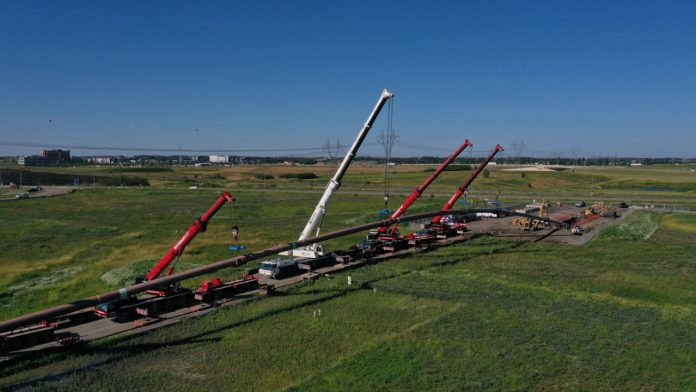
The Trans Mountain Pipeline is one that spans from Alberta to British Columbia, transferring oil to BC’s coast. The expansion aims to create a second pipeline almost parallel to the original, which will pass by Burnaby Mountain along the way. The $12.6 billion project will include 12 pumping stations and 980 kilometres of new pipeline.

In an email statement to The Peak, Trans Mountain said, “Since the beginning of the Expansion Project, we have had extensive engagement with neighbours, landowners, residents, and local businesses to ensure feedback is heard and respected. The safety of our people, our facilities, and the environment is paramount in everything we do.” 

The statement continued, “The most critical and responsible emergency management strategy is to prevent a spill from occurring. However, if there’s a spill, Trans Mountain is prepared to respond quickly with detailed emergency procedures and trained professionals.”

Tiny House Warriors, an Indigenous anti-TMX group, are leading an initiative to keep the pipeline from passing unceded Secwepemc territory. A statement on their website says, “We have never provided and will never provide our collective free, prior and informed consent — the minimal international standard — to the Trans Mountain Pipeline Project.”

According to Kanahus Manuel, a spokesperson for the Tiny House Warriors, “The Trudeau government does not have the right to put a pipeline through unceded Secwépemc land [ . . . ] To try to legitimize this illegal act, Canada uses what legal scholars call [ . . . ] misinterpretation of ‘consent’ which is inconsistent with Indigenous, constitutional and international law.”

Trans Mountain stated that they “respect the constitutional rights, unique culture, diversity, languages, and traditions of Indigenous People in Canada.” They added, “We acknowledge the significance of culture and language for Indigenous People and the considerable traditional knowledge that has been passed on for generations. Trans Mountain has signed Agreements with 59 Indigenous groups in BC and Alberta that represent more than $500 million in benefits and opportunities for Indigenous communities.”

The letter organized by the SFSS, Justice, No Pipeline, and Dogwood SFU can be found here.
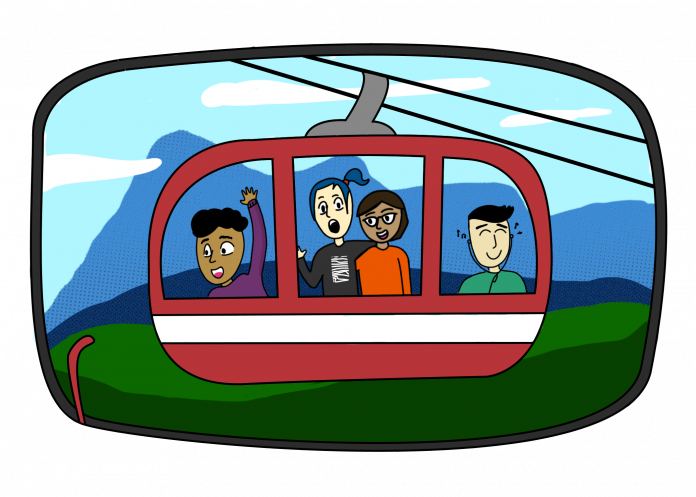
A gondola will mean improved accessibility to SFU

0
ILLUSTRATION: Johanna Jucutan/The Peak

If you don’t fall under the miniscule category of students who have their own vehicle, snow tires, and are able to afford and find parking on campus, chances are that you’ve probably been through the horrors of public transit during a snowfall on Burnaby campus. The idea of a gondola as a solution to this annual disaster has been somewhat of a daydream for years now in the SFU community — the project has always been sort of just “up in the air,” and up until recently, it hasn’t really seemed like a priority. It has been clear that SFU students are struggling in many ways during the pandemic — a big one being financially. So, the gondola may not seem like an immediate priority in these times. However, it is still a necessary project that SFU should be considering to improve access to Burnaby Mountain and a project that has valuable long-term benefits. 

We don’t know what the future of the campus will look like in the next few years as we adjust to the “new normal,” but the long-term benefits of this project are undeniable and will serve future generations of SFU students. Some of these predicted benefits include improving transit reliability to and from Burnaby Mountain, cost-effectiveness, reduction in greenhouse gas emissions, and improved safety during snowfalls. There is a lot of uncertainty in these times, but the trek up Burnaby Mountain is a constant for SFU students. 

The 2018 Burnaby Mountain Gondola Transit Feasibility Study indicated that overcrowding, on-time performance, and bus bunching was amongst the worst with the 145 bus compared to all other bus routes, and that the Gondola Project could improve bus reliability at similar rates and average bus times as current bus services — while also improving transportation during harsh weather conditions. 

The study also outlined environmental objectives like reducing the overall carbon footprint that is left from the heavy usage of buses to and from Burnaby Mountain, and a plan for using sustainable materials and methods of operation. Budget estimates and specifics are detailed in the document, but it is apparent from the overall plan by TransLink, that the vision is to plan for the gondola to not only benefit (future) SFU students by not leaving them stranded on Burnaby Mountain during a snowfall, but the general public in the long run as well. 

While it’s still publicly unclear where all the funds for the gondola construction will be coming from, given that this is a TransLink project, it is unlikely that SFU students would be footing the bill through the dreaded tuition raises. Considering that virtually all on-campus SFU students and community members would benefit from this, even a small (and unlikely) financial investment on our part would be far outweighed by the long term benefits. Students still deserve the university’s support around COVID-specific barriers, but there is no reason that these supports cannot co-exist with the long-term goal of creating a more accessible and green campus for SFU’s future. After all, increased accessibility is a form of support for students as well and this gondola will benefit all of us in the SFU community. 

Not offering ASL classes is an accessibility issue

1
Courtesy of Dynamic Language

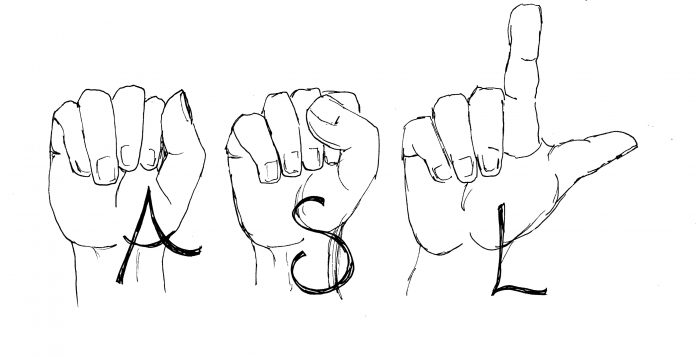
Personally, I think that it is absolutely atrocious that SFU does not offer courses to learn American Sign Language (ASL). Currently, VCC, UBC, and Douglas College have all taken steps to ensure further accessibility for their students, so why hasn’t SFU?

From personal experience, I took French in high school as well as in university. While having a basic knowledge of how to communicate in French helped me plenty when I was in a French-speaking environment, I have never had to utilize those skills when out and about in the Lower Mainland. On the other hand, I have had multiple occasions where I have encountered someone who was either hard of hearing or deaf, particularly in my customer service job, and I have had difficulty communicating with them. 

Granted, I’ve found a few YouTube videos online with some basic signs to use in a work setting, but I find that as soon as the time comes to use the signs I come up blank. This is because I have never had the opportunity to learn ASL in a classroom setting.

Beyond my own experiences, the lack of ASL classes at SFU goes farther than a communication barrier. It is completely an accessibility issue.

Look at it this way. If I were originally a French speaker, I always have the ability to learn another language, or I can navigate my way through environments with the use of Google Translate or other devices. For those with hearing impairments, however, the range of navigation is far more limited. While the spectrum of hearing ability is vast, there is not always the option to have hearing aids for some individuals, nor is there the ability to lipread given the current circumstances (though seriously guys, keep wearing your masks). What remains is communicating through one’s phone or through pen and paper, which cannot always be feasible in certain situations. 

Further, before the point gets raised: “Isn’t ASL just a way of speaking English with your hands?” ASL is a completely unique language which harbours its own grammatical and lexical structure, as well as certain words and phrases with no English counterpart. There are even several families within the sign language sphere depending on where you’re from! It is quite literally its own language and culture which undeniably warrants its own academic program. Students of such an academic program could even provide more potential applicants for a career as an ASL interpreter, which is currently high in demand. 

According to a CBC article posted in 2018, the population of deaf individuals living in Canada sat at 340,000, whereas the number of individuals who were hard of hearing sat at 3.15 million. 

To me, it’s clear that SFU needs to take the extra step and implement a program to bring ASL to a wider array of students, for both the sake of Deaf/hard of hearing individuals, as well as hearing individuals. 

Apocamoth Now

0

September 1 (Day 1):

Dear Diary,

New year, new me, baby. 

I don’t know what it is, but something feels funny about coming back to campus. I’m all settled in my dorm room, ready for the school year, but something feels — off. I’m not just talking about the COVID-19 stuff, either; it’s more like something is going to go south real quick. I bet it’s that physics class that Reddit said would be an easy B-Sci credit. Hmm.

Anyways, maybe it’s just the start of school jitters. I’ll try to keep a positive attitude.

September 6 (Day 6):

Dear Diary,

I think it’s going to be a great semester, despite the circumstances. My positive attitude is really paying off, I think. My roommates and I ordered boba and watched The Silence of the Lambs. What a classic!

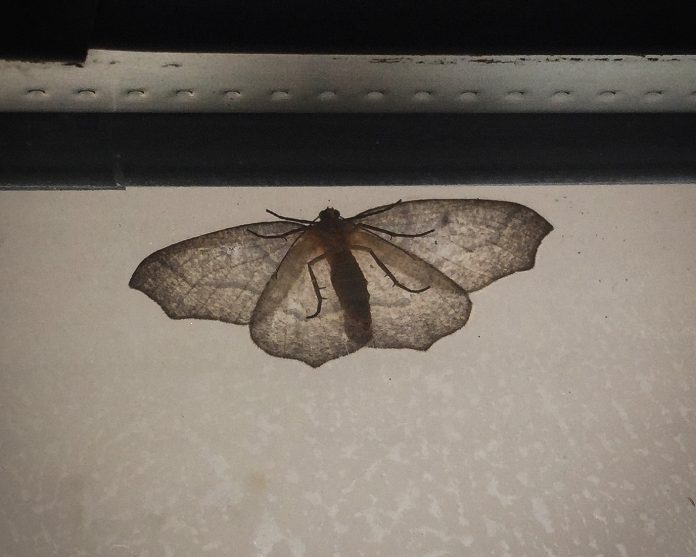
Awe, a little moth landed on my page as I write this! How cute. 

September 7 (Day 7):

Hey Diary,

Uh, this may sound weird, but I swear there are like four moths in my room just fluttering around. That doesn’t sound like a problem, per se, but they make me so uneasy . . . How did they even get in here when my window is closed? Ha, look at me, writing about moths. Who cares. They’re harmless.

. . . Let me just Google if moths can bite.

September 8 (Day 8):

I woke up when it was still dark out this morning to go to the washroom. I look out my window and all I see are moths! They’re everywhere. Streetlights just clogged. And why is it so smoky out? What the hell is going on?

I need to calm down. What could 2020 throw at me at this point that could hurt me any more? How could it get worse? It can’t.

Well, classes start tomorrow. Time to prepare.

September 9 (Day 9):

So, it turns out online courses fucking suck. I thought in-person tutorials were awkward when the TA asked a question and no one made eye contact. It’s much, much worse. I feel my morale resting at a zero right about now. At least there’s a cute little moth here chilling with m— wait.

September 17 (Day 17):

This is a warning to anyone planning on going to campus . . . don’t do it. It’s impossible to see. It’s like Margaret Atwood meets that one Shrek song that talks about the world being on fire. Yeah, it’s smoky as balls out. But on top of that are all the MOTHS. On walls, ceilings, doors, tables, floors — wherever you look: m o t h s. Dystopian novel content, man. It’s terrifying.

September 21 (Day 21):

My roommate Sara braved the cloud of smoke and moths to go do laundry yesterday.

She hasn’t come back since.

September 27 (Day 27):

I don’t have much time to write. The moths hijacked the campus. The lowered student population and campus security stood no chance. If you’re reading this, I have a stash of Oreos in the drawer under my bed. You can have them. Tell my mom I love her.

October 3 (Day 33):

The moths took over my Townhouse. I’m currently hiding in the adjacent laundry room. It’s littered with dead moths. All I have to eat are fabric softening sheets and Tide pods.

Wait . . . under those thousands of moths . . . is that . . . ?

Sara? 

October 27 (Day m o t h):

NO MORE HUMAN. ONLY MOTH.

Removing statues is essential in accurately recounting history and bringing justice for oppressed racial minorities

0
PHOTO: Eric Thomas / Getty Images

PHOTO: Eric Thomas / Getty Images

A series of statues have been taken down and vandalized both worldwide and in Canada as increased attention is being brought to the racial injustices BIPOC face. A part of the movement has been identifying where power is currently held and how to effectively remove power from the police-state and its functions of upholding white supremacy, colonization, and capitalism. Statues are essentially symbols of these ideas which inform the status quo. Thus, the removal of statues is a preliminary step to address the inequalities created as a result of not only the individuals depicted, but the interests they were serving. 

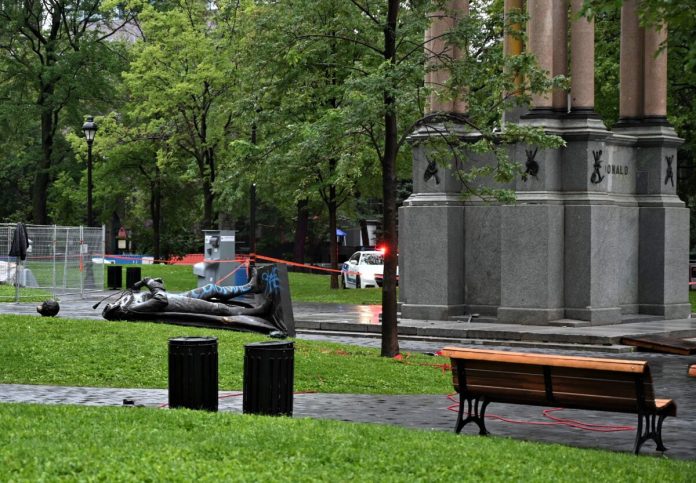
An individual whose life’s work consisted of white supremacy, colonization, and capitalism was John A. Macdonald. The first Prime Minister of Canada’s statue was recently removed in Montréal by activists who cited his continuation and escalation of the genocide against Indigenous peoples as making him not worthy of being immortalized.

Those opposed to the removal of the statue, including Prime Minister Justin Trudeau, say that the action is one of lawlessness and vandalism. Where the perpetrators are not only criminals, but those looking to whitewash or erase history. Trudeau, who pledged his support to help implement the recommendations of the Truth and Reconciliation Commission in 2016, now apparently refutes actions consistent with the basis of the commission to dismantle the “paternalistic and racist foundations” that Canada currently operates from. 

The irony of whitewashing the history of an individual who more effectively implemented the cultural genocide of Indigenous peoples is staggering. Not only is the “history” that the offended parties are referring to inaccurate, but it is purposeful in its point of view — emphasizing the systems in place that abuse minorities and glorifying whiteness The events that have actually been erased from history are the same omissions that allow an individual like John A. Macdonald to be idolized by the general population. 

The argument that removing a statue is an attempt to erase history is absurd as well. In Germany there are no statues of Adolf Hitler, but the history of WWII and the mass genocide that occurred is not forgotten. Rather, the history of his actions are taught appropriately.

In Canada, however, the history told of John A. Macdonald is one of a heroic arc. His story omits the past and present effects of the Indian Act and the creation of the colonial state of Canada. This revisionist history is present in textbooks written from colonalial perspectives, where the reader is asked to determine the pros and cons of an act that resulted in the genocide of generations. If someone refuses to believe the fairytale of John A. Macdonald being a brilliant leader and him purposely starving Indigenous peoples being congruent, is that individual erasing history? 

The removal of statues of abhorrent figures is necessary. They are a symbol of not only their actions, but the acceptance and idealization of the actions they perpetuated and the ideology those actions serve. Further, reconciliation is not possible when the founder of the colonial state of Canada and the pioneer of the residential school system, and thus genocide is seen as a figure worth memorializing. 


Students shouldn’t have to use their webcams in lectures

1

So, I’m neurodivergent. I won’t get into my whole medical history, but it means I do things differently — especially when I’m stressed. In case you haven’t noticed, this year has been stressful for literally everyone. What with the pandemic and all. 

Sometimes, stress causes me to have flare-ups of certain symptoms. For example, I might struggle with picking at my skin obsessively, which can leave me with blemishes. I also have a lot of fidget toys, which I often end up using so my idle hands are kept busy. 

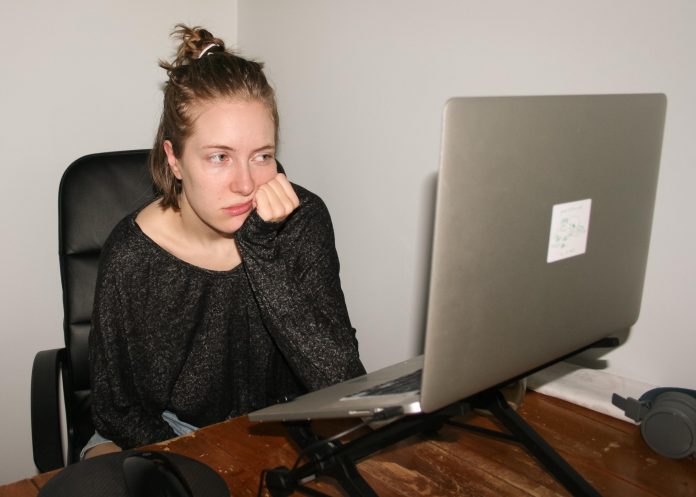
In the old world, I had the strength to hide these habits, but that’s not the case right now. With all classes being moved to remote and Zoom lectures becoming the norm, it has almost become an expectation that students appear on camera for their classes — whether this is to simulate the sensation of being within each other’s presence in a lecture hall or merely for professors to see their students is unclear. What I am certain of, however, is that I don’t believe the use of webcams in lectures should be necessary and enforced.

I don’t want people to have to see me like this, and in the case of fidget toys, I don’t want to be a distraction to other students — or worse, get scolded for using them. Besides that, the idea of having to look camera-ready is a whole other stressor. That could mean so many different things! And as a woman, it makes me nervous: are we expected to put on makeup for an hours-long lecture in our bedroom? Because a lot of us get judged for showing up barefaced. 

Speaking of bedrooms, it’s also bold to assume everyone has some space where they can appear on-camera confident they won’t be disturbed. And even if they do have their own room, maybe they don’t want a lecture hall’s worth of peers seeing it. People are prone to subconscious biases, and a peek into everyone’s bedrooms is a minefield. Some rooms will be messier. Some will look poorer. Are we expected to put that on display and let assumptions fly? 

When I have a depressive episode, my room falls into disarray. I lack the energy to clean it. I kept going to school during these low points, but if school had included everyone getting a peek into my messy inner life, it might’ve been a different story. 

And truth be told, using a webcam simply won’t be viable for some people. They might have computers with webcams that stopped working ages ago, or internet that struggles when you broadcast yourself. Even I’ve had days where Zoom would lag and glitch until I turned my camera off. 

Professors really shouldn’t be forcing students to turn on their webcams. It’s uncomfortable, it’s pretty much a breach of privacy, and it opens up a whole bunch of potential subconscious biases. I just want to learn without facing potential judgement. 

SFUnexplained: Former SFU president Andrew Petter replaced by suspicious look-alike during final term

0
Illustration: Maple Sukontasukkul / The Peak

Wake up, sheeple! Our beloved previous university president, Andrew Petter, has been replaced by a doppelgänger. 

For starters, Petter has not been seen in person for months. After a decade of hard work spent keeping this university intact, he vanished. Few have claimed to have actually seen his mythical face. In his two most recent interviews with The Georgia Straight, he neglected to meet the interviewer in person. Instead, he opted for a phone interview to avoid direct contact. Coincidence? I think not.

During his interview in August, he used the word “community” a whopping 23 times. When we shift just one letter in “community,” separating the closeness of the two Ms in the word — like Petter has been separated from our lives — we are left with “com uni tmy.” 

Come uni Timmy. 

Come to the university Tim Horton’s. 

There are two Tim Horton’s on the Burnaby campus — just like the two Ms — but only one is inside the university. Follow-up research shows that this Tim Horton’s has been closed for months, perhaps because of their ties to Petter’s disappearance. His constant reiterations of the word “community” must have been cries for help.

In his interview with the Straight back in January, he used the word “community” only twice. When you take away two from 23, the number of pairs of chromosomes required to make his doppelgänger, you get 21. The only factors of 21 are one, three, seven, and 21. The most important factors, one, three, and seven, are prime numbers. Petter was in the prime of his career when he disappeared, and he was number one in our hearts. The numbers three and seven equal to 10, the number of years he served as SFU’s president before it was too late.

Further, his first and last words to The Georgia Straight were “I” and “now.” The letter I is the Roman numeral for one. “One now” is a warning: there would only be one Petter from then on, and it wasn’t the man we know and love.

If you’re still unsure whether he’s truly been taken, just ask yourself one question: have you ever seen him in person? Has anyone you know seen him in person? If they have, how do you know that person isn’t a doppelgänger?

Single student not even that mad that they’re alone, grateful for emotional support laundry on their bed

0
Illustration: Tiffany Chan / The Peak

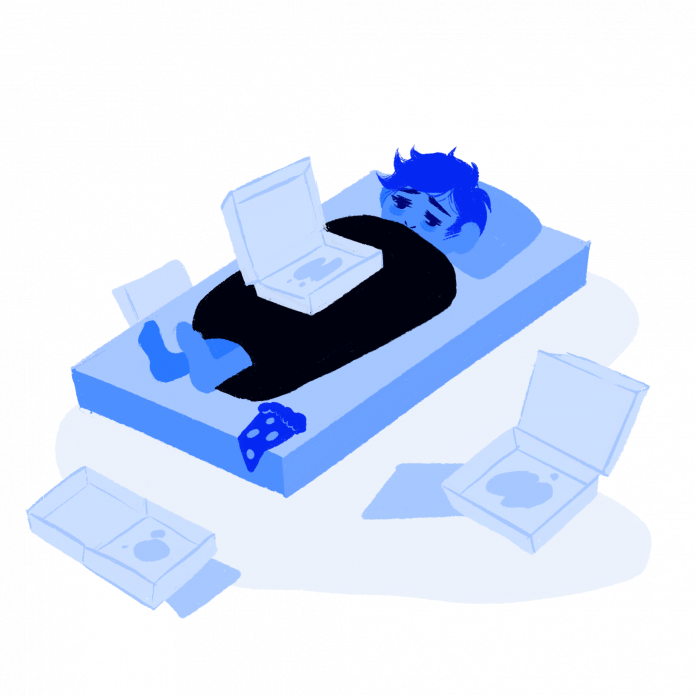
The room is silent with the exception of a lone ceiling fan pushing lukewarm air down on the bed. There I lie on my crunchy bedsheets, staring into the abyss of my stylish water-stained popcorn ceiling. The hot September sun is the only source of light in my room, casting laser beam lines like a light show appropriately set at a funeral.

The bed is equal parts dirty laundry and human, and the difference between the two grows increasingly unperceivable with the passing of each day. I have been here for days, feeling far emptier than the bed on which I lie. Empty pizza boxes line the floor of the room, worth the equivalent of an entire semester’s tuition. A gin-soaked tube sock of a long lost lover is clenched in my fist, used for both sponge baths and hydration.

It’s been 78.5 days since I last experienced human touch — long enough to forget the feeling. You can’t really miss something you don’t know, right? I think so. Yet again, the other day the pizza delivery driver’s hand brushed mine as I was getting my change back and I almost felt something. 

In other news, I discovered that asking Pizza Hut delivery drivers if they “wanna hang out sometime or something” is generally something you’re not supposed to do. 

That’s alright, though, because I have plenty of friends whom I can talk to. I get messages on Snapchat like crazy, even if it is just a black screen with the only word being “streaks.” But honestly, I’m doing great — thriving, even. I watched a self-help video on YouTube and I think that all the “me time” I’ve had lately has helped me learn to love myself just as much as my pet goldfish loves swimming on its back. I would say it’s helped me to love myself even more than a good stuffed crust, but I really just don’t taste as good when lathered in garlic butter. Believe me, I’ve tried. 

I called my mum the other day and asked if she wanted to hang out. She asked me if I was okay. I said, “yeah, I’m doing great.”

“Okay, good.” 

She hung up. 

Modern problems require modern solutions, so I made some sock puppet friends out of the laundry on my bed. They really do a good job of hyping me up, like any group of true friends would. Together we compiled a mailing list of every non-related female in my contact list, sending out a mass 3 a.m. “u up?” text. Overall, the operation was a success. Of all 20 recipients, I got four replies, and only three of those said that they’re blocking my number. The last reply simply read, “Really? This again?”

On second thought, maybe I should’ve filtered out my old retail managers from the list. That’s okay, though. I’ve got plenty of time to find new references to put on my resume.

I can’t really be mad at the situation. It is what it is. If anything, it’s made me stronger. With the power of stuffed crust and sock puppets on my side, I can take on the whole world, even if the whole world ignores me.

Student Union Building completes construction

1
PHOTO: Jonathan Wong / The Peak

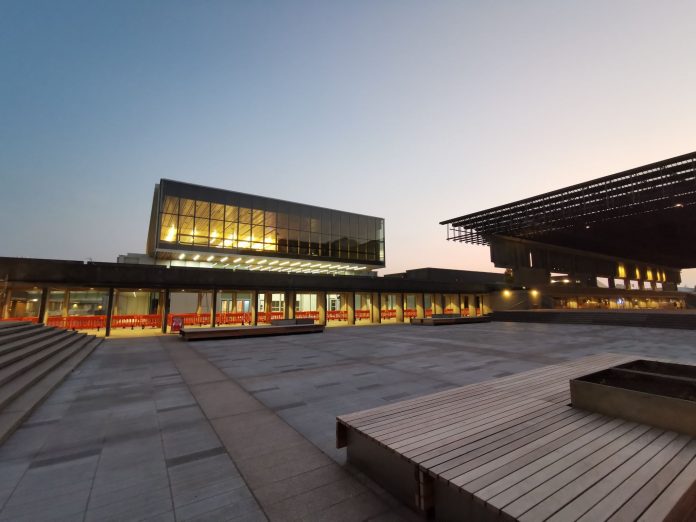
The Student Union Building (SUB) is in its final stages of completion. While construction has been completed, its opening is pending final inspection and awaiting health protocols to be deemed safe for students due to COVID-19. 

SFSS President Osob Mohamed shared in an email statement with The Peak, “The Student Union Building has been long-awaited by SFU students, and we are finally reaching the point where the building has been completed, and we will be able to move in and enjoy the building and amenities very soon.”

The construction was completed in late August 2020, and “is now undergoing occupancy inspections that need to be successfully completed before we can occupy the building,” Mohamed stated. There are minor issues that are being resolved before the inspection is set to happen. Mohamed did not elaborate.

The SUB has been delayed numerous times since it’s projected opening. It was set to first open in Fall 2018, then pushed to Summer 2019 due to weather and staffing issues, and then again delayed to March 2020 — the most recent pushback being to Fall 2020. When asked about the delays, Mohamed responded, “Our contractor’s COVID protocols have caused some delays in getting some construction milestones done.” 

The grand opening for the building hasn’t been announced as of now, and COVID-19 alters the plans put in place beforehand. The SFSS is planning on leading up to the opening virtually, due to the pandemic: “This will be through mostly online means, such as digital tours and videos [that] we are hoping to create until we can safely host festivities there,” Mohamed added.

The building will be ready for use as soon as it is safe to do so, while maintaining public health protocols. 

Mohamed concluded with a message to students, “We are thrilled to finally see the SUB project completed and ready for student use in the near future, after so many years of anticipation. It has been a long time coming, but I believe that students will be able to utilize and enjoy it for many, many years to come. It will be a great hub for student groups, activities, study spaces and a place for our students to relax, find community and create memories during their time here at SFU.”

Top Ten personality traits society has outgrown the need for

0
Very calm, very cool. Nothing wrong here. Illustration: Siloam Yeung / The Peak
  1. Pineapple on pizza debaters

Some might say the worst thing is putting pineapple on pizza, but what’s worse than that is the people who use this debate as their primary personality trait. To me, food preferences are like sex: I don’t care what you’re into, so long as you’re not shoving something down my throat I didn’t ask for. It doesn’t necessarily matter which side of this debate you’re on, if you’re the type of person who frivolously argues for one or the other, I highly suggest you improve your palette — the taste level here is quite questionable.

2. “Oopsie, I bought another plant!”

Succulents, cactuses, and bonsais; these are just a few examples of the things used by plant people to create the facade of a personality. What could be more enticing and thrilling than talking to people about giving something water . . . and then moving it into the sun . . . and then . . . just . . . watching it do nothing? Look, I get it, it’s easier to make friends with plants than people because, unlike people, plants can’t leave you when they’ve outgrown you. Don’t fret; at least with all of your plants you’ll hopefully have enough oxygen to breathe a new life for yourself. 

3. The Office c̶u̶l̶t̶i̶s̶t̶s̶ fans

Making your entire personality based around a TV show is one thing, but to make it around The Office is about as interesting as trying to sell blank paper. Between spewing references that are way overdone or berating people for NOT watching The Office, people with this personality trait try way to hard to be a “likeable” character — just like the ones they idolize on this show. Hate to break it to you, though, none of these characters are even close to likeable. You guys are all about bears, beets, Battlestar Galactica, right? How about bored, beaten-to-death, barely tolerable? 

4. The messy misogynist

There’s a lot I could say about this one, but I don’t think the people who need to be reading this one have the brain capacity to read long and complicated things. Unfortunately for the rest of us, there’s no antidote to treat the poison secreted by these types of people. What I can prescribe to people who exude toxic masculinity, though, is one lethal dose of a reality check and the hard pill to swallow that not everything is about men. 

5. Car connoisseurs

Now, you might call me biased for this one because I don’t drive, but I’ve sat in enough passenger seats and heard enough rants about car expenses to know that, ironically, car personality types lack one thing: drive. While there’s a multitude of things I could say about cars and car enthusiasts (like how cars are literally just glorified death traps) I’ll summarize with this: if you invested your money in something more productive than a fancy car, maybe you’d have less problems that you feel the need to drive away from. If I were you, between insurance, gas, and car aesthetics, I’d care more about what I’m putting into my bank instead of what I could stick in my exhaust pipe.

6. Racists

Though normally I’d reserve discussing such topics in other sections of the paper, I’m including racists in the humour section because anyone who’s racist is an absolute joke. 

7. Disney adults

In what I like to call the evolution of Horse Girls, Disney adults are people who cling a little too hard to the magic of Walt Disney and would probably drop kick a toddler for a seat on the Peter Pan ride at Disneyland. Speaking of Peter Pan, much like Peter these people never want to grow up — and also much like Peter, these people lack the skills or interests to integrate themselves successfully into conversation with non-Disney adults and can only relate to children on an intellectual level. As much as you’d like to fuse your childhood obsession into adulthood with fun tank tops that read “Hakuna Some Vodka,” unfortunately you’re just going to have to . . . Let It Go. 

8. “Hey, did you know I’m vegan?” 

Have you ever heard the joke “how can you tell a pathological liar is lying? Their lips are moving.” The same could be said for vegans: you know they’re vegan as soon as their meatless lips are open and promoting juice cleanses. But you know what’s just as bad as vegans who within moments of speaking try to coerce you into buttchugging açaí bowls? Vegans who brag that they don’t brag about being vegan. You would think with how much cleansing they do, these types of vegans would have the clarity to see the hypocrisy in bragging about not bragging. But alas, they’re so focused on their diets they fail to see that they lack substance — and no, I’m not talking about meat. 

9. ^~*I’m Quirky*~^

Anyone who says or believes they’re ~quirky~ and ~different~ probably saw the movie Mean Girls, started believing that cliques actually exist in real life, and made it their duty as the ~relatable~ and ~awkward~ person to oppose these standards. Hate to break it to you, but Mean Girls is just a movie — a pretty tired one at that. Anyone who thinks they’re quirky has yet to face the reality that when everyone is quirky, no one is quirky. This could also be summarized by the truly heinous statement: “I’m not like most girls!” To be honest, what does that even mean? I feel like more people live by this statement than people who don’t. This perfectly defines how quirkiness is a complete contradiction: if most are saying they’re not like most, wouldn’t that mean that the quirky ones who say they’re not like the majority are the majority? Who is this majority that they speak of? Someone please make this make sense? 

10. Macchiathoes

This one goes out to people with a latte problems that have the inability to espresso themselves, and instead use a beverage to hide their easily brewsed egos behind; that’s right, I’m talking about self-proclaimed coffee addicts. If you’re the type of person who actually enjoys cringey pun mugs, flexes how much they contribute to capitalism by going to Starbucks, and prides themselves on their knowledge of the fast food coffee hierarchy, it’s about time you got served. Coffee-fueled personalities are much like coffee itself: hot or cold (since you can’t come up with an actual personality), constantly roasted (this one speaks for itself), and bitter (because there’s nothing else interesting about you besides what you drink.) You know what they say: “Don’t talk to me before I’ve had my coffee.” How about just don’t talk to me ever.