Home Blog Page 409

Students shouldn’t have to use their webcams in lectures

1

By Alex Masse, SFU Student

So, I’m neurodivergent. I won’t get into my whole medical history, but it means I do things differently — especially when I’m stressed. In case you haven’t noticed, this year has been stressful for literally everyone. What with the pandemic and all. 

Sometimes, stress causes me to have flare-ups of certain symptoms. For example, I might struggle with picking at my skin obsessively, which can leave me with blemishes. I also have a lot of fidget toys, which I often end up using so my idle hands are kept busy. 

In the old world, I had the strength to hide these habits, but that’s not the case right now. With all classes being moved to remote and Zoom lectures becoming the norm, it has almost become an expectation that students appear on camera for their classes — whether this is to simulate the sensation of being within each other’s presence in a lecture hall or merely for professors to see their students is unclear. What I am certain of, however, is that I don’t believe the use of webcams in lectures should be necessary and enforced.

I don’t want people to have to see me like this, and in the case of fidget toys, I don’t want to be a distraction to other students — or worse, get scolded for using them. Besides that, the idea of having to look camera-ready is a whole other stressor. That could mean so many different things! And as a woman, it makes me nervous: are we expected to put on makeup for an hours-long lecture in our bedroom? Because a lot of us get judged for showing up barefaced. 

Speaking of bedrooms, it’s also bold to assume everyone has some space where they can appear on-camera confident they won’t be disturbed. And even if they do have their own room, maybe they don’t want a lecture hall’s worth of peers seeing it. People are prone to subconscious biases, and a peek into everyone’s bedrooms is a minefield. Some rooms will be messier. Some will look poorer. Are we expected to put that on display and let assumptions fly? 

When I have a depressive episode, my room falls into disarray. I lack the energy to clean it. I kept going to school during these low points, but if school had included everyone getting a peek into my messy inner life, it might’ve been a different story. 

And truth be told, using a webcam simply won’t be viable for some people. They might have computers with webcams that stopped working ages ago, or internet that struggles when you broadcast yourself. Even I’ve had days where Zoom would lag and glitch until I turned my camera off. 

Professors really shouldn’t be forcing students to turn on their webcams. It’s uncomfortable, it’s pretty much a breach of privacy, and it opens up a whole bunch of potential subconscious biases. I just want to learn without facing potential judgement. 

SFUnexplained: Former SFU president Andrew Petter replaced by suspicious look-alike during final term

0
Illustration: Maple Sukontasukkul / The Peak

By: Carter Hemion, Peak Associate

Wake up, sheeple! Our beloved previous university president, Andrew Petter, has been replaced by a doppelgänger. 

For starters, Petter has not been seen in person for months. After a decade of hard work spent keeping this university intact, he vanished. Few have claimed to have actually seen his mythical face. In his two most recent interviews with The Georgia Straight, he neglected to meet the interviewer in person. Instead, he opted for a phone interview to avoid direct contact. Coincidence? I think not.

During his interview in August, he used the word “community” a whopping 23 times. When we shift just one letter in “community,” separating the closeness of the two Ms in the word — like Petter has been separated from our lives — we are left with “com uni tmy.” 

Come uni Timmy. 

Come to the university Tim Horton’s. 

There are two Tim Horton’s on the Burnaby campus — just like the two Ms — but only one is inside the university. Follow-up research shows that this Tim Horton’s has been closed for months, perhaps because of their ties to Petter’s disappearance. His constant reiterations of the word “community” must have been cries for help.

In his interview with the Straight back in January, he used the word “community” only twice. When you take away two from 23, the number of pairs of chromosomes required to make his doppelgänger, you get 21. The only factors of 21 are one, three, seven, and 21. The most important factors, one, three, and seven, are prime numbers. Petter was in the prime of his career when he disappeared, and he was number one in our hearts. The numbers three and seven equal to 10, the number of years he served as SFU’s president before it was too late.

Further, his first and last words to The Georgia Straight were “I” and “now.” The letter I is the Roman numeral for one. “One now” is a warning: there would only be one Petter from then on, and it wasn’t the man we know and love.

If you’re still unsure whether he’s truly been taken, just ask yourself one question: have you ever seen him in person? Has anyone you know seen him in person? If they have, how do you know that person isn’t a doppelgänger?

Single student not even that mad that they’re alone, grateful for emotional support laundry on their bed

0
Illustration: Tiffany Chan / The Peak

By: Zedd Strangelove, SFU Student

The room is silent with the exception of a lone ceiling fan pushing lukewarm air down on the bed. There I lie on my crunchy bedsheets, staring into the abyss of my stylish water-stained popcorn ceiling. The hot September sun is the only source of light in my room, casting laser beam lines like a light show appropriately set at a funeral.

The bed is equal parts dirty laundry and human, and the difference between the two grows increasingly unperceivable with the passing of each day. I have been here for days, feeling far emptier than the bed on which I lie. Empty pizza boxes line the floor of the room, worth the equivalent of an entire semester’s tuition. A gin-soaked tube sock of a long lost lover is clenched in my fist, used for both sponge baths and hydration.

It’s been 78.5 days since I last experienced human touch — long enough to forget the feeling. You can’t really miss something you don’t know, right? I think so. Yet again, the other day the pizza delivery driver’s hand brushed mine as I was getting my change back and I almost felt something. 

In other news, I discovered that asking Pizza Hut delivery drivers if they “wanna hang out sometime or something” is generally something you’re not supposed to do. 

That’s alright, though, because I have plenty of friends whom I can talk to. I get messages on Snapchat like crazy, even if it is just a black screen with the only word being “streaks.” But honestly, I’m doing great — thriving, even. I watched a self-help video on YouTube and I think that all the “me time” I’ve had lately has helped me learn to love myself just as much as my pet goldfish loves swimming on its back. I would say it’s helped me to love myself even more than a good stuffed crust, but I really just don’t taste as good when lathered in garlic butter. Believe me, I’ve tried. 

I called my mum the other day and asked if she wanted to hang out. She asked me if I was okay. I said, “yeah, I’m doing great.”

“Okay, good.” 

She hung up. 

Modern problems require modern solutions, so I made some sock puppet friends out of the laundry on my bed. They really do a good job of hyping me up, like any group of true friends would. Together we compiled a mailing list of every non-related female in my contact list, sending out a mass 3 a.m. “u up?” text. Overall, the operation was a success. Of all 20 recipients, I got four replies, and only three of those said that they’re blocking my number. The last reply simply read, “Really? This again?”

On second thought, maybe I should’ve filtered out my old retail managers from the list. That’s okay, though. I’ve got plenty of time to find new references to put on my resume.

I can’t really be mad at the situation. It is what it is. If anything, it’s made me stronger. With the power of stuffed crust and sock puppets on my side, I can take on the whole world, even if the whole world ignores me.

Student Union Building completes construction

1
PHOTO: Jonathan Wong / The Peak

Written by: Mahdi Dialden, News Writer

The Student Union Building (SUB) is in its final stages of completion. While construction has been completed, its opening is pending final inspection and awaiting health protocols to be deemed safe for students due to COVID-19. 

SFSS President Osob Mohamed shared in an email statement with The Peak, “The Student Union Building has been long-awaited by SFU students, and we are finally reaching the point where the building has been completed, and we will be able to move in and enjoy the building and amenities very soon.”

The construction was completed in late August 2020, and “is now undergoing occupancy inspections that need to be successfully completed before we can occupy the building,” Mohamed stated. There are minor issues that are being resolved before the inspection is set to happen. Mohamed did not elaborate.

The SUB has been delayed numerous times since it’s projected opening. It was set to first open in Fall 2018, then pushed to Summer 2019 due to weather and staffing issues, and then again delayed to March 2020 — the most recent pushback being to Fall 2020. When asked about the delays, Mohamed responded, “Our contractor’s COVID protocols have caused some delays in getting some construction milestones done.” 

The grand opening for the building hasn’t been announced as of now, and COVID-19 alters the plans put in place beforehand. The SFSS is planning on leading up to the opening virtually, due to the pandemic: “This will be through mostly online means, such as digital tours and videos [that] we are hoping to create until we can safely host festivities there,” Mohamed added.

The building will be ready for use as soon as it is safe to do so, while maintaining public health protocols. 

Mohamed concluded with a message to students, “We are thrilled to finally see the SUB project completed and ready for student use in the near future, after so many years of anticipation. It has been a long time coming, but I believe that students will be able to utilize and enjoy it for many, many years to come. It will be a great hub for student groups, activities, study spaces and a place for our students to relax, find community and create memories during their time here at SFU.”

Top Ten personality traits society has outgrown the need for

0
Very calm, very cool. Nothing wrong here. Illustration: Siloam Yeung / The Peak

By: Juztin Bello, Copy Editor

  1. Pineapple on pizza debaters

Some might say the worst thing is putting pineapple on pizza, but what’s worse than that is the people who use this debate as their primary personality trait. To me, food preferences are like sex: I don’t care what you’re into, so long as you’re not shoving something down my throat I didn’t ask for. It doesn’t necessarily matter which side of this debate you’re on, if you’re the type of person who frivolously argues for one or the other, I highly suggest you improve your palette — the taste level here is quite questionable.

2. “Oopsie, I bought another plant!”

Succulents, cactuses, and bonsais; these are just a few examples of the things used by plant people to create the facade of a personality. What could be more enticing and thrilling than talking to people about giving something water . . . and then moving it into the sun . . . and then . . . just . . . watching it do nothing? Look, I get it, it’s easier to make friends with plants than people because, unlike people, plants can’t leave you when they’ve outgrown you. Don’t fret; at least with all of your plants you’ll hopefully have enough oxygen to breathe a new life for yourself. 

3. The Office c̶u̶l̶t̶i̶s̶t̶s̶ fans

Making your entire personality based around a TV show is one thing, but to make it around The Office is about as interesting as trying to sell blank paper. Between spewing references that are way overdone or berating people for NOT watching The Office, people with this personality trait try way to hard to be a “likeable” character — just like the ones they idolize on this show. Hate to break it to you, though, none of these characters are even close to likeable. You guys are all about bears, beets, Battlestar Galactica, right? How about bored, beaten-to-death, barely tolerable? 

4. The messy misogynist

There’s a lot I could say about this one, but I don’t think the people who need to be reading this one have the brain capacity to read long and complicated things. Unfortunately for the rest of us, there’s no antidote to treat the poison secreted by these types of people. What I can prescribe to people who exude toxic masculinity, though, is one lethal dose of a reality check and the hard pill to swallow that not everything is about men. 

5. Car connoisseurs

Now, you might call me biased for this one because I don’t drive, but I’ve sat in enough passenger seats and heard enough rants about car expenses to know that, ironically, car personality types lack one thing: drive. While there’s a multitude of things I could say about cars and car enthusiasts (like how cars are literally just glorified death traps) I’ll summarize with this: if you invested your money in something more productive than a fancy car, maybe you’d have less problems that you feel the need to drive away from. If I were you, between insurance, gas, and car aesthetics, I’d care more about what I’m putting into my bank instead of what I could stick in my exhaust pipe.

6. Racists

Though normally I’d reserve discussing such topics in other sections of the paper, I’m including racists in the humour section because anyone who’s racist is an absolute joke. 

7. Disney adults

In what I like to call the evolution of Horse Girls, Disney adults are people who cling a little too hard to the magic of Walt Disney and would probably drop kick a toddler for a seat on the Peter Pan ride at Disneyland. Speaking of Peter Pan, much like Peter these people never want to grow up — and also much like Peter, these people lack the skills or interests to integrate themselves successfully into conversation with non-Disney adults and can only relate to children on an intellectual level. As much as you’d like to fuse your childhood obsession into adulthood with fun tank tops that read “Hakuna Some Vodka,” unfortunately you’re just going to have to . . . Let It Go

8. “Hey, did you know I’m vegan?” 

Have you ever heard the joke “how can you tell a pathological liar is lying? Their lips are moving.” The same could be said for vegans: you know they’re vegan as soon as their meatless lips are open and promoting juice cleanses. But you know what’s just as bad as vegans who within moments of speaking try to coerce you into buttchugging açaí bowls? Vegans who brag that they don’t brag about being vegan. You would think with how much cleansing they do, these types of vegans would have the clarity to see the hypocrisy in bragging about not bragging. But alas, they’re so focused on their diets they fail to see that they lack substance — and no, I’m not talking about meat. 

9. ^~*I’m Quirky*~^

Anyone who says or believes they’re ~quirky~ and ~different~ probably saw the movie Mean Girls, started believing that cliques actually exist in real life, and made it their duty as the ~relatable~ and ~awkward~ person to oppose these standards. Hate to break it to you, but Mean Girls is just a movie — a pretty tired one at that. Anyone who thinks they’re quirky has yet to face the reality that when everyone is quirky, no one is quirky. This could also be summarized by the truly heinous statement: “I’m not like most girls!” To be honest, what does that even mean? I feel like more people live by this statement than people who don’t. This perfectly defines how quirkiness is a complete contradiction: if most are saying they’re not like most, wouldn’t that mean that the quirky ones who say they’re not like the majority are the majority? Who is this majority that they speak of? Someone please make this make sense? 

10. Macchiathoes

This one goes out to people with a latte problems that have the inability to espresso themselves, and instead use a beverage to hide their easily brewsed egos behind; that’s right, I’m talking about self-proclaimed coffee addicts. If you’re the type of person who actually enjoys cringey pun mugs, flexes how much they contribute to capitalism by going to Starbucks, and prides themselves on their knowledge of the fast food coffee hierarchy, it’s about time you got served. Coffee-fueled personalities are much like coffee itself: hot or cold (since you can’t come up with an actual personality), constantly roasted (this one speaks for itself), and bitter (because there’s nothing else interesting about you besides what you drink.) You know what they say: “Don’t talk to me before I’ve had my coffee.” How about just don’t talk to me ever.


Study examines player safety in hockey games

0
Image Courtesy of SFU Men's Hockey via Facebook

Written by: Mahdi Dialden, News Writer

SFU PhD student Olivia Aguiar and her team at the Injury Prevention and Mobility Laboratory have conducted research on the impact of physical incidents amongst the SFU men’s hockey team. The project began in 2014, and Aguiar joined as part of her graduate studies in 2017. The aim was to attend SFU men’s university-level hockey games and record hits throughout the games. 

In an interview with The Peak, Aguiar explained their process: “We set up cameras around the rink, so we [were] recording what’s going on simultaneously with the game camera, and [captured] head-impact events.” Head-impact events refers to all types of physical contact that occur to a certain players’ head during a game. 

The study showed that “players were just as likely to experience a hit to the head from the opposing player’s body or body part, as they were to contact their head with the environment, [such as] the glass.” Aguiar added that, “The opposing player’s hand was twice as [ . . . ] likely to contact the head as the shoulder.” 

According to Aguiar, it becomes a problem when researchers want to bring this issue to the forefront of hockey conversations. “All these hits to the head, that [are] sustained as being part of the game, could potentially have consequences down the road.” She thinks that there is a need to “shift the culture” to make the game safer. With this in mind, Aguiar believes that research brings an objective view, as it allows others to “examine things that [ . . . ] a player might not notice.”

Aguiar thinks that she and her colleagues can eventually influence the game by bringing hockey stakeholders to the conversation. She maintains that it’s pivotal that the subjects of the study are included in the conversation. “Having dialogues with stakeholders, [ . . . ] to understand how they perceive head impacts [ . . . ] [can be used] as an opportunity to hopefully educate them on what we’ve been observing and find a middle ground there,” she added.

As a former SFU student-athlete, Aguiar said that her “passion for sports fuelled [her] to enter the field.” When asked what motivated her to join the hockey project, she said, “My love of science and sport, and just trying to make it a better experience [in the] the long term for these athletes.” 

Previewing the next chapter for the hockey project, Aguiar said that they, “will be integrating the sensor measure with the video data, that will give [them] a snapshot of the severity of the head impact as well as the characteristics of [them].” They’ll eventually “be able to identify most common and severe scenarios and what they look like,” she explained. 

For her thesis, Aguiar wants to conduct “interviews with stakeholders from SFU and local hockey clubs and communities [to] get an idea of how they perceive head impact, and what they think are the most feasible solutions.” Her end goal is to “[act] as the middle women [ . . . ] the bridge between the sports community and the science communities.”

VLAFF’s Queer Pix short films tell compelling stories of resisting oppression

1
VLAFF short films explore intersections of queer and Latinx identities. IMAGE: Brianna Quan / The Peak. Images courtesy of Vancouver Latin American Film Festival

By: Michelle Young, News Editor


Vancouver’s Latin American Film Festival (VLAFF) ran from August 27 to September 6, featuring a variety of programs available for virtual screening. I bought the Queer Pix selection, which featured short films, documentaries, and one animated short. Coming from Venezuelan heritage — and only visiting Latin America twice as a child — I was especially excited to dive into Latin American short films. As detailed on the event page, the pieces “celebrate courageous characters who stand strong against oppression.” 

The first film in the series, which was 15 minutes in length, was The Orphan (O Órfão). It was directed by Carolina Markowicz and took place in Brazil. The film follows Jonathan, who is searching for a family and a home. Once adopted, the audience watches him grow closer to his new family — despite his initial distrust. However, they decide they don’t want to keep him upon watching him apply bright-red lipstick. 

Throughout the film, the audience watches in a flashback as household objects and slurs are hurdled at Jonathan in his old foster home — but he throws the items back. The film didn’t have a concrete conclusion, however it established that Jonathan was ready to face the world, was comfortable with his sexuality, and would always stand up for himself. While it was heartbreaking to watch a child grow far beyond his years, it was also reassuring to watch the character settle for nothing less than he deserves — a family who will fully accept him.

The second short film, Before It’s Too Late (Antes que seja tarde) was directed by Leandro Goddinho and spanned around 15 minutes. This film follows two young men discovering “what they mean to each other.” The film begins with a voice recording of Brazil’s 2018 far-right then-presidential candidate, Jair Bolsonaro, proclaiming he’s a “proud homophobic.” Then, there’s a cut to Cauê, one of the protagonists, who is having a panic attack in a hotel room. The second character, Julian, promptly aids him in stopping the attack. 

Someone bangs at their door, dismissing the panic attack as “another girly-queen drama,” but Julian refuses to let him in. This quickly establishes the dynamics of their relationship and also portrays a prejudiced society. It demonstrates that these ideas seep through into people’s lives — dismissing any kind of notion that Bolsonaro is merely one uneducated man. 

The film illustrated how Cauê and Julian spend time together, with a slow build-up of physical affection: a kiss on the hand, a stroke on the mouth, a soft kiss. Bolsonaro wins the presidency the next morning, claiming he will “focus on the majority, and not on the minorities.” The film ended with Cauê and Julian sharing a kiss in front of an audience; a public statement that they refuse to stand in the shadows.

 My only grievance with this film was the pacing — as if it was trying to desperately give the audience a happy conclusion. I found it odd how the two characters had only discovered their feelings for one another, and were suddenly ready to share it with the world. I appreciated the message the film is trying to send: to stand boldly against oppression. However, I felt the rushed events undermined the complexity that can come with navigating a brand new relationship and discovering your own sexuality.

The third short film, Reminiscence (Reminiscencia), was directed by César Zamudio de Souza and was around 10 minutes. It follows a taxi driver who is on her way to pick up a client. Upon arriving, she watches Yorget, a transgender woman, suffer verbal and physical abuse — and defends her. 

The films, understandably, left me wanting more of these characters and their stories. They all explored the constraints of Latin America’s conservative society and highlighted some of its traditional practices. For instance, I appreciated the small references to Catholicism — which is widely practiced in Latin America. To see la Virgen dangling from the rear-view mirror, and watch the driver in Reminiscence make the sign of the cross before she began driving felt like a detailed touch, and also reminded me of the family practices in my own Venezuelan home. 

Though short, these pieces were emotional and left an impression on me: in only fifteen minutes they had moments that made me sad, angry, and happy. The portrayal of LGBTQ2+ issues did not rely on pity, but rather, called upon the audience to challenge oppression alongside the characters that were fighting it. Most notably, the films were successful in demonstrating the necessity to stand for LGBTQ2+ rights and served as a testament that the fight is far from over.

SFU students working on study-group app, StudyHubble

0
PHOTO: Priscilla Du Preez / Unsplash

Written by: Nathan Tok, Peak Associate

A multidisciplinary team of SFU students are creating an app that enables undergraduate and graduate students to find study partners. The ultimate goal of the app is to connect isolated students through an online platform to create communities. The team, composed of Timothy Carlos, Anthony Cho, Amy Deng, and Saad Ifitikar are calling the app “StudyHubble.”

Over a four-month process from January 2020 to April 2020, the team found research that suggested many young Vancouverites believe it’s difficult to make friends and think of themselves as isolated. The team eventually decided to focus on post-secondary students for their app. 

SFU students interviewed by the StudyHubble team were receptive to the idea of finding new ways to connect with other students. In an email interview with The Peak, Deng explained that this inspired the team to create the app. “As students [ . . . ] we understand how difficult it can be to connect with others [ . . . ] and it really means a lot to [ . . . ] be able to bridge that gap.”

Amongst other criteria, StudyHubble matches students based on their school, their field of study, or shared classes. The algorithm can be “changed” depending on what the user is looking for. For example, users can indicate that they’re seeking study partners from other schools.

While the app’s primary role is to match study partners, the team eventually wants users to be able to take advantage of a variety of features such as video calling, finding resources for better learning, and messaging features. According to Deng, “Social inclusion is important for all students’ mental health and academic progress [ . . . ] [and] post-secondary students need an inclusive and accessible way to develop peer-to-peer connections while balancing school responsibilities.” 

The team hopes that the app will “[alleviate] the pressure of asking strangers to study,” since all users would be looking for study group connections. Currently, the app is limited to SFU students around Vancouver. However, the team is eyeing the rest of Greater Vancouver to allow more students to participate and are considering going beyond BC. 

“We are also aiming to [ . . . ] encourage students to still make those meaningful connections while studying across Canada in other provinces,” concluded Deng.

StudyHubble expects to announce a release date in Spring 2021.

SFU student devastated to learn that taking six courses does not count as a personality trait

0
Photo: Element5 Digital / Unsplash

By: Devana Petrovic, Staff Writer

The semester just started and students are getting settled into their new schedules, dropping or changing classes, and, in some cases, coming to terms with life-altering discoveries. Third-year biological sciences major, Sheena Ann Oing, recently fell prey to self-actualization after being informed that her constant complaints about taking too many classes are actually annoying. 

Oing spoke with The Peak about how the event’s impact on her and how she hopes to bring awareness to this struggle faced by many, but especially masochistic STEM majors.

“All these years I thought I was receiving the pity I longed for [ . . . ] I just wanted people to feel bad for me. Was it a little much to take six classes every semester for three years straight just so I could have complaining rights? I personally don’t think so,” said Oing. 

She then revealed that she was removed from all of her course Facebook group chats last midterm season after copying and pasting the same complaint paragraph six times.

“But anyways, I’ve totally seen the light or something now,” she continued.

Oing attends SFU with money from her parents’ trust fund. She confirmed that there is no actual reason for her excessive course schedule other than thinking it’s “kind of quirky and relatable.”

“It’s just the worst. I only get like four hours of sleep — if I can even manage to squeeze that into my hectic schedule. I basically live off of energy drinks and coffee, am just so tired all the time, and can’t even remember what it’s like to do something other than studying — well, talking about studying — if you could even imagine that. Not sure you would know the struggle, though.” 

She then noted that despite being “sooo overworked and stressed with all six classes,” she is still somehow behind in her degree and might not finish in the expected four to five years. A possible explanation she gave was the game on goSFU she created where she would close her eyes, type random stuff into the course search bar, and sign up for whatever popped up “just to fill up her schedule.”

“It was the most devastating thing that has ever happened to me. I was telling the girlies about how I am literally so much more stressed than anyone else because of all the classes I’m taking this semester and no one even said anything in response?!”

Oing reached out to one of her friends after the incident and was shocked to discover that the group was ignoring her messages because they were “so over it. Please stop. Please.”

“It was absolutely earth-shattering. I haven’t even been able to process it properly yet because I am still so shocked. Some people just really don’t understand what I’ve been through. Anyways, I’ve learned from my past mistakes and all. Now I know that next semester when I take six classes, they should be towards my intended degree or whatever.” 

Five brilliant Canadian podcasts to engage, inform, and entertain you

0

By: Meera Eragoda, Arts & Culture Editor

If you’re anything like me, you listen to hours of podcasts in a week — but somehow, the majority of them end up being American and you’re left wondering where all the Canadian podcasts you can support are. As I’m trying to diversify and Canadian-ify (not a word but shouldn’t it be?) my podcast feed, I thought I would share my top five Canadian podcasts. Some of these I’ve been listening to for awhile, and some I’ve recently gotten into, but all are engaging.


Sandy and Nora Talk Politics

Courtesy of Sandy Hudson and Nora Loreto

Terrible podcast art aside, this podcast is my favourite of the moment. Hosted by Sandy Hudson and Nora Loreto, this podcast shines a light on Canadian politics from a radical perspective and covers topics in the news such as the WE scandal, statues, and the police. I discovered this podcast after a series of tweets by Hudson which pointed out the misogynoir (misogyny towards Black women) apparent at the CBC. I started listening to understand more about defunding the police as Hudson, founder of BLM Toronto, along with BLM Toronto were responsible for getting the Canadian mainstream media to start talking about the defund the police movement. This podcast is acerbic and intelligent and will provide you with insight into federal politics. Because both Hudson and Loreto are based in Eastern Canada (Ontario and Quebec, respectively), the podcast tends to focus more on political events that occur there but is nevertheless relevant to listeners in BC.


CRACKDOWN

Courtesy of Cited Media Productions LTD.

This is a Vancouver-based podcast that I would highly recommend everyone listen to, especially as we are not only facing the COVID-19 pandemic but also an overdose epidemic. CRACKDOWN is hosted by Garth Mullins, an award-winning documentarian, activist, and opioid user. This monthly podcast brings you the stories of people who use drugs from their perspectives and platforms them as the experts in their lives. It explores drug policy, criminalization, and activism. I would recommend listening to understand why people who use drugs need to be the ones in charge of decisions that affect them.


Secret Feminist Agenda

Courtesy of Hannah McGregor

This podcast is hosted by SFU associate professor of publishing, Hannah McGregor, and covers a wide range of topics from a feminist perspective. McGregor, unfortunately, is taking a hiatus and evaluating the future of the podcast, but the good news is that even if it ends up being cancelled, there are plenty of episodes in the back catalogue to listen to. Many of the episodes contain interviews with various people — including Sara Ahmed, which hopefully gender studies majors appreciate! — but some are just McGregor talking about a variety of issues from a feminist perspective such as ableism, trans rights, feminist science, and more. As she’s based in Vancouver, there is more BC content, making it a perfect complement to Sandy and Nora Talk Politics. This podcast will encourage you to be unapologetic in practicing feminism in an anti-oppressive way.


The Secret Life of Canada

Courtesy of CBC/Radio-Canada

This CBC podcast hosted by Leah-Simone Bowen and Falen Johnson, and produced by TK Matunda, is here to bring us the untold and undertold histories of Canada. They tackle subjects such as the secret history of Japantowns and the secret history of blackface in Canada, to more light-hearted topics such as the history of Canadian snacks. This podcast has definitely taught me a lot that I never knew and has episodes on histories all across Canada, including the Maritimes — which I always somehow overlook and can now pay attention to thanks to this podcast.


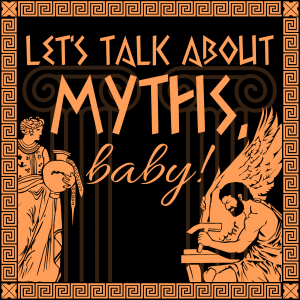
Let’s Talk About Myths, Baby

Courtesy of Liv Albert

In this podcast, host Liv Albert, tells you stories of various Greek and Roman myths with hilarious interjections of feminist takes on how ridiculous the characters of these myths really were. Her love for mythology really shines through, as does her ability to shake her head at the antics of various characters. If you find Greek and Roman mythology entertaining but also want a podcast that doesn’t overlook the problematic stereotypes present within them, this one’s for you.

All of these podcasts are available on Spotify and Apple Podcasts.