Home Blog Page 385

Your weekly SFU Horoscopes: February 8–14

0
An illustration of a girl with long flowing hair. Astrological signs and stars shine around her.
ILLUSTRATION: Marissa Ouyang / The Peak

Aries: It’s frustrating to know that people are too cowardly to admit that they’ve been madly in love with you for years. Take action into your own hands. DM your exes, your best friend’s dad, that one kid from your high school math class that wore a Squirtle hat every day of his life, and tell them that you are expecting— nay, demanding— a love confession. That, or investments for Dogecoin stocks. 

Taurus: Your 2015 Instagram bio was probably “Kanye taste with Drake feelings.” But your Drake feelings aren’t going to save you when you realize you’ve spent all your money on skincare and nothing on a gift for your SO. Here’s an idea: snatch some flowers from Ronald Reagan’s grave. Regifting has never been so anti-establishment.

Gemini: Love is in the air, Gemini, and you’re wearing a mask. The stars say it’s time to talk to someone new. Take inspiration from what you know: say you have a clogged pipe and can’t pay a plumber, or apply for a job as a middle-aged woman’s pool cleaner.

Cancer: The stars have a very special message for you, Cancer. It reads: “Get in a relationship immediately. I don’t care if it’s with that weird person on Hinge who wanted you to see his pet Kay.” . . . I think my star translation got a little convoluted. If you see Kay . . . WAIT

Leo: You have a vast array of choices this Valentine’s Day. Who will you choose? Maybe you’ll Zoom with your classmate from the third grade who gave you their Charizard card? Well, the last one is great if you wanna catch ‘em all: the best starter and COVID.

Virgo: You have rules, Virgo. Leave a room cleaner than when you walked in. Be cautious about lovers. Yet, something about that buff, bald man makes you want to risk it all. For Mr. Clean, you’d be willing to be just like his products — all-purpose.

Libra: Timothée Chalamet? That skater boy in your Zoom class who is most certainly sending “u up?” snaps during a war crime lecture? You don’t need them. It’s time to realize your worth and stop searching for unattainable skinny white boys, just make them yourself. There are Tim Burton claymation tutorials on YouTube.

Scorpio: Want to make some quick cash? Become ordained at www.lonelyministers.com and spend your February officiating weddings! You get to make $5 each time and you can repress your overwhelming desire to shoplift the entire Valentine’s Day chocolate section at Shoppers Drug Mart. Who needs Smarties when you’re such a smartie?

Sagittarius: Ah, Valentine’s Day. Today, while couples are cuddling at home, you can live out your mermaid fantasies (sort of) when you free the lobsters from the supermarket. Get your heist tools: an oversized coat, a bucket of water, and a seashell bra.

Capricorn: Reality shifting is all the rage on TikTok, Capricorn. I know you’re realistic and practical and all that, but give it a shot! Close your eyes and let your reality shift over to whatever anime you’re obsessed with this week. Maybe in the 2D world you’ll find someone to love you.

Aquarius: When it comes to romance, your dream relationship is the one in Beauty and the Beast. You just want a partner who will let you wander around their castle and read every book in their enormous library. It also doesn’t hurt that you have a thing for furries. 

Pisces: You’re equipped with some frog-shaped chocolates, a rose bouquet, and a handmade card that you’ve learned calligraphy for. Now show up on the doorstep of your pre-pandemic Tinder match from last March. Yeah, they ghosted you, but they also complimented your ass. You can’t let a love like that go.

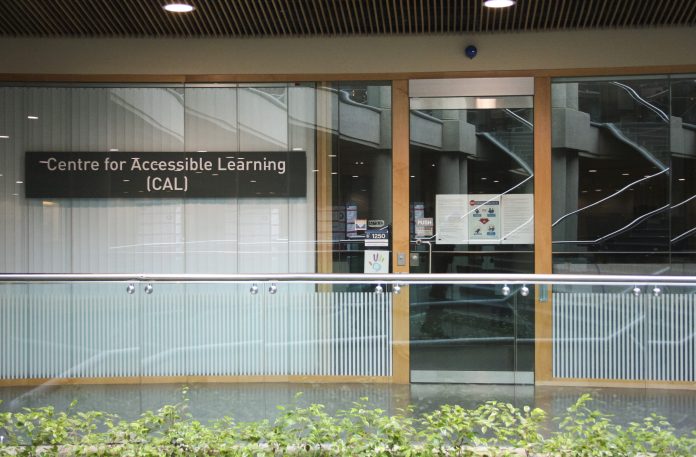
SFU’s Centre for Accessible Learning is not accessible

1
Think twice before going to CAL for learning accommodations. PHOTO: Gudrun Wai-Gunnarsson / The Peak

I recently delved into the process of obtaining learning accommodations from SFU’s Centre for Accessible Learning (CAL). But I was shocked to learn that receiving support would require weeks of my time and energy, and would only force me to settle for the absolute bare minimum. These services that are intended to promote equity in learning are overly bureaucratic, limited, and lack sensitivity with vulnerable cases; in short, they are inaccessible.

In October of last year, I was hospitalized for a psychiatric condition, which caused me to miss a week of classes and severely impacted my ability to keep up with my courses. However, despite a letter from my family doctor and an ER psychiatrist, I did not have enough documentation to register with the CAL. Nonetheless, I met with one of their advisors. 

However, I came out of the meeting frustrated by the inaccessibility of receiving accommodations, and entirely overwhelmed by the amount of information thrown at me. Like many students, I did not have the privilege of being able to see a private psychiatrist to provide me with the necessary documentation, nor did I have the time to get in touch with a psychiatrist at SFU before the registration deadline. So I did what a CAL advisor urged me to do: I dropped all of my classes. The situation was out of my hands and it was made very clear to me that I should just “wait until my condition improves” to enrol in courses again. 

I know I am not the only student who has dealt with these circumstances. Serena Bains, an SFU student and member of the SFU Disability and Neurodiversity Alliance (DNA), revealed to me that the CAL appeared to be the only option at SFU to receive learning accommodations. But when they spoke to members of DNA, “everyone had recited how inaccessible accommodations were.” They explained that obtaining documentation was not worth the hassle to “receive hardly any accommodations.” This is the same reason that prior to my hospitalization, I had never reached out for support, and it seems like the reason many others had not as well. 

Bains further explained how they had also encountered trouble with receiving immediate accommodation after being hospitalized. 

“I thought that my situation was dire enough that CAL would have to provide me with significant accommodations. I entered the centre visibly upset and was told that I needed an appointment and that I couldn’t speak to an advisor.” 

While Bains managed to provide enough documentation to receive an appointment, they were told that they could not receive accommodations unless they went through SFU’s Health and Counselling Services (HCS). 

This bureaucratic process and its necessity for students to “prove” their condition creates a barrier for those who require accommodations, but do not have access to diagnostic privileges. It is significantly counterintuitive to expect students with disabilities, like those with psychiatric disabilities, to complete long and complicated processes just so they can have the same opportunities for academic success as those without. This aid is a necessity for students, yet SFU treats it as though it’s a privilege. 

I can see why these extensive requirements for documentation are needed — to prevent students who do not have disabilities from making false claims. But it is ableist to expect students with disabilities to just “push through” the excessive documentation process, especially when their case is particularly sensitive or complicated. Besides, if a student is struggling enough to falsify claims for support, that should be enough grounds to at least receive some help, documentation or not.

Bains elaborated that when they finally received documentation from HCS, they were “provided with 13 pages of highly sensitive and triggering medical records.” They noted how the paperwork was re-traumatizing and included documented quotes from healthcare professionals that criticized their character. It is entirely unfair that a process intended to support students can become an emotionally triggering ordeal. Students should not have to relive trauma, or feel as if their condition is being invalidated to receive minimal accommodations like access to lecture recordings or 15 extra minutes to complete an exam.

I am lucky enough that I was able to gather the right documentation in time for the Spring semester, but many are not in this position. Some students are limited by their ability to deal with the CAL registration process and cannot actively advocate for themselves. Some are even discouraged from attempting to register, or are expected to accept that they will not be able to receive all the help they need. At the end of the day, the CAL’s services are intended to instill equity at SFU but this is impossible if these very services are inaccessible.

Your favourite class group chat

0
Illustration by Momo Lin/The Peak

Jan 21, 2021, 4:20 PM 

Vicky created this group.

Vicky named the group EDUC 112 Babes 😍💅

Vicky added You, Howard Menzuck, and 27 others to the group. 

Vicky: Hi everyone, please add anyone I may have missed! I’m so excited about our first assignment being due soon, how exciting is that?! Looking forward to this semester and connecting with all of you 🥰 oh . . . and the upcoming assignment! I’ve started it. It’s not too bad tbh but it’s hard with working and my other six classes. Have you guys started? I’ve started it.

Vicky: Also if everyone could fill out this non-anonymous survey about family relations and bodily functions for my BUS 200 class that would be really appreciated! It’s a little personal, but I promise I won’t even judge your answers. Including your SIN is optional

Howard: Yo is this the chat for CRIM 201

Howard left the group. Vicky added 6 others to the group.

Jan 22, 2021, 2:21 AM

Julie: Hi guys! The instructions for this assignment are kinda confusing, does anyone know how many words it’s supposed to be? When is it due? MLA or APA? Do I write my own name at the top? If I sacrifice one of my Zhu Zhu pets, does that count as a hands-on application of course content? Thanks in advance 🙂

Jan 22, 2021, 3:50 AM

Sam: (image attached: SYLLABUS_EDUC112FINALFINALFINALLL.docx)

Jan 22, 2021, 6:30 AM

Julie: hello…? Is anyone gonna provide me with direct answers here?

Bentley: Anyone in HSCI 114? Can’t find the group-chat anywhere 😢

Vicky: No. 

Vicky removed Bentley from the group.

Jan 22, 2021, 5:03 PM

Evan: Is there class today? 

Jan 22, 2021, 6:15 PM

Evan: I wasn’t at the lecture today. I had food poisoning for 27 minutes, well I thought for sure I did after I burped and it tasted weird, ya anyway what did I miss? Can someone personally go over everything with me? I know the lecture is recorded, but I prefer it this way.

Evan: what’s the assignment thing? Is that for today? Anyone got a Sparknotes link?

Jan 23, 2021, 3:25 PM

Kaitlyn: Hi friends! 💕 I know everyone is suuppppeerr stressed with an assignment being due tomorrow and all. I totally feel ya 🤣 🙌 I just did not want to pass off the chance to tell you guys about a really great business opportunity! Within a week of being with VegaSlim I have become my own boss and an entrepreneur. Message me if you’re interested! 💘 

Jan 23, 2021, 3:45 PM

Kaitlyn: Can someone send me pictures of their notes from the past three classes?

Jan 23, 2021, 5:55 PM 

Kendra: So apparently the assignment has to be done in Latin script and needs to include at least a couple of children (I think) as sources, for like educational purposes or something like that? 

Vicky:  What?! I didn’t see that on the syllabus. I already handed mine in yesterday after working for 10 hours, wow. 

Kendra: Oh yeah my friend told me, don’t think it’s on the syllabus haha. 

Julie: omg emailing our prof right away to ask about this!

Jan 23, 2021, 6:15 PM

Kaitlyn: Just want to say that VegaSlim products are NOT laxatives. I know it says that on the box, but I swear that’s a lie. All VegaSlim products are completely vegan! 💗

Jan 23, 2021, 11:56 PM

Dina: It says on the syllabus that the maximum word count is 2000 words, but I have 1999 . . . I’m really nervous. Actually, my entire body is shaking and I’m profusely sweating. I’m clammy everywhere because of how nervous I am. Should I email our prof and ask if this is okay?

Julie: not sure, I would send a couple of emails just to be 100% 

Jan 24, 2021, 11:58 PM

Shnev: IS ANYONE ELSE HAVING TROUBLE WITH CANVAS??? I HAVE ONE MINUTE TO HAND THIS IN, SOMEONE PLEASE HELP I’M LOSING MY MIND 

Jan 25, 2021, 12:03 AM

Shnev: i just remembered i’m in ontario and in est

Keep MMIWG in your hearts this Valentine’s Day

0
The annual Valentine’s Day march is in its 30th year. Photo courtesy of Maggie McPherson via CBC

Indigenous women are leaders, community developers, Knowledge Keepers, negotiators, and life givers; they are the heart of their Nations. In order to fulfill these roles, Indigenous women require space, health, and safety, all of which are increasingly difficult to find under the intersecting forces of gender-based violence, poverty, and racism. The federal government has shown lackluster effort in implementing an action plan to protect Indigenous women and girls from these inequities. This is failing communities, and missing and murdered Indigenous women and girls (MMIWG) across Canada, and there should be greater recognition of that.

The Women’s Memorial March was started by Indigenous women in Vancouver’s Downtown Eastside (unceded Coast Salish territory) in 1992, and is held every Valentine’s Day to honour MMIWG affected by continuing injustice. The March seeks to bring attention to the disproportionate loss of Indigenous women from the Downtown Eastside. 

These issues have received more wide-spread attention since the 2015 announcement of an official inquiry into MMIWG. Indigenous women and girls are 12 times more likely to be murdered or go missing compared to all other women in Canada. The 2019 National Inquiry’s Final Report on MMIWG acknowledges this truth through survivor and family member testimonies. The report also cites systemic, oppressive structures, such as “specific colonial and patriarchal policies” and “intergenerational trauma and marginalization,” as causes. 

In adherence with this report, the federal government affirmed to carry out a National Action Plan by June 2020. COVID-19 restrictions have hindered this plan, but they have also been making it more difficult for Indigenous women and girls to receive support. The Downtown Eastside’s means of support (including housing) are decreasing, leaving Indigenous women and girls at most risk of gender-based violence. It is more than apparent that the Canadian government needs to take action to protect Indigenous women and their right to thrive.

Repeatedly, Canada’s many levels of government wait for a tragedy to occur before they appear to take Indigenous peoples’ concerns seriously. Indigenous leaders were forced to make their demands for an action plan clear once again following the racial abuse and death of Joyce Echaquan at a Quebec hospital, and the downgraded charge for Barbara Kentner’s murderer. Ontario Regional Chief RoseAnne Archibald recently called on “both levels of government to develop a strong joint action plan with First Nations” to protect Indigenous women. The Chair of the First Nations Women’s Caucus, Anna Betty Achneepineskum, also advocated for the government to “address the patriarchal systems, policies, laws, and attitudes that contribute to systemic racism, discrimination, and injustices.” Clearly, the government is not prioritizing the effective collaboration needed to support Indigenous leaders and their communities.

 It is disheartening that reconciliation efforts by the Canadian government continue to be neglectful of true action.

Investigating and addressing the “the causes of, and remedies for, the disproportionate victimization” of Indigenous women and girls is one of the 94 Calls to Action made by the Truth and Reconciliation Commission (TRC) of Canada. The TRC was initially founded to acknowledge and document the injustices caused by the legacy of residential schools. Ultimately, the TRC is a means to educate Canadians and work towards reconciliation, and their calls to action have been active since 2015. In December 2020, three former commissioners of the TRC expressed concerns that implementation of these goals by the government seem to be “slow and uneven.” It is disheartening that reconciliation efforts by the Canadian government continue to be neglectful of true action. 

The Women’s Memorial March, in its 30th year, continues to be an opportunity for Indigenous families, communities, and organizers to grieve lost ones. It commemorates where these women were last seen or found. The March is largely led by Indigenous women, who should always be the leading voices in this arena. For non-Indigenous allies, the March should implore us to commit to raising awareness, support, and resources in the hopes that those affected or who have lost a loved one can heal. We should keep missing and murdered Indigenous women and girls in our hearts this Valentine’s Day, as it doesn’t seem like the Canadian government will. 

All genders are welcome to support Indigenous women and girls in the march which begins at noon on Hastings and Main Street. Social distancing and masks are required to participate in-person. RSVP to [email protected] to join the SFSS Women’s Centre’s company. Donations to the Downtown Eastside Women’s Centre help to fund the march.

Toxicity in online yoga communities and how my Master’s degree helped me break free

2
Photo courtesy of Charlotte Gravert.

I vividly remember the first time I went to a yoga class — the kind of yoga that contemporary pop culture treats as the image of youth, answer to good health, and the quick fix for all kinds of humanitarian ailments. Picture skin-tight leggings on slender flexible white women under 40 popping into downward dogs in their lunch breaks from their corporate jobs. I only learned deep into my yoga journey that yoga can be much more. 

The studio was conveniently located in downtown Toronto, had a small coffee shop in the front, and a shiny washroom with product placements in the back. I was awkwardly sitting on my yoga mat in the midst of girls warming up their splits, regretting I didn’t show up earlier to catch a spot in the back. Going through the poses, all I could think about was my sweat dripping on the mat. It turned my already gripless mat into a water slide that I feared wouldn’t be a soft landing for my face when my hands decided to fly off the edge. To make things worse, not a single mat around me showed the same scattered sweat stains. 

Despite the fact that I hated being in this first class, I kept coming back. Locked in by the imminent promise of achieving what the other girls had and armed with an overpriced yoga mat, a new outfit, and a safe spot in the back, I pushed through sun salutation after sun salutation. On the surface, I was getting stronger and more comfortable but beneath, I felt as if I was continuously falling short. 

Thanks to the yoga community I had immersed myself in, I was never short on new products and practices to fix myself with. In the yoga studio, as well as online, I had teachers and fellow students who were never short of recommendations. With each purchase, I was getting a little closer to the promised yogaland, a place where everyone is beautiful and healthy! With each investment into my future self, I was becoming a more authentic version of myself. 

Or that’s what I thought. It took me years to realize that wasn’t necessarily the case. 

My toxic on-off relationship with yoga became habitual. Whenever I didn’t practice for a while, whenever I didn’t make it all the way through the 30 Day Challenges, I always found a new thing to buy myself new credibility with. The mantras of the classes fueled my self-obsession: “Thank yourself for showing up on your mat today, for making this time for yourself.”

It wasn’t until one lucky day in the midst of lockdown, that the stars of academia, life, and yoga aligned.

I never had the money to spend on a full yoga teacher training (we’re talking at least $2,000) but I always had an eye on it — the ultimate self-investment. During the lockdown,  Yoga Alliance allowed for yoga teacher training to be held online, and many of them were much cheaper than the in-person retreats. I looked for about a month before deciding on a training that felt authentic, despite the site design looking a bit rough. Honestly though,  I couldn’t argue with the $300 price tag. 

At the same time, I was doing a directed study about the culture of neoliberalism to complete my MA coursework. While reading into the sociological effects of late stage capitalism — in particular how we turn ourselves into enterprises in constant competition with one another and are stuck in a never-ending pursuit of becoming better, faster, and stronger — something clicked. I wasn’t practicing yoga at all. I was practicing neoliberal self-discipline, using yoga as a vehicle for the ideology that is currently destroying our planet. 

It was through my Master’s degree that I finally found a yoga practice that truly served me, and in some way, my environment too. Creating a practice that wasn’t only about myself, but one that shifted to focus on a better together.  I was no longer faking a good conscience through acts of consumer activism, but instead taking up the work to protest the things brands falsely made me believe were being fixed through my purchases. The way I practice yoga now differs immensely from the workouts I previously put myself through. Now, when I practice yoga, I practice listening — listening more carefully and moving more intently.

Yoga is a diverse practice with its philosophical roots dating back 1000s of years to India. But yoga’s multivalent forms are currently under attack by one dominant neoliberal ideology. Yoga is commercialised, stripped of all cultural heritages, and utilised as a tool for people to cope rather than react to late capitalism. Whatever kind of yoga you practice, it is important to check your alignment, not just physically, but also ideologically. For me, this meant taking my practice and yoga teacher training not as an opportunity for personal gain, but as an opportunity for education. Education as a tool for true empowerment, breaking free from the fake positivity and toxicity sold under the “yoga” label. 

Not falling for the toxicity in today’s yoga culture means not supporting the blunt ableism, ageism, racism, and sexism. It means creating a yoga culture where teachers are paid living wages and the practice is accessible. Where BIPOC and LGTBQ+ practitioners are heard and have the same platform as heteronormative white yogis. Yoga has become a site of gentrification and gatekeeping, and it is up to all of us, to practice what we preach and hold space for one another in a system that is largely failing us. 

One step at a time. Today, this might look like listening to the amazing podcast by Tejal Patel and Jesal Parikh Yoga is Dead. Or choosing your next YouTube yoga class from a BIPOC teacher.

Moving Towards a More Equitable Housing System reimagines the rights and lives of renters

0

A group of statisticians, advocates, urban planners, real estate developers and a journalist walk into a Zoom meeting and ask each other what’s wrong with the housing market. Turns out, a whole lot. 

Moving Towards a More Equitable Housing System: Is Vancouver a City for Renters? featured a head-spinning web of insight with a panel of experts on various aspects of the housing system. The event was designed not only to inform participants on housing policy, but also for the City of Vancouver to hear what their experiences have been as renters, and what they would like to see put in policy as a result. 

The event was moderated by director of SFU’s urban studies program Meg Holden and Globe and Mail journalist Kerry Gold, both of whom had plenty to offer to the discussion.

The baseline of the discussion was promptly given by Andy Yan, the director of the City Program at SFU and described as a “fixture” in the Vancouver housing discourse. He opened the event with a statistical deep-dive into the Vancouver housing market. He described Vancouver as a city of renters, with at least half the city being occupied by renters since 1971. 

Even more damning were the statistics comparing the percentage of income levels in Vancouver households  to what income brackets were for the housing units approved in 2017 by the City. Housing units were significantly disproportionately developed for those earning over $80,000, compared to the amount of housing units developed for those earning minimum wage. 

According to Leilani Farha, the UN’s former special rapporteur on the right to housing and global director of housing non-profit The Shift, it’s the treatment of something that should be a right as a commodity. The main concern she sees in Vancouver, she said, is one that she’s seen all over the world in her work: the financialization of residential real estate. 

“Financialization is a very particular phenomenon, at least with the work that I do on it and my concerns,” she described. “It really is where housing is viewed as an uber-commodity. I’m not talking about the individual who buys a house and is chuffed when their property value goes up. I’m talking about institutional investors, the private equity firms, the asset management firms that have millions of dollars invested in residential real estate.” 

Farha explained that when multinational corporations scoop up real estate,  they evict the current tenants to do surface-level renovations and pass along the cost to the tenant to pay for with a higher rent. All of these factors make housing increasingly unaffordable and companies all the more profitable. 

William Azaroff, the CEO of Brightside Community Homes Foundation, is engaging in the kind of flipping activities Farha describes, but in an non-profit, well-intentioned way. His Vancouver-based non-profit flips apartment buildings to make them more densely populated and more accessible for different kinds of support, like seniors, people with disabilities, or those fighting addictions. The developments are also designed to be “deeply affordable” with different payment plans depending on the renter’s circumstance. Azaroff emphasized that housing is “not one-size-fits-all” and that there should be diversity beyond single bedroom walk-ups.

The housing-as-rights perspective was echoed by a fellow activist Barbara Steenbergan, a member of the Executive Committee of the International Union of Tenants, who joined the call with an ecstatic presence from Brussels, Belgium. She was in Brussels for a reason: the European Parliament just adopted a hard-fought resolution that legislates EU countries to recognize housing as a human right. After hearing statements from renters in both the chat and in the form of video messages, she opined that Vancouver should adopt similar policies to protect renters, like social rent policy which protects renters and often makes it a preferable option to owning.

According to Steenbergan, Vancouver is “at the beginning of that wave” in regards to these policies. Furthermore, it’s more than just policy making. She encouraged those in the audience to add their voice in advocating for change. “This must come from the ground up [ . . . ] from the organized crowd, from the tenant’s union, from all these people fighting for more affordable housing. [Only] then [will] you have the chance to fight for more affordable legislation,” she said.

Putting into action a similar belief from a different standpoint was Squamish Nation councillor Khelsilem, who has been involved in the Nation’s development of housing. “We continue to press all levels of government to repatriate and return land to the nations in the spirit of, as article 27 speaks to specifically, the repatriation of Indigenous lands that have been confiscated or taken, or to be compensated for our lands that have been confiscated.”

Khelsilem continued, “We are choosing to enter into the real estate area because so much of our natural lands [and resources] have been alienated from us. Our lands have been completely obliterated for the city to exist. [We] see [entering into the real estate area] as an opportunity to not just succeed in our territories but also give back to our city. We believe that the delivery of a significant amount of housing is what we need in our city.” 

Khelsilem was also quick to note that while the City of Vancouver clearly needs to invest more in affordable housing and reduce the zoning barriers for non-profit housing, the federal and provincial government also need to chip in. 

“One of the things that’s challenging about that [income-housing equivalent] graph [referenced earlier] is that anyone with an income of under $50,000 or below, the amount of subsidies that are required to pay of mortgages for financing or the costs of construction and new, affordable housing, the subsidies to ensure that those rates are required for those incomes, require huge amounts of subsidies form other levels of government to pay for that.” 

He pointed out that while the onus is on the City of Vancouver, it does not rest solely on their shoulders. “The reality is that federal and provincial governments need to step in to be able to increase the amount of housing at those levels.” 

Gold also mentioned that the BC provincial NDP are funding social housing at the same rates they were in the 1990s, without accounting for how underfunded they became during BC Liberal rule and the measures needed to restore their ability to operate.

When it comes to the perspective of investors, however, these approaches to the market are seen differently. That became evident in the perspective of Evan Siddal, president and CEO of Canada Mortgage and Housing Corporation. He argued the important role of investors, as he essentially acts as Canada’s highest authority on what federal housing is and isn’t funded.

Keen to “stick his neck out there to give people something to shoot at,” he laid out what the federal government is doing to create a “massive supply of housing.” Through its $22.7 billion Canada Housing Benefit, which partially subsidizes rent, and the Rapid Housing Initiative, the federal government  aims to provide shelter for unhoused people in major cities and was oversubscribed by 200%. Sounds effective, right? The other panelists had questions.

“I know I have a question,” said Gold. “So the low-interest rate construction program, from what I understand is that they only have to provide affordable housing for ten years. What happens after that? Does it convert to market rate after they choose to?” 

“It can,” responded Siddal, “The minimum threshold is ten years but we’re receiving significantly more competition through this money.” 

Gold’s concern, echoed next by Farha, was that these developments would soon convert to unaffordable rates as soon as the threshold expires, and that the housing may be temporarily affordable but not secure in the long-term. After all, the “any supply is good supply” approach offered hasn’t historically worked in Vancouver when the supply isn’t affordable. As Farha put it, these affordable units aren’t truly affordable and sustainable until they are protected from private investors. The success of the Squamish Nation contradicts Gold’s claim about the approach never working in Vancouver before. Squamish’s latest developments provided affordable, high-density housing.

After some terse moments of debate, Vancouver City Councillor Sarah Kirby-Yung was finally able to connect her video to the call to offer thanks for the opinions expressed. In a closing message, she talked about how they need to integrate all these different approaches into how they develop their housing plan. Kirby-Yung told the audience that she prefers to think of Vancouver, not as a city for renters, but as “a city for people.” This seemed to negate the urgency of establishing better tenant rights and access to affordable housing in favour of a message of vague unity — not unlike the disproportionate funding of upper-class housing units that occurred in 2017. 

The majority of the event, watching as an outsider felt like being a kid sitting at the adult dinner table for the first time. The specific issues to which the panelists spoke felt familiar and resonated, yet the concepts and policy quibbles felt levels above common knowledge. However, the talk emphasized how housing is one of the most crucial issues of our time and understanding how rights-based approaches, the roles of outside money and the zoning laws that get in affordable development’s way is key for any citizen to make a housing system that works for everyone. 

The event was hosted by the City of Vancouver, SFU Public Square, SFU Urban Studies, SFU Vancity Office of Engagement, and the SFU City program. 

SFU heroically lowers their own bar even further with P/CR/NR grading for electives

0
PHOTO: Gudrun Wai-Gunnarsson / The Peak

After almost a full year of online classes, SFU finally wakes up from its slumber and decides that yes, students do deserve some help with their grades during a pandemic, but not too much help. 

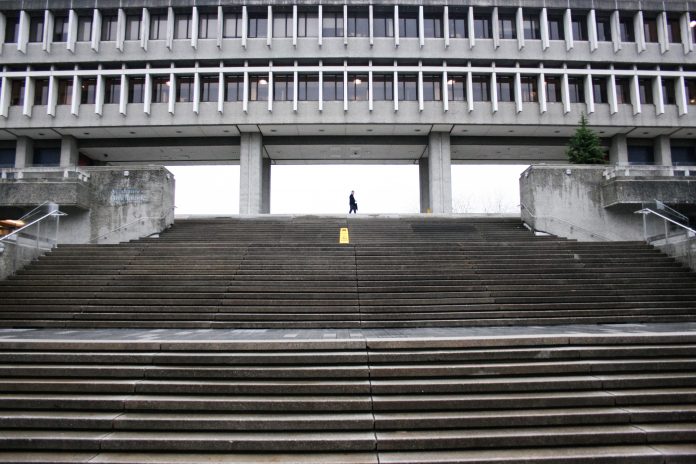
On January 14, SFU students received a mass email sent out by Student Services with the subject line: “Approval of temporary pilot P/CR/NC undergraduate grading system.” Truly putting the “brutal” in “brutalist architecture,” the university’s administration approved the comprehensive grading scheme . . . but only for elective courses. 

This was not the first time that SFU took students’ hearts on an emotional roller coaster ride, hinting at some sort of salvation only to unbuckle the safety belt and throw them out of the upside-down carriage. The legacy continues of students pushing the giant boulder of the Tuition Freeze movement up the hill only for SFU to increase the incline of that hill and the tuition. This hurdled boulder of a tuition hike was all in the name of the “overall health of the university.” In the end, all students were left with trust issues and a fear of the Indiana Jones movies.

How does the pass/credit/no credit system work for Zoom-fatigued students? Well, if you are among the fortunate ones who receive C- or higher, then congratulations! You get a P grade! If you are in the group of students who, due to a global health crisis, could not get a grade of C- or higher, you receive a CR grade. Imagine, your grades slipping? Surely not! This is the same level of education, after all. Just ask the four unopened emails to my TA about an assignment due in two hours. Last, but of course not least, the NC grade for those who did not pass the course(s) ensures no decreased GPA and no increased morale for next semester at all.

Keep in mind that these grades only apply for electives, and that P/CR/NC grades cannot be used for, say, scholarships and financial aid purposes. Fear not, the university’s gatekeeping bursaries are here to the rescue! But not for you, or you, or you . . .

At this point, this program is so full of holes it cannot be called a band-aid for suffering students since that would be derogatory towards band-aids around the world. 

With this program, students will now enjoy the privilege granted by the Senate to have 12 elective credits that will not affect their grades. Already taken your electives? Well, here’s a box of tissues — wait, sorry. You have to pay for those.

With this monumental decision from SFU, the school has proved itself to be empathetic for students’ struggles and is willing to reform, as long as those reforms are approved by the Senate and aligns with the interests of the university, of course. SFU’s astonishing ability to do absolutely nothing for its students is so prevalent that for the sake of efficiency, writers at The Peak are brainstorming for an automated response for every time SFU passes a new policy that does nothing for students while giving themselves a pat on the back. Suggestions welcome.

Celebrities are not our friends

0
The Kardashian-Jenners’s power to pandemic party shouldn’t be defended. Screenshot courtesy of @kimkardashian via Instagram

It’s easy to feel like we know celebrities. We see them through our screens more often than some relatives, receive constant digital updates on their existence, and can access details of their lives fairly easily. All of this exposure can lead to shock and defensiveness when these people aren’t as they appear. 

Dua Lipa and the Kardashian-Jenners attend pandemic party after party, the Woody Harrelsons of the world spread conspiracy theories, and predators like Chris D’Elia harass minors from verified accounts, to name a few façade-breaking acts. Waves of fans inevitably arrive online to defend each one of these celebrities because they truly believe they know these people, and that the rest of us just don’t get it. The truth is, the public doesn’t know celebrities at all, and it’s time that we stop pretending we do.

Any glimpse of their life is filtered through layers of expensive publicists and lawyers until the audience sees exactly what these professionals want. Even when it seems otherwise, like in the case of these pictured COVID-19 parties, it still reflects a larger carelessness. So what if it gets leaked? Fines mean nothing to the rich. Worst-case scenario, sponsorship deals fall away for a few months until publicists and brands collectively decide their clients can make money again. 

The problem isn’t that the punishments aren’t harsh enough, it’s that the world has agreed celebrities are immune to practicing decency. The public has decided that maintaining celebrities’ status as modern gods is better than making sure they don’t cause harm. That doesn’t just mean elevation in the public eye; it’s elevation in every way. Even if one of these stars gets COVID-19, they’ll likely receive the best healthcare money can buy while the workers maintaining their lives aren’t afforded that luxury. This is the case on film sets, particularly in the COVID-19 epicentre of Los Angeles, where low-level workers are forced to risk contact with the virus in order to keep making a living. 

This isn’t to say that having some sort of parasocial relationship with celebrities is always bad. Having someone to be happy for without dealing with the complexity of a relationship can be comforting. It’s just wise to be aware that what we see is part of a carefully constructed image, often tied to the profitability of commercial brands and production deals. If celebrities are less savoury than who they pretend to be, their fans or the public don’t have a duty to defend them. With no truthful transparency to draw from, what is there to defend?

That being said, emotionally cutting ties with public figures can sting. For example, one of the most public reckonings from the pandemic involved Ellen DeGeneres. Her non-existent communication to existing staff during COVID-19 swept a workplace culture of sexual harassment and intimidation into the public eye. Growing up, I watched The Ellen DeGeneres Show every morning before school. I credit her presence as an out lesbian as a big part of my own self-acceptance and realization of my own feelings towards women. Knowing that the person who gave me that freedom had harmed so many people hurt. But it felt better to acknowledge who she really was than to hold onto a false belief in her crafted persona. Though I already knew Ellen wasn’t the warm, sunny person she portrayed herself to be, it still felt like a blow.

However, with great power, comes great privilege. Ellen spent her career telling people to be kind while doing the exact opposite behind the scenes, but it doesn’t always have to be that way. Celebrities have used their immense privilege to fund projects that amplify underrepresented voices without any press motivation, taken risky and bold public stances in the name of justice that resulted in career ruin, and called out the entertainment industry itself to make it better for those who come after them. If that public privilege can be used to make a dignified entertainment industry, the system can move beyond idolatry into a more equitable, humane form of mindless fun. 

Powerful and wealthy celebrities are ultimately not the public’s friends. It’s part of their job to make it feel like they are, and the most well-known ones are the best at it. Those same people, however, get to live by a completely different set of rules than anyone else as long as they keep up that charade. The harm that comes from this power means that they’re not worth our screen time.

Four things that would’ve protected the Capitol better than their security

0
PHOTO: Louis Velazquez / Unsplash

Okay, so, the whole Capitol coup happened, right? And the officers supposedly protecting the place kind of . . . didn’t. They did take some selfies with the largely unmasked hoarde and let the place get destroyed with little action, though. I feel safer already!

With that terror residing in the back of your mind, here are five alternatives that most certainly would have done a better job defending this governmental building.

  1. The Chihuahua Next Door 

My neighbours have a chihuahua and it means business. 

How do I know this? Well, I hear it every time I walk past their house. It’s come at me a few times. Someone leaves the gate open, and it careens out into the street, screaming at the top of its tiny lungs, because barking isn’t enough. It’s also broken into our yard. Twice. We have to coax it out, which is easier said than done, because it’s a chihuahua. 

All it knows is rage. You can run at it, it’ll keep barking. It lives for the thrill. No one will ever get past it.

“No” isn’t a word it knows. “Stop” isn’t a word it knows. “Please dammit if I have to watch you get hit by a car I’ll never forgive myself” isn’t a phrase it even somewhat registers. And sure, it doesn’t know a lot about American politics, but that doesn’t seem to be a prerequisite for being in or near the Capitol any time, anyway.

2. My Long-Dead Tamagotchi 

Tamagotchis. If you were cool, you had one. If you were really cool, you had several. If you’re super cool(?) but also super nostalgic and have a hard time letting go of material possessions, you probably still have one kicking around. Anyways, mine has pink stripes. 

What if I told you it could be a tool for fighting Trump supporters? 

I mean, think about it. The Tamagotchi is a symbol of everything these people hate: it was created outside of America, it’s from after 1995, and to win you have to care about a living creature besides yourself. Simply by existing within their proximity, it’s going to send these wannabe revolutionaries spiralling. 

And if all else fails, it makes a kickass projectile. 

3. Literally Any Girl With A Selfie Stick 

This one’s great, because it’s more about the aftermath. 

In the moment, nothing attracts these violent people more than potential attention. I mean, look at them. They were streaming, they were taking selfies, they were updating their stories left and right. So, like, they’ll take a selfie opportunity. Of course they will. 

So, here’s the kicker: share your selfies and start asking if anyone knows their faces. It shouldn’t be that hard, because it’s not like any of them are wearing masks. The Venn diagram between Capitol Trumpies and COVID-19 deniers is basically a circle at this point — specifically the circle in the centre of the biohazard symbol. 

4. Jack Dorsey, CEO of Twitter 

I know what you’re thinking: “Buddy, that’s a guy who can’t even get his website to ban Nazis.” 

And, sure, Twitter is home to folks who fit barrels of vitriol into 280 characters at most. If there was some sort of a Nobel Unrest Prize for someone who innovated new ways to sow chaos, Jack Dorsey would get it for unleashing Twitter upon the world. Just look at K-pop stans.

But also, they did ban the guy that many bigots worship. Big Boy Bigot. King Bigot, if you will. Dorsey more or less exiled the former President of the United States from his digital kingdom. You know, the then-president of the country he lives in. His platform did that. 

Do I still think most people could grab him by his scraggly quarantine beard and throw him a good few feet? Yeah, I do. But I also know that Trump supporters see this man as the slayer of their god. Put him in front of the Capitol and nobody’s getting through. They’ll stop to scream profanities at him and get tired.

The Bright-er Side: Hallmark movies are showing more diversity

0
ILLUSTRATION: Siloam Yeung / The Peak

I usually refer to watching Hallmark movies as my guilty pleasure. Not because they’re super cheesy, but because of the network’s history of prioritizing white, cisgender, heterosexual, and overall normative stories. However, with the latest batch of Christmas movies, I’ve noticed a significant change in the amount of diversity shown. 

In less than a year, Hallmark’s LGBTQ2+ representation went from plausibly deniable (two men dancing close together at a final party scene) to front and centre with actors Jonathan Bennett and Brad Harder playing the first gay lead couple in a Hallmark flick. For anyone interested, the title is The Christmas House, and it was by far my favourite Christmas movie of 2020. 

Bennett and Harder were not the only ones to make Hallmark history. Indo-Canadian actress Nazneen Contractor, star of The Christmas Ring, was Hallmark’s first South Asian lead. Vancouver’s Antonio Cayonne also became one of Hallmark’s first BIPOC leads with his role in Christmas in Evergreen: Bells are Ringing. 

Hallmark’s Christmas 2020 lineup also included Jewish representation with the movie Love, Lights, Hanukkah!, and interracial couples in movies such as Jingle Bell Bride and The Christmas Bow. The latter featured Lucia Micarelli, an American musician and actress who is half Korean — a noteworthy detail because I have never seen anyone distinctly East Asian as a primary character in a Hallmark film. After years of watching these movies, expecting to see mostly white people on my screen, I didn’t think that having someone who looked more like myself represented would mean so much, but it did. 

Obviously, Hallmark still has a long way to go in terms of diverse representation. For instance, while The Christmas House did have a leading gay couple, it also featured two heterosexual couples as part of the main cast. I would love to see a Hallmark movie in the future where an LGBTQ2+ romance was given more focus than a heterosexual one. Also, while there have definitely been more primary and secondary BIPOC characters lately, I would say that three quarters of casts are still white.

While I am disappointed that it took this long for Hallmark to stop casting the same rotation of white actors and actresses in their movies, I’m happy to see them making a conscious effort now. It’s better late than never, and I can now say, without embarrassment, that I’m a Hallmark movie fan.