Home Blog Page 279

Environmental imperialism: invasive species

0
A photo of English Ivy. The leaves are forked three ways, and abundant. White veins highlight the pale, heavvy green of the leaves.
English Ivy is a remarkably common plant, considering how it doesn’t belong. PHOTO: Anton Darius / Unsplash

By Luke Faulks, Staff Writer

While BC has made some important steps on Indigenous reconciliation, the process has been slow. BC’s apparent reticence to pursue reconciliation becomes more galling once one realizes there’s a piece missing from the conversation: environmental imperialism. Environmental imperialism can roughly be defined as the process of altering a native landscape to suit a colonial project. Alongside land usage in agriculture and energy sourcing, invasive species are a way colonies solidify their presence on foreign land.

Historian Alfred Crosby argues much of the influence of colonizers was due to their ability to alter native ecosystems. This process can be deliberate, like with the importing of decorative fauna (SFU’s epidemic of English Ivy), or inadvertent, as in the spread of rats. Even more difficult to classify are the impacts on the environment of the spread of European diseases, which weakened resistance and led to deaths among Indigenous populations during colonial expansions.

The impacts of early land-use changes still resonate today. Colonies were in part formed to cultivate crops and raise livestock — broadly; to siphon the wealth of the land. Often, this exploitation came at the expense of the native environment. According to author Mary Lyn Stoll, historic colonies are now “the largest exporters of grains and animal products once utterly foreign to the colonized landscape 500 years ago.”

Globally, cultures are influenced by the ecosystems that surround them. Whether by the types of foods that are available, the access to materials for crafting, or in the allusion to animal behaviours, culture and nature are closely linked. In importing invasive species and the subsequent replacement of native flora and fauna, we can see an uncomfortable parallel to the colonial mindset.

It’s worth asking, then, how do we incorporate the decolonization of landscapes into the reconciliation process?

On an individual level, helping remove invasive species can be a benefit, both for your community and to reconciliation efforts. The 2018 #Next150 movement, aimed at providing participants with concrete steps to support reconciliation efforts, suggested “learning about invasive or introduced plant species in your community or region.”

Further, learning about native species can help inform your choices when planting a garden or going grocery shopping. Although foods like wheat and beef are invasive, blueberries, corn, squash, and tomatoes all originate from North America, as do bison, turkey, and many types of fish.

Environmental imperialism is a dominant feature of colonial projects — the alteration of Indigenous territories is essential to the success of colonial endeavors, and continues to ripple through BC. Resolving the legacy of environmental imperialism will take time and effort. The least we can do is to start talking about it.

We need to care about the SFSS — and not just when they annoy us

0
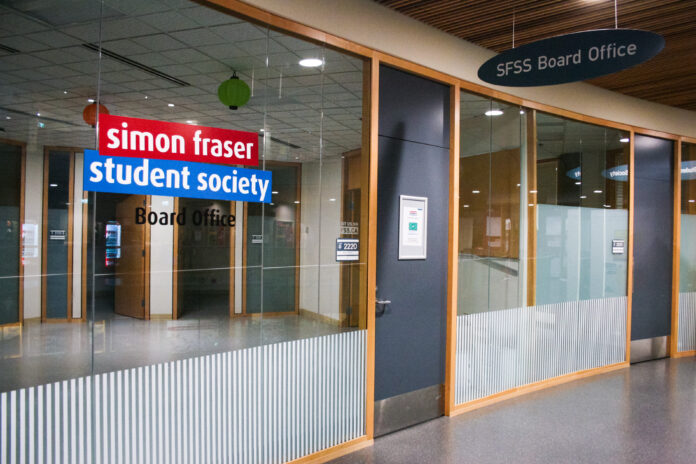
A photo of the SFSS board offices. The offices are empty, and it looks like the photo was taken in after-hours. Nonetheless, it does not seem that the offices are a lively hub of activity.
The SFSS does a lot to define student life, both off and on campus. PHOTO: Gudrun Wai-Gunnarsson / The Peak

By: Luke Faulks, Staff Writer

​​SFU students don’t seem to think about the Simon Fraser Student Society (SFSS) much. During the 2018 election, only 2,158 out of around 30,000 students cast a vote for SFSS president. The number of votes cast has consistently declined since then, reaching just 598 votes cast for the president during the 2021 election. That’s just 2% of the SFU student population.  

COVID-19 alone can’t account for this low participation — students are emailed electronic ballots for executive committee positions and referendum questions, which should negate any fears of in-person voting during a pandemic. Similarly, the fact that Gabe Liosis, the former president, ran unopposed in 2021 reflects that student interest has been low. Students are simply caring less and less about the SFSS. 

When students do care about the Society, it’s often because the SFSS has done something to make the student body angry. Just a few weeks prior to a failure to consult students on the SUB closure, the group sent out a letter calling on the university to increase student consultation when changing policy. The annoyance caused by this hypocrisy is compounded by opaque reasoning on the part of the SFSS when it comes to the building’s closure.

Early on, students need to be informed about what the SFSS means for their time at SFU. SFU provides a program for incoming undergraduates called “University Prep.” While the page has information for everything from faculty information to ways for student-athletes to get involved, it doesn’t mention the unique role of the SFSS. Students come into SFU unaware of the role the SFSS plays in their degrees, despite — among other things — the group’s enormous budget. The SFSS needs to advocate on behalf of themselves, for their inclusion in that introductory program. 

The SFSS plays a large role in student life at SFU. The SUB was a $65 million project dedicated to developing the student communities on campus. That its closure is controversial, or that its operating hours are mysteriously incompatible with student life is irrelevant — the building’s existence is a testament to the group’s power. Student money is spent on these projects, so it’s important that students are represented in votes and referenda — like the 2021 SFSS fossil fuel divestment proposal.

Not limited to infrastructure, the SFSS influences university decisions on a broader scope. With the goal of representing student ideals, the SFSS has lobbied for a clear evacuation plan in the event of a fire or explosion at the TMX tank farm (the only access roads on the mountain are adjacent to the tank farm, and could be inaccessible in the event of a fire), more rigorous financial support for students, and adequate reporting methods and resources for survivors of sexual violence. They serve as a platform for all the ways that student life could be improved, including the funding of events like puppy therapy, or the pizza bill of your student union’s movie night.

The SFSS, however, has more potential for enabling student engagement — and good reason to do so. A student advocacy group cannot accurately represent its members without the substantial voter turnout needed to keep it relevant. Representation can only come through student feedback; this demands better student outreach on the part of the SFSS to combat student apathy.

The SFSS further needs to start adapting its election campaigns to a post-COVID-19 world. A more concentrated social media campaign — forgoing the flyers that adorn a now periodically empty campus — would be a good start. Emphasizing giveaways alongside education as to how the SFSS affects students could further play a role in bringing the society back to the scrutiny it needs to stay true to its goals.

The SFSS is a hub for engaged students, a complicated bureaucracy, and often a scapegoat for students’ frustrations with SFU as an institution. Given, and yet somehow despite, all that, it’s worth a second look.

Escapism is healthy — in moderation

0
A person is reclining on a couch. The photo is taken over their shoulder, and we can see that they have a book open, a glass of wine, and a TV playing in the background.
There are an almost endless number of ways that people can escape reality. PHOTO: Allyson Klassen / The Peak

By: Twinkle Pethad, SFU Student

Escapism — the use of activities to temporarily transport us into a happier world where we have control over our actions and emotions, creates an illusionary pleasant atmosphere. Though moderation is needed, escapism is rather necessary to survive in this chaotic world where moments of peace can seem rare. 

As humans, we need a variety of activities to escape the monotony of our daily chores and negative situations. These situations can range from break-ups and bad days at work, to the heavier anxieties induced by things like the climate crisis and late-stage capitalism. We escape through unrelated and distracting acts such as reading, watching movies, exercising, scrolling through TikTok for hours, listening to podcasts, among others. 

Whereas most forms of escapism are crucial, positive, and uplifting in nature, some can be detrimental to our health and well-being. Some examples of negative escapism include drug and social media addiction in which we lose track of time and can remain trapped due to the high dopamine activity they cause. After hours and hours of engaging in escapist acts, we snap back into reality. We realize that none of the problems we were avoiding have disappeared. We have postponed dealing with our problems, but we weren’t able to delete them from our lives. After this realization, our anxiety rises. We are perplexed as we expected otherwise; we expected to become happy.

We successfully hide in a warm cocoon for a few hours. In the span of a few hours, our warm cocoon turns cold. Once again, we are shivering.

This isn’t to say that we don’t deserve breaks. We are social beings who need several hours of rest to perform, and we seek entertainment to remain youthful and joyous. However, too much of everything can be disastrous. Often, I lose track of time when I’m stressed about life — all I feel like doing is cuddling in a cozy blanket and spending entire nights binging on Gilmore Girls (my newest escape). What I forget is that all the problems that I am trying to escape remain unresolved. 

So how do we solve our avoidant habits? In my opinion, there is no solution. That’s because escapism itself isn’t a problem that needs to be solved (to identify the problem, we might instead look towards pressures of constant productivity). Escapism is personal to each individual — while I may need weeks of a break to rejuvenate, my friend might need only three hours of escapism to jump back into reality. 

The division between escapism and reality is not always so clearly defined, either. Our personal escape mechanism eventually penetrates and fuses with our reality. For example, while reading is a form of escapism, over the years, it has also become part and parcel of my daily life. This simply means that reading is now an integral part of my daily life. The same could apply to any form of escapism. However, caution is inarguably needed when we start to rely too heavily on avoiding our problems. At the end of it all, we do have some responsibilities to maintain, and their neglect can compound stress. If we continue to struggle in setting boundaries, we might consider seeking professional help to develop a sustainable balance.

What Grinds Our Gears: Morning classes are absolutely brutal

0
A photo of someone asleep at a desk. Their notes are open in front of them, and they are using an open book as a pillow. It is light outside, with the semblance of noontime.
Waking up early is really not as easy as some might have us believe. PHOTO: Andrea Piacquadio / Pexels

By:Annalisse Crosswell, SFU Student

It took months of pandemic life to create a sleep pattern resembling what others might call normal — having a circadian rhythm somewhat synchronized with the sun — and yet I could never find a way to maintain it. Some may feel early mornings are a blessing, but I am certainly not one of them.

Over the summer of 2021, I picked up work in a bar. After months of working past midnight, it seemed brutal that I was expected to be on campus by 8:30 a.m. for a required course. Even more shocking was the expectation that I would be in a state to participate in discussion, despite having woken up at 7:00 a.m. to get to class. 

While I enjoyed the horror of my classmates as I caffeinated myself back to alertness by gulping down Red Bull between my morning lecture and noon tutorial, I truly struggle to maintain concentration when I’ve been forced awake before ten in the morning. Like many of my classmates, I have a commute time of over an hour to get to the Burnaby campus — and don’t often get to sleep past my preferred time.

Of course, this is not to say that morning classes should be eradicated. Apparently, there are morning people who wouId be equally disadvantaged if they had to study later in the day. So, while I understand that writing an essay at 2:00 a.m. may not appeal to all, for other students who think two in the morning is the perfect time to start an essay, morning classes are a wrench in the wheel that is studying.

The SUB should not have been closed

0
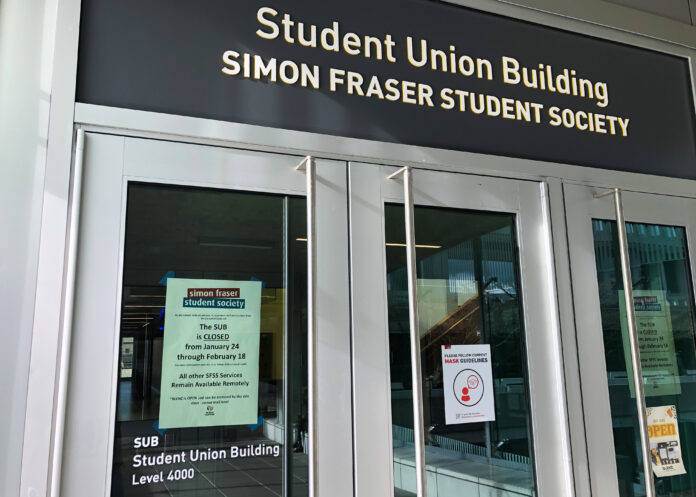
A photo of the Student Union Building. The doors are shown with a note from the SFSS taped to the inside, reading: “The SUB is closed from January 24 through February 18.”
The Student Union Building will be closed until at least February 18. PHOTO: Allyson Klassen / The Peak

By: Craig Allan, Peak Associate

On January 20, the Simon Fraser Student Society (SFSS) informed the student body the Student Union Building (SUB) will be closed from January 24 until further notice. After some debate, the SFSS agreed to re-open discussion around the building’s usage on February 18. 

The closure is building-wide (though Blenz Coffee has remained open) for all but staff, who are given distancing regulations and are encouraged to work from home. This means SUB services — like the Health and Dental information office — will be only accessible online. The entire building will be off limits to the students who not only pay dues to the SFSS but financed the construction of the SUB. Citing concerns that SFU is not acting with the necessary caution to preserve student safety, the SFSS decided that closing the SUB was necessary to prevent the spread of COVID-19. 

So their best course of action for this is to abandon their members and leave them with less space on campus? Less available study space means students will be forced into closer proximity with one another, increasing risk of disease transmission. The SUB is a building filled with seating and is one of the biggest indoor congregation areas at SFU Burnaby. To lock students out of the building is an abandonment of the students — the very members that the SFSS claims to care so much about.

Despite concerns about students’ lack of social distancing and mask-wearing habits, it remains true that the SUB is an optional space. No students were required to be there. Any non-employee uncomfortable with the proximity of those in the building was entirely able to find space elsewhere on campus to study or socialize. Though employee safety is paramount, there are less drastic methods of curtailing disease spread — like having employees work from home, or closing employee spaces to the public and implementing the same distancing procedures that are now in effect. 

Closing the SUB weakens the SFSS’ statements that they represent student interests. The ongoing discussion by students upset about the building’s closure points to a disconnect with the SFSS’ actions, and the ideals of the student body. Though the SFSS surveyed students for their thoughts on a return to in-person education, there was no commentary solicited on the usage of the SUB. Student input on the closure of the SUB took the form of last-minute surveys by individual student unions, leaving little time for the feedback that should have surrounded such an impactful decision.

SFSS can say that they are closing the building because they care about the students, or because they don’t support the university’s decision to re-open so soon. But no matter their rationale, the results speak for themselves: SFU students now have less space for studying, services, and congregating. It is not by the decisions of the university, but of the Society whose main purpose is to advocate for students.

Self-care amidst an endless workload

0
A balance-type scale. It is sitting on painted wooden slats in a variety of bright colours. The scale is polished golden, and stars adorn its base.
There’s more to life than our academics. PHOTO: Elena Mozhvilo / Unsplash

By: Charlene Aviles, Staff Writer

We’re encouraged to constantly be productive regardless of the cost. Overwork culture promotes overworking as “a status symbol that puts us on the path to success.” As students with the ambiguous goal of “academic success,” it is always possible to study more. This runs the risk of taking over our lives. Without proper rest, productivity will be temporary. Setting clear boundaries between work, school, and home helped me establish the work-life balance necessary for my well-being and success.

Concerned about students burning out, a teacher once gave me advice: “It’s not about the quantity of hours. It’s about the quality of hours.” Her motto still resonates with me, especially as a working student. With a schedule busy with academic and work-related responsibilities, a balance between school and non-academic priorities — like fitness and friends — is key to sustaining my mental health.

During my teenage years, I neglected my hobbies in favour of my studies. It wasn’t until the break before transferring to SFU that I was reminded of life outside school. Going forward, I was determined to maintain a work-life balance.

Re-engaging in activities like dance were a source of joy. When a friend invited me to perform at her birthday party, I jumped at the opportunity. As part of the traditional Filipina debut, pairs perform a waltz called the Cotillion de Honor. The weekly practices not only helped me stay active, but also keep in touch with my friends.

When universities transitioned to remote learning, my work, school, and home environments overlapped. During online classes, I would work, study, and rest in the same room, so I needed to develop clear boundaries to maintain a work-life balance. By scheduling regular breaks and through the use of a few tricks — weekly snack dates with a friend, or a study-exclusive playlist — I was able to keep my schoolwork from overflowing into the rest of my life.

In the pursuit of academic success, it’s tempting to prioritize work over getting enough sleep. However, chronic sleep deprivation has several consequences, such as difficulty focusing and an increased likelihood of anxiety and depression. By setting clear boundaries to separate my study time from the rest of my life, I established a healthier sleep schedule. While being better rested helped me concentrate for longer and complete my daily to-do lists, the reinforcement of my mental health was invaluable.

Phrases such as “time is money” glorify work. Similar to a neverending workload, people are faced with the pressure to work long hours, risking an addiction to work. Money and time can both be spent and saved, but it’s equally important to invest time into other priorities, such as health, fitness, friends, or family.

Three sweet, limited edition drinks to warm you up this winter

0
Collage of three hot chocolates taken at different angles: one flatlay, one portrait, and one pour shot
Treats from Metro Vancouver’s Hot Chocolate Festival. Image: Gudrun Wai-Gunnarsson / The Peak with photos courtesy of Sara Wong

By: Sara Wong, Arts & Culture Editor

Broyé Café — “Black Eastern Storm”

Photo: Sara Wong / The Peak

I love Vietnamese coffee, so ordering the “Black Eastern Storm” was one of the easiest decisions I’ve made at a café. This drink combines Vietnamese coffee with dark chocolate, so it’s very rich and decadent. Broyé, formerly known as Baker and Table, pairs this Hot Chocolate Festival offering with a Vietnamese coffee-flavoured melon pan (Japanese sweet bread). You can substitute it for another flavour though, like the taro mochi melon pan pictured here. There’s quite a wide variety, but trust me when I say they’re all delicious!

Kafka’s Coffee — “Drove My Dulce to the Leche but the Leche Was Chai”

Photo: Sara Wong / The Peak

The drink name alone earns the staff full points for creativity. I was equally impressed by the blend of dark and milk chocolate, mixed with homemade dulce de leche and masala chai. It sounds like a lot, but Kafka’s struck the right balance between sweet caramel, intense spices, and chocolate. It also pairs nicely with the dulce de leche swirl brownie that’s served on the side. If you want to make the drink even more memorable, go to their Great Northern Way location and order it spiked with Baileys liqueur or Odd Society crème de cassis!

Temper Chocolate & Pastry — “Yuzu Haiku”

Photo: Sara Wong / The Peak

This is one of the most unique flavours in this year’s festival lineup. “Yuzu Haiku” is a milk hot chocolate with a shot of sake. Getting to pour the rice wine into the hot chocolate myself was a fun, interactive experience I wasn’t expecting. As for taste, the mellower chocolate allowed the fruity notes from the sake to shine. Temper accentuated this flavour profile with a citrus sugar rim and a mini yuzu sablé cookie. I was impressed with how smooth the drink was too. In my experience, artisanal hot chocolates can be really thick in consistency, so this was a pleasant surprise.

Hot Chocolate Festival runs from now until February 14. Check out their website for a full list of participating cafés and flavours.

Gondola town hall presenters share benefits of proposed project

0
Upper bus loop with buses in the background
Amirul Anirban / The Peak

By: Yelin Gemma Lee, News Writer 

On January 21, 2022 Simon Fraser Student Society (SFSS), Graduate Student Society (GSS), and SFU collaboratively presented a virtual gondola town hall where the external relations representatives from each group delivered a presentation. The presentations highlighted the benefits of the proposed Burnaby Mountain gondola transit project to various SFU community members and included updates on where the project is headed this year. 

The event was moderated by SFSS Board organizer Ella Droko. SFSS vice-president external and community affairs Matthew Provost was the first to present.

“The support for the Burnaby Mountain gondola project has been long-standing,” said Provost. “It also added an extra evacuation measure in the event of two exit routes on Burnaby Mountain becoming blocked, either due to weather or hazardous events simply because the Burnaby Mountain tank farm is actually located on campus as well.” 

He said the SFSS has been lobbying since 2009 for the gondola and believes the majority of students who rely on public transit deserve safe and reliable services.

Provost added the gondola is a sustainable solution to issues such as traffic congestion, population growth on campus, and limited parking on campus. He reported it would reduce greenhouse gas emissions by 1,700 tons per year and double the transit capacity of the existing 145 bus route, loading “2,600 passengers per hour per direction.”

“For the longevity of this project, it seems that this would be a more appropriate measure to address some of those concerns around overcrowding and population growth,” said Provost. Students and UniverCity residents should be able to access services off the mountain easier, he said.

Ruben Munoz, GSS director external relations, began his presentation by emphasizing the different barriers graduate students experience such as parenthood and workforce responsibilities. Munoz pointed out major issues GSS membership experience include inconsistent schedules, difficulties establishing a sense of community, longer commutes with practical terms and internships, and inconsistent transit with winter weather.

“We’re looking for more secure options. So therefore when we talk about community issues, these issues affect us at a deeper scale,” said Munoz. He pointed out additional and reliable transportation will have a positive impact on students’ mental health and sense of community on campus. 

Joanne Curry, SFU vice-president external relations and the institutional lead for the gondola project for the past eight years, was the final presenter.

Curry explained that over the past two years, TransLink has been addressing technical requirements such as impacts on sound and environment. She said there is a lot of data globally to support the viability and safety of the project.

The Georgia Straight reported the Burnaby Mountain gondola project’s most direct route was approved by the Burnaby City Council in a closed meeting on January 24. The next steps are for the Mayor’s Council on Regional Transportation to include the project on TransLink’s 10-Year Vision and Investment plan, which will also include consideration for funding the project.

Roya Pishvaei reflects on how SFU’s dance program helped her grow

0
Portrait of Roya at the beach with her eyes closed and head tilted up
Pishvaei’s passion for dance is all-encompassing. PHOTO: Mikela Vuorensivu Photography

By: Charlene Aviles, Staff Writer

For Roya Pishvaei, dance is more than a hobby; it’s a lifestyle. In an interview with The Peak, the vice-president of SFU’s Dance Student Union discussed her passion for dance and her dedication to the SFU community.

Pishvaei has loved dance for as long as she can remember. She’s tried various dance genres, ranging from Bollywood to ballet to street jazz. Her interest in SFU’s dance program was piqued at one of their shows, where she was blown away by the creativity of the performers. 

“I went to a dance show when I was in grade 12 for a field trip. And it was one of the most odd and engaging performances I’ve ever seen,” said Pishvaei.

The showcase pushed her to audition for SFU’s dance program. 

“I still had a lot of self-doubts though, and I think this really hindered my ability to perform to my full potential. Unfortunately, I did not get in, but I re-auditioned a year later having much more experience and training,” said Pishvaei.

After taking additional classes, she felt more prepared for the second audition and believes her determination helped her through the process.

“There was an interview, and I remember saying to the professors, ‘If you don’t accept me into the program, I’ll just keep auditioning until you do,’” said Pishvaei. “Ultimately, I think confidence is the key because nobody is going to be the perfect dancer. We’re all auditioning for this program because we want to learn and grow.”

Pishvaei’s commitment to dance goes beyond her classes. Her work with the Dance Student Union helps create community. 

“My interest started with wanting to bring people together through a really hard time,” said Pishvaei, referring to the ongoing pandemic. “I think dance is so much more than just performing. And it’s really up to us as dancers to inspire, and to cultivate very safe, engaging, positive environments for self-expression.” 

Hoping to help create these environments, Pishvaei wants to become an instructor. “I think that’s what motivates me; knowing that I can spread happiness through movement,” Pishvaei said. She wants dance classes to be a welcoming environment “where people can feel really free to not be judged and just enjoy dance for the sake of enjoying it and not feeling pressured.”

Her advice to new students is to be flexible with their choreography because it might change from its original design.

“You can always go back and change it. Creating a base for yourself, just like how you would write the intro and thesis to your essay. You create that base, but then you go back and edit it after you finish the rest of your essay,” she said.

According to Pishvaei, dancers are lifelong learners. All the time and dedication put into different styles at SFU helped her grow as a dancer. 

“I was thrown into the deep end, but in a way that pushed me to become so much better. And I think after four years, I’m a completely new dancer with a different understanding of my body,” said Pishvaei.

Top Ten SFSS executive team candidates

0
A hand dropping a voter ballot in a box
Your ballot — hopefully for Chase. PHOTO: Element5 Digital / Unsplash

By: Luke Faulks, Staff Writer

  1. Jane Hoo
    Not many people know Jane by her first name, but all our readers will recognize her as the person who designed those “Owl in area” signs last year during the scourge of intermittent owl attacks in Burnaby. Admittedly, Jane’s platform seems to be largely owl-based but we believe her proven track record of actual action in the SFU community automatically puts her as a top contender for this election.

  2. Reginald Trashpanda III
    Currently serving as resident food critic for The Peak, Reginald Trashpanda III is a raccoon of many opinions. “Our university is in dire need of culture, class, and taste,” claimed Reginald on his recent talk radio show. “Regretfully, the burden has come unto me in order to set SFU straight.” Despite the fact he is not an undergrad student nor human being, Reginald Trashpanda III has successfully registered with SFSS as a candidate and is polling fantastically in the Upper West Campus district.

  3. Brandon
    Much like Jane, not a lot of people know who Brandon is, where he came from or what his opinion on anything is. But that just may be what this university needs right now. After a term dominated by progressives, and a legitimate desire on both sides of the aisle to see politics become less divisive, why not go with the mysterious Brandon? Conservatives love him, Liberals are . . . largely silent on the issue, so what’s the harm?

  4. The ghost of Terry Fox
    He is absolutely livid no one put a toque or scarf on his statue this winter. So naturally, Terry has been awakened and is loose on campus looking for change. Terry will be both figuratively and literally running for Council this semester under the insistence that students start getting their spare winter clothes in check.

  5. E. Rex Sean
    An extremely real candidate who is more than just an unfortunate name. It is unknown any policies E. Rex is advocating this election or what their plans for office will be as most of their campaign has been promising voters they are a real person. However, multiple E. Rex Seans can be found across campus as their poster’s largely consist of a giant picture of their face and the campaign slogan “I won’t let you down.”

  6. Jeb Bush
    The last few decades haven’t been kind to the former governor of Florida. We don’t know why or how he enrolled at SFU for this but give the guy a break. He needs this.

  7. Koi Johnson
    Hailing from the remote “East-corner-of-the-pond,”  Johnson laid out her platform in a recent interview with Carp and Diver. Johnson has also emphatically requested to be seated far from “that raccoon” during debates. When asked to comment on these requests Reginald Trashpanda III stated he “would never lower himself to dining in the AQ pond.”

  8. Seymour Buttz
    Unlike E. Rex, this candidate is very much fake. But we still think it’s worth the vote just for the jokes.

  9. Chase
    Another unknown fresh off the streets, Chase’s campaign journey is truly inspiring. Although he doesn’t have any specific platform or policies, he does assure us he “had a life changing acid trip at Burnaby Mountain park that just made [him] totally like, understand . . . our entire reality.”  Everytime you see Chase, he’s holding a skateboard, wearing a cozy knit sweater, and sipping a bottle of homebrewed kombucha. He always asks you how you’re doing, he always genuinely listens and he always makes you feel safe. Vote for Chase.

  10. A literal change.org petition
    Let’s face it, activism is tough. While only about 40 students recently turned up to the class walkout protest, over 4,000 students signed the change.org petition. This candidate is running with the promise that all student society decisions will be made through petitions and the university will finally see deep rooted change(.org). “Over the course of the pandemic, we’ve learned to do everything digitally — why not activism?” the petition stated in its about section, with thousands agreeing. If you wish to vote for this candidate leave your name, and email address on the form then go to sleep assured that the petition will be sent  . . .  somewhere and do . . .  something.