Home Blog Page 240

Growing up unaware of my autistic identity

0
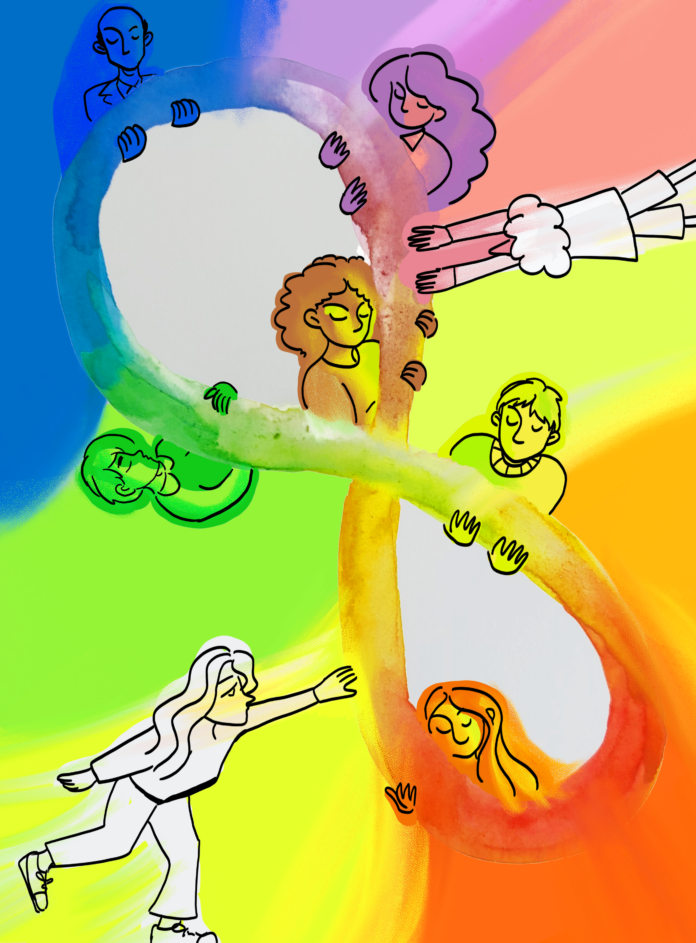
The infinity neurodiversity symbol with eight people around it reaching for it or holding onto it. The symbol spans the whole area diagonally with the middle in white and the edges of the image to the outline of the symbol being multicoloured.
Increasing awareness of neurodiversity helps reduce the stigma and help people feel less alone. ILLUSTRATION: Angela Shen / The Peak

By: Olivia Visser, Staff Writer

The concept of neurodiversity was not widely discussed when I was growing up. People were either normal or they were weird. There was no nuance to this conversation, nor any way to approach our differences without creating an “us vs. them” dynamic. When I was diagnosed with autism at 21, I realized all the quirks I saw as alienating me from society were just differences that make me who I am — differences that are actually shared by many of my peers. 

The word “neurodiversity” simply refers to the existing variation in human brains. Someone who is neurodivergent is someone who does not fit into the “typical” neurotype — the ability to navigate situations the general population has deemed “normal.” This word is commonly used to describe people with autism and ADHD, but it applies to all neurological differences, from learning disabilities to personality disorders and beyond. Neurodivergent people account for roughly 15 to 20% of the world’s population, but they lack support and representation because of the outdated belief that neurodivergence is an affliction to be overcome.

All throughout my childhood, I recall having felt a nagging sense of disconnect from the rest of the world. I’d watch from the outside while kids my age played together, never quite grasping how others seemed to so effortlessly just open their mouths and talk. I was a quiet kid in elementary school: polite enough to stay out of trouble and capable of getting decent grades without putting in too much effort. I was diagnosed with ADHD at 11, once I started struggling to keep up with increased workloads. Parents and teachers were well meaning yet dismissive, attributing my struggles with schoolwork and making friends to self-esteem problems. According to adults, I just needed the time to grow into my own identity.

But I didn’t know what my identity was. I had gotten by in life by copying the mannerisms of those around me. I know now this is referred to as “masking” or “camouflaging” and it’s incredibly common for autistic people, which is why we often go undiagnosed for so long. This is also what contributes to autistic burnout for many young people who reach a breaking point in managing the high demands of adult life. I experienced this after the shift to my first year of university, having increased difficulties with memory, energy, and overstimulation. At the time, I didn’t realize why it felt like I was losing my social and self-care skills. Now I know that the expectation of trying to fit into this neurotypical world is often what contributes to periods of additional stress for autistic people.

Without this terminology, though, as I grew up, I only knew that socialization did not come naturally for me. Adults viewed what they saw as shyness as something to be overcome, so I felt shame for still struggling as I approached adulthood. The few childhood memories I have of openly being myself ended in bullying. To peers, the “real me” was too loud, too weird, and too direct. Because of these experiences, I shut myself in, preventing my classmates from truly getting to know me. I didn’t know much about autism at the time, so I thought my difficulties with communication were because of something that needed to be fixed.

When you’re unaware of your autistic identity, you have no idea why the ins and outs of daily life are so terribly exhausting. For one, masking only gets you so far. I could spend all day rehearsing a conversation and practicing reciprocity in my head, but once things go “off-script” I’m always a deer in the headlights. I can remember moments from retail jobs where I’d completely shut down due to stress and find myself unable to speak. Other times, I’d miss customers’ blatant jokes or find it painful to look them in the eyes. I developed a persona as a clueless and clumsy young adult, and eventually discovered that subscribing to this naïve façade was the easiest way to get by in social situations. This absolutely devastated me because all I wanted was to fit in while being myself.

I realized I might be autistic while viewing a presentation put on by SFU Autistics United as a part of the training for a summer camp I was volunteering with. The presenter described the autism spectrum as a colour wheel instead of a linear line, and a light bulb went off in my head. According to this analogy, the way autism presents is varied depending on individual differences. Instead of having “severe” or “mild” autism, someone may have significant sensory processing difficulties but high social skills. Alternatively, someone may be fully non-speaking with restricted interests, yet might not have too many issues with overstimulation or social anxiety. There are endless ways to be autistic, just as there are endless ways to be human.

Autism is a developmental disability that over 1% of people are estimated to be born with. Our understanding of the condition has grown from the belief that those with autism require 24/7 support to recognizing autism is a spectrum where each individual requires varying levels of support.

For instance, I have trouble reading people’s intentions and difficulty initiating conversation. If an article of clothing bothers me, it feels like that sensation is amplified compared to my surroundings. I can’t talk straight or focus on anything else and it will likely take me a day to mentally recover. On the other hand, I have an impeccable memory, good analytical skills, and find it really difficult to be dishonest. All these traits are part of who I am and I’m proud of that. I don’t need my identity reduced by others telling me they can’t tell I’m autistic because I’m so “high functioning.” It’s not the compliment you think it is.

Because of the “high functioning” label, I missed out on a lot of crucial support in school and following my autism diagnosis. Traditionally this term was used by doctors to describe autistic people with an IQ over 70. Nowadays it’s often used to dismiss people’s struggles by suggesting that “fitting in” well enough is more indicative of the autistic experience than an autistic person’s own perspective. Nobody sees what goes on inside your head, so if you smile and nod believably enough then others will think you don’t need additional help when you ask for it. For a while I even identified with this term because I thought that if I wasn’t perceived as “high functioning,” I’d be seen as incapable. Sometimes all you want is for someone to recognize that you have limitations and be willing to work within them.

I avoided reaching out to a psychologist for years, because part of me was worried that I had things “too easy” to actually be autistic, denying myself the fact that suffering is dynamic and not a competition. Once I finally did reach out, the psychologist was certain I was neurodiverse. This diagnosis was simply a pricey confirmation of what I’ve always known deep down. I knew that something was different about how I think and socialize but could never pinpoint what it was.

Confirming my diagnosis was like finally giving myself permission to be who I truly am. It’s still a work in progress, but I don’t feel the weight of trying to be like everyone else so strongly anymore. I don’t even bother anymore to make eye contact when I don’t feel comfortable, because I communicate more effectively and genuinely when looking away. I’m less ashamed to have interests that don’t match my peers, and I know that the friends who are worth my time will be up front about whether they want to listen to my info-dumping, instead of making fun of me.

Understanding who you are is one of the most liberating feelings there is, but recognizing neurodiversity is only the first step in making our society fair and accessible. In recent years, the neurodiversity movement has turned into a self-advocacy movement led by neurodivergent people, intersecting with the broader disability rights movement. This is a valuable step towards inclusion in our society, as neurodivergent people are the best source of information on how to accommodate our diverse needs. Seeing and listening to us is the most effective way to show you care. Although I didn’t know what neurodiversity was as a young teen, I’m hopeful about the media’s increasing representation of disability justice. I hope more young people grow up aware of the fact that there really is no “normal.” Beyond that, I hope we work to embrace differences in communication instead of making personal judgments.
SFU professor Tim Takaro sentenced to 30 days in jail for opposing TMX

0
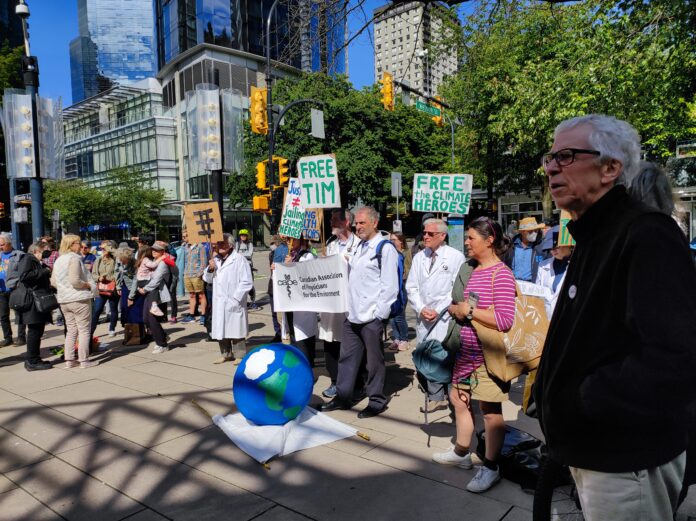
The photo is of a large crowd, gathered outside in Vancouver. They are holding signs that read, “Free Tim” and “Free the climate heroes.” Two people are holding a large banner that says “Canadian Association of Physicians for the Environment.”
A rally in support of Takaro was held on the day he was presented before the Supreme Court. PHOTO: Pranjali J Mann / The Peak

By: Pranjali J Mann, News Writer

On the morning of June 13, SFU health sciences professor Tim Takaro was presented before the Supreme Court pertaining to his violation of the injunction zone around the Trans Mountain pipeline expansion (TMX) project worksites. The injunction zone is a five metre perimeter around the TMX construction site made by the BC Supreme Court to prohibit protestors from impeding construction. 

Previously, Takaro had climbed a tree at the TMX construction site in Burnaby. He occupied a tent around “100 feet up in a tree inside a Trans Mountain worksite [ . . . ] for three days before being arrested,” according to Burnaby Now.

Dr. Kate Tairyan, SFU director of undergraduate programs for health sciences, expressed her disappointment at Takaro’s sentence.“This is not the right way to use public resources and public money. Jailing people who are warning us about the impact of climate change and global heating [ . . . ] as criminals is of course painful to see and witness,” she said in an interview with The Peak.

The construction of the TMX pipeline has climate activists concerned. “There is no absence of evidence that fossil fuel projects, especially expansion and proliferation of those projects, is harmful,” said Tairyan. “British Columbians know [ . . . ] that this project is going to hurt them, it’s going to harm them.” 

The Peak attended a protest that occured on the day of Takaro’s sentencing. The first speaker was Ruth Walmsley, a member of the Brunette River Six who said, “The Coast Salish people do not give their consent for this project.” On Takaro’s protest, Walmsley added, “I think he’s a hero, not a criminal [for] stopping new energy projects when governments fail to act to protect us from climate disaster.”

The next speaker was Dr. Linda Thyer from Doctors for Planetary Health. Thyer said Takaro, during his professional and academic career, researched air pollution in connection with burning of fossil fuels. She noted inhalation of dangerous gasses can “prematurely kill over 15,000 Canadians every year.” Dr. Shannon Waters, member of Stz’uminus First Nation and physician said, “Our ecosystems are our healthcare system. We must move away from our harmful and destructive practices and behaviors, to ones which will allow life to flourish.”

Tsleil-Waututh land defender Will George addressed the gatherers by thanking them for their solidarity, efforts, and presence. George was also previously jailed for violating the TMX injunction in May this year and is currently out on bail. “I don’t belong in that place [ . . . ] we don’t belong in there, we are not criminals.” 

SFU psychology professor Michael Schmidt explained both the SFU Faculty Association and Simon Fraser Student Society have opposed TMX. He said, “If the students say no, and the faculty say no, then I think it’s fair to claim that SFU says no to TMX!” He was also concerned about the risk to the SFU community from a “fire in the tank farm that would trap us on the mountain with no escape route.” He noted, “We are also concerned, many of us even more concerned, about the climate consequences of this pipeline and what it means for young people, our children, and our grandchildren.” He added people should be cutting back on fossil fuels, investing into renewable energy, and “providing generous support to individuals and communities who might be economically affected” by this transition.

Lastly, a member of the Youth Stop TMX initiative highlighted the need to increase education among youth regarding TMX this summer. Expressing concern on the expansion, they said, “I can’t even begin to fathom what the future is going to look like. It’s terrifying. But it’s not terrifying to the point that we sit down because that’s what they want us to do. We have to power through that fear and still continue to stand up and mobilize for us and for our children.”

On June 15, Takaro was sentenced to 30 days in jail for criminal contempt, after pleading guilty on June 13 before the court. The judge said their harsh judgment was to deter others from ignoring court orders. 

On the arrest, Tairyan said, “Canada is not going to maintain its reputation as a leading nation if it continues supporting this project.” She added, “Liquefied Natural Gas (LNG) projects, fracking, and anything that extracts fossil fuels is already proven by science that it is going to hurt and harm individuals, communities, livelihoods and our future and our planetary health, our health, public health, and planetary health.”

LNG projects involve turning raw natural gas into a liquid form by cooling it, whereas fracking involves drilling deep into the earth to release the natural gas from the ground. 

On the Trans Mountain website, their statement on environment notes “extensive work has determined environmental impacts and mitigation measures to reduce those impacts. Our goal is to protect the environment, have as little impact as possible and, where we do have an impact, ensure we return the land to a similar function. Ultimately, we can’t put the land back exactly the way it was.” Critics of the pipeline cite additional issues such as oil spills, toxic fumes, fires, and carbon pollution

Tairyan continued, “If we mess up [the environment] our children are not going and our grandchildren are not going to be able to have a livable planet.”

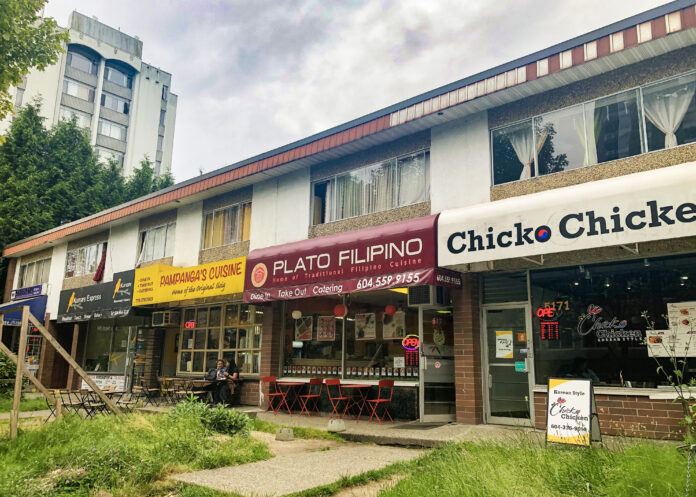
Filipino food hub at risk of displacement due to building development

0
The photo is of the businesses on Joyce Street. Plato Filipino's store front is featured.
The city has taken note of the public’s concerns and plans to relay them to the rezoning applicant. PHOTO: Allyson Klassen / The Peak

By: Chloë Arneson, News Writer

On June 21, Heritage Vancouver Society hosted Shaping Vancouver: The Joyce Food Hub virtual panel to discuss the rezoning of small Filipino businesses. These cultural cornerstones are facing displacement due to building development on Joyce St. near the Joyce-Collingwood SkyTrain station. 

The Joyce St. food hub was described as the “Filipino Heart” of Vancouver by The Tyee. Stores like Kumare Express, Pampagna’s Cuisine, Plato Filipino, and Kay Market offer “dishes from home” to the large Filipino community that lives in Vancouver. 

These mom-and-pop shops are currently at risk of displacement due to the city’s plan of building new condos around the SkyTrain station. In the City of Vancouver’s precinct plan, they noted this development would “transform the station into a vibrant entry point for the community and unify the neighbourhood.” The event explored how the Filipino community of Joyce St. is not ready to give up their sense of community, and are rallying together to support local businesses.

Hannah Balba was one of the panelists at the event and works as a settlement worker for Filipino families at Collingwood Neighbourhood House. When asked about how this development will impact the Filipino community that has built up around Joyce St., Balba noted “these changes are already happening.” 

In Canada, the Filipino community experienced more job loss than other visible minorities during the COVID-19 outbreak, as they contribute largely to essential services that cut workers’ hours, such as food service, retail, and hospitality. For the restaurant owners of Joyce St., taking care of Filipino frontline workers is a source of pride. Edith Malang of Pampanga’s Cuisine told The Tyee, “The frontliners, especially nurses, they don’t have time to cook.”

Balba explained many of the Filipino seniors have settled in this neighbourhood for decades, often came as migrant workers or live-in caregivers. Some places on Joyce St. offer remittance services, which allow immigrants to send money back home. “People are not only working for themselves here, but are helping to lift their families out of poverty back home,” Balba said. 

Gentrification is a process where a city displaces the current community in an urban area by building more housing and attracting wealthier people to that area. “Filipino seniors have stayed here precisely because it has been affordable, precisely because they have had access to these cultural assets, because of the access to these kinship relations,” Balba said. 

On March 29, Vancouver Council members voted unanimously to consider the importance of intangible cultural heritage in Vancouver and investigate what can be done to prevent such losses. The city also updated their website to reflect the feedback they received about the proposal, stating “the loss of these important cultural food assets would be a significant impact to the community and [ . . . ] City staff will be discussing these concerns with the project applicant.”

Bennet Miemban-Ganata from Plato Filipino told The Tyee, “I want my fellow Filipinos to do more, get involved in the community and reach their goals — not just settle for what is given to them.” 

What does your favourite bottled water say about your midterm chances?

0
A photo of a few bottled waters lined next to each other
PHOTO: Steve Depolo

By: Luke Faulks, Opinions Editor

The world is going to end in eight years thanks to climate change. Fortunately, the same corporations responsible for the planet’s rapid decline have elected to provide you with a means to survive the heat-induced collapse of human civilization: renewable energy bottled water. But your choice says more about you than your thirst and desires to mock people who’re too weak to get the cap off. Find out what your choice of water bottle means about your midterm chances this semester!

You’re exhausted after stamping out a fire at your second cousin’s gender reveal party. What refreshing water do you reach for?

  1. Voss
  2. Dasani
  3. Nestle Pure Life
  4. A cup of tap water, like a nerd

You’ve just woken up in the desert after a major bender. Despite knowing in the back of your head that your live-in butler Jean-Claude isn’t there to put some water on your bedside table like he always does, what do you instinctively reach for?

  1. Voss
  2. Dasani
  3. Nestle Pure Life
  4. An imaginary desert oasis, like a sucker

You’ve just graduated. Congratulations! Class of ’22. Just fantastic. Unfortunately, you’re now too poor to afford actual alcohol, and forced to resort to water. What do you go for to celebrate your win?

  1. Voss
  2. Dasani
  3. Nestle Pure Life
  4. Suck the alcohol fumes out of your burnout roommate’s N95 mask

You’ve just heard that Gwyneth Paltrow’s tasteless and colourless liquid cure-all is actually just water. What kind of water was she actually using?

  1. Voss
  2. Dasani
  3. Nestle Pure Life
  4. The tears of small children (I have money on this)

Which bottled water brand sounds most like a Spider-Man villain that’s going to get a sympathetic origin story in a new movie?

  1. Voss
  2. Dasani
  3. Nestle Pure Life
  4. El Muerto

If you chose mostly As, you’re going to switch your majors, so DW about the midterm

Why does anyone buy a bit of Voss? Not to drink, certainly. Voss is good for one thing and one thing only: showing off the cool bottle it came in when you were in high school. Ooooh, you have a water bottle that’s a cylinder with a thick lid. Get bent. In each of the above scenarios (mostly) about DRINKING WATER, you’ve selected a bottled water that’s 100% just about showing off. Time to re-examine your academic priorities and find something that’s more true to you.


If you chose mostly Bs, you’re your classmates’ go-to for cheating off mid-term exams

That’s right. Dasani? Nope. It’s actually owned by Coca-Cola. By shelling out for a Dasani every time you ache for refreshment, you’ve taken a stance in the long-running and totally deadlocked Pepsi versus Cola debate. You’re decisive. You’re the decision-maker. You’re the real thingtm. And your classmates know it. They’ll look at your scantron sheet when they’re vexed by a multiple choice question. Embrace your role.


If you chose mostly Cs, you’re crushing that Econ midterm . . .

. . . Because you’re a fucking monster. It was in the name. “Nestle.” Do your research. I certainly have. Nestle is bad. Like, child slavery bad. Water-thief bad. But keep on keepin’ on quantifying human emotions using numbers, Mister (I assume) Econ major.


If you chose mostly Ds, I really don’t know what to do with you. They weren’t consistent at all. 

But for god’s sake, don’t make a movie about El Muerto. He’s been in like two issues. Do Big Wheel! He’s a dude who turns to a life of crime and adopts the gimmick of . . . wait for it . . . driving around in a gigantic wheel. Can you say “Oscar?” Cast Joaquin Phoenix and you’ve got yourself a contender for Best Picture. And a cool hamster.


Need to Know, Need to Go: Black Edition

0
Blue and white calendar illustration on dark grey background with block text “Need to Know, Need to Go”
Summer isn’t over yet! Go show these community-based events some love!

By: Yelin Gemma Lee, Arts & Culture Editor

The Black and African community are coming out to connect and play this summer with these amazing summer festivals. With so much going on this summer, there is surely something for every member of these communities to celebrate their culture. Vancouver is the proud home to many incredible Black-owned and operated organizations that work to make space for Black community members in the city.

This list is largely inspired and made possible by @blackvanclub on Instagram, an arts and entertainment blog “connecting the dots for Black people in Vancouver.” Here are some of the events to get you pumped for the summer ahead:

Caribbean Days Festival 

This event, presented by the Trinidad and Tobago Cultural Society of BC, is the only event I knew of before encountering @blackvanclub on Instagram because my partner and their family look forward to it all year. They say it’s a place where they feel seen, safe, and celebrated. Celebrated as BC’s largest Carribean celebration, this event is free, open to all ages, and back after a two-year hiatus. The festival features a carnival parade, entertainment stage, special events, food and craft vendors, and children’s activities. Don’t miss out on this “weekend of tropical rhythm, cuisine, carnival and culture as only the Caribbean can offer.”

When: July 23 (10:00 a.m.–8:00 p.m.) and July 24 (11:00 a.m.–7:00 p.m.)

Where: Town Centre Park, Coquitlam

Afroqueer Pride Sunday

This is an event exclusively for Afro-diasporic, Indigenous, and Brown queer communities, presented by Afroqueer YVR. Afroqueer is a “Black run and Black centered community collective” that have strict community guidelines in place with safety and fun at the forefront. The event aims to uplift “Black/African artistic expression, the event highlights an all-Black DJ lineup, West African and Caribbean treats, drag performances and more.” Go celebrate Pride and community at the same time in this affirming safe space! Tickets are $25 and available through Eventbrite.

When: July 31, 12:00 p.m.–6:00 p.m.

Where: Beaumont Studios, Vancouver

Vancouver Black Block Party

Enrich your summer vacation with an event that aims to “share and express Black culture, talents, and creativity.” The event features a day full of live performances by brilliant artists including SFU alumni Bukola and lots of food vendors including Kula Foods. It appears that this is the event’s first year, but it has gained a lot of traction with over 1,000 followers on Instagram in a little over two months. The event is free with registration through Eventbrite.

When: August 27, 12:00 p.m.–9:00 p.m.

Where: Vancouver Art Gallery Plaza

If you are planning to attend the events listed as a non-Black person, remember to honour the space and those it is intended for by not taking up too much of it. Please also note that some events are exclusive to certain communities, and it is important that you seek out this information before attending BIPOC centered events.

The quintessential curriculum you will encounter as an English student

0
A photo of a prim scroll
PHOTO: Biker Jun

By: Kelly Chia, Humour Editor

My fellow beloved English students,

After having spent almost six years at this beloved institution, I have derived the perfect formula for the English class that everyone will experience in university. It comes down to five essentials. Now, I love literature, just like anyone else who found comfort in their English teachers in high school and only know how to express their feelings in long paragraphs. But sometimes, you just have to laugh through the pain, as an academic bonding exercise.

So let’s drink those 4:00 a.m. espresso cups in praise of our 2,500 word essays, shall we?

Shakespeare

Oh, of course this would include Daddy Willy. With any luck, you are learning about Hamlet, Macbeth, or King Lear, because for us edgy folks, his later stuff is really where it’s at. In terms of violence and existential self-analysis, that is. We love that here, as you’ll hear about later. But hey, it’s fun to read about fairies, too!

Cool 1800s author

Take your pick: are you studying Science Fiction? Postmodernism? The Romantics? Well, my favourite author, so far, is Mary Shelley. You go, queen, keep your husband’s heart in your drawer (allegedly) and invent the science fiction genre at 18. Love you, you goth genius.

Some racist author or work for “critical analysis”

For the sake of everyone’s education, it is necessary to critique and analyze our faults, especially as a nation on stolen lands. Obviously, everyone is equally affected by works discussing the horrors of colonization, imperialism, and brutalistic nonsense in an academic sense. For some reason, your classes seem to think historical racism is more relevant to teach than the current racism happening today.

There’s no victims in historical representation, because “it was so long ago,” the authors were geniuses, and your profs thinks trauma is a thought exercise. That’s totally why I’m reading Joseph Conrad and H.P. Lovecraft again. But if you get really lucky, you may get one (1) book about resilience and recovery. As a treat.

Bonus sexism for character development

You know how reading about racism provokes “interesting discussions?” Well, meet its equally prevalent friend: women experiencing violence or death in everything you read. And I mean, everything. Violence for literary meaning, as it turns out, is still disturbing.

Later, in discussing how there has to be more literature that doesn’t involve devastating minority figures, you might be told that devastation is worth “exploring.” It’s so important to have your opinions reflected in a hell chamber in the name of academic learning and “objectivity!” But it will serve as proper essay fodder for when you discuss how “justified” or unjustified their deaths were.

To be an English major is to exist in a state of dissonance.

Sigmund Freud

WHAT IS WITH THIS GUY. He is everything everywhere all at once, and not in a kind way. I never want to see Sigmund again. When we meet in Hell, it’s on sight. Psychoanalyze that, dream daddy.

If you’re wondering why after all this criticism I am still an English major, it is because I am extra. I will not hesitate to unleash a MLA cited 3,000 word paper on my loud opinions.

CONFESSIONALS: My summer of identity theft and unrequited love

0
An orange envelope with “confessional” written in cursive across it. The envelope is surrounded by a bunch of hearts.
Pour your heart out post-Valentine’s Day. ILLUSTRATION: Marissa Ouyang / The Peak

By: The Impersonator

Everyone has done it: enter the wrong classroom on the first day of school. You quickly grab a seat at the front and make yourself comfortable only to be caught off guard by unfamiliar jargon. Mitochondria, epinephrine, tropomyosin!? Most of these words you’ve never heard in your life — this can’t be right!

Yup, that was me at the start of this year’s summer semester. Anyone else would quietly see themselves out as soon as they realized their mistake, but not this human doormat! This is the story of how I people-pleased so hard that I ended up in a midterm for a course I wasn’t enrolled in.

I don’t like drawing attention to myself, and I certainly don’t like offending others. I wasn’t prepared to ditch BPK 110 after the TA, Frank, so enthusiastically complimented my pants. Who could abandon someone after that!? We had a connection. I don’t think either of us were prepared to throw away our blossoming new friendship.

I’m not a science person, so BPK wasn’t ideal for me. The textbook wasn’t that bad though. And besides, the more I showed up to office hours, the more connected I felt to the material. Beforehand, I didn’t know that there’s only one type of enzyme, that digestion actually occurs in the esophagus, or that Frank can bench 225.

It’s hard to form a genuine bond with your classmates when you’ve taken the name of the person who never shows up for class, Margaret Lee. I’d often get called upon and stare at Frank blankly, forgetting that I was Margaret in this sick game of mine.

Practice makes perfect, though. By the time our midterm rolled around, I’d become Frank’s favourite student and people were even asking me for study help. Frank reassured me that I’d do great, that I was so enthusiastic about the course there’s no way I’d fail.

There’s no way I could pass, either. I got ahead of myself. I forgot I’m an English major already enrolled in four courses, and this wasn’t one of them. Not only was I behind in every other class of mine, but by the time that fateful day was here, I realized there was no way I could take the exam.

I tried to tell the invigilator that I lost all my ID but they didn’t buy it for a second. Especially not when Margaret walked into the room and pulled out her student card. Oh God. You skipped every class for the first half of the semester! If university were a meritocracy then I’d still be in BPK 110. I deserved it.

Frank, if you’re reading this, I’m sorry you had to find out the way you did. I really thought we had something special going on, and if you can settle for an Arts student then I truly believe it’s worth a shot. I still remember our summer full of sweaty iClicker palms and heart-to-hearts about bile. I’ll be out ­­here, Little Mermaid style, waiting to be part of your BPK world.


The challenges of studying as a student with ADHD

0
a laptop, cup of coffee, notebook and pen, and phone on table
Navigating a university structure not built for your brain can be frustrating. PHOTO: Andrew Neel / Pexels

By: Nercya Kalino, Staff Writer

We’ve all seen the lists of study tips that advocate for strict schedules and the Pomodoro Technique, but most of these tips are designed for neurotypical brains, meaning they don’t work for everyone. The Peak spoke to Adelina Streletskaya to get her perspective as a student who has Attention Deficit Hyperactivity Disorder (ADHD), a “neurodevelopmental disorder that causes various hyperactive and disruptive behaviours.” A behavioural neuroscience student in her second year, Streletskaya spoke about study tips, what diagnosis means to her, and some of the habits she has developed over time for her academics.

Streletskaya explained she was medically diagnosed in September 2021 but first became aware of ADHD in the beginning of 2020. She recalled, “I would get random comments when I was younger from teachers saying that I would talk too much or that I wouldn’t pay attention.” This is an experience that some people may go through due to being unaware of the different ways the symptoms of ADHD can present. Additionally, while boys (or those socialized as boys) are more likely to display hyperactivity and impulsivity, girls (or those socialized as girls) are more likely to display symptoms internally, such as low self-esteem and inattentiveness. Thanks to TikTok, there has been a spotlight on women and girls being underdiagnosed with ADHD. 

Once Streletskaya realized what was happening in her brain was not her fault, it changed  the way she saw herself in academics.

Streletskaya explained she used to be a lot harder on herself for not understanding certain topics the same way her peers did. “I would get really confused as to why someone would be able to just go to a lecture and understand it right away but I wouldn’t be able to do that. Before my diagnosis, I was getting really frustrated with myself [ . . . ] but after the diagnosis it made a lot more sense and I started working on understanding it better and [having] self-compassion.

“It doesn’t mean there’s something wrong with me. My brain just functions differently.” The important thing is to be patient with yourself, she added. 

Now that she knows she has ADHD, Streletskaya has a different way of looking at her studies. She first dedicated time to research ADHD to learn more about the traits behind it. She realized teaching herself about the topic made it easier for her to be calmer with herself. Once she had a better understanding of what this meant, she changed her routine by giving herself more time with tasks and scheduling breaks to avoid being overwhelmed. 

Streletskaya explained she also takes medication for her ADHD. “I think my life changed quite a bit, especially when I started taking my medication,” she shared. 

“One thing that is misconstrued is that medication drastically changes something with people with ADHD and that suddenly your brain is going to be working a million miles an hour and that it’s going to solve all your problems, but medication is more like a band-aid,” she said. 

From her perspective, there is still a lot of adjusting that one has to do, in addition to medication, to change the tendencies that would lead to old habits. 

“Instead of working against my ADHD, I started working with it,” Streletskaya expressed. She explained paying attention to routines is important and understanding she’s a morning person has been key. Now, instead of leaving her studying until the evening, she studies in the daytime. She also recommends having different study spots for different subjects and emphasized the necessity of tackling one thing at a time. She gave the example of the commonly recommended Pomodoro Technique, which alternates set studying times and breaks, as a method that did not work for her. “It just didn’t work for me because that 15 minute break would turn into three hours,” she said.

Another way Streletskaya works with her ADHD is by understanding her symptoms and using them to her advantage. She explained she tends to talk a lot so she integrates this into her study routine by explaining what she’s learned to classmates or friends.

As contrary as it sounds, a routine is an important aspect of working with ADHD — even though ADHD makes it difficult to develop a routine. Medication may help, but for the most part, it’s about understanding how ADHD intertwines with lifestyle. It may be hard at first to let go of habits, but in order to progress with the help of medication, students should take time to observe and take note of the things that are difficult, and start making changes slowly. 

There are challenges in any journey that requires large life changes for a long term impact. For Streletskaya, comparing herself to others is one of those challenges. “It’s really hard to see someone who gets it right away and how it takes way less work for someone to get the same understanding as I do. It gets very frustrating because it almost feels unfair and like they have an advantage,” she said. To an extent, when she reflects on how much others can handle doing in a day, she sometimes feels as if ADHD is a punishment. 

“By the time I plan and schedule and actually study, I don’t have energy for anything else,” she explained.  

Although comparison is a thought process familiar to most students, it is important to remember achievements. A way to do this is by writing down accomplishments and putting them somewhere visible. It is easier to believe that priorities are out of control, but it comes down to finding important tasks and investing time into that. For Streletskaya, that is her academics.

Streletskaya suggested trying multiple ways to figure out what works for your study style with ADHD. She explained Google is the best place to start to find tips but SFU’s Centre for Accessible Learning is another option. She also suggested talking to other people who have ADHD and can validate your experience.

“Don’t be afraid to try anything and everything,” Streletskaya stressed.

SFYou: Dr. Jen Marchbank

0
Dr. Jen Marchbank looking into the distance. She has shoulder length brown hair with two blonde streaks framing her face and a black v-neck top.
There are many things to look forward to in Surrey that celebrate LGBTQ history and that Marchbank was heavily involved with. PHOTO: Simon Fraser University - Communications & Marketing / Flickr

By: Yasmin Vejs Simsek, Staff Writer

Editor’s note: The acronym LGBTQ will be used, as is used by the interviewee. This is not meant to diminish or neglect those identifying with IA2S+.

Dr. Jen Marchbank is a professor and graduate chair in the department of gender, sexuality, and women’s studies (GSWS), but her commitments don’t stop there. As a deeply engaged activist for the LGBTQ community, she inspires people to create the change they want to see through innovative teaching practices. On May 26, she received the YWCA Women of Distinction Award for Education, Training and Development. The award ceremony recognized 75 remarkable women in 14 different categories. The Peak spoke to Marchbank to find out more about her accomplishments and the upcoming Surrey Pride Festival she’s putting a lot of effort into planning.  

Marchbank credited her award to her work with NEVR, the Network to Eliminate Violence in Relationships. Marchbank attended the awards ceremony with her wife, Sylvie Traphan, and was thrilled to hear an anonymous donor matched the fundraising. “They had a target of raising $125,000 in that night [ . . . ] and then an anonymous donor matched it, so they got a quarter of a million for purpose-built housing for women and their children in Burnaby.”

 Speaking about the award, Marchbank said, “One of the things I was recognised for was my innovative teaching practice and using things like podcasts, intergenerational oral history, and my research in LGBTQ and trans youth and elder abuse.” Marchbank received the award not just for her work at SFU but also the work she does outside of it. She explained that includes the advocacy she does with Youth For a Change, a Surrey-based organization she founded with Traphan in 2012 to educate and support queer youth, “training them to become social justice advocates themselves.” 

Of all the projects Marchbank has done, one of her favourites came through SFU. “I really liked the elder abuse project that I did with Dr. Gloria Gutman from gerontology, Claire Robson from GSWS, and our artistic director at that time, then PhD candidate Kelsey Blair

“What I liked so much about the LGBTQ elder one was the intergenerational aspect of it, the community level aspect,” Marchbank said. The project was created with both Youth For a Change and Quirk-e, a queer collective for elders. When they began this project, they didn’t realize that no Canadian material existed on the topic. In the end they created Canada’s first educational materials on elder abuse in the LGBTQ community through the creation of five posters in different languages with different cultures represented and three videos. They also toured with members of the collectives to every health authority in BC. 

“And it’s still going! Claire, Gloria, and I are still working as a team and the project’s been morphed into the Indigo Project,” said Marchbank.

 Surrey Pride

This month however, Marchbank is busy with Surrey Pride. As secretary of the Surrey Pride Society, she is deeply involved in the festivities being held at and around SFU’s Surrey campus. She previously served as president and, under her leadership, they changed the name from Out in Surrey Rainbow Cultural Society to Surrey Pride Society. “I used to say after that, my favorite title is past president. I really like being a past president of Surrey Pride,” she joked. 

Marchbank’s journey with Surrey Pride started when she went to their AGM in 2011. Looking around the room, she realised that she and her wife were the only lesbians present. “So, I made a comment: ‘where are all the lesbians?’ Which got me noticed and elected,” she said. After a short hiatus, she is now back on the Board to help Surrey Pride get back on its feet after COVID-19 restrictions. Marchbank’s daughter, Jasmine Brodoer, and Traphan are also on the Board, and it’s jokingly referred to as “the family business.”

 There are many things to look forward to in Surrey that celebrate LGBTQ history and that Marchbank was heavily involved with. A three month long LGBTQ history exhibit, curated by Marchbank, just opened in the first week of June in the Museum of Surrey. Marchbank’s personal archive is now available through her donation to the Surrey Archives.

On June 23, SFU GSWS and Surrey Pride will host the Canadian premiere screening of Nelly Queen: the Life and Times of Jose Sarria, a documentary telling the story of the world’s first openly gay man to run for public office in 1961 San Francisco. The event will take place at SFU Surrey and registration is required. 

Surrey Pride Festival is happening on June 25 at Central City Mall Plaza in Surrey from 4:00–9:00 p.m. This year it’s being held both virtually and in-person with welcome in different languages to recognise Surrey’s diversity. In-person, there will be mobility accessible stages, ASL sign interpreters, and porta potties.

A full list of all the events at Surrey Pride 2022 and information on how to get tickets can be found here: https://www.surreypride.ca/pride-2022.

Exploring Canada’s racist history of drug prohibition

0
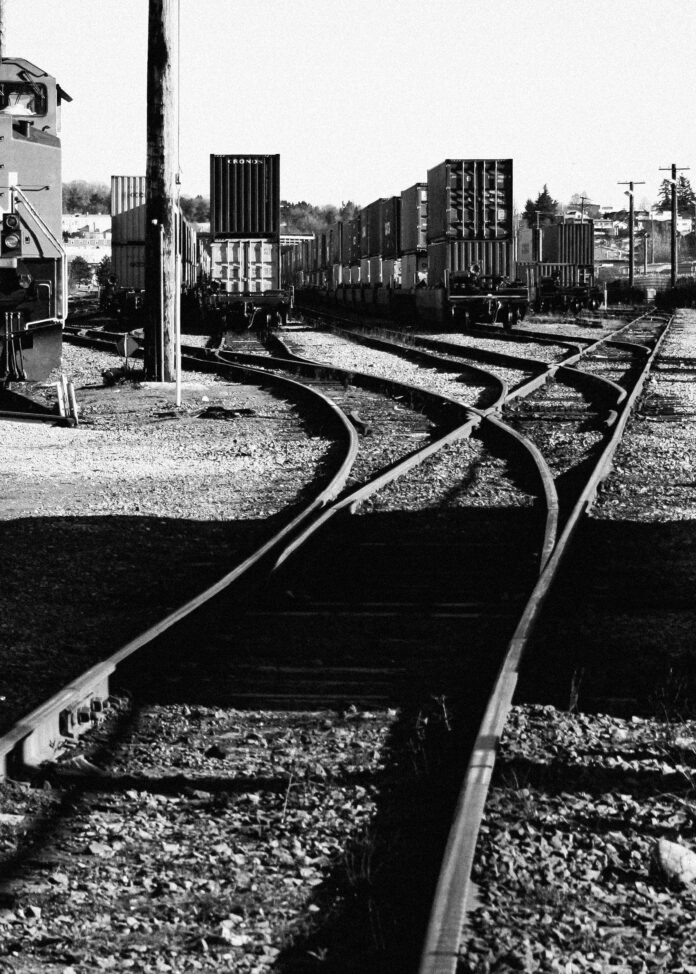
a black and white picture of railroads.
BCCDC and SFU health sciences hosted this seminar for Asian Heritage Month. PHOTO: Gudrun Wai-Gunnarsson / The Peak

By: Olivia Visser, Staff Writer

Content warning: anti-Asian racism, anti-Indigeneity, white supremacy, xenophobia, drugs, and drug-related death

This month, BC set out to be Canada’s first province to decriminalize the possession of small amounts of drugs starting January 2023. The decision is a landmark step towards freedom for many British Columbians, but we can’t forget the insidious history of racial discrimination that characterizes Canada’s drug policy. Shila Avissa and Cherlyn Manderson-Cortes addressed this history in their May 27 seminar, “Railroads, Riots and Reefer: A Brief History of How Drug Prohibition Shaped the Early Asian Immigrant Experience.”

Presented by SFU faculty of health sciences and the BC Centre for Disease Control, this seminar was part of a “larger harm reduction workshop” put together by the First Nations Health Authority (FNHA).

Avissa is an Indonesian social worker and researcher and Manderson-Cortes is a Filipinx clinical nurse educator. Having extensive experience and knowledge of drug policy and its impacts, they decided to deliver this presentation to “speak to the toxic and poisoned drug crisis” currently affecting British Columbians. BC declared its first public health emergency from drug-related deaths on April 14, 2016. Since then, 9,400 British Columbians have lost their lives to toxic and illegal drugs. “Those are just the deaths that we know about since we started paying attention,” Manderson-Cortes said.

Manderson-Cortes was first introduced to the “dark roots of drug prohibition” by Janine Stevenson from the FNHA. Drug prohibition, she said, is “a story of oppression and injustice that intersects with Black communities, Indigenous communities, and in the lives of many other racialized folks.” Manderson-Cortes highlighted that many Chinese workers used to work alongside Indigenous people who “were also exploited in the early days of BC’s natural resource industry.” The country’s first drug prohibition was aimed towards Indigenous people with Canada prohibiting them from consuming alcohol in 1868, an exclusion that continued even after the country-wide prohibition was lifted in 1921.

Honouring this intersectionality, they began the seminar with a land acknowledgement. Avissa showed the audience two photos of səl̓ilw̓ət (Burrard Inlet), describing it as a “deeply meaningful place” to both her and Manderson-Cortes. 

“The land that we are on has been the site of human activity since time immemorial,” Avissa expressed, before acknowledging that most of this land is still unceded. She also paid an important tribute to “ancestors of African origin” who were brought to Canada by the Transatlantic Slave Trade.

To start off their presentation, they spoke about how opium and alcohol were the first substances to become illegal. Marginalized groups have suffered and continue to suffer higher rates of criminalization for drug use than white people. For example, Manderson-Cortes said prohibition made the Chinese community “targets for law enforcement.” According to the presentation, substances like heroin and cocaine were regularly prescribed within white communities in the 1800s. Meanwhile, immigrants were starting to see discrimination acted out on their communities through drug legislation.   

The Canadian Pacific Railway (CPR), which facilitated the immigration of 17,000 Chinese men, paved the way for anti-Asian racism. This in turn underlined Canada’s drug prohibition. Manderson-Cortes addressed the discrimination evident in the disparities among Chinese and white CPR workers. She displayed a recruitment ad which offered white workers $1.50 a day and Chinese workers $1. On top of that, Chinese immigrants had to pay for their own food while white workers had provisions covered. 

After the railway’s completion, there was a racist belief there were “too many Asian workers and too many Asian immigrants,” said Manderson-Cortes. This led to the imposition of a $50 head tax on Chinese immigrants, which reached $500 by 1903. When that wasn’t enough, the Chinese Exclusion Act banned nearly all Chinese immigration into Canada by heavily restricting the immigration requirements. The Canadian government’s next, more subtle strategy that targeted Chinese immigrants was the stigmatization of opium, with Vancouver leading the way for Canada to pass the Opium Act of 1908. 

Manderson-Cortes explained opium prohibition normalized racism because it facilitated the mainstream adoption of Chinese exclusion and isolation. The large percentage of Chinese men in BC were scapegoated for introducing opium to Canada and corrupting white women with it — despite the British having controlled the opium trade and popularized it in China. She described prohibition as “the seed from which xenophobia grows, from which paranoia and fear of other cultures grows.” 

Opium used to be legal in the 1800s and was popular among Chinese immigrants, but anti-Asian sentiment was most prominent after the railway’s completion. The drug became a way to justify the targeting that also permeated popular media. The presenters read a few quotations and showed a book cover highlighting the opium stigmatization which targeted the Chinese community. They also used Canada’s first woman judge and famed suffragette, Emily Murphy, as an example of popularized racism. According to Murphy, opium was “an attempt to injure” the white race, furthering the stereotype that Asians brought opium to white people and corrupted them with it. 

“When you stigmatize a substance, you can stigmatize an entire community,” Manderson-Cortes said. Legislators sought to ban opium not because of health concerns, but because of perceived impurities tied to its popularity in Chinese communities. Widespread racism and hatred also contributed anti-Asian riots in San Francisco that led to many Chinese immigrants fleeing the violence by coming to Vancouver.

For Asian immigrants escaping racism, Canada was hardly safer than the United States. Vancouver was home to the Asiatic Exclusion League, an organization led by white men to promote anti-Asian sentiment and lobby for anti-Asian policies. On September 7, 1907, they became a “rightist mob” when they attacked Chinatown, targeting shop owners and destroying property. Their signs read: “For a white Canada.” 

Manderson-Cortes said, “Drug prohibition isn’t entirely about people’s health, and [ . . . ] what it does is support anti-immigration laws and help create new workforces of low paid labor.” Moreover, she said that “disrupting connections between communities” was an effective method of limiting the networking of racialized folks. This is a discrete but powerful form of oppression. 

In the 1960s, Canada targeted migrants who used cannabis as a cultural activity. By the 1970s, there were “over 400,000 convictions per year.” Canada’s history of prohibition lives on in the mass sentencing of members of minority groups.

Manderson-Cortes emphasized “there was always resistance” to the racist, classist, and ableist war on drugs, and “there will always be resistance in the future.” She added this resistance is usually led by those “most impacted by these discriminatory laws,” then gave a few examples of community resistance. 

The South Asian Local Mobilization Outreach Network, or the Salmon Project, was created as a response to the overdose crisis in BC. They offer “life saving education resources” in “culturally relevant ways” that are centred in harm reduction approaches.

Avissa also named a grassroots organization fighting against the war on drugs in Indonesia, the STIGMA Foundation. They offer support to drug-users in Indonesia through various types of community advocacy such as education and community organizing. She called their work a “daily act of resistance and bravery” as drug use is still heavily criminalized in Indonesia. 

Avissa and Manderson-Cortes finished their presentation by encouraging everyone to “stand in solidarity alongside the local, national, and global resistance” against drug prohibition. Their presentation was a deeply informative approach to addressing racism through education and the normalization of drug use.