Home Blog Page 185

Am I the Peakie?

0
A photo of someone looking prim in an office chair with a thick book in their hands.
PHOTO: Pexels

By: C Icart, Staff Writer

Dear Peakie,

I tossed Caesar salad for a “friend,” but I didn’t use Caesar sauce because I don’t believe in the concept of Julius Caesar after he stole all my work. I feel like the salad should be titled “betrayal” salad instead. It’s a name that’s a work in progress. My friends all say I’m being petty, but I think I’m just standing up for what I believe in. 

Am I an asshole for wondering why my former friend doesn’t want my betrayal salad?

Sincerely,

Brutus

Dear Brutus, 

ESH (everybody sucks here). You cannot kill a man and eat his salad, too! Your so-called “friend” asking you for a Caesar salad in the first place is toxic behaviour.  But you AGREEING to make the salad and leaving out the KEY INGREDIENT?! Straight to jail. You need new friends, and you need to learn how to not agree to things you cannot do. Best of luck to you and your sad, undressed salad!

Sincerely, 

Peakie

Dear Peakie,

I made a teensy-weensy parking error and took up two parking spots with my entire car body. I have been quoted directly from ICBC as a “menace,” but I thought it was a compliment until I received a big fine from SFU and a sticky note with a sad face on it. What did I do to warrant that sticky note? I am just parking the way my heart desired — horizontally!

Am I an asshole?

Sincerely,

Driving Away From My Consequences

Dear Driving Away From My Consequences, 

YTA (you’re the asshole). But so is the person who gave you a license. They’re going to have to bring back Canada’s Worst Driver just for you! You’re confused, sweetheart! First, you say you made a parking error, then you say you’re parking according to your heart’s desires. Which one is it??? Your heart never makes mistakes. Here’s my advice. Suffer through the 145, packed like sardines to get up the mountain, like the rest of us. 

Steering you in the right direction, 

Peakie

Dear Peakie,

I feel like it’s very well-understood by everyone that the fourth seat in the second row belongs to me. It is my desk to claim because I sat there on the first day. I am emotionally attached to this table and I feel so viscerally upset when I see someone sitting in my seat. How can I tell these people off? And can you please tell me I’m a good person?!

Sincerely,

Waiting for Someone to Stand

Dear Waiting for Someone to Stand, 

NTA (not the asshole). Everyone in your class has been in a classroom before. They all know the unspoken rules. There may be no official assigned seating, but there sure is unofficial assigned seating. So here’s what you’re going to do: next time you go to class, if someone is sitting in your seat, you sit right on them. Alternatively, just take the desk home with you in-between lectures. If the seat isn’t in the class, no one can steal it from its rightful owner — you. 

Standing in solidarity,

Peakie

SFU alum joins the Calgary Stampeders

0
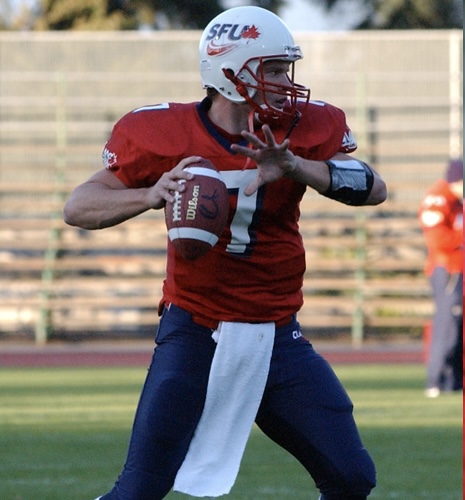
photo of former SFU quarterback J.R. Davies throwing a football during practice.
PHOTO: SFU Athletics

By: Isabella Urbani, Sports Editor

Former SFU quarterback J.R. Davies is set to embark on his first season as the running backs coach for the Calgary Stampeders of the Canadian Football League (CFL). A running back is an offensive player that rushes the ball up the field to gain yards. Davies, who had previously helped out as a scout for the team, accepted the position in January after coaching high school football in Texas for the better half of a decade. 

If the last name Davies seems familiar, it’s because it is. The Lorne Davies Complex at SFU is named after J.R.’s late grandfather, Lorne Davies the first Director of Athletics at SFU. J.R. followed in his grandfather’s footsteps and started playing football when he was six-years-old. Time spent off the field was spent at SFU, watching his grandfather coach the football team. 

Davies continued his football career at Port Moody Secondary, playing alongside eventual professional players like Corey Mace, who went on to play briefly for the Buffalo Bills. Growing up around football, Davies had no doubt in his mind that he wanted to play collegiate football. But with SFU a few years removed from being a National Collegiate Athletic Association (NCAA) school, Davies brought his talent across the border to the University of Las Vegas where he was the team’s backup quarterback. 

“At the end of the day, when you finish college, you want to be able to say you played,” explained Davies on his decision to transfer to SFU. Making the change to SFU was also an easy decision for Davies who referred to the university as his “home.”

“If I had gone to UBC, I think my grandfather would have disowned me [ . . . ] It was going to be SFU no matter what,” Davies joked. 

The generational talent made an instant impression on his new team, where he assumed the starting role of quarterback. Davies cemented his legacy at SFU after leading the football team to its first post-season victory, followed by their second-ever win a week later against the University of Alberta. 

Davies attributes his great start at SFU to “trying to meet the standards set for so long of having good players” at the school. After finishing his tenure as a student-athlete at SFU in 2007, he took up an assistant coaching position with the team, before tackling the bright lights of the Texas football scene.

In Texas, “everything is so much bigger” said Davies, confirming the age-old saying. Programs can have upwards of hundreds of students.

While coaching in Texas, Davies found out he was an inductee into the 2018 BC Football Hall of Fame, by Scott Ackles the son of famed Bob Ackles. Bob Ackles is thought to be thebuilder of football in BC and the CFL.”

“It was a great honour,” said Davies about the accolade. An even better “tribute to Bob Ackles who did so much work in the province of BC for football.” 

While there’s a lot to look forward to in his first year coaching in the CFL, Davies is excited to work with former BC Lions quarterback and current head coach of the Stampeders, Dave Dickenson. Dickenson watched a few Shrum Bowls when Davies was the quarterback of SFU. Given all the home connections, playing the BC Lions won’t be so much of a homecoming for Davies as a full-circle moment. 

Davies has continued to watch SFU football games, although it will be more of a challenge to do so next season. SFU is hustling to find a new conference after announcing in February that its current conference, Lone Star, would not be renewing its membership with the football team. While the fate of the school’s football team hangs in the balance, Davies and many more alumni go to show just how many CFL players and staff SFU has produced. 

Opinions in Dialogue: What it feels like to be disabled during COVID-19

0
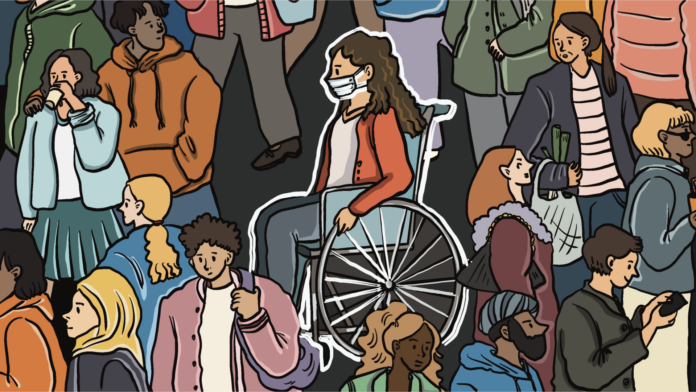
a crowd of unmasked people with one masked person in a wheelchair in the middle
ILLUSTRATION: Andrea Choi / The Peak

By: Olivia Visser, Opinions Editor & Michelle Young, Editor-in-Chief

It’s been just over three years since COVID-19 was declared a pandemic. Most people in the west spent around two years following COVID-19 precautions. However, many were eager to discard their masks in 2022 and 2023, following the removal of the mask mandate — as if COVID-19 disappeared. While proper counts may have stopped, the virus hasn’t gone anywhere. Some might be lucky enough to avoid severe illness from COVID-19, but others risk their lives every time they leave their homes. What’s it like to be disabled in a society that acts like the pandemic is over?

Michelle: It was very isolating for me to see how fast and willing people were to remove all COVID-19 precautions. Previously available accommodations like hybrid events were quickly discarded in favour of in-person activities and large gatherings — most without any COVID-19 precautions. Many organizations and institutions have completely ignored disabled people by citing “provincial guidelines.” That isn’t enough. Where are disabled people left when no one wants to bother including us or creating safe spaces for us? Since when did leftists decide the government — who has historically been ableist — was the sole authority on whether the pandemic is over? The available data clearly says otherwise. I shouldn’t have to disclose all my chronic health decisions for organizers to decide whether or not to make spaces safe for me. 

Olivia: As much as I’d like to say we’re living in a post-pandemic world, I know this isn’t true. I’m someone with a disability that causes dysautonomia, a form of central nervous system malfunction. My body struggles to regulate basic functions like digestion, memory, sleep, and heart rate. I can’t risk catching COVID-19 again. When I had the virus in 2020, I ended up in the emergency room from chronic illness complications exacerbated by the virus. I still don’t feel like I’ve fully recovered two years later. Despite all this, it seems like my concerns are being increasingly dismissed by others — sometimes blatantly. The number of times I’ve had friends and family members tell me “we have to learn to live our lives again” or say they find it strange I still wear a mask is disheartening. 

Michelle: I think people who are saying “we have to live with COVID-19” are kind of missing the point. We do have to live with COVID-19 — but not in the way these people are asking us to. There is a way to live with COVID-19 that doesn’t involve unmitigated transmission and putting lives at risk. We’re not asking people to stop going to work or schoolwe’re asking for measures against airborne transmission to be put in place so everyone can do these activities safely. 

The rhetoric that the vulnerable, or even just anyone concerned with getting COVID-19, should “just stay home” is exclusionary. We all deserve to participate in society safely. Hospitals and HandyDART transit buses still require masks because “many passengers use the door-to-door public transport service to travel to and from medical appointments.” Even in mandatory spaces, people are becoming careless. There is a general understanding that COVID-19 measures keep the vulnerable safe. However, this assumes that disabled people only exist in these spaces. We are everywhere. Our lives are not bound to medical appointments. Schools, the grocery store, other public transit, shopping malls — these are all spaces we should be able to access safely. Our concerns are not grounded in unjustified anxiety — they are grounded in a true understanding of risk and genuine concern for our health. COVID-19 isn’t the cold or flu, and there is little immunity from previous infections. Long COVID can affect able-bodied people too, so think about what a threat that is to someone who is already chronically ill.   

Olivia: We need to take long COVID more seriously. Long-term complications from the virus are rising. A startling amount of people are now being diagnosed with myalgic encephalomyelitis/chronic fatigue syndrome (ME/CFS) and dysautonomia. These are serious and disabling disorders of the central nervous system that have no cure. I can’t imagine the toll this will have on our already struggling healthcare system going forward. 

Kayli Jamieson — an SFU grad student — was previously healthy and developed long COVID after an infection in 2021. She told the Burnaby Beacon she frequently has to stop what she’s doing to lie down, and says this impacts her ability to work or spend time with friends. Our concerns about COVID-19 should move beyond our risk of death alone, and include the severe implications of long COVID. Do people really not see an issue with 10–20% of COVID-19 survivors developing long-term disabilities? 

Michelle: With age, all of our health will eventually decline, which is why ignoring the vulnerable now is such a missed opportunity. It’s troubling that many healthy and able-bodied people assume they will be fine after a COVID-19 infection. This can be true, but isn’t guaranteed at all. Multiple infections also increase your risk of severe and long-term illness. It is known COVID-19 can greatly affect the immune system well after an infection. At the start of 2020, everyone was willing to mask and protect the vulnerable because I think they understood the risks much better at a time when there were no vaccines. However, many are overestimating the amount of protection vaccines give with a mutating virus. Airborne transmission, presymptomatic transmission, and asymptomatic transmission are often conveniently ignored during discussions of COVID-19 protocols. Social distancing and “staying home when you feel unwell” do not provide enough preventative measures to truly keep us safe from infection. 

Olivia: The sad part is that I don’t think many people are even social distancing or staying home when unwell anymore. I often sit beside people on the bus who cough and sneeze the entire way, and it puts me at risk — but these people don’t seem to think of that possibility. Even if they don’t have COVID-19, have we not learned that we have the ability to protect our community from other viruses like the flu? COVID-19 aside, people shouldn’t be working or going to class when they’re sick with anything. These situations have made me regret not wearing a mask at the start of the pandemic, but I’ve never regretted wearing one since. The stares and snide looks don’t bother me as much as the thought of repeatedly destroying my immune system through re-infection.

Michelle: It’s frustrating that what we have learned through the early days of COVID-19 has quickly been forgotten. Often, sick leave and attendance policies don’t allow people to stay home. At the very least, I don’t understand why these people can’t wear a mask. Long-term, it’s going to be very bad for the workforce to continuously get sick. The lack of policies is negatively affecting all of us, the arguments going around about how disabled people are “privileged” enough to stay home invalidate our experience. First, it is not a privilege to be homebound. There are disabled people who are working in-person and trying to protect themselves to the best of their ability. We aren’t all staying at home. We are wanting to advocate for policies that keep the working class safe

Olivia: Even if I could just stay home, my family members work in public education, face-to-face with the virus everyday. Masks in schools have essentially disappeared. The two times I caught COVID-19 were from school exposures brought home to me. I simply can’t risk catching the virus a third time — I can’t begin to imagine what that would do to my disabled body. Saying we should stop “living in fear” of the virus completely disregards those who have very legitimate reasons to be afraid. If you’re not worried about yourself, could you at least extend some concern towards the disabled population? We know masks work best when worn by the majority; it’s uncomfortable being the only masked individual in the room as an at-risk person. I don’t expect others to mask in every scenario,  forever — but we’re clearly still in the middle of a pandemic, and most people have been quick to abandon all precautions for the sake of their comfort. If people could at least throw a mask on in crowded spaces like the bus or classrooms, it would make a world of a difference to people like me, who can’t afford putting our health on the line. 

Michelle: It would be nice if others could realize there are vulnerable people everywhere. I have found solace in online groups and virtual disabled spaces. I have seen disabled, immunocompromised, and chronically ill people do so much advocacy work over the years. I know a part of it is a necessity, but it’s grueling work to do when so many have decided they can’t be bothered to protect us. It’s already so difficult to be disabled in the face of ableism, especially now during a pandemic but I hope eventually, the gears will shift, and accessibility will be something integrated into our institutions and society.


Tackling gender equity in academic sciences

0
This is a photo of a student looking at their pages of homework. Their back is to the camera as they sit at a table
PHOTO: Shirlyn Zobayed / The Peak

By: Aditi Dwivedi, News Writer

On January 12, SFU Sci-Space conducted a workshop to help interested students start discourse about the conditions of gender equity and inclusion in the academic sciences, and the changes they want to see in their futures. This is the second year SFU Sci-Space has held a workshop regarding gender equity in STEM. The workshop had both undergraduate and graduate students share their experiences on gender-based violence and marginalization within academic sciences.

In an interview with The Peak, Thomas Leischner, the student engagement coordinator for the Sci-Space team, opened up about the idea behind the workshop and why it was needed in the university space. According to Leischner, the workshop was “put together in response to student need.” Apart from a few changes implemented to improve the conditions of gender equity and inclusion in academic sciences in 1970, the past fifty years have proven to be more-or-less stagnant

The workshop was designed to direct participants towards creating their own theories of change they’d like to see in the future. After SFU Sci-Space’s recent screening of the documentary Picture a Scientist, Leishner reported students wanted to continue the conversation. He said, “It was clear the documentary had given them a real sense of urgency about the issue but not a lot of clarity of purpose — not a lot of ideas of how they might take action.” He said the workshop created a space for further conversation on how to take collective action. 

“The ultimate aim is that students feel they have that clarity and vision of what they might want to get involved with after the workshop,” said Leischner. 

In reference to last year’s participants, he stated “one person joined the Active Bystander Network on campus, one person is now an executive of the Women in STEM Club.” 

A student at SFU, Carys Kenny-Howell, who attended last year’s workshop, spoke to The Peak about how it helped her grow. “We often focus on the details and history of the issues we face, and while that’s important, I think that this workshop was especially helpful because it focused on taking action to create meaningful change in the way that we believe will be most impactful.” She further noted what she learned through the workshop can be applied to realistic settings. Since attending the workshop, Kenny-Howell was inspired to start working with the Contract Worker Justice organization on campus. 

For more information about SFU Sci-Space events and workshops, visit their website.

Horoscopes March 27–April 2

0
An illustration of a girl with long flowing hair. Astrological signs and stars shine around her.
ILLUSTRATION: Marissa Ouyang / The Peak

By: Kelly Chia, Humour Editor

Aries:

Precious Aries, you deserve a companion who knows how to soothe your rage, which we have determined will be directed toward leather bus seats today. We think the kind Blissey will make you smile just by looking at her. Plus, she’ll give you an egg in these trying times.

Taurus:

Wow, spring is blooming in more ways than one. Good for you, Taurus, it looks like you have found some peace this week! Chill out and enjoy the cherry blossoms with the blossom Pokémon, Cherrim! Like you, Cherrim spends a good deal of time hiding its beautiful face away from the sun, but now you are in bloom and deserve to frolic. Yes, FROLIC! 

Gemini:

Oh, Gemini. You’re so special, and if you need to read a Humour Horoscopes column to believe it, then damn it, this was your day! In fact, we don’t think one Pokémon would be enough to encompass your glory . . . so have two. Nidoran are famously known for having two forms. You know what they say — three is a party!

Cancer:

Have you been avoiding emails and texts this week, Cancer? We get it — we all need a break sometimes. But the world misses you! How about a companion who knows how to cheer you on? The adorable Plusle comes with complementary plus-signs on its cheeks. ISN’T THAT ADORABLE? Now, fight your inbox!

Leo:

Okay, olive branch, Leo. We’ve been a bit too mean to you lately. In all honesty, we are jealous of your charisma and star power! I mean, how do you do it? Oh, look at that! The enigmatic and sweet Eevee is drawn to your ability to adapt to all situations. May you evolve and achieve all your dreams this summer!

Virgo:

A-are you okay, Virgo? We sense some animosity on your end! While you may just want to kick a bush that pisses you off, how about having a scream session with Loudred? We hear screaming can release something in you, and Loudred knows all about how to make your voice loud and proud!

Libra:

You are killing it, Libra. You have been handling every responsibility like a champ, and we know the perfect little guy to run alongside you in all your errands today. Take Growlithe up for size! The loyal puppy is ready to help — and give snuggles when you are all done.

Scorpio:

The Stars are hearing that you need some home decor inspirations to really get into the spring cleaning mood! Well, we’re not sure how much Fomantis knows about interior decoration, but they’re super cute! Maybe you’ll be ready to take care of some succulents with the little plant Pokémon by your side. 

Sagittarius:

Awful news!! We were ready to deliver your horoscope, but it’s been stolen by Zorua! Tricky fox. Oh well, all we were going to tell you was that you are a great friend, and we think this is the fox’s way of trying to get you to play! Why don’t you look for that tuft of fur?

Capricorn:

You have been championing group presentations left and right, turning in essays, and running on two hours of sleep and a dream. You need a rest, Capricorn. We promise everything will be okay after you get some sleep. The watchful Rowlet is watchful, but also wise. It will help you ace every test with an owlish coo!

Aquarius:

You love the winter, and are still bitter about losing an hour of sleep as the days get warmer. We get it, we are winter children, too, and we just want to cozy up! Is that so hard? Alolan Vulpix does not think so! One flick of those six icy tails and you will be ready to have some hot chocolate by your frosty fox. 

Pisces:

What’s this? In place of your horoscope this week, we have found . . . a wish scroll! You are so blessed, Pisces! The wish Pokémon, Jirachi, feels sorry that you always come last in horoscope lists and has decided to grant you a wish. So, what will it be? Your most ambitious wishes will come into fruition — the Stars won’t tell! 

Who killed the school spirit?

0
Black and white image of a student looking at the camera with a magnifying glass.
PHOTO: cottonbro studio / Pexels

By: Kelly Chia, Humour Editor

Dear students,

I write about a most precarious incident at your school. There are only two crimes that happen at this institution you call home . . . real ones, and the ones that you never forget. And this one, I have not been able to stop thinking about. The greatest crime committed at Simon Fraser University? Heartbreak. [Pause for dramatic effect.]

At least, that’s what I felt. My name is Simon Solves, and I am the finest detective, certified investigator of brilliant scrutiny — or BS for short! But on this foggy day, I found myself staring at the Koi pond just mooning over what happened to the school spirit. The coroner darn well announced the death of the school spirit at 11:59 p.m. last Tuesday, you see. And they suspected . . . foul play.

The case? Impossible on the outset. How do you assess the death of something intangible? Well, you start by looking at the students. Never mind those people laughing at the fire pits, or having fun with their friends. They don’t exist in Simon Solves’ eyes.

No, the real students suffering through the drudgery of academia! I mean, look at them as they gaze worriedly at Canvas. You see, that was suspect #1. Canvas . . . if you replaced “can” with “murder,” the program’s name suddenly sounded sinister. Combine that with the time of death, and you have an understanding of the “final destination” for the school spirit . . . FINAL PAPERS! 

I brought my suspicions to the nearest raccoon I could find, for I have always thought of them as the wardens of truth. “Pip pip,” the raccoon said wisely at me as it washed its paws in a puddle. But I knew what it was really saying: “You are on the wrong track, buster.”

I will not lie, students. I grieved. For me. For the school spirit, which I had affectionately named, “Schoolie.” I could see the desperation on the students’ faces as they commuted down from the campus, wondering what happened to their once joyful camaraderie. Oh, it broke my heart. But then, the raccoon dropped a slip of paper at my foot: “SUB,” it read.

“SUB . . . SUB . . . I paced around. Yes, there was a building named the “SUB,” but it was more complicated than that. Why would my friend not spell out the full name? Why only the abbreviation? 

Then it hit me. The word I heard floating around student grades recently. “Sub-par!” Of course! If it was not Canvas that murdered the school spirit with malevolence, it was the exams! I rushed to the nearest office I could find! Unluckily, that office was locked deep in the bowels of the Maggie Benston Centre.

“I have discovered what has killed the school spirit!” I announced proudly to the receptionist. They stared at me, no doubt in awe at my reputation. I was Simon Solves! I solved everything, allegedly! 

“I deduce that your assessments have been killing the school spirit . . . a death by a thousand cuts!”

The receptionist tilted their head to look at me, as if studying my face. Would the truth reveal itself now? I chuckled at the thought! They then looked wanly at me, placing a McFogg mask on their desk.

“Mr. Solves . . .  I am afraid the answer is more complex than you expect.”

Well? Are you not intrigued? I was as well! But then I was promptly shunted out of the office for disruption of peace! The nerve. Or, was it a tactic to throw me, Simon Solves, off the scent?! 

I would find this out in due time, but now I must leave with what the folks in my office describe as a, “Peak-hanger.” If you leave some tips and friendly compliments, perhaps I may have more to tell you about the very tragic tale of Schoolie . . .

Love,

Solves

The Lingerie Football League exploited women

0
photo of a football field.
PHOTO: Thomas Serer / Unsplash

By: Simran Sarai, Sports Writer

Despite drawing in women from a variety of sports, the validity of the Lingerie Football League’s (LFL) conduct should be questioned. Prior to its 2009 launch in the US, lingerie football was something people could purchase to watch during the Super Bowl half-time show. As one of the sole professional sports leagues for women in Canada at the time, the league eventually expanded to include Canadian teams, like the BC Angles. 

In its sole season in Canada, each team played two away games with travel costs covered by the league. But that’s as many benefits as players would get. While women athletes around the world were voicing their demands for equal pay — the LFL had women competing and performing for free. Players weren’t even allowed to compete without paying a registration fee. 

Athletes competed with hardly any protective gear or clothing. They faced backlash from the communities they competed in, who voiced their displeasure that women were being asked to compete professionally in lingerie to pursue their athletic endeavours. Former Angels player Stevi Schnoor also wasn’t a fan of wearing the team’s “one size fits all” attire.

“How is this going to fit me and the girl I’m looking at next to me?”

Her teammate Kate Marshall explained how the lack of protective clothing encouraged models to try out for the team, rather than women who were looking for an athletic league of their own. You literally had people like myself who had been in athletics for a while” and “models who just kind of thought it would be fun.”

Marshall compared the Angels tryout to a “Sports Illustrated photo shoot,” holding the league’s uniform responsible for undermining the level of competition.The uniforms often caused unwanted exposure, but they were prohibited from wearing anything underneath their uniforms to avoid capturing another company’s “brand apparel” on television. Coaches cited worries about the predatory nature of other coaching professionals who might see the LFL as an opportunity to harass the athletes.

Many athletes wore the uniform, as “uncomfortable” as it was, to be able to play professionally and in hope of future, paid opportunities. 

There’s no question that the LFL was trying to “upsell” the sport to men with its team names. Before BC, the team name “Angels” was used in Major League Baseball by the Los Angeles Angels. Sounds kind of fitting considering that Los Angeles is the city of angels. So riddle me this: what’s the correlation between angels and BC? There’s a very different connotative meaning behind this use of the word — which alludes to the mysticism of women and their hypersexualization by men. 

While the LFL was marketed as a progressive opportunity for women to develop their athletic skills, it failed to empower women. Instead, it contributed heavily to the very issues that women in sports had advocated against for decades. Rather than providing women with a genuine opportunity to showcase and improve their skills, the LFL ultimately served as a money-grab for those who wanted to take advantage of the male gaze, without even paying the women involved for it. 

Q&A with Accessibility as Creative Practice intern, Keimi Nakashima Ochoa

0
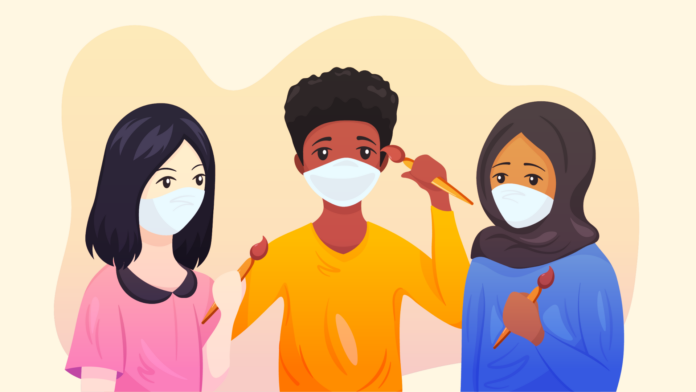
An illustration of three masked individuals holding paint brushes wearing colorful clothing.
ILLUSTRATION: Alyssa Umbal / The Peak

By: Nercya Kalino, Staff Writer

SFU Galleries is hosting a series of workshops for creatives with access needs led by 2023 Accessibility as Creative Practice intern, Keimi Nakashima-Ochoa. The first workshop, which took place on February 25, was for immunocompromised artists. Taking place at Audain Gallery, with masks required and rapid tests requested, two more workshops will be held throughout the spring and summer: one for sensory-sensitive folks, and another for disabled LGBTQIAS2+ people. “Pals and partners” are also invited to participate and all skill levels are welcome. The Peak had the opportunity to interview Nakashima-Ochoa to reflect on the first workshop and discuss future plans.

The Peak: May you please share a bit about yourself and artistic background? 

Keimi Nakashima-Ochoa: I am a racialized immigrant settler. I am a Disabled, bilingual, learner, worker, and artist. My work and worldview have been shaped through my ongoing learning of disability justice and Black feminism. My art practice incorporates a lot of different things, including creative access, reading, writing, weaving, and printmaking. I spent most of my youth in Amiskwacîwâskahikan. I have been building my life on these ancestral lands of Xwməθkwəy̓ əm, Skwxwú7mesh, and Səlilwətaɬ people and families for nearly six years now. 

Why is accessibility in creative practice important? 

Accessibility and creativity are inherently linked. Though concepts of “accessibility” are pretty new in mainstream culture, Disabled communities have had to navigate ableism with boundless creativity and imagination for centuries. I am someone who has both been making art and living with chronic pain most of my life. Incorporating ways of meeting more needs into arts organizations has been both natural and necessary for my survival within them. The more people that can access and survive arts spaces, the better those spaces will be — having more perspectives and ideas only adds to what cultural institutions can provide. 

Who are these workshops geared at? 

The three workshops are designed to connect folks intentionally through parts of their identities, by creating in community. The first workshop was centered around those who are immunocompromised, and we gathered with measures that focused on keeping things more sanitary, including things like medical-grade masks and single-serving snacks. Our next workshop will be focused on supporting those who are sensory-sensitive and have specific special interests, but may not necessarily identify as Disabled. Our third and final workshop will be a gathering for those who are rooted in the political nature of Disabled, queer, and racialized identity. 

Can you tell me a bit about what went into putting these workshops together? Were there any challenges and how did you overcome them? 

A core aspect of these workshops is that they are small, so that the social aspect is more engaging than overwhelming. That being said, the small scale still requires thorough planning ahead of time, especially while planning on the basis of meeting specific needs. There have definitely been challenges that have come up in the planning process. I think the biggest challenge being that universities — and their affiliates — have all historically served large groups at a standardized level. While that is changing, clear communication, and openness to doing things differently, have been key aspects to moving this project forward. 

As an Accessibility as Creative Practice intern, what are some things you look forward to learning through this opportunity? 

I’ve definitely been learning a lot about navigating a gallery that is attached to a university, and the processes that require it. I’ve had the opportunity to work through/with a couple of public galleries or artist-run centers, and a university library, but I’ve never worked with a university gallery! As an alumnus of another lower mainland university, I’m grateful for the opportunity to gain insight into more cultural and learning institutions. 

For those who are unable to participate in these workshops, what other options would you recommend for them to experience open-ended artmaking centered around care? 

Everyone deserves care. Unfortunately, care is not the norm in capitalist, white supremacy culture, so it can be challenging to find. I’ve been able to access and learn so much more about care through Disability Justice spaces. There are lots of local folks who are immersed in Disability Justice. Vitoria Monteiro, an SFU alumni who will be leading the next workshop of this series with me, is another artist creating spaces with care. I have learned so much from Kay Slater about care, and they host lots of different art spaces. There are too many others to name, but disabled-ness is generally well suited for the online world, and all it takes is a little bit of research to re-frame how we think about care, especially in relation to artmaking. 

CMNSU presents Careers in Communication

0
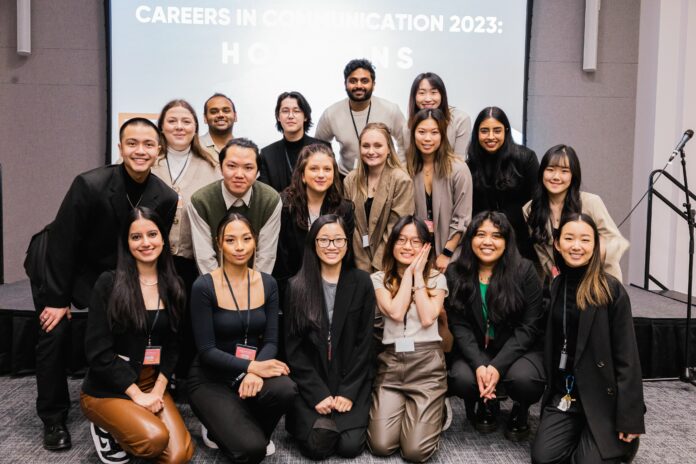
This is a photo of the communication student union executive board. The students are huddled together and smiling for the camera
PHOTO: Linda Jolly

By: Saije Rusimovici, Staff Writer

Editor’s note: Saije Rusimovici, who wrote this article, is an executive member of the SFU communication student union. The Peak acknowledges and has taken steps to prevent conflicts of interest or potential bias from influencing the article. 

On March 10, the SFU communication student union (CMNSU) hosted “Careers in Communication.” This event provided SFU students with the opportunity to network with over 20 industry professionals in the communication field, ask questions, and learn about potential career paths. Industry professionals included employees from Microsoft, Arc’teryx, Worksafe BC, and Herschel Supply Company. 

The communication student union is a group of 18 communication students. CMNSU president Kirtana Menon conceptualized the first communication-centric case competition at SFU last year. This event was held online. Careers in Communication 2023 is the first in-person networking event hosted by CMNSU.

Students participated in a case competition. Teams of 3–4 worked together to find a solution to a real-world communication challenge that may occur in the workplace. Groups had to strategize to find a creative and effective approach that would be applicable in a professional circumstance. 

This year’s case competition was sponsored by Grace Hui, communications manager at Electronic Arts. The theme of the case centred around the gaming industry. Competitors were challenged with using communication strategies to promote inclusivity and equity when their larger, fictional company was acquiring a smaller company. 

Menon recounts her experience putting together this event with the CMNSU team. 

“Hosting [Careers in Communication] was a dream come true for me,” Menon said. “I am so glad that I was able to lead a team that created a space to pick up technical skills, along with networking opportunities.” 

When asked how Careers in Communication played a role in empowering students, Menon described how the case competition was an opportunity for students to apply their skills to a corporate world problem. Networking sessions included interactive panel discussions and “speed dating” style discussions with an industry professional. 

“It was such a full circle moment seeing so many successful industry professionals working at top firms [interact with students] that actually spent their university years volunteering at clubs like CMNSU or taking on communication degrees,” Menon said. “Gives you so much hope that you too will end up there one day!” 

To learn more about Careers in Communication & other events presented by CMNSU visit their website or Instagram @cmnsu

WGOG: bugs in glasses

0
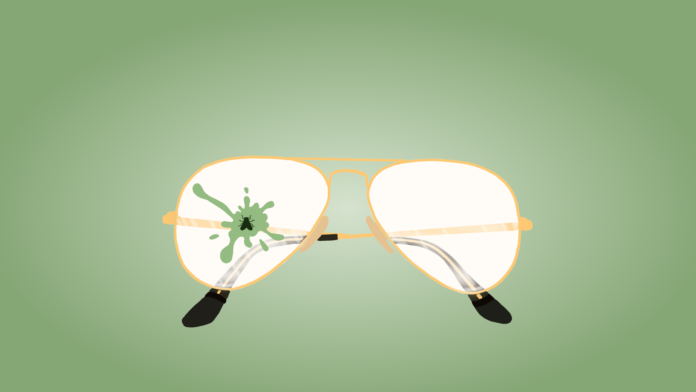
illustration of a pair of aviator-style glasses with a fly splattered on the front of one lens
ILLUSTRATION: Raissa Sourabh / The Peak

By: Isabella Urbani, Sports Editor 

This piece goes out to all my fellow glass-wearers. 

My glasses are practically glued to my face, and yet, at the end of each day when I take them off to sleep, there’s always so much dirt on the lenses: pesty little lashes that mock the dwindling numbers on my eyelids, eye crusties, and a ridiculous sheen of oil and sweat on the frames. 

Sure, okay — I guess I could pull out my handy-dandy eyeglass wipes and clean them off at the end of each day or whenever the dirt gets so bad it appears as floaters in my vision. That’s a realistic option. But bugs? Absolutely fucking not. How, you ask? How does a bug manage to press itself in the minimal space between my glasses and FRICKIN’ EYELID? YEAH, I’LL TELL YOU HOW. 

Blind spots. My glasses may be snug on my nose, but the gaping spaces on the sides of my face? Bugs mistake it for an invitation to my barbecue because they’re ALL UP IN MY GRILL. 

It doesn’t happen often, but a chill goes down my spine even imagining the little buzzing sounds their little wings make when they get too close to my ear. Imagine hearing that sound, and then feeling those wings flap against your eye

I’m one bug in my glasses away from feeling no remorse this summer when I sentence them to death after I accidentally leave the bathroom window open again, just to smush them.