Home Blog Page 181

I don’t want two-factor authentication

0
Student holding head in hands surrounded by number representing the MFA authentication codes
ILLUSTRATION: Alyssa Umbal / The Peak

By: Saije Rusimovici, Staff Writer

Mission: Impossible — Rogue 2FA Code

Whoever developed two-factor authentication (2FA) must have been trying to hide some serious shit. The service requires an alternate method of sign-in, like a code sent to your email or an alternate password. This might not be too bad if the password was something simple, instead of a combination of numbers so complex I doubt a codebreaker could understand. As for alternate passwords, I’ve locked myself out of my Apple ID, like, five times in the last three months. What makes anyone think I have the brain power to keep yet another password stored up there? Yes, yes, I realize I could write them down, but I usually use Goodnotes, and I’m sure we’re not far away from throwing a few passwords to log onto that too (as if anyone wants to see my sparse health science lecture notes from three semesters ago). Now, this may have come in handy for secret agents like James Bond and Mission: Impossible era Tom Cruise. But for an average person like me!? 2FA is stressful and a painful waste of time. 

Since when did logging into my Canvas account become as complicated as getting into a CIA database? I mean, I feel honoured that my information is important enough to require multiple passwords to access it. If anyone wants to look at my mediocre grades, they can go right ahead and have a little laugh. Honestly, swiping out of Canvas to open my email browser to find my authentication code somewhere among thirty-five unread emails from Joy Johnson is more stressful than anything else. 

Any hacker would be disappointed after stumbling upon my college-kid-sized lump of money embarrassingly divided between my checking and savings accounts. The rest of the money is long gone into the corporate hands of The Juice Truck at Whole Foods (they’re just so good, though . . . ). Thank goodness for the copy-and-paste feature that makes it easier to sign in with the overly complicated code hidden in an excessively detailed email. My memory isn’t what it used to be. I can’t even remember my credit card PIN, let alone three different authentication codes in one afternoon. In a way, it’s reminiscent of the “I am not a robot” prompts on Google (though if a robot was trying to hack into my accounts you could be sure I have something to hide . . . ).


Large-scale fishing has serious ethical implications

0
someone pulling in a fishing net on a boat
PHOTO: Fredrik Öhlander / Unsplash

By: Nercya Kalino, Peak Associate

Fish farming has complicated impacts on the environment. Most of us don’t have the slightest idea what processes fish go through before they land on our plates. When you learn what happens behind the scenes in the fishing industry, it becomes harder to see eating fish as appetizing. Over the years, the practice of open-net cage farming has been an ongoing concern between Indigenous peoples and the Canadian government; the government has been urged to abide by restrictions on farms along the BC coast. In 2018, Pacific Wild released a statement about the farm operations in the Musgamagw Dzawada’enuxw Nation territory. They said the fish farms located in that territory were “operating without free, prior, and informed consent of the nation, violating the UN Declaration of the Rights of Indigenous Peoples.” This has been a progressing problem for a long time, and it’s only one of many violations in the industry. 

Ethical farming of any kind of meat is crucial to the future of sustainable eating. Fish are no exception. With open-net cage farming, wild fish are exposed to chemicals, parasites, and fecal infestation from waste in the ocean and crowded living conditions. Living Oceans stated that, in “BC alone, salmon farms produce the same amount of waste as a city of half a million people,” and fish farms are the “perfect environment for disease transmission,” which can easily spread to wild fish and negatively impact local populations. 

This is quite concerning. Mass farming has been an inevitability of the fish industry, and it contributes to many people’s livelihoods — but it shouldn’t exist without extreme caution and regulations. The BC government recently examined the issue of rights violations on Indigenous territories. In 2022, they released a statement concerning sustainable aquaculture to embrace reconciliation with Indigenous communities, protect jobs, and respect wild salmon. There was a new policy made about open-net cage farming effective this coming June. The policy will only grant tenure renewals for open-net cage farms operators who ensure  “their operations will not adversely impact wild salmon stocks” and agreements with Indigenous peoples. This is a good sign. 

But fish farming is a complex issue in terms of ethics and economies. The Union of British Columbia Indian Chiefs wrote about the history of fish farming and how it’s impacted their community; farms often invade burial islands sacred to Indigenous people. On top of that, “those nations on whose waters these fish farms are located experience immediate and destructive impacts.” Some of these impacts include the “destruction of traditional harvesting grounds, and the poisoning of water and marine resources.” 

There are a few actions consumers can take to avoid contributing to harms caused by mass fish farming. Many brands display the Ocean Wise symbol on their packaging to indicate ethically farmed fish, but it’s also important to research individual brands to ensure their ethicality. It can also help to reduce your consumption of larger fish species like salmon and halibut in favour of small species like sardines and mackerel. Samantha Renshaw, “Science Lead at Ocean Wise,” also stressed the importance of supporting small and family-run fisheries. The next time you find yourself with fish on your plate, ask yourself how it got there, what it was exposed to, and what that means to you. 

New initiative opens to support mental health and substance recovery

0
This is a photo of a group counselling session. Many people of diverse backgrounds are sitting in a circle of chairs in a large room.
PHOTO: Tima Miroshnichenko / Pexels

By: Eden Chipperfield, News Writer

On May 2, the Canadian Mental Health Association (CMHA) of North and West Vancouver hosted a Consumer Involvement and Initiatives Program at the Segal Centre to celebrate the opening of the Recovery College YVR. This community centre offers free courses surrounding mental health and substance use. It is the first of its kind in the Lower Mainland to focus on inpatient care and outpatient rehab. 

Inpatient care consists of the individual admitting themselves into a program with a “controlled environment to address substance use disorders, co-occurring mental health conditions, and other behaviors that may be causing them difficulty,” according to Addiction Center. This program offers the individual residence in a treatment centre and constant medical or emotional support. 

In comparison, “Outpatient treatment is generally considered to be less restrictive than inpatient programs.” These programs involve the indivudal attending short daily treatment sessions, multiple times a week. This type of care “allows more flexibility for work and life needs, as well as an opportunity to readjust into the world with support.”

According to the Centre for Addiction and Mental Health (CAMH), most mental health services specifically focus on individuals with severe and continuing mental health problems. This leaves 20% of Canadians unaddressed when they face mild to moderate mental health and substance use issues. CAMH reported, “People with mental illness and substance use disorders are more likely to die prematurely than the general population. Mental illness can cut 10 to 20 years from a person’s life expectancy.” 

Speakers who attended the event included Julia Kaisla, the executive director of the North and West Vancouver CMHA brand, the honourable Jennifer Whiteside, the Minister of Mental Health and Addictions, and Andrew MacFarlane, the Regional Director of Mental Health and Substance Use of Vancouver Coastal Health as well as MJ, a recovery college peer support worker with lived experience. 

The Recovery College YVR classes include art therapy, pet therapy, mediation and self-management for addiction. They also offer specialized language sessions, such as the Farsi speaking women’s group. 

 For more information on the Recovery College YVR programs, visit their website at recoverycollegeyvr.ca/. 

Polite ways to tell your dentist you don’t want to chat while their hand is in your mouth

0
Patient receiving a dental check-up
PHOTO: Anna Shvets / Pexels

By: Hana Hoffman, Peak Associate

Shwshdf bfftjjrrhjjdj hhrrgscdrr. That’s the sound of my best conversational pronunciation during dentist appointments. Picture this: you’re laying on a bed, your head feels closer to the ground than the rest of your body, you’re wearing scratched and sticky sunglasses, the dental hygienist is flushing your mouth with fluids, and they’re constantly asking you questions you can’t physically or verbally answer. I’m sure we’ve all been there, but I just wanted to rant a little further about it since it’s getting to my last nerve (and so is the numbing needle in my gums).

To be honest, I sometimes can’t tell whether a dental hygienist is trained in teeth maintenance or client interviews. All these different tools fill my mouth with water, air, and weird-tasting chemicals, which then drip down my chin and neck. Yet, they constantly ask about my life and then ramble about their experiences and advice. I do try my best to answer, but I usually end up choking and almost drowning in my own spit. Do they really expect me to talk understandably while I can’t move my tongue or lips? Please, I’m no ventriloquist.

Adding on to that, I keep hearing the same questions every. single. appointment. Yes, doctor, I study at SFU. Yes, I have a younger sister. No, I’m not 19 anymore; I’m 20 now. Yes, I brush my teeth daily. Like, bro . . . I’m not sure how many more times I can repeat myself before I lose my mind.

And here’s the worst experience: being flooded with questions during wisdom teeth removal. Is tooth surgery really the best time to be asking questions? Pretty sure the better way to reduce pain is to focus on the TV on the ceiling rather than trying to engage in a one-way conversation with the dentist — unless there is no TV, in which case I don’t know how anyone would survive. It’s funny when they ask me how my day is going. Just look at me bloody gums, scraped teeth, watery eyes . . . yeah, I’m totally doing great and how about yourself?

Whether you’re in for a cleaning, a tooth removal, surgery, or a tightening of the braces, you don’t deserve to embarrass yourself by mumbling back in gibberish. Dental hygienists should hold their horses until after the dental work is done. Or, even better, chat before starting.

To prevent these awkward conversations, I have a few ideas in mind. Firstly, the copycat method. Just interrupt the dental hygienist’s sentence, tell them to start copying whatever you say, and go silent. Then they’ll copy your silence! Secondly, confuse the dental hygienist with your made-up hand gestures. Every time they ask you a question, answer it the best you can using every body part but your mouth, and they won’t know what you mean, so they will give up on starting a conversation. Thirdly, play dead. In other words, pretend to fall asleep during the appointment so that they will stop talking since there would be no point in doing so.

I’ve also got some tricks up my sleeve, literally. Idea 1: Pull your phone out of your sleeve to use Bluetooth. Let the dentist deal with your cavity while you keep calm, listen to music through your earbuds, and block out any questions the dental hygienist asks you. Idea 2: Pull your DS out of your sleeve so you can turn it on and play Mario Kart music out loud. Your dentist will start bobbing their head to the beat and forget about all the conversation topics they had in mind. Idea 3: Pull your earmuffs out of your sleeve and put them over your head. Block the voices and tool noises so you can silently relax.

I hope these strategies will come in handy to everyone who is not a ventriloquist. If they don’t work, my final bit of advice is to floss and brush as much as possible so you’ll never need to go to the dentist!

An interview with the creators of MiPhone

0
Person holding a “Business” newspaper
PHOTO: nappy / Pexels

By: Izzy Cheung, Staff Writer

Touted as the second coming of the iPhone, Parker Parkins’ MiPhone has risen in popularity since appearing on the famous reality TV program, Dargon’s Den. The MiPhone is the newest cellular device on the block. It operates as a typical cell phone would, but also allows users to access all the financial data of anyone within a certain radius — you know, as you do. 

The Peak sat down with Parkins, and co-founders Michael Michaels and Bob Johnson, to discuss how they are “disrupting” the phone industry. 

Q: How did you all meet? 

Parkins: The three of us were in the same statistics class in first-year. We did a project together about accessibility in technology, and we’ve been tight ever since. We moved into a big house together in second-year, and we’ve been bringing more people in from that day on. 

Q: Your mission statement is to “change the world through accessibility.” How did accessibility become such an important topic for you? 

P: We took a class in third-year about cryptocurrency. It made us think about the politics behind accessibility, specifically, accessibility to each other’s data. Why do we have to keep secrets between us? We’re all on the same side — the side of the human race. 

Q: You’ve been saying “we” a lot. I’m curious to hear what Mr. Michaels and Mr. Johnson think about this. 

Michaels: I agree. 

Johnson: I agree as well. 

P: We always know what the other is thinking. The three of us are intertwined. 

Q: So you’re all very into knowing everyone else’s personal information. 

P: Yes. As a collective human race, globalization has made us trend towards becoming a more interconnected society. We want to accelerate that process by making connecting with others easier. Again, why do we have to keep secrets between us?

Q: You mentioned that you’ve been bringing people into your house since you moved in together. Are these people your employees, or . . . ? 

P: We don’t refer to them as “employees,” but as our recruits. All of us firmly believe in the idea of human connectivity, so we’ve all replaced our cell phones with MiPhone. We even picked up a few other recruits from our appearance on Dargon’s Den. Our recruits have fully subscribed to the MiPhone mindset, so it’s only a matter of time before we can convince others to do the same. 

Q: That sounds awfully cult-like. 

P: It’s called devotion. We wholeheartedly believe in this cause and are actively working towards making the world a more connected place through it. 

Q: With all those recruits, what kind of jobs does each member have? Are there any specific roles within the franchise? 

P: Oh, no. We don’t believe in a hierarchy system, so there are no specific roles within our community. Everyone comes in at the same level, which makes us even more interconnected. 

Q: So . . . how do you determine a manager for everything? 

P: Everything is equally managed. 

Q: By . . . ? 

P: We all have our respective roles. We all believe in the future of an interconnected human race. 

Q: An interconnected human race that makes everyone’s financial data accessible, making them vulnerable to exploitation. 

P: We prefer to call it accessible. Exploitation is a crude way of referring to it. 

Q: So how do the operations of MiPhone run if there’s no specific management system? 

P: Everything is equally managed. 

Q: Mr. Michaels? Mr. Johnson? Care to pitch in? 

M: I agree. 

J: I agree as well. 

Q: Any final closing remarks before we end this interview? 

P: Join us in making data more accessible throughout the world. Replace your iPhone with MiPhone, and reap the benefits of interconnectivity. 

The Book Nook: Five books to add to your summer reading list

0
A person sitting criss-cross between two heaping piles of books looking up with an open book in hand

By: Saije Rusimovici, Staff Writer

Book cover with title and author in white text with abstract collage elements featuring images of mountain, cityscape, and clouds.
PHOTO: Courtesy of ‎Ecco

The World Keeps Ending, and the World Goes On  by Franny Choi

Reading poetry in a shaded area with a cool drink in hand — what could be a better way to start the summer? Franny Choi is a novelist and poet with a variety of thought-provoking fiction and non-fiction under her belt. The World Keeps Ending, and the World Goes On is perfect for reflecting on the colossal issues in our world today in small doses of lyrical poetry. Re-reading lines and stopping to soak up and sit with the difficult emotions that arise allows for new insight each time. For instance, “Good Morning America reflects on the ongoing and repeating tragedies of a colonial state, and the grief and horror that follows. Covering topics like the pandemic, refugee crises, and race, Choi offers a glimpse of hope in the face of these crises. I recommend listening to the audiobook, which is narrated by Choi!

Book cover with title and author, a colourful floral spine. The photo featured is of a Black woman and an Italian man. The woman is in a white gown sitting atop a bike, smiling, with her hair slick back. The man is wearing a tweed suit and is smiling at her.
PHOTO: Courtesy of Simon & Schuster

From Scratch by Tembi Locke

Tembi Locke is an “actor, producer, and screenwriter” who made her debut as an author in 2019 with this heart-wrenching memoir. From Scratch is a compilation of Locke’s life experiences, including interracial and intercultural marriage, and grief. A Texas native, Locke travels to Florence, Italy as an international college student. Upon meeting chef Saro Gullo, her life changes drastically. After moving to LA with her after several months of long distance, the couple navigate seeking the approval of their in-laws, cultural differences, adopting their daughter, and their biggest fight of all — cancer. The book speaks to your senses with flashbacks to hot summers in Sicily, the bustling streets of LA, and scrumptious culinary experiences in lively Florence. Ultimately, this memoir encapsulates what it means to be human and experience grief and love. 

Deep red book cover with a bold, capitalized white title. Featuring an illustration of three crows on a barbed wire.
PHOTO: Courtesy of ‎Doubleday

Bad Cree by Jessica Johns 

The cover’s bold illustration of a spooky forest against a flaming orange sky drew me to pick up this book, and the thrilling narrative kept me on edge to the very end. Indigenous author, Jessica Johns, crafts a unique, supernatural read that will give you chills. The horror novel follows a young Cree woman experiencing terrifying dreams of dead crows. What’s even scarier is the fact that she now sees crows everywhere — as if they’re following her. These dreams surface memories from the night of her sister’s death. Soon enough, the dreams start to infiltrate her waking life, offering more and more details about what really happened the night her sister died. Fearfully navigating through her grief, Mackenzie returns to the rural Alberta community where she grew up and is forced to face the truth and confront the messages in her dreams. Bad Cree brings you along a young girl’s personal mystery to uncover hidden truths about family, violence, and the land that she grew up on. 

Book cover of with title written in capitalized, yellow font filling up half the page. Subtitle reads: The stories behind the province’s most intriguing murder and missing person cases.” The photo behind the text is of an empty road beside a mountain that turns left.
PHOTO: Courtesy of Arsenal Pulp Press

Cold Case BC  by Eve Lazarus

Calling all true crime fans! I never knew how many unsolved cases there were in BC until I read this book. Eve Lazarus is an exceptional storyteller who transports readers to the time periods where crimes were committed, unpacking evidence, motives, and suspects as engaging as a true crime podcast. Her writing is detailed yet easy to comprehend, avoiding legal jargon and centering the focus around the victims, their families, and the communities. The reader is able to form their own theories about some of BC’s most baffling cold cases. As a criminology minor, summer is my favourite time of year to take a break from academic reading and pick up a new read that relates to the intriguing history of crime in BC. 

A book cover with a closeup of Viola Davis’ face in black and white. There is a sticker on the book that reads “Opra’s Book Club 2022.”
PHOTO: Courtesy of ‎HarperOne

Finding Me  by Viola Davis

This is hands-down one of the best books I’ve ever read. Award-winning actress, Viola Davis, walks readers through her life’s journey of poverty, professional rejection, and what it was like growing up as a Black woman in an industry built for white actors. Davis leaves nothing unfiltered, including stories about abuse in her family home, discrimination at school, and working through mental health issues including depression. Her story of self-discovery, determination, and perseverance begins with facing the traumas of her childhood and young adulthood in order to understand how these experiences have shaped her into the woman she is today. 

All books in this list are available to purchase online from the Massy Books website.

Clothing stores have a sizing problem

0
Clothing store racks
PHOTO: Gudrun Wai-Gunnarsson / The Peak

By: Saije Rusimovici, Staff Writer

Content warning: mentions of size and weight

There’s nothing more frustrating than walking into a store filled with gorgeous clothes only to be absolutely traumatized by the fitting room experience. For women in particular, there seems to be a persistent notion that the size of our clothing defines us. It’s unfortunate that many brands still reflect the idea that smaller is better. For years, I tried to fit my size ten body into denim shorts, dresses, and trousers two or three sizes too small for me, all for the sake of seeing a smaller number when I got dressed in the morning. The designs of many popular brands are tailored to a specific body type often tall, thin, and small-busted. Because of this, “standard” sizing can be perceived as reinforcing the notion that smaller is better. Clothing stores are excluding many women with their sizing, and should be taking on proactive initiatives to make their clothing lines more inclusive for all bodies. 

Plus-size is defined as “a size of clothing for people who are larger than average.” According to Project Cece, a curator of over 200 sustainable ethical fashion brands, sustainable fashion is often not size inclusive because there is not enough demand to cover the costs of full lines of plus-size clothing. However, the “average” American woman is a size 16 — how can it be that the demand is not high enough to make more plus-size clothes? It’s baffling that plus size has become its own niche even though it represents such a large portion of women. 

For years, I wanted to be “an Aritzia girl,” decked out in the latest fashion trends like low-rise jeans and slim fitting leather pants. However, nearly every time I went into the store I left feeling terrible about myself. Even the largest dress on the rack wouldn’t zip up past my hips, and the medium-labelled sweaters clung to my body as if they were size XS. Similarly, Brandy Melville clothing is marked as “one size fits all,” which is far from the case. Even for petite girls, most small sizes don’t take proportions into consideration. Dresses and jeans marked as XXS can drag on the floor and leave gaping holes in the chest area, because they assume you’re shaped like an hourglass. Similarly, individuals who are petite yet curvy may struggle to find clothing tailored to their body type. 

Aritzia is not the only store that advertises clothing catered to a specific body type, save for the one or two performative Instagram shots of mid-sized women wearing non-fitted, casual fitness attire made of naturally stretchy materials. In 2017, plus-size model and actress Barbie Ferreira was featured in an Urban Outfitters campaign. However, at the time the store didn’t, and still doesn’t, have a plus-size clothing line. This sort of performative advertising works in favour of big brands wanting to showcase a commitment to size inclusivity without taking real action to do so.

I used to feel so ashamed to ask for a bigger size, so I would buy something off the rack and hoped that somehow I would become smaller by the time I had to wear it. It’s not only that sizes are limited — many articles of clothing are labelled as a size large but comparable to another brand’s small. By what standard is the clothing we wear true to size? 

Brands that do not offer inclusive clothing sizing options reinforce a culture that deems smaller is better. It’s nice to see that more clothing brands have become committed to diversifying sizing such as Victoria’s Secret, American Eagle, and Joe Fresh, as well as smaller fashion brands like Girlfriend Collective, that are making strides in diversifying the fashion industry. But there is still a lot of work that needs to be done to create fashionable, sustainable, and well-fitting clothing for all bodies. 

By Us, For Us reports pressing circumstances faced by BC sex workers

0
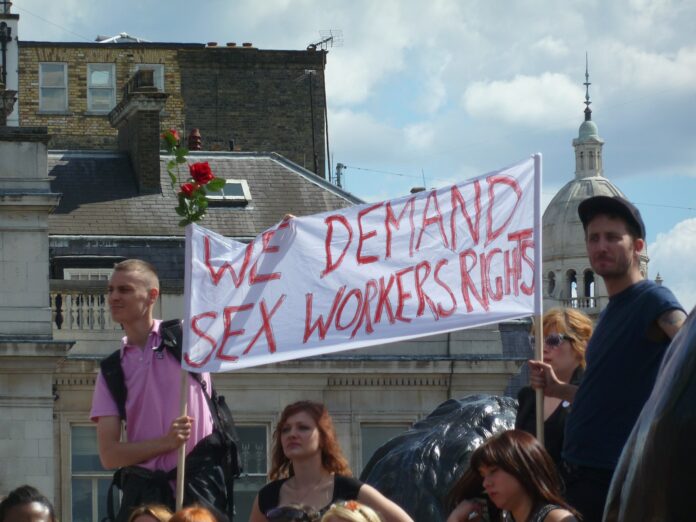
This is a photo from the 2011 Slut Walks in the United Kingdom. Protestors are holding a large banner that reads “We Demand Sex Worker’s Rights,” in red font.
PHOTO: Wikimedia Commons

By: Eden Chipperfield, News Writer

The By Us, For Us project surveyed over 200 sex workers across Metro Vancouver and Southern Vancouver Island; it highlights essential topics like the COVID-19 pandemic, the criminalization of sex work, the ongoing overdose crisis, and the national inquiry into murdered and missing Indigenous women and girls. 

In an interview with researcher Sylvia Machat, who wrote the By Us, For Us report, further explanation and insight were provided regarding the project’s goals. 

Machat described decriminalizing sex work as “removing restrictions on the sex industry via legislation.” For example, the current legislation has criminalized the act of purchasing sexual services or the sex worker themselves hiring third parties such as divers or assistants. “Decriminalization would allow sex workers to access health and safety regulation as well as support services,” Machat added. 

The criminalization of sex work means that workers involved in the sex trade do not receive the same amount of care and support as other jobs. This disadvantage limits their access to counselling, regular HIV/STI testing, and other medical services. Machat elaborated that “increased access to healthcare, particularly mental health care, would help address ongoing issues that sex workers deal with,” especially those from all backgrounds and walks of life. 

Prominent findings within the report show 73% of surveyed sex workers are living with disabilities, 45% identified as Indigenous, and 60% were worried about a loved one overdosing. The report makes numerous suggestions for how the government can create solutions; these include investing in the security and safety of sex workers to eliminate the stigma. This may also open new opportunities for their collaborations with agencies and organizations. 

The report notes how sex workers often face stigmatization and discrimination for their work at the hands of police and law enforcement officers. A section in the report addresses the stigma that cis-gender male sex workers face as they are often categorized as doing “women’s work.” Machat discussed how the stigma of sex work exclusively being a woman’s job has been fought against by numerous male, Two-Spirit, transgender and non-binary sex workers. “Rather than tackling this issue through police departments, male, Two-Spirit, trans, and non-binary sex workers we spoke to wanted to see support such as check-in systems, good rapport with healthcare professionals, and avenues for reporting harms experienced in sex work to sex worker support services,” said Malachat.

A suggestion Machat provided in the report regarding communication avenues between sex workers and police, is “trainings delivered to police by active and recent sex workers about the realities of the sex work industry.” The Canadian National Inquiry into missing and murdered Indigenous women and girls found “state actions and actions rooted in colonialism.” Sex workers who identify as Indigenous and Two-Spirit feel disadvantaged and ignored because of colonist practices within Canadian culture. A suggestion that Indigenous sex workers have provided are resources to see medical professionals to be able to access STI screenings and “to ask sex-work related health questions openly, without fearing loss of child custody and racism.”

The By Us, For Us project aims to further educate communities about decriminalizing and sex work. Machat said, “I think the most important thing to know about the sex industry is that sex workers do sex work as a solution to costs of living in Canada.” 

Manufacturing the Threat exposes how policing upholds power in Canada

0
FILM STILL: Ana and Omar walk outside of a gas station convenience store holding hands and each have a paper cup. Ana is wears a black hoodie over a red hijab and baggy pants and Omar wears a white kufi on his head with brown stripes, a black jacket, jeans, and an earth-tone T-shirt.
PHOTO: Courtesy of DOXA

By: Petra Chase, Arts & Culture Editor

Content warning: mentions of Islamophobia, colonialism, and racism.

Canada’s façade of tolerance and freedom is stripped away in a new documentary called Manufacturing the Threat. It’s the first feature-length documentary that explores the infiltration of marginalized communities by agent provocateurs, revealing the dark underbelly of the Canadian Security Intelligence Services (CSIS). It premiered on May 6 as part of DOXA Documentary Film Festival screenings, and it’s a must-see for understanding how colonial power is upheld in Canada.

The film’s director, Amy Miller, has been making documentaries “in the spirit of justice” since 2008, and her documentaries have been screened at over 100 festivals around the world. Inspired by educational theorist Paulo Freire, Miller believes in “popular education as a way for transformative change,” she told The Peak. “[Freire] came up with this idea that if you can connect the dots for people in terms of structural inequalities in our life, they can build collective power and transform society.”

The documentary investigates the case of Ana Korody and Omar Nuttall, a couple from Surrey who were targeted by CSIS agents after converting to Islam. They spoke on how their vulnerable mental states and life circumstances were taken advantage of in radicalizing and coercing them to plot a bomb on Canada Day. They were told that according to Islam, they were predestined to commit this act and had no free will, which Ana explained and later learned is not accurate according to Muslim teachings. They were arrested in 2013, and in 2022 sued the RCMP. Hearing about their experiences, which must have taken a lot of bravery to share, was chilling.

“We often hear the claim that the way to counter racism in national security agencies is to diversify them,” Azeezah Kanji, a legal academic with a specialty in Islamic law stated in the documentary. “To the contrary, the presence of Muslim officers is used to further extend the arm of securitization and the reach of these agencies into vulnerable Muslim communities and families.”

Manufacturing the Threat points out how the CSIS exists to “justify its own existence.” The film demonstrates Canada’s largely undocumented history of infiltrating and undermining marginalized communities to uphold colonial control, which was inspired by the book Produire La Menace by Alex Popovic. From the RCMP’s roots in colonizing Indigenous land to vilifying and surveilling Muslims in the aftermath of 9/11, Miller hopes the film shows people how “othering happens in a collective way through things like policing.” 

Miller explained information on the CSIS’ operations are not widely known or available. “It is so difficult to be able to have the proper conversations that we’re just navigating in the fog,” she said. “Something we really should be discussing more is: why is it so difficult to get this information, why does Canada like to present itself as this beacon of democracy, and why is our access to information so difficult and filled with so many trickwires to stop us from having that access?”

Miller argues that security threats like climate change are largely ignored, and other “manufactured” threats are used as distractions. “To me, it’s not homeless people in Vancouver that’s the crisis around what makes people feel safe, it’s affordable housing,” she added. “I think we need to go a step backwards and say ‘what does national security even mean in 2023?’” In our current institution, it’s often those who defy the “status quo” who are made into an enemy.

Check out the full list of documentaries showing this year at DOXA on their website, doxa2023.eventive.org/films. Find out more about Amy Miller, her campaigns, and documentaries on her website, amymiller.info.

LGBTQIA2S+ students need the SOGI curriculum

0
girl in denim t-shirt with rainbow symbol wear backpack in summer park outdoor.
PHOTO: IURII KRASILNIKOV / iStock

By: Eden Chipperfield, News Writer

The topic of queerphobia has been increasingly present in the media lately, mainly due to increased drag bans and anti-trans laws occurring in the US. Unfortunately, our neighbours to the south are not the only culprits of increasing queerphobic propaganda, such as stripping away gender affirming care for trans minors. In British Columbia, an anti-queer agenda has risen dramatically, causing concern for the lives and well-being of LGBTQIA2S+ individuals residing in the province. 

On March 25, 2023, an incident sparked outcry from the queer community and allies. A protest took place in Surrey challenging the sexual orientation and gender identity (SOGI) curriculum taught in BC school districts. The SOGI curriculum teaches about different sexual and gender identities and educates students to create inclusive and safe spaces, such as gay-straight alliance clubs in schools.

The queer community has been attacked relentlessly for years. Yet, in 2023, it’s staggering how queer folks still have to fight for narrow-minded individuals and politicians to see their identities as valid. As with any social issue, the people most impacted by discriminatory rhetoric are those already experiencing heightened marginalization — in this case trans and racialized queer folks. In a world where progress and new ways of thinking have been celebrated and introduced into schools, workplaces and communities, the resistance to accept this change is consistently based on far-cry claims of LGBTQIA2S+ people grooming children. The same people making these claims ignore religious organizations or groups like the Boy Scouts of America involved in scandals of leaders grooming young children, when these are the exact ideals they argue against. 

Schools have added curricula like SOGI to better educate the young people of today and show them that the feelings they may experience at a young age are valid. SOGI not only helps questioning individuals find a term for what they identify as, but helps build better-educated and accepting members of society who will soon pass the torch on to the next generation. This curriculum is educating allies of the LGBTQIA2S+ community on how to support their fellow queer peers and create a safer and more inclusive environment by teaching them about pronoun usage, different types of gender and sexual orientations, and having conversations about diversity. SOGI being attacked because of the education it provides to young minds not only damages the mental health of queer and questioning individuals but also spreads misinformation like the grooming rhetoric into the consciences of young people that may affect how they treat members of the community

It’s unfortunate to see how, once again, positive change is being pushed back and rejected due to religious right-winged political opinions and a general lack of education regarding these topics. I applaud the teachers discussing these subjects in class and moving forward with the SOGI curriculum to educate and provide awareness around a community of people who are increasingly attacked based on their identity. Parents who are raising their kids to be anti-queer are failing their children by not being open-minded or accepting, and creating a toxic environment for schools and society in general.  Allies need to ensure they are being educated properly on these topics, and that means listening to their queer friends and peers to further understand how to support them and raise awareness regarding LGBTQ2S+ stories and calls for action. Queerness is never going to cease to exist, so you might as well jump on board and begin to accept that our communities are evolving for the better. As Sasha Colby, winner of RuPaul Drag Race Season 15, stated in her historic winning speech: “We’re not going anywhere.”