
Home Blog Page 1408

The Surrey stigma: The city we love to hate

1
Photo by Ben Derochie

By Kelly Thoreson

“I heard that Surrey was not the nicest place. It wasn’t a place you wanted to go to,” said Ella Sargent, a sixth-year kinesiology major at SFU. “The ‘ghetto’ is a bad word for it, but it is something along those lines.”

The legend of Surrey is common in the Lower Mainland, and SFU students are guilty of spreading the word: Surrey is not a nice place. Any number of reasons are given for this assumption, such as gang violence, shootings, ‘dirty’ girls, or ‘thug’ guys, to name a few. But is any of this true?

Surrey has gained a reputation for being a dangerous city — a reputation that isn’t completely unfounded: the ‘Surrey Six’ shootings in 2007, the ongoing gang wars, and the recent murder of SFU student Maple Batalia are just a few examples of high-profile violent crimes that have occurred in Surrey. According to a report by the Police Services Division of the B.C. Ministry of Public Safety, Surrey had an overall higher crime rate than Vancouver between 2001 and 2010. However, the difference in crime rates isn’t that significant. Certain crime rates, such as those for property crimes, are actually quite similar between the two cities.

Gang violence in Surrey has also escalated in the past few years. In an interview with The Vancouver Sun, Corporal Drew Grainger reported, “We have certainly seen a spike in gang violence, particularly in the last month in Surrey. There is no denying that. This comes in waves and we are in the height of another gang cycle of increased violence, unfortunately.” Grainger also indicated in the interview that he didn’t believe the public should be too worried about the increase in gang violence because “very few innocent bystanders are struck down by this kind of violence.”

So the myth about Surrey being plagued by gang violence might have a kernel of truth to it, however, you probably won’t get shot in Surrey unless you give someone a reason to shoot you (such as joining a rival gang). Chelsea Henry, a first-year kinesiology student who transits from the Burnaby campus through Surrey to her home in Langley, explained Surrey’s ‘safety’ issues as a matter of time and place: “There are parts of Surrey which are a little sketchy — like where the Surrey Central station is,” Henry said, “but it is only really sketchy at nighttime.”

Surrey Central is located in Whalley, a neighbourhood notorious for being the ‘bad’ part of the city. However, for a number of years the City of Surrey has been on a mission to gentrify the area and transform it into a downtown core, with some success. The combination of the SkyTrain station and SFU’s Surrey campus has been central to cleaning up Whalley. A new public library recently opened in the centre, and it will be joined by Surrey’s city hall in the future. These institutions have helped to make the walk between the SkyTrain station and the SFU Surrey campus likely the safest in Whalley.

It is a good thing that SFU Surrey is located right at the SkyTrain because, if it weren’t, it would be a lot more difficult to access. At 317 square kilometres, Surrey is the largest city in the Metro Vancouver area and more than double the size of Vancouver — yet it has a marginal amount of transit resources due to its suburban design. In a letter published last July on the blog City Caucus, Surrey mayor Dianne Watts addressed the transit issue: “It’s been 17 years since Surrey has seen an expansion of rapid transit, despite the fact that our population has more than doubled. Currently, our vast city is so underserved by transit that for most people it’s not a viable option.”

The city, while admittedly in need of transit service, is still not as dense as Vancouver — a factor which makes Surrey less walkable and transit-friendly. However, Surrey is rapidly growing, with the city’s website claiming it gains approximately 1,000 new residents per month. If the city succeeds in its plans to generate a downtown core and draw businesses, perhaps Surrey will become dense enough to facilitate a more easy-to-use transit system.

In order to become a denser city, Surrey will need to do something about how it is designed. Despite the City of Surrey’s motto, “the future lives here” Surrey is a suburb to its core. It is plagued with parking lots, food chains, and big box stores. Even if Surrey develops its transit system and becomes more densely populated, it will remain unfriendly to pedestrians (and therefore also to transit-users).

Surrey’s suburban quality really comes to the forefront when trying to find a fun activity to do. The only real nightlife is Mirage, and movie theatres are sparce. Plus, people are growing really tired of eating at Boston Pizza and shopping at the Wal-Mart Super Centre. Aside from its renowned selection of South Asian restaurants, Surrey doesn’t have much to offer.

Despite any personal feelings or thoughts you may have about the state of Surrey’s crime, transit, or entertainment situations, the SFU Surrey campus is a jewel in the city that you can be proud of.

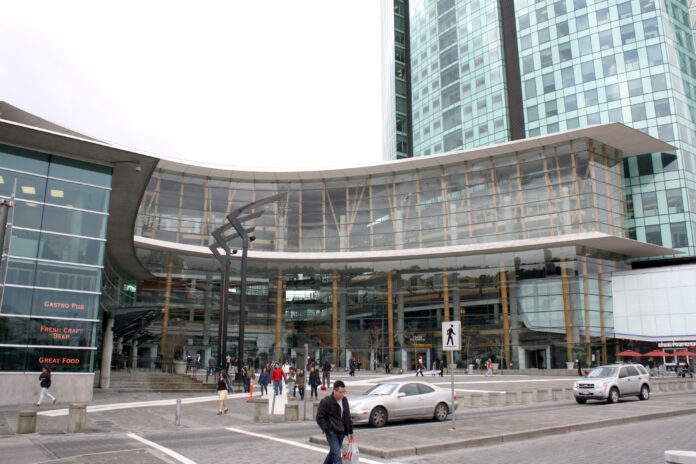
SFU Surrey stands apart from the other campuses for a number of reasons. First, it is one of the most beautiful campuses. Similar to Woodward’s, SFU Surrey is made up of exposed wood, smooth concrete, wide windows, and splashes of colour. What sets Surrey apart from Woodward’s, however, is the abundance of student spaces. There is an abundance of lounges, seating, and “team rooms” available, and students at Surrey are actually sociable while they are using these spaces. Narula claimed that this is one of her favourite parts about the campus. “There is a close-knit community at SFU Surrey,” she said. “Not to be biased against Burnaby — I love that campus — but I love SFU Surrey in terms of community.”

There is more to like about Surrey than just the SFU campus, however. The new public library has received a lot of praise, and the city boasts a number of beautiful parks. Plus, it is next door to White Rock, where a stroll along the boardwalk always makes for an enjoyable day trip. Even if the Surrey of today doesn’t satisfy you, it is growing rapidly and may eventually steamroll Vancouver as British Columbia’s business centre. Surrey is already attracting businesses, and there is a developing trend of a reverse commute of workers from Vancouver to Surrey. “It’s got a bad rep,” admitted Carlos Suzara, a first-year sociology major from Surrey. “But Surrey’s not that bad. When you stay here for a while and really get to know the people and the diversity of people, it’s great. It’s a big city, and I heard that it is going to be the next downtown.”



“I don’t know how to use a condom” & other tales of how sex education failed me

1
Photo: Mark Burnham

I thought I had pooped my pants, but who poops their pants in the fifth grade? I didn’t remember going to the bathroom that day, but I guessed I must have — in my pants. Maybe it was ‘anal leakage’ — a word that I had recently heard a family friend use in reference to what happens after eating too many greasy chips. It must be that. What else would explain this mysterious maroon streak in my underwear?

After a day of walking around with my underwear packed full of toilet paper and taking frequent bathroom breaks, I decided I would try those things in my mom’s bathroom that I always saw on commercials — you know, the ‘super absorbent’ ones that they pour the blue liquid on. They would be a more effective diaper than this bundle of T.P. in my underwear. Definitely.

I pulled my pants down, expecting to see the brownish stain I had grown familiar with, only to be surprised by a different colour: red. My memory was jogged, taking me back to the second grade when my best friend said, “My mom told me that when girls get older, they bleed from their vaginas.” I had been dreading this day for years, but it didn’t hurt like I had imagined it would. It was just kind of . . . there. Relieved that I could start eating chips again, I asked my mom if she could buy more of those diaper things — or, pads — and that was the end of my ‘anal leakage’ phase.

Later that year, I learned about menstruation in my first sex education class. This is just one of the ways that the sexual health education system in my school failed me.

My sex education resembled what you see in the movie Mean Girls: “if you have sex, you will get pregnant, and you will die.”

I grew up in Abbotsford, B.C., which is nestled in the Fraser Valley about an hour’s drive east from Vancouver. As you drive within the city limits you will see a sign that says “Abbotsford: City in the Country”, reflecting the city’s growing population and its dedication to its agricultural roots. Most importantly, however, Abbotsford is the heart of the Bible Belt of British Columbia. I like to tell people that means there is a church on every corner — which is stretching the truth, but not by as far as you would think.

In B.C., individual school districts have control over the sex education implemented in schools, compared to Ontario where sex education is provincially-mandated. There are loose federal guidelines for how sex education should be implemented, and there are resources made available by the provincial government, however in the end the school district has a final say. This means that the religious sentiments of Abbotsford citizens could implicitly be transferred into my sex education curriculum, guiding both when I started receiving sex education (too late in my case), as well as what would be talked about in these classes.

The Abbotsford school district’s policy on sex education resembles what you see in the movie Mean Girls: “if you have sex, you will get pregnant, and you will die.” District policy details its support for teaching abstinence in schools, stating that “by encouraging and promoting responsible, informed decision-making and creating a climate where abstinence is celebrated as a smart, safe, healthy choice, the board anticipates that students will choose to not engage in sexual activity, thereby avoiding the associated negative emotional, physical, and psychological consequences.” Contraception, therefore, is a bit of a taboo subject for the Abbotsford school district. The policy specifies that while information on the various methods, their risks, and their failure rates will be provided to students, students will not be taught how to use contraception. “It is important for all teachers to address this topic within the context of ‘saving sex’ instead of ‘safe sex’ or ‘safer sex’,” the policy says in regards to contraception. “All discussions about pregnancy and STD prevention must focus on encouraging students to make the responsible choice of not engaging in sexual activity.”

Needless to say, I learned how to use a condom from watching Molly Shannon pretending to be a sex ed teacher in the movie Never Been Kissed — not from my own sex ed class. Not to mention all of the other dysfunctional happenings that went on in Abbotsford, such as girls who would have anal and oral sex freely — but were waiting to have vaginal intercourse so they could remain virgins.

Needless to say, I learned how to use a condom from watching Molly Shannon pretending to be a sex ed teacher in the movie Never Been Kissed — not from my own sex ed class.

It is because of school districts like Abbotsford that Sex Week is held in residence at SFU. Sex Week is an annual weeklong program run by Residence Life which features events such as sex information sessions, burlesque classes, sex toy parties, and Valentine’s Day card-making workshops. Alex Belfer, one of the organizers of this year’s event, which occurs this week, explains that they hold this program for a number of reasons: it is fun, but most importantly, it is educational. He claims Sex Week provides “an open and healthy place” for residents to learn about and discuss sex with people they trust. The need for this program is demonstrated through the varying levels of knowledge that residents have about sex coming into university. “While you hope that they come with the knowledge,” Belfer said, “they come from diverse backgrounds . . . and each different background approaches sex differently.”

With the amount of sex and sexuality that children and youth are exposed to through scenes in movies, ads in magazines, or internet pornography, it is important to properly educate students in order to provide a context for this information. For instance, children — especially girls — should be taught from a young age about self-image and self-worth, and teenagers should be educated on the porn industry and the expectations that it can create. One would hope that this occurs before young people become sexually active — and at the very least, they should be equipped with this knowledge before moving out of their parents’ homes.

Ontario’s provincial government is trying to create a sex education curriculum that fits students of the 21st century. Beginning at a young age, the curriculum is inclusive of the diverse students in the system and a wide array of issues surrounding sexual health — such as explaining gender identity and sexual orientation, and emphasizing acceptance. This curriculum reform has caused a lot of controversy, however, with many residents opposed to the changes — mirroring the recent uproar over Burnaby’s sex education reform to include LGBT culture and issues in the curriculum.

Public education should not be impacted by the values — religious or otherwise — of a community. Sex education is a matter of physical and emotional health and well-being, and it is important that children and youth are informed on the issues at hand. While parents are a good place to start this education, there needs to be a way to ensure that all children receive adequate and effective sexual health information. The Canadian Guidelines for Sexual Health Education, published in 2008 by the Public Health Agency of Canada, argues that schools are in a unique position to provide sex education because they are “the only formal educational institution to have meaningful (and mandatory) contact with nearly every young person.” However, in British Columbia, there is no way to ensure standards of sex education because it varies between districts.

Sexual health education is too important to leave up to individual school districts — or to wait until university programs like Sex Week. Girls should be prepared for their first periods; boys should know what is happening when they get their first erections; young people should know how to put on a condom by university. These are the basics, and even these needs aren’t being met by all school districts. The B.C. Ministry of Education needs to reform so that it can dictate the sex education curriculum. Sex Week shouldn’t be a student’s first point of contact with effective sex education; it should be a fun week of events where they can explore sexuality and become more comfortable talking about it.

Ski Ninjas: Stem Cells

0

By Kyle Lees at Ski Ninjas

Word on the Street: Reading Break

0

By Gary Lim

SFU establishes new Faculty of Bears

0

By Gary Lim


Citing interest from the increasing bear population at SFU, the board of directors in association with the president’s office has decided to create the new Faculty of Bears.

“It’s a no brainer really, as of 2012 members of the family Urisidae will comprise four per cent of the student population on the mountain,” noted Shelly Thurman, newly instated dean of the fledgling faculty. “It’s an absolute shame that these majestic creatures have yet to be recognized for their ingenuity and intelligence. For far too long whenever a lone black bear wandered onto campus—likely in search of higher education—it was destroyed and mixed into the Chartwells’ meat supply, but no more.

Administrative analysts such as Stephen Calhoun say that the influx of new ursine students is just what SFU needs to facilitate future growth. “For a long time now international students have been the fiscal cornerstone of SFU, but we need to see a shift if this institution is to survive. We need to be bold, and tap into the virtually untouched non-human markets. Who knows how much vital revenue, in broken-off chunks of honey comb and half-eaten deer carcasses, will be pumped into school because of it?”

The programs offered by the faculty will range of a diverse number of topics from first-year foraging techniques, to seminars on how to properly defend your thesis and cubs. The classes will predominantly be held in Blusson Hall, now renamed Bearson Hall. Any human student caught inside Bearson Hall limits will no longer be covered under their SFU Health Plan.

In anticipation of the inception of the new department, existing faculties will begin offering bear-related courses in hopes of enticing the new students, as well as the leaving of open garbage receptacles outside lecture halls. Among the new courses offered are ECON331: Trends of a Bear Market, ENGL103: Bears of Canadian Literature and SA400: Bears in society: The ageing gay gentleman.

Overall student approval of the project remains high with only several vocal students decrying the logistics of the faculty. Freshman Andre Nicoletti remarked, “Am I the only one who thinks this is a terrible idea? I mean they’re bears, they’re forest animals, creatures that could rip us into lunch-sized pieces no problem. But for some reason now we want to put them in the middle of a densely populated, loud, and stressful environment? Who comes up with this shit?

I’ve tried speaking to other students and professors too about this but they just ignore me; no, they literally act as if I no longer exist. We’ll be talking about classes or tutorials and everything will be fine. But if I so much as mention the word ‘bear’, their faces go blank and their eyes drift off like something’s disconnected in their brain and then they’ll start smiling, a horrible rictus grin, and then they’ll just walk away. What the hell is going on here?”

Herbivore haunts: downtown edition

0

By Meaghan Archer
Photo by Jenny Waters (The Peak)

Campus rats at Harbour Centre and Woodward’s: The Peak presents you a walkable selection of veg- and wallet-friendly lunch locales

Being a veg head or even just having the occasional Meatless Monday isn’t as awful as some carnivores make it out to be. It is a common misconception that vegetarians and vegans survive on kale chips and tofu, because if you don’t eat meat, then there’s nothing left but broccoli and rice, right? Negatory.

Scrumptious options are abound. If you are already a veg head or just want to try something new, healthy, and fabulous, seat yourself down and start munching!

Seriously, it won’t kill you. Vegetarian cuisine is popping up in more restaurants and I couldn’t be happier. Here are a few picks of some veg-friendly dining spots in downtown.

The Templeton
1087 Granville St.

If you’re into ‘50s style diners, this is the place to go. The authentic décor and working jukeboxes add an old school twist to your dining experience. Everything on the menu is fairly priced and made from organic ingredients, so you don’t feel as guilty.

There are options for everyone, whether you’re vegan, vegetarian, or a total carnivore. I tried the vegan lentil loaf, which was flavoured with Moroccan spices and came with some sweet mango chutney. The best thing was that it was obviously baked, not fried, and so tasted a little more homemade.

The side dish, fries, were crisp on the outside and soft on the inside — perfect. The Templeton is known for snappy service, but it wasn’t among the worst.

There are lots of classic diner-style dishes on the menu, like burgers, fish ‘n’ chips, grilled cheese sandwiches, poutine, and milkshakes. The breakfast menu also looks worth checking out.

Rating: 7.5/10

Freshii
870 West Cordova St.

If you’re looking for something quick and fresh, Freshii is just a five-minute walk away. With customizable salads, wraps, soups, and bowls, you would have to be an idiot to make your meal terrible.

This little spot is great whether you’re looking to take away or sit down for a bite and relax. There is a prepared menu to order from that is friendly to all kinds of eaters, but if you’re picky or want something different, there are combos and a variety of toppings, including all sorts of nuts and fruits, including blueberries and mango.

I was particularly impressed with their salad dressing graph, which points out which ones are vegan-friendly. It also doubles as an ingredients list, helpful for those with allergies or other limitations.

Freshii also provides a chart with the nutritional information of everything on the menu, and which foods are free of certain ingredients. Clearly, Freshii is dedicated to serving their customers as best they can, and the staff also reflects this — everyone was incredibly friendly and helpful with questions.

Rating: 8.5/10

Panz Veggie
1355 Hornby St. 

If you are looking for a stress-free decision in a calming environment, I suggest you hit up Panz Veggie, which serves 100 per cent vegan Chinese cuisine. Don’t let the sweet and sour “steak” and “ribs” fool you — they are meat-free too.

Knowing that everything on the menu is vegan and made from local ingredients makes meal decision time less stressful — well, sort of. The tons of delicious items to choose from tends to negate the ease of the decision process.

The deep-fried spring rolls and wontons are recommended — both come with a tangy plum sauce, and any dishes with the above-mentioned faux meat is also worth a try.

And don’t be scared about trying something new — that’s half the fun! If you have any questions, the staff are extremely friendly and willing to answer any questions you might have and also give their glowing recommendations. I know I’ll definitely be back for more.

Rating: 10/10

Bite-sized mentions:

La Taqueria
322 West Hastings St.
Twelve different tacos to choose from, four of which are vegetarian, while meats are locally and ethically sourced as much as possible.

Bon Chaz
426 West Hastings St.
Comes from the name of a Mexican pastry, baked daily, with sweet a filling, in flavours from chocolate to green tea.

W2 Media Cafe
111 West Hastings St.
Attached to the Woodward’s campus, W2 is the kind of place that offers quinoa salad and puts their sandwiches on baguettes.

Gorilla Food
436 Richards St.
For the adventurous eater, head underground to Gorilla, which offers all things organic, vegan, and raw at great prices.

Review: The Complete Works of William Shakespeare

0

By Larissa Albuquerque
Photo by Les Erkine

Perhaps Shakespeare can help you form a truce with iambic pentameter with its postmodern spin on Renaissance-era theatre

Whether you dozed through Shakespeare in your high school English classes, or you’re a fan of the famed playwright, The Complete Works of William Shakespeare is a sight to see. Three talented men suit up in colorful tights as they set you on a comical and theatrical journey through all of Shakespeare’s tragedies, comedies, and histories. “Is it even feasible to perform 37 plays in 97 minutes with only three actors?” a skeptic might ask.

While this eccentric, fast-paced performance not only proves this to be possible, it will leave you more knowledgeable on what Shakespeare is all about and breathless with laughter. With so many plays and so little time, it is to be expected that corners get cut and creativity employed.

As a result, the audience is presented with clever shortcuts such as 16 comedies in a mere 60 seconds, 14 histories played out like the Superbowl playoffs, Othello summarized into a rap by a white boy, Macbeth with three butchered Scottish accents, and Hamlet both sped up and rewound.

The smaller size of the Metro Theatre and its low production value adds to this intimate performance, where audience members feel as if the actors on stage were their close friends performing on their living room floor because of their close proximity and interaction.

The general population of the audience consisted of lovely seniors who were all excited and ready for a night out on the town, along with mothers and fathers with their children hoping for a night that would cater to everyone’s likings. The addition of a more youthful turn out full of energy might have nicely added to the highly vivacious performance, and this would almost certainly occur if this play were to reprise at, say, the WISE Hall.

This aside, Braedon Cox, Robert Sterling, and Adrien Gendron give a brilliant performance through the amount of chemistry they have on stage. Their interactions with the audience and abrupt references to today’s pop culture make this play extremely comical and highly accessible, even if the only Romeo and Juliet you know involves Leonardo Dicaprio.

Review: The Grey

0

By Clinton Hallahan
Photo courtesy of Liddell Entertainment

Buoyed by a skilled director and strong cast, The Grey rises above its boring premise

Banking heavily on the new Liam Neeson in a constant state of ass-kicking, The Grey is the latest imperfect Joe Carnahan effort I have no choice but to go to bat for. A film centrally concerned with Neeson beating up wolves with his bare hands, The Grey has no business being as good as it is. Once again, material that should have been trite and forgettable turns out to be a solid feature under Carnahan’s direction.

Even with its wolf-beating credentials, The Grey is downright understated next to Carnahan favourites The A-Team, and Smokin’ Aces. Following the trudging Alaskan hinterland journey of a band of airplane crash survivors, the film covers the requisite Alive! and Lord of the Flies territory, but quickly establishes itself as a unique survivalist yarn. Neeson plays Ottway, a hired gun for oil and gas interests in the north, fending off the incursions of wolves on the crews working in remote outposts. Faced with salvaging supplies from a downed airliner and surviving alongside others forced or encouraged to take work away from society, Ottway leads his ad-hoc family in a campaign against a pack of wolves bent on harassing them like so many wounded caribou.

Like any study of personalities and psyches put under the strain of incredible trauma, a sensitive script runs the risk of passing into the territory of the overwrought at any moment. Trite, groan-worthy moments flare out of The Grey at regular intervals, but it’s notable how Carnahan minimizes these moments. Juicing a career performance out of Neeson and solid supporting efforts from Dallas Roberts and Frank Grillo, Carnahan elevates what could have been a painful slumber party of bonding and exposition into a brutal and visually arresting suspense piece, with a haunting and beautiful final scene.

Trying to marry biography with performance is a fool’s errand, but knowing a little bit about Neeson going in is beneficial. Ever the fan of the expository flashback, Carnahan unsubtly establishes some undue end to Ottway’s marriage, an end that haunts Ottway.

Knowing that Neeson’s wife met a tragic end just a few years ago shouldn’t add to the poignancy of his portrayal of Ottway, but it does. The grief of loss and the comfort of her memory aren’t written so much on the face of the character as it is on the actor, making for a harrowing and memorable role.


The Ruffled Feathers are poised for flight

0

By Eamonn Singleton
Photo courtesy of the Ruffled Feathers

With talent, creativity, and a new album on their side, all that’s left is a pinch of luck for the Ruffled Feathers to be propelled into success

Gina Loes, frontwoman of self-described chamberpop band the Ruffled Feathers, has her fair share of responsibility in developing the band’s unique game plan in distributing their upcoming album, Oracles. “If I ever went back to school, it’d probably be to study business,” she laughed.

Songs from the album are to be released in pairs every two weeks, easing the audience into piecemeal. Each release will also be accompanied by creative projects, such as artwork, short stories, or videos tailored to the songs. “For each song, we’re going to tell you what the song is about, how it makes us feel, and what the influences were. It also allows us to show a different form of art,” Loes explained.

The first release included “Canals of Suzhou” and “All My Cities”. The former is illustrated with a photo essay by Charley Wu, who plays a wide array of instruments, from the guitar to mandolin. “All My Cities” is accompanied by a family recipe for bread, from Gina’s mother, as well as a special T-shirt that was designed with the song in mind.

“I know some talented musicians who are playing, performing, and writing really good stuff,” Loes explained of the rationale behind the band’s strategy. “But with the structure of the music scene, you have to do something to stand out, to be unique. It’s really easy to record an album. Anybody can do it now and upload it to iTunes. But what are you going to do differently?”

Part of the band’s focused direction is a result of their previous struggles. After things things didn’t take off like they imagined after they released their Lost Cities EP in late 2010, the band took a break. But after six months of hiatus, Loes grew anxious to play again. At a time where she could have called it quits, she instead made the decision to give the band another go, forgoing other work opportunities in New York to do so. “I’d rather play music,” she stated confidently.

After a few changes in the line-up, and with a more thought out strategy, the Ruffled Feathers gave it a second try. By then, the momentum had been building, and the band found themselves on the airwaves of CBC Radio 3, and performing at larger venues like the Biltmore.

The band’s philosophy on remaining unique also extends to their style of music as well. “There’s a lot of classical piano, heavy horns, and male–female harmonies all overtop of a rock band,” said Loes. Oracles is a particularly eclectic compilation; she described some songs as having a Western theme, others sounding more traditionally Chinese, along with a few in the style of ‘50s doo-wop.

The Ruffled Feathers are hoping to embark on their first tour some time after their CD release show in April.

“The Vancouver music community is small enough that it’s accessible,” Loes said. “There are tons of great musicians, and it’s easy enough to make connections and for everyone to know each other.”

“However,” she continued, “once you’ve been around long enough, you run out of new places to play which means we’re at the point where we need to start traveling, but that’s a whole other barrier on its own.”

The Ruffled Feathers perform live at The Cellar on February 24.
