Home Blog Page 1227

Lucky SFU student approved by BMO for credit card

0

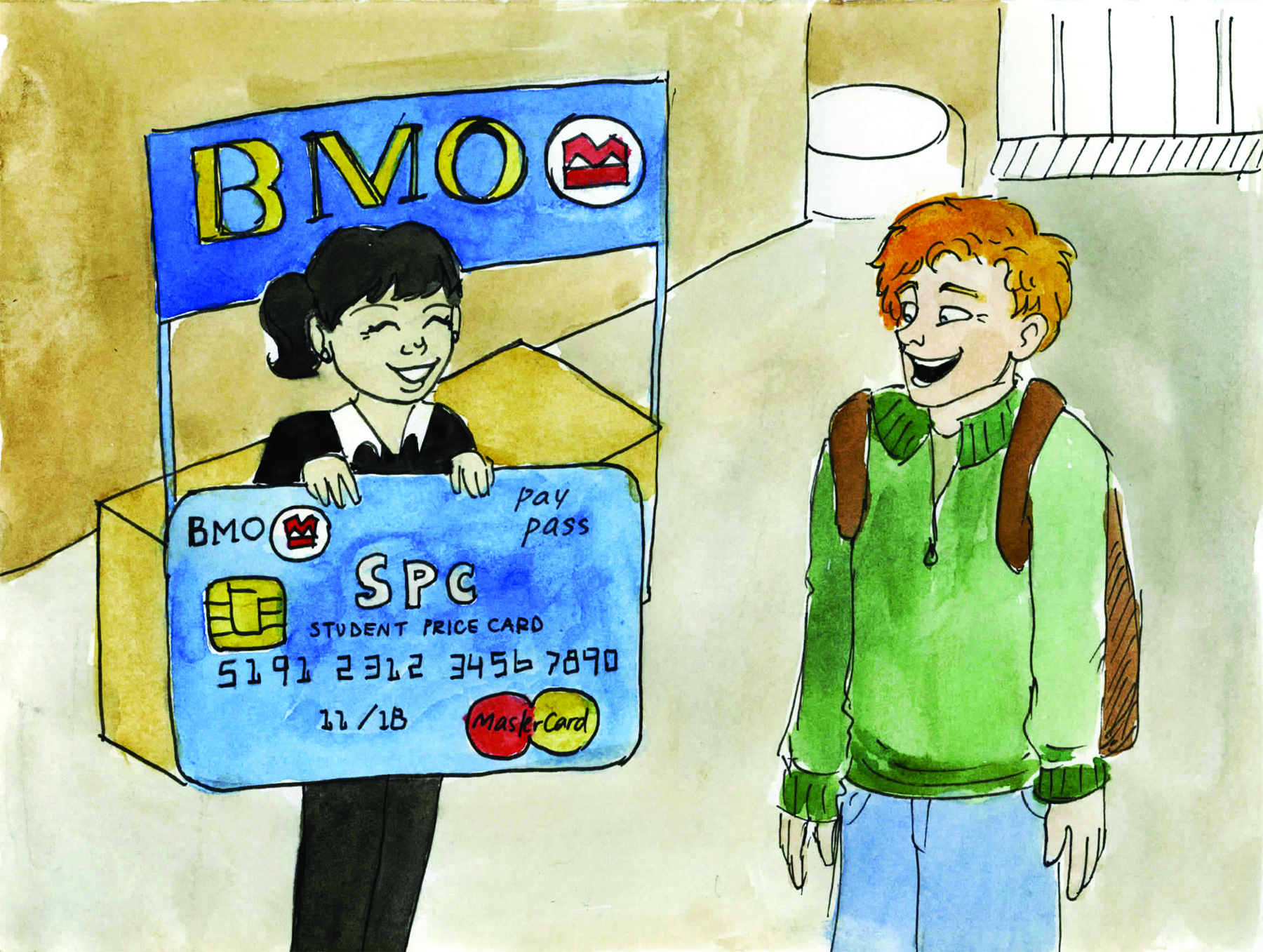
BURNABY — An extremely fortunate first-year student, who is sure to quickly become the envy of all his classmates, reportedly was hand-picked by the illustrious Bank of Montreal to receive his very own credit card.

According to his story, Jason Seidelman, an 18 year-old SFU student was selected to receive a free credit card from BMO, an honour he is sure is extremely rare.

“I was just walking through the Blusson Hall on my way to a biology lecture when out of nowhere they approached me,” Seidelman explained while proudly showing off his new “gold” credit card. “They said that I was eligible for a special student credit card . . . I don’t know how they knew I was eligible, but I figured that they must’ve been on their radar for quite some time now.”

Seidelman told The Peak that he believed it was his strong work ethic and diligence that had attracted BMO to offer him this amazing opportunity and although he wasn’t sure, he said he wouldn’t be surprised if they had heard about his impressive “A-” grade on his latest Chemistry lab report.

“Anyway the woman from BMO took me to their secret booth and asked me if I’d be interested in getting their card,” Seidelman said bulging his eyes, “Of course I said yes, who would turn down an opportunity like that?”

Although statistics reveal that about 99 per cent of students offered BMO credit cards actually do turn the offer down while pretending they really have to get to their class, Seidelman’s feeling of uniqueness has not been diminished.

At press time however, Seidelman did experience a minor dip in his positive feelings when it came to his attention that his idiot friend Craig had also been head-hunted by BMO an hour after him in the same location.

Point/Counterpoint

0

SFU students respond to whether educated North Americans should be able to suggest change in third world countries. This comes into light after SFU professor Morten Jerven’s book on research in African statistics, Poor Numbers, caused him to be blacklisted from two international conferences, and accused of being a “hired gun” of the West with a hidden agenda to discredit African officials.


Lauren Kyle, SFU student

Jerven’s main argument is that African economic statistics are not reliable, and can misinform the delegation of funding for countries in need. In his quest to re-examine the methods used in statistics, he suggests more universal data collection techniques. He has opened up a new conversation across multiple disciplines in academia: do we have the right to stick our noses into other countries and claim their practices to be insufficient? I don’t think we do.

As a high school student, I participated in many activist endeavours and even a major protest in downtown Vancouver collecting petitions to stop the practice of FGM (female genital mutilation) in third world countries. At the time, it seemed a heroic, thrilling, and controversial topic. Now, as a social science student, I cringe at the attitude and approach behind that rally. Do I have the right as a naive student to label as immoral a cultural practice that has been continuing for years?

Although it is important to stand up for human rights and to keep an open dialogue about what should be considered universal standards of living and freedoms, it is equally important to realize that our education is Eurocentric in its curriculum and purpose, and when looking through this magnifying glass at other cultures, we do not have the lived experiences of other peoples, nor the ultimate superior lifestyle of the world. Even with seemingly superior statistics or health practices, we will never be able to replace the voices of those who live in the cultures.


Leah Bjornson, Associate News Editor

Many voices critique the “whiteness” of academia — and rightly so. There is an overwhelming number of male, caucasian scholars who write the histories of and prescribe policies for less-developed countries. The repercussions of western academics taking up the “white man’s burden” to educate people in African nations — and in doing so, treating them as children — can include ignorant policies that do not acknowledge the complications and realities on the ground.

However, by viewing this complicated relationship as a fight between ‘the West and the rest,’ we are potentially solidifying a way of thinking that created this problem in the first place. This dialogue of ‘us’ and ‘them’ might result in closing off channels of information that could be potentially beneficial. For example, if Jerven is correct in his observations that certain policies pursued by governments like Malawi are less than effective, this has vital consequences for those governments. If we discriminate and reject his thesis on the basis of his “whiteness,” then the danger is that alternative and helpful initiatives may never be implemented.

What this opening of dialogue requires is easier said than done. Western policymakers have for a long time imposed their policies in Africa, many of which have been ineffective or even harmful. It follows that African officials may distrust an academic like Jerven, whose critiques could have major implications for the amount of foreign direct investment flowing into the continent.

Nevertheless, it does not make sense to disallow talented scholars from investigating a particular issue on account of their race. In doing so, we only serve to reinforce this dialogue of “us” and “them” — which was the root of the problem.

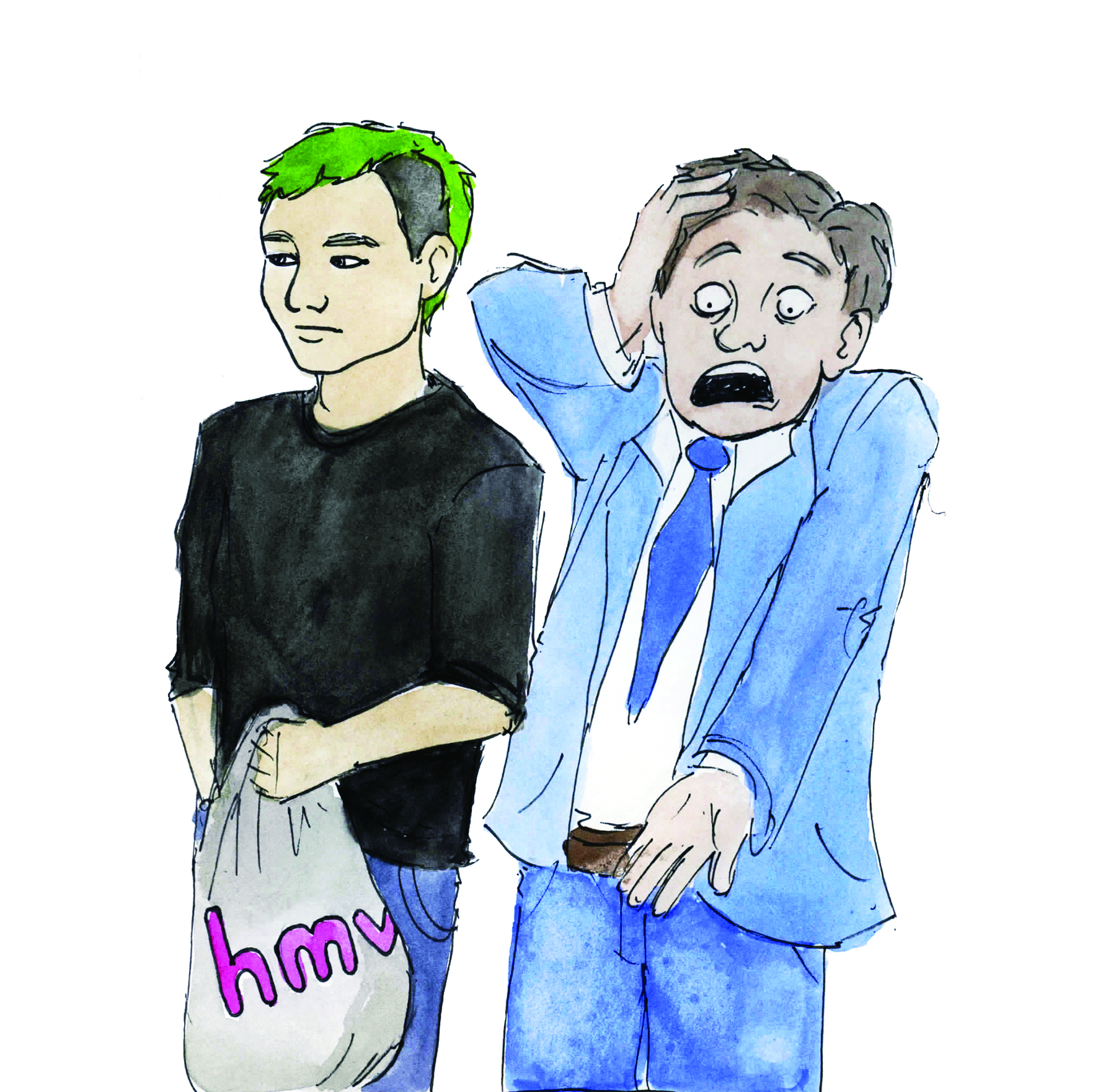
HMV CEO “not quite sure” how the company is still in business

0

LONDON — HMV CEO Trevor Moore told the media yesterday that he was “just floored” at how his company that sells exclusively products that are available for free online somehow had revenue of $1,486.44 million dollars last year.

While the company managed to do alright in the last quarter without making any adjustments to their out of date business model, Moore isn’t too optimistic about the future.

“I mean, it kinda sucks for everyone working here, but realistically, can this go anywhere but down?”

Moore explained that he was really “just trying to figure out in his head how much time the company had left” as he attempted to tell the media that the physical CD’s and DVD’s HMV sold were all at once infinitely more compact, durable, and transportable.

At one point Moore even admitted that he himself didn’t own many, if any items sold at his stores. “I don’t even own DVDs” Moore said, “I mean realistically I travel a lot, so I’m not going to carry around 50 to 60 DVD discs with me, that’d be insane!”

Moore also complained that the government needed to stop the piracy of the music business. He argued that if it wasn’t music piracy, customers would still be buying the cumbersome and archaic discs.

“I mean what do you expect us to do? Sell our stuff on the internet now that the market has changed? No way, these people are breaking the law.”

In closing Moore stated that though the online market seemed to be far from perfect, it was not HMV’s responsibility to develop or buyout a digital service like Netflix.

“If we sell stuff online, less people will want to buy CDs—we’d be cutting into our own market share!” Moore said before leaving to contemplate how someone with his business sense even became a CEO.

Research Roundup

0

WEB-bears-Andy Wright

Grizzly findings

A new study, co-authored by biologists from SFU, the Raincoast Conservation Foundation and the University of Victoria, questions the sustainability of BC’s grizzly bear population management over the last ten years.

Using information requested by the science-based advocacy group Raincoast, the authors aimed to determine whether BC’s alleged “sound” scientific management of wildlife actually preserved the grizzly bear population.

The study, published on Nov. 6, found that the total number of kills exceeded the limits set by BC government’s biologists. Also, as the study stresses, the actual number of overkills could be even higher given the amount of uncertainty in the bear population count.

Kyle Artelle, an SFU doctoral student, Raincoast biologist, and lead author of the study, expressed concerns in a press release. “These overkills are a serious concern because the biology of grizzly bears makes them highly vulnerable to excessive mortality,” he said. “They have great difficulty recovering from population declines.”

The study reveals that grizzly bears, indeed, have biological characteristics that can hinder population growth, such as a long lifespan and delayed reproductive maturity. Sows “have small litters [that they] keep for up to two years, after which they will often go one or two years without having any cubs at all,” Artelle told The Peak in a phone interview.

This is the first independent study on the BC Ministry of Environment’s policies of wildlife management, and it was made possible after a Freedom of Information (FOI) request that went to the Supreme Court of BC.

Although the findings of the study may look grim, Artelle talked of a “hopeful” side to the study, supported by data: “even considering all other sources of kill, such as road and rail accidents, and self-defence kills, if [the government] had eliminated or reduced hunting in the study period, they could have prevented most of the overkills we detected. So the government does have a tool to prevent this from happening.”

These findings come in a time of rising mobilisation against trophy hunting in BC among the Coastal First Nations communities. A public opinion poll conducted for the Coastal First Nations in September found that four out of five British Columbians support a ban on trophy hunting grizzly bears.


WEB-Ash Parameswaran-pamr


Fecal matters: innovation could save lives

Ash Parameswaran of SFU school of engineering and three of his graduate students have created an inexpensive lifesaving invention, which is on track to save the lives of millions of infants. The lab-on-a-chip (LOC) is an inexpensive microfluidic device that can quickly do bacterial tests for infantile diarrhea and determine the appropriate antibiotic for treatment.

Parameswaran’s was one of the 102 research projects to receive a $100,000 grant from the federal government’s Stars in Global Health Program. With international HealthCare practitioners clamoring to lay their hands on the LOC, the grant money will be used by Parameswaran and his team to develop the USB-sized mechanism, which will cost around five dollars and plug into a cell phone.

The inspiration for this design comes from the high infantile death rates in association with diarrhea, especially in developing countries. In these countries, it may take as long as 10 days to reach a doctor and begin the necessary treatment — in most cases, this is too late.

There are 10 different antibiotics available; the problem is the ability to instruct on their use and diagnose the specific vein of bacteria. Parameswaran’s design would enable mothers to test the fecal matter themselves and administer treatment with over-the-phone aid from a licensed practitioner.

Parameswaran is supervising a team of highly qualified personnel. His graduate students hold high standing academic and industrial appointments today both nationally and internationally. Parameswaran has also establishing a microfabrication and micromachining laboratory to fabricate micromechanical devices and systems here at SFU.

These resources will help Parameswaran and his team to incorporate the LOC’s biology and electronics into a desk-sized prototype for investors, followed by the final USB-sized product, assuming further funding, which in the future could be used anywhere with access to a cell phone.

Trenchcoat makers baffled by decline in popularity of trenchcoats

0

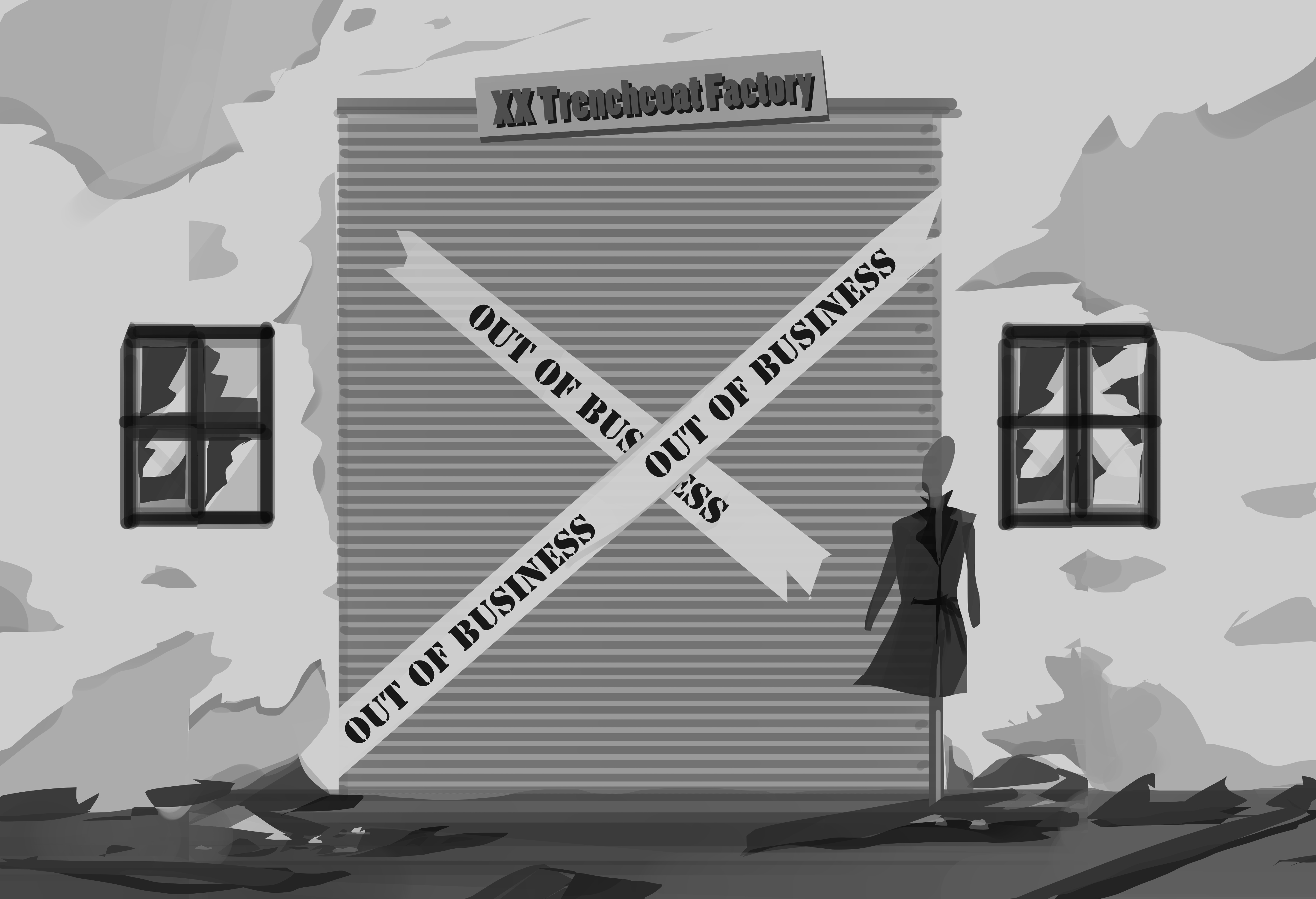
VANCOUVER — A continuing decline in the sale of trenchcoats has left industry insiders befuddled. Though once popular among private detectives and all around cool people, now trenchcoat sales have reached an all-time low.

“Trenchcoats have just not been selling,” stated Fred Sandersgaard, CEO of Trenchcoats and Cigarettes R Us, “I quite regret opening a store that sells only trenchcoats and cigarettes. There just does not seem to be a market for chain-smoking private-eyes these days.”

Although its usage for looking cool while smoking was once a necessity for being hired by any detective agency, they were perhaps most known for their versatility.

“They look so cool and are so multi-purposed,” said Turner Trenchcoat, a once successful trenchcoat salesman and a man so convinced of their greatness that he changed his last name to Trenchcoat, “whether you’re solving cases, going to a porno, or just going for a good flash, you can’t leave your house without one!”

Trenchcoats did suffer a decline for a brief period in the 60s, after chain-smoking no longer seemed as cool. But out with the cigarettes, came two new growing trends, public masturbation and flashing.

But now, trenchcoat use is down amongst masturbators and flashers. In a National Perverts Society survey, only 40 per cent of flashers use a trenchcoat while a mere 10 per cent of masturbators continue to use them.

“Things just go out of style . . . it’s like once everyone wore suit and ties, and now everyone wears hoodies and stuff, no more fancy stuff, those pervs are just the same” said Scott Stewartson, an SFU student who was quick to point out that he is “totally not a perv” and became defensive upon questions of his plans for his night.

A flasher who wanted to remain anonymous but were just going to go ahead and tell you, it’s respected member of the community, John Fredrick, stated, “It’s hard to get anything done wearing a trenchcoat. I mean if I wear a trenchcoat it sends a signal that I’m a creep, never mind the fact that it’s late at night and easy to fright anyways. You know, I got to be more subtle.”

Despite giving a reason to the decline in trenchcoats, he refused to elaborate on how “he went about business” as he claimed that he would be giving away “trade secrets.”

Perhaps, that is the problem, the target audience is too much of a secretive bunch. Though some are opposed to change, such as Mr. Trenchcoat, others are more receptive to the possibility of change. A sales rep for Cheap Thrills Inc. was quoted as saying, “If we knew what they want, we’d give it to them . . . Those perverts are just too hard to market for.”

Unfortunately, some are ultimately doomed to failure.

“I haven’t had a sale in months,” Sandersgaard added, “Soon, I’ll have no choice but to fold up shop. Maybe after this is done I’ll go back to selling top hats and monocles, now that’s where the money is.”

Sexual assault with cereal

27

Are you having rape for breakfast? The recent string of sexual assaults at the University of British Columbia may be shocking, however these assaults occur in addition to incalculable rapes and assaults happening around the world each day. In areas ranging from developing nations to Metro Vancouver, sexual assault happens at the breakfast table. Canadians are surrounded by subversive sexual assault in their bowls of cereal and their cups of coffee, because milk is a product of rape.

Many people are not aware of the unavoidable connection between dairy milk and sexual assault. Just like human mothers produce milk after they become pregnant and give birth, cows also are impregnated in order for them to produce milk. The industry often uses a device nicknamed the “rape rack” to artificially inseminate female cows. Farms may opt to shove a 12 inch long “insemination rod” into their cow’s vagina, which often necessitates guiding it with their arm in the cow’s anus. When the mother cow gives birth her baby is taken away from her so that humans can drink the milk instead.

Don’t believe it? Even the industry lobby-sponsored website reveals that dairy farms have a separate calf barn where the baby cows are taken after they are born, away from their mothers. Where do these cows go?

Sometimes veal calves (male babies) are purchased directly from dairy farmer seven to 10 days after they are born (and, of course, are then killed before they reach adulthood). Female babies are raised until they are old enough to be artificially inseminated, and then the vicious cycle repeats. The dairy cows themselves, when their production declines, are sent to slaughter.

Non-human animals, just like us, do not want to give their bodies and their lives for the pleasure of a few.

As children, most Canadians are told that cows “give” milk, but this explanation is misinformed. Just as women do not “give” their consent by walking alone at night to be assaulted, cows do not “give” their milk, people take it from them.

Local farmer’s will try to say that their cows are happy and treated nicely, however the murder and rape of these animals is an unavoidable part of this profit based system. Organic and free range labels still have the same assaults connected with their products, not to mention the incalculable uninvited gropings and unwanted touches that happen during the actual milking process.

If we really want to be a society that says “no” to sexual violence, then we have to look at our own choices and stop supporting sexual assault, directly and indirectly.

What about the nutritional benefits of milk? We can get enough calcium from spinach, broccoli, kale and other leafy greens, as well as fortified non-dairy milks, like those made from soy, rice, almond, coconut, hemp, cashew, hazelnut and flax.

Next time you go grocery shopping, choose one of these alternatives. Choose not to support rape and sexual assault. Choose a vegan milk and join the movement to stop systematic rape and sexual assault. It doesn’t take much to make compassionate food choices, and it astronomically reduces the suffering of non-human animals, who just like us, do not want to give their bodies and their lives for the pleasure of a few.

Got milk? Not me. And I am not asking for it.

Moment of zen

0

Jon Stewart

At the SFSS Board meeting last week, President Humza brought to the Board’s attention that the SFU Outdoors Club encountered some troubles on their most recent excursion. While snowshoeing, the group allegedly discovered late in the night that two of their members were missing. The two were later found, safe and asleep.

However, there seems to have been a miscommunication between the club and Board, as seen in Humza’s comments.

“I don’t exactly know what the process of snowboarding is,” said Humza.”You’re supposed to be close to one another. There’s supposed to be teams and proper checks and balances.”

Humza admitted that he has never been a fan of the sport.

Woohoo, Boohoo

0

Woohoo: giving money to homeless shelters

I have fairly liberal opinions concerning the homeless. I know that the issue is much more complicated than homeless people being unwilling to secure jobs or preferring to be addicted to drugs -— as many of the most elegant conservative arguments boil down to. People may become homeless for these very reasons, no doubt, but I prefer to view these people as people before lazy drug addicts.

I don’t think it’s too much of a stretch to see anyone, including myself and (doubtlessly) our hundreds of loyal SFU student readers, as having the potential to be homeless. Even if my growing up as upper-middle-class stayed constant, a change in family, friends, love, or forgiveness could have led me down a path of addiction, or deep-set problems that emerge as financial irresponsibility.

Homeless people deserve support before judgement, which is why homeless organizations, like shelters, churches, and support groups, deserve the extra financial or physical support of whomever can give it.

Boohoo: handing out money on the street

Handing out money to people panhandling does not solve the issues surrounding homelessness. At first, it appears to be helping someone support themselves, at least in the short term. However, there is no guarantee that the money they receive will go somewhere worthy. Many of them suffer from mental-health issues, or do not know how to spend their money appropriately.

Of course this does not apply to every person begging on the street, but, doubtless, it applies to many. In the end, handing out money freely supports people living a lifestyle in which people exist in society without contributing.

The act may seem like one of the many small acts of kindness that make the world a better place. And perhaps it is. The problem, though, is that there are so many other kinder acts that require a similar sized contribution — for example, giving money to worthy homeless shelters.

So the next time you’re tempted to give money to a homeless person, write a reminder to give that same amount to a homeless shelter. Better yet, volunteer time or donate food. If you really want to help, it’s the best you can do.

Clan women continue successful season in Missouri

0

The SFU women’s wrestling team, already having found success this season, kept up the momentum with a strong showing at the Missouri Valley College Open on Nov. 16. Seniors Justina DiStasio and Jenna McLatchey both won their respective weight brackets, while two other Clan wrestlers, juniors Nikkie Brar and Darby Huckle, finished second in theirs.

DiSatsio went undefeated through four rounds to lay claim to the 170-lbs bracket title. Her first win came at the expense of Wayland Baptist University’s Brenda Mendoza, before beating Menlo College’s Solove Naufau in the second round by technical fall. She tossed aside Missouri Valley College’s Brittany Jones in the third round before besting Ruth Leger from Lindenwood College in the final round for a dominant title win.

McLatchey also won all four of her matches, but three of the four were won by decision. Her only non-decision victory came in the first round against Alana Jimniez, wrestling for New Jersey’s Bearcat Wrestling Club. She then topped Justina Luafaleman of Northwest Tech to move on to the third round, where she’d face — and defeat — another Wayland Baptist Wrestler, Angela Vyborny. In the final round, she beat Malexsis McAdoo of King University to claim the 191-lbs title.

Brar, meanwhile, won her first four matches to move onto the final of the 116-lbs bracket, but lost a close match by decision to Jessica Fresh from Waldorf College and was forced to settle for second.

Huckle, however, needed just two wins to move onto the final round of the 101-lbs bracket, but ultimately lost to Oklahoma City University’s Emily Website to fall just short.

Also wrestling for the Clan were senior Gina Carpenter and freshman Mallory Velte, who each finished fourth at 130-lbs and 136-lbs, respectively. Velte’s fellow freshman Laura Anderson finished seventh at 123-lbs, while Jilliane Vina and Minika Podgorski also hit the mat for SFU.

Already having had plenty of success so far this season, the Clan women will get a month to prepare for their next event, the Southwestern Oregon Duals on Dec. 16.

SFU Entrepreneur of the Year awarded to computing scientist

0

CMYK-maryam Sadeghi-Mark Burnham

This year’s SFU Entrepreneur of the Year award was presented on Nov. 16 to Dr. Maryam Sadeghi, an SFU alumna who recently received her PhD in computing sciences.

Sadeghi was recognized for her venture in health technology, called MetaOptima Technology Inc., and its development of the app, MoleScope, which will allow patients to detect skin cancer in its early stages at home.

Each year, the SFU Entrepreneur of the Year (SEY) program gives student innovators a chance to pitch their ideas to professionals and to compete for first place and the title of Student Entrepreneur of the year. Presented by Enactus SFU, SEY is a program that, as described on its website, “inspires business ideas and recognizes the future innovative leaders of tomorrow.”

“It’s a huge problem,” Sadeghi said of skin cancer, “70 per cent of patients identify it themselves or by family members who have never had access to any imaging device to look at moles closely and find cancer early.” In it’s early stages, skin cancer is highly treatable and catching it early on can mean a world of difference.


Above all, Sadeghi believes the product will bring its users peace of mind.


Sadeghi’s technology includes an advanced imaging device to capture potentially cancerous moles, to be used in conjunction with the smartphone app. The app will help patients keep track of their moles over time and learn how to spot the suspicious ones, as well as connecting patients with nearby specialists to whom they may send high quality images of their moles for consultation.

“It’s all about health solutions and having access to digital and mobile health,” said Sadeghi. MoleScope is just one of the tools MetaOptima hopes to develop that advances towards this ideal.

The MoleScope app will prove particularly useful for those patients that must travel lengthy distances to see a doctor about their suspicious moles. Sadeghi, mentioned that she’s observed patients coming to Vancouver from Victoria and even Kelowna, just to have their moles inspected.

“They could be doing this from their homes,” Sadeghi said she realized. “There’s not a lot of tests involved in the first visit, so it’s just looking at moles and saying, ‘oh, this is nothing,’ or ‘I need to biopsy this.’”

Above all, Sadeghi believes the product will bring its users peace of mind. For those who are already living with skin cancer, they are faced with the challenge of tracking all the numerous moles typically accompanying the illness, something Sadeghi describes at “a huge problem.”

The app should render this task less daunting as it will keep track of each individual mole and organize them to show their progression, and all from the comfort of patients’ own homes. After various stages of testing, Sadeghi is hoping to have the app on the market by summer of 2014.

SEY applicants were vetted through two preliminary rounds conducted online. The ten semi-finalists then presented their businesses to a panel of judges and the pool for the final round was reduced to four. The four finalists presented to a new panel and an audience in order to determine the ultimate winner for 2013.

On her experience as a contestant, Sadhegi commented “it was great!” She also remarked on how good it was to see the passion in all her fellow contestants and that she was happy to be a part of the competition.