Home Blog Page 1209

University Briefs

0

WEB-university briefs-markhillary:Flickr

UFV opens new agricultural facility


UFV’s new Centre of Excellence in Agriculture officially opened on Saturday, Feb. 15. The centre will provide a place for those interested in agriculture to study and receive training relevant to the industry.

Located in Chilliwack, the centre is in “the heart of the bread basket of BC,” — the heart of the agricultural industry. The hope is to involve the industry so that students can study the technology as well as learn in the classroom.

UFV facilities and campus development executive director Craig Toews told The Cascade, “If we don’t have industry involved, we don’t really have a real check and balance in terms of [whether or not] we are training students with the skills that the industry really needs for jobs.”


With files from The Cascade


UBC student swims to raise HIV awareness 


Haley Pipher, a fourth year UBC student, will swim 10 kilometres in three hours to raise funds for HIV awareness.

Pipher, a former member of the UBC Thunderbirds swim team, told The Ubyssey: “[The swim] has been something I’ve wanted to do for quite a few years now. There’s a lot of stigma against this disease, so I’m just trying to raise a little bit of awareness.”

The swim will take place at 10:30 a.m. on Feb. 18 at the UBC aquatic center with proceeds going to the Positive Living Society of British Columbia, an organization for HIV/AIDS support and awareness.


With files from The Ubyssey


McGill students protest fossil fuels conference


Around 30 McGill students and community members organized a blockade at a conference held by the McGill Institute for the Study of Canada (MISC) on Feb. 7 to discuss fossil fuel usage.

Mona Luxion, a protester, stated, “[MISC has] to understand it is a very political decision to have a conference that debates the role of the tar sands in some sort of ‘both sides are equal’ way, rather than acknowledging [that] the tar sands and global warming are killing people right now, and will continue to do so.”

Justyna, a Concordia student, voiced her dissent with the protest, saying, “I understand their position; however I think blocking the door and not letting people into a conference that is supposed to be about open discussion and rational debate isn’t a very productive way of supporting or representing your opinion.”


With files from The McGill Daily

Board Shorts

0

WEB-board shorts-Chris Hunkeler_Flickr

Funding request reaches SFSS exec.

The Chinese Students and Scholars Association (CSSA) requested $4,000 from Funding and Grants for their annual Lantern Festival Event, to be held on Feb. 15, $2,000 of which was allotted for prizes, including two iPads and rings from Tiffany’s. Funding and Grants has already contributed $300 for the rehearsal space as well as $170 for audio-visual materials.

The CSSA had originally requested approximately $7,800 for their event. As of Feb. 12, they had only sold 100 tickets — around 30 per cent of the total capacity for the event.

Funding and Grants has approximately $9,000 left in their budget for the remainder of the fiscal year, which ends in three months. Based on this, as well as the fact that Funding and Grants does not usually approve requests exceeding $1,500, it was resolved that the SFSS would give the CSSA $1,500 for location and logistics expenses.

Clan send Wolves packing

0

WEB-W basketball-Adam Ovenell-Carter

From the first tip-off, the ball was in Clan hands for nearly the whole first half. The dominant opening 20 minutes against the Western Oregon Wolves led to the Clan’s tenth victory in the Great Northwest Athletic Conference (GNAC).

Erin Chambers scored the first basket setting the tone for the rest of the game, but the score didn’t really start to ramp up in SFU’s favour until after the first media timeout early in the contest. The Wolves scored on a couple of free throws to bring the score to 14–10, but SFU would hold them to just four more points over the latter half of the opening frame.

Though Chambers opened the scoring, the star of the half was Rebecca Langmead, who scored 16 points and boosting the Clan’s slight edge to complete dominance.

While the Clan could find space at will in the Wolves’ end, there were no holes in the Clan’s defence, and at the midway point SFU was dominating Western Oregon, 35–14.

“We came out really strong defensively,” said point guard Marie-Line Petit, who had six assists on the night. “We knew really they had two weapons offensively, and we controlled them really well.”

But the Wolves turned things around in the second, draining 17 points in just over eight minutes. The previously tight Clan defence became sloppy, with WOU’s Kelsey Henry putting on a show much like Langmead in the first, dominating for a short time.

“[The Wolves] had that extra spark, maybe, that extra edge,” conceded Petit of her opposition’s strong second-half start.

But the Clan’s first-half cushion gave them a chance to regain their momentum. Halfway through the second, SFU rallied off 10 straight points, including two three-pointers by Chambers.

Langmead scored a career-high 24 points, and though the Wolves won the second half 36–35, the 21-point gap secured in the first by the Clan meant a decisive win, and a 10–4 conference record.

Clan can’t rally past Falcons

0

Sometimes, an upset just isn’t in the cards.

Just as it was looking like February might be kind to the Clan, on Feb. 13, SFU lost 89–79 to Seattle Pacific University Falcons.

SFU had beaten third-place Alaska Fairbanks on Feb. 1 and lost an 84–83 heartbreaker to Western Washington, who sit in second, one week later.

With just one Great Northwest Athletic Conference (GNAC) victory entering February, and then having held their ground against two of the conference’s top three teams, the Clan had every reason to feel good about themselves.

But against the Falcons, the conference’s top team, the Clan were brought back down to Earth.

A 10-point loss to a team that was 11–2 entering the contest is respectable for a beleaguered Clan team, and there were plenty of positives in the game. Four players scored double-digit points, with Sango Niang’s 26 leading the way. The team shot 54.5 per cent from the field, 46.2 per cent from three-point range, and ended the game on a 24–9 run.

But the Clan’s largest lead was three points — the game’s opening score — and lasted 19 seconds. Against a lesser opponent, those shooting numbers may have resulted in a lasting lead. But against a team shooting almost 60 per cent from the field and 55 per cent from three, it wasn’t enough.

“We came up against a very disciplined team tonight,” said head coach James Blake after the game. “[Players] had good individual efforts but we need more ball movement to get more players involved in the offence.”

The Falcons methodically built up an 80–55 lead with over seven minutes to play. Had the Clan’s late-game siege been successful, it would’ve been the story of the season. Instead, it feels more like a drop in the ocean. However respectable the final score was, it’s another loss in what’s been a frustrating season for the SFU players.

The loss drops the team’s conference record to 2–11 with just five games to go.


Hot and bothered

0

Synced Sequence Replaced.Still002

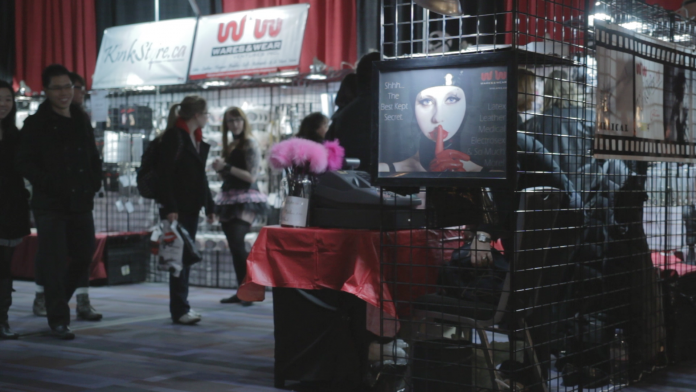
Despite Ron Jeremy’s absence — porn’s most shot actor with an impressive 2,000 films under his belt was scheduled for another day — Vancouver’s Taboo: Naughty but Nice Sex Show offered plenty more jaw-dropping reasons to pay it a visit.

From Jan. 30 to Feb. 2, the Vancouver Convention Center was filled with vendors selling sex toys of every colour, shape, size, texture, and flavour. Sexologists were giving talks on everything from foreskin to nipple-play, and there was even a curtained-off area called The Dungeon where no cameras were allowed (let your imagination run wild).

“The magic moment is when your tongue flicks the F-spot!” An unconventional welcome, booming over a loud-speaker, met guests as they first arrived. One of the most popular talks was by sexologist Dr. Jess, though the event featured plenty of other seminars lined up one after the other. Perhaps the most informative aspect of the evening though came from conversation with crowded vendors.

Making their way through booths and nearly-naked men, guests arrived at what was almost out of place: a museum-like set-up, looking like something from a Jane Austen novel with high-end, fashionable corsets.

“Melanie Talkington has the largest collection of antique corsets in the world. When Taboo found out about her [show at the Louvre in Paris] they asked us to come,” explains Stephanie, an exhibitor for Lace Embrace Atelier. Dressed in attire designed by Melanie Talkington herself, Stephanie says that they opted for a more “museum-esque” set-up to show that there is still an element of class and high-end fashion to the corset.

Selling corsets and lingerie modelled after antiques, Stephanie says that their custom-made attire not only attracts people with fetishes from all over the spectrum, but is appealing outside the bedroom as well.

“There’s steampunk, there’s historical — people who like to dress up as historical figures […] and then there’s modern women who come to us for medical corsets, as well as for weddings and proms. Some are even champion weight lifters that need custom corsets,” she says.

Synced Sequence Replaced.Still003

Fanned out on a seductively comfortable looking bed at Posh Passion Parties’ booth was the steamy adult trilogy Fifty Shades of Grey. Posh Passion Parties does in-home educating and demonstrations on how to spice things up in the bedroom.

Tastefully put by the company’s director Coralie Lynch, “We basically tell you everything your mom didn’t tell you about sex. So moms teach us how to get pregnant, and we teach you how to have orgasms.” The long line to sign up indicated people were eager to learn.

Lynch says books like Fifty Shades have “made things more mainstream. It’s made more women, who would have never had a party like this before, more [open] to the idea.”

As people open up about what happens under their sheets, organizations like Metro Vancouver Kink are poised to inform people how to do it properly. Kink’s director at large says that their monthly “play parties” allow people to explore sexual activities like bondage and role-playing. These parties offer a way for people to build connections in the kink community and to know that they shouldn’t be ashamed of what they are personally fond of.

Passion was evident in every vendor’s voice as they explained their contributions to the Taboo exhibition. But no one was more heated than — brace yourself — The Peak’s very first humour editor. Now founder of the Canadian Foreskin Awareness Project, Glen Callender contributed for 10 years to the very paper you’re reading. Callender has since taken his ambition down yonder.

“CAN-FAP promotes foreskin education, appreciation and stimulation, and advocates for the human right for all children, male, female and intersex, to grow up with intact genitals, so they can have the decision for themselves if some part of their genitals is [to be] cut off,” said Callender.

His reason for starting such a movement? “Well, I have a really, really great foreskin. I’m not going to lie to you. It’s a fantastic foreskin.”

At the age of eight, Callender discovered the process of circumcision and found it deeply disturbing. He didn’t want other little boys to be “strapped down and have a wonderful body part cut off” so starting his own movement seemed logical.

If there’s one thing to take from Vancouver’s Taboo: Naughty but Nice Sex Show it’s that no aspect of sexuality should make you feel ashamed. And remember: play safe!

Small stage, big moves

0

dancer.png?w=618&h=408&crop=1

Peter Chu might as well be Canadian. He loves Vancouver and keeps coming back to work with companies like Kidd Pivot and be a part of shows like Dances for a Small Stage.

“I’ve danced and worked for Canadian companies my whole career. It’s hard sometimes coming back to the US,” said Chu. The creative team he works with as part of his own company, chuthis, is made up of many Canadians including costume designer Linda Chow and composer Jean-François (Djeff) Houle. His management and PR team is also based in Vancouver.

The upcoming Dances for a Small Stage 30 is a Valentine’s Day themed evening of dance by artists like Noam Gagnon, Karissa Barry, Lina Fitzner, and Jim Hibbard. Chu will be reprising his solo “Someone to Dance With,” which seems to fit the theme very well. In this solo, danced to “Superman” by Five for Fighting, Chu’s character carries a single red rose around as he looks for a dance partner. “I love the music,” said Chu, “the character is really endearing — he’s trying to find his someone to dance with. He has a sense of hope.”

Chu was first involved with Dances for a Small Stage when MovEnt artistic director Julie-anne Saroyan asked him to do a solo in 2008. That was for Small Stage 18, and Chu performed “Someone to Dance With.” In 2012 he performed his company’s full-length show, Nothing Sticks, for Small Stage 26. At that time, Stacey Tookey was part of chuthis, and now they are both back at Small Stage for the latest edition. Tookey and Chu have also worked together on So You Think You Can Dance, and he said they have a long-standing friendship. “It’s nice to work with people you respect and who are your friends,” he said.

“The character is really endearing — he’s trying to find his someone to dance with. He has a sense of hope.”

So You Think You Can Dance is a different beast,” said Chu, “I enjoyed my experience there, it gave me an opportunity to create in a different way. It’s a different realm than concert dance,” he said. “I learned that I like the process and development stage of new work. With TV, there’s not a lot of time to manage the creation.” The caliber of dancers on the show is very high, but Chu said that it’s harder to create on dancers you don’t know.

Despite that, Chu was one of the only choreographers on SYTYCD to do a warm up with the dancers before getting into the choreography. “I was still able to coach and train them a bit — they said that never happens,” Chu explained. “I’m an advocate for education and training, taking care of the body. There’s something to be said for warming up as a group.” In 2012 Chu choreographed the top 8 group dance, and in 2013 the top 16 group dance with Stacey Tookey. “It was nice because my pieces didn’t have to be judged,” he said with a laugh.

Other than working in TV and performing at Small Stage, Chu will be a company member with Kidd Pivot when they present Tempest Replica in Vancouver this March, and he’s also working on some new material for chuthis. “I work best multi-tasking,” he said, “I’m very organized — sometimes probably too organized.”

He maintains his sanity by taking at least one hour a day to take care of himself and do something like a pilates class. Loving the work he’s doing makes things easier though: “I spend a lot of time and work on research and development — that keeps me calm and sane.” He also credits his management team, Laura Murray Public Relations, with helping him stay on track. “I have a hard time saying no, but you can only do so much. It’s about finding that balance,” said Chu.

Coming to Vancouver, he finds a great sense of community: “I’m really looking forward to performing with all the artists and being in the Vancouver community. Vancouver feels like a second home almost.”

Dances for a Small Stage 30 will be presented from February 13 to 15 at the Ukrainian Centre. For more information, visit movent.ca.

Wrong reform

0

WEB Trudeau talking - Justin In Markham-Unionville flikr

On the morning of January 29, Liberal party leader Justin Trudeau made an announcement in the House of Commons that shocked the political community of Canada. In this Wednesday morning massacre, he announced that all 32 Liberal senators would be removed from the party caucus, and would now sit as independents. This was an unexpected move to say the least, one I can’t see being advantageous for the man who wants to become prime minister next year.

The first attack on Trudeau’s announcement came later that day, and from, surprisingly, Tom Mulcair, leader of the Opposition. One would expect that the leader of the NDP, who wants to abolish the Senate altogether, would be happy about any proposal that made changes to that institution.

Mulcair questioned, though, why Trudeau would make such an announcement now, when less than six months ago, he voted against an NDP proposal to remove all Senators from party caucuses. Both Trudeau and former Liberal leader Stephane Dion suggested that the reform disrespects the constitution of Canada, because it makes changes to it. How can Canadians trust someone who doesn’t stay consistent on his ideals in such a small period of time to be the prime minister?

This is far from the only criticism Trudeau received after this bombshell announcement. Prime Minister Stephen Harper suggested that the change is merely cosmetic, saying, “the change announced by the leader today is that unelected Liberal senators will become unelected senators who happen to be liberal.”  While these Liberals will not be allowed to call themselves Liberals in the Senate, many will remain members of the Liberal party.

With this change, “unelected Liberal senators will become unelected senators who happen to be liberal.” – Stephen Harper

To make matters worse, removing these senators from party caucus removes a level of accountability expected of them. Over the last year we have heard about many of the problems regarding the Senate’s accountability to Canadians. Independent senators are accountable to no one, since the Senate polices its own members. At least prior to this change they would have to be somewhat responsible to the party’s elected representatives.

Furthermore, independent senators are devoid of most of the power that comes from being in the Canadian Senate. Under Senate rules, independent senators cannot sit on committees. In a single stroke, Trudeau has handed the upper chamber over to the Conservatives, who will continue to remain part of the party caucus despite Trudeau’s pleas to Harper to follow suit.

As if this debacle was not enough, Trudeau also announced: “If I earn the privilege of serving Canadians as their Prime Minister, I will put in place an open, transparent, non-partisan public process for appointing and confirming Senators.” In other words, voting for Justin Trudeau means the process of appointing Senators will become even more undemocratic. Instead of being chosen by the elected Prime Minister, they would be appointed by an appointed committee, which would completely remove Canadian electorate from the process.

Nobody disputes that the way Senators are currently chosen is not the best system. But Trudeau’s proposal does not fix the situation. It was Justin’s father, the late Pierre Trudeau, who put so much red tape around the reform of the Senate that it has taken Stephen Harper eight years just to be able to bring the issue before the Supreme Court.

As the NDP calls for abolition, and the Liberals for a less democratic Senate, we must hope that the Conservatives can call for an elected Senate without the consent of the provinces. Otherwise, we are in for a long struggle to reform an institution that desperately needs reorganization.


Inheriting movement

0

cooper_workshop_2011_0499

Adapted from their previous version of this work, the 605 Collective have re-mounted Inheritor Album with some new cast members, allowing the work itself to symbolise the theme of inheritance and succession. I saw the previous version at the Dancing on the Edge Festival in 2012, and I was eager to see it again in its new form.

           The choreography itself has not changed much, but the first thing I noticed when the collective took the stage was the absence of a few of their key members. I was disappointed to not see Shay Keubler, Justine Chambers and David Raymond, but it seems that the collective is growing and evolving just as this show did.

I’ve been a fan of the 605 Collective for a few years, and it is hard to think of dancers other than the original six cast members as being a part of it, but despite my initial apprehension, the performance was very impressive. I realized that the idea of the collective is to incorporate new members and to always be evolving.

           Inheritor Album is an hour-long barrage of high energy dancing, fast-paced and bass-heavy electronic music, and beautiful animated film projections. The 605 Collective have a unique, athletic style. Some sections of the show were reminiscent of waves moving smoothly back and forth across the stage, slowly gaining momentum.

The 605 Collective have a unique, athletic style.

They were perfectly synchronised and their movements were so in tune with the music, creating a work infused with energy. Their unique fusion of urban and contemporary dance, pure rhythm, and stamina is what sets them apart from other contemporary dance groups.

            The show began in low lighting with the dancers anxiously running across the stage, and then all six of them began frantically running in a circle, overtaking one another and propelling each other forward by pulling on another dancer. They were running on top of an animated circle resembling a vinyl record that was projected onto the stage.

           There is a common theme running through the different sections of the show, as they all pulse to the beat and seem very aware of each other. The show is about the interpretation of inheritance and succession, and the dancers play with these ideas in various ways.

For example, one section of the show has the dancers standing in a line and, one by one, they are inspected as they are pass along and then tossed in a pile. The last one standing ends up with the other five dancers hanging off of him as he walks slowly, letting them fall one by one.

           While most of the show was very fast paced and required a huge amount of endurance from the dancers, there were a couple of slower, more thoughtful sections, such as a solo by Laura Avery, which was a nice contrast to the constant energy of the group dances. There was also an exquisite group number that grew from small subtle movements and gradually became huge broad movements filling the entire stage. The 605 Collective’s ability to take a simple gesture and turn it into a grand sweeping movement is one of their greatest strengths.

           Miwa Matreyek’s beautiful animations were projected onto the stage and backdrop to add an urban street vibe to the show, which complimented the strong beat of the music and the urban/contemporary dance style very well. As shadows of the pulsing group of dancers flashed onto the back wall and they walked off stage one by one, I was left with the feeling that the new members of this cast have inherited the spirit of the original members.

The Collective received an enthusiastic standing ovation, and I’m sure anyone in the theatre who saw them for the first time is now in agreement that they are one of the best contemporary dance groups in Vancouver.

Inheritor Album was presented as part of the Push International Performing Arts Festival from January 30 to February 2 at the Scotiabank Dance Centre. For more information, visit 605collective.com.

Deconstructing Woody

0

woodyallen

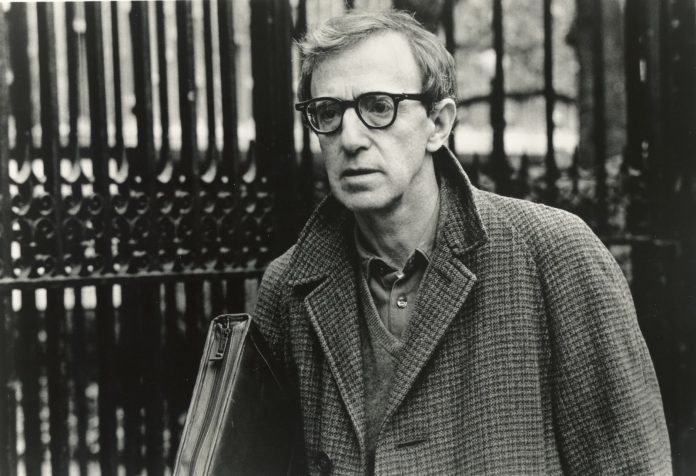
I’ve been a Woody Allen fan for as long as I can remember. My first Allen picture was Annie Hall, which I watched before I was old enough to understand any of its dense cultural references. From there, it was Manhattan, Broadway Danny Rose, Hannah and Her Sisters, Interiors, and Bullets Over Broadway. The music, the performances, the wry self-awareness of the characters — all of these aspects, common themes in Allen’s filmmaking, appealed to my preteen sensibilities.

I was hooked. I’ve spent the latter decade of my life loving Woody Allen’s films, and in their own way, they’ve influenced my view of the world around me. There’s an everyman quality to Allen’s neurotic avatar that seems to speak volumes about my own life, and to this day I consider these films to be among my very favourites.

Unlike many of those who have written similar pieces to this one in recent weeks, I had very little knowledge of Allen’s sexual abuse allegations until Dylan Farrow, his adopted daughter, penned an open letter earlier this month detailing her experience, which was published in part in The New York Times. “When I was seven years old, Woody Allen took me by the hand and led me into a dim, closet-like attic on the second floor of our house,” she writes. “He told me to lay on my stomach and play with my brother’s electric train set. Then he sexually assaulted me.”

For those of you who haven’t, I encourage you to read Farrow’s letter, which is posted in full on Times writer Nicholas Kristof’s blog. Though one might question whether it is fair that Kristof — a personal friend of the Farrow family — used his position at the paper to give Farrow’s message a platform, it’s hard to know whether such a thing would have gained attention anyway. Farrow’s account is harrowing and detailed, calling to task Hollywood, and particularly artists who have worked with Allen, for silencing her and other abuse survivors.

“What if it had been your child, Cate Blanchett? Louis CK? Alec Baldwin?” She asks. “You knew me as a girl, Diane Keaton. Have you forgotten me?”

I do not know what happened between Woody Allen and Dylan Farrow — nor do any of the journalists, lawyers or family members making statements, one way or the other. There are only two people who know for sure, and a wide range of opinions and speculations in between.

Allen apologists will cite the Yale–New Haven Child Sexual Abuse Clinic, who testified in March 1993 that no abuse had taken place. Those on the other side will counter by saying that a state attorney at the time stated there was “probable cause” to convict Allen, but the case was dropped in order to spare Dylan unnecessary trauma. In a custody case between Farrow and Allen, Judge Elliott Wilk called Allen’s relationship with Dylan “grossly inappropriate.” Mia would go on to win custody over Dylan, as well as seven more of her nine children.

But without much in the way of concrete evidence, how should we choose to judge the Woody Allen case? Your first instinct might be to say that it’s wrong to side with either party, and that it’s none of our business, anyways. But there is no middle ground here. You’re either with Allen, or you’re against him.

~

Days before Dylan’s letter was published, Woody Allen was awarded the Cecil B. DeMille Award for lifetime achievement in filmmaking from the Hollywood Foreign Press. At the Golden Globes Award ceremony, Diane Keaton fumbled through a sentimental speech in praise of Allen’s artistry and his female characters who, in her words, “can’t be compartmentalized.” Winning the Best Actress in a Drama statuette for her role in Allen’s latest film, Blue Jasmine, Cate Blanchett echoed Keaton’s praise, saying “we take him for granted.” Applause filled the room.

Allen’s lawyers have argued that Farrow’s account, which they believe was “implanted in her” by mother Mia Farrow, was timed to coincide with the awards season, in order to undermine Allen’s chance of winning accolades for Blue Jasmine. Others, such as documentarian Robert B. Weide in a now-infamous article for The Daily Beast, have suggested that the scandal was a strategy to promote Ronan Farrow’s upcoming show on MSNBC, as well as a chance for Mia to publicly lash out at her former partner. Moses Farrow, Dylan’s brother, has publicly defended Allen, saying that Mia forced Dylan into believing that Woody had assaulted her.

But though Weide and others — including Allen himself, in a written response published just days ago in The New York Times — are quick to question the motives of Mia, Ronan, and other public detractors of Allen, their arguments are borderline ad hominem: whatever any second or third party’s feelings or motivations towards Woody, this isn’t about them. It’s about Dylan Farrow — whose name change is offhandedly revealed by Weide, despite her clear intention to keep it hidden — and her testimony.

I don’t know what happened, but I know that I stand with Dylan Farrow.

This may seem counterintuitive to many of you, but we must remind ourselves that we aren’t lawyers, judges, or jurors — the court of public opinion is not a court of law, and if my belief that Allen is guilty turns out to be untrue, no one will have spent undue time in jail, and I will apologize for my error. But if I believe the opposite, and I am proven wrong, I will have been complicit in letting a survivor’s story fall on deaf ears, as these accounts too often do in our society.

For every Dylan Farrow, there are thousands of men, women, and children whose stories will never be told. For me, the well-meaning Woody Allen fan who only recently learned of the allegations against him, Farrow’s story might never have reached me. Given that it has, I am inclined to believe it.

A recent article by Michelle Dean for Flavorwire touches on the uncomfortable truth of issues such as these: that there is no such thing as an impartial stance. “If you find Farrow’s letter easy to dismiss, because you like Allen’s movies,” she argues, “you’re just as guilty of this so-called ‘rush to judgement’ as anyone else.” Aaron Bady’s piece in The New Inquiry raises a similar point: “The damnably difficult thing about all this, of course, is that you can’t presume that both are innocent at the same time. One of them must be saying something that is not true.”

For every Dylan Farrow, there are thousands of men, women, and children whose stories will never be told.

Some will choose to ignore the debate entirely, not to get involved and to wait for the issue to sort itself out. But, like the Hollywood Foreign Press, who have supported Allen’s art without so much of a mention of Farrow’s allegations, you are implicitly devaluing her story. Not to pay attention is to allow Allen, and indeed all others like him, to get away with it. To do nothing is to support him.

~

All of us live in a rape culture. Many of you will have heard this term, but not all of you will know what it means — a rape culture is one where we question Farrow’s account before we question Allen’s guilt, one where unfounded accusations of rape are cited over unreported assaults, one where we are taught to avoid attracting sexual violence but rarely reminded not to perpetuate it. A culture where, according to the Rape, Abuse and Incest National Network, an estimated 60 per cent of rapes go unreported, and only three per cent of rapists ever see the inside of a jail cell.

Our culture is one that devalues the experience of victims and protects those who are accused of sexual violence. Though it would be inaccurate to presume that statistics have a direct bearing on Woody Allen’s case, they are illuminating nonetheless: on a worldwide scale, the National Centre for the Prosecution of Violence Against Women estimates that between two to eight per cent of rape charges are later determined to be unfounded.

This number is often assumed to be much higher, as our cultural conversation tends to hinge on the veracity of a victim’s story and their corresponding mental state. Look at Wiebe, whose article cites descriptions of Farrow as “mentally unstable.” Look at Stephen King, whose quickly deleted tweet concerning Farrow’s “palpable bitchery” focuses the debate squarely on her person rather than her experience.

In these instances, Farrow is not a human being but an archetype on which our assumptions about women and the sexually abused are projected.

Arguments claiming Dylan’s status as a pawn between quarreling exes Mia and Woody further depersonalize her: entrenched in the culture of celebrity, she is faceless, and has no iconic presence to be measured against. She is a statistic; Allen is an icon.

Too many of these debates have centred around Allen as a filmmaker and a cultural presence while framing Dylan as an outsider, a troubled child turned troubled adult who was either brainwashed by her mother or otherwise fundamentally disturbed. But it’s important to set a precedent of believing those who speak out against sexual assault: there is less to lose in the occasional unfounded accusation than there is in fostering a culture where survivors are encouraged to stay silent, and made afraid to share their stories.

In arguing for her case — which, even if untrue, she inarguably believes to have happened — Dylan has shown remarkable bravery and heroism. In supporting it, we can advocate for a more tolerant society which accepts and embraces those who survive sexual abuse.

Hollywood has a talent for marginalising the voices it doesn’t want to hear. It’s the reason that African-Americans so rarely win awards, and stories of slavery and colonialism are so rarely told. It’s the reason that challenging films like The Master and Amour lose out to crowd pleasers like Argo. It’s the reason popular films fail the Bechdel test year after year, and it’s the reason artists that beat their wives and spew racial slurs are quickly and overwhelmingly forgiven.

But we as viewers have the opportunity to reject the homogenized “reality” that Hollywood presents to us. We can choose to give voice to the voiceless, even if it means risking being wrong about a public figure whom, two weeks ago, I would have counted among my favourite artists without second thought.

Still, the question remains: can I still include Allen on that list? If we are to believe Dylan Farrow, and accept the belief that Woody Allen is a sexual predator who molested his seven-year old adopted daughter, how should we look at his films? His plays? His music? Is it possible to separate, as is so often debated, the art from the artist?

~

The great Jewish conductor Daniel Barenboim once said of Richard Wagner, “he never composed an anti-Semitic note.” Wagner, one of the staunchest anti-Semites of his time, is generally looked down upon in Israel and other Jewish communities. If we are speaking of overtly anti-Semitic artists, we must also mention T.S. Eliot, Ezra Pound, and Edgar Degas, all of whom wrote extensively on their negative views of Judaism.

The list, of course, does not stop there. D.W. Griffith’s 1915 film The Birth of a Nation, arguably the cinema’s first masterpiece, was so strongly in favour of the Klu Klux Klan that the organization went on to use the film as a recruitment tool for decades afterward. Twenty years later, Leni Riefenstahl’s Triumph of the Will depicted the 1934 Nuremberg Rally in Nazi Germany with striking beauty and brilliant filmmaking technique — you’d be hard pressed to find a modern documentary or advertisement whose approach can’t be traced back to the Riefenstahl.

Hollywood has a talent for marginalising the voices it doesn’t want to hear.

Lord Byron engaged in incest. Gustave Flaubert paid for sex with underage boys. Norman Mailer tried to kill his wife in a drunken rage. John Lennon and Pablo Picasso, among many others, were said to physically abuse their family members. I could go on, but my point has been made: if you eliminate artists whose views and personal lives you disagree with, you end up crossing a lot of names off of your list.

As Jay Panini wrote in “Room for Debate”, The New York Times news blog, “Being an artist has absolutely nothing to do with one’s personal behavior. Wonderful human beings can be dreadful poets, painters, filmmakers, musicians. The reverse is equally true: hideous people can make great art.”

This is a fundamental truth. Even if Woody Allen the person and Woody Allen the artist prove to be incongruous, Manhattan is still the same film I’ve seen a dozen times. As much as I’d like to retroactively detach myself from my emotional and intellectual reactions to Allen’s art, I don’t know if I can. If Allen is a bad person, he is a bad person who makes good art, even if that art is fundamentally altered by revelations about his character.

So what are we to do with Allen’s filmography? We can boycott his movies, in order to deny him the royalties and fame that come with his ongoing success — but is this fair to the artists who have worked with him, such as the immensely talented film editor Susan E. Morse, who worked with him from 1977 to 1989? What about all of the actors involved in his works, from Diane Keaton to Cate Blanchett, from Dianne Wiest to Scarlett Johansson? They may be implicit in silencing survivors, as Farrow argues, but is this enough reason to boycott their work as well?

Perhaps the most often cited analogue to Woody Allen’s case is that of Roman Polanski, who pleaded guilty to the sexual assault of a 13-year-old girl in 1977. His films are among the most celebrated in Hollywood: Rosemary’s Baby, Chinatown, and The Pianist — which won him Best Director in 2002 — have all been lauded as masterpieces. As in Allen’s case, the Hollywood elite has gone to great lengths to minimise the effect of Polanski’s crime. Whoopi Goldberg even went so far as to refer to the assault as “not rape-rape,” and many have expressed similar defenses.

Unlike Allen, I have been aware of Polanski’s crimes since before I ever watched one of his movies. I have not boycotted them, and have not decried Polanski’s status as a famous filmmaker as a result of his actions. However, each viewing is tempered by my knowledge that Polanski has committed horrifying acts, and that his status as a gifted and sometimes brilliant filmmaker does nothing to diminish this fact — how could it?

~

I applaud those of you who will decide, unselfishly, that you would rather deprive yourself of Allen’s artistic work than support a man who may have raped a seven-year old girl. However, I can’t count myself among you. It’s likely that I will rewatch many of Allen’s films in the next year with a new perspective, and I have no idea whether or not this will affect their value. It’s hard for me to reconcile the 10-year old kid who fell in love with Annie Hall and the 20-year old undergrad who just wrote an article condemning its director — maybe I’ll never be able to.

But this is our relationship with art: as we evolve and our viewpoints change, so too does our reaction to and opinion of the cultural products that we hold most dear. Maybe Allen will still make my list of best-ever filmmakers in a month; maybe not. All I can say for sure is that I’ll never see Annie Hall the same way again.

Update: Read Dylan Farrow’s response to Woody Allen’s op-ed here.

Woohoo, Boohoo

0

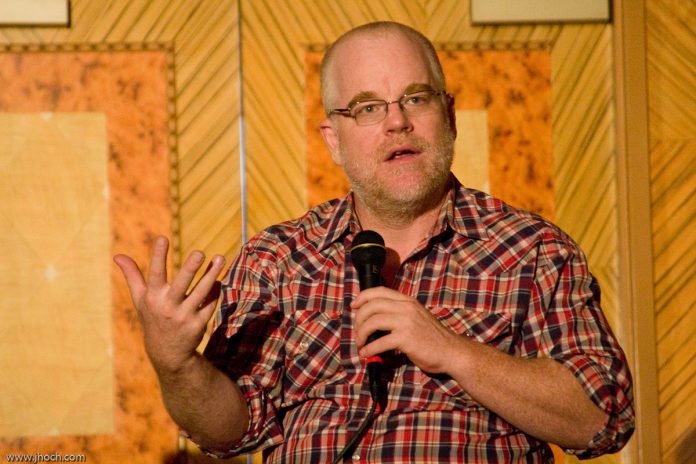
Philip Seymour Hoffman - Flikr justinhochWoohoo: celebrating Philip Seymour Hoffman

Last week we lost one of the best actors of his generation, Philip Seymour Hoffman, to drug addiction. After spending two decades of his life sober, Hoffman relapsed two years ago, eventually leading him to an overdose in his apartment. He was 46.

Hoffman gave pretty much amazing performances across the board: Almost Famous, The Master, Boogie Nights, Capote, 25th Hour — the list goes on and on. He disappeared into his roles like a modern-day Brando, and we should be thankful that we have so much of his amazing work to revisit.

Pretty much everyone in Hollywood has weighed in on Hoffman’s untimely death, admiring his acting talent as well as his kind-hearted personality. For those of us who didn’t know him, we can still watch him perform and be reminded that he was, and remains, one of the greats.

Boohoo: criticizing his disease

Unfortunately, some people have taken Hoffman’s death as an opportunity to criticize his addiction, calling his death “selfish” or “a waste” or wondering “how could he do that when he had children?” Those of us who haven’t lived with addiction — myself included — can’t possibly understand the challenges faced by those who suffer from it.

It’s a disease of the brain like any other, and living with addiction is a constant battle against the power of temptation. It’s why programs like Alcoholics Anonymous teach you to use the present tense when describing your problem: “I am an alcoholic”; “I am a drug addict.”

Hoffman was such a one, and after 20 years of sobriety, all it took was one misstep for him to lose everything he had worked so hard to achieve. We lost a brilliant actor to addiction the way we lose our friends, our loved ones, and our family to disease and illness. Rest in peace.