The results are in! Here are the students you elected as your representatives to the Senate, the Board of Governors, and the Senate Graduate Studies Committee. Those elected will serve from June 1, 2014 to May 31, 2015.
Board of Governors
The Board of Governors is responsible for business decisions concerning university property, revenue and policies.
Jesse Taylor was elected as graduate student representative for Board of Governors; his platform outlined availability of student housing, rising tuition rates, student space on Surrey and Vancouver campuses, and student engagement at the university level as areas to focus on improving during his term.
Deven Azevedo was elected as undergraduate representative for Board of Governors. Azevedo expressed his desire to advocate for greater transparency in SFU’s investments, a review of the risk of SFU’s investments in fossil fuel companies, and the creation of a mechanism by which students can better attain the ear of the board. Azevedo was also recently recognized as one of two SFU recipients of the $60,000 Schulich Leader Scholarship in 2013.
Senate
The Senate is responsible for the academic governance of the university, meaning all matters excluded from the purview of the Board of Governors. These include teaching and research, with a specific focus on the development of new initiatives, the formation of priorities, and the consideration and approval of policies.
Ting Liu and Amelia Huang were elected by acclamation to the Senate, being the only students running from the faculties of Education and Environment.
The following 14 students were elected by the student body for the remaining positions on the Senate.
Paul Yoon – Applied Sciences
Chardaye Bueckert – Arts and Social Sciences
Dion Chong – Arts and Social Sciences
Sarah-Sophia Flodr – Arts and Social Sciences
Ehsan Jozaghi – Arts and Social Sciences
Dimitri Ossinsky – Arts and Social Sciences
Athina Pilarinos – Arts and Social Sciences
Madelaine Simpkin – Arts and Social Sciences
Brandon Chapman – Business
Shirin Escarcha – Communication, Art and Technology
Colin Chu – Health Sciences
Kayode Fatoba – Health Sciences
Nicholas Chapman – Science
Barbara Szymczyk – Science
Senate Graduate Studies Committee
Four students (two regular, two alternate) were elected to the Senate Graduate Studies Committee, which meets monthly to discuss issues and pass motions relevant to graduate students.
Elected as the regular representatives were Ehsan Jozaghi and Jasneet Singh Sabharwal.
Jozaghi served on SFU’s Senate twice previously, and his platform stressed advocacy for more funding through scholarships, fellowships and bursaries, lower tuition fees, smaller class sizes, more funding for TAs and TMs, and the implementation of a Burnaby mountain gondola.
Sabharwal outlined in his platform a desire to foster a better relationship between all students and SFU as well as boost inter-disciplinary research and improve funding opportunities for students.
The alternates elected were Jayme Lewthwaite and Paul Yoon.
L.A. Party, presented by the PuSh International Performing Arts Festival and SFU Woodward’s from Jan. 21 to 25, transcends the tedium of a tired, clichéd storyline with its quirky, self-aware dialogue and sense of discovery.
A lonely, inexperienced (i.e. he’s never had a girlfriend and desperately wants one) vegan who needs to get out more finally gets his first taste of ‘the dark side’. Temptation calls in the form of a house party with slacker surfers with Australian accents asking him if he’d like a beer, some weed, some mushrooms, and the list goes on. The audience sits in captured time watching his descent into madness, enamored by the theatrical display of his inner turmoil and the hayride his mind takes.
Perhaps it’s the draw of the ‘city of dreams’ — the burning vibe that you could be anyone you want to be.
The story is only one half of the show. Performance wise, L.A. Party was pretty darn fantastic. The arrangement was a completely original innovation. It took me a while (I’m embarrassed to say) to realize that there were actually three actors building off of one another to create one character; such was the smooth synchronization of the performance. I love how this visual demonstration of disembodiment reflects the main character’s disconnection from his old personality.
It was like nothing I’d seen before or even imagined — the actress sitting in the middle of the stage had her face bandaged up, and on the screen that was her face, a live video played of a man making facial expressions to the timing of yet another actor doing the voiceover, speaking with a passion and intensity that was mirrored in the actress’ movements and the other actor’s exaggerated facial movements.
There was something magical and startlingly intimate about listening to this witty, sometimes long-winded and at all times self-absorbed, vegan unfold and sit up in a dark room. And when the spotlight recast itself on the voice actor — whose solo entailed him screaming utter nonsense about monkeys and pancakes in various accents and intonations for five minutes — the room erupted with the silence of shock and the uproarious laughter of incredulity. Well done, performers.
This man could be anyone and everyone; just change the face projected on video and the faceless entity adopts another personality.
I must pause to wonder why the writers chose to set such a commonplace occurrence specifically in LA. Perhaps it’s the draw of the ‘city of dreams’ — the burning vibe that you could be anyone you want to be.
This man could be anyone and everyone; just change the face projected on video and the faceless entity adopts another personality. You can pretend, you can act, you can transform and take on another mask for one night, or for the rest of your nights.
Maybe that’s why it speaks to the audience. It seems pretty poignant that a man’s journey overnight to self-discovery should take place in a culture of inherent vanity, of perpetuating laziness, of pretense and lust for fame and status. Perhaps it is not just the city of dreams, but also the city of second chances. In his fall into madness, there was tranquility.
L.A. Party was a work of art — storytelling on a children’s playground — where imagination ricocheted to life in a small dark room. A little satirical, L.A. Party combined an upsized dose of talent in an enormously enjoyable and hugely hilarious show.
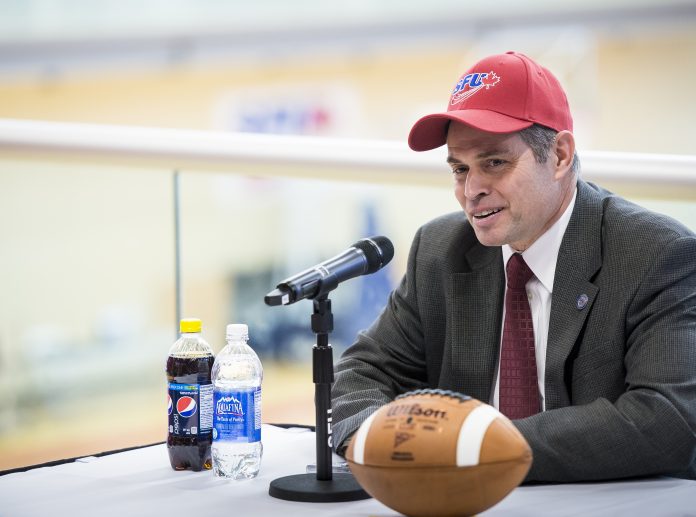
On Tuesday, Feb. 4, SFU filled its football head coaching vacancy with former BC Lions offensive coordinator and SFU graduate Jacques Chapdelaine.
The deal had been rumoured for some time, but was officially announced this week. Chapdelaine replaces Dave Johnson, who was fired Nov. 19 following a disappointing 3-7 in the NCAA Div. II’s Great Northwest Athletic Conference. Johnson amassed a 20-44-1 record in seven seasons at the helm of SFU football, split between the CIS and NCAA.
Chapdelaine and the Lions parted ways on Nov. 27, shortly after Johnson was let go, which lead to immediate speculation that the Clan alum might return to his alma mater.
The knock on Chapdelaine is his lack of experience with American rules. Though he hasn’t been around the four-down game since graduating SFU (then part of the NAIA) in 1982, he has a wealth of football experience nonetheless.
The former SFU slotback has over 20 years of CFL coaching experience to his name, including spending the last four seasons as the Lions’ offensive play-caller. He brings a championship pedigree to Burnaby Mountain, too: Chapdelaine has won three Grey Cups (2001 with Calgary; 2006 and 2011 with BC) as a coach.
He also spent six years playing in the CFL, from 1983-1989.
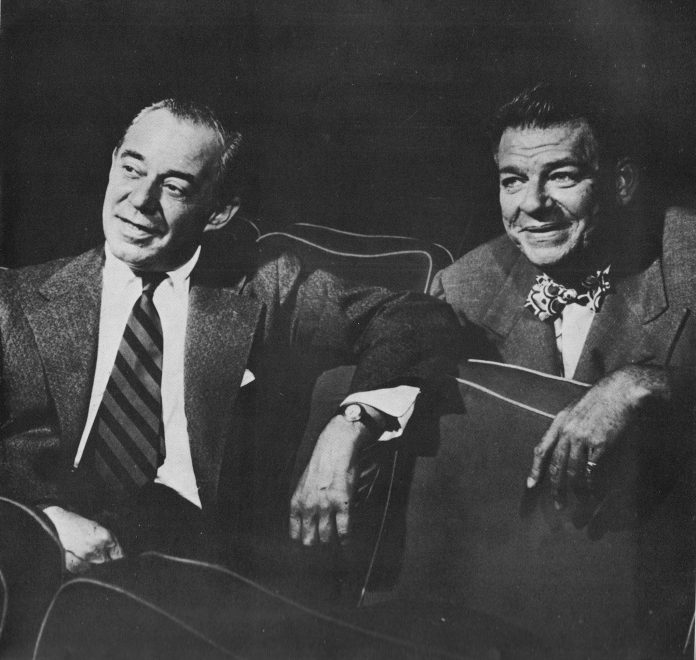
The careers of Rodgers and Hammerstein encompassed 11 musicals, 34 Tony Awards, 15 Academy Awards, two Grammys, and one Pulitzer Prize. What the duo also did was leave a lasting legacy in the musical theatre community, spawning a lineage of artists who continue creating work in the same spirit.
From Oklahoma! to The Sound of Music, Patrick Street Productions’ new revue show, Rodgers and Hammerstein: Out of a Dream, will take audiences on a nostalgic journey through songs from their entire oeuvre.
Peter Jorgensen, artistic producer of Patrick Street Productions, had been working on a similar show involving Rodgers’ and Hammerstein’s work when he gained a new appreciation for the duo. “I wanted to do something that honoured their work and them as contributors to musical theatre,” he said.
The decision to produce this show also coincides with their other events this season: Floyd Collins and An Evening with Adam Guettel. Guettel, who wrote the music and lyrics for Collins, is Rodgers’ grandson and an accomplished composer and lyricist of musical theatre in his own right.
Guettel won two Tony Awards for The Light in the Piazza and has created many other successful works. His mother, Mary Rodgers — Rodgers’ daughter — is also a composer as well as an author of children’s books.
“Hammerstein was an amazing human being for the time. He was progressive and cared about social issues.”
Peter Jorgensen, artistic producer
“It’s an amazing lineage,” said Jorgensen, “they were really mavericks and took a lot of risks — took the form into uncharted territory. Adam Guettel is continuing in the same spirit,” a spirit that is demonstrated in Out of a Dream’s timeless songs.
As Jorgensen explained, “Hammerstein was an amazing human being for the time. He was progressive and cared about social issues. There are themes of intolerance and racism in the work. It was entertaining and had something to say.”
Each show started with Hammerstein: he wrote the lyrics and libretto, and then Rodgers wrote the music. “Hammerstein crafted the story, which was always sensitive and nuanced, and then,” Jorgensen continued, “Rodgers made those lyrics sing and gave them more meaning and depth. He was a master of the craft. You don’t think about the dramatic structure of the music; it just sounds inevitable, so you don’t question it.”
When working on this show, a structure began to emerge for Jorgensen as well. “I listened to every cast recording of their work,” he said. Once he had chosen which songs he wanted to include, he placed them into a rough order based on the trajectory of a love story. There is a section about evolving relationships, then passion, complications, and separation.
“The songs they wrote are a direct result of the story they were telling,” said Jorgensen, “it wasn’t just for the song’s sake.” With this in mind, he wanted to make sure they came alive when separated from their original production: “The songs had to be contextualized so they could be received both theatrically and musically.”
Since the show covers the whole Rodgers and Hammerstein canon, there will be some songs that everyone knows, from shows like Carousel, South Pacific, The King and I, and Cinderella, in addition to some that many have never heard: “There are some absolutely astonishing songs from their lesser known works.”
“There is so much hope in their shows and their songs,” said Jorgensen, “Hammerstein was an eternal optimist. He saw the darkness, but always had hope and saw the good, too.”
Out of a Dream will give audiences a taste of their career and show why the two have left such a mark on the art form. “I want the audience to come and get swept away in the stories and romance,” he said. “It’s a romantic, nostalgic trip through their work. If some people get a better appreciation for their work, that’s great.”
Rodgers and Hammerstein: Out of a Dream will be presented from February 5–16 at the York Theatre. For more information, visit patrickstreetproductions.com.
We sent a few of our staff to cover the annual “Taboo Naughty but Nice Sex Show” here at the Vancouver Convention Centre. We encountered a wide range of individuals, including one of our very own Peak alumni.
While there’s been a lot of talk about Russia’s ban on “non-traditional sexual relations” during the upcoming Olympic games, up until now there has been very little practical information about how they will go about maintaining their country’s 100 per cent not-gay claim to fame. You might be asking yourself, for example, how could these games possibly be more straight than Nagano ‘98? Well, fortunately for you, Peak Humour was able to obtain a list of changes to the Sochi games that will keep this celebration firmly inside the Iron Closet.
LOGO:
The first and most important step taken against blatant Olympic homosexuality was of course revamping the “obscenely gay” Olympic rings logo. Not only has Russia replaced the “queer rainbow colour scheme” with the far more butch “black-and-white” but Russia also took steps against the suspicious commingling of circles suspected to be a representation of the “gay conspiracy”.
The Olympic rings logo has received some serious rebranding.
ICE HOCKEY:
“Too many men” now subject to death penalty
While Russia was happy to see rules already in place to prevent the game being overrun with a more than comfortable number of men, they thought the sport’s punishments were too soft. Unlike the two-minute “minor” penalty hockey fans are accustomed to seeing when one too many guys join the party, the guilty team will now have to choose a player to be publically executed. Sorry, Dan Hamhuis.
Excerpt from new edition of Olympic Hockey Rulebook.
“Mandatory Fighting” rules implemented
Although fighting in international hockey is typically not a common occurrence and in the past has come with heavy repercussions, Russian Olympic organizers have done away with these rules in favour of a much more macho code of conduct. Instead, heavy punishment will follow if teams do not engage in at least one manly bout of fist-a-cuffs per period. Teams who do not beat each other up with at least this frequency will risk disqualification — which also may be enacted if two opponents ever make eye-contact lasting over three seconds.
BOBSLEIGH
Compulsory “Bible-width apart” rule adopted
Inspired by only the finest Christian summer camps, Russia has instituted a rule requiring that each teammate be at least the width of one standard Russian Orthodox Bible (24”) apart from another. Russian officials have made it clear that they hate to have to enforce these kinds of rules and wish they could just trust everyone but that some (French) teams have ruined it for everyone
New required sitting positions.
LUGE
Doubles required to sit “Back-to-back”
After extensive research into the possible seating arrangements for two-man luge, Russian officials settled on a “back-to-back” configuration that they believe will be most effective in limiting “impure thoughts”.
These positions are now banned.
SPEED SKATING
Mandate on 90% less-tight suits
While Russian olympic advisors say that they understand the practicality of speed skaters’ skin-tight spandex uniforms in accordance with their long-standing anti-”tight and bright” policy, they are requiring all teams to loosen up their suits to be at least 90 per cent less tight. According to the new uniform guide, a pair of relaxed jeans and an oversized army jacket are now recommended wear for the renamed “medium-speed skating” events.
BIATHLON
Targets to be replaced with members of the Village People
Although pleased with a sport that involves so much nonsensical gun use, Russia isn’t satisfied with any ambiguity in Biathlon’s staunchly heterosexual image. In order to combat any possible rumours that the sport is not only for “straight shooters”, the typical targets will be replaced with cardboard cutouts of the Village People, a suspected group of homosexuals whose music just arrived in Russia this past year. They have also considered eliminating the sport’s “skiing” element.
Hatred for the “YMCA” is now a key component to being a successful Biathlete.
FIGURE SKATING
Spinning, twirling and enthusiasm forbidden
While Russia isn’t pleased at all with the existence of the solo male-version of this sport, they have decided to let it take place as long as competitors refrain from any “spinning, twirling, fancy tricks or displays of any kind of emotion.” According to officials, skaters who step out, do a couple of laps with their heads down and get off the ice will receive perfect scores.
New rules hope to combat signs of “gay” emotions.
Ice dancing limited to traditional waltz
Fearing a possible emergence of frightening and “ungodly” ice grinding and ice twerking which could confuse their nation’s youth into “alternative lifestyles”, Russia has laid down the law that the “Traditional Waltz” will be the only acceptable form of Ice Dancing. The Russian Olympic committee says they will also work to ensure that every competing “couple” is contractually married before being allowed to compete.
ALPINE SKIING
Ski poles eliminated, skis replaced with snowboard
After overhearing some snowboarding high-schoolers, an emergency meeting of Russian Olympic officials decided to take great actions against what they had discovered was widely acknowledged as a “gay sport”. While the group couldn’t understand what particularly made going down a mountain on two planks so appealing to homosexuals it was decided the sport had to be reinvented. What they came up with is basically just snowboarding, which is already an Olympic event.
Depiction of new “less gay” version of Alpine Skiing.
CROSS-COUNTRY SKIING
Cross-country skiing has been eliminated outright from the Sochi Games.
CURLING
Male Sweeper position eliminated
Uncomfortable with the idea of men using brooms, fearing that they might give off the impression that males have the capacity to perform housework, the “sweeper” position has been removed from men’s curling for the Sochi Olympics. While the women’s game will stay the same due to officials’ designation of “sweeping and yelling” as “female activities”, the men’s game will be completely restructured. Instead of sweepers, the sport will now only feature a thrower who will no longer attempt to gently place the rock but launch it as hard as he can in an attempt to knock over ten pins.
Rule changes to Men’s Curling are expected to infinitely increase the number of “strikes” per game.
MEDALS
The new “less flamboyant” medal system.
As part of the elimination of overly-flamboyant costumes and accessories associated with the “gay lifestyle”, Olympic medals will be replaced with congratulatory clumps of raw iron. The 1st place winner will now receive 25 lbs of iron while 2nd and 3rd place will receive 15 and 5 lbs respectively. These prizes will be taken away in the event of a congratulatory hug or even lingering high-five with any member of the same sex (including teammates, coaches, fans and parents).
During Parliament’s winter break, Prime Minister Stephen Harper was making headlines. Though one would have expected that his trip to the Middle East would have garnered the most attention, when he became the first Canadian PM to address the Knesset, the national legislature of Israel, this was overshadowed by the media coverage of the first part of his winter break.
Many articles were written on his annual trip to Arctic Canada, questioning why the area matters, and if Canada should be using valuable resources and gaining international prestige over this frozen land. Those writers could not be more wrong about the importance of the Arctic to Canada’s future.
For starters, the Conservative government is emphasizing developing the land, making this more than just a flag-waving exercise designed to show the world who’s in control of the territory. In fact, Canada’s current term as the chair of the Arctic Council has been devoted to sustainably developing the eight states and six indigenous populations that are members.
The continued presence of Canadians, including our indigenous Inuit populations, give Canada a strong claim on the Arctic territories. But this claim is under threat. Foreign submarines travel under the Arctic ice pack as a shortcut to move from the Pacific to the Atlantic, often, apparently, without explicit Canadian knowledge.
Pierre Leblanc, a retired colonel and former commander of the Canadian Forces’ northern command, told the National Post that “for decades” the Canadian government relied on other countries’ “goodwill to know if they’re in our waters or not.”
One could imagine the outrage that would occur if a Canadian Navy vessel took a shortcut through the Florida Keys without informing the United States government. It sends the message that we are not willing to defend our sovereignty, which may become important in future years as the Arctic becomes more accessible and desirable for mining.
A much as I hate the melting of the polar ice caps, there is a great economic opportunity here for Canada if we act on it. Along with the possibility of the opening up the fabled Northwest Passage, the Arctic also provides an opportunity for huge economic gains.
Over time, Northern Canada has given us gold, diamonds, and uranium along with other minerals. As the ice caps melt, more resources will become available; the United States Geological Survey, in fact, estimates that 22 per cent of the world’s “technically recoverable” oil and natural gas could be located in the Arctic Circle.
Granted, there are many environmental concerns to be addressed here, but it should come as no surprise that Canada recently submitted a proposal to the United Nations to extend its territorial sovereignty to include the North Pole, where the Russian Federation planted its flag in 2007. If the Arctic territory that we currently control is any indicator, the vast store of untapped wealth there has the potential to turn Canada into an economic power in the world if we manage to focus our attention on the region.
In 2008, there was a proposal from the European parliament to place the Arctic under international control similar to Antarctica. While the current Antarctic Treaty does not support nor deny territorial claims to Antarctica, Arctic territories have a variety of countries involved in their administration, simply because they are part of the sovereign territory of the nation.
As the Canadian Arctic territory has belonged to our nation or its British colonial predecessor for hundreds of years, we should stand strong on our true north Arctic territories.
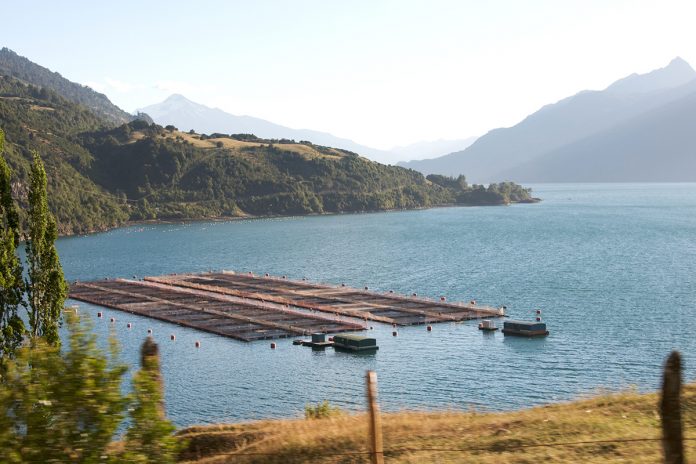
Recently, several letters to local First Nations groups announced that the federal government will be accepting applications to expand fish farming in the BC area.
The decision is highly controversial and critics claim it represents a lack of transparency in the federal government. Yet, according to an irate Green party, the government has already accepted twelve applications for farming in environmentally sensitive areas.
BC Minister of Fisheries and Oceans, Gail Shea is under particular scrutiny. When asked whether Shea had previously spoken publicly or issued any statements about the moratorium being lifted, a spokesperson claimed via email that the minister “talked about it openly” but was unable to provide evidence of a press release, a statement, or a quote according to the Vancouver Sun.
Further contention surrounds the possible impact on wild salmon populations if the expansion goes through. Applications for expansion from all areas of BC have been accepted, with the exception of those from the Discovery Island archipelago located near Campbell River on Vancouver Island — this area was deemed especially fragile in the 2012 Cohen report, which called for a moratorium on fish farm expansion after the collapse of the Fraser River salmon population in 2009.
Shea has assured the public that the government is making “major investments in research” to “bolster . . . environmental protection in the aquaculture sector through science, enhanced regulatory regime, and improved reporting.”
According to the Vancouver Sun, Department of Fisheries and Oceans spokeswoman Melanie Carkner said, “All applications . . . will continue to be evaluated through the lens of environmental sustainability and engagement with First Nations and other stakeholders.”
In response, SFU professor of statistics and director of the undergraduate environmental science program, Rick Routledge, said, “The federal government’s claim that such decisions will be made ‘through the lens of environmental sustainability’ is not credible.”
Routledge told The Peak that the federal government has shown no signs of paying attention to environmental impacts on wild salmon populations in the past; in fact, “in the past they have hidden away evidence [of this],” he said. According to Routledge, in the fall of 2011, his research demonstrated positive readings for ISAv disease in local wild salmon. ISAv (or infectious salmon anemia) is a viral disease affecting Atlantic salmon populations in Canadian fish farms.
Routledge proceeded to alert the media in a press conference, and it was later revealed that Canadian government labs had found similar evidence of disease in 2002 and 2003. However the information had not come forward and was never supplied to Cohen as information for his report, even though some of the positive testing samples had been sockeye salmon.
The Positive Aquaculture Awareness society (PAA) published a statement on Jan. 17, stressing the need for fish farm expansion. They argued, “The Federal Minister of Fisheries, Gail Shea gave a clear signal for the orderly expansion of the industry which is vital as a provider of employment and business opportunities for many coastal communities.”
The PAA claims that the concerns of critics such as Routledge are “hard to justify” since the 2012 Cohen report never revealed a “smoking gun.” The PAA further backed up the government’s decision by calling into doubt the validity of their critics’ expertise saying: “As expected, the usual suspects of salmon farming critics rose to the occasion and flooded the mainstream media — most of whom (both critics and media) don’t know the slightest thing about salmon farming.”
“Coastal communities rely on commercial and recreational fishing. If you ask whether they would rather have a chance to fish or work in a facility they’d rather fish,” said Routledge. He went on to accuse the government and the PAA of “misusing the precautionary approach” and attempting to cause a “campaign of doubt”.
When asked about the effects this expansion will have on local wild salmon populations, Routledge explained, “There’s very little evidence of direct impact on wild salmon, but lot’s of evidence on ISAv and other diseases are turning up.”
These diseases are related to fish farm prevalence, and over-farming. “In my opinion, conservation of wild salmon takes priority, period,” said Routledge.
Routledge continued we “vigorously explore land facilities” as an alternative solution. Land facilities would eliminate any interaction between farmed and wild salmon, and a more controlled environment would lower infection risks. The Save Our Salmon Initiative is currently working with the Namgis First Nations community in testing one such facility, to see whether it is a viable option.
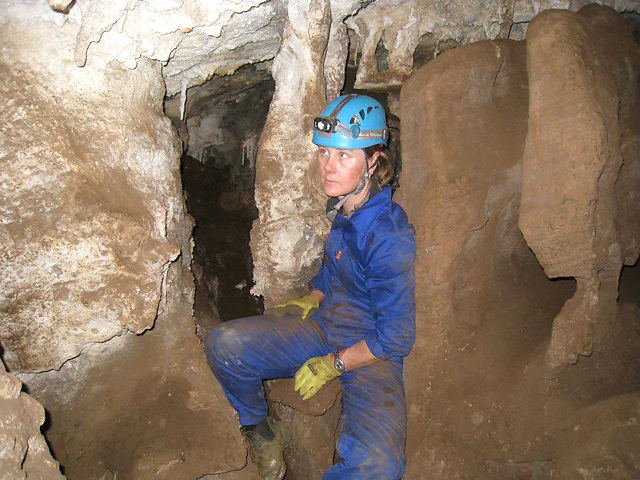
Dubbed “underground astronauts,” a team of six female excavators — including a PhD candidate from SFU — has unearthed over 1200 fossil hominid fragments from Rising Star cave in South Africa.
The excavation zone, nestled in South Africa’s Cradle of Humankind World Heritage Site, has been known as a hotbed for hominid remains since the 1800s, but has not revealed a find this impressive for decades.
Due to the volume of material, the find is one of the most significant discoveries ever made in paleoanthropology.
Two recreational cavers, primed as initial investigators, were the first to stumble upon the remains. An expedition was quickly organized, and scientists were hailed to join the team.
Prospective applicants for the Rising Star Expedition had to have a master’s degree or PhD in paleontology or a related field, be an experienced caver, and also be able to squeeze through an 18-centimetre wide passage leading to the chamber of the cave.
Of 57 applicants, Marina Elliott, an SFU PhD candidate of archeology, was one of the select few to meet the full requirements. Backed by the National Geographic Society, the project was organized and led by Dr Lee Berger of the University of the Witwatersrand, in Johannesburg. The excavation lasted for three weeks in November 2013.
Elliott joined four Americans and one Australian in the underground search that she said was “a major undertaking — not only in danger, but also in the complication of the excavation.”
While the findings cannot be declared until the final analyses have been done, Elliott does offer some details: “The number of individuals [found] is somewhere above twelve . . . but they don’t have a set number of minimal individuals just yet. Age wise, the remains are tentatively between one or two million years old, but this could change considerably once the final analysis gets done,” she said.
Well known from previously unearthed hominid samples, South Africa’s Cradle of Humankind World Heritage site has had a powerful impact in terms of understanding human evolution and human origin. In a field where discoveries are few and far between, the Rising Star Expedition is a momentous operation for current paleoanthropology research.
However, Elliott refrained from early speculation until more research and analysis has been completed: “Material like this is rare. It’s really important because it represents a large number of individuals, and it’s definitely a major find in paleoanthropology, but it’s too early to know the full impact,” she explained.
Academic papers are expected by the end of 2014, but for now all theories are tentative: “We will hopefully find out the type of species in the next couple of months. We are probably not talking human, probably for sure, and probably not even in the genus homo . . . but it’s possible that these individuals are something like an australopithecine [which is any of several extinct humanlike primates].”
As an all-female team, the Rising Star Expedition didn’t simply make literal ground-breaking discoveries — the team also promoted female scientists: “It’s a nice opportunity to showcase women in science. This was dirty and physical work, and that doesn’t always get told . . . [but] this work is just as much part of a lab or academic setting.”
Elliott continued, “It’s also nice to tell people that if they have a daughter, it’s not only bookwork. There’s a lot of work like this in the sciences and that’s great to be able to say.”
The tech nerd in me loves the idea that Google’s new eyewear device “Glass” has been developed and will soon be on the market. A part of me is astonished that such technology can be developed, while another part is unnerved, afraid of this invention’s social and political consequences.
Google’s new gadget has already made some cracks in our legal code. The device has been distributed to thousands of lucky beta users — some of whom have met with legal confusion surrounding its use. Unfortunately, I think these instances have only marked the beginning of what will be a long series of court-cases, as lawmakers battle to keep pace with today’s fast evolving technology.
For those of you who don’t know, Glass is an eyepiece that is similar to a pair of glasses. The device sports a small, transparent screen that sits just above the right eye so as not to obscure the user’s vision. Users can use voice-command to record pictures and videos, engage in live video-chats, send messages, use GPS, and even translate languages.
But despite these interesting features, some beta-users have gotten in over their heads. Last October, a San Diego woman was pulled over in her vehicle for speeding. When the officer saw she was wearing Glass, he also gave her a ticket in belief that she had been driving “with monitor visible to the driver.” Later, the court decided to throw out the citation due to lack of sufficient proof that she had been using the monitor.
Just last week an Ohio man was suspected of recording a film he was watching while at the cinema. After the cinema had him reported, he was drilled by officers from ICE Homeland Security Investigations. While the man proved that the recording feature was inactive, this does not mean that other users can’t at least use the same excuse.
Glass is the first gadget on the market that is truly secretive in its execution, and this secrecy has made authorities suspicious.
While it’s easy to tell if someone is using a cellphone while driving or a camera to record at the cinema, it’s nearly impossible to tell if a user is doing so with Glass, as it carries similar features. This apparatus is the first truly personal accessory. Only the user knows what is happening through the lens.
Furthermore, it’s far too easy to evade legal trouble if one is using Glass to break the law. If questioned by authorities, the user could simply state that he or she was not using the gadget for those intended purposes. Officers, like the one who took the speeder to court, will not have proof beyond a reasonable doubt that the device was in use. In other words, expect more “Glass-Criminals” to hit the headlines in the near future!
Google Glass makes me nervous. Because it is such a leap in technological advancement, Canada’s lawmakers need to get their asses in gear and discuss modifications to our current code. Considering the pace at which our society evolves, I can’t imagine the stress these people go through. But laws must reflect modern technology. Glass is only the beginning of a series of personal, wearable gadgets and the abundance of problems they will cause.