Home Blog Page 1206

Avocado or Egg?

0

I’m sure almost everyone has questioned the “egg/avocado” in the AQ courtyard. The Peak brings you some answers.

Created by Brandon Hillier and Alysha Seriani

Music by
Chad Crouch – http://www.chadcrouch.com/wp/
Circus Marcus – http://www.circusmarcus.net/

Thanks to Eleanor Qu for the illustration of the sculpture, and to Leah Bjornson for interviewing the students.

Board Shorts

0

CMYK-Last Word Burnaby Mountain Park-Josh NV-Flickr

New recreational facilities on the mountain

President Humza Khan brought to the board’s attention that SFU is planning for an off-campus organization to build a recreational facility on Burnaby campus which would include a pool, a gym, a racquetball court, “and other fun areas.”

“The plan is to get this third party organization to come and build these facilities. In order to pay for these facilities, SFU will be leasing out a certain portion of the land they have for up to 60 years to this organization,” said Khan.

An educational institution with the power to grant degrees would be built on this land. Community outreach on this initiative began last Monday, with a survey sent out to students for feedback.

Student Union Building Space Program approved

The board approved the Student Union Building (SUB) Space Program presented by Marc Fontaine, Build SFU general manager. The space program is expected to be approximately 90 per cent correct at this stage, with minor revisions possible in the future.

The plans include allotted space for eight student organizations, programs or unions, a coffee shop, and two games lounges which would include gaming pods and billiards tables.

Board members brought up concerns about the plans for a club workspace, as many previously thought that an industrial hackspace for large projects was in the works. However, the plans specify that there will be no industrial tools or equipment in the space.

“There have been lots and lots of suggestions, some of which I think are crazy and not realistic, and some that are realistic,” Fontaine said. “I’m satisfied that by making some kind of messy room or workshop that has a industrial floor, enough electricity, probably ventilation, and some sort of tables or workbenches, there will be time in the future to figure out how to operate it.”

Artists and date confirmed for spring concert

Business representative Brandon Chapman confirmed to the board last Monday that April 4 had been selected as the official date for the spring concert.

The events committee is pursuing a liquor license approval for the event, which Chapman is confident will be obtained.

Khan also informed the board that they had selected headliners for the concert, to be disclosed to The Peak on Friday before press time.


Welcome to The Peak dot ca 2014

0

peak2014-scr2


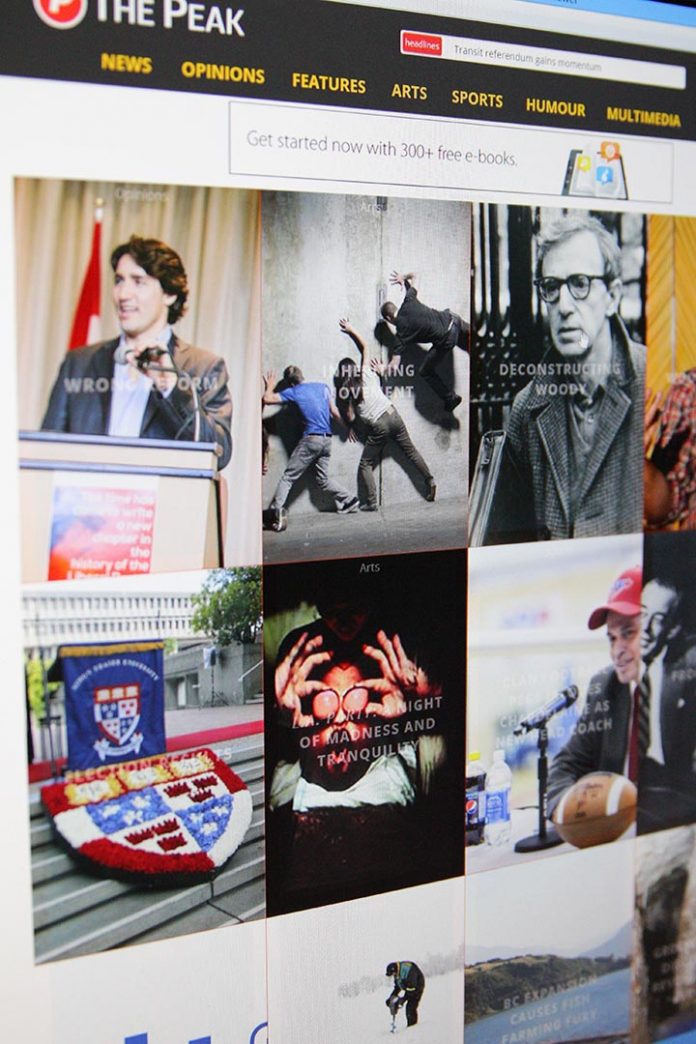
Welcome to the newly redesigned The-Peak.ca. You may have noticed that we’ve got a new look and a fresh coat of paint.

There’s been plenty of change, but the gist of it is The Peak online is now more efficient on the inside, and a bit more attractive on the outside.

The largest and most noticeable change is our improved ability to shape shift, as the site is now optimized for your tablet and phone. Now you can read, comment, and obsess over content wherever you go!

Whether you read us online, offline, or both, thank you for being a loyal reader of The Peak and we hope you like what you see.

Let us know how we’re doing and feel free to leave feedback on our new look and feel by commenting below. Cheers.

The War on Kiev

0

Ukraine war_WEB

“Do you hear the people sing, singing the songs of angry men? It is the music of a people who will not be slaves again.”

The refrain of this number from award-winning musical Les Misérables may call to mind the stages of Broadway or the shaky cameras of the 2012 Hollywood production, but since November 2013, the song has been given a shocking real-world analogue: in the streets of Kiev, the capital of Ukraine, public protests and skirmishes between activists and law enforcement have proven that truth is indeed stranger than fiction.

What started off as a small protest of 2,000 people on Nov. 21 has since exploded into mass riots across the country, primarily in Kiev and Western Ukraine. Thousands more join the demonstrations every week. Protesters and police forces have now met in several clashes, and government buildings have been seized by activist groups. Numbers of protesters have now been estimated between 400,000 and 800,000, and the movement has been given an unofficial title by those involved: the Euromaidan, or Eurosquare.

So what caused this all to happen? What launched Ukraine, a country whose daily happenings tend to fall under our radar, into international headlines? The short answer is this: the catalyst for this uprising was the announcement by President Viktor Yanukovych that the country was renouncing the European Union in favour of closer economic ties with Russia.

To some observers, this may seem inconsequential, but Ukraine has been divided between these two powers since gaining its independence just over two decades ago, and the country has played a careful balancing act ever since: as a former Soviet state, Ukraine’s recent history has been coloured by its negotiated relationship between the EU to the west, and Putin’s Russia to the east.

What started off as a small protest has since exploded into a series of mass riots across the country.

For example, Ukraine has some basic agreements with NATO, but also leases the port of Sevastopol to Russia for its Black Sea Fleet. The nation has made several steps towards integrating with the EU, but also maintains close economic ties with Moscow, its largest trading partner. The western regions of the country tend to be pro-Europe and the eastern and southern regions pro-Russia, to the point where it defines political parties.

This dichotomy has even lead to fist fights in the Ukrainian Parliament over a bill to adopt Russian as the country’s official language.

The Euromaidan protests have also united the opposition parties of Ukraine. One of the demands of the European Union was that President Yanukovych release his archrival Yulia Tymoshenko — the former Ukrainian prime minister and leader of the oppositional All-Ukrainian Union “Fatherland” party — from prison, where she is currently serving a seven-year sentence for abuse of power and embezzlement.

Many, including members of the Helsinki Committee for Human Rights, have expressed skepticism over Tymoshenko’s sentencing, seeing it as a form of revenge the president has taken against the woman who helped overturn his 2004 election amid allegations of vote-rigging.

Supporters of Fatherland include Vitali Klitschko, a former world heavyweight boxing champion and the head of the pro-EU Ukrainian Democratic Alliance for Reforms. Ukraine’s far-right nationalist party, Svoboda, has also joined in the protests, all of them calling for the resignation of the president and for new elections to take place.

For many in the pro-EU crowd, there is a fear of Ukraine once again being subjugated to Russia, a situation the nation finally escaped in 1991 with the breakup of the Soviet Union.

Apart from a brief period between the downfall of the Russian Empire and the establishment of Soviet rule, Russia has dominated Ukrainian culture, economic practice and political process since the Middle Ages.

Perhaps the most glaring reminder of Russian oppression in Ukraine is the Holodomor, or Extermination by Hunger, a man-made famine wherein seven to 11 million Ukrainians starved to death due to Stalin’s attempts to collectivize Soviet farming. It is easy to see why one would be resentful of Russian interference in Ukrainian life.

Ukraine is also in the unenviable state of living next to a powerful neighbour who wants access to its resources, and is not afraid to do whatever is necessary to get them. Russian President Vladimir Putin has his own reasons for pressuring the former Soviet Republic into rejecting the EU — not least of which is his proposal of a rival economic union known as the Eurasian Economic Union, or the EAU.

Putin has gone so far as to threaten economic sanctions on Ukraine. During the pro-Western government of Yulia Tymoshenko, Russia shut off natural gas exports to Ukraine twice, which did significant damage to the nation’s economy. Putin is also a shrewd politician — shortly after Yanukovych rejected the EU, Russia offered a $15 billion stimulus package and a 33 per cent price cut for natural gas, which will certainly help the Ukrainian economy in the future.

Historically, Ukraine has been the breadbasket of the Soviet Union as well as its predecessor, the Russian Empire. With its large coastline on the Black Sea, it has also been the site of some of Russia’s only all-weather ports, making the nation both economically and strategically important to the Russians. On a more cynical note, and perhaps in the thoughts of many in the pro-European camp, Ukraine has acted as a defensive buffer for Russia against invasions from the West — something Putin still fears, and perhaps with good reason.

If Putin can’t bring Ukraine back into the Russian fold, he will do everything in his power to keep it separated from the West.

Civil war in Ukraine has the potential to change the face of Europe, and possibly the whole world.

His unpopular decision to derail the deal with the EU and sign with Russia aside, President Yanukovych is not the most popular character. He was blocked from office in 2004 amid the aforementioned allegations of vote-rigging, and since returning to power in 2010, he has been accused of corruption and mismanagement of the nation’s economy.

Indeed, one might argue that it was the president’s decision to send in the riot police that caused a peaceful protest to escalate into the ongoing violent situation which has dominated news stories over the past months.

As the sun rose the morning after riot police violently broke up what was at that point a small, peaceful rally, the cries were no longer for integration with the European Union. They were for the resignation of the president, and a guarantee for human rights and democratic freedoms for all Ukrainians — something protesters continue to fight for to this day.

Government tactics have only become more oppressive and violent since that first day: the initial death of four protesters has led to many others, and uploaded YouTube videos of activists being beaten and abused have multiplied.

In late January, sources revealed that text messages had been sent to those suspected to have engaged in the Euromaidan protests by the Ukrainian police, warning them that they “are registered as a participant in a mass riot.”

On the other hand, supporters of the government have seen riot policemen set aflame by Molotov cocktails thrown from the crowds, the statue of Vladimir Lenin in Kiev’s Bessarabska Square toppled and replaced with a red and black insurgency flag, and several government buildings occupied by protesters. Barricades were torn down by police forces, but were promptly rebuilt.

Even more terrifying for the government — and also denied by them — are reports that some units of the military had refused orders to deploy to Kiev, renouncing the use of force against the protesters.

The situation further escalated again in the New Year, as the Ukrainian Parliament passed sweeping anti-protest laws that criminalized each and every method employed during the protests. This was done despite the fact that opposition members were not present, and the texts of the documents weren’t available to be read before going to a vote.

This led to an outcry both from opposition parties and the international community, with the US Department of State expressing that “the process and substance of the Rada’s (Ukrainian Parliament) actions today cast serious doubt on Ukraine’s commitment to democratic norms.”

The German Foreign Minister also commented that “the limitation of civil rights will lead Ukraine only further away from Europe,” which seems to be exactly what Yanukovych is going for.

Far from discouraging the protesters, this move was met with a gathering of 200,000 activists in central Kiev, who marched on Parliament in defiance of what they termed the “Dictatorship Laws.” They were met by police forces, and several were injured and killed during the clashes between the two groups.

Later in January, prominent Euromaidan activists Ihor Lutsenko and Yuriy Verbytsky were abducted from the Kiev hospital where they were receiving treatment. Lutsenko was found beaten in a forest the next day — Verbytsky’s dead body was recovered hours later.

These anti-protest laws, coupled with the increasing levels of brutality on the part of government forces, have begun to erode Yanukovych’s traditional support base. Most of the laws were rescinded shortly thereafter, while protest numbers continue to grow.

With the Olympics in Sochi currently occupying the world’s attention, it is unlikely that we will see any big moves over the next couple of weeks. Both sides will likely bide their time until they can once again gain the attention of the world.

At this point, there are really only three possibilities for the future of the Euromaidan protests.

Possibility number one is that the government manages to strike a deal with the opposition leaders, and muddles through for another year until the 2015 election. Given that 82 per cent of protesters, when interviewed in early February, maintained that they would continue protesting until their needs are met — namely, that Yanukovych resigns and elections are held — and that a third of Ukrainians have come out in favour of closer ties with Russia, this outcome seems highly unlikely.

Possibility number two is that Yanukovych does resign as president, fulfilling the wishes of most Euromaidan activists. Though the pressure on the Ukrainian president increases with each public protest, this too seems to be an unlikely outcome; the president has already focused a wealth of time and energy on securing ties with Russia and maintaining his control over the nation. It will take a lot to force him out of office.

The third possibility (and, unfortunately, the most likely) is that violence will continue to escalate, Yanukovych will panic and call in the military to disperse protesters — an act that would likely lead to the civil war many have already begun to predict. Given the staunch opposition between the two sides concerned, as well as the international debate it has sparked, this seems to become more and more of a foregone conclusion with each passing day.

If that happens, it is likely that Russia will step in to protect its interests as it has done countless times before, and we will be looking at a whole new situation, one that has the potential to change the face of Europe, and possibly the whole world. For now, we in the West can only watch and wait, hoping that a peaceful solution can still be reached.


SFU Bookstore sees decline in sales

0

WEB-bookstore-mark burnham

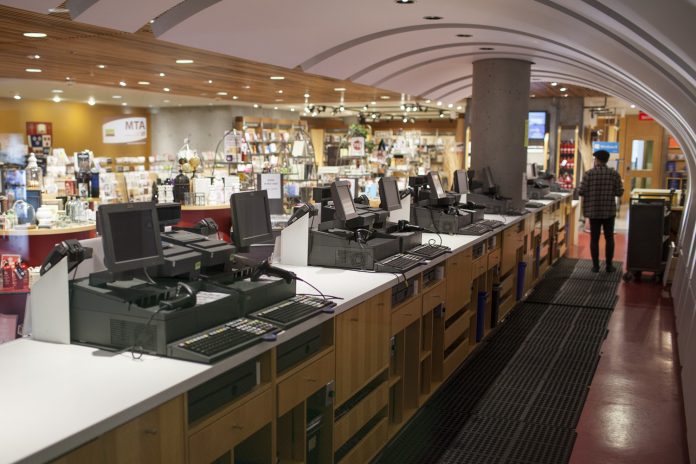
Sales at the SFU Bookstore have dropped by between eight and ten per cent annually over the past two years from $13 million in 2012/13 to an estimated $10.6 million this academic year. Projections show further decline over the years to come.

The bookstore’s financial situation was under discussion at last month’s board of governor’s meeting. The board believes the decrease in profits is the result of a combination of things, including professors assigning less printed material and students finding alternative options to buying textbooks.

The numbers indicate that change is on the horizon for the SFU Bookstore. Pat Hibbits, vice-president of finance and administration, spoke to the idea of moving in the direction of more digital material, “You have to give more space to things other than textbooks [. . .] there isn’t an expanding need for [them].”

A survey of 450 SFU students last fall showed that more and more students are finding alternatives to shopping at the bookstore for course material which is having a direct impact on textbook sales.

Of the students surveyed, only 67 per cent bought a textbook, whether from the bookstore or some other source. The remaining 33 per cent used other means: some borrowed from a friend or a library, searched for the information online or in an unassigned book on the same topic, or even rented the book.

WEB-Bookstoregraph2-EDIT

Those who buy textbooks are also finding other means of getting their books, with only 68 per cent of buyers going to the SFU Bookstore. The next most popular method of purchase is finding used books on social media like Books2go and Locazu.

WEB-Bookstoregraph1-EDIT

Hibbits said, “We always thought that our big competition was Amazon, but in fact, that’s not that much of a competition. It’s actually students making other choices.”

Hibbits stressed the importance of the need for adaptability, “Some of the things we’re trying to do is to tap into the electronics market, whatever that looks like,” she said. Also, SFU Document Solutions is making efforts towards the BCcampus Open Textbook Project, which encourages institutions to pick up standardized texts that can be developed and made more accessible.

Despite the challenges faced by the bookstore, Hibbits assured that prices on textbooks will stay the same and that they are only trying to recover costs. A special task force of faculty and students is at work on the “textbook affordability conservation process” to make books more affordable for students. The gifts, clothing, and other books are where the margins are a little higher.

Although the VP believes that the sales drop will plateau at some point, she recognized that the market for textbooks is ever-shrinking and the traditional “old-way bookstore” is on its way out. She said, “Every bookstore in the country, I think, is facing the same kind of challenge.”

This challenge may give way to a different sort of store, “Perhaps, rather than thinking of it as the SFU Bookstore, you [should] think of it as the SFU store.”

Books belong to the imagination

1

BW - interactive book - Andrew Zuliani

It’s been a disheartening start of the year for book-lovers. Developers at the Massachusetts Institute of Technology (MIT) have recently invented a book system called Sensory Fiction that is designed to help readers feel a protagonist’s emotions by physically simulating the moods of a novel as one reads.

At first I was intrigued by this invention, but upon closer analysis I wonder whether these developers have ever read a book purely for enjoyment.

The device is comprised of a high-tech book and vest. That’s right, a vest that contains a heartbeat and shiver simulator, a body compression system, audio speakers and temperature controls. As the reader flips the page, the vest senses the part of the story and acts accordingly.

If the protagonist is stranded in a scorching desert, the vest will turn the heat up to allow readers a chance at heatstroke as well. If a character is trapped in a frozen lake with no way to break through the ice, the vest will not only chill your bones, but will compress your midsection with swelling airbags, sure to give claustrophobic people heart attacks.

So now, suffocation is accompanied with its own lighting system and soundtrack! What, can’t breathe? How about some daunting orchestral music?

With sensory fiction, authors would be confined to one-dimensional feelings. Happy or sad.

Of course, I exaggerate with my examples, but the real system is not too far off. A system that stimulates distress would undoubtedly cause readers discomfort and distraction from the story itself.

Apart from the hypothetical reader looking (and sounding) ridiculous, the developers’ ideological approaches are problematic, as well. They claim that the book will enhance readability, liken fiction to near-reality, and create new avenues for “sensory” authors to convey their stories.

But novels do not need to be enhanced. I am sure that any avid reader, such as myself, would agree that the entire premise of a novel is to internalize a story without the help of machines or equipment.

To read a book is to stretch the mind and allow for one’s imagination to cascade relentlessly. Reading a book should be a completely personal experience, unconstrained by airbags and temperature gauges. To truly enjoy a book, one should feel the protagonist’s emotions for oneself without them being spoon-fed by an artificial ambience.

Technology like this would not create new avenues for story conveyance; it would only restrict these avenues. Authors would not have the freedom to illustrate any complex emotions, but would be more confined to simple, one-dimensional feelings. Happy or sad. Red light or blue light.

The human mind is one that can experience multiple emotions at one time, and a novel, without wires or batteries, allows a reader to imagine exactly this, and even more.

MIT, I’m sorely disappointed with what your research has led to. Sensory Fiction is a step back, as it undermines the values of traditional books and assumes that readers are not  intelligent enough to experience the moods of a novel on their own.

As one Guardian reader says online, these inventors are “sheltered, vociferously literal, deeply unimaginative nerds” and are “the last people in the world who ought to be mucking around with books.” I couldn’t have said it better myself.

Let’s leave a novel to it’s independent, imaginative reader, and save the electronic simulations for elsewhere.

Burnaby campus addresses alcohol demands

0

WEB-Grocery Beer-Mark Burnham

In light of BC’s new recommendations on liquor laws, as well as the SFSS’s upcoming spring concert, the question of alcohol availability on campus has once again been raised.

As demonstrated by the online buzz surrounding Rashed Aqrabawi’s September article “Nice Kickoff Concert, but where was the booze?”, alcohol on campus is a hot topic. And due to the government’s recent announcement of its intentions to overhaul the province’s liquor laws, including the sale of alcohol in grocery stores, students may eventually see changes on the Burnaby campus.

According to John Flipse, SFSS food and beverage services manager, the ability to purchase alcohol at Nesters or a liquor store on the mountain might potentially change things for the better. “Currently there is a beer and wine store at the Mountain Shadow which might probably notice a decline in business [. . .] [Liquor sales could] draw more people to Cornerstone and assist other businesses [. . .] on the hill,” Flipse said. He conceded, however, that “nothing will happen quickly.”

Eric Olson, manager of Nesters Market, says the most requested service by the Burnaby Mountain community is alcohol sales. Many Nesters customers leave the mountain searching for alcohol near where they purchase their groceries; therefore, the sale of alcohol in Nesters may not only serve the emerging community, but also the grocery store’s best interests.

Nevertheless, Olson said that there is still “too much uncertainty to provide concrete information on the recommendation,” and that he is unsure about the sale of alcohol at the grocery store. However, a liquor store is included in the plan for the new lot being developed by Cornerstone — who gets the rights to that store remains to be seen.

“We’re doing our best to make it happen.”

– Gordon Harris, president and CEO, SFU Community Trust

The Burnaby Mountain Business Association had been discussing alcohol sales on the mountain, especially since there is now a larger community as a result of UniverCity expansion.

One of the possibilities that SFU Community Trust (the commmittee responsible for community planing on the hill) is considering is that of a private liquor store which would attempt to meet the demands of communities on the mountain, including those residing in UniverCity.

Community Trust president and CEO, Gordon Harris, said, “With the minister’s announcement of them accepting all 73 recommendations [. . .] we’re very encouraged that it might mean that we’ll be able to continue [government liquor sales] discussions with the province sooner rather than later.”

“We’re committed to ensuring the provision of a liquor store for the residents of the university, and the mountain residents have identified different priorities from child care centers, elementary schools, pharmacy, grocery stores, and now a liquor store,” Harris continued. “We’re doing our best to make it happen. The problem is that the provincial government believes we’re still a small market.”

Olson hopes students have faith in the upcoming plans saying, “The development phase will change a lot of things at SFU, and we want students to know that Nesters is a part of this community and its future.”

New institute promotes global sustainable mining

0

WEB-mining-flickr-Magnus von Koeller copy

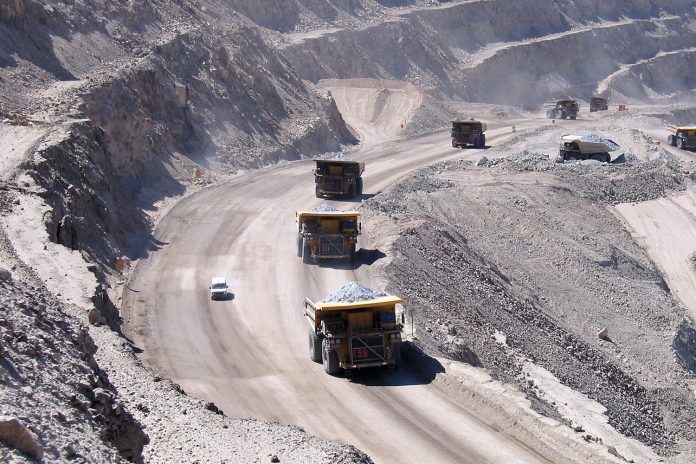
SFU has joined UBC and École Polytechnique de Montréal in a joint venture to establish the Canadian International Institute for Extractive Industries and Development (CIIEID).

Officially launched on Jan. 29, the Department of Foreign Affairs, Trade and Development (DFATD) proposed the project in order to promote socially and ecologically responsible mining practices in less-developed countries.

Controversy surrounding the organization’s corporate and governmental ties has emerged among several student and public interest groups at UBC and SFU.

Bern Klein, executive director of CIIEID, told the Vancouver Sun that “the institute’s mission is to help national, regional and local governments to leverage mining and resource extraction into long-term, sustainable livelihoods.”

The joint proposal for the institute submitted by SFU, UBC, and EPM was awarded $24.6 million in federal funding by the DFATD this past November. The grant will be used to build and then run the institute for five years.

In addition to the grant provided by the DFATD, the three coalition members along with their strategic partners have agreed to commit $15 million in funding and in-kind aid towards the CIIEID. Strategic partners for the organization include NGO’s, international governmental and development bodies, and industry mining companies such as Stantec, Asanko Gold, and Goldcorp.

After the grant runs out, the Institute will search for funding from their strategic partners. Physical headquarters for the CIIEID will be on the UBC campus.

Daniel Shapiro, dean of SFU’s Beedie School of Business and member of CIIEID’s executive board points out that artisanal mining (small-scale mining operations that utilize traditional, non-mechanized extraction techniques) normally occurs without regard to environmental and social responsibility, which can create problems for the communities in which it occurs.

“These countries want to expand their extractive industries, and in some cases, the ways they’ve been doing it turns out okay; in other cases, the results will be disastrous. This is what we’re trying to work toward — preventing this,” Shapiro said.

Programming and outreach will be limited by the project’s mandate to areas that Canadian extractive corporations have already invested in. Klein points to mining organizations in Ecuador, Colombia, and Peru as potential partners.

Some controversy regarding the motivations behind the project has sprung up among concerned students and community members; some worry that an association with corporate bodies may reflect poorly on the reputation of the academic institutions.

A group of concerned UBC students discussed the ethical concerns surrounding SFU and UBC’s involvement in the CIIEID on SFU’s radio station, CJSM 90.1, on Jan. 22.

“Canada does not have a track record of strong corporate social responsibility,” cautioned Sam Stime, a UBC graduate student involved with UBC’s Social Justice Society. He also raised concerns over the fact that several members on the CIIEID’s executive have had corporate mining ties in the past.

SFPIRG, a social justice organization on SFU’s campus, has also been vocal in raising concerns about the CIIEID’s structure.

Jennifer Moore, program director for MiningWatch Canada, told the Vancouver Sun that she worries that the independence of the CIIEID will be compromised by the fact that the majority of its funding comes from the DFATD.

However, Shapiro and fellow board member and SFU professor Carolyn Egri asserted that academic independence is tantamount to the CIIEID.

“There’s a really strong principle of academic independence and integrity running throughout the project,” said Egri, whose research focuses on corporate social and environmental responsibility.

Egri maintained that allowing corporate involvement in the CIIEID is important in tackling the problems at hand: “If there’s a problem, you have to solve it by including the people who are contributing to the problem. Excluding them won’t help at all.”

Shapiro added, “We are independent. We are all university people who cherish independence, so we are not an arm of the government in any way.”

SFU researcher explores mental health in Vietnam

0

WEB-Jill Murphy-PAMR

SFU researcher Jill Murphy is saying “hẹn gặp lại sau” (see you soon) Canada, and “good morning” Vietnam as she heads overseas to pursue research related to mental health practices.

The study will be conducted in coordination with Simon Fraser University and the Institute of Population, Health and Development in Hanoi, represented by Elliot Goldner and Dr. Vu Cong Nguyen, respectively. Funded by Grand Challenges Canada, the pilot project aims to test the feasibility of a large scale training program for health care workers in Vietnam.

Researchers hope that the information gained will be used towards improving health care systems and mental health care conditions around the world.

Management of mental health is lacking for most populations; it is a growing issue that continues to be stigmatized and misunderstood, even in countries like Canada. In many less developed countries (LDCs), services are lacking and knowledge is insufficient in areas related to mental health.

The country of Vietnam was chosen partly because Simon Fraser University already has a strong connection with Vietnam. Vietnam is also economically and socially similar to many other LDCs.

The research will focus on common mental health disorders such as depression, anxiety, and other mood disorders. Many of these illnesses are correlated, and often a decrease in mental health leads to or aggravates physical health problems. As the World Health Organisation predicts, depression could become the second leading cause of disease worldwide by the year 2020.

Murphy explained that there continues to be a stigma around mental health, which causes people to fall into a state of anxiety, discomfort, or shame.

To alleviate this issue, she advised that doctors be provided with better resources so that they can recognize the signs and symptoms of a mental disorder and manage the situation in a culturally appropriate manner. Doctors should also be able to provide the appropriate treatment, and provide strategies and tools with which patients can educate themselves.

“Research has shown that primary health care workers, [such as] doctors and nurses, can successfully treat common mental disorders such as depression and anxiety,” said Murphy. “Improving training and support of these health care supporters can lead to a great deal more services available on the primary care level.”

She continued, “Mental health has been neglected globally, in countries like Canada, because they have often been stigmatized […] In the future it is important that mental health no longer be seen as something separate but be integrated in the broader context of the global health.”

In Vietnam, Murphy plans to interview health care professionals about their work environment, with a specific focus on their workload, attitudes, and understanding of mental health issues.

“Primary health care workers are the first point of contact for patients when they seek help [for] mental illness,” Murphy said. “The ability of these primary health care workers to successfully integrate mental health interventions into their everyday practice can determine whether or not people receive adequate and successful care for their mental disorders.”

Murphy will also be gathering information from patients about the health care system and its ability to provide help when it is needed. Lastly, surveys will be given out to different sample populations for a broader perspective on the overall occurrences of mental disorders.

For Murphy, this research is her stepping stone towards bigger goals — she hopes it will contribute to the “growing body of information” around mental health and “improve services around the world,” eventually moving towards integrating better health care in other countries and building connections and opportunities for those suffering from mental illnesses.

Winter’s Cold War

0

event_the_cold_war_final

Set in the years of near-conflict after WWII through the early 1960s, Michael Hollingsworth’s play The Cold War is an entertaining commentary on what it means to be Canadian — past and present.

Presented by SFU’s School for the Contemporary Arts theatre department, The Cold War  tells the story of Canada’s tumultuous political history alongside tales of struggle from its female citizen Mary Muffet, who has been pushed out of the workforce and back into the home.

Although its topics are serious, The Cold War is sure to be a historical romp, energetic and detailed, typical of Hollingsworth’s style. Not only for those passionate about history, theatre, and feminism, it appeals to anyone looking for a new and refreshing performance to see in downtown Vancouver as winter trudges on.

A cast of 11 SFU theatre students play over 70 characters in this fast-paced production. June Fukumura (previously seen in Women of Troy and Donut Holes in Space), plays Mary Muffet, a modern working woman who loses her job at a munitions factory and is forced into being a homemaker. Fukumura encourages audiences to enjoy the intricate story lines.

Much of Canada’s history is either unknown, or underappreciated.

Kiki Al Rahmani (previously seen in Women of Troy and Picnic), who plays Prime Minister John Diefenbaker, lends to the historical side of this play. When studying her character, she realized how fascinating Canadian history can be.

Movements that are still ongoing struggles today, such as gender equality and First Nation’s rights, were advancing by leaps and bounds during this time period — with the help of PM Diefenbaker. According to Rahmani, much of Canada’s history is either unknown, or underappreciated and this play brings this history to a place that is both accessible to the public and highly compelling.

Assistant director Sarah Faye Bernstein (from the Jamie and Sarah Experience Project) spoke about the inspiring work of director D. D. Kugler. Not only a professor at SFU, Kugler is also a freelance director and dramaturg who has worked throughout Canada. He is most known for his adaptation of Newhouse and his play Not Wanted on the Voyage, both written with Richard Rose. Bernstein describes how watching him work is truly an experience in itself, as his eye for detail makes the play what it is.

If the historical aspect of The Cold War doesn’t spark the imagination, then the satirical dark humour and big, bold costumes and props promise memorable entertainment. From a Russian Mata Hari-esque spy, to television-obsessed children, hilarious characters will rule the stage, causing all kinds of trouble.

The Cold War addresses intriguing subjects, from blackmail and espionage and the rise of the “bigger is better” mentality, to the fear of nuclear attack. Hollingsworth’s typical “big” aesthetic is prevalent in the exaggerated costumes and props, and is in contrast to the contained blocking and staging.

So, if you find yourself with a hankering for something refreshing and new, SFU’s School for the Contemporary Arts theatre department promises a fabulously good time.

The Cold War is playing at the Fei & Milton Wong Experimental Theatre from Feb. 19 to 22, and from Feb. 25 to March 1. Shows at 8:00 p.m. Tickets are $5 for students and seniors, $15 for general admission.