Home Blog Page 1205

Tippy Top Ten: SFU Road Construction

0

Here are the Tippy Top Ten worst things about the road construction at SFU…

10. It’s really messing up previously super convenient trip to school on top of a mountain

9.Your Sherpa wants a raise

8. New roads will be useless in five years when we all have flying cars

7. Will add 5-30 minutes of bus stop small talk about how bus is 5-30 minutes late

6. Future smooth roads will make us more susceptible to attacks from invading Mongolian army

5. It’ll force you to drive through UniverCity and remind you there’s a place called “UniverCity”

4. Soon won’t be able to blame bumpy road for arousal on the 145 anymore

3. With legitimate excuse for being late, “murdered parents” story will go to waste

2. Will inspire too many students to transfer into Construction faculty

1. Even after they’re finished, the roads will still lead you to SFU

Satellite Signals

0

5396001815_6505704ba0_o
Woodward’s

Over the weekend of Feb. 20, the Human Rights Watch Traveling Film Festival was held at the Djavad Mowafaghian Cinema. The event presented highlighted films from HRW’s annual festivals in London and New York.

Through storytelling, the featured films illustrate the reality of human rights abuse in order to evoke empathy and challenge each viewer to demand universal justice.


Surrey


Leader of SFU Surrey’s Digital Health Hub Maryam Sadeghi’s venture, Molescope, won first in the annual Coast Capital Savings Venture Prize competition; the prize for first place is $3,000.

Molescope is an app that helps patients keep track of suspicious moles that could potentially prove to be cancerous. Sadeghi and Molescope also gained recognition this past fall when she was named Student Entrepreneur of the Year 2013.
Vancouver

On Wednesday, Feb. 19, SFU Public Square hosted their monthly “Lunch Poems at SFU.” The noon-hour event featured readings by two noteworthy Canadian poets, Ray Hsu and Joanne Arnott.

Hsu has published over 150 poems and two award-winning books of poetry. He has taught creative writing at the SFU Writer’s studio, as well as in a US prison. Arnott, a Métis writer and activist, published her first, award-winning book of poetry in 1991. She often assesses and judges poetry for prestigious Canadian literary awards.

Questionable Information: Bing

0

The popular phrase “just Bing it” predates the Internet by 10 years.

A modern Canadian citizenship bill

0

WEB-canada citizenship-Mark Burnham

One of the most consistent themes of the current Conservative government has been developing and promoting this country’s history and sense of self.

A week and a half ago, Minister of Citizenship and Immigration Chris Alexander tabled a bill that will continue this development of national pride, one that will drastically alter the process by which a person can become a Canadian citizen.

The bill includes a variety of changes that will make it more difficult to become a Canadian citizen. Our country currently has some of the most lenient rules regarding citizenship, which has led to Canada being used by people who commit residency fraud, for which the RCMP is currently investigating more than 8,000 cases.

The new bill also addresses those who spend the minimum amount of time in Canada required to become a Canadian citizen, while spending the majority of their lives outside the country, unaware of our culture.

Canadian citizenship is a privilege that Canadians need to start taking more seriously.

The first of these changes will raise the residency requirement from the current three years to four, with time spent in the country before obtaining permanent residence status not counting towards the requirement.

Though this may upset some, the new residency requirement is still a full year less than both the United States and the United Kingdom. This new requirement will also allow for a greater integration into Canadian society and will serve, according to Alexander, as “a demonstration of one’s commitment to reside here and to participate.”

Another major change, and one that I cannot endorse enough, it the change to the language and knowledge test. Under the current system, applicants aged 18 to 54 must pass both a language and a knowledge test, and may take the knowledge test with an interpreter present.

The new legislation says anyone between the ages of 14 to 65 must pass both tests in either French or English without the use of an interpreter. It substantiates the idea that those who have been here long enough to fulfil the residency and citizenship requirements should be able to speak one of our official languages, something that has been in place in many other countries for quite some time.

This bill will also address the issue of the remaining Lost Canadians, extending them and their children retroactive citizenship. These are the descendants of Canadians born prior to Canada’s first citizenship law in 1947, who were ineligible under current laws for a variety of reasons. Many of them have always believed themselves to be Canadians, but officially had no status as Canadian citizens. This bill will finally fix that wrong.

This bill also carries some harsh penalties. The current penalty for residency fraud is a mere $1,000, not much of a deterrent. The new fines jump to $100,000 for immigrants falsely claiming to be living in Canada in order to maintain their status and thus qualify for citizenship.

This bill will also allow the Canadian government to strip citizenship from Canadians who commit acts of treason, engage in terrorism, or take up arms against Canada, so long as they are dual nationals. This portion has been heavily criticized, but it makes sense: if you are willing to take up arms against this country, you should not be among its citizenry.

Canadian citizenship is not a right, it is a privilege, and one that Canadians need to start taking more seriously. This bill is a solid step in the right direction, and shows the world that we as Canadians consider citizenship in our country to be a thing of great value.

Clan win on Senior’s Day

0

It was Senior’s Day for the Clan women’s basketball team and the final home game for seniors Chelsea Reist, Kia van Laare, Rebecca Langmead, and Marie-Line Petit, as well as senior team manager Alex Mackenzie. In a proper send-off, the Clan won their fourth straight game, 70–59, against the St. Martin’s Saints, despite a sloppy second half.

The game got off to a slow start after a 35 minute ceremony delay, with no scoring in the first minute. Head coach Bruce Langford, unhappy with the pace of play, called a timeout early while the game remained scoreless. The timeout was quite effective as Reist, one of the seniors playing her last home game, opened the scoring on a three-point play, turning the momentum in SFU’s favour.

For the rest of the first period, the Clan were on top as the Saints didn’t score until the Clan had already scored eight points — including an Erin Chambers three-pointer. The Saints had numerous defensive woes, highlighted by two straight fast-break baskets by van Laare.

Though not as tight as the previous game against the Wolves, the Clan still played a great defensive game allowing just 18 points in the first half for a score of 39–18 at the break.

Mirroring the game against the Wolves, however, was the Clan’s weaker second half during which they allowed SMU to close the gap. Though the Clan took quite a few fouls in the first, the Saints only started to punish them for it in the second, scoring on 13 of 17 free throw attempts, as compared to their 50 per cent average from the stripe in the first.

As the second frame went on, SMU kept scoring, while SFU struggled to hit baskets. The Saints gave a formidable pushback, winning the period 41–31. However, it was not enough and the Clan won 70–59.

“It was a little rough at times,” said Reist after her team’s final home game of the season. “There were a few turnovers, and things we could have cleaned up a little bit, but we had some strong points in the game and I think we’ll focus on those going ahead.”

But for many, the focus was on Reist and her fellow seniors, who left West Gym triumphant one last time.

“It’s a bit of roller coaster,” she said. “I’m super happy that I’ve been able to play [here]. Obviously it’s really sad, and I’m going to miss it a lot, but it was fun.”

But with the playoffs looming, the ride’s not over just yet.

Clan win big at home

1

Sango Niang’s previous career-high night was, unfortunately, a losing effort for the Clan. This time, however, the guard’s effort was not in vain, as Niang set a new career-best with 36 points in SFU’s 112–99 win over Central Washington.

The Clan’s win snapped a three-game losing streak, avenging a 96–79 loss earlier in the season. A surprisingly tight, dominant first period for the Clan gave way to a nail biter of a second.

Although the Wildcats won first tip off, the Clan scored the first five points, including a three-pointer by forward Ibrahim Appiah. CWU responded quickly scoring 14 straight points in just over three minutes. Sloppy defence and poorly timed fouls contributed to the Wildcats’ offensive burst.

That pressure would not last, however, as senior David Gebru got the momentum back for SFU with a layup at 14:13, after a well-timed steal by Taylor Dunn. The clan clawed their way back up the scoreboard with guard Sango Niang making the court his playground.

The Clan reclaimed the lead midway through the first — pushing the score to 19–18 — but did not truly explode offensively until after Niang scored his second three-pointer of the night. With the score 29–27 for the Clan, SFU just kept draining three-pointers until they led by 19, 58–39, to end the half. With all due credit to the offence, the defence also got tighter by the minute only allowing 12 more points from the Wildcats over the final 7:37 of the period.

Niang notched 22 points in the first period alone, nearly reaching his previous career high for a game (26 points) set only two games ago in a close loss to Seattle Pacific University.

Although the Clan opened the second period’s scoring, their defence lapsed at times, allowing the Wildcats to get within six with just three minutes to play. But SFU got going again just in time, and nailed their late-game free throws.

Justin Cole, who scored 16 points and two three-pointers, ended the game with a slam dunk on a steal from Niang in the last half-second, taking the score to 112–99 and keeping the Wildcats out of triple digits.

It was a decisive way to end a stretch of three losses where it seemed the Clan were getting better but with no real results. In this game, there were results: SFU notched a team-high in points and have now tied their previous NCAA best in conference wins with three. And three games still remain for the Clan to beat that record.


Campus Roadwork Update

0

WEB-road repair-mark burnham

Starting Monday, Feb. 24, all buses leaving Burnaby Mountain will return to their usual routes.This means that buses will go down the mountain via University Drive West and the bus stop by residences will once again be in service.

This alteration is due to recent feedback from the SFU community and will address the concerns of access to the residence bus stop as well as the increase in volume of traffic on University Drive East.

The detour up the mountain is to remain the same for the duration of the project, but this change in route will only be in effect until phase two of construction, which is scheduled to begin near the start of the summer semester.

Clan tip off road trip with a loss

0

WEB-W basketball-Adam Ovenell-Carter

After a successful sweep of their final home-stand of the season, the SFU women’s basketball team couldn’t keep their momentum going in Alaska. The Clan dropped an 87–71 decision to the Alaska Anchorage Seawolves in their first of three road games to close out the regular season.

Things got away from the Clan early. Just five minutes into the game, SFU was down 9–2 and had already turned the ball over eight times. After falling down 19–10 midway through the half, the Clan would rally to cut the lead to five, but that’s as close as they would get. The Seawolves pulled away and led 39–25 after the opening 20, aided by SFU’s 16 first-half turnovers.

It was a sloppy game through and through for SFU.

“We got outrebounded 43–30,” said head coach Bruce Langford after the contest. “We allowed them to have 27 offensive rebounds which was basically the story of the game, [as well as] 25 turnovers on our part.”

SFU never quit, though; the second half was a much better performance than the team’s effort in the first. The girls shot just 33 per cent in the first, but 58 per cent in the second. SFU made three straight three-pointers on three straight possessions, making the score 53–46 UAA midway through the second. Another 10–0 run later in the game would pull the Clan within eight, 70–62, with about eight minutes to play.

But every time the Clan inched back, messy play mired the comeback efforts and allowed the Seawolves to pull further away each time, and ultimately meant a loss by a disheartening 16 points. With just two games to play in the ultra-tight Great Northwest Athletic Conference, SFU will have to move on from the disappointing effort quickly.

The loss drops the team’s record to 11–5 within the conference, still comfortably in third place, but they’ll need to work out the kinks with playoffs just around the corner.


Power to the People

0

We’re coming to the end of Black History Month, an observance we celebrate every February in Canada and the United States. Given the recent death of Nelson Mandela, I felt I should write something about a few great black people throughout history with whom you may not be familiar. We already hear about visionary figures such as Dr. Martin Luther King Jr. and Malcolm X, Rosa Parks, Maya Angelou and (one of my personal heroes) Nelson Mandela.

Instead, this article is dedicated to the unsung heroes of black history — men and women who have risked their lives for the betterment of their communities and countries. They may not have done deeds that received universal press coverage or given speeches that set nations’ imaginations aflame, but in their own way, they have done their part to shape the modern world. Here are three such people.

Rebecca Lee Crumpler, M.D.

Rebecca-Lee-Crumpler

Born in 1831, Rebecca Lee Crumpler was the first African-American woman to obtain a medical degree in the United States; an impressive feat, given the time period that she lived in. But beyond this noble achievement, Dr. Crumpler also worked closely with fellow black doctors to tend to the needs of newly freed slaves and war veterans during and after the Civil War.

Her work was so extensive that she wrote the Book of Medical Discourses: In Two Parts, which is now recognized as a fundamental influence on modern public health policy and American literature.

“It was a significant achievement at the time because she was in the first generation of women of color to break into medical school, fight racism and sexism,” Manon Parry, curator at the National Library of Medicine’s History of Medicine Division, told Time magazine. “It was a common theme that minority females went in to the profession to provide medical care for underserved communities.”

These “underserved communities” and the world in general, owe a great debt to Dr. Rebecca Lee Crumpler, a woman who not only saved countless lives, but changed even more.

Philip Emeagwali

emeagwali

Emeagwali was born to a poor Nigerian family in 1954, but he eventually went on to earn a certificate from the University of London, as well as degrees from George Washington University and the University of Maryland.

As a math wizard and child of an oil-bearing nation, Emeagwali’s work revolves around the simulation of oil reservoir detection. I’m not saying that I understand the intricacies of this process, but I do grasp its importance. For those of you that do, he decided to forego the use of multiple supercomputers to detect the oil, choosing instead to use many microprocessors at once.

For his many achievements — including the invention of a Connection Machine, used to calculate the volume of oil reservoirs and other mathematical equations at a rate of 3.1 billion calculations per second — Emeagwali won the Gordon Bell Prize in 1989, one of the crowning achievements offered in the field of computer science. Not too shabby for a kid whose family once couldn’t afford to send him to school at all.

Patrice Émery Lumumba

rasouli_amir20130401081517020

Last but certainly not least, Patrice Émery Lumumba (born Élias Okit’Asombo) was the first democratically elected Prime Minister of the Democratic Republic of Congo. He was a champion of nationalism, Pan-Africanism and unity among the African people, in a time when North America still struggled to offer African-Americans equal rights.

In a nation that had been ravaged and torn apart for centuries by the colonial forces of Belgium and the United States due to its rich mineral deposits, Lumumba and his Mouvement National Congolais (MNC) finally won a hard-fought independence from Belgian forces in 1960.

Black History Month is, first and foremost, a time to learn about and reflect on the black story.

Less than a year later, Lumumba — a symbol of the power and potential of the African people — was captured and assassinated by an execution squad from the Congolese breakaway state of Katanga. For their part in the attack, the Belgian government offered a public apology in 2002, expressing their “profound and sincere regrets.”

“In Congo, Lumumba’s assassination is rightly considered the country’s original sin,” Georges Nzongola-Ntalaja argued in The Guardian. “It was a stumbling block to the ideals of national unity, economic independence and pan-African solidarity[…] as well as a shattering blow to the hopes of millions of Congolese for freedom and material prosperity.”

Since Lumumba’s death, Congo has seen much bloodshed. The Second Congo War, beginning in 1998 and ending in 2003, is sometimes referred to as the Great War of Africa, and at one time the conflict involved nine different African nations. The country is still plagued by colonial pressures and intermittent periods of violence and civil unrest, as well as poverty and disease.

Many of you may be wondering why I decided to add the icon of a war torn nation at the end of this article. The answer is this: there is still much work to be done.

Black History Month is not just a celebration of black history, or a time to recognize how far we’ve come as a people. It is, first and foremost, a time to learn about and reflect on the black story, to plan the next steps in this great story we are writing, and share the chapters that we’ve etched onto the world’s great journal with those around us.

Perfect Symmetry

1

grace_symmetry

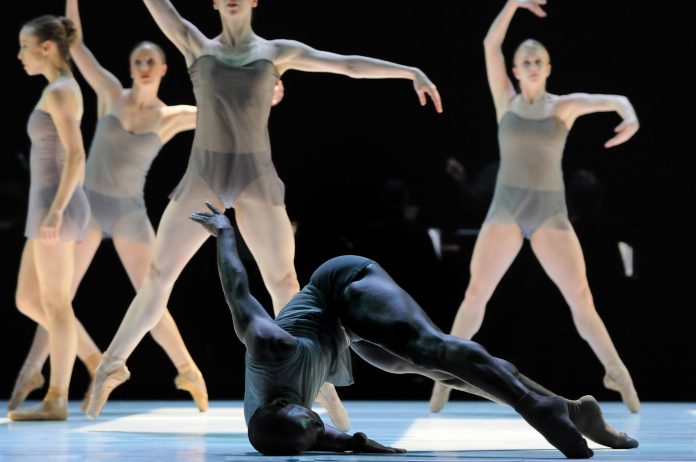
With two world premieres, Grace Symmetry, Ballet BC’s audience favourite, will showcase the works of three diverse choreographers.

Vancouver’s Wen Wei Wang is remounting his work In Motion, which was performed by the company in 2011. “It’s nice; the first time it was very fast and the second time I’m able to make a few changes,” said Wang, “I feel much better. The dancers are more relaxed and they understand it better, can make it look better.”

           The Turning Point Ensemble chamber orchestra will be partnering with Ballet BC on this show, as they did when Wang first presented the work. He took the opportunity to work closely with the musicians and have them on stage with the dancers. “It’s the only piece with musicians on stage,” he said. “Owen Underhill is conducting to the audience too instead of facing away,” explained Wang. “The conductor has to look over to the audience; he’s like a dancer too — I like to see the movement.”

           Having the musicians on stage has an equalising effect, and they are just as much in the spotlight. “The music is a very important part of the piece. It’s a small orchestra; they become the set, a part of the work,” said Wang, “The audience can see something they normally don’t see.” This also makes the stage look fuller, and in some sections of the piece the musicians and dancers will interact, and they are integrated into the work.

           The creative process for In Motion differed from how Wang normally works for his own company as he was limited to choosing music from the Turning Point Ensemble. “It was a different process for this; I had to work towards the music,” he said. But he doesn’t think one method is better than the other: “In another sense it’s great. I am just going for another kind of experience, there’s no right or wrong.”

“The music is a very important part of the piece. It’s a small orchestra; they become the set, a part of the work.”

Wen Wei Wang, choreographer

           Wang also said that each piece he does is quite different; with his own company, the works are more personal. “In the beginning I don’t think about it for the audience,” he explained, “but what’s right for the moment, the music, and the dancers. Of course after a week or two you start thinking about the audience.” Regarding In Motion Wang said, “I want them to see the pure steps and emotions. Sometimes we think it’s deep, but the audience can’t get into it. It’s like music: you don’t have to understand it, but you can feel it.”

           Similarly, Kevin O’Day wants the Ballet BC dancers to feel the movements and not rely on automatic cues. Back at Ballet BC after presenting Face to Face in 2010, he is creating a new work for the company that is about spontaneity and the relationship between time and space.

This world premiere is titled Here On End, and O’Day said he was excited about the “beautiful opportunity of live music and the ability to explore contemporary classical music” with the Turning Point Ensemble. At his home company, Ballet Mannheim, O’Day uses live music for all of his shows.

“We’re never really comfortable in creation — there’s a conflict of creation always at hand.”

Kevin O’Day, choreographer

           Even though he is away from Mannheim, he said being at Ballet BC has a similar feeling: “Emily Molnar has made a great creative environment.” He enjoys working with the company and described them as an “extremely open group,” saying “the work environment is one of willingness to explore new movement. It’s a very process oriented company.”

           If the piece he’s creating doesn’t have a story or narrative, then it is collaborative and he works with the dancers to develop material together; they have to build the raw materials and develop the movements first before the piece can take shape. Although Ballet BC has a comfortable working environment, O’Day said, “We’re never really comfortable in creation — there’s a conflict of creation always at hand, but the environment and the willingness helps. There’s safety in a group that’s willing and able to trust.”

           O’Day doesn’t try to pinpoint how an audience will react to his work. “It’s important to stay working on this idea that’s made to be presented,” he said, “attaching an artist with the work so they can feel the work and embody it so that the audience can come away feeling something.” There may be subtextual sentiments he’s trying to get across, but people are free to have their own interpretations. “I don’t want to be present as a choreographer on stage,” he said, “my goal is to remove myself.”

Ballet-BC-dancer-Gilbert-Small-with-artists-of-Ballet-BC_photo-by-Michael-Slobodian

           Here On End features the same composer and collaborators as 2010’s Face to Face, and the piece uses every company member and apprentice, but other than that it’s very unique.

           O’Day described the concept of this work as music in connection to space and time, with open spaces in the music. John King’s time vectors/still points has minutes of open time which are never exactly the same, so there is an organic configuration of the music. “The dancers have to be aware of sound cues,” said O’Day. “It’s something that I’m interested in — organic configuration of space and time.”

           Creating another world premiere for Ballet BC, Medhi Walerski is back after his popular Petite Cérémonie which was presented in 2011.

           His new work features the whole company and is titled Prelude, using Russian composer Lera Auerbach’s Ten Preludes for Violin and Piano. As the title of the music suggests, there will only be a violinist and pianist from the Turning Point Ensemble accompanying the work.

“You choose the brushes and the colours, and then you begin to paint. There’s a whole creative process that happens before creating the piece.”

Medhi Walerski, choreographer

Walerski said he decided to work with the idea of time, specifically the idea of a prelude, something that happens before something else: “At first I thought maybe this work was a prelude to Petite Cérémonie, or that they would work well together,” but he said that they are very different. “Petite Cérémonie was lighter, more theatrical,” he said, “all my works are very different.”

           Walerski’s creative process involves a lot of research: “I collect different information and try to create a music collection, images, photos, texts, and things that inspire me to create material. I like to have a lot of information,” he said. Post-research, he begins to create phrases of movement and work with the dancers, looking for raw material. He likes to work collaboratively with the dancers, allowing them to add something personal to the work.

           “We played for a week, then had a bunch of ideas, and then in week two we began to build bit by bit,” said Walerski. “You then have all these ideas, but they don’t always fit — the hardest part is that you have to get rid of things and there are maybe one or two ideas that are really good.” He compared the process to painting: “You choose the brushes and the colours, and then you begin to paint. There’s a whole creative process that happens before creating the piece.”

           The moment Walerski sees his piece on stage on opening night is when everything comes together. “A piece really finds it’s own identity at the end with the lighting and the audience,” he said. Opening night is not only stressful for the dancers, but for the choreographers sitting in the audience, watching their creations coming to life. “It’s exciting and frightening, but I guess that’s why I do it,” he laughed, “I’m sweating more than the dancers.”

Grace Symmetry will be presented by Ballet BC at the Queen Elizabeth Theatre Feb. 20 to 22. For more information, visit balletbc.com.