Home Blog Page 12

Gwangju Uprising explores the quest for democracy

0
Schlarpi / Wikimedia Commons

By: Phone Min Thant, Arts & Culture Editor

Content warning: Brief mention of military brutality 

Beyond Death, Beyond the Darkness of the Age — a poetic name for a book that has so much suffering, death, and destruction. While the book’s first revised, English-language publication did not carry its original name, it carried the painful experiences of ordinary South Koreans in their struggle for freedom and democracy. 

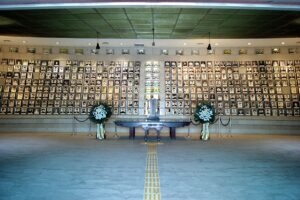
Gwangju Uprising: The Rebellion for Democracy in South Korea is a hefty book that details the movement for democracy espoused by citizens of Gwangju against the authoritarian military dictatorship of Chun Doo-hwan. Written by activists with input from the acclaimed novelist Hwang Sok-yong, the original publication in the 1980s — although discreetly distributed and read throughout South Korea — faced numerous efforts at censorship, landing the authors in jail

In a style dissimilar to many other history books that I have read, Gwangju Uprising can best be seen as a testimony from a courtroom extrapolated into over 500 pages of reading. The book takes the reader through every detail of the protests (later uprising), from the formations used by the riot police and soldiers to the types of injuries sustained by victims of military brutality. Accompanying each chapter (each of which roughly represents a day during the ten days of the uprising) are maps which chart all the routes taken by security forces as well as the protestors at critical moments of the movement. 

Also complementing these observations are the first-hand testimonies of those involved in the uprising. Many of these quotes reflected the real emotions of those seeing horrific events unfold right in front of their eyes, but also give insight into the inhumane mentality of the soldiers assigned to suppress the protests — many parallels could be drawn from these quotes to contemporary protests happening around the world, and how the oppressed can remain hopeful in the face of unbelievable oppression. The juxtaposition between quotes from soldiers describing their experiences beating up protestors with their batons and those from activists asking, “Don’t you remember which country you are sworn to defend?” painfully highlights the usual power imbalance between authoritarianism and its victims. 

Another noticeable feature I also enjoyed about the book is that the authors did not forgo important geopolitical analyses in their quest for first-hand record-keeping. There are many references to issues such as the US’ implicit consent to South Korea’s military government, or the negligence of its military and diplomatic officials regarding the situation in Gwangju. This was something I found particularly useful to me as someone who is both interested in history but also wanted to learn more about how the Cold War’s diplomatic and security environment negatively affected democracy in countries like South Korea. 

Given the intensity and detail of the book, you might be wondering if it is suitable for someone who doesn’t know anything about the protests or even about South Korean politics. While most of the content focuses on the protests, the first few chapters significantly (and concisely) lay down the domestic political situation leading to the uprising, beginning with the assassination of president Park Chung-hee and the rise of Chung Doo-hwan in the military — and later political — echelons. There is enough information — without unnecessary jargon — to get the layreader going!

Coming from a country whose citizens have stood up to military authoritarianism, many of the scenes in the book spoke to me dearly, sometimes painfully, sometimes with hope. Gwangju Uprising is not only a history book, but also a homage to ordinary people fighting for democracy, in South Korea back then, and around the world today. 

Latin American Heritage Month events

0
RDNE Stock Project / Pexels

By:  Lucaiah Smith-Miodownik, News Writer

October marks Latin American Heritage Month in Canada — a time to honour the ongoing impact and future influence of Latin Americans on the country. Both Canada and Latin America are steeped in rich Indigenous cultures that are foundational to their existences, and Latin American Heritage Month also provides an opportunity to reflect on the colonial history that both share.

For intriguing opportunities to celebrate and learn about Latinx culture just outside your door, read on!

What: Fire Never Dies: The Tina Modotti Project  

Where: The Cultch Historic Theatre, 1895 Venables St., Vancouver

When: October 15–26, 2:00 or 7:30 p.m.

Chilean Canadian playwright Carmen Aguirre brings her latest work to the Vancouver stage for its world premiere. Fire Never Dies: The Tina Modotti Project is a play that tells the story of Tina Modotti, a photographer turned activist during the Spanish Civil War. The play will preview on October 15, before debuting the following evening. Those interested can also purchase special talkback tickets on October 19 and 21, which provide the opportunity for audience members to ask any questions they may have.

What: Brazilian Live Experience

Where: Latin Plaza Hub, 68 Water St., Unit 301, Vancouver

When: October 24, 7:00 p.m.

Come experience Brazilian song and dance on a night out in Gastown. This event will feature live performances honouring both Brazilian and Afro-Brazilian culture. Experience samba, a dance style that originated in Salvador de Bahia, where it was developed primarily by enslaved people trafficked from Portuguese Angola. Forró, another popular style of Brazilian music and dance to enjoy, was born from “a fusion of African, Indigenous, and European musical influences.”

What: La Feria del Libro en Español (“the book fair” in Spanish)

Where: Ocean Artworks Pavilion, 1531 Johnston Street, Vancouver

When: October 25, 11:00 a.m. – October 26, 5:00 p.m.

Immerse yourself in literature at the book fair! This event “highlights the diversity of Latin America through books, storytelling, art, and family-friendly activities.” There will be book exchanges including Spanish and Portuguese collections, talks by authors, and art displays exhibiting Latin-inspired works.

What: Cut & Create: Paper Flowers Workshop

Where: Ocean Artworks Pavilion, 1531 Johnston Street, Vancouver

When: November 1, 5:00–6:00 p.m.

If you are interested in crafting your own paper cempasúchil (marigold), this event is the perfect opportunity. The cempasúchil is rooted in Mexican culture as the flower of the dead, and is often used in ofrendas as a part of Día de los Muertos (Day of the Dead). In addition to crafting flowers from crepe and tissue paper, participants will learn about the cultural significance of the holiday. Día de los Muertos is a celebratory opportunity to reunite families with their deceased loved ones, and in doing so, reframes the concept of death itself as something not to be feared.

What: Catrina Party

Where: Old Bridge St., Vancouver 

When: November 1, 7:00–11:00 p.m.

La Catrina, also known as the elegant lady, is another image distinctly tied to Día de los Muertos. Created by artist José Guadalupe Posada, the illustrations are rooted in a sense of satire and serve to remind us that we all die in the end, regardless of our social status. This event will feature a La Catrina costume parade, best-dressed La Catrina contest, live music, and Día de los Muertos-inspired cocktails.

There will also be a closing ceremony on November 2 from 6:00 to 8:00 p.m. at Granville Island’s Day of the Dead Market. For more  Latin American Heritage Month events, visit latincouver.ca/lahm and vlacc.ca/latin-expressions.

Two songs that played as a soundtrack to my embarrassing life

0
A chaotic-looking lady with hair curlers all tied up in her hair.
PHOTO: wayhomestudio / Freepik

By: Noeka Nimmervoll, Staff Diva 

Dear Diary, 

I can’t lie, life has been wild recently. I don’t know what’s going on with the universe — I think Mercury is definitely in retrograde. Either that, or the universe has developed a remarkable sense of comedic timing. These songs played in the most ridiculous situations all this week. I’m hiding inside my home from now on, for real. 

Every Day’s a Lesson in Humilityby Suki Waterhouse & Belle and Sebastian 

Every day’s a lesson in futility

Got to take the dogs out

Every day’s a lesson in humility

Got to eat my own words

It’s so embarrassing to be alive, girl. On Sunday, I was at the mall in the food court. I had just done some shopping, and I decided to get a bowl of pho. I sat down with my pho, took a bite, yadayada. Right then, I saw a friend walking through the mall in my direction. I got so excited to see her — we hadn’t seen each other in months! I stood up in the middle of the food court and yelled, “SARAH!” spraying a mouthful of food, EWW. I shocked (and probably disgusted) a bunch of people around me. Oopsie. But then . . . I guess my jacket got caught under the bowl because it spilled. ALL. OVER. ME. Girl. I was MORTIFIED. AND THEN. My “friend” locked eyes with me and pretended to gag. I GASPED. She strutted away, laughing, and I was there, DRENCHED in beef soup and noodles with the ENTIRE FOOD COURT watching as I made a fool of myself. Then, this bitch-ass song played — it was insane timing, evil even. That was the worst way to spend $18 ever.

Landslideby Fleetwood Mac

Oh, mirror in the sky, what is love?

Can the child within my heart rise above?

Can I sail through the changin’ ocean tides?

Can I handle the seasons of my life?

OK. Diary, let me set the scene for this one. I’m at H-Mart after a serious and horrible realization. It’s a Tuesday at 10:00 a.m., and I have makeup POURING down my face — I had just realized that being a popstar without having any singing or dancing talent is not a viable career path. Girl, I do NOT need this emotional turmoil before my dentist appointment, and I was literally BANKING on that career path. I am feeling this song so hard, walking through the aisles with my heartbreak in the air, MELTING on the floor while sob-singing this song in the frozen section. Then, girl, security kicks me out. I KNOW. H-mart hates to see a diva like me coming, I guess. So I get my cute butt moving, I go to my dentist appointment with makeup smudged all over my face, and then I get trapped in a sterile room with my dental hygienist scraping metal against my teeth. I am still so distraught that I forget to lie when she asks if I’ve been flossing. And then, I hear:

I took my love, I took it down

GIRLLLL. THEY’RE PLAYING THE SONG AT THE DENTIST’S TOO. What the hell am I supposed to do?? Cry, with my mouth wide open? Why is this acceptable radio music?? Ugh, musicians are so useless anyway.

I literally couldn’t believe it. I’ve gone THROUGH it this week, and these songs are officially ruined for me now. Girllll, whatever. At least my teeth are clean.

With love,

Noeka 


My journey infiltrating the country of Islam

0
A white woman wearing all sorts of different cultural attire, holding a map in her pocket.
ILLUSTRATION: Cliff Ebora / The Peak

By: Zainab Salam, Sand Excavator

Mission report: Desert Day 1

Subject: Bringing Civilization™ to the so-called Orient.

Girl, we going to Islam?” That is what I asked my adjutant upon dismounting the camel. He nodded gravely. Neither of us knew exactly where the country of Islam was located, but it seemed vast enough to cause me to ponder for about 6 or 7 minutes. I landed on the idea that we would stumble upon it . . . eventually. 

Once I entered the tent, I was greeted with suspicious glances from the Bedouins. To calm them down, I then declared my heritage: “Do not fear me, people. I am from Civilization™!” I made sure to place a heavy emphasis on the capital C. It had the desired effect — they incredulously laughed at me. I should note that they laughed at me, due to their cultural teachings that encourage being welcoming towards your superiors by laughing at them. It is their Muslimanity’s teachings. 

For efficiency, I requested to speak with their leader. A Bedouin man with warm brown eyes emerged from the back room of the linoleum-floor tent. When I explained to him that his tribe had insulted a person from Civilization™, he replied, “Ma’am, this is a Wendy’s.” Turns out I had been queuing at a Wendy’s the entire time. Ah, my diet was about to be ruined! 

But that was yesterday. Today is a new day! 

Upon embarking on my new mission today, I met three merchants. One of them does not appear to be of the Muslimanity faith. He was pale and had blue eyes. I believe he might have been a covert Civilization™ personnel. I winked at him, but he was deep undercover and acted confused. That behaviour had me nodding sagely. His faithfulness to our Civilization™ will be reported to my superiors upon my return to base. 

Later that evening, I attempted to ride a camel into the sunset for dramatic effect. The camel threw me into the sand. I concluded this was a symbolic gesture of respect. This is an odd land: just yesterday, a local decided to honour me by lifting the entrance cloth off the tent. I had to explain to him that I am but a regular Civilization™ person. He looked at me weirdly and said, “I am literally camping. No — this isn’t my home — can you please leave me alone?” Silly commoner. Camping doesn’t exist outside of Civilization™! This is literally cultural appropriation. 

As the sun set, I posed dramatically against the dunes. I am sure history will remember me fondly — I will be remembered as the bridge between our Civilization™ and their tribes. I am the main character! 

Mission report ends. Glory begins. I know my work here will grant me a book deal. My life story will be turned into a Hollywood movie, where I will be played by a blonde actress with piercing blue eyes. Naturally, the locals will be played by ethnically ambiguous and amateur actors, but who cares? Huzzah!

The Steve Chronigulls

0
A seagull sitting in front of the koi pond. He’s holding a director’s clapper.
ILLUSTRATION: Angela Shen / The Peak

By: Lucaiah Smith-Miodownik

The Peak recently interviewed Steve C. Gull, a local screenwriter and seagull who lives in the reflecting pond. We decided to check back in with the avian creative and see how he’s been since we last spoke.

Last time we talked, you were working on your screenplay, Romeo and Gulliet. How’s that going?

“Turns out there were some licensing issues with the whole thing. Apparently, the idea is already taken? To be honest, I’m kind of starting to regret telling you guys about the project. I think someone else might have stolen my idea. I looked it up, and it turns out there’s a gnome version, too? C’mon, let’s be realistic here. Anyways, all that to say, Romeo and Gulliet won’t be hitting the big screen anytime soon. Such is the life of an artiste, I suppose.”

Do you have any other projects in the works?

“Yes. But I’m not taking any chances this time. I don’t want you people leaking my work again. Well . . . what the hell, I guess a little sneak-peak couldn’t hurt. So, picture this: A young Canadian seagull has a burning passion for ice hockey. Turns out, though, that he’s much better at golf. He enters a tournament hoping to beat the pros and win enough money to save his grandma’s house. It’s a real David and Gulliath situation (yes, that one’s in the works as well). So far, the working title is Flappy Gullmore. Keep in mind here that we’re still in the rough draft phase. Creativity takes time.

“I’ve also been looking to branch out and diversify my portfolio. I’m working with my agent on securing a role in an upcoming National Geographic documentary. Oh, and I just booked a cameo in a PETA commercial starring my buddy, Daffy.”

Let’s go back to the beginning. How did you first find your passion for the arts?

“I like to think the passion found me, really. I remember it was after a particularly spicy SoulCycle session. I went to pop in to my favourite vegan acai bar like usual, but they were closed. I was devastated. I went home, and the words kind of just flowed out onto the page. It was a healing experience, really. From then on, I just knew I had a gift, and I was obligated to let people hear my voice. What I want anyone seeing my art to take away is that you can get through hard things in life. If I can help one person with their trauma, then I’ve done my job.

“My career hasn’t been without struggle. You know, I actually applied to be the arts editor for The Peak back in my university days. I had the job for a little while until they fired me. Apparently the new cigarette-timbits compote in the dumpster behind the Student Union Building isn’t worth writing about multiple times? Oh well, their loss. Between you and me, I still sometimes shit on the newspaper stands around campus just to spite them.”

Is there anything else you’d like to add?

“To anyone reading, you better not get any ideas about stealing my project. I hired the best lawyers to sue people, including your seagull-phobic newspaper. I further demand that The Peak rename itself to The Beak. Oh, and follow me on Instagram: @whatsteveseesgull.”

Nepal’s Gen Z protests have led to an uncertain political transformation

0
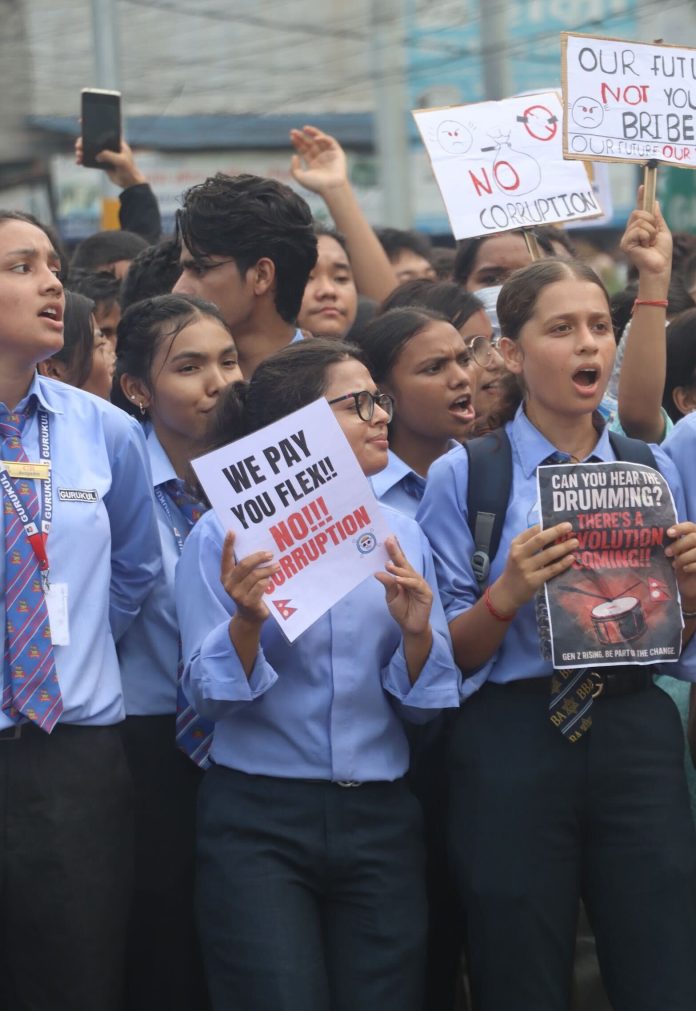
A crowd of students protests against Nepali corruption, holding signs saying, “We pay you flex!! No!! corruption” and “Can you hear the drumming? There’s revolution coming!!” in all caps. The photo is a close-up of five girls in particular, who all wear blue collared shirts and dark dress pants.
PHOTO: हिमाल सुवेदी / Wikimedia Commons

By: Niveja Assalaarachchi, News Writer

On September 4, the government of Nepal, headed by then-prime minister K. P. Sharma Oli, banned 26 social media platforms from being accessed within the country. The government introduced the ban for platforms that did not register themselves with the country’s Ministry of Communication and Information Technology, such as WhatsApp, Instagram, and Facebook. However, the ban was seen as more than a registration issue as it sparked widespread outrage over deeper socioeconomic issues in the country, such as corruption. 

The Peak interviewed Dr. Rupak Shrestha, an assistant professor at SFU’s school of international studies, on the situation in Nepal. Shrestha, born in Nepal, is a political geographer whose research explores topics such as sovereignty, security, and surveillance.

On one level, “Nepal has one of the highest rates of social media users per capita in South Asia.” Shrestha discussed how daily communication, business relations, remittances from abroad, and other activities are all carried out through social media, meaning the ban would disrupt these aspects of everyday life for Nepalis.

Shrestha also pointed out how the ban was the breaking point in large-scale dissatisfaction: “Citizens were angered by a state that appeared to criminalize everyday life. For many, the ban was not [seen] as a regulatory measure but a direct attack on their ability to speak, connect, and survive in the midst of increased unemployment and deepening distrust of the state and its elite ruling class.” He noted these socioeconomic pressures, which either force many to move abroad or find work in the informal sectors, were acutely felt among the youth due to their more active role in the economy. 

In the weeks leading up to the social media ban, activists launched campaigns to highlight the wealth accumulated through corruption by political elites. Corruption is deeply rooted in Nepal’s political structure, affecting most aspects of daily life. Transparency International, an anti-corruption organization, ranked Nepal 107th out of 180 countries on a scale of “very clean” to “highly corrupt.” A nepotistic political culture of appointments, combined with poor accountability for government spending, has led to scandals relating to the misuse of funds, bribery, offshore financial accounts, and money laundering

The protestors had “non-negotiable” demands, including “the dissolution of the parliament, mass resignation of parliamentarians, immediate suspension of officials who issued the order to fire on protesters, and new elections.” 

Protesters targeted key government institutions, such as the parliamentary complex, Supreme Court premises, and homes of famous politicians, setting them on fire. The violence permeated throughout the protest movement, which saw 74 protesters dead and more than 2,100 injured.

Facing mass discontent, prime minister K. P. Sharma Oli resigned from his post, citing the need for a new “political solution.” With the blessing of protesters, Shushila Karki was eventually appointed by President Ramchandra Paudel as the interim prime minister. Nepal has both a president and a prime minister. Karki is a former chief justice and has been popular among the population for her “stance against government corruption” and financial mismanagement. In her first few days, she dissolved parliament, setting the stage for federal elections by March 2026.

Shrestha highlighted how stability will come from “rethinking power itself. In Nepal, military and police power often operate as if they are distinct from the state, yet they shape its legitimacy and citizens’ everyday lives,” he continued. 

“Without reforming, and in some cases dismantling/abolishing, the cohesive arm of the state, democratic futures will remain fragile.” — Dr. Rupak Shrestha, assistant professor at SFU’s school of international studies


Throughout the Lower Mainland, housing struggles persist

0
A shelter composed of various coloured tarps (orange, white, black, brown, blue and a greish purple) is pictured outside on a cloudy day. A regular medium-sized building is in the background.
PHOTO: Courtesy of @unhousedsolidarity / Instagram

By: Lucaiah Smith-Miodownik, News Writer

Content warning: mentions of systemic violence, overdose, and death

From Vancouver to Kelowna, community members are uniting in solidarity for those affected by ongoing tent city policies. In late March, residents along the Okanagan rail trail were forced to leave as officials capped the number of tents at 60. Additionally, some areas of the encampment are now reserved for overnight use only.

For some, the procedure is all too familiar. “It’s a coordinated strategy that cities are using. It’s intentional and thought out, and the rhetoric is identical,” advocate Fiona York told the Unhoused Solidarity Collective Okanagan (USCO), which focuses on elevating unhoused voices. The collective noted that officials used similar language in the case of CRAB Park in Vancouver, where a “clean-up” last March ultimately led to a forced closure in November.

The Peak corresponded with USCO and spoke with two community members who have spent time living in encampments about their experiences, their solidarity with those in similar situations, and what they would like to see change.

“One of my best friends actually died because of them cleaning up all the stores, or all the camps that were on Hastings Street. There was nobody on Hastings that night, and he overdosed right on the corner,” Kirstine Fuhrman said, herself also having experienced street sweeps. “If they hadn’t done that, then he’d still be alive,” she said. Using substances alone increases the risk of overdose, as no one is available to help during an emergency. A recent study also indicated that street sweeps “negatively affected respondents’ access to services,” like supervised consumption sites

USCO reported that in Kelowna, “deaths among the unhoused have spiked since the City’s recent violent decampment of tent city.” 

Despite the reduction in its size, the encampment “remains only 75% full.” The shortfall stems from the fact that the “vast majority” of residents refuse to sign a required Good Neighbour Agreement to stay.

One unhoused Kelowna community member, Timothy Freeman, explained to USCO that the agreement forces residents to surrender privacy and control over their own homes. The agreement also prohibits residents from having visitors. Bylaw officers can visit the site, but must do so on a set schedule to avoid any surprise inspections or confiscations.

The alternative, Fuhrman explained, isn’t always sufficient either. “They don’t want to offer you any actual housing; they just want to offer you things that are inadequate,” she said.

“I’d like to see some of these politicians actually stay in some of these places they’re offering us.” — Kirstine Fuhrman, unhoused community member

“It’s sad, it’s disheartening that they’re still getting away with these things against people, and it shouldn’t be happening,” said Athena Pranteau, a community advocate who spent time living in CRAB Park. Pranteau shared that she has been unhoused on two separate occasions, both “due to clerical issues from BC housing staff.” She may face the prospect of being unhoused with her two kids again, expressing a sense of “impending doom.”

USCO hopes to “gain some momentum with regards to resources for the unhoused that will significantly impact the ability for people to gain shelter and income in a way that’s sustainable,” the organization told The Peak. “How can any government make improvements without hearing from the very people they’re claiming to be helping? USCO wants to bridge the current disconnect and hopefully gain some community understanding during the process.”


It’s time to rethink our hockey obsession

0
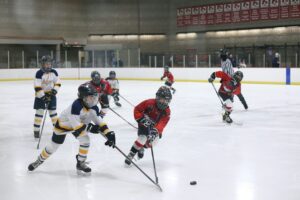
a group of kids playing hockey, in an ice ring. They are wearing their hockey jerseys.
PHOTO: April Walker / Unsplash

By:  Lucaiah Smith-Miodownik, News Writer

Multiculturalism and hockey are often portrayed as encapsulating the Canadian identity; however, the two don’t seem to intersect. This sentiment is shared in an article from the University of Toronto Press, written on sportscaster Harnarayan Singh, the first Sikh person to commentate an NHL game in English. He was also the first person to commentate in Punjabi. This is a reminder that Canada’s most celebrated sport doesn’t reflect its praised diversity. 

The NHL consistently ranks as the whitest professional sports league in North America, illustrating a stark contrast between the country’s supposed values and its beloved national game. This juxtaposition is not simply a standalone outlier, but rather a visible manifestation of the Canadian project itself. Growing up south of the border, Canada was always shrouded in an ethos of quiet pacifism, especially in comparison to the US as a whole. But what does it mean when so many NHL players are white, and when those who are not are subjected to racism

It might be easy to say that there’s nothing stopping minority players from reaching the highest level — while, at the same time, celebrating those who do as shining stories of success amongst a backdrop of Canadian liberalism and supposed inclusivity.

It’s clear, both from history and current events, that legal protections against discrimination don’t translate to equitable treatment.

The entrenched colonial institutions are designed to be more difficult to navigate by people of colour.

Despite this, racialized athletes have left their mark on the game. The Coloured Hockey League, founded in Nova Scotia in 1895, featured Black players who were innovators in the game — introducing techniques like the slapshot decades before they were popularized in the NHL. Despite their contributions, these players and the league were systematically erased from mainstream hockey narratives. In retellings of the game’s history, we see an apparent oversight that continues to shape the image of the game through the exclusion of Black, Indigenous, and other racialized people from its focal portrayal. 

Hockey shapes its legends and lore around idealized violence as well. So much so that there is a historic player archetype, the enforcer or goon, whose role on the team revolves around fighting, often to the detriment of their own health. The NHL’s relative laxness on fighting compared to other professional leagues is evidently tied to the organization’s whiteness — the two cannot be separated. Beyond the world of sports, the culture on the ice illuminates a greater societal double standard — Black Canadians are dehumanized for simple existence, while pulls and punches pave the path to the Stanley Cup for many white players.    

Sports should be a place where we can express collective pride and individual identity. They provide an opportunity to recognize the uniqueness of a diverse nation united by emotional investment in the game. But in order to reach a point where that is truly the case, we need to invest in other aspects of life that enable players to flourish on the ice. This means investing in equity across society, and relentlessly pursuing racial justice. It also means tearing down the imagery, language, and ideals associated with Canadian hockey — of a hegemonic visual of white masculinity.

As long as the sport’s culture reinforces such imagery, veiled as a celebrated illustration of culture, we must reimagine our connection to it.


Hobbies are integral to combating toxic productivity

0
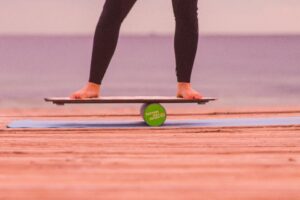
a photo of a person’s legs, while they’re balancing on a board. There’s a cylinder object that the board is balancing on. And the person is doing so, on top of a yoga mat.
PHOTO: Gustavo Torres / Unsplash

By: Heidi Kwok, Staff Writer

Capitalist societies program us to believe it’s unproductive to set time aside for leisure activities. I’ve countlessly fallen victim to this mindset myself. If I choose to turn my attention to creating art or reading the latest sci-fi novel from my favourite author, I feel guilty thinking those minutes and hours could’ve been spent on school assignments or work. This form of productivity guilt is certainly not helped by social media accounts that glorify hustle culture. This is evident in the daily routines of content creators who appear to wake up at 5:00 a.m., go to the gym, attend classes, run marathons, and serendipitously find the cure for cancer, all the while running a multi-million-dollar Fortune 500 business in their spare time. 

I’ve come to realize that hobbies are more than just ways to fill one’s time — they’re acts of resistance against toxic productivity culture, helping us protect our health, build connections, and nurture our sense of self. This shift in perspective didn’t come easily; it came only after I experienced the harm of overworking myself and the relief that hobbies offered. 

Over time, I’ve realized that toxic productivity is extremely unhealthy and detrimental to my sense of self-worth — having been burnt out in the past due to the constant pressure I’ve experienced from overworking myself. The unrelenting feeling of having to overachieve has made me neglect relationships, skip meals, and driven me into a chronic state of stress. Hobbies made me realize there was more to life than dedicating your soul to the grind culture. There’s immense joy to be found in checking out shows that everyone’s been praising, going on a hike, leveling up my piano skills, and doing touristy things in my own city. Yes, my long-term career goals are important to me, but I’ve also come to appreciate the value of a healthy work-life balance. In this way, hobbies directly push back against the narrative that constant productivity defines worth, proving instead that rest and joy are vital for resilience — which is ultimately integral to living a balanced life. 

Moreover, hobbies foster social connections, closely knitting together like-minded people who often share the same values and goals. For instance, when I jumped into rock climbing, I was emotionally overwhelmed by the multitude of warm welcomes and constant encouragement I received as an awfully incompetent beginner. Watching seasoned climbers gracefully conquer a towering 20m route dotted with crimps and slippery slopers was awe-inspiring, leaving me with a surge of determination to one day achieve a similar feat. This newfound persistence eventually materialized in my personal and work/school life, allowing me to find motivation when faced with seemingly insurmountable challenges. These connections reinforce the importance of community in sustaining resilience — while highlighting that hobbies are deeply social experiences as much as they’re personal. 

Hobbies are a safe haven where you can discover and pursue your passions without external judgment. While the rest of Metro Vancouver obsesses over their love of extreme outdoor sports, I’ve since opted for less thrill-seeking activities in a bid to match my more cautious lifestyle. I love time spent alone at home mastering a new piece of music — whether it’s on my piano, guitars, ukulele, or trumpet (albeit, at the unfortunate expense of my neighbours). Wandering around the city on weekends has also led to some impromptu photography sessions, which then inspired me to recreate my snapshots into abstract paintings. These creative activities create space free from the need for validation.

At the end of the day, hobbies are more than pastimes — they are acts of resistance against a culture that equates worth with productivity.

You don’t need to pour your heart and soul into what society deems to be productive to feel sufficient. Your life’s quality, which includes your health and well-being, is what matters most!