Home Blog Page 1165

Healthcare should cost more

0

The loonie I have in my pocket today is 1.48 per cent less valuable than it was this time last year. Such is the reality of inflation. Fortunately for me, as part of the CUPE 391 union, I don’t need to worry: my wage increases each year in order to factor in inflation.

This is generally referred to as a Cost of Living Adjustment (COLA) and is often written into collective agreements for unions. The COLA clause makes sense: if you’re working the same job, providing the same value to your employer, you should be paid the same real wage (factoring inflation).

SFSS’s upcoming referendum concerns essentially that — the students act as the employer, while our health and dental provider, Desjardins, is dealing with inflation and asking for something like a COLA clause.

If you’re not familiar with the referendum, let me explain. It asks two questions. The first  concerns offering an Enhanced Plan, which is $255 (includes a 10 per cent increase in basic dental, 10 per cent increase in prescription drugs, etc.) alongside the current Basic Plan at the price students currently pay ($198).

Well, obviously, we’re all in favour of freedom of choice. The tricky thing here is that if/when this first question passes, everyone will automatically be switched to the Enhanced Plan as a default. It will then be up to us to revert back to the Basic Plan if we want to.

The second question is where the COLA-esque clause is proposed. It asks if we are okay with the prices of our respective health and/or dental plans rising by a maximum of five per cent per year for the indefinite future, starting in the 2015-2016 school year.

When the Health and Dental Plan launched in 2008, we paid $198. Today, we still pay $198. Something had to give, and it did. Our plans have actually been scaled back three times, so our current plan covers less than it did in 2008. Now, while inflation historically hovers around two per cent, this yearly increase is also said to cover the projected increase in claims that Desjardins has to pay for.

If you’re okay with COLA clauses, then you should be okay with paying the two per cent inflation tax each year for your health and/or dental plan. When it comes to paying the other possible three per cent, it depends on whether or not you trust the intentions and the increased claims projections made by Desjardins.

If you choose not to pass this second question, our respective health and/or dental plans, whether they be Basic or Enhanced, will most likely be scaled back yet again in the near future.

We have to make due with what we have in this plan. At the end of the day, price increases are a result of our inflationary economic system. We’re angry when we see coffee costing us a dime more than last year, but it’s all relative. The referendum asks us to address this. Either you want to pay a little more to receive the same, or pay the same and receive a little less.

The choice is up to you, the members of the SFSS (all 25,000+ SFU undergraduates). We can vote from March 25 to 28 with ballots being sent to our SFU Connect emails. And, if you’re going to complain about the results, just make sure you’ve voted in the first place.

What are the Liberals smoking?

0

On March 5, Justice Minister Peter Mackay arose to announce that the Conservative government is considering a reform of our nation’s marijuana laws. The Liberal Party immediately took to Twitter, writing that “having shown poor judgement long enough, @minpetermackay finally agrees with @JustinTrudeau: time to reform our marijuana laws.”

The following day, a second tweet linked to a comic detailing the five Conservative stages of grief, accusing them of co-opting Liberal policy and counting it as cooperation. Neither of these tweets are true.

In claiming that Mackay agrees with Trudeau, one has to completely ignore the Minister’s own words, as he stated explicitly, “We’re not talking about decriminalization or legalization.” Far from the law being looser, this proposal will make laws concerning the possession of marijuana more enforceable for police, exactly the opposite of the current Liberal’s position to decriminalize and eventually legalize the drug.

More comprehensive enforcement is the opposite of legalization.

Under the Criminal Code of Canada, anyone convicted of possessing small amounts of marijuana, up to 30 grams, can be jailed for up to five years, with first-time offenders facing fines up to $1,000 or up to six months in jail.

However, many times when police officers recommend charges, Crown prosecutors tend to not follow through if the amount is under this limit. Though it may not seem like it, 30 grams is quite a substantial amount of product. This in turn has led to police officers turning a blind eye to marijuana use, as the most they can usually accomplish is confiscation of the drug.

Mackay’s proposal, which has not been drafted but which has the support of the Canadian Association of Chiefs of Police (CACP) and the Prime Minister, would give officers more enforcement options to deal with those caught in possession of marijuana.

It is likely that the ability to give formal charges would remain on the books, as there will continue to be cases where charges are appropriate to the situation, but it is the belief of the CACP that the large majority of possession cases could be more efficiently dealt with through tickets, rather than a lengthy legal process.

Some critics have said that this ticketing system is a half measure at best, and that a ticketing system muddles whether or not it is acceptable under the law to carry small amounts of marijuana.

I don’t see how this is the case. Ticketing systems are already in place for a variety of activities that are illegal, such as jaywalking, drinking in public, and speeding. It is difficult to cast doubt on the acceptability of these activities from a legal standpoint, though I’m sure all of us have done at least one of those three things, and maybe even been caught. This is not a half measure, it is a method of ensuring compliance with the law as it now stands, whether we agree with that law or not.

This proposal is not a co-opting of Trudeau’s legalization policy, nor is it a step in that direction, and it is difficult to see how one could think that is the case. More comprehensive enforcement is the opposite of legalization. It is a step to make the current law more functional not a step towards abolishing it altogether.

This proposal is a step in the right direction, showing that we want consequences for those who break our country’s laws.


SFU hockey upset in semis

0

After opening the BCIHL semifinals with a loss to the Trinity Western Spartans by a score of 3–2 at the Langley Events Centre, the Clan hoped to bounce back Friday when they faced them again at the Bill Copeland Centre.

The Clan did just that, with goaltender Ryan Parent notching a shutout in a 2-0 victory. Special teams were in SFU’s favour with an effective penalty kill, thwarting all seven Spartan power plays, and also scoring one power play goal.

SFU started out with the offensive edge, however an early penalty to the Clan evened up the momentum, and TWU goalie Silas Matthys made some key saves on SFU chances. Parent was not to be outdone, however, making a brilliant save with just a minute left to keep the first period scoreless, with the shot count slightly favouring the Clan at 11–8.

However, the Clan dominated the second period, holding TWU shotless for nearly seven minutes. Before the Spartans could even muster a shot, second year Clan forward Nick Sandor opened up the scoring on the power play with 16:04 left in the period, which would end up being the game winner.

A series of penalties for the Clan nearly resulted in a goal for TWU with Spartan forward JP Villeneuve deking past everyone, only for his shot to get blocked before it hit the net.

Fresh off the penalty kill momentum, the Clan’s Kale Wild set up a backhand one-timer goal by rookie Yan Kalashnikov with a nice feed, putting SFU at a comfortable 2-0 lead which would hold for the rest of the game. Defenceman Jared
Eng also notched an assist on the goal.

After being dominated offensively in the second period, TWU mounted a pushback in the third, taking the shot count from 26–13 in SFU’s favour to 31–29 after the third, still in the Clan’s favour. However, neither side generated much offence in the third, keeping victory hopes for the Clan in tact.

A lacklustre power play by the Spartans at the end of the period and a poorly timed penalty with only 1:34 left ensured Parent’s shutout and the Clan’s victory in a mostly dominant game for SFU.

However, the Clan went on to lose Sunday night in the pivotal game three by a score of 4–1, despite out-shooting the Spartans 41–17.

An inability to capitalize plagued their Thursday loss, in which they outshot TWU 43–18, and was noticeable even in their 2–0 win Friday; it came back to bite once again, causing a disappointing upset in the best of three series.

The Trinity Western Spartans, who have never placed higher than third, will face the reigning champions, the Selkirk Saints, in the BCIHL finals, while the Clan head home early.

Wake up and smell the bacon

0

WEB-smell app-Mark Burnham

Apparently, the time for sniffing our iPhones has arrived. “Scented” mobile apps are an emerging product, along with their small mobile accessories which plug right into the headphone jack. The accessory emits a puff of scent in accordance with whatever actions are being played out on the iPhone screen.

I have to say, the more I ponder this concept, the more I dislike it.

With mobile apps such as “Scentee,” an app based out of Japan, users can now send these smells to each other all across the globe. “Scentee” comes with over 100 different scents, such as coffee, roses, chocolate and even corn soup (yuck?).

When I finally wake up, I will groggily wander into the kitchen only to realize there’s actually no real bacon?

Koki Tsubouchi, CEO of “ChatPerf” and creator of “Scentee,” claims that the new dimension of messages that scented apps provide can bring people closer together.

Alright, I understand how this may be intriguing at first. Receiving a pleasantly-scented message from a friend or loved one may add a nice touch to text messages. But I think we should seriously consider the negative aspects of scented apps. And trust me, there is a plentitude.

Apart from the potential for scents to become old very quickly, a downfall of an app such as “Scentee” is that it’s currently only able to hold one scent at a time. The user would have to reload the plug-in accessory with a new scent-chip in order to receive a different smell.

In other words, there are no surprise smells here. If a lover is going to send you roses, they’re going to have to notify you first. Otherwise, if you have “asparagus” plugged in, your Valentine’s Day might not turn out so hot.

Additionally, I have a beef with food-scents (pun intended). I’ve noticed that most of the scents one can buy are various types of food. This is a bit of a tease. I’m even more irritated when I read about apps, such as “Poptopia,” where bursts of popcorn scent are puffed into your face as you pop the kernels on screen. I enjoy junk food as much as any other guy; if I’m going to smell it, I’ll also to want to eat it.

But what bothers me the most is an Oscar Mayer app entitled “Wake Up and Smell the Bacon.” Mayer gives us a supposedly ingenious alarm clock that awakens you to the sounds and smells of “fresh, sizzling bacon.” Now, I think I speak for many when I say that as a Westerner, bacon is life. There is no experience equivalent to that of crispy, greasy, salty bacon, especially first thing in the morning.

Considering this, I’d like to know what Oscar Mayer was thinking. Why would you tease your consumers with the illusion of bacon in the morning? What an abysmal misuse of food-scented mobile technology. It’s already difficult enough for me to wake up. When I finally do, you’re going to make me groggily wander into the kitchen only to realize there’s no actual bacon? Bullshit! That would offset the mood of my entire day.

If you think scent accessories are a good idea, think again. Prepare to be underwhelmed by boring, artificial scents.

Do you really love the smell of flowers? Pick some. Love the smell of food? Learn to cook. Nothing, especially not scented apps, can come close to the real deal.

The dark Underbelly of the Beat Generation

0

Underbelly

William S. Burroughs, Jack Kerouac, and Allen Ginsberg represent the Beat Generation in American Literature. Full of drug-induced episodes, a rejection of authority, and spontaneity, their works have influenced and inspired artists of all genres.

“They’re like the Three Musketeers,” said Jayson McDonald, “flinging themselves headlong into calamity.” McDonald embodies William S. Burroughs in his one-man show, Underbelly. Kerouac and Ginsberg also have cameos, but Burroughs is the star.

In order to emulate his style, McDonald dove into the mind and literature of Burroughs. “It’s a lot of me trying to inhabit Burroughs’ headspace,” he said, “it’s not an enormously pleasant place to be. If I inhabited that world completely I would be putting my health at risk.”

McDonald also explained that it’s hard to know who Burroughs really was because everything about him is half myth, and he would invent stories about himself.

To get into character, there are a few essential things McDonald does: “I age myself a bit, put on a rumpled brown suit, and pop a couple of imaginary bennies [Benzadrine]. I also wear strong prescription glasses — the world looks a bit trippy.” That trippy perspective on the world is just what McDonald needs to feel the drug-induced blur of the Beats.

McDonald also likes to get very involved in the text; he spent a lot of time reading and listening to Burroughs’ work, which includes prose, poems, novels, and audio recordings. “You kind of lose yourself a bit in his work — it’s kind of a trip. Listening to him read it is even more of a trip,” said McDonald.

“They’re like the Three Musketeers, flinging themselves headlong into calamity.”

Jayson McDonald, actor and writer of Underbelly

The words in the show are all his own, but he said the most common question he gets asked is ‘how much of the text is yours and how much is Burroughs?’ “It’s flattering, but also a little aggravating,” he said. The show is so influenced by Burroughs’ work that McDonald seems to have succeeded at emulating his style, which people are recognizing: “I’d say that’s mission accomplished.”

The character in Underbelly is very close to Burroughs himself, but a bit more energetic and with a different voice. “I’m doing an interpretation of Burroughs,” said McDonald. “He had a monotone, drugged, nasally voice, so I couldn’t subject an audience to that for an hour.”

McDonald first performed this character as part of Uno Fest in Victoria, a solo performance festival hosted by Intrepid Theatre. McDonald did a four-minute monologue of Burroughs, and the artistic director of Intrepid suggested that it would be great as a full show.

“I’ve always been interested in these artists from the 50s,” said McDonald, “It was a very interesting and charged time that forged some strong, angry artists.” He said that in the aftermath of World War II and with the threat of nuclear Armageddon, it was a frightful time: “I’m interested in what that does to an artist.”

Along with McDonald’s extensive research, director Jeff Culbert provided invaluable dramaturgy and helped McDonald find the emotional narrative arc. “The show will appeal to you if you’re interested in language and its versatility,” said McDonald, adding, “it requires a great deal of you as an audience member.”

The show has had a good reception on the West Coast, and McDonald said that Vancouver was the most receptive audience when he performed the show as part of the Vancouver Fringe Festival in 2012. The show won that year’s Cultchivating the Fringe award, which entails a run at The Cultch, so he’s back to share Burroughs with us again.

Burroughs’ world is all in the mind. “It’s just me and the stage and the lights and sound that create the world,” said McDonald. “It’s jumping all over the place, and a set would anchor it too much. The less we show you the more your mind can fill in the blanks — that’s always been the appeal of his literature for me.”

SFU prof named BC’s first HIV/AIDS research chair

1

WEB-Bohdan Nosyk-PAMR

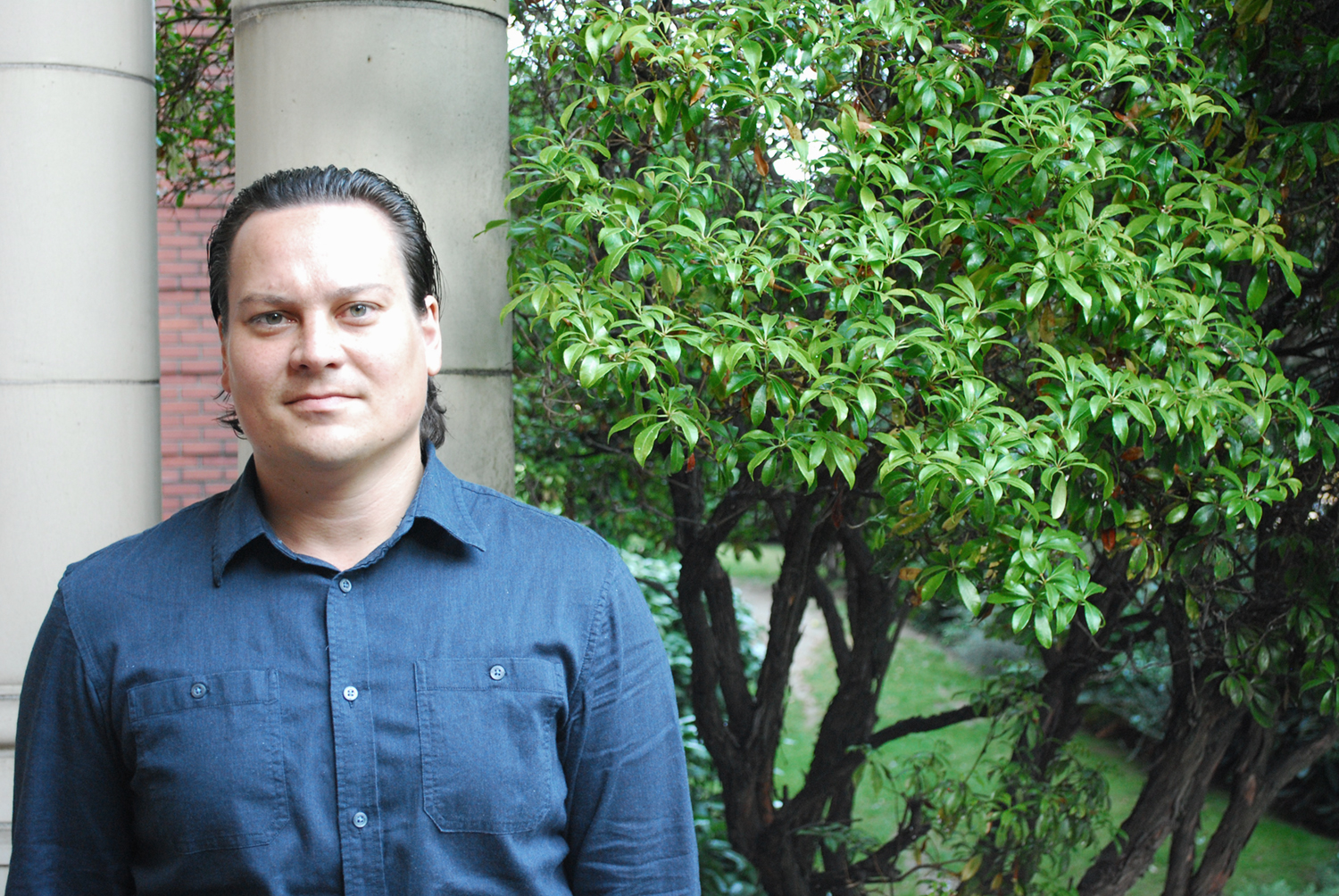
Bohdan Nosyk, an associate professor in health economics at SFU and a researcher at BC Centre for Excellence in HIV/AIDS (BC-CfE), has been appointed BC’s first ever HIV/AIDS research chair in health economics. Nosyk leads research that seeks to discover efficient, cost-effective care for HIV/AIDS patients in BC.

His new role is part of a broader effort between St. Paul’s Hospital Foundation and BC-CfE to be at the forefront of the fight against HIV/AIDS.

“We are now setting the health research agenda for the province in terms of HIV/AIDS,” said Nosyk. “We have a mandate to continually monitor the epidemic and watch how the money is being spent and the quality of care people are getting.”

The $3 million research chair position came out of the desire for BC-CfE, headquartered at St. Paul’s Hospital, to strengthen the work already being done on its Treatment as Prevention initiative. This program provides HIV testing and highly active anti-retroviral therapy [HAART] to patients.

BC-CfE research has shown that this initiative has resulted in a 90 per cent decrease in HIV-related morbidity and mortality since it was introduced in 1995, and the number of new HIV cases in the province has fallen dramatically.

“[Nosyk] has been responsible for helping develop approaches that will maximize the beneficial effects of available HIV interventions, and to ensure that we are doing everything that we can to contain the spread of HIV/AIDS,” said Irene Day, director of operations at BC-CfE. “I think that Dr. Nosyk in this chair is a tremendous asset to the province.”

Using mathematical models and world-class health services data, Nosyk has been able to show that the treatment scale-up of HAART in the province has been extremely cost-effective.

“It’s saved a lot of lives, prevented a lot of infections, and it’s going to continue to have an impact because the more people we get on treatment, the smaller the number of new cases that we see,” Nosyk said.

Through his teaching in health economics at SFU, Nosyk hopes to inspire students to get involved with scientists working with BC’s valuable health administrative data.

“The evidence that we’ve derived from the provincial health administrative data holdings has been put into practice, and it’s had a substantial public health benefit,” Nosyk said. “I think we’re only scraping the surface of what we can do with the amazing data resources we have in this province.”

This partnership extends beyond the three organizations involved. The work by Nosyk and his team of researchers will be communicated to policy-makers and caregivers working directly with patients.

They will also be working with HIV/AIDS programs and other harm reduction initiatives, such as methadone maintenance therapy for injection drug users, which indirectly targets and prevents the spread of the disease. Nosyk hopes to strengthen relationships with health authorities, the Centres for Disease Control [CDC], and Corrections BC.

“BC is a national leader in terms of how effective we’ve been at containing our HIV epidemic and continually driving down new cases of HIV,” explained Nosyk. “We’re now at a point where we’ve seen such progress that we have to be careful with how we spend the money that we have — and catch those last few cases and treat them effectively.”

“What we do here extends beyond BC, across Canada, and internationally,” said Nosyk. “The benefits of our research helps this province enormously, but goes beyond political borders.”

Clan manhandles Vandals

0

WEB-LAX

The Clan lacrosse team continued its dominance of the Pacific Northwest Collegiate Lacrosse League with a one-sided, 14–2 thrashing of the University of Idaho Vandals. The Clan improved their record to 4–0 in their division and 5–1 on the season.

From the first whistle, the Vandals were overpowered. The Clan opened up the scoring with two goals from Ward Spencer and a goal each from Casey Foster, Andrew Branting, and Clan leading scorer Tyler Kirkby, making it 5–0 at the end of the first frame.

Idaho goaltender Craig Patrick kept the Clan at bay in the second quarter, holding the Clan to two goals, one from Sam Clare and Foster’s second of the night, making it 7–0 at the half.

The Clan found their groove again in the third, going on a four-goal run off of goals from Jordan Stroup, his first of the year, and three more from Kirkby to make it 11–0 after three.

The Vandals finally got on the score sheet in the fourth, after being held scoreless for over three quarters, with a goal from their leading scorer Patrick Tunison.

However, Brendan Ferrell notched a beautiful goal minutes later to extend the Clan’s lead to 12–1. SFU netted two more off shots from Clare, his second, and Kirkby, who potted his fifth of the day, to round out the Clan scoring.

Vandals attackman Derrick Wilson snuck one past Clan goaltender Jeremy Lasher on a powerplay late to make the final score 14-2.

Both Clan goaltenders logged minutes, with senior Darren Zwack stopping all six shots in 35:54 minutes, and improving his save percentage to .720 on the season.

Freshmen Jeremy Lasher took over between the pipes for the remaining 24:06, stopping five of seven shots for a save percentage of .714. His save percentage improves to .611 on the season.

The Clan scooped an impressive 44 loose balls, with defenceman Alex Thomspon grabbing five and defenceman Mark Hilker and Long Stick Midfielder Riley Wanzer grabbing four each to lead the way.

After the win, the Clan broke into the top-10 of the Men’s Collegiate Lacrosse Association (MCLA) rankings at #10. They have a tough five day road trip ahead of them, playing games against #1 Arizona State, #20 Arizona, and unranked Illinois before returning back to Burnaby Mountain to take on divisional opponents Washington State on March 29 and Portland State on April 5.

With wins this weekend the Clan will continue to move towards that #1 position and securing a spot in the MCLA tournament.

Manufactured Landscapes

0

burtynsky2

Do you ever think about where your cell phone will go once you throw it away? What about who made it, or who mined the materials to put it together? Edward Burtynsky’s photography boldly searches for the answers behind these questions — and they aren’t pretty.

On display from March 1 to May 26, Edward Burtynsky: A Terrible Beauty, a new exhibit at the Vancouver Art Gallery, compiles almost 50 of Burtynsky’s breathtaking photographs, taken over a period of 30 years.

His early works are mostly focused on the natural landscapes of British Columbia, but his more recent photographs look for both the beauty and horror in the industrial footprint humans have had on the earth — from the claustrophobic factories of China to the vast oil sands of Alberta.

Burtynsky is a Ryerson University graduate, and he also moonlights as president and founder of Toronto Image Works, a small-scale digital media facility and photography lab. His works have been featured in the Guggenheim Museum and the National Museum of Canada. His exhibit at the art gallery was preceded by a donation of 34 of his pieces.

Though Burtynsky’s work is both diverse and international in scope, the exhibit focuses heavily on two of the photographer’s recent series: Oil, which comprises a multitude of photos taken between 1999 and 2008 of oil rigs and pipelines — including those in the Alberta oil sands — and Water, a series focused on irrigation systems and water preservation that recently inspired an acclaimed documentary film, Watermark, which Burtynsky co-directed.

Beyond the scope and symmetry of Burtynsky’s photographs, there’s a strong message of environmentalism and social justice.

His photographs are printed in large format, but they do little to suggest the huge scope of his images. Oil rigs, abandoned container ships, and overstuffed landfills dwarf the photographer’s human subjects, who end up looking like ants or tiny plastic figurines. Burtynsky also employs a depth of field which gives his images a crispness and precision that seem to magnify their surreality.

But while Burtynsky has the eye of an artist, he’s got the mind of a photojournalist — beyond the breathtaking scope and harmonious symmetry of his photographs, there’s a strong message of environmentalism and social justice. When interviewed by The Walrus, he explained, “I document landscapes that, whether you think of them as beautiful or monstrous, or as some strange combination of the two, are clearly not vistas of an inexhaustible, sustainable world.”

The contradiction between beauty and monstrosity is rarely clearer than when one is walking through this exhibit. While his images are meticulously framed and at times poetic, Burtynsky’s photographs simultaneously force us to confront the truth behind the minutiae of our daily lives: the water we drink, the food we eat, the gas we guzzle, the technology we take for granted.

“As humans, we still absorb 70 per cent of our knowledge through our eyes,” Burtynsky told the National Post in 2011, “I think the photograph, in this still and quiet way, penetrates our consciousness.” It’s certainly hard to walk away from A Terrible Beauty without feeling as though you’ve opened your eyes a little wider to the world around you.

Burtynsky’s photography is a beautiful mix of style and substance. The photographer offers a complex and provocative look at the impact of industry on the natural world — one that isn’t easily forgotten.

The “bad” Russians and “innocent” Ukrainians

0

WEB-Ukraine-Flickr-Sasha Maksymenko

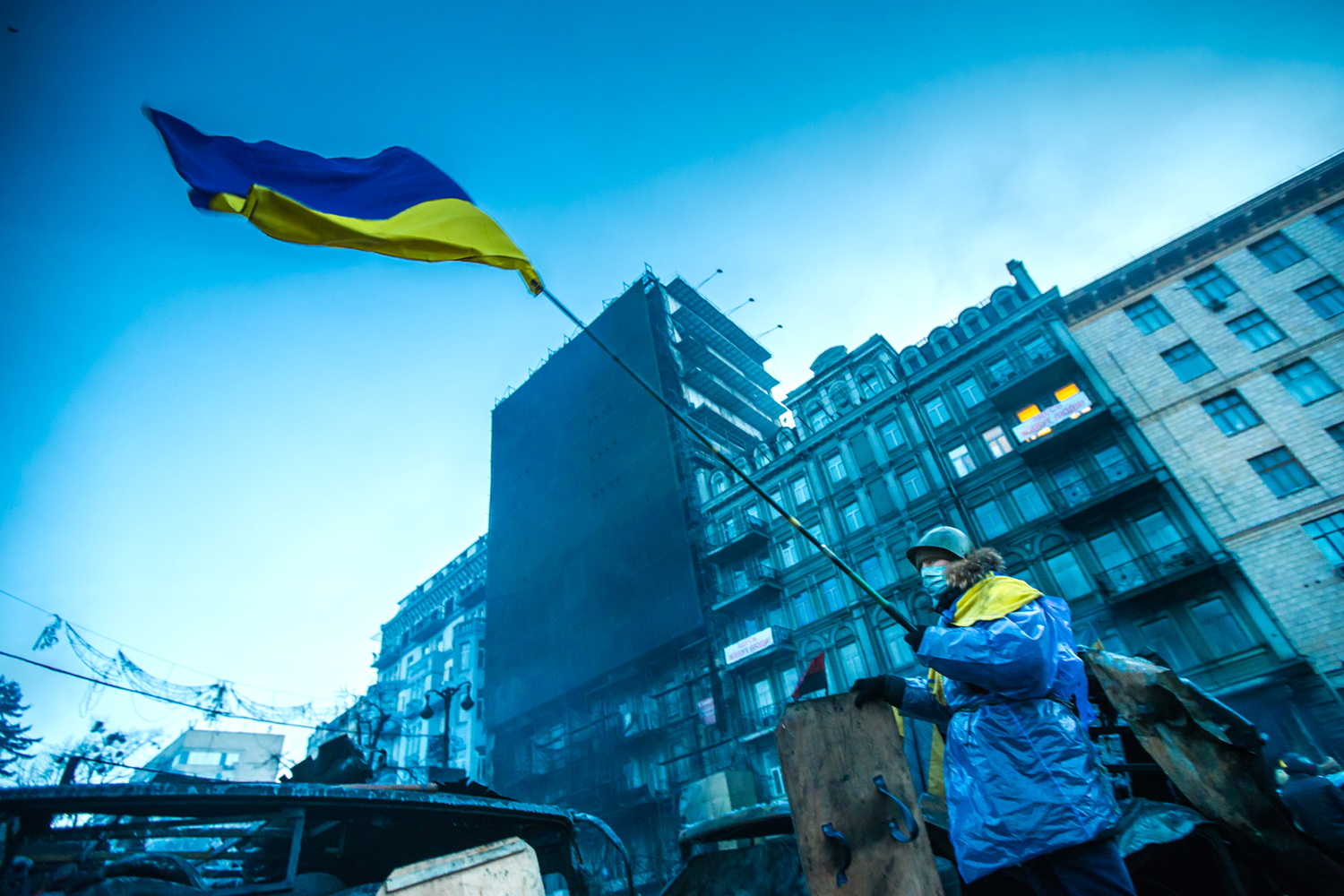
In flagrant defiance of Ukrainian sovereignty, Russia has invaded, occupied, and is preparing to annex Crimea. The ire these actions have provoked in the West is acute, with voices on both left and right vying to appear more upset.  From Warsaw to Washington governments stand in their unity of condemning Moscow’s actions.

Yet is all this justified? Our media has painted a stark dichotomy between the “bad” Russians and the “good” Ukrainians. But we must not place halos on the new Kiev government too quickly.

On February 22 the Ukrainian Parliament voted to impeach the pro-Russian president Viktor Yanukovych in answer to the cries of impassioned protestors. They certainly did not have the constitutional authority to make such a move: 328 of 449 members of parliament voted to have him removed, but Article 111 of the Constitution demands three quarters of the constitutional composition — 337 votes — to make this decision. They did, however, have the support of Kiev’s police.

As pro-Westerners took over the functions of government, they reversed many of the president’s policies. The new government rejected Russia’s billions in loans and appealed to the West for financial help instead. And most controversially of all, it made Ukrainian the sole official language of the republic, disappointing the country’s eight million Russophones.

Understandably, many in the Russophone-dominated Ukrainian East felt robbed of their election, and politically marginalized. That separatist feelings should arise in places like Crimea, under such circumstances, should not surprise anyone.

If the majority of people in a smaller region want to leave the country, do they need the permission of the whole country to do so? One could easily make a credible moral case for either side of this dispute. On the Crimean issue, the West’s answer is clear: national integrity trumps minority self-determination.

But we do well to remember that we have often been on the opposite side of this argument. In 1999, NATO used military intimidation to force Serbia to allow for de facto autonomy in the Albanian-populated Kosovo region.

Nearly a decade later, in 2008, Kosovo’s local government opted to officially declare independence. This decision carried the strong approval of the local Kosovor population and virulent condemnation of Serbia’s national population (not to mention their Russian allies).

The two scenarios are, of course, not entirely analogous. The threat posed by the Serbs in 1999 against the Kosovor population, used by the West to justify intervention, was genuine (although nonexistent by 2008). The threat posed by the Ukrainians against Russophones in places like Crimea used by Putin to justify occupation is largely imaginary.

Yet the parallels are too similar to ignore. At the moment, the West may be treating Ukraine’s national integrity as sacrosanct, and the aspirations of Crimean locals as irrelevant, but this seems to be more out of interest than principle.

Author Spotlight: Joan B. Flood

2

JoanBFlood_crAyeletTsabari

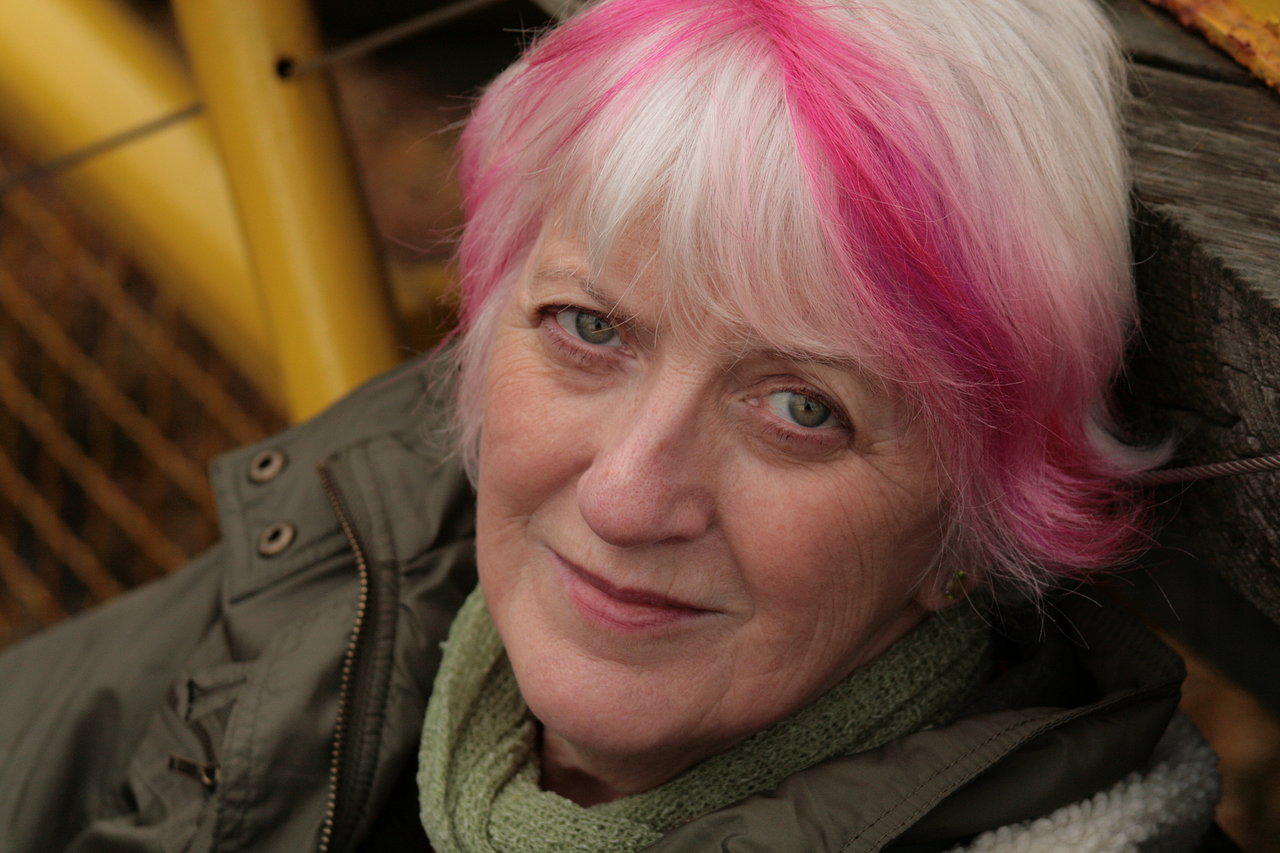
Irish by birth and Canadian by choice, Joan B. Flood is a writer of fiction, non-fiction, and “even a poem or two.” Her first novel, New Girl (Musa Publishing, 2012) is a contemporary coming-of-age novel for young adults. She has contributed to several anthologies and her story “87” won honourable mention in The Binnacle’s Annual International Ultra-Short Story Competition in 2012.

Joan B. Flood graduated from The Writer’s Studio at SFU in 2008, after being encouraged to apply by a friend who attended a reading event of TWS graduates. Recently, Flood has been a contributor for CanadianLesFic.com, a new site to promote the writing and reading of lesbian fiction.


The Peak: What inspired you to begin writing and telling stories?

Flood: I began telling stories at a young age. My mother and father took us out for walks and on the way home when we were all tired and whiney my Dad would say “shorten the road,” which meant we had to tell stories.

In school I began to write in earnest. I had teachers who encouraged me so I kept doing it. I didn’t begin to write fiction until much later in my teens. As a teenager I read Edna O’Brien’s Country Girl. I had never read a book before that had a young female protagonist whose point of view [and motivations] were central. At that time I thought about writing stories.

As I was writing New Girl I recognized a lot of the influence of Edna O’Brien. Also I was lucky enough to grow up in a nation of natural storytellers so every family gathering had stories.


P: What was your experience in TWS like?

F: I was [initially] in the Creative Non-Fiction section and Wayde Compton was my mentor. After a few weeks I felt I was in the wrong group. I had no interest in writing about the kinds of things other folk wrote about and did very well. Memoir didn’t interest me, articles about Facebook and such didn’t interest me.

I really struggled for a while. Then I went to a session with Steven Galloway along with my cohorts. They were all amazed and couldn’t understand how anyone wrote fiction, but I got this great bubble of excitement. So I switched to writing fiction.

[The Writer’s Studio] taught me how to take my writing seriously, how to develop discipline, and most of all introduced me to so many other writers, from my year and other years, that have become mainstays in keeping me on an even keel with writing.


P: What is the story behind New Girl?

F: I never intended to write a Young Adult book, nor a LGBT book. I did some bookkeeping at a wonderful place called Academie Duello [local swordplay school]. Late in the afternoon young people came in for the youth class. Often they came early and sat around talking.

It struck me that although the world they inhabit is very different from the one I grew up in, the issues they face are really similar, how to fit in, who to trust, what do they want, how to deal with the hurts and joys of their days. Gradually the characters in New Girl came to mind. I wrote a couple of paragraphs that then became the story.

It grew into a LGBT story because I became intrigued by what was going on between Carly and Jane [two of the book’s characters] and decided to explore that. I did a quick search of the young folks reading materials and found that many of the LGBT books dealt with the paranormal and/or coming out, and romance. I think I got a bee in my bonnet and thought I wanted to write about some of the real issues facing young people and put out some alternative scenarios, write the book I’d wish had been there when I was growing up.


P: What projects are you currently working on or participating in?

F: I have a few things on the go. Novel writing is a long, lonely business so to amuse myself I’m doing these flash fiction pieces. I am working on two stories, likely novels; one is about three women, family, and secrets. The other is a speculative fiction story set in some other world and time.

Also, if all goes according to plan, I will be one of the mentors at SFU’s Southbank Writing Program in Surrey this summer. I’m really looking forward to that. Working with writers on their work is rewarding and rich. I learn so much about writing that way — it’s a totally selfish act.