Home Blog Page 1164

Board Shorts

0

WEB-boardshorts-The Story Lady-Flickr

Soups on!

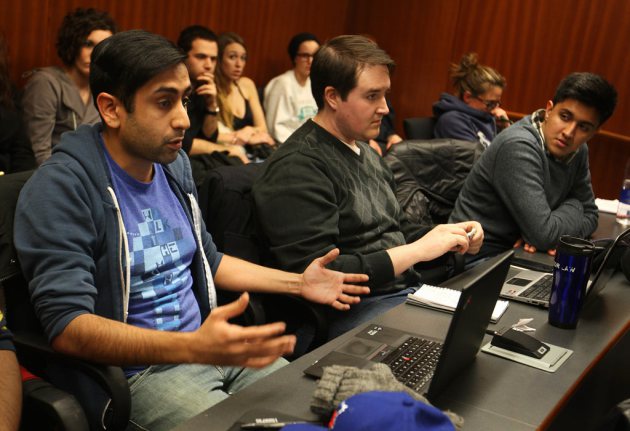
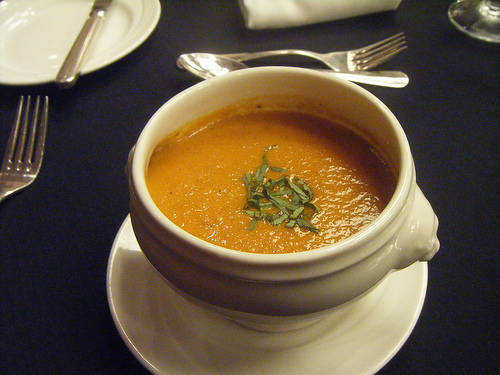
The board approved up to $4,000 from the Space Expansion Fund for the purpose of creating a soup and sandwich station in Higher Grounds. The motion was brought to board by John Flipse, food and beverage services manager.

“We are not making the soup in house like the Ladle, we are rather buying from a wholesaler,” explained Emad Shahid, treasurer. He said the money will be used to purchase all the pots and pans used to “heat up the stuff.”

Build SFU selects SUB engineers

The engineer selection committee recommended to board the approval of three groups as engineering consultants on the Build SFU student union building (SUB) project.

The board approved the selection of Integral Group as mechanical engineering consultants, Fast + Epp as structural engineering consultants, and MMM Group Limited as electrical engineering consultants for the SUB.

This marks the next step in the SUB project as it enters the architectural design development phase. On Thurs., Mar. 20, the architects also presented potential building designs for the student union building and asked those in attendance for feedback.


Highland audio/visual system to be upgraded

The board approved $19,000 plus taxes from the Space Expansion Fund to upgrade the AV system in the lower area of the Highland Pub.

“The plan is to make the lower pub busier than it is right now,” Shahid said. “That could potentially help us to host events that are specific to a number of people that would not take up the entire pub.”

Applied sciences representative Raham SaberiNiaki questioned the $19,000 price tag, but Shahid explained that the company that gave them the estimate was the same firm that installed the AV system in 2010.


2014/2015 Budget

Shahid presented a preliminary budget planning sheet for 2014/2015 to the board, asking for input on variable line items (i.e. those that have flexible budgets). Board members were invited to approach Shahid in the upcoming weeks, with any proposals from board going to FASC for approval.

Once board members have given their final input, the board will bring the proposed budget to students for feedback.

University Briefs

0

council_02a

Students vote “no” to all student government candidates

The University of Windsor Students’ Alliance was recently faced with a peculiar problem — an election with absolutely no winners.

On March 13 and 14, the majority of the University of Windsor students voted ‘No’ or ‘None of the above’ for every candidate, each of whom was uncontested. This movement was led by a student-run group called Vote “None of the Above,” which questioned the legitimacy of an election with no opposition candidates.

As a result, the Students’ Alliance will no longer have an executive or a board of directors once the current term ends on April 30. As it’s too late in the semester to run another election, the current executive is attempting to plan out the summer semester and hoping the full-time staff will be able to oversee most of the day-to-day operations.

With files from The Windsor Star

Ryerson to “bug” the books

Ryerson University students will soon be thinking twice before “losing” a library book. The library is currently planning to implement a new tracking system that would allow them to keep tabs on the exact location of library items.

The library will be labelling items such as books and laptops with Radio Frequency Identification (RFID) chips, which were commonly used to track livestock. Although this project will be costly, librarians claim the new system will be more efficient for both the students and the library staff.

Additionally, they hope it will reduce the number of thefts, which totalled 43 in the 2012/13 school year, and 19 in the last semester.

With files from The Eyeopener

Students bring the love to campus

A team of UBCO students have been collecting pictures of their peers making heart symbols as part of the a “love project” for the 2013/14 year. This project, which was launched at the start of the Chinese New Year, was prompted by the similarities between the Mandarin symbols for “20 13 14” and “love forever.”

The 201314 team has currently compiled 1,037 photographs, just shy of their 1,314-picture goal. By turning the images into a large collage on campus, the students hope to infuse love into their daily lives. Team member Rita Yu said, “Maybe after one day at work the staff is tired, when people see the photo they were smiling so happily in the photo maybe they will try to encourage them and make their day.”

The team hopes the project will grow and spread to other universities across Canada and the world.

With files from The Phoenix

Your guide to the GSS Elections

0

All candidates’ responses have been printed as received. Responses exceeding the given word count have been cut off at the mark, indicated by an ellipsis.


Member and Community Relations Officer

The MCRO is responsible for the public communications of the GSS, including the website, social media and special communications. The MCRO oversees the Society’s member and community development efforts through outreach, workshops, events, orientations and other programming. The position also involves recruiting volunteers, acting as liason with community groups and chairing the GSS Environmental & Social Justice Committee.

1. How would you engage graduate students in society events and activities?

2. The MCRO chairs the Environmental and Social Justice Committee. How would you manage that committee and improve it?

3. How do you feel about the current types/number of events held by the GSS?

WEB-GSS elections-Mark Burnham

Brieanne Olibris

1. As grad students are busy, events need to be easily accessible to them. To achieve this, we must balance the use of our limited resources with bringing desired events to where students are when they are there.

2. Successful efforts facilitated by ESJC are grounded in student needs and interests. Setting a yearly agenda of long-term sustainable programming and project goals would focus and increase the efficiency and efficacy of the deliverables to which it is accountable.

3. The GSS offers a great number of diverse events to students, either alone or in partnership with other groups. This facilitates highly valued mixing between students from different disciplines. However, they are not equally accessible to students from all campuses.


Melissa MacAskill

1. I would like to implement more regularly occurring events and activities. These have potential to be much more successful, because participation grows over time and participants start to unwittingly shape the events with their own collective ideas.

2. As the TSSU steward for my caucus, I have learned a lot about advocacy and awareness surrounding a number of social issues, beyond labour regulations. I will draw heavily on ideas and resources the TSSU provides to effectively serve the . . .

3. The GSS does an excellent job organizing all kinds of events – which all graduate students would know if more of them attended! That being said, there is always room for more creativity and variety, which I would like to . . .

Coordinating and External Relations Officer

The CERO will be the primary representative of the society to government, university administration, and other partners. The position entails being responsible for the long-term and strategic planning efforts of the society and supporting the collective advocacy activities of the GSS.

Devon Cass

This candidate failed to submit their responses to The Peak by the deadline.

Academic and Internal Relations Officer

The Academic & Internal Relations Officer (AIRO) is responsible for overseeing the governance of the society, its committees, council and departmental caucuses. The AIRO is also the primary point of contact between the GSS and the university with regards to academic matters, including the Senate Graduate Studies Committee.

1. How would you keep the society, its many committees, council and departmental caucuses in check?

2. What academic changes might you advocate for on behalf of students?

3. How do you see the relationship between the AIRO, the Senate Graduate Studies Committee, and the university?


Liu Ting (Emma)

1. Effective communication is very important. I would propose to have a discussion group in social media where representatives from aforesaid organizations can post their suggestions and share the updated information. Actual meeting can be held based on needs.

2. Provide more information on research fund and invite some experts from different fields to give public lectures on the current economic and academic trends.

3. The Senate Graduate Studies is the agency of university and AIRO is the agent. The task of AIRO is to bridge the gap between individual member and university as well as to facilitate mutual communication between them.

Mengliu Zhao

1. Officially, by meeting committee and council members, reading caucus meeting minutes. But personally I enjoy networking in different situations, and listen to student’s individual perspectives how the work of GSS and the caucuses can be further improved.

2. I would advocate for more interdisciplinary communications and collaborations. Graduate’s life is challenging, but could also be fun and enjoyable — hopefully I can help more of my fellow grad students to realize that.

3. AIRO shall serves as a bridge between GSS, Graduate Studies and SFU, reflecting more on student’s side that what can be done to further improve the academic environment as the whole community.

SFSS elections heat up

0

WEB-SFSS debates-Evan Chan

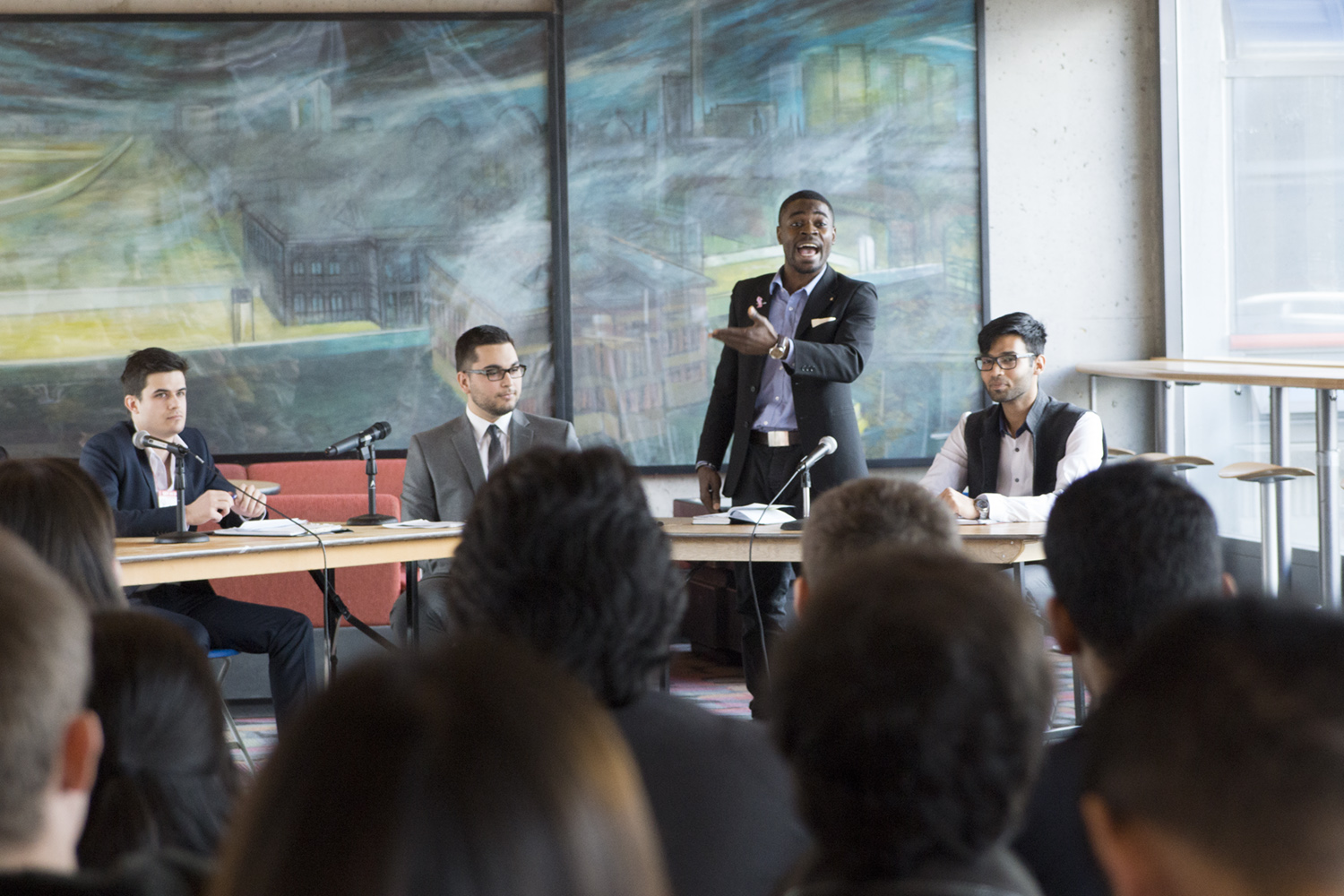
Last week’s SFSS debates kicked off not with a bang, but with a chuckle. At least, that’s what many in attendance were tweeting throughout both the at-large and faculty rep candidate debates held on March 19 and the executive candidate debates that happened the following day.

During what many in attendance — both in the West Mall atrium and via cyberspace — called some of the spiciest and juiciest SFSS debates they’d ever seen, candidates for each SFSS board position faced off in a conversational style debate.

The Wed. debates, held for the at-large and faculty rep candidates, began amiably, with candidates expressing their plans for the board should they be elected. The mood, however, began to turn as the Communication Art and Technology candidates, Natalie Cheung and Shirin Escarcha, took the stage. From that point on, the conversational nature of the debates became more heated, especially between candidates on opposing slates.

This year, candidates with self-proclaimed shared visions for the society joined together to form two different slates: ACE and Move the Mountain. Independent candidates also contributed to the lively dialogue happening on stage.

As the debates ran longer into the afternoon, those in attendance both jeered and cheered for the competing candidates. The battle truly came to a head, however, with the final debate between candidates for at-large reps.

One hot topic was that of the open textbook program, advocated for by candidate Jeremy Pearce. Pearce responded to candidate Humna Ahmad’s question about the program, saying that he has just become involved with it, but feels it is more accessible than giving students more bursaries.

Ahmad replied, “Bursaries are more than just funding textbooks. They’re there to support students’ lives.” After Ahmad cited statistics pertaining to the program, Pearce remarked, “I appreciate you incorporating statistics I gave you at the last debate.”

The tension of the moment was broken by candidate Baqar Hassan, who complimented fellow candidate Rebecca Langmead on her basketball skills.

It seemed the intensity would carry on into the executive debates, which occurred the following afternoon. The four and a half hour long debate went over time, but there was never a dull moment.

The proceedings started off on a light note as the VP, student life candidates introduced themselves. Candidate Kayode Fatoba demonstrated his rapping skills with original lyrics that had the room clapping along.

Topics under discussion pertained to bettering the student experience. Candidates also shared stories of their successes and failures. The idea of transparency was presented and became a recurring topic for the afternoon.


Those in attendance both jeered and cheered for the competing candidates.


“The SFSS is not very open, [. . .] I want to change this. A transparent student society is what we need,” said VP, student life candidate, Blossom Malham. Many candidates restated the claim that many students don’t even know SFU has a student society, let alone what it does.

The most talked about issue during the hour-long VP, finance, discussion was not only how to maintain the budget, but how to potentially increase revenue through avenues such as sponsorship and renting out spaces like the Highland Pub.

Several members from opposite slates argued about the importance of engaging students in SFU culture through throwing events, versus other issues that affect students, such affordable tuition and services like the Health and Dental Plan.

The most highly anticipated conversation of the event was between the presidential candidates. As with the Surrey all-candidates debates, only three out of the four were in attendance. There was much back and forth between opposing slate members, Chardaye Bueckert (Move the Mountain) and Brandon Chapman (ACE).

Bueckert brought up clear policy violations that have occurred in SFSS, while Chapman challenged her on having a negative attitude towards the current board. He said, “You blame the current board for its current situation.”

Chapman spoke to his slate’s mandate of cultivating a stronger sense of community on the principles of accountability and excellence. Bueckert emphasized a strong need for change within the society, saying, “Vote for who is going to represent you best.”

Meanwhile, presidential candidate Alexander Morris says he has a new perspective and a “fresh face” to offer to SFU students. His platform rests on promises of bringing free coffee to students, condensing similarly mandated clubs, and engaging every single member of the SFU community.

The so-called “spicy” debates that took place last week gave candidates the stage, but now the fate of the next SFSS board of directors rests in the hands of undergraduate students. Voting for the positions will take place between March 25 and 28.


Debatable Tweets

At-large and faculty rep candidates debate

@PeakSFU: Betty closing statement: “By voting for Betty, you will bridge the gap between campuses.” #SFSSElection
@MereScientist: @PeakSFU If she’s going to bridge the gap, she should probably figure out which science DSUs are based out of Surrey, first. ^^;;

?@AnDum: “It’s another concert vs no concert year” – me, at last week’s debates #SFSSElection

@the_rianne Mar 19: Something funny over there, guys? #ace2014 #SFSSElection

@bwally_ : You can’t deny that genuine compassion fuelled from Shirin #sfsselection #ACE2014 #somuchenergy

@PeakSFU: Shadnam “You should vote for me because I actually show up for debates.” Akashdeep is absent #SFSSElection

@PeakSFU: Ben for Applied Sciences says he will not talk about what he would do if elected, but teach people new words #SFSSElection

@ChardayeB: I appreciate all candidates speaking, its not easy. Not sure why people in audience are laughing at folks #SFSSElection #movethemountain

@PeakSFU: Jeremy “Why can’t you have your cake and eat it too?” regarding throwing both large and small scale events #SFSSElection

@PeakSFU: Baqar compliments Rebecca on her basketball skills #SFSSElection

@AnDum: Candidates laughing or making fun of other candidates should not be running for office. You make the SFSS look bad. #SFSSElection

@natlamlam: @AnDum You should hv seen their faces when if you’re sitting out there as a candidate. It’s worst than just laughs #SFSSElection @PeakSFU

?@PeakSFU: Political animals, the SFSS candidates begin to chuckle and scoff at rival groups, comfortable in their natural environments #SFSSElection

@ManjotBadesha: I think this year’s #SFSSElection debates have been the most intense.

@PureEm: All of the at large reps have close friendships with the current board. So what new ideas are they actually bringing? #SFSSElection

@PeakSFU: Amir: “I’m not saying I can move the moon. I’m a problem solver.” #SFSSElection
@SheriffdeenM: @PeakSFU well there goes my vote #sfsselection. That thing keeps shining in my face when I’m trying to sleep.

Executive candidates debate

@PeakSFU: Kayode: “You could vote for this, or you could vote for that.” *audience is clapping, Kayode is rapping* #sfsselection

@alia724: These debates are a lot spicier than I remember. #lovingit #SFSSElection

@PureEm: Apparently the SFSS is about to become Groupon. With a student union building #sfsselection

@grahamc604: “What does your march madness bracket look like?” #sfsselection

@natlamlam: @PeakSFU pls tweet more. pleaseeeeee! ustream sucks. ppl are suffering. #SFSSElection

@maxjameshill: @PeakSFU Make sure to ask Alexander what colour the average #SFU Burnaby student is. #SFSSElection

@alia724: There’s a lot of concert talk. The important question here is, WHEN CAN THE SFSS GET A BEYONCÉ CONCERT?!?! #aimbiggerguys #SFSSElection

@JNLLBND: I want a concert everyday #SFSSElection

@PeakSFU: Spotted: Alexander in our favourite bow tie. #dapper #SFSSElection

@PeakSFU: Darwin: “I’ve been doing this for a long time, and I feel very ready. I think this makes me a strong candidate.” #SFSSElection
@SheriffdeenM: @PeakSFU “in other news, Godzilla consults me on his workout regimen.” #sfsselection

@CarlinLeung: Heard that the #ACE2014 sat in the front row of the #SFSSElection debate and laughed at other candidates… #wtf @bchaps99 @SfssElections
@bchaps99: @CarlinLeung It’s been pretty quiet today, however if funny comments are made, the crowd reacts #SFSSElection

@alison_r: Actually kind of wishing I was at the #SFSSElection debate, @PeakSFU makes it sound so fun. #greatjobguys #proud @meliroach @Freyatron

@PeakSFU: Alexander: “Free coffee is about looking into the warmth of someone’s brown eyes.” #SFSSElection
@AnDum: Could use one of Alexander’s free coffees right about now. #SFSSElection

@PeakSFU: Chardaye: “Let’s talk about how all four presidential candidates are white. ” #SFSSElection

@hnguyendon: This #SFSSElection debate is gold. I don’t even go to SFU.

@PeakSFU: Brandon: I think we need to build on the community aspect before we focus on advocacy. #SFSSElection

@PeakSFU: Brandon on financial aid: I think the world is dog eat dog. #SFSSElection
@PeakSFU: Chardaye says to Brandon that students would disagree with the statement that “their need is not real.” #SFSSElection

@PeakSFU: Alexander makes plea that he “really needs this job” not like Brandon, “Mr. Goes to the Yacht Club.” #helpimpoor #SFSSElection
@Comicchild: @PeakSFU I am seriously poor. I’ve eaten cereal for the past week only. Cereal.


Feminism amid online misogyny

0

A woman can wear her hair short for convenience or fashion, but short hair is always making a political statement. This is a sentiment that a Return of Kings article made recently, in an online piece titled “Girls with short hair are damaged.” But rather than someone who chooses to rebel against the suppressive patriarchy, according to the anonymous author, a women’s short hair says that she is bound to be manlier, more aggressive, or simply “damaged,” choosing to do away with this symbol of her femininity and beauty.

Articles such as this are insulting, misinformed, and a testament to women’s oppression in general. But they give me hope that feminists and future feminists can draw strength from such misogyny being laid out so clearly.

Claims made in the article range from disrespectful to downright infuriating. For instance, the author bases a woman’s attractiveness on being “bangable,” only existing to satisfy sexual desires. To girls who think they can “pull-off” short hair, the author says:  “Pulling something off, I often respond, is the equivalent of ‘passing’ a class. Just because you have enough left-over attractiveness to remain bangable after cutting off your hair doesn’t mean you wouldn’t look better with it back on.”

The author continues, “Women have a much stronger copycat instinct than men. While men seek to stand out from the crowd, women aim to stand out in the crowd. Just like women don’t go to the bathroom alone, they don’t go into a style alone.” In one fell swoop, the author implies that gender is equivalent to sex, that women are instinctively sheep, and that women’s intelligence is generally limited to imitating others.

This article is what makes feminists, if we let it.

Comments on this already strongly worded article are equally as disconcerting, with statements such as “Feminism today is about privileged spoiled white girls trying to tell me they are oppressed.” This dismisses women’s issues as being beneath addressing, confirming women’s lower status in society.

The sad reality that this article proves is that we are currently living in a man’s world. Men call the shots; women are still subordinate to them in the workplace as well as the home. Men are paid more than women in general, and often have more opportunities to advance in corporate executive positions.

Yet this article also gives me hope. There wouldn’t be feminists if there weren’t issues to fight for, and this article lays out the issues quite simply. “Girls with short hair are damaged” stands as a sign that prejudice is still rampant in this world and it needs to be stopped.

Articles such as this are what create the responses, like that of New Statesman author Laurie Penny, that prove how informed and fed up women are with this state of affairs.

Until the general public — which, today, has a vehicle for anonymous, insulting, and misinformed articles — realizes that women are more than a hairstyle, all women need to know that these opinions are out there, and all women need to hold their heads high.

Clan fall in West semis

0

WEB-W basketball-Adam Ovenelle-carter

The Clan women’s basketball season came to an end last week, following a 76–68 loss to the Montana State University-Billings Yellowjackets in the NCAA West Region semifinal.

It was the second time in as many years that the Clan made it to the semis, and though the loss to the #2 Jackets undoubtedly stings, it’s hard not to look at this season as a success.

After stars Nayo Raincock-Ekunwe and Kristina Collins graduated, the team was expected to regress. Though there were some struggles midway through the year, SFU still put together one of its best seasons in the NCAA.

“In a week, we’ll probably be pretty pleased with our season,” said head coach Bruce Langford, whose team was ranked third in the West, right behind MSUB. “There were a lot of high points, a lot of good points. We hit a bit of sickness in the middle and had a bit of a lull but we recovered from it and started to play pretty good basketball in the last three weeks or so.”

His captain agreed with him. “I think we had a tremendous season,” said Erin Chambers, the Clan’s leading scorer. “To get this far was great for the team.”

Chambers finished the game against MSUB with a game-high 33 points, but a 12–1 run by the Jackets to open the second half — which started tied at 35 apiece — put the Clan in a hole they couldn’t climb out of. But it wasn’t for lack of trying.

The deficit would reach 18 points with just three and a half minutes to play, but SFU went on a 10–1 run to close out the game, tightening up the score before time ran out on their season.

SFU finishes the 2013-14 season with an impressive 20–10 record. Though they must bid farewell to seniors Kia Van Laare, Marie-Line Petit, Chelsea Reist and Rebecca Langmead — all key contributors — they’re poised to bounce right back.

“In the next year, I’m really excited to watch this team get better,” said Chambers, who will enter her senior season next fall. “We’re going to go and we’ll all work on our game. We’ve got some good kids coming in and I think we’ll give it a good run next year.”

Enactus SFU sweeps the competition at regionals

0

enactus

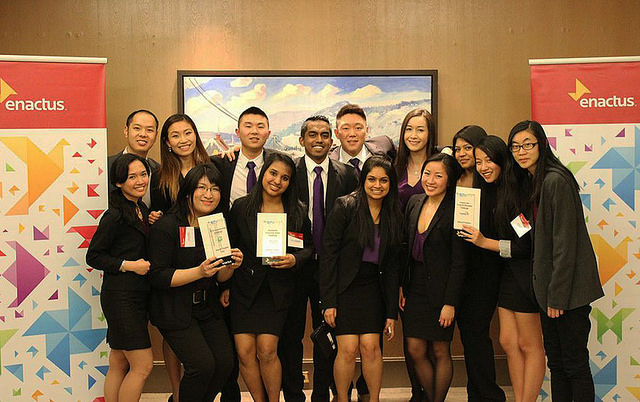
SFU made history at the recent Enactus Canada Western Regional Exposition, where the team swept the competition with their innovative entrepreneurial initiatives. For the first time in the group’s 22-year history, Enactus SFU claimed first place in each of the top categories.

Their Banner Bags initiative earned the number one spot in the Scotiabank Eco-Living Green Challenge; the entrepreneurial program Jumpstart landed first in the TD Entrepreneurship Challenge; and the Hunger Actions project seized the title in the Capital One Financial Education Challenge. SFU student Chantelle Buffie also won the HSBC Woman Leader of Tomorrow Award.

“This is a huge accomplishment, not only placing in the three categories but winning them all,” said Enactus SFU president Vanessa Lee in a media release. “We’re proud of the contributions all of our members have made to the community this year and look forward to riding this success into the national competition.”

Ben Hwang, a veteran of the competition, stepped behind the scenes to coach members of the entrepreneurial accelerator program, Jumpstart. The program supports aspiring entrepreneurs at SFU who may have a great idea, but lack the resources to put a project in motion.

Winona Bhatti also took the year off as a competitor to coach her team, Banner Bags, to a victory. The eco-friendly initiative teaches high school students how to transform old banners into bags and other fashion apparel.

Vameesha Patel, Manhei Lee, Mark O’Connor and Wendy Huang teamed up to bring their cause, Hunger Actions, into the spotlight. The program empowers low-income single mothers to budget for healthy lifestyles.

Despite Hwang and Bhatti having competed before, the team members told The Peak that the butterflies never really go away. “I think I had [my team’s] whole script memorized,” Bhatti said, laughing. “I was so much more nervous as a coach. I was nervous for them.”

Competitor or coach, it didn’t seem to matter: Jumpstart member Jason Monoharan  explained that climbing the stage, “you’re shaking. You’re pretty nervous. No matter how many times you practice, you’ll have nerves.”

Still, the team members expressed that the great pride that comes with presenting to the judges makes it all worth it. “Knowing that you did something special, it’s an amazing feeling,” said Bhatti.

The team is now preparing for the national competition in Calgary at the end of April, but Hwang said that the main goal is not winning: “We’re just really excited to see what other schools are doing, and to learn from them.”

The Right to Choose

0

muslim

Like every other middle class family in Pakistan, my house had maids — someone who cooked and cleaned, helped out with the household chores, and took care of us. My sibling and I developed strong bonds with these women, until they had to leave our house, and we said goodbye. We moved on.

When I was 13 years old, I had a maid named Parvati. She was named after the Hindu goddess who is considered to be the “ultimate source of power” by many practicing Hindus. I remember her fondly: chiefly for the fact that she was my very first student, instilling in me a passion for teaching that I have always held on to strongly. Every day after she had finished working, she would sit down with me, my star pupil, blissfully happy and eager to learn the alphabet.

One day, Parvati quit her job unexpectedly; her parents found out that she had engaged in premarital sex with her fiancé and gotten pregnant.

She stood at our doorstep one day, her childlike eyes filled with fear and sadness, as her aunt narrated what had happened, not letting go of a single opportunity to humiliate her or declare how the family’s reputation was now tarnished.

At first, my mother wasn’t sure how to react to the situation around me, torn between whether she should discuss it openly, or silently suppress the taboo my society had confirmed it to be. Meanwhile, I spent the following weeks asking myself: “Why didn’t she just abort it secretly and be done with it?” The answer, as I’ve learned seven years later, was never that simple.

What exactly is abortion? I remember my very first law class back in Pakistan, where my pro-choice, liberal, and exceptionally brilliant teacher had asked us the same question. “Killing of a child!” I replied instantly. She looked me in the eyes, saying nothing.

“So,” she finally replied, “Are you absolutely sure that it’s a child?”

Always an advocate for women’s rights and equality, I’d been stunned at my choice of words. It was an ironic, yet enlightening experience. If I, the pro-choice, liberal, yet naïve 17-year old feminist had just blurted out those words without a second thought, how much stronger could the responses be from those who were strictly anti-abortion, or “pro-life?”

No one has any right to deny a woman their right to choose.

···

“A medical procedure used to end a pregnancy and cause the death of the fetus.” This is, according to the Encyclopedia Britannica, the objective definition of an abortion. Naturally, our next question must be, what is a fetus? The same source defines a fetus as, “an unborn or unhatched vertebrate especially after attaining the basic structural plan of its kind; specifically: a developing human from usually two months after conception to birth.”

Most of us will recognize these definitions, but they do little to answer the key moral debate surrounding abortion: does a fetus count as a living “person?” This has been the drive behind discussions and arguments by pro-choicers and pro-lifers for centuries.

Judith Jarvis, in her article, “A Defense of Abortion” starts of with a compelling argument that the fetus has become a “person” before birth, but the right to life for the fetus is ultimately outweighed by the mother’s right to her own body.

Jarvis proposes a hypothetical situation. You wake up in your bed one day to find a famous, unconscious violinist lying next to you. He has been plugged to your body because he was found to have a fatal kidney ailment, and only your blood type can help him survive — if he stays plugged into you for nine months.

Are you compelled to agree to those terms? Of course not. However, if you say no, do you kill someone? Yes. Jarvis argues that, “You are not morally required to spend nine months in bed, sustaining the life of that violinist, but to say this is by no means to say that if, when you unplug yourself, there is a miracle and he survives, you then have a right to turn round and slit his throat.”

In this example, she illustrates a potential distinction between abortion and murder — one should be permissible, she says, while the other should not. Her argument is unique in that it recognizes the personhood of a fetus, but still argues that, morally, a pregnant woman has a right to choose.

Jarvis’ argument is reflected in an image macro I saw circulating on the Internet a while ago. It asked the reader to imagine a scenario where he/she has a baby in one hand, and a petri dish with an embryo in the other. If the reader was forced to drop one of these two, which would they choose? I think this puts things into perspective, and eventually forces a person to acknowledge the difference between the two — after all, which would you choose?

···

Since abortion was not a common practice in the time when the Holy Qu’ran was introduced, Islam offers no specific instructions forbidding the act as a whole. However, most Islamic scholars agree that abortion is impermissible after four months of pregnancy, as they believe that it is then when the fetus starts possessing a “soul,” and a life is blown into the fetus.

Seyed al-Sabiq, in his book Fiqh al-Sunnah, summarizes the differing views on abortion held by Muslim scholars. He cites the theologian Al-Ghazali, who argues that “when the sperm enters the ovaries, mixes with the ovum and acquires potential of life, its removal would be a sin [. . .] the graveness of the sin increases very much if one does so after the stage when the spirit is blown into the fetus and it acquires human form and faculties.”

Even in the case of rape, many Muslim scholars believe that abortion is not permissible after a period of four months, arguing that a child conceived in this way is still “legitimate.” While Islam does provide women rights when it comes to many other things, such as education, property, and marriage, it overwhelmingly restricts a woman’s right to choose when it comes to abortion, imposing rules and regulations at every turn.

Pakistan is a country where women are still fighting for basic rights, a country where women are burnt, tortured, and killed in the name of honour, a country where the Hudood Ordinances — proposed under the dictatorial rule of Muhammad Zia-ul-Haq — demand that for a woman to be considered a victim of sexual assault, she must bring in four eyewitnesses.

Pakistani women are constantly placed in submissive roles, and their ability to take control over their own bodies is an inevitable consequence of these conditions.

According to the Guttmacher report, out of every 100 pregnancies in Pakistan, 14 result in abortions. The report concludes by saying that “under current circumstances, many Pakistani women are paying with their health — and even their lives — to avoid births that they cannot afford or do not want.”

However, there is another side to this story. On a trip back home, I asked some of my Muslim friends what they thought of abortion. “I honestly don’t have much religious knowledge on the topic,” one began. “However, I believe that it’s something that should be exercised as [little] as possible. It truly is a sin. It’s hard to imagine legalizing it fully, as that probably means ending so many lives that one day could grow and prosper.”

I was surprised to see how different my friends’ views on the subject were from my own.

I set up an interview with Humza Khan, the president of the Simon Fraser Student Society, in order to ask him for his thoughts on abortion. Being raised in Pakistan and having his roots traced back to the Pashtun culture — a culture whose people are known for their warriors, hospitality, and sportsmanship — I was eager to see if his experiences, as a Muslim living in Canada, would match mine.

“I believe that a person, whether man or woman, possesses the right to do whatever they want to do with their body,” Humza told me during our interview. “It’s not for me to decide what a woman should or shouldn’t be doing with her body. We need to destigmatize it.”

I asked him how he reconciles these views with his Muslim faith. “The basic argument for anyone who is pro-life would be that you are basically destroying a life,” he began. “However, at the same time, is it fair for us to bring a life into this world, knowing fully well that they may not have the resources to survive?”

I breathed a sigh of relief as I walked out of his office that day. I now believe in my heart that many of my schoolmates — be they Pakistani Muslim, or otherwise — actively accept and support a woman’s right to choose, no matter what their social, cultural, or religious background may be.

···

A much less tolerant society than ours at SFU exists in India, the second most populated nation in the world. Eighty per cent of Indian women disapprove of abortion, and 56 per cent consider it to be a heinous crime — the sacred texts of Hinduism, and therefore those who practice it, forbid abortion at any stage. Unlike Islam, this doesn’t leave much room for discussion.

Many Indian women live in fear of torture and rape from the minute they step into the public sphere. For those living in a country defined by its harsh stances against a woman’s right to choose, the fear of violence and sexual assault pervades all aspects of daily life.

The 2012 Delhi gang rape case — in which a 23-year old student was raped by a bus driver and five other men, later dying from her injuries — resulted in widespread protests, both in India and abroad, against a perceived lack of women’s rights in India. In the aftermath of this traumatic case, I discussed abortion with an Indian student at SFU. “My religion considers it to be a sin,” she told me. “I believe that if a woman has the money and the resources to look after the kid she’s going to have, she should never abort.

Even though I wouldn’t get an abortion personally, I still strongly believe in others’ right to have one.

“On the other hand, I’ve witnessed the poverty in India, which is why I’d say that if she cannot take care of it, she should abort it. It’s better for the child.”

In the United States, the nation with the second largest Christian population of the world, Roe v. Wade (a milestone decision reached by the Supreme Court in 1973) established that abortion should be legal in all the states early in pregnancy, and should be prohibited later on according to the states’ discretion. According to a 2011 poll conducted by Gallup, 45 per cent of Americans were pro-life, 49 per cent pro-choice, and the rest were undecided.

I googled the word “abortion” and found a wide range of viewpoints, most of which were expressed in the realm of social media. The anti-abortion pictures and images that I came across were truly surprising.

One of them read, “Last year Obama supported the “right” to murder 1.2 million unborn children.” Another featured a picture of baby and the text at the bottom said, “Baby saved from late-term abortion when car dies on the way to the clinic.” Another read, “My baby is not a tumour or a toenail to be removed, a baby is a person.”

If a country with women like Wendy Davis and Hillary Clinton has people whose mindsets dictate thoughts like these, how can my staunchly religious republic hold onto any hope for women’s rights?

Even Pope Francis, whose liberal viewpoints have gained him widespread acclaim, recently spoke against abortion, saying: “It is horrific even to think that there are children, victims of abortion, who will never see the light of day.”

This is the same Pope who recently argued that it’s time for the Catholic Church to get rid of its “obsession” with homosexuality, premarital sex and contraception. However, after being pressured by the Church, Pope Francis exposed the limits of his progressive views: he may be tolerant of the LGBT community and the poor, but he’s not yet ready to take a stand for a woman’s right to choose.

No matter how liberal the Pope may seem, and no matter how beloved he is by his followers, we must be critical of the fact that he was not even willing to clarify whether abortion may not be immoral in the cases of sexual assault, or when a pregnancy endangers a woman’s life — something Islamic scholars have openly discussed and debated, with most reaching the conclusion that the woman’s life is worth more than that of the fetus.

It’s interesting to note that Islam, a religion that’s often misunderstood when it comes to the rights of women, and often considered oppressive and patriarchal, is significantly more tolerant of abortion than Catholicism or Hinduism. Still, from a religious perspective, it seems there’s little room for pro-choice arguments.

···

So, what does it mean to be pro-choice? I once had an open discussion with a few friends in order to undermine the social taboo of talking about abortions in public. We asked each other, “would you ever do it?” in order to question our beliefs and put our presuppositions to the test.

Would I ever get an abortion done? I’d been asked this question before, but I’d never really considered it. After weighing the options, I decided I would probably never do so myself.

“I believe that a person, whether man or woman, possesses the right to do whatever they want to do with their body.” – Humza Khan, SFSS President

Do I still believe in a woman’s right to choose? Of course! I feel everyone has as much a right to their own personal choices as I do to my own. Even if I wouldn’t get an abortion personally, I still strongly believe in others’ right to have one — whatever the reason. Pro-choice doesn’t mean pro-abortion, but it does support the idea that we all should be able to make our own choices about our own bodies.

Another poll conducted by Gallup suggests that only 35 per cent of the American people believe that a woman should abort if she or her family cannot afford to raise the child. Here comes the concept of abortion actually being ‘pro-child.’ I come from a country where abortion is not even an option for thousands of women in poverty, as they have no access to the proper medical care.

Do you know where their kids end up? Madrassas, fundamentalist religious schools where they’re clothed and fed, but taught to hate anything remotely un-Islamic. If they don’t end up there, these kids end up on the street, sold as prostitutes or used as drug mules for people too cruel and uncaring for you and I to ever understand.

I believe that there are children who should never have been brought into this world, because they are living a life full of suffering. This is one of the reasons I identify as pro-choice. Hopefully one day we will live in a world where children don’t face this adversity — but time and again, this proves to be more fiction than reality. Our world is still plagued by poverty, disease, and famine. How can one be expected to bring a child into such a world?

···

Canada is one of the few nations in this world that has laws that place no legal restrictions on abortions. According to Statistics Canada, the ratio of live births to abortions is 100 to 30.

The main decision that defined abortion laws in Canada was made by the Supreme Court in 1998 in the historic R. v. Morgentaler case, where the court stated, “The decision whether or not to terminate a pregnancy is essentially a moral decision and in a free and democratic society, the conscience of the individual must be paramount to that of the state.” Since then, abortion has been a right guaranteed to all Canadian citizens, and procedures performed here are among the safest in the world.

Still, there isn’t much difference between us and our neighbours to the south when it comes to public opinion. In a Léger poll conducted in September 2001, 46.6 per cent of the respondents said that they were personally for abortion, while 37.6 per cent said that they were personally against it.

However, that same poll dictates that 54.5 per cent of those respondents agreed that it’s a woman’s choice when it comes to her fetus and her body — regardless of their own personal views. This is a defining factor of our view in Canada, as opposed to the rest of the world. Even if you don’t personally agree with abortion, no one has any right to deny a woman her right to choose. Oh, Canada.

Finally, the Guttmacher report, last conducted in 2009, effectively subverts many myths we often hear about abortion, and proves to be a fitting conclusion to my argument.

The report states that a woman’s likelihood of having an abortion is statistically similar whether she lives in a developed or a developing region. In addition, once legalized or criminalized, abortion rates on national and state levels do not change. Legalizing abortion will not, as some argued, encourage more people to have them — it will, however, make sure that those who do are given the option to do so safely.

No matter where you stand on the ethics of abortion, consider this. Once we deprive certain people of the opportunity to make their own choices about their bodies, how can we claim to extend all people fair and equal rights? There is a difference between opposing abortion and opposing a person’s right to have one. In the end, the person whose body it concerns should have the final say, and no one else. We should all have the right to make our own choices.

SFU cracks down on academic dishonesty

1

A recent CBC survey has shown that SFU punishes over ten times the number of cheaters as UBC.

Rob Gordon, criminology professor at SFU, explained that the survey results, based on the 2011/2012 school year, measure the level of faculty reporting, not the actual occurrence of academic dishonesty. In total, over 500 SFU students were disciplined for cheating during that period.

“Our faculty members are much more active and aggressive with respect to academic integrity issues than our colleagues at UBC,” says Gordon. He adds that what was reported by the 42 post-secondary institutions surveyed across Canada doesn’t necessarily reflect reality, but reporting behaviour — something that SFU has been actively working to increase.

Since 2009, SFU has been keeping a record of all reported cases of academic dishonesty, enabling faculty to check a student’s history when determining a suitable punishment. SFU is the only Canadian university with an FD (failure due to academic dishonesty) grade, which Gordon says follows students throughout their professional lives and is reserved for severe cases, such as repeat cheaters.

A growing inter-faculty network, made up of academic integrity advisers and a university-wide academic integrity committee, is in place to educate students on the new policy and encourage staff participation. Gordon sees SFU’s high reporting statistics as an indication of how seriously the university considers issues of academic dishonesty.

“I don’t think any faculty member really wants to be a policeman around this stuff,” Gordon admitted. “They would rather students came here to study, to acquire knowledge, and all those other good things — but there are a proportion who come just to try to get a degree.”

Despite the fact that students face punishment for academic dishonesty, Gordon says that student interest is in favour of the university’s increasingly aggressive stance on cheating. SFU’s academic integrity policy was updated in 2009 in response to student concerns about degree devaluation.

Gordon claims that the university’s active approach to academic dishonesty and high reporting behaviour will keep a degree from SFU in good standing with prospective employers or graduate schools. He hopes that increased awareness and communication will deter students from risking their academic careers.

And when cheating does happen, Gordon said, “It’s actually easier to uncover than people might think.”

The Internet has proven to be both a blessing and a curse when it comes to countering academic dishonesty. While there are countless websites offering custom essays, written to order (and ready in only three hours if you’re willing to pay over $150, according to one website), anti-plagiarism search engines enable instructors to efficiently review suspected cases of cheating.

Plagiarism and cheating on exams were the two most reported infractions at SFU. The university is currently combatting essay writing companies, most of  which are unaffiliated with SFU and can’t be stopped by the university directly. While SFU continues to enforce its academic dishonesty policies, Gordon says government prohibitions are necessary to stop these companies from operating.

SFU’s policies are designed to reduce academic dishonesty to a minimum, though Gordon says he isn’t naïve enough to believe it can ever be completely eliminated.

If students are unsure about the scope of academic dishonesty, the library offers an online quiz that outlines unacceptable behaviour. Gordon adds, “I’m happy to say that I took it and I got a hundred percent. And I didn’t cheat.”

SFU needs better snacking options

1
WEB-SFU snack options-Mark Burnham
It seems all of SFU’s residents are tempted by our easily-accessible junk food.

“That’ll be on MasterCard,” — a phrase many students sheepishly mutter to the Tim Horton’s attendant on a daily basis. Overspending on convenient, quick (and usually, not-so-healthy) food is a common theme for SFU students.

At a university that prides itself on sustainability, why is it impossible to find a 50-cent banana to grab between classes? Why is it that even if you do remember to grab those leftovers before leaving the house, you have to descend to the depths of somewhere out of the way, like TASK 2, to find a microwave?

When taking a closer look at the structure of the school’s dining options, one can conclude that daily indulgences in quick, pricey snacks can be attributed to more than a little laziness on a student’s part. Is SFU setting us up for failure when it comes to our meal options on campus?

The most effective way to ask for something is with your purchasing power.

We all want convenience, and convenience they have given us. But the convenience that students are being provided with seems targeted at benefiting SFU financially in the long run, as opposed to the bank accounts and bellies of the student body.

Taking a look at recent initiatives implemented in the school, ulterior motives appear to be behind the scenes. Look at the (recently added) ATM availability, for example. You don’t have to look far to find an ATM conveniently sitting beside five vending machines full of chips and pop.

The suggested transaction here is undoubtedly convenient, but good luck finding something that will provide you with the nutritional value your body actually requires.

It is no wonder that students gravitate towards daily indulgences of chips and pop. Who wouldn’t when you only have 10 minutes between classes and a dollar in your pocket? The school is structured around an awareness that students often need to grab a quick snack between classes, but is not making healthy options nearly as available as sugary snacks.

If, by some miracle, you are lucky enough to find the last bruised and neglected banana at Starbucks, I hope you enjoy a nice big markup because that’s what you are going to get. Any new innovations of “fast fruit” for students are coming at a price.

When examining the services that are conveniently provided at SFU, a less than subtle bias is encouraging students to spend, spend, spend on foods that are getting them nowhere fast. By making use of these services and not demanding better, we are perpetuating the problem.

If we, as students, want better options while keeping our bank accounts out of the red, then we are going to have to ask for them. The most effective way to ask for something is with your purchasing power; so don’t buy things that you don’t want to see stick around.

If you want to keep off the freshman 15 and not see deficits by April, you best BYOB (Bring Your Own Banana), because SFU apparently isn’t going to sell you one easily.