Home Blog Page 1161

World Cup Woes

0

soccer-lilyli

For most of us in Canada, it’s difficult to understand the immense impact that the World Cup and soccer in general have on the rest of the world. Think of it this way: can you think of any other sport that’s played by over 250 million people, with over 3.5 billion fans, in almost 200 countries? I didn’t think so. Many around the world consider soccer — or football, if we want to be accurate — a sort of religion, with the World Cup as their holy month of worship.

Every four years, millions gather around TVs and in stadiums to watch 32 different countries face off in a series of football matches. For an idea of the crowds these matches attract, look no further than the final World Cup match back in 2006, which garnered a TV audience of over 715 million people.

To make a long story short, to a lot of people, football is a pretty big deal.

But there are enough issues with this year’s World Cup tournament, which began last week in Brazil, to consider reevaluating whether the competition — and the organization behind it — are worth the trouble in the first place.

The Fédération Internationale de Football Association (FIFA), established in 1904 as the international governing body of football, has been running World Cup tournaments every four years since 1930. They’re also probably the most corrupt, greedy, and generally detestable sports organization in the world — and that’s saying something.

It’s worth remembering that, in these games, there’s a lot more at stake than just a trophy.

FIFA started out as a small committee with the aim of enforcing regulations, but quickly grew into the corporate juggernaut it is today. Today, FIFA maintains their status as a tax-exempt not for profit organization, a title which saves them about $250 million a year in taxes.

This is despite the fact that they’ve done little to hide their astronomical earnings — most of which have come out of World Cup championships, where FIFA is routinely reported to earn much more than the host countries. The organization currently has over $1 billion in bank, which FIFA president Sepp Blatter described in an Al Jazeera interview as “a reserve.”

At this point, FIFA’s tendency towards bribery, corruption, homophobia, sexism, and financial mismanagement is pretty much an open secret among football fans. Most recently, FIFA has struggled with controversy over their choice to host the 2022 World Cup in Qatar — a nation where working conditions have been described by the International Trade Union Confederation as “a system of modern slavery,” and where temperatures during games can reach upwards of 50 degrees Celsius.

Since the Qatar decision was announced back in 2010, FIFA has faced repeated allegations of bribery, notably from The Sunday Times and The New York Times. FIFA president Blatter even openly described the choice to host the Cup in Qatar as “a mistake,” before blaming racism as the main reason for the media’s scrutiny towards the organization and its decision.

Like I said. FIFA — not so great.

Never has this been more clear than in the lead up to the 2014 World Cup, which has been plagued with mismanagement and corruption since the beginning. As of publication date, nine construction workers have died working in construction for the games, and as many as 250,000 impoverished people living in favelas — shanty towns around urban centres — are facing displacement in an attempt to make the Cup safer for tourists, and to free up room for construction.

Over $15 billion has been spent in preparation for the tournament, and projections for the ultimate cost of the games have landed at around $30 billion, more than the last three Cups combined. Roughly $270 million of this budget has been spent on a new stadium in Manaus, a small city on the bed of the Amazon river. The stadium will be used four times over the course of the World Cup, but given its remote location, the difficulty of transporting equipment there, and the lack of a large football team in Manaus, it’s unlikely to be used much afterward.

To top it off, FIFA practically forced Brazil to temporarily repeal its law against drinking in stadiums, a law originally introduced for safety and security reasons, in order to appease one of its key corporate sponsors, Budweiser. 

As you might expect, Brazilians aren’t exactly pleased. In fact, the majority of Brazilian citizens (about 61 per cent) oppose the World Cup and FIFA, citing its potential damage to the economy, its negative effect on the country’s international image, and internal corruption as the main reasons. The results of the poll, conducted by Pew Research, came on the heels of widespread protests in May, in which over 10,000 Brazilians marched on the National Stadium in Brasilia, criticizing the games and the complicity of Brazil’s government.

Of course, it isn’t just football that’s the issue here. Brazil’s economy has ground to a halt in the past few years, and issues which have long threatened the nation’s presence on the world stage — rising crime rates, high illiteracy rates, and an 85th-place ranking on the Human Development Index — have largely been set aside in anticipation for football’s biggest celebration.

As much as the game is central to Brazil’s culture (many Brazilians even refer to their country as o País do Futebol, or “the country of football”), it’s easy to see why it isn’t the ideal time for the World Cup to be held in the country. And amidst seemingly endless controversies with FIFA — whose unpopularity has even led some of Europe’s football officials to call for president Blatter’s resignation — it seems as though the Cup, whether played in Brazil or not, will continue to attract negative attention.

I’m not saying that you can’t enjoy the World Cup this year. You certainly won’t be alone in doing so. But whether you’re a casual football watcher or a die hard fan, it’s worth remembering that in these games, there’s a lot more at stake than just a trophy. 

Prenatal exposure to chemicals linked to lower IQs

1

A recent study conducted by Simon Fraser University researchers found that exposure to flame retardants during pregnancy can lead to lower IQs and hyperactive behaviours in children. 

The birth cohort study was originally designed to test the impact that chemical exposures have on the developing brain.

SFU health sciences professor Bruce Lanphear is part of a research team who study these effects; they hope results will lead to the creation of a systematic approach in testing these chemicals by the federal government. 

Lanphear and his team conducted their study by examining the levels of polybrominated diphenyl ethers (PBDEs), a type of flame retardant, in pregnant women. PBDEs are persistent organic pollutants that were withdrawn from the US market in 2004 due to concerns of toxicity. The team observed the levels of PBDEs in expectant mothers who were 16 weeks pregnant, and subsequently monitored these levels over time until their children reached the age of five.

The researchers reported that a tenfold increase in a woman’s exposure to flame retardants during pregnancy — routinely found in furniture, car seats, and pajamas — led to a 4.5 IQ decrease for her child.

Lanphear speculated as to the meaning behind the results. “The developing brain is more vulnerable to toxins. Cells that are undergoing rapid growth tend to be more vulnerable to neurotoxins, and exposure to flame retardants could be responsible, in part, for learning problems, or behavioural problems like ADHD, in children.” 

Lanphear noted that PBDE levels are higher in North America than in other parts of the world due to previous regulations that actually required higher amounts of the chemicals in the manufacturing of products such as furniture.

While the majority of modern North American products built after 2005 should contain little to no traces of PBDEs, the chemicals have been detected in foods such as fish and other meats, making exposure a significant risk.

Regarding the results, Lanphear said, “It is time to regulate these chemicals like we regulate drugs and test them for toxicity before they are marketed.”

School girls shouldn’t be taught shame

1

brastraps-clarachow

As summer sun soars on, girls across the country find comfort in tank tops and spaghetti straps.  However, many of these young women are being punished at school for violating dress codes. It looks like such rules are a way to perpetuate systemic sexism, for both males and females.

Recently, at Labrador City’s Menihek High School, approximately 30 students were sent home from school for wearing inappropriate clothing, including mostly females with exposed bra straps, and two males wearing sleeveless shirts.

While the dress code appears to be non-gender biased, students have said otherwise. The Huffington Post quotes student Maddie Plynn saying that school officials said dress codes are in place to keep girls’ bodies from distracting boys. Some boys, she said, feel they are being made out to be “uncontrolled horny monsters.”

Another student, Danielle Matias, says that she was told girls can’t wear certain clothing, as “male students will take it the wrong way”

These rules are clearly unfair for both sexes. While women often deal with the confrontational side of this issue, males surely have difficulties reconciling a rule that makes them out to be dogmatic.

Recognizing that someone is attractive is natural and often uncontrollable. However, punishing a girl, either through embarrassment or sending her home, based on how she looks is unacceptable. What the girl is wearing should not be the focus of the issue. Instead, the focus should be on the staff and students who feel the need to target women for their attire.

Moreover, shaming young women for their bra straps is a destructive rule as it objectifies them and alienates them from their male counterparts. Perhaps not at this school, but certainly at others, and in general public, boys wear tanks, showing the exact same amount of skin as girls, yet never face similar punishment or criticism.

Bras are a female-specific garment that provide comfort and support. Sending girls home from school because of visible bra straps sends a message that sexualization is their fault and it’s up to them to not lead men on with what they wear. Teaching kids to shame bra straps is proof of work yet to be done in regards to sexual objectification.

Sadly, the explanations girls like Plynn and Matias receive regarding their summer attire are too commonly heard. Rather than a clothing crack-down, schools need more opportunities in place to educate both males and females about respecting the differences in their anatomies.

School boards and staff have argued that schools are a workplace and students should be dressed professionally. Schools need to be treated as more than strictly professional, though.

To kids, they’re so much more: they’re places of personal growth and socialization. It is in the best interest of schools to let students feel that a school is a safe place where they can express themselves freely without fear of judgment and humiliation. Perpetuating a taboo on bra straps does not serve society or schools well. Women should feel that how they present their bodies is up to them.

The core of this issue is going by unnoticed. Everyone has a right to wear comfortable clothing on hot summer days. School boards should not dictate what young girls find comfortable. A girl showing her shoulders or bra straps is not trying to provoke any attention, but rather stay cool and comfortable on hot days.

Teachers or parents sending girls home are out of line, and send damaging messages to children.

Apply to be The Peak’s Editor in Chief!

0

In anticipation of the passing of The Peak’s new constitution, the collective will be electing an Editor in Chief on July 2. The Editor in Chief will be responsible for overseeing the day-to-day operations of the paper as well as the hiring and management of staff.

To apply to be The Peak’s Editor in Chief for Fall 2014 and Spring 2015, please fill out the form below. Applicants are invited to give a brief presentation of their plans and qualifications at The Peak office, MBC 2900, at 1 p.m. on Wednesday, June 2. Voting will then be open for one week, with results announced at collective on July 9. Please contact [email protected] for more information.

Error: Contact form not found.

Hiccup and Toothless are back in another animated adventure

0

HOW TO TRAIN YOUR DRAGON 2

I have three words to describe this film: short and sweet; any hopeless romantic who enjoys seeing their favourite characters go on new adventures would be satisfied with How To Train Your Dragon 2. For some older audience members, the plot points will seem simple and perhaps predictable, but predictability is hardly a fault with a film intended for a younger audience.

Beyond that, or perhaps in spite of it, the film moves at a reasonably fast pace and offers a fun, well-rounded story. It also displays a larger array of aerial manoeuvres by the dragon riders than in the previous film, and is similarly enhanced by the 3D feature. It’s almost a guilty pleasure — at the end of the day, what’s not to love about dragons and flying?

Much as it was in the first installment, the script is cleverly written and filled with ample moments that balance the comedy and the action; the animation often utilizes foreground and background to balance the two. In one scene, Hiccup (Jay Baruchel) is having a conversation about something relatively serious, while Toothless (Randy Thom) is in the background being bombarded by tiny dragonet(te)s.  

The humorous dialogue is well portrayed by the returning cast, with the addition of Cate Blanchett, Kit Harington, and Djimon Hounsou, the latter being the latest villain. These voice actors engaged with the story and once again brought it to life.

The film succeeds in expanding the world of Hiccup and Toothless. With the background laid down in the first film — and aside from probably the only major plot development that was surprising — the second film focuses instead on supplementing and enhancing the details.

One focus centres on character development: Hiccup’s struggles with figuring out who he is, the person he wants to be, and his role in the world.

Set five years after the first movie, the animators have altered the characters and setting to mark the difference. Some people have even commented that Hiccup and Astrid (America Ferrera) were rather “good looking.” 

For those who haven’t seen the short film Gift of the Night Fury or the TV series, the biggest shift from the original is probably Hiccup’s relationship with his father Stoick, the Village of Berk, and Hiccup’s relationship with Astrid. The sequel also features the dragons’ growing personalities, along with the strengthened bonds between them and their riders. Not to worry though, despite any changes, the characters still maintain their fun, unique personalities!

From time to time the film might feel like a side story. While it ends with a resolution, there is the hint of a possible continuation, and indeed, director Dean DeBlouis intends to continue with a third installment. Despite leaving some questions unanswered, the film was enjoyable, and if you are already a fan, this shouldn’t dissuade you in any way.

University Briefs

0

9915504
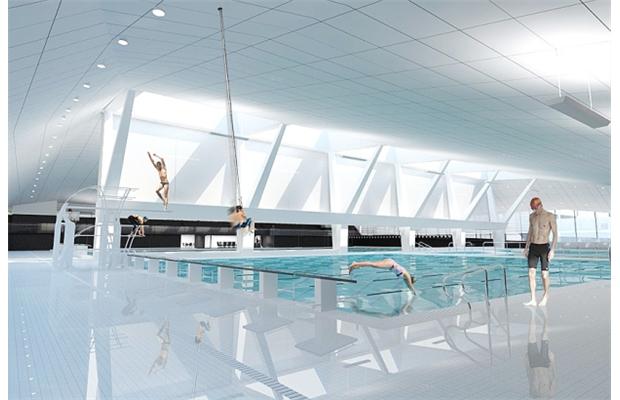
UBC to build new aquatic centre

The University of British Columbia is investing $40 million in the construction of a new aquatic centre, construction of which is set to begin in late July.

The new aquatic center is a response to the poor state of current facilities. Just recently, the current aquatic center had a steam room failure, resulting in its closure for three weeks. The current aquatic center’s problems have persisted for several months to the concern of university officials. According to Kavie Toor of UBC athletics’ facilities and business development, the indoor pool may soon be unsafe to use.

With files from The Ubyssey and Vancouver Sun


U of R deported students return

Two Nigerian University of Regina students have returned to the university after their deportation  eight months earlier. Victoria Ordu and Favour Amadi were deported after violating their visa restrictions by taking jobs at Walmart.

“It’s still like a dream to me you know. It still hasn’t set in yet. We’re very, very happy to be back here to complete our education,” said Amadi.

Some have defended Ordu and Amadi, seeing the punishment as too severe for their mistake. Following rallies held all across Saskatchewan, the Canadian government has changed its policy to allow international students with study permits to work off-campus.

With files from CTV News


Four vie for U of A presidency

Professors from across the country are vying for the opportunity to become president and vice-chancellor of the University of Alberta. The situation is an open joke on current affairs because 56 people have applied, all in teams of four.

Current U of A president Indira Samarasekera’s salary is ranked among the highest in the country; in 2012, she earned almost $1.2 million in salary and benefits. By applying together, the groups are insinuating that this salary is high enough to support four people, and are protesting the high salaries of university administrators across the country

With files from The Gateway


Demand better Facebook working conditions

0

CMYK_Facebook_Anderson Wang small size

While I believe that Facebook and the Internet as a whole have improved many aspects of our lives, I also think that there is much room for improvement. A social network is just like politics: people tend not to pay much attention to what it is, or how it is changing, yet it would be in their best interests to do so. Facebook can be oppressive, as we have little control over what it exposes us to.

Being so integral to the company’s success, we should demand more control over what happens within Facebook.

Maybe you haven’t heard of the newest updates that Facebook is introducing. Who has, considering how often new additions are made to the service? One particularly frightening update is its use of device microphones at any point, supposedly in order to tell friends what you are listening to.

But with more than 1.23 billion active monthly users and a market capitalization of 165.61 billion US dollars — that’s about $134 per user — one cannot ignore the fact that Facebook is huge. As such, it’s no surprise that the company constantly innovates to try to stay on the cutting edge of social media technology, to meet its users’ rising expectations and face competition from rivals such as Twitter.

For users to have more control over Facebook, there could be an association or union of users.

Users don’t seem to be concerned with the use of their data, or the possibility that changes in the company’s policy are made without consultation. And that really should change. It brings to light the lack of control we have over our social media.

If the information we share on Facebook is worth $134 per user — or whatever the actual figure is — it is because, by constantly making up this elaborate picture of ourselves for our friends to see, we are very easy targets for companies that use Facebook’s ad services.

Some people will argue that this is the price you pay for a free service. But I believe that there should be a way for users to have a say in the company’s policies — and not just by making petitions and sharing their outrage on that same social media.

Rather, there could be an association of users, or some sort of union. It is about accountability, it is about involving users in the network they use, and it is about asking them to take part in improving that social media.

In Facebook’s future, there are some serious changes that I’d like to see. I want fewer (to no) ads, since I consider this as just a way to use our brain time for a profit. It needs smarter algorithms to take away the possibility of missing friends’ really important posts. And it needs a better interface for users who speak a number of languages to be able to address their friends in the languages they understand.

As users of social media, we’re almost employees. We create the income for the company. We should be asking for better working conditions.

Some infinities are bigger than others

0

A Fault In Our Stars

On the surface this film may seem like a typical teen romance full of clichés, but the story goes much deeper than that. Dealing with both love and death in profound ways, The Fault in Our Stars is full of wise words and emotional scenes. Shailene Woodley proves once again that she is a talented actress, and her Divergent brother Ansel Elgort shines as her love interest.

Hazel Grace Lancaster (Woodley) is a normal 17-year old girl, except that she pulls an oxygen tank around with her and faces the threat of her impending death on a daily basis. Her strength of character, intelligence, and determination attract the attention of Augustus Waters (Elgort) during a cancer support group session. 

A former cancer patient with an amputated leg, Augustus is there to support his friend Isaac (Nat Wolff) who has lost one eye to cancer and will soon lose the other. Augustus has the kind of smile that makes you feel like he knows a secret about you, and his brazen confidence and charm attract Hazel right away. 

The first conversation between Hazel and Augustus is beautifully written and sets the tone for their relationship. When Augustus pulls out a cigarette and puts it in his mouth, Hazel is disgusted and says that he’s ruined everything. He explains that he never lights the cigarette: “It’s a metaphor, you see. You put the killing thing right between your teeth, but you never give it the power to do its killing.”

Augustus has the kind of smile that makes you feel like he knows a secret about you.

Hazel and Gus bond over Hazel’s favourite novel, An Imperial Affliction by Peter Van Houten. The book doesn’t exist outside the film, but I hope someone decides to write something based on it because it sounds like it would be a compelling story. The protagonist of the novel also has cancer, and the book ends mid-sentence as she dies. 

Hazel and Gus relate to the book’s themes, and Gus loves to quote one of its lines: “That’s the thing about pain — it demands to be felt.” Just as the pain of their situations demands to be felt, the book demands that they seek out answers to its ending. Gus manages to secure a meeting with the author in Amsterdam, and they embark on an adventure.       

While in Amsterdam, Hazel realizes how deeply she’s fallen in love and describes it beautifully: “I fell in love the way you fall asleep: slowly and then all at once.” Gus, never afraid of freely expressing his emotions, has a beautiful monologue where he declares his feelings: “I’m in love with you, and I know that love is just a shout into the void, and that oblivion is inevitable, and that we’re all doomed and that there will come a day when all our labor has been returned to dust, and I know the sun will swallow the only earth we’ll ever have, and I am in love with you.” 

At times, it may seem like their relationship is unrealistic, but the characters are so endearing and played so well by Woodley and Elgort that the exaggeration doesn’t detract from the film. Focusing on the love between Hazel and Gus, this film manages to deal with what may seem like dark, depressing themes while remaining uplifting and humorous. 

One of my favourite scenes involves Hazel, Gus, and Isaac delivering revenge to Isaac’s ex-girlfriend in the form of an egging. Despite everything that these teenagers are going through, they are still teenagers who want to have a little fun.


Ballet BC alumna Makaila Wallace begins a new chapter

0

Makaila Wallace, Photo Credit Micheal Slobodian

Makaila Wallace is embarking on a new chapter of her career. After almost 11 years with Ballet BC, she is now an independent artist looking for new adventures and exploring all the possibilities for her future. “It was time for a change,” said Wallace, “I just felt as though I needed more time and space for other interests I have.” 

Since leaving home at 14, Wallace has always been part of a major ballet company. First the Royal Swedish Ballet, then Royal Winnipeg, and most recently Ballet BC. After 15 years as part of a formal company, she’s looking for a change. “I’m allowing myself time to transition and readjust,” she said, explaining that she wants to remain curious. 

Wallace is exploring outside the walls of Ballet BC and even outside the traditional stage in her new work as part of Dances for a Small Stage: Summer Lovin’. The work will be performed on the lawn outside Burnaby’s Shadbolt Centre for the Arts, and she said that they aren’t sure exactly where they will be performing yet. 

During her last few years at Ballet BC, Wallace said she began to appreciate small venues. “I really started to become drawn to more intimate venues,” she said, explaining that she always really enjoyed having people come to watch rehearsals. She found that there was a very different dynamic between her and the audience in that type of space, and that her performance was different as well. 

“The challenge of performing on the big stage is that it’s the same work, but there’s something about it being a ‘final version,’” said Wallace. The challenge for her was to approach it the same way as in the studio. 

“That’s the thing about a dance performance — every moment is unique to itself. I struggle not to make it the final answer,” she said. Rehearsals are a peek into what the dancers do every day, but on stage Wallace said it’s important to keep some of that spontaneity.

This piece was a “collaborative choreographic process” with Simone Orlando. The two Ballet BC alumnae also teamed up with pianist Candy Siu and Vancouver Opera singer Willy Miles-Grenzberg. Siu approached Wallace first; their original idea was different and was intended to be a larger project. However, when Small Stage approached Wallace, she thought their work would be a good fit for the series. 

Wallace met Siu when she played piano for her ballet class at Harbour Dance Centre. “I really enjoyed her as a pianist,” she said. When she heard Miles-Grenzberg sing along with Siu’s playing, Wallace said she was blown away. “They’re beautiful together. I almost feel like I’m an addition to their piece.”

While collaborating with Siu and Miles-Grenzberg, Wallace was also working with Simone Orlando and thought that her choreographic skills would benefit the piece. “She kind of helped me mould it into place and added structure,” said Wallace, emphasizing that this work is very much a collaboration between these four artists and she is extremely grateful for their support.

Looking towards the future, Wallace isn’t sure if choreography is in the cards. “Maybe at a point in the future,” she said. “I’ve never had a choreographic itch myself. I’ve always enjoyed being in a collaborative environment.” 

The BFA program at SFU is of interest to Wallace, and with an interest in combining education and art, she is also thinking about getting into education someday and maybe teaching elementary school. 

For now, she’s doing some teaching, working on independent projects, and always keeping creatively active. “I’m very much wanting to keep dance a part of my life ― as to what shape or form, that’s still evolving.” 

Dances for a Small Stage: Summer Lovin’ will be presented on the South Lawn at the Shadbolt Centre for the Arts June 20 and 21. For more information, visit movent.ca.

Jehovah’s Witnesses recruit entire Girl Guides of Canada

4

VANCOUVER — In an unforeseen development, Canada’s favourite millennialist restorationist Christian denomination has added a record amount of new members by forming a partnership with their number one door-to-door soliciting rivals.

According to elders of a local Witness church, the idea to recruit the country’s girl guides came up during their weekly meeting after a tedious debate about the precise imminence of “the end.”  

“We were hearing a lot of complaints from members about more and more people closing the door on them,” explained Harry Smith, a local elder, “and with this whole peephole fad sticking around, it’s becoming increasingly difficult to get our message out to the public.”

Instead of making any changes to their intrusive method of recruiting or ridiculous general belief system, Witnesses instead decided that their best course of action would be to bring in a new generation of more approachable, cuter members.

“We’ve been competing with the Girl Guides for centuries and they’ve always beaten us,” continued Smith. “I mean, we can’t even give our literature away but they can come to your house unannounced and charge five dollars for what are, frankly, mediocre cookies.”

While Smith admitted that he did enjoy the mint flavour, he believes salesmanship is the key and immediately reached out to obtain the Guides’ services, a task which was easier than he expected.  

According to sources, the girls were actually quite receptive to joining the religion (after they were explained the principle of eternal damnation, of course).  

Although the group is sometimes criticized for its cult-like practices, a conversion to the Jehovah’s Witness religion is not expected to change that aspect of the Girl Guides. As practicing Witnesses, the Guides will continue to partake in all their regular activities, with the only exceptions being any that are fun.

They will continue to go door-to-door, as they did before, but will now give out cookies only to those who have agreed to follow the sacred word of Jehovah and also have agreed that the act of accepting cookies is a sin.

According to elders, the project is already a huge success with a massive increase in their soliciting percentages, as the public apparently does not have the heart to slam the door in the face of a little girl, no matter how imposing her ideology might be.