Home Blog Page 1160

SFU’s French programs get a boost

0

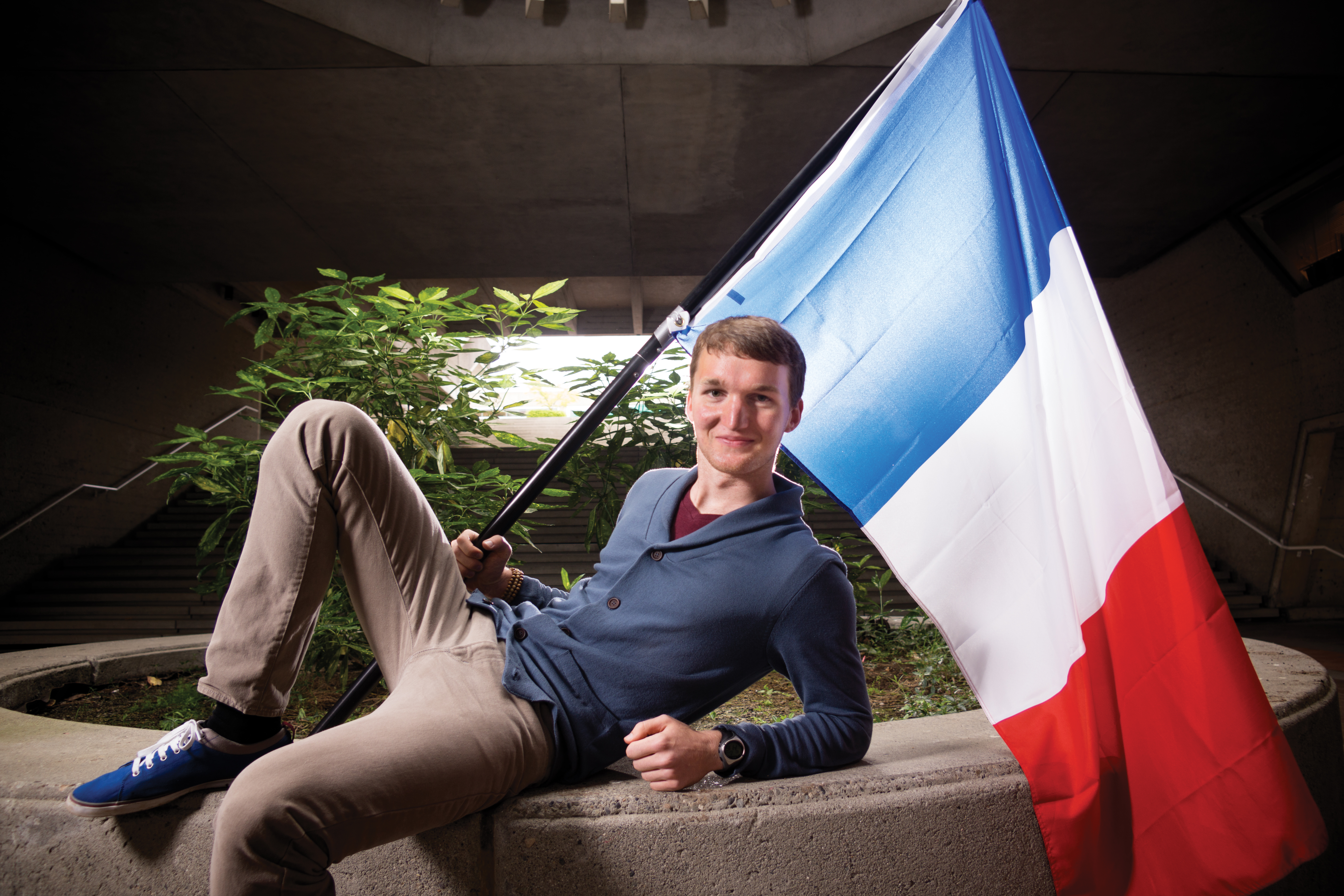
WEB_French_Anderson Wang

SFU’s Office of Francophone and Francophile Affairs (OFFA) has a new reason to celebrate it’s 10 year anniversary this fall. The federal government has announced that, through Heritage Canada, Official Languages, it will contribute $2 million a year to OFFA for the next five years.

The funding will go to French programs in both the Faculty of Arts and Social Sciences and the Faculty of Education. 

SFU is the only BC member of the Association of Universities of the Canadian Francophonie. In addition to organising complementary programs, such as the “printemps de la francophonie,” it has also created links with the community directly, and works with the government at the provincial and federal levels.

“Our mandate is to maintain the new programs we have created,” Claire Trépanier, director of OFFA, told The Peak

Trépanier spoke about the development of SFU’s French program, saying, “The French Cohort Program dates back from 2004. We had our first graduates in 2008. Programs change a lot, and our directive from the federal government is to maintain those programs, which is already significant. We had $8.3 million in total for the past five years. Our goal with the increased amount is to make sure we respond to the need.”

That need includes the growing demand for French immersion teachers in the province’s public school system, as well as post-secondary educational needs of BC’s francophone and francophile communities.

“In June last year, we consulted with SFU directors, but also teachers, students and the community to understand the teachers’ needs,” said Trépanier. “We also met with the provincial government, which also is very aware of the growing needs of French language teaching but also of teaching in French.”

Trépanier is optimistic about the future of the French language in BC. With 70,000 francophones, 300,000 French speakers, and a large demand for immersion classes — 50,000 students as of today — interest in French is growing. 

“What is really extraordinary,” Trépanier stated, “is that those children often come from families where they already speak several languages. So I view the situation of French in BC positively, while keeping in mind the fact that there is always work to be done.”

This “work to be done” is further exacerbated by increased francophone immigration to Canada, more and more of whom are settling in minority French communities outside of Quebec. Trépanier believes that “the more we offer this education in French from kindergarten to university, the more people will want to immigrate here, to be integrated in an education system in French.”

One such system, offered mainly in French, is SFU’s French Cohort Program, which allows students to pursue studies in the French language and political science simultaneously. For John Craig, dean of the Faculty of Arts and Social Sciences, this program is one of SFU’s “gems.” The program is “both intellectually worthwhile and politically worthwhile,” he stated. 

Craig noted that “without the official federal policy of bilingualism, you would find that local circumstances start dictating local policies. [As such, we would likely see] the rise of Mandarin or Punjabi here in the Lower Mainland.” 

Nevertheless, because the federal government is a bilingual operation, Craig feels “it’s very important that people access what they need to access in both official languages.”

As funding is determined by a plan of action with specific initiatives, OFFA’s priority is to maintain existing classes in the departments of political science, history and French, as well as continue to offer the professional development program, the masters and PhD programs, and programs for in-service teachers.

OFFA’s future projects include a partnership with the School of Criminology and the development of ILEAP, a program to improve elementary school teachers’ French. Trépanier hopes these programs will help to “celebrate the fact that [SFU’s] multilingual students choose to pursue post-secondary education in French in BC.”

SFU gondola plans grounded

7

Gondola


Metro Vancouver mayors voted in favour of a $7.5 billion regional transit improvement plan on Thursday, June 12, but a lack of provision for the Burnaby Mountain gondola project has spurred SFU groups to take action.

On Thursday evening, Simon Fraser Student Society (SFSS), the Graduate Student Society (GSS), and Sustainable SFU (SSFU) issued a press release regarding the exclusion of the Burnaby Mountain Gondola from the proposed 10 year regional transit plan.

Chardaye Bueckert, SFSS president, explained the groups’ reactions to The Peak: “We weren’t surprised, we weren’t overly shocked, but we were definitely disappointed, given that the project is such a high cost-benefit ratio.”

Bueckert is one of several gondola proponents who has been advocating for the project’s construction since early 2010. The gondola — or, as SFU President Petter likes to refer to it, the Burnaby skybus — would run from Production Way – University Station directly to Burnaby Mountain.

The project would cost approximately $120 million dollars and would reduce noise as well as air pollution of up to 7,000 tonnes of greenhouse gases.

Although a business case analysis by CH2M Hill found that the gondola would generate substantial benefits to commuters and the region, estimated at 3.6 times its cost in dollar terms, TransLink decided against it as the upfront cost would be $12 million more than continuing to run buses to SFU’s Burnaby campus over the next 25 years.

Burnaby Mayor Derek Corrigan explained the omission to the Burnaby Now: “I wanted a more realistic, more focused plan. If you keep adding items to a wish list then pretty soon it becomes so unrealistic that no one ever believes it will be done.”

Corrigan said the the decision was mainly based on economic feasibility. He said, “There’s a lot of arguments being made about the gondola being more environmentally sound than the buses are, and I think there’s merit to that argument, but when it comes to financial, the argument on it didn’t work.”

Proposals that were included in the list of potential transit initiatives include a new tolled four-lane Pattullo Bridge, light rail transit lines in Surrey, an extension of the Millennium Line along the Broadway corridor to Arbutus, a 25 per cent increase in bus service, and maintenance and upgrades to the 2,300 kilometres of the region’s major road network.

Nevertheless, Bueckert feels that the gondola, in combination with plans to expand the B-lines, for instance, “would be very complementary proposals.” According to the SFU groups’ joint press release, the gondola would eliminate the need for the 135, 145, and 144, liberating 32 buses an hour at peak times.

Combined with the expected $10 million bus upgrade that will be needed by 2020/21 due to increased demand for buses, Bueckert feels that “it’s a no-brainer to build this project.”

Despite its exclusion from the plan, Bueckert is optimistic about the ability of the SFU community to move this project forward. She said, “We’re not deterred, and we’re committed to this and we’re going to keep pushing, however we do not want to wait 20 years for this project.”

This story is developing and will be updated as more information is available.

Fighting a Losing Battle

1

FORWEB

Vancouver’s Downtown Eastside is often seen as a neighbourhood fraught with poverty, crime, and violence. However, despite its socio-economic issues, it is also a central location for community building and social change in Vancouver. Many local businesses and organizations help to foster a sense of community and culture for the neighbourhood. Spartacus Books is among these organizations. A non-profit bookstore, it is run completely by volunteers and, until recently, stood at the edge of the Downtown Eastside.

The shop prides itself on carrying books and magazines from small independent publishers that would not be found on commercial bookstore shelves. They also provide access to academic and scholarly publications that are not available elsewhere. Over the years, Spartacus has been a community space for people living in the DTES to discuss and share radical ideas and join together in the name of inspiring social change and political activism.

Recently, however, Spartacus Books was evicted from their location on East Hastings Street so that the space could be renovated to reap higher commercial rents. After being part of the neighbourhood for more than 40 years, the bookstore has been forced to relocate in order to satisfy the interests of Vancouver’s real estate developers.

A Gladiator in the City

Spartacus was originally founded in 1973 at SFU by a man named Roger Perkins, who also worked at the SFU bookstore. Originally called the Spartacus Socialist Education Society, the bookstore soon expanded to accommodate the needs of those advocating for a diverse range of political views.

As one of the longest-running collectively run bookstores in North America, Spartacus has been one of the main sites for the promotion of alternative culture in Vancouver, addressing issues that mainstream media often gloss over. It has also been a valuable resource for a poverty stricken community to use as a safe space that they can call their own. Its eviction comes as a a huge blow to the community, who have come to rely on the bookstore as a crucial centre for community building and the exchange of ideas.

Spartacus Books’ story is nothing new in the aggressively gentrified Downtown Eastside.

Spartacus has also extended its reach beyond the DTES. For example, the bookstore has fostered connections with several SFU campus organizations, including Out on Campus and the Women’s Centre. The bookstore has, in the past, collaborated with these groups in the form of book buybacks to build up their respective libraries.

“[The Women’s Centre has] always appreciated Spartacus for providing social justice-oriented material, as we do in our Centre library,” says Natasha Sanders Key, the resource assistant for SFU’s Women’s Centre. “We have also appreciated them as a valuable resource to residents of the Downtown Eastside, and were very saddened to hear about their eviction from their Downtown Eastside location.”

Spartacus Books’ story is nothing new in the Downtown Eastside, an area that has been rapidly and aggressively gentrified in the past decade. The eviction of this bookstore is not just a physical loss, but also one that is keenly felt throughout the entire Downtown Eastside community.

A Long and Bitter History

The Downtown Eastside has long been a marginalized community, as it contains the regions of Chinatown and unceded First Nations territory. With the historical forces of colonialism and classism pressing their own interests against the community’s, it is no wonder that many of the Downtown Eastside’s residents are low-income First Nations peoples, displaced as a result of these colonial forces. This long and hurtful pattern of displacement is unfortunately still active today, as evidenced by the eviction of community hubs such as Spartacus Books.

Spartacus Books has faced its fair share of adversity throughout its over 40 years in the community. The bookstore and its members went through a devastating fire in 2004, which completely destroyed the building that was housing them at the time in Victory Square.

The fire started in the dumpster in the store’s back alleyway and quickly spread, consuming the entire building and around $100,000 worth of uninsured books from Spartacus’ stock. In spite of this, Spartacus was able to recuperate from its losses with the help of the community; DTES residents and fans from across Vancouver pitched in to donate books and resources to help get the store back on its feet.

The bookstore is no stranger to renovation-related eviction, facing this threat once before in 2013. Outrage and support for the bookstore poured in, and people took to the streets and protested on social media against the eviction. Their support definitely made an impact, as the owners of the building told Spartacus Books that their lease was being renewed for another year. However, it soon became clear that the landlord did not intend to renew the lease any further. 

The bookstore wasn’t so lucky this time around, and was forced to move from its current location in order to make room for a new café that will be taking its place. Collective member and media coordinator of Spartacus, Mike Mowbray, said of the eviction, “The landlord plans to renovate the space, along with the neighbouring storefronts, and reap commercial rents much higher than they were from businesses of a different character than was here before. They’ve made clear that Spartacus has no place in that plan, even if we’re willing to pay the higher rent.

“The landlord wants us gone,” he concluded.

A Community Worth Fighting For

Regular customers were disappointed to see the bookstore move, as it had become a valuable community space for many people living in the neighbourhood. Mowbray says of the Downtown Eastside, “This city treats a lot of poor folks, anybody who might look out of place in the businesses that fill up newly gentrified storefronts, badly, in a lot of ways.”

Mowbray cited a point made by one of his fellow collective members at Spartacus, saying, “While the café that will likely replace Spartacus might offer free wifi, that’s contingent on customers having five or six bucks for a latte and their own laptop to access the network. Spartacus has always provided computers and a connection so that folks in the neighbourhood could access the Internet at no cost anytime the shop was open.”

Mowbray also emphasized that the neighbourhood had become the bookstore’s identity, and that the services that the bookstore provided were given out of solidarity, rather than charity — as many had become attached to the spot and to the neighbourhood.

The bookstore also provided a “people’s phone,” a free phone that was maintained outside of Spartacus’ East Hastings location, accessible by anyone who needed to make a call, 24/7. According to Mowbray, the phone provided a literal connection for residents in a neighbourhood lacking public pay phones, and where many residents do not own a telephone.

“I remember one guy coming in a while back when the phone was out of commission,” Mowbray recalls, “telling us that it was the only phone freely available to folks between Commercial and the Carnegie. It may seem like a small thing, but folks come in all the time to say what a difference it makes.”

The Politics of Property

In a Rabble.ca article on Vancouver’s DTES, authors Harsha Walia and Dave Diewert describe gentrification as “the social, economic, and cultural transformation of a predominantly low-income neighbourhood through the deliberate influx of upscale residential and commercial development.” It is a phenomenon that is all too common on the Downtown Eastside.

SFU geography professor Nicholas Blomley, whose research specializes on the organization of laws and property, calls the gentrification of the DTES “an issue of land.” He continued, “It is a question of how land is to be used and the relationship that the collective has with that land. Private property seems to dominate the conversation, either directly or indirectly.”

The increase of gentrification in the area is also partly due to the fluctuating changes in the economy. Around 18,000 people lived in the DTES in 2012, at which time the unemployment rate sat at 11.3 per cent and nearly two thirds of residents made low income salaries. According to a profile of the area conducted in 2006, the median household income was $13,691, in comparison to the median income of $48,000 for most other Vancouver residents.

“The general pattern that is happening in the Downtown Eastside is the riding of rents [in favour] of the so called ‘revitalization’ of commercial spaces,” Blomley says. “The stories and narratives of the Downtown Eastside are changing, and while it may look the same, the community is affected by the loss of resources from places such as Spartacus Books.

“It’s easy to see the love and support for Spartacus here in Vancouver.” – Mike Mowbray, collective member of Spartacus Bookstore

“In a city like Vancouver, increasingly unaffordable for most people,” Mowbray says, “folks need to stand in solidarity with the people of the Downtown Eastside against the developers and a developer-backed City Hall not only because it’s the right thing to do, but because the politics of property are not contained by neighbourhood boundaries. Renters in particular are at the mercy of a process that is only going to extend the range and force of its impacts if we don’t act together to challenge and subvert it.”

The Downtown Eastside also has a bitter history in terms of the division of First Nations territory. The city of Vancouver itself was built on unceded territory taken without the consent of First Nations people, who now make up a significant percentage of the DTES’ population. Many of these people now reside in the area as a result of their displacement from their original community.

Blomley says of this history, “First Nations people have always felt the results of gentrification the most acutely because of the historic need that dominant societies felt to marginalize them. Places like Spartacus Books are able to provide alternative histories and political resources. We lose something if we lose those, especially considering the current commercialization of media.”

For its part, Spartacus Books has been one of the foremost sources for alternative First Nations histories and sources in Vancouver. With the loss of the bookstore, First Nations people in the area have lost yet another space for cultural and community growth.

It is out love and support for this community that the collective members of Spartacus have continued to fight against the gentrification of the Downtown Eastside. “Gentrification is not a process without active agents,” Mowbray clarified; “It’s not a faultless process of organic urban change. Gentrification is something that happens because of the deliberate actions of profit-seeking real estate speculators and predatory property managers who have made a business of evicting residents and hiking the rents.”

Essentially, real estate agents want to create a profit margin that current residents cannot afford — residents, therefore, are forced to move out. Spartacus Books has, in solidarity with others, been an organization that firmly resists this process while endeavoring to be an open and free space for all to discuss and share their ideas.

A New Leaf

Though Spartacus is no longer a member of the DTES community, its days are far from over. On June 1, the bookstore settled into its new location on Findlay Street, in the Commercial Drive area. There, they will continue to connect with the community around them as they plan to host radical movie nights, book club meetings, and musical performances which everyone in the neighbourhood can enjoy.

“It’s easy to see the love and support for Spartacus here in Vancouver,” Mowbray says, “whether it’s 10 years ago when folks kicked in to help the store overcome the loss of $100,000 in uninsured books during the 2004 fire, [or] this past weekend when people offered their hands, their heads, their vehicles, boxes, food and collective energy to our move to the new location by the Drive.”

Though they’ve faced adversity, Spartacus remains a beacon of hope in inspiring social change. In their new location, the bookstore is sure to provide support for the community, and to continue to push forward their own narrative — and Vancouver’s.

Program explores diversity through Islamic studies

0

CMYK_MosqueinAbuja_Wikipedia Commons

For the past six summers, SFU has offered an introductory program in Muslim Studies at it’s Harbour Centre campus. Now entering its seventh year, the topic for this year’s two-week long program is mysticism and popular culture in Muslim societies and cultures. 

The course will cover both historical and contemporary ideas in Muslim culture and societies, exploring the more generally known Islamic fundamentalism, as well as the mystical interpretations in Muslim cultures that most people are unaware of. 

“In essence, the program aims to provide participants — who include not only university students but also educators, community activists, health and legal professionals — with a grasp of the rich diversity of Muslim beliefs and practices,” said Amyn Sajoo, SFU scholar-in-residence and lecturer for the Centre for Comparative Studies of Muslim Societies and Cultures.

Sajoo explained, “We tend to associate diversity with geographical and cultural variation, which is certainly true of Islam. But there is a pluralism in ways of being Muslim even within particular locales — what scholars call ‘communities of interpretation.’”

The program will run from June 16 to 27; on June 25, a lecture by guest scholar and professor Omid Safi from the University of North Carolina on June 25 on the mystical poet, Rumi, will be open to the public at Harbour Centre. Although registration for this year’s summer course has closed, Safi’s lecture will provide students with an opportunity to experience a preview of what the program is like.

The summer program is taught on the assumption of no prior knowledge of the  “precepts, practices and cultures of the Muslim world,” Sajoo explained. The course includes everything from sessions on history, to legal and ethical frameworks, to key themes in Islam as a faith tradition, as well as its civilizational expressions and much more.

“Participants may well be inspired by their brief encounter with a whole new world of Islam to consider developing a professional interest in various aspects of the subject — from anthropology to history, architecture, or law. Each of these, of course, can lead to an extremely rewarding career,” Sajoo added.

In contemporary politics, the Middle East and Islamic societies are becoming increasingly relevant. “Religion, and especially Islam, is very much in the headlines, though often for the wrong reasons, and we certainly need qualified people to put matters in perspective.

“Moreover, we have a substantial Muslim diaspora here in North America, and the engagement with Islam is no longer just a matter of relating to the Middle East, or Asia, or West Africa. So again, developing a career interest in, say, the sociology of Muslim identities in Canada or Britain is very much in the cards,” Sajoo said.

Overall, Sajoo believes that the program will not only leave students with a better understanding of Muslim cultures overseas, but also within Canadian society. “The program will leave participants, at the end of the fortnight, with a far deeper understanding of the textures of faith and culture that make up Islam, not just in the Middle East, Asia and Africa but also in the Muslim diaspora here in North America,” Sajoo concluded.

The naked truth

4

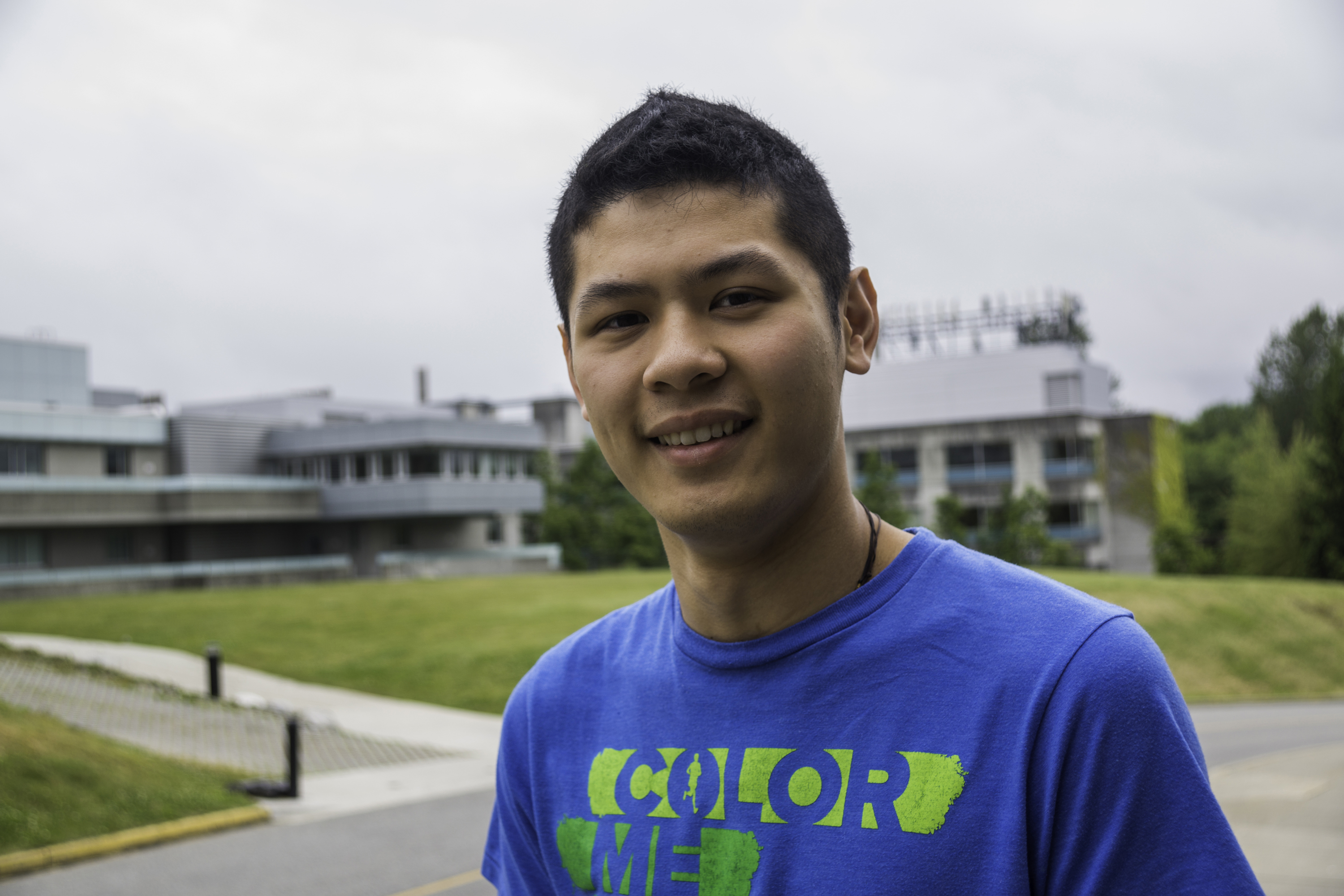
WEB-EV_Anderson Wang

When you look in the mirror, do you see a positive or negative image of yourself?

The body is beautiful and amazing because it comes in all shapes, colours, and sizes. We are all built differently but many of us forget about that fact. We persistently suffer from the lack of perfection because we constantly compare our bodies to others’, looking for something we don’t have instead of being comfortable with what we do. This continuous negative judgment of our own bodies does not only prevent us from living happier lives, but it can also lead to more destructive medical conditions such as depression, anxiety, and eating disorders.

When I was younger I used to have really low self-esteem because I was not satisfied with my physical appearance. I grew up as a scrawny little girl, and suddenly grew larger after I hit puberty.

I hated my weight and always got made fun of for being shorter than the other girls. This kind of negative reinforcement pushed me to exercise excessively, so much so that I stopped listening to my body: I once blacked out while running on a treadmill. I became obsessed with getting rid of what others called “flaws” on my own body so that I could feel socially accepted, instead of appreciating and enriching the beauty of myself.

Stripping myself down challenged my negative perceptions and made me embrace my “flaws.”

My fascination with nudism or naturism started when I first started going to Wreck Beach, a clothing-optional beach, and one of Vancouver’s hidden gems. At first, the thought of going nude in public was terrifying, especially for someone not comfortable with their own body.

But having a safe and secluded space like Wreck Beach opened my eyes to how body image should be viewed. With a community that is comfortable enough to happily run or lay around naked in a public beach, anyone who is afraid to leave his or her comfort zone is welcome. I found that stripping down to just my skin challenged my negative perceptions of my body, and made me embrace my “flaws” as a part of me, rather than something that defines me.

There is no such thing as the perfect body: it is a social construct; it is not real. We have to forget about society’s idea of an ideal body because some people are born with eleven fingers, some people have inverted nipples, breast sizes are not always even, and stretch marks are natural. Whatever it is, shaming others for not having an ideal body is not acceptable.

Accepting our own bodies is not easy because we encounter our bodies differently on a day-to-day basis. They change, they grow, they shrink and they become exhausted, but we have to learn not to feel inferior, no matter our appearance. Our goals should not be based on comparing ourselves to others but to work on ourselves.

Develop a healthy lifestyle that is based on positive reinforcement. Celebrate your body; wear your bikini even if your stretch marks show, dress however you want, but never forget to be comfortable in your own skin.

The Shift 1-Act Festival has something for everyone

0

CMYK Shift 1-act festival - The After After Party 3

The Shift 1-Act Festival promises an eclectic mix of shows. From a play about a professional surrogate mother that is part cautionary tale, part memoir, and part stand up comedy routine, to a play by a group of SFU alumni that explores the works of Phillip K Dick, this festival has range. 

“There’s a good mix. You can find a little bit of everything,” artistic managing director Nick Sartore stated. “What we really wanted to do with the festival is give people a chance to see a lot of different kinds of works.” Sartore explained that the variety of shows will help draw not only those well versed in theatre, but people who may be new to theatre, and more hesitant to commit to one full length play.

“Normally, you think okay, I’m going to the theatre to see this one show that’s going to run two and a half hours and hope I like it because I’ve invested $30 on a ticket.” He continued, “Whereas with this, [. . . it’s] a bunch of different stories so maybe some of them you like, some of them you don’t and hopefully you like more than you don’t. But hey, that’s sort of the fun of it.”

The plays are mostly performed by graduates of local theatre programs including SFU, UBC, Langara College, and Douglas College. The festival, which was extended by a day this year, gives these students of theatre a chance to showcase their works in front of an audience. 

“It can be hard sometimes for especially independent theatre to get an audience [. . .] so it’s really great we have such a fantastic audience.”

The seventh annual Shift 1-Act Festival features five plays, with four of them written by their presenters. An initially planned sixth show, The Oxford Letters was cancelled due to scheduling conflicts. 

Desire(e) contains both drama and comedy in a story about a  professional surrogate mother who loses the ability to bear children before she has her own. Written by Scott Button and directed by Evan Frayne, the show explores dreams and what happens when they don’t come true. 

Theatre group A Wake of Vultures, comprised of SFU graduates, looks at the works of Phillip K Dick in The PKD Workshop. “The show’s very academic, so it’s maybe something people haven’t seen before where it’s presented almost in a lecture style,” said Sartore, before describing the show as a “really awesome audio-visual experience.”

The After After Party (Waiting for Gordo) is “an original comedic two-hander [. . .] about two best friends who totally deserve each other” written and performed by Katey Hoffman and Cheyenne Mabberley who play Fiona and Jules who wait for a guy, presumably named Gordo.

The Merchant of Showboat is the only adapted play, originally written by Jason Sherman. SFU theatre graduate Kaylin Metchie directs this play which raises questions about race and culture.

This Time I Get What I Want is a one woman show written and performed by Jennica Grienke, a graduate of the University of Winnipeg. It is described by Grienke as “a solo triumph of self in which the lead character (loosely based on me) confronts her hopes, dreams and desires on stage.” The lead character who shares the name “Jennica” is described as “single, depressed, unemployed and perhaps slightly alcoholic.”

The Shift 1-Act Festival will be held at The Cultch from June 18 to 21. For more information, visit shifttheatre.ca.

SASS seeks to unite faculty of arts

0

WEB_SASS_Anderson Wang
During the SFSS elections earlier this year, the Society of Arts and Social Sciences (SASS) was officially recognized as the first Faculty Student Union (FSU) at SFU after a campus wide referendum. 

In the past, SFU students were represented by Departmental Student Unions (DSUs) only, making the introduction of an FSU a drastic change. According to newly elected SASS president, Dion Chong, this formalization will allow for better representation of arts students.

However, the referendum passed by a narrow margin of only 12 votes over the required voter quota, raising questions and challenges for Chong and his team. 

When asked about the low overall voter turnout — 9.44 per cent — Chong replied, “For a young organization the positive result of the vote is pretty awesome. It is unfortunate that we had one of the lowest voter turnouts we’ve had yet, and it can be disheartening at times, but we needed to reach at least five per cent of our membership [to pass our referendum] and we did that.”

“Everything we’ve been working on has led up to this point, and we hope to continue to grow,” said Chong. SASS members have been working towards official recognition since 2011, when they were first recognized by forum. “We were kind of in limbo for a while,” explained Chong, because the bylaws simply did not have a provision for FSUs to exist.

Chong went on to explain the difficulties of reaching the many members of SASS; the FSU represents not only students who are majoring in arts and social sciences, but also any student who is pursuing a minor, a certificate, or is enrolled in just a single class. This makes SASS membership larger, as many students elect to take breadth courses in arts and social sciences, compared to other faculties.

“If this had been a different union, the sciences for example, it would have been an easier vote. We would have had to reach less students, but as it is, this vote and the turnout was no small task,” explained Chong. 

As an FSU, SASS now represents over 30 different DSUs, 14 of which are active, and has a bigger budget, more man power, and authority behind it. 

“A big challenge in the arts is that students in the arts don’t necessarily stick in one department,” said Brady Wallace, arts and social sciences representative on the SFSS board of directors. “They may not feel that they want to participate in a particular DSU or program that they’re only taking six courses in. Because there is that lack of attachment, there may be a lack of engagement.”

Chong hopes to use the added level of legitimacy SASS has garnered through the vote to build bridges between departments, coordinate activities, begin a completely arts-centric scholarly journal, and develop fun and representative learning opportunities which will help foster a sense of pride in arts and social science undergraduates. 

Despite the challenges such ventures will likely entail, Chong is optimistic about the future of SASS and what it stands for. He told The Peak that SASS represents “the value of the arts,” saying, “it instills a degree of pride. We have great courses, hilarious profs, and students who actually give a damn about making the world a better place.

“I’m proud of that, and I’m proud that I represent a society which encapsulates that and cares enough to channel it into an even better future for the faculty,” concluded Chong. 

Pipe Dream

0

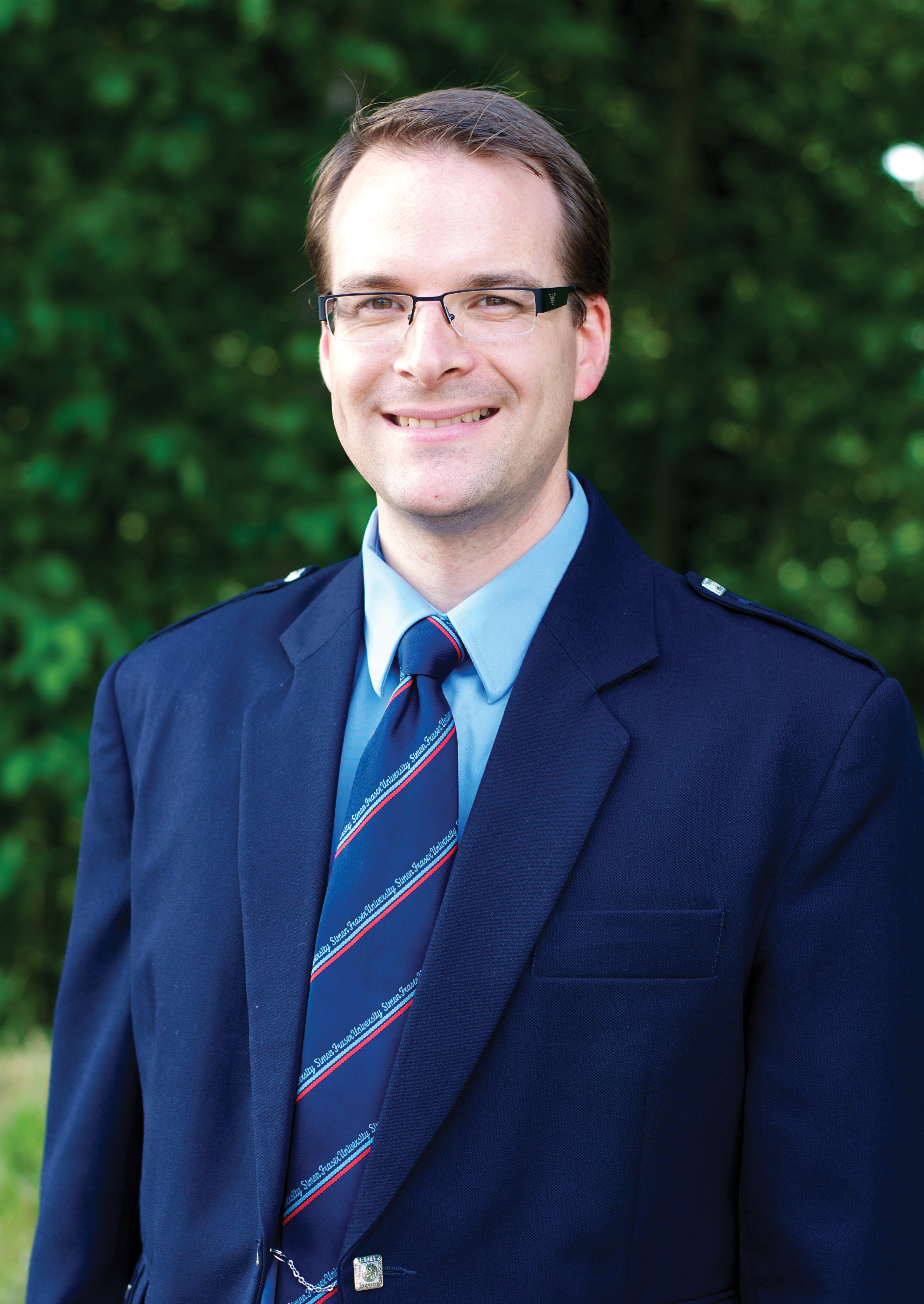
Alan Bevan - Abbotsford

SFU contains a host of hidden wonders; one of them, in particular, is dear to my ear. As far back as I can remember, I have felt enamored by music of Scottish origin — in particular, the tradition of piping combined with drums. 

I stumbled upon SFU’s Pipe Band one day during a short stroll across Burnaby Mountain. Literally, all it took was walking by the Pipe Band practicing, and I was hooked. Without a second’s hesitation, I plunged head-first into the bagpiping, drumming goodness. 

For over 30 years, the SFU Pipe Band was organized, led, and conducted by Terry Lee. Recently, Lee stepped down and was replaced by Alan Bevan, a world class piper and member of the band since 1995. I had the opportunity to interview Alan about the SFU Pipe Band and his prior involvement with Terry and Jack Lee.

“I started when I was seven and a half in Abbotsford in the local Pipe Band, eventually reaching Grade 1 and competing against the SFU Pipe Band,” Bevan remembers. “Grade 1” is a term connoting the highest level of performance within the world of piping. After facing off against SFU, Bevan soon joined the team’s ranks, and rose to become one of its most prominent pipers.

Replacing Lee as SFU’s pipe major was a daunting task for Bevan, especially in light of the band’s six-time World Champion status under the former’s leadership. However, Bevan has a wealth of experience, both with piping and with the Lee family.

“We have people come from all over the world to play in the band.” – Alan Bevan, pipe major

“I started taking lessons from Jack Lee [pipe sergeant of the SFU Pipe Band and Terry’s brother] as a young teenager. That was a turning point in my career. I did well in the amateur ranks, and I turned pro after studying under Jack for a year,” Bevan explained.

He continued, “They [Terry and Jack Lee] are both excellent players. Terry was the first one to be asked to join the Pipe Band. Jack has been the number two guy in the pipe core. They have a symbiotic relationship.”

Despite leaving his grand legacy to Bevan, Terry Lee is still involved with the SFU Pipe Band; however, his level and degree of involvement has lessened, with Alan taking on many of Lee’s previous tasks. Though he has big shoes to fill, Bevan is confident in his level of expertise as a piper.

Speaking to his experience at the highest level, Bevan said,“You can only win the gold medal once at each of those contests [which SFU Pipe Band competes in]. I’ve now won each of those gold medals.”

But it’s not just Bevan raking in the medals. Besides meeting the pipe band’s exceptional leadership, I have also experienced first-hand the high-quality drummers and pipers that make up the band, each of whom is passionate about both the music and the team — living up to the impressive standard Bevan has set.

“It’s a tough band to get into in the first place,” Bevan admitted, referring to the group’s high standards. “We have kids come up through the ranks of the Robert Malcolm Memorial Organization [and Pipe Band]. Not all of those guys get into SFU. A few have, they’re pretty fired up by the time they get there, obviously.

“We have people come from all over the world to play in the band,” Bevan continued. The Pipe Band’s international and local performers throughout the last few decades have performed at such venues as Carnegie Hall, Lincoln Center in New York, the Salt Lake Tabernacle, and the Sydney Opera House. 

The pipe band has an unique way of preparing for a given season; it’s a process Bevan describes as the band’s way of always having something to work towards. Rather than focusing single-mindedly on one big performance at the World Championships, the band works towards other contests, while keeping their eventual goal of a championship in mind.

This kind of preparation keeps the band’s spirits and motivation high throughout the year. In fact, it may be the secret to their world class success. Not many universities can claim to have a pipe band; even fewer can claim to have one as talented and successful as ours. As the band’s proud new pipe major, Alan Bevan has high hopes for the future — and with everything he has going for him, why shouldn’t he?

Senate Report

0

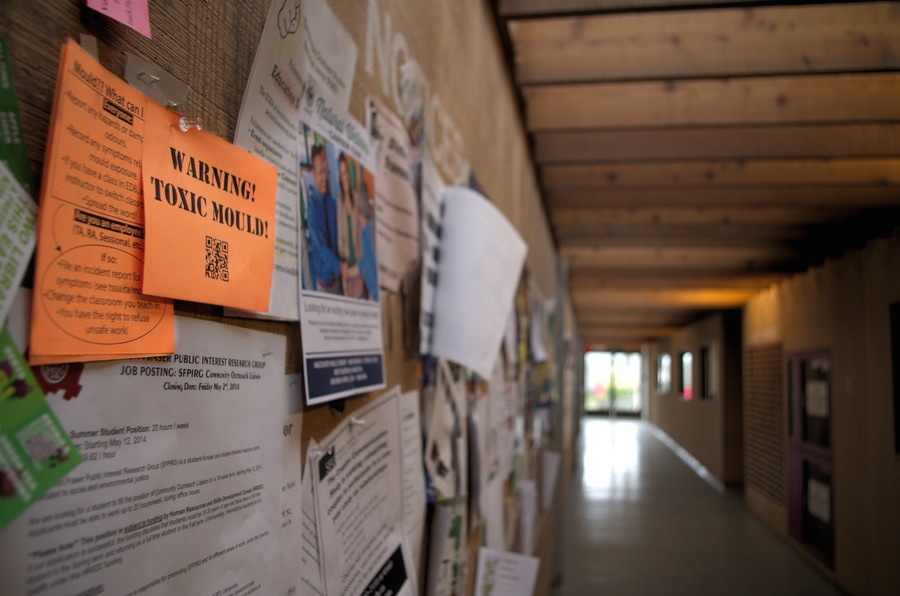
WEB-Mould-2
At the most recent SFU senate open session, President Andrew Petter addressed a question regarding the indoor air quality in the education building put forward by graduate student senator Ehsan Jozaghi.

Jozaghi requested an update on the action taken by administration to address the issue of mould in the education building and Robert C. Brown hall, given that it is an ongoing issue affecting the health of students and faculty working in these buildings.

Petter responded by saying that despite a lack of funding for deferred maintenance, the problem will be handled: “If there is a health issue, or a safety issue, we simply address it. We have to. That means funding has to be reallocated, as it has been from other areas in order to do so.” 

Chief safety officer Terry Waterhouse spoke to the efforts that have been made to communicate with the SFU community about this issue. He explained that the communication process has been a “two-way street.” 

The university has been hearing concerns “openly and thoroughly” from people working in the building by way of direct interviews and surveys. A user working group has been formed and town hall meetings have been held as well; full reports on the education building review and assessment are available online. Waterhouse stressed the importance of transparency in this matter.

Petter concluded that the age of the buildings and lack of resources were at the heart of the issue: “Although we are investing in upgrades, and although we are dealing with safety concerns wherever they may arise, it’s still not enough to compensate for systematic underfunding.” 

Risky trades pay off

0

At the trade deadline, both Stanley Cup finalists made what appeared to be questionable trades. Now, with both the LA Kings and the New York Rangers competing for the cup, those deals aren’t looking too bad.

Let’s start with the Kings. They traded Matt Frattin, a prospect who saw fourth line minutes, a second round pick, and a conditional third round pick, to the Columbus Blue Jackets for Marion Gaborik.

The return was not necessarily in question, as Gaborik is supposed to be an elite goal scorer and, to my knowledge, Frattin is not touted as a huge prospect. A team can always use picks, so throwing them away is a bad idea. But LA is in the midst of a possible dynasty, and they have got to be in “win now” mode.

However, Gaborik does not strike me as someone who would fit into the Kings’ defensive system. He was obviously added to give them some offensive firing power. The question was: could he also play a good defensive game?

Gaborik clashed with John Tortorella on the Rangers due to his presumed inability to play Torts’ style of game (although, considering Torts, it may not have just been Gaborik’s game). Gaborik, whether it was right or not, came off as offensively gifted, but one-dimensional.

St. Louis is still skilled at 38 years old, but he probably only has a few years left.

After his turbulent time with the Rangers, he was traded to the Blue Jackets ― which did not help matters. He posted only nine goals and played 34 games, over what was essentially one season. He appeared plagued with injuries, and was no longer the 40 goal scorer he once was.

However, after the trade he seemed to fit right in with the Kings. He went nearly a point per game after his trade, and in the post-season, he heated up. As of June 10, he has scored 13 goals and 21 points. This puts him on pace for over 40 goals in a season.

It also seems likely that he will want to stick around for a few more years and sign a contract with the Kings, considering this new found revitalization. The LA sun probably doesn’t hurt either.

The Rangers, Gaborik’s former team, also made a big and questionable move. They traded Ryan Callahan, a franchise guy, a 2015 first round pick, and a conditional second round pick, to the Tampa Bay Lightning, for Martin St. Louis. (Note that Callahan and St Louis are on the last years of their contracts, and will be unrestricted free agents next year.)

St. Louis is 38 years old. Even though he is still skilled, he probably only has a few years left. Tampa Bay, though they gave up their captain and are not guaranteed to re-sign Callahan, would have lost St. Louis to free agency anyways. Now they gain two high picks for the future, and a great player for their ill-fated playoff run.

On the other hand, St. Louis will likely sign again with the Rangers, but it is likely that his production will decline as he approaches and passes 40. And Callahan seemed to be the face of the Rangers before being traded.

However, the Rangers made the finals. And Martin St. Louis looks pretty darn good. I think it’s pretty easy to argue that without him, they wouldn’t have made it this far.

Both teams made controversial decisions that paid off. Soon, one team is one cup ring richer, and the other will have come so close.