Home Blog Page 1146

Report weighs pros and cons of Site C dam

0

254107207_8f8ef627cf_z

A report determining the fate of the proposed $7.9 billion Site C dam project has come back inconclusive, neither suggesting approval of the project nor suggesting tis rejection.

The dam’s construction — which would occur on the Peace River in northern BC — would begin in 2015, but has been under discussion because of the accompanying environmental, economic, social, health and First Nations concerns.

In the report, the joint review board acknowledges that the dam “would provide a large and long-term increment of firm energy and capacity at a price that would benefit future generations” while producing “a vastly smaller burden of greenhouse gases than any alternative, save nuclear power, which BC has prohibited.” It also notes possible local economic benefits such as jobs created.

However, it also points out that in addition to concerns about “high initial costs” and a question of when the power will be needed, the project would cause damage to local ecosystems.

“[It] would significantly affect the current use of land and resources for traditional purposes by Aboriginal peoples.” It would also affect local farmers, “who would bear the loss” of “agriculture on the Peace Valley bottom lands,” though it would not significantly impact BC agriculture.

For SFU political sciences professor and former BC Hydro board member Marjorie Griffin Cohen, the report is problematic in that there was not enough analysis into alternate possibilities, such as geothermal energy. She states that the lack of costings done for alternative energy sources makes it hard to determine whether the Site C dam is the best possibility, and makes it difficult to give the project a definite yes or no.

The panel does not believe that BC Hydro has adequately proven the need for more power.

“There is nothing to compare it to,” Cohen commented, while also blaming what the report calls “policy constraints that the BC government has imposed on BC Hydro [that] have made some other alternatives unavailable.”

Along with geothermal energy, plans for several smaller dams instead of one large dam were proposed, but declined. The report claims that these would be of “similar or somewhat higher costs” than the Site C dam project.

Cohen also notes the government has reduced the role of the BC Utilities Commission (BCUC), with this project having been exempted from their oversight. “Removing BCUC’s oversight of efficacy of electricity policy [. . .] means that a true airing of alternatives simply does not occur,” Cohen told the Vancouver Sun.

BC Hydro plans for construction to start in 2015 with it ending in 2024. Though Site C would be the least expensive viable energy option, the panel does not believe that BC Hydro has adequately proven the need for more power in such a brief period of time.

Many First Nations are also concerned with the project’s potential effects on their lifestyle. However, Treaty 8 Tribal Chief Liz Logan, whose tribe boycotted the official announcement ceremony in 2010, was pleased with the report, telling the Times Colonist that, “It’s not necessarily a clear yes or a clear no, but we’re happy that they did say there were significant impacts to our way of life.”

Environmentalist groups, such as the Wilderness Committee, have stated their concerns for the affected area, most notably the agricultural land that will be lost. They also doubt the need for the dam, claiming on their website that “it is about exporting electricity [. . .] and expanding BC’s oil and gas and mining industries” rather than a legitimate need for electricity.

However, some environmentalists find the lack of a carbon footprint hard to resist. “Site C is a fantastic conundrum. Even someone like me, [who is] pretty environmentally oriented, is not entirely sure you should not build that dam,” SFU professor and former chair of the BCUC, Mark Jaccard told The Globe and Mail.

Although the report was indecisive, it was not intended to be the final word. The report states, “The decision on whether the Project proceeds is made by elected officials, not by the Panel,” and as such it is up to the government to decide the fate of the project.

 

Totem explores the infinite potential of human existence

0

CMYK-Totem - cr OSA Images

Chronicling the evolution of the human species from amphibians, to apes, to the present, Totem is a new Cirque du Soleil production that fuses many cultures and inspirations to create a magical tapestry of human ingenuity. As tour publicist Francis Jalbert explains, “It explores the infinite potential of human beings. We’re always moving onwards and upwards; we don’t accept the status quo.” It’s also about the evolution of our own lives and the way we evolve as individuals.

With the focus of this show being mainly on the overarching theme of evolution, rather than plot and characters, Jalbert said that the audience is invited to draw their own conclusions and interpretations of what they see. This production allows people to “discover Cirque in a new way,” he explained, describing it as “the most intimate, strong bond and connection with the performers” of any Cirque show. Even if people have seen a few Cirque du Soleil shows, he assures that this one will be different. 

Each act is its own story that represents a different stage in our evolution, but they are not presented in chronological order. Instead, they jump back and forth in time and see the parallel bars act representing the origins of life. Fish, frogs, and other amphibious creatures dominate the stage along with a giant turtle. 

The Russian bars act takes the show into outer space as they represent cosmonauts trying to defy gravity. Another act that Jalbert finds very impressive is the fixed trapeze duo. Performed by two teenage characters, he said that this act represents the evolution of young love and touches the audience on an emotional level while also being technically stunning.  

Many Native Canadian and American cultures are represented in the show, explained Jalbert. Although no specific tribe is portrayed, the hoops dancers act is inspired by many of these cultures and represents the circle of life and a deep connection with the earth. The music, also heavily influenced by native cultures, is very tribal and heavy on percussion. The vocalists are Esi Kwesiwa Acquaah-Harrison, an African heritage singer and Christian Laveau, a member of the Huron First Nation within Quebec City.

The costumes by Kym Barrett include many natural elements such as feathers and shells, and Jalbert explained that they are very diverse with each act requiring a different aesthetic. The inspiration for these costumes is a fusion of imagination and reality as Totem seems to straddle these two worlds. 

The many video projections used allow for the audience to escape to many different places. “It’s like travelling around the world without leaving your seat,” said Jalbert, “you step into the big top and forget about your reality.” The projections include a marsh in Montreal, a waterfall in Iceland, and a volcano in Guatemala. 

The mixture of different landscapes and cultures, and an emphasis on the earth and our connection to it, fills this show with a sense of hope. “When the audience leaves, they will feel like they just dreamt for two hours with us,” said Jalbert, “It’s an outstanding, unique theatre experience.”

Totem will be presented by Cirque du Soleil under the big top at Concord Pacific Place from May 15 to July 6. For more information, visit cirquedusoleil.com/totem.  

Spaces and Reservations presents a reality of life

0

Spaces and Reservations

It’s a story that isn’t a story. There are no plot twists and no special effects. It’s not a drama showing unfaithfulness, it isn’t seeking to teach a life lesson, and it isn’t a documentary. It is quite simply a film depicting one of life’s realities.

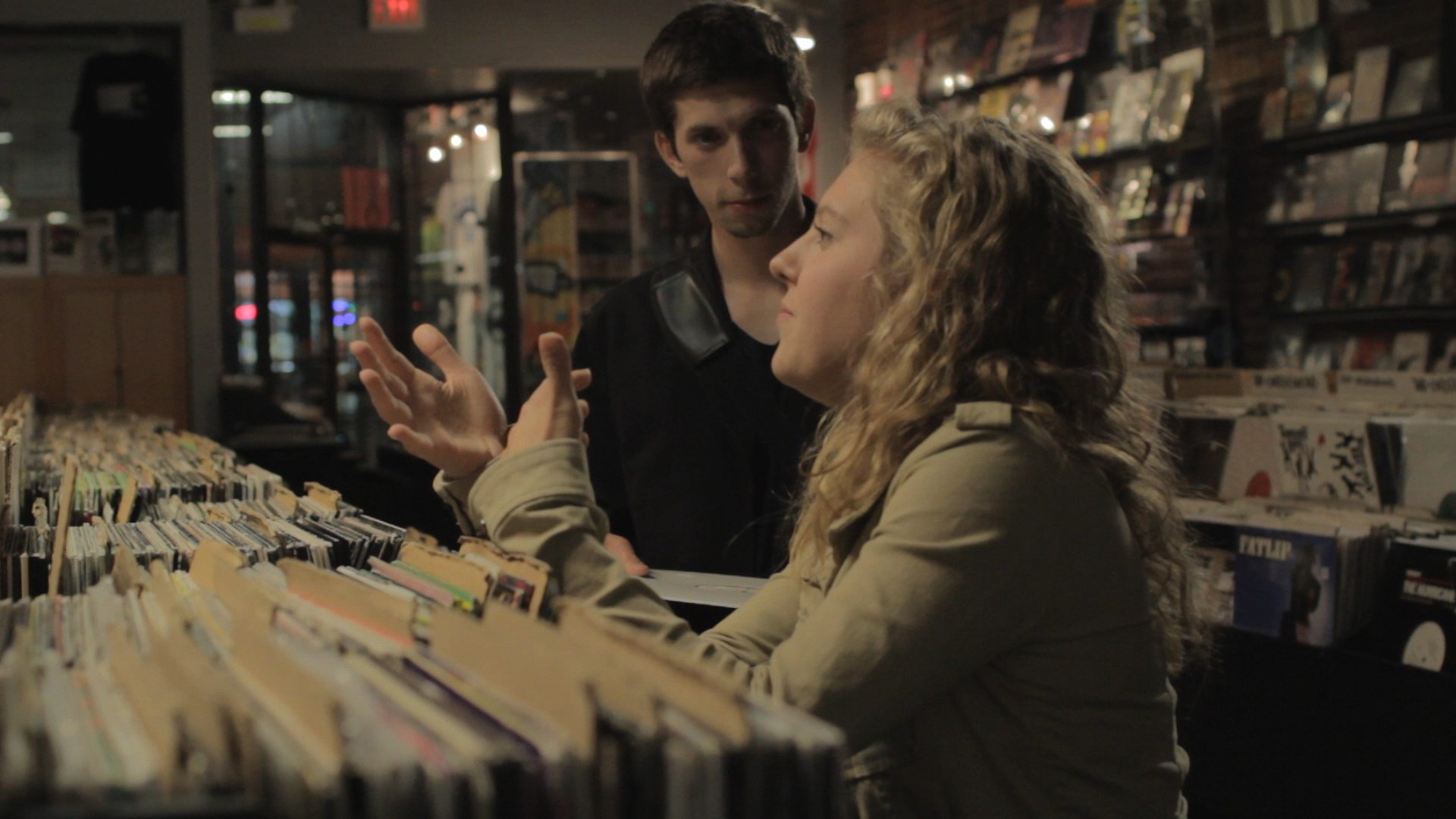
Spaces and Reservations, is the latest feature film from DIY filmmaker and SFU film student, Brendan Prost, who is best known for his previous films, Generation Why and Choch. This film follows the relationship of Jamie (Zach White) and Kacie (Taylor Hastings) as they drift apart, their separation, and eventually their break up. 

It is about “malaise and stoicism, about the feeling of stoicism, and being stuck and static. It’s about losing people, feeling people drift away from you. It’s about having your actions motivated by guilt and fear, and sympathy for someone else,” explains Brendan.  

For Spaces and Reservations Brendan assembled a crew of talented individuals, including local actors Taylor Hastings and Jennifer Kobelt (Cassandra) as well as fellow film students at SFU, notably Jeremy Cox as the director of photography, and Rheanna Toy as the production designer. 

Brendan also reconnected with Zach White with whom he worked on both Generation Why and Choch. “The big difference between doing this project and the other two feature films [. . .] was getting to collaborate with people like Jeremy and other people from the SFU film program, and having their technical knowledge and their skills at my disposal,” says Brendan.

It is within the raw nature of the actors’ performances and the director’s careful gaze that the strength and beauty of this film can be found. Not a lot happens action-wise, the majority being either dialogue or silence, but “if a script is any good [. . .] the scene isn’t about what the characters are saying, it’s about [. . .] what’s going on underneath,” says Brendan. 

The two main actors play their connection in a way that is realistic, and this reality drives the story forward. Their characters are unremarkable, average individuals, but their situation is nostalgic and familiar, and the audience is invested despite themselves. Perhaps in witnessing something unfold, in waiting in the silence, they are reminded of their own relationships.

Jamie and Kacie’s relationship has already begun to stall before it even begins; with the first line in the film the awkwardness is obvious between the two. In one scene, as Jamie turns to leave, he stops and after a slight pause he goes back to Kacie, hugs and kisses her. 

“He has to remember and turn around and come back, and that is the degree in which the characters are conscious of the fact that they are drifting apart from one another. They just catch themselves in these moments,” Brendan points out. 

It isn’t until two thirds into the film that Kacie and Jamie begin to open up and seem like a couple. The film is like driving toward a pothole, without knowing for certain where it is and when the car will reach it.  

Brendan wrote a detailed 105-page script for this film, however the actors improvised their lines depending on how the scene played out, lending to the realistic quality. “It just speaks to [the] degree of naturalism [the actors] managed to achieve, and at the same time being so emotionally attuned to what’s going on in the scene,” said Brendan. 

Cinematographer Jeremy Cox elaborated saying, “One thing we’ve all learned from this film was how to improvise effectively [. . .] take exactly what you have around you, the people you have, the resources you have, and make the best out of exactly what you have.”

Essentially “it’s a film about first experiences, about naivete. It’s really a film for younger people, a film for people our age,” says Brendan, “[however] that varies . . . it appeals to a first heartbreak, a first time that you lose someone.”

Spaces and Reservations will screen at the Rio Theatre May 20 and 27. For more information, visit spacesfilm.com. 

Tippy Top Ten: Donald Sterling

0

Here are the Tippy Top Ten Most Appropriate Punishments for Donald Sterling…


10. Spend eternity in black heaven

9. Have fate decided by OKC referees (am I right?)

8. Slap on the wrist from Dennis Rodman

7. Season tickets at Apollo Theatre

6. Fined until he has to live as a lowly millionaire

5. Have courtside seats moved to directly below basket

4. Lifetime ban from speaking

3. Walk a mile in Magic Johnson’s size 14 shoes

2. Forced to own LA Clippers from 1981 to 2014

1. Elevator ride with Solange Knowles

Stuck between childhood and adulthood

0
SFU: engaging adult-children?
SFU: babysitting the world?

Have you ever felt like you’re somehow less mature than, say, your parents were when they were your age? Chances are you have. In generations past, it seemed like a lot more young people knew where they were headed in life and how to get there. In contrast, today’s youths seem to be marred by constant uncertainty and worry for their futures. But, why?

I first came upon the concept of extended adolescence in one of my psychology courses; it alludes to a trend in the younger generations in which individuals remain in a prolonged period wherein they don’t identify as adults. They are largely dependent on their parents and have yet to establish an autonomous lifestyle (i.e. moving out, having a full-time job, etc.).

However, this period of dependence is increasingly being stretched out into one’s early to mid-twenties. Many young adults today (myself included) are living with their parents, often move back in with their parents after moving out, and are marrying and having children later in life.

It appears as though adolescence, or at least the transition from adolescence to “full” adulthood, has become a longer process for contemporary youths, and I believe that this is due to the fact that people now stay in academia longer than ever before. This is a phenomenon caused by Sir Ken Robinson’s “academic inflation,” or minimum job requirements generally becoming more complex.

Those extra school years buffer the responsibilities that come with being a mature, independent adult.

Graduating from high school no longer marks the end of formal education for most, as it did in the past. With each passing generation, more and more people are able to attend colleges, universities, and other post-secondary institutions.

Even so, having a bachelor’s degree used to almost guarantee employment, and having a master’s or higher meant you would never be out of a job. Fast forward to present day, and a bachelor’s degree no longer holds as much prestige as it used to. It has now become necessary, but not necessarily sufficient for a career. People graduating with a BA are now as commonplace as people graduating from high school a few short decades ago, and today’s MAs are near equivalent to BAs of the past.

All this inflation means that people have to stay in school longer to get the required degree for their desired profession, or just for a better chance at getting a job. Today’s youths are thereby remaining in an academic setting for a longer period of time; those extra years serve as a buffer against the responsibilities of getting a job, finding their own place of residence, and everything else that comes with being a mature, independent adult.

Many young adults today are stuck in psychosocial moratorium, not completely dependent but far from being autonomous. Psychologist Erik Erikson says this occurs while people try to find identity during their adolescent years.

It is hard to say whether this extended adolescence is a good thing or a bad thing, as it is a relatively recent phenomenon, and I am personally still on the fence about it.

However, it does help to explain why today’s youths appear to be less prepared and less certain of themselves than the older generations; it’s not because we’re any less competent, but because we’ve been given a few extra years of academic safety from the real world.

Maybe it’s time we personally draw more attention to mixing the school world with the real world, to take advantage of the longer period we spend as adult-children.

Young and Serious

0

BW-Marine_Vatch_Jeune et jolie

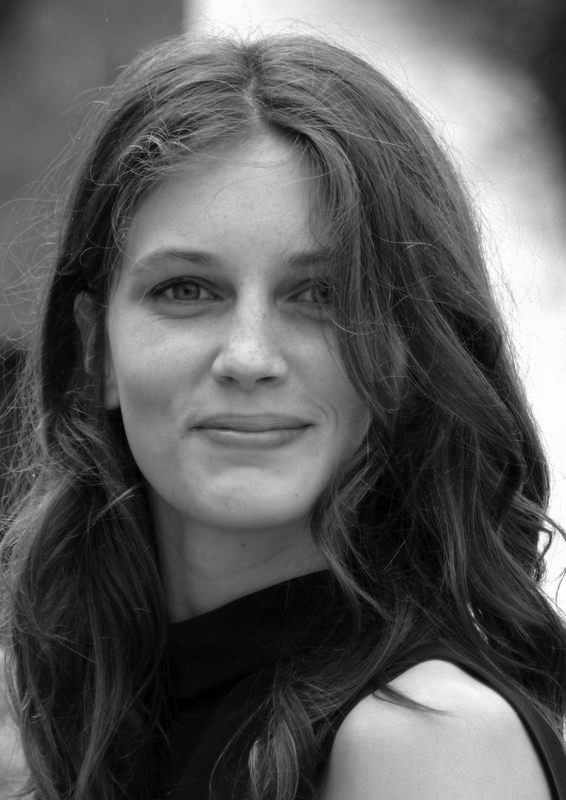
“No one’s serious at seventeen.” This line from Rimbaud’s 1870 poem “Novel,” which features in François Ozon’s Young & Beautiful, proves a passé perspective for the film’s protagonist. Isabelle, the young and beautiful woman in question, is followed through four seasons each paired with a musical motif by the irreplaceable Françoise Hardy.

The film begins with a summer romance — not unlike the subject of the Rimbaud poem — between Isabelle and a German boy. The first of four seasons portrayed in the film seems at first like a typical coming-of-age story: A pretty, white, 17-year old girl on vacation with her affluent parents sneaks out of her summer home to lose her virginity on the beach to a boy she’ll likely never see again. Star-crossed lovers? Not likely. Ozon’s take on the cliché shows that our young protagonist gains self-awareness upon her first sexual encounter. She realizes her power and regrets not the loss of her “innocence,” but the loss of her pleasure.

Autumn sees Isabelle back in business: not just back to secondary school and her teenaged friends, but also secretly managing herself as a sex worker meeting clients at hotels and in carparks, and making a tidy sum in the process. At this point we wonder, why would a beautiful girl, who has everything going for her, waste her youth on prostitution?

What is so successful about Ozon’s Young & Beautiful is its refusal to dehumanize sex work. Isabelle is a young woman living in a public world polluted with images of girls her age as sexual objects and a private Internet world of pornography which is more accessible than ever. She believes that she is in charge of her body, and is simultaneously empowered and alienated by her independence. 

The winter brings melodrama in Isabelle’s life worthy of the films of Fassbinder or Sirk, and it is clear that the film was shot on celluloid to maintain the cinematic spell of stories past (unlike another film last year on blooming female sexuality, Blue is the Warmest Colour). 

Young & Beautiful seems nostalgic for a time it never knew: new German melodrama, the sparkle of celluloid, and the longing lyrics of Françoise Hardy.

While the film suffers due to its sometimes overwrought musical score, Young & Beautiful is ultimately a successful portrayal of a young woman who is multifaceted: she is assertive and independent, yet deeply curious and ignorant. Ozon takes his protagonist seriously and this lack of condescension leads to the unique portrayal of Isabelle in a humanistic and empathetic way. 

Young & Beautiful rejects the idea, expressed in “Novel” by Rimbaud, that young women are objects to be goggled at. In this way, everyone is serious at 17 — and it’s still rare to see that portrayed with such accuracy in film. 

Bad Taste: Why it’s okay to like what you like

0

4077027769_f75b187a2d_o

Nickelback. Dan Brown novels. Céline Dion. Call of Duty. Any household item with a picture of a cat on it. Dance Moms. Tattoos of pot leaves. Bedazzled phone cases. Transformers — the movies, not the cartoons. The Twilight series. The Black Eyed Peas. Nicholas Sparks. American Idol. People who use the word “bro” unironically. Pulpy detective novels. Disco music. Snow globes. The song “Ice Ice Baby.” Keeping Up with the Kardashians. Insane Clown Posse. Porn.

What do they all have in common? They’re widely considered hallmarks of bad taste — critically reviled and culturally frowned upon, yet popular and well-liked in their own right. Each one has a devoted and often diehard fanbase, though they’re often looked down upon as “low culture.” Somewhere, an invisible line is drawn between the acceptable and the unacceptable in pop culture, and these haven’t made the cut.

So, where’s that line? What does it mean to have good taste or bad — and can someone have both? 

The discussion behind tastes has its roots in aesthetics, a category of philosophy which deals with the nature of beauty, art, and — you guessed it — taste. Greek philosophers tended to favour a reproducible set of characteristics which could be considered intrinsically beautiful, such as symmetry, harmony, and order.

Immanuel Kant, a 19th century Prussian philosopher, thought differently. He argued that our experience of beauty is subjective, and rejected the idea that there are features which everyone would agree upon as beautiful. He also connected the idea of “good taste” with that of a cultural and community consensus, saying that whatever was accepted by the majority would always prove tasteful.

One glance at the Top 40 or the highest grossing films of all time seems to undermine this position; what is popular, as it turns out, is not always in good taste. Films like Twilight, books like Fifty Shades of Grey, musical acts like 3OH!3 — not exactly the artistic high points of pop culture.

Categories like “good taste” and “bad taste” limit what art we’re able to enjoy and appreciate.

French philosopher Pierre Bourdieu argued that what’s really considered good taste is that which is the preference of the ruling class; that is, the rich, the famous, those in power and those with influence. This ties into the distinction between high and low art. In the Victorian era, entertainment and art forms were divided clearly along class lines: the poor went to vaudeville shows and listened to music in saloons, while the rich enjoyed operas and fine literature.

However, an interesting thing happened in the 20th century — the line between high culture and low culture began to blur. Film, literature, poetry, architecture, painting, and other media began to appeal to diverse classes and cultures, and the previously clear boundary between the taste of the higher and lower classes became more and more difficult to pin down. (Post-modernists were all about taking advantage of this trend.)

Today, our culture is so remixed and so fluid that it’s hard to distinguish what’s considered bad taste from what isn’t. Take Game of Thrones, for instance, a pulpy, violent, and shamelessly oversexed epic which draws enormous audiences every week, hungry for another hour of political intrigue and proudly corny dialogue. Is it bad taste? I don’t think so — I can find plenty to appreciate about the show on an artistic level if pressed, even though I primarily watch it for dumb fun.

Even pop culture that is almost uniformly considered bad or uncool is worthy of analysis. In his book Let’s Talk About Love, Carl Wilson, a former music critic for The Globe and Mail, examines why Céline Dion is so fervently disliked by so many, and yet has simultaneously amassed such a huge following. He discusses how, beyond the sap and the kitsch, millions of people are genuinely affected by Dion’s music, and asks why we reject certain artists or genres seemingly on nothing more than principle.

Think of it this way: have you ever listened to a whole Justin Bieber album, or read a whole Nicholas Sparks novel, or watched more than one episode of Honey Boo Boo? Did you ever think that, if you did, you might actually like it?

I had this experience with hip-hop. Almost singularly, hip-hop has always been a tough sell for many who consider it simply, uniformly bad without really listening to anything other than what’s on the radio. This perception has a sociocultural undertone to it — it’s no coincidence that hip-hop, which began as a way for poor black kids to express themselves in a world where they had to speak twice as loud just to be heard, is considered by many to be crass and improper.

But once I actually spent the time to explore a genre I had previously dismissed, I found a world of art which really spoke to me, that I fully connected with. My first thought was this: why had I dismissed hip-hop in the first place? Was it because I didn’t like it, or because I wasn’t supposed to?

We use taste to curate who we are, and the way we want the world to see us — it’s the reason we show off our favourite TV shows and movies and books on our Facebook pages. But categories like “good taste” and “bad taste” limit what art we’re able to enjoy and appreciate, and they keep us from experiencing a spectrum of different expressions. We all love a little trash TV or a rom com or a tawdry comic book now and again — the same way we all appreciate a good novel or a well made film.

So go ahead. Binge watch that new reality TV series. Listen to that new Taylor Swift single. Read that cheesy detective novel. Who’s stopping you?

Dread the two-goal lead

0

Rangers goalie

I first heard the phrase “dreaded two-goal lead” during one of the recent EA NHL games by commentator Gary Thorne. I initially scoffed at this saying because, in addition to being an excuse to hate on Thorne (I dislike the EA in-game play-by-play crew), it just sounds stupid. Why would a two-goal lead be bad? Two goals are better than one, aren’t they?

Well, for the 2014 NHL playoffs, my pal Thome seems quite correct in his assessment. If one thing is certain in these games, it’s that no lead is safe, especially if it’s by two goals.

Perhaps most notable of these was game two in the Montreal-Boston series, where the Canadiens were leading 3-1 to start the third period, only to lose 5-3 after four straight Boston goals.

Or you might remember game seven of the Anaheim-Dallas game, when it looked like the eighth-placed Stars might upset the first in the western conference Anaheim Ducks, rushing out to 2-0 in the first 10 minutes.

While rallying against an early 2-0 lead is not all that impressive, Dallas achieved three different two-goal leads (Anaheim would score, then Dallas would score, restoring the lead), with the last one remaining intact before Anaheim scored with 2:10 left in the third period. Before that goal the score was 4-2; by the time the game ended, it was 5-4 in Anaheim’s favour.

Why does this happen? One would assume a two-goal lead should be fairly safe, especially with how strong some of these teams’ defenses are, and how talented the goalies are. A two-goal lead, you would think, is better than a one goal lead, with at least some room for margin for error.

The reason: momentum. Once you score, you generally gain momentum, and the team that was scored on will play worse, probably resulting from nervousness after losing their seemingly safe lead. Now it only takes one goal to tie up the game, and generally, it seems, the team who scored is able to dominate for a while.

After being scored on, a team will play worse, probably resulting from nervousness after losing their seemingly safe lead.

At this point, a second goal by the trailing team is a fairly good possibility and if it is achieved, the momentum has swung completely, giving the formerly trailing team the likeliest chance of scoring the next goal, and winning the game.

With a three-goal lead, however, there is a cushion after being scored on, protecting the team from the immediate momentum gained. That being said, comebacks from three goals or more do still happen (as seen last year in Toronto’s glorious meltdown).

In these playoffs, the dreaded leads do not just apply to the games individually but to series as well. St. Louis, after winning their first two games at home, ended up losing 4-2 in the series to Chicago. More recently, the New York Rangers came back from a 3-1 deficit to win in seven against the Pittsburgh Penguins.

However, it should be noted that now the two goal leads seem to be evening out, with the collapses appearing less frequently, as compared to the first round where nearly every game held an amazing comeback.

(A)side jab: With all the recent talk about pulling goalies sooner, it was hilarious to see Boston, in game six, pull their goalie with four minutes left and be scored on immediately. They were down 3-0 and likely to lose anyways, so the consequence was not too severe. Nevertheless, it was funny to see Boston fall flat.

Coffee, Tragedy, History: Blaq Sheep Coffee

1

You may be scratching your head as you read the title of this new column: Coffee, Tragedy, History? This, dear reader, is (I hope) the first in a series of articles in which I will evaluate cafés and restaurants based on the quality of food and drink, atmosphere, and artsyness

Historically, cafés have been a hub for artists and their ilk, a gathering place for people to listen to poetry and music or watch plays. Cafés have also served as galleries for emerging artists or simply as a place for a writer to get some work done. 

By the end of each article, you should know if the selected café is a place you would want to visit, if the coffee is good, if you can catch a live performance of some angsty boy band there, and if the baristas will spit in your drink. You should also know if it’s the spot where you’ll pen your next poem and, hopefully, you will have been entertained for five minutes before returning to your bleak and humourless existence as a university student.

It was a hot spring day and I was walking down Fourth Avenue when I spotted Blaq Sheep Coffee. I was overheating, so naturally I ordered a Cajun Mocha. The drink lifted $4.25 from my wallet for the smallest size. As the milk steamer sang its siren’s song I assumed it would be nothing more than an over-priced version of a normal mocha with a quaint dash of paprika on top or a squirt of some artificial flavoring. I was wrong. I took my first sip and my taste buds were met with an onslaught of hot pepper sauce and dark espresso. Tears of joy and pain glistened on my face; it was the perfect drink. 

Blaq Sheep Coffee sports simple furnishings. A muted grey and black colour palette with red highlights completes an interesting yet not extremely outgoing look. I felt very much at ease in the café but I do feel that I have to comment on the name and the menu. Black sheep coffee as a name seems perfectly straightforward at first glance: we make unusual coffee, our coffee stands out from the rest, we are the black sheep of the coffee trade.

Yet on closer examination I realized the name is spelled Blaq Sh33p Coffee. With no obvious explanation as to why it is spelled Blaq Sh33p rather than Black Sheep I have to assume it was named by a 12-year old. The menu features such items as the “Pacemaker” (Americano), “Blatté” (Latté) and the “Scrappuccino” (Cappuccino). Fine, call a Latté a Blatté: it’s a little too cute but at least it makes sense. The others have no clear connection with sheep or coffee and only serve to confuse the customer.

The service was nothing remarkable. Thankfully, my order was not taken by an actual sheep; no one tried to shear me and I was greeted with a smile as I approached the counter. All standard operation for any self-respecting coffee shop. My drink was made promptly and with precision. No other customers were in at the time so I couldn’t see how effectively they would handle a rush, but the service I experienced was more than satisfactory.

The café doesn’t seem to have made its mind up about art. It seems to be getting involved in community events (I saw a flyer for an equestrian’s competition), but I did not see anything related to live music or poetry readings, and I did not see any paintings for sale. 

That being said I would describe the café’s attitude toward art not as Scrooge’s attitude toward giving, but as one of ambivalence soon warming to benevolence. It would certainly serve as a location for any writer to get some work done and  I think given time, a place for musicians and poets to perform as well. This is not a café for an artist to trek to, but it’s a worthy spot none the less. 

Atwood’s Pauline honours First Nations writer

0

CMYK-Rose-Ellen Nichols - cr Karie Peterson

Pauline Johnson was a writer who has often been left out of the canon, but as a performer and vocal First Nations woman, she had an exceptional career for her time. Her work returns to the stage in City Opera Vancouver’s Pauline, a chamber opera written by Margaret Atwood and composed by Tobin Stokes. 

Pauline is set in the last weeks of the writer’s life — she is dying of breast cancer. As she is treated with morphine and obscene early 20th century surgeries, the show moves in and out of her consciousness to examine her life through her dual identities as a poet and popular entertainer, white and Mohawk, and lover and independent woman. 

Born in 1861, on Six Nations Reserve in Ontario, to a named Mohawk chief and an English mother, Pauline took her original, popular costumed performances across Canada, the United States, and the United Kingdom, at a time when women rarely travelled and performed on their own. Eventually, she retired from performance to the West End in Vancouver, where she continued to write and worked with Chief Joe Capilano of the Squamish Nation to translate and publish Legends of Vancouver, a collection of Coast Salish legends.

The Peak sat down with mezzo-soprano Rose-Ellen Nichols of the Coast Salish First Nation who plays the role of Pauline.

The Peak:How did you get involved with Pauline?

Rose-Ellen Nichols: City Opera Vancouver had a call for auditions for this new production and I went in. There are hundreds and hundreds of people who are auditioning for the same thing you are, and you hope you can get the chance to do the role. There was something about me they really liked. 

P:Margaret Atwood had written a libretto about Pauline Johnson in the 90s and then put it in a drawer because she couldn’t get it produced. 

Nichols: City Opera has been trying to get this going for about six years, and they wanted to get Margaret Atwood in on it. [Artistic director] Charles Barber says that the hardest part was getting her number, but when they asked her, she was just like, yep. I totally want to be in on that project.

P:Why were you drawn to the role of Pauline?

Nichols: I enjoy the duality of her life. She was a First Nations person and a white person in one person, like I am. I’ve always felt I have this dual life. I grew up on the coast where my family are hunters and fishers. When I went to university for the first time I felt so alone because I’d never been away from home before. It was emotional and difficult for me, but I wanted to pursue a career in opera. It’s what I have a passion for and it’s another way of storytelling.

P:This sounds like a perfect role for you. No one else has ever performed it before. You kind of get to create it. What has this meant for your approach?

Nichols: This is the fourth new opera I’ve done. It’s enjoyable getting to be creator of these roles. I mean, other people give input on how they want it to be done, but ultimately it’s up to me to make the final decisions because I’m going to be onstage on opening night. Hopefully the directors and everyone will be elated with it. 

P:Pauline Johnson’s work is really performable on its own. It’s lyrical, in the first person, reads like monologue, uses internal rhyme, and is full of exclamation. The libretto is a mixed work from Pauline Johnson and Margaret Atwood. How did the performability of her work translate into the opera?

Nichols: It’s been seamlessly done. You wouldn’t know what parts are Margaret and Pauline. It goes together as this storyline — in and out of dreams. Tobin wrote the pitches, the notes, the rhythms, and where he thinks the words should fit. Margaret has tried to keep it true to the poetry it was. There are complete arias out of Pauline’s poetry. A lot of times in opera you’ll find the same word repeated over and over and over. I think Margaret has kept the poetry. There’s a couple places where there is repetition, but I have to find reasons behind each repeat. As a performer I have to think about why I am saying it multiple times, what is different between each one, and what is my emotion behind each one. I have to find emotions in the words and hopefully draw the audience into the show. 

Pauline opens at the York Theatre on May 23 and runs May 25, 27, 29 and 31.