Home Blog Page 1143

Justice is Blind

0

IMG_6388

By: Leah Bjornson

On July 11, SFU student Anthony Janolino tripped over a discarded hose in the Shrum Science Centre. Now, he’s making it his mission to bring on-campus accessibility issues into the spotlight.

This isn’t the first time that Janolino, a visually impaired student, has encountered problems getting around SFU’s Burnaby campus. After repeatedly struggling to navigate the campus’ staircases, bridges, and slopes, Janolino decided to stand up for his own needs and those of other visually impaired students on campus.

He recounted an incident in 2010, when a folded up rug was left in front of the stairs near the Highland Pub going down to the bookstore in MBC. “I almost swan dived down that,” Janolino told The Peak.

Such hazards are typical of those Janolino says he encounters on a daily basis. These include chairs, tables, and objects that obstruct pathways, lips on tiles and uneven surfaces, stairs of mismatched heights, and a lack of proper signage in construction or out-of-service areas.

Janolino claims that SFU has been late to respond to reports of hazards on campus since he began attending the university in 2009.

“Other problems that I’m finding are things that are changeable,” said Janolino. “For a while, in 2011, I was ending up going into out of service elevators where they would put just a sticky note on the door saying ‘out of service.’ They wouldn’t even put on the yellow caution tape. It’s a lot of sloppy things like that.”

Even when such issues are addressed, the warning signs may be placed at head or neck level, where they can’t be detected by canes. Similarly alarming are overhanging trees or gutters, which Janolino’s cane cannot find.

The 2006 British Columbia Building Code recommends that pathways be free from obstructions for the full width of the walk to a height of not less than 1,980mm. In the AQ alone, one can find trees hanging over walkways as low as four feet from the ground.

Janolino says that last summer, he was forced onto the road because of overgrown trees near Residence. “I did file my reports and told people, nothing was being done, so I resorted to chopping them up myself,” said Janolino.

The university response

Janolino claims that SFU has been late to respond to reports of hazards on campus since he began attending the university in 2009. The July 11 incident proved no different, when he found himself passed around from contact to contact until being called by Anne Carchesio, an SFU safety assistant, five days later.

“The fast response doesn’t happen,” explained Janolino. “There’s been repeat incidents, there have been things that have been left for a while, nothing is really happening.”

Carchesio pointed Janolino in the direction of TJ Aujla, SFU’s environmental health and research safety (EHRS) coordinator, who agreed to accompany Janolino on a walking tour of SFU’s Burnaby campus to examine the hazards on campus. 

“He pointed out a lot of areas of concerns that I wasn’t aware of previously,” Aujla told The Peak. “Each concern that he pointed out was valid, and would require a response from EHRS and the Centre for Students with Disabilities (CSD).”

Aujla said that EHRS is hoping to make a coordinated response with the CSD and Facilities Services to address Janolino’s concerns. “With his recommendations, we can move forward,” he said. “It helps having the people with concerns, like [Janolino] did, provide recommendations. These are concerns that he’s very familiar with.”

For the director of the CSD, Mitchell Stoddard, a coordinated effort is the key to making a difference on campus, especially when different hazards fall under the purview of different departments. Currently, the CSD is a frequently used channel by which students report hazards on campus; the CSD can then connect with Facilities, Housing and Residence, or other organizations to handle the issue.

Stoddard explained how a reported hazard is handled: “If it’s a high risk situation, then we’re going to notify whoever can address that high risk situation as soon as possible. If it’s something else, then it’ll go through other channels and we will make a determination.”

For example, CSD recently received a message that pointed out a potential head-strike issue across from Starbucks on the stairs down towards the bus loop. “Literally, we got notified of it, and within the same day we contacted facilities, and they had a temporary barrier up. Within that week there were formal bars around that would allow a cane to detect it,” said Stoddard.

“The majority of [hazards on campus] that can be readily addressed are addressed well,” Stoddard continued. “Where we struggle and scratch our heads, the walkway across the pond [being an example]. My understanding is that’s been looked at several times in the past, trying to find a way to create something that gives the right kind of signal to everybody without actually making the problem worse.”

Janolino has himself complained about the koi pond’s design to the university before. However, “they said that if they did some changes to it, it would wreck the architectural design,” Janolino reported.

This tension between art, architecture, and functionality is a constant theme on the Burnaby campus, which, as a half century old building, was built without considering the accessibility issues that we face today.

“Erickson loved horizontal planes,” Stoddard said. “The way the university was designed almost 50 years ago doesn’t lend itself to the kind of awareness that we have about the needs of a diverse community or student body.

“I do think there’s always an aesthetics balance, but the aesthetics can’t trump the functionality.”

For Stoddard, the next logical step is working towards formalized, systematic changes in how the university addresses accessibility issues. “In the same way the university has adopted sustainability [. . .] I think the next level is to see the university consider [. . .] accessibility as an item that needs to be signed off [on].

“If you ask me relative to five years ago, ‘Are we moving in the right direction?’ Yeah, we’re moving in the right direction and things are coalescing. Does that mean that there’s not a lot of work to do? No, there’s a lot of work to do. But I think now you’re starting to see groups come together that can move those kind of things forward.” 

For now, Stoddard hopes that the students will take the initiative and bring these accessibility issues to the university and the community at-large. “I think having more students with disabilities having conversations with this office, but then be willing to have them on their own, as their own entity, I think that’s powerful and I would like to see more of that,” he concluded.

IMG_6372

The blind leading the blind

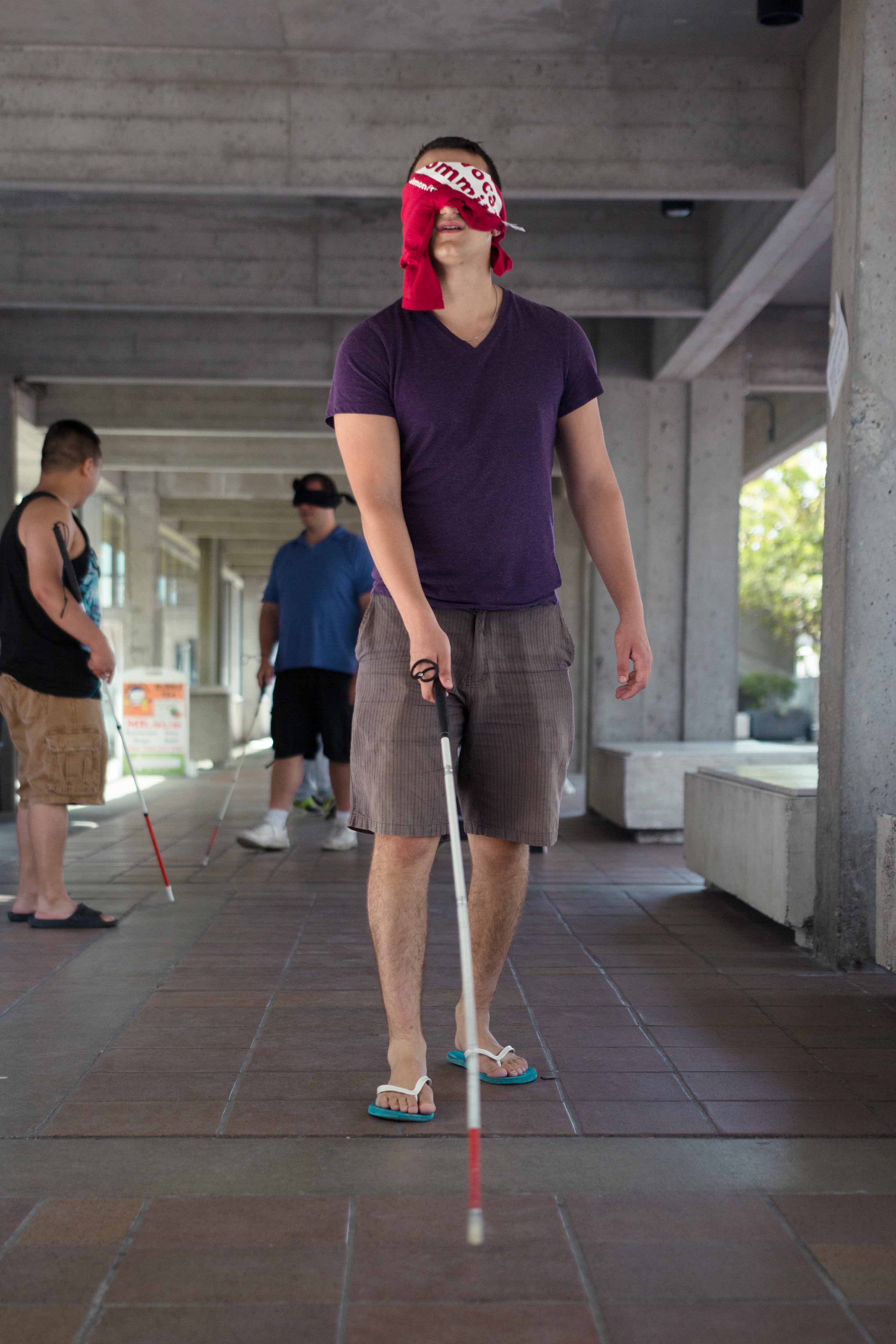
On Thursday, July 17, in conjunction with the SFSS Accessibility Fund Advisory Committee (AFAC), Janolino took four SFSS board of directors members on a similar tour of SFU to experience the various hazards visually impaired persons encounter on campus. The catch? All members of the tour were blindfolded.

Arts and social sciences rep Brady Wallace and health sciences rep Ayla Kooner were blindfolded and assisted by members of The Peak, while at large rep Jeremy Pearce and VP finance Adam Potvin were blindfolded and given canes.

Pearce, who sits on both Students United for Disability Support (SUDS) and AFAC, said of the multitude of hazards, “We were blown away.”

The four, led by Janolino, walked from the Dining Hall to the Renaissance near the bus loop, navigating stairs, uneven tiles, gutters and overhanging trees at head height, and an array of objects such as chairs and tables blocking main paths.

“The way the university was designed almost 50 years ago doesn’t lend itself to [. . .] the needs of [the] student body.” – Mitchell Stoddard, director of the Centre for Students with Disabilities

Halfway through the tour, as Potvin cautiously made his way up the AQ stairs, he said, “There’s a lot of random crooks and corners, I feel like I’ve turned a million times. There’s so many edges.”

Walkways with shifting edges, which are a staple feature at Burnaby campus, were particularly challenging. When visually impaired persons navigate paths, Janolino explained, many use the “shoreline” technique, in which they track their cane along the edge of the walkway. Without an even edge, navigation is hindered.

The four were most concerned when walking across the koi pond bridge. “I’m terrified. This was my biggest fear,” said Pearce, approaching the pond. 

“The AQ pond is a place you can have a lot of trouble with,” explained Janolino. “Blind people who are not as mobile as me, you have to teach them specific skills to get through that [. . .] because the general ways will not protect you getting through that pond. You either avoid all the way or memorize a specific motion to make sure you don’t fall in. And go very, very slowly.”

The four participants took approximately 15 minutes to cross the pond bridge. Wallace and Kooner narrowly avoided falling in, eventually having to crawl across. 

Janolino, who has himself fallen into the koi pond, had previously suggested to the university that they might install tactile tiles, similar to the textured tiles that mark the end of skytrain platforms, which would signal the edge of the pond pathway to visually impaired visitors. However, as of yet, no changes have been made.

The participants reached the end of the walk after an hour and 15 minutes, with minimal scrapes and bruises. Upon removing her blindfold, Kooner exclaimed, “Why do we have water things everywhere?” Wallace echoed her, saying, “Why do we have rocks that come out of the middle of nowhere?”

Potvin and Pearce were left somewhat stunned after the experience, one which Pearce feels everyone should have to go through: “You know that age old saying ‘walk a mile in someone else’s shoes’? [. . .] I would encourage the people in charge of making decisions for the university to go outside and do what we just did, ‘walk a mile in his shoes’ so that they can understand these issues first hand.”

Refusing to turn a blind eye

In an attempt to offer SFU students with disabilities an easier way to report hazards and accessibility issues on campus, SFU’s Accessibility Fund Committee is launching an awareness campaign centered around their feedback form on the SFSS website.

The society hopes that students with accessibility issues will use the feedback form to report issues commonly faced on the Burnaby campus, so that the SFSS can take these issues to the university for consideration.

“Obviously it is a little embarrassing and demeaning to have to come into the [general] office or any office and talk about a problem that you’ve had with our campus,” said Pearce. “So, through this anonymous feedback form, any student would be able to anonymously post whatever accessibility issue they are having on our campus.”

However, SFSS members are confident that changes can be made. “It’s really just a lot of little, simple things that can be done, but need some pushing,” said Potvin.

Although the SFSS is only responsible for society space — namely, within the MBC — Potvin said that the AFAC is hoping to take “more of a lobby stance” throughout the next year. To promote awareness, they plan to host events similar to the blindfolded tour. 

Although SFU president Andrew Petter responded with hesitation to SFSS president Chardaye Bueckert’s invitation to participate on a similar walk, he did say that the university will be following the SFSS’ initiatives closely.

Though it may be a while before students like Janolino can walk across Burnaby campus unimpeded, the steps being taken for visually impaired students bode well for the future.

“It seems as though this year is filled with really proactive people from the SFSS as well as [university representatives] in our school,” Janolino concluded. “It seems as though there’s a bunch of people in different positions right now that could be really essential and pivotal to the situation, that could make it happen this time around.”

Canadian documentary series features SFU professor

0

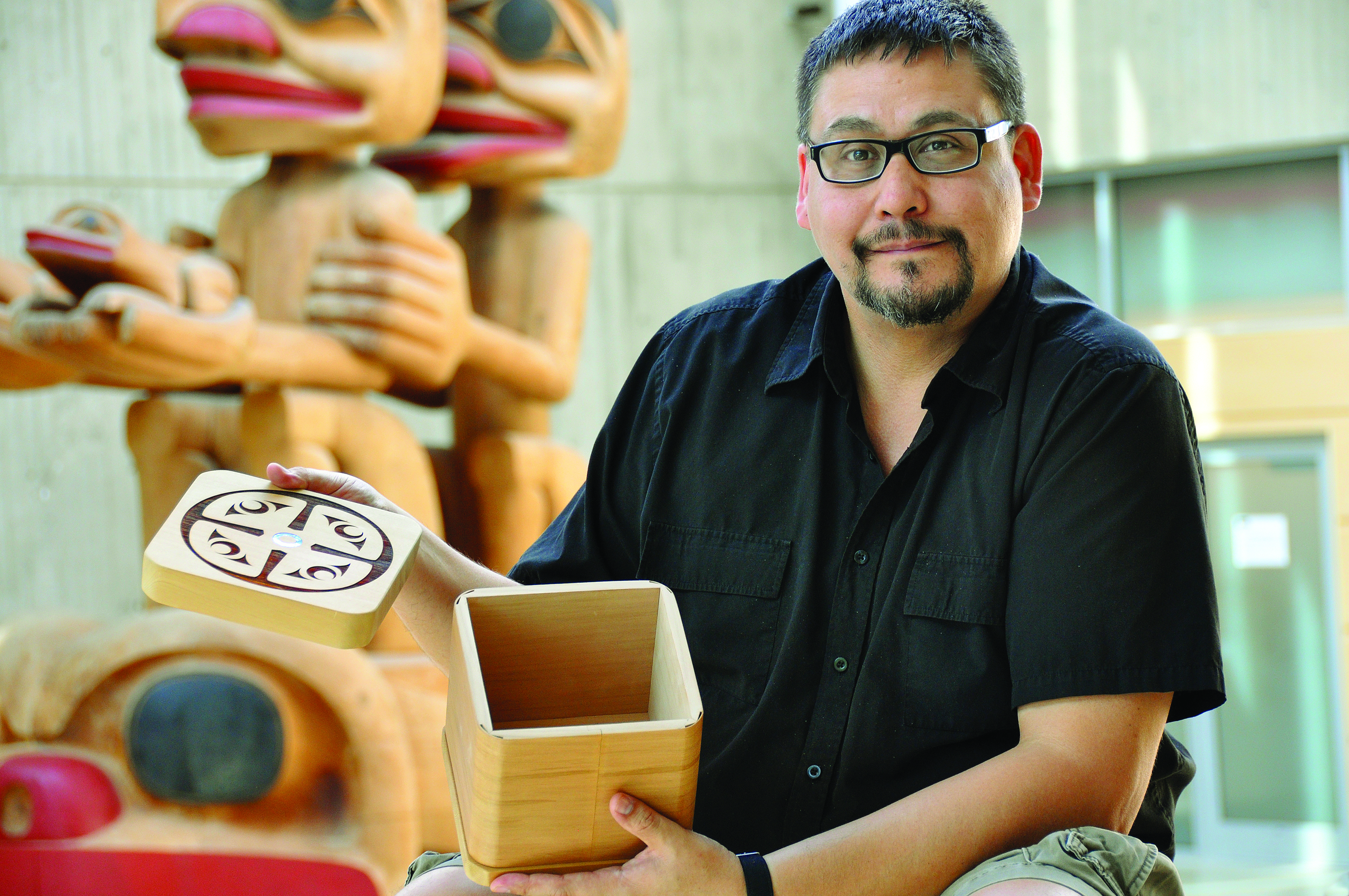
An SFU professor recently returned from Whitehorse, Yukon, where he was on set for the new documentary series, Wild Archaeology, which explores the history of First Nations across Canada.

“We just finished filming two episodes and I love it!” says Rudy Reimer, professor of First Nations studies and archaeology. 

As the host for the new series, he brings with him more than 20 years of experience working in the field of anthropology, archaeology, and First Nations studies.  

Reimer was first introduced to the concept when producer Tracy German contacted him about the idea. He told The Peak that he had always wanted to be involved in a project such as this, and this series sounded like an excellent opportunity to do so.

Wild Archaeology tells the story of archaeology across Canada, region by region, Reimer explains. He feels it is important to create an experience that connects people to the culture, the geography, and the history that exists within the land we live in and the people we live alongside. Reimer also hopes the program will help “dispel many myths that non-First Nations people might have about indigenous cultures that are alive and well.”

According to producer Palefox Pictures, “the series recognizes the importance of consulting and partnering with archaeologists, anthropologists and indigenous studies researchers of Aboriginal origin.” 

The series, set to premiere in 2015/16 on the Aboriginal Peoples Television Network (APTN), takes the audience through an educational and cultural exchange that brings them across the country to active research projects, archaeological sites, and First Nations cultural heritage sites.  

Alongside Reimer are two young First Nations co-hosts, Jacob Pratt and Jenifer Brousseau. Together, the three explore dramatic landscapes within and outside First Nation territories, including the Squamish Nation Territory, locations in Yukon including the White River Nation Territory and the Little John site, Richardson Island in the Arctic, Central Ontario around Lake Huron, and many others.

“What we do as indigenous archaeologists is bring oral history, place names, traditions, and integrate those under cultural understandings into the archaeological records that gives us a much more nuanced understanding of the ancient past,” Reimer explains in the teaser.

The series is different from other television programs in many ways. As Reimer explains, the story is told from the indigenous perspective, with the archaeological analysis conducted by, with, and for the First Nations. The program will also promote real archaeology and First Nations heritage to a large and diverse audience on a national and international level. 

Currently, there is only one 13-episode season which is being filmed in two summers. Because Reimer teaches at SFU during the fall and spring semesters, the break in filming is meant to allow more time, effort, and long-term planning to be put towards working collaboratively with First Nations and archaeologists. 

To quote Palefox Pictures, “Without the support and involvement of Canada’s Aboriginal Peoples, we would not be granted access to vital information, locations, and oral stories required to convey this exciting history.”

Women belong in the boardroom

0

A study by Beedie School of Business professor Judy Zaichkowsky has discovered that when it comes to women in the board room, it only takes one to improve a company’s management ranking.

Previous research suggested that in order for women’s voices to be heard at the board of director’s table, there needed to be at least three women present. However, Zaichkowsky’s research found that one woman was enough to significantly improve company performance, even in male-dominated industries.

Zaichkowsky hypothesized that these positive results occur because, “When you get a woman in there, the men pay a little more attention to details.”

Zaichkowsky first became interested in the topic of women in corporate governance when she became a member of SFU’s Board of Governors. “A lot of times you’ll see something happen and you’ll think, ‘Whose dumb decision was that?’, so you’d like to somehow be in a position to make changes for the better,” she said, laughing.

When The Globe and Mail began ranking corporate governance structures in their annual Board Games segment, curiosity drove Zaichkowsky to ask the question, “Was this score related to the number of women on the board of directors?”

Zaichkowsky explained that, “There is this [existing] body of literature that says for a voice to be heard, you have to be at least a minority. Tokens are rarely heard in a group.” However, the evidence cited in support of this “critical mass” theory either came from an outdated sample or was lacking a substantial statistical basis.

After almost 10 years of research, Zaichkowsky came to a different conclusion. She explained, “What I find is, to make a difference in corporate, you don’t need three [women]. You can make a difference with one.”

In her paper, Zaichkowsky writes that “lone women were said to exhibit a certain pride in being a highly qualified corporate director. They were accustomed to their outsider status and needed no additional support from the presence of members of their own gender group.”

Jim Alampi, CEO of executive leadership firm Alampi & Associates, suggested in an interview with CNBC that these positive results may be attributed to the fact that women are more willing to ask questions and challenge the status quo.

“Even if she doesn’t think of herself as breaking new ground [. . .] she’s going to ask questions men stopped asking years ago or wouldn’t think to ask,” he said.

Some government policies — for example, in Ontario — are still pushing to set quotas based on the “critical mass” theory. Zaichkowsky’s study may change this misconception, suggesting that a lone woman “may be all it takes to provide a better governed and maybe an even more stable company.”

SFU Dining Services lays out plans for new venues

0

SFU Dining Services is exploring the possibility of a new dining venue in Univercity on Burnaby campus, and has been asking students via Twitter and Facebook to complete a survey as to what they would like to see.

The vision for this space is similar to that of the residence Dining Hall, the only 24/7 university dining service in Canada. It would be open 24 hours a day and provide not only students, but the Burnaby Mountain community, with a place to eat, study, and interact socially.

Once public interest and demand has been gauged, a proposal will be put forward to the university for a new dining venue at Cornerstone’s Centre Block, right across from Nesters. If accepted, Dining Services would like to implement this plan by 2017.

Ancillary Services’ executive director, Mark McLaughlin, gave The Peak the scoop on all that the near future holds for dining on the Burnaby campus, starting with a centrally located Jugo Juice to open this September.

There are currently 3,500 residents on campus and that figure is expected to increase to 10,000 in the long-term. McLaughlin explained that as the SFU population grows, its dining services will need to grow as well.

The next change that the SFU community can expect is a new food court at Discovery 1. This extension is expected to open January, 2015. Both this location and the potential space in Univercity would be rolled into SFU’s meal plan, which serves students in residence and even some commuters.

McLaughlin explained some of the overarching goals for these plans: “Our vision for Dining Services is to create engaging, trendy, popular spaces where students can study, hang out, make friends, [. . . and] to drive up the school spirit and break down some of the social isolation.”

He believes that there’s a great need for such a space in Univercity, which is home to students, faculty, and independent families. “There’s no space for the community and the students to come gather,” said McLaughlin.

The more specific details of the proposal for the Centre Block space will be worked out after the consultation process ends on July 31. The online survey asks about dining habits, frequented locations on campus, and the need for a meal plan among other things.

“It’s a really exciting project. We’re trying to create social spaces for students, places where students can engage each other,” McLaughlin continued. “It’s still in the planning phases. We’re just sort of planning and testing the water and we’ll see what the reaction is. So far, the reaction has been pretty positive I think.”

No, #NotAllMen

21

14090438714_2c1db12993_o

Oftentimes, the best course of action when faced with a topic that explodes in social or traditional media circles is to step back and examine it from afar. This has become difficult in the era of the ‘hot take,’ where the desire for instant gratification and analysis informs nearly every aspect of life, particularly media cycles. As such, the initial opinion formed — however incorrect — forms a lasting impression which becomes nearly impossible to avoid.

Given that preamble, you may believe that Eliot Rodger’s murderous rampage in Isla Vista was borne from a systematic, even institutionalized, male hatred of women. Never mind the fact that most of Rodger’s victims were members of his own gender; the image seared into our collective conscious is that of a highly disturbed individual espousing a deep-seated hatred of women, ensconced in his privileged mentality and repeated sexual rejection.

But to assess Rodger’s ramblings as an astute dissection of human nature and pan-male behaviour is to afford it way too much credit — this is an oversimplification as damaging to gender discussions as Rodger’s own arguments.

Rodger was not a scholar of gender theory; nor was he a worldly, educated person immersed in a wide range of cultural viewpoints. He was a freewheeling sociopath, whose central thesis was qualitatively obtuse and inconsistent with his actions. But that same thesis grated on the edges of a bundle of raw nerves, and was seized upon to build a strawman argument while the families of his victims wept on the six o’clock news.

What has become apparent is that most feminists are unwilling to be inclusive.

It was easy, especially at first, to get caught up in the stunning tide of the #YesAllWomen discussion. As a heterosexual male, I have no idea what it is like to be a woman. I have no idea of what it is like to be gratuitously objectified or made to feel uncomfortable or cornered in society’s fringes. I cannot truly empathize because I cannot truly relate, and I do not want to sympathize because that approach is, to me, belittling and patronizing. 

However, I believe that it is important to be inclusive in terms of discussion, as communication and education are powerful tools. Opening one’s mind to learn and appreciate and understand is a constructive pathway that facilitates resolution. But what has become apparent is that most women — at least those who advocate feminist theory — are unwilling to be inclusive. 

No, I do not think that “all feminists hate men,” an oft-repeated yet utterly idiotic argument seized upon by many Men’s Rights Activists. But I do think that too many feminists are unwilling to engage men in their discussions.

Perhaps the most egregiously false assumption made by numerous feminists is that ‘\”sexism” — a loaded gun catch-all accusation — flows unidirectionally from men towards women. This assumption undermines the efforts of women’s rights groups, and acts deconstructively to reinforce barriers within a gendered society; it is a flashpoint us-or-them argument that debilitates open discussion and is, frankly, pretty smug.

#YesAllWomen was borne from the same well-intentioned wellspring as #NotAllMen, before the latter was hijacked by MRA zealots. No, Not All Men are psychopathic deviants who enact sexual violence on women. No, Not All Men have their heads buried in the sand over the progression of gender norms. No, Not All Men harbour a hatred of women that leads them to murder.

Not All Men are Elliot Rodger, just as Not All Men are Ted Bundy or Jeffrey Dahmer. 

It is clearly illustrated by the stories of women whose tales of abuse and violence and fear were shared through the Yes All Women hashtag that, while Not All Men are psychopaths hiding under a cloak of benign behaviour, some are. But to automatically qualify all men as a ‘potential threat’ is patently ridiculous.

If this were reversed, then Yes All Men should feel terrified of leaving their wives or girlfriends home with their children, because they might drown them in bathtub à la Andrea Yates. It is a leap of logic so strenuous that you would need serious stretching in advance to prevent blowing a hamstring.

According to the blog Finally, A Feminism 101, men are incapable of being discriminated against. Similarly, feminist ideas of sexism and patriarchy repeatedly refute the idea of reverse sexism, i.e. sexism directed towards men. In this view, men cannot experience sexism because, ancestrally and historically, we have enjoyed nothing but power.

This is ridiculous. In essence, feminists have labeled being born a heterosexual cis-male a crime — a crime of existence. I cannot choose who I am, nor what I am, any more so than I can choose what freedoms and benefits my ancestors enjoyed. I cannot speak for them, and I am not responsible for their decisions or reasoning. I am me, in the present day, and I want to talk.

The gross assumption that all men are predators and therefore cannot play a part in the revolution is absurd. The civil rights movement was abetted by whites who championed those causes. The same can be said, in part, of the gay rights movement.

Yes, all women struggle with a patriarchal society that establishes certain behaviours as norms. But the term “women” is generally inclusive of all women, irrespective of sexual preference or race or upbringing. This broad scope facilitates inclusion. The same broad scope when turned towards men, however, only facilitates conflict.

As Courtney Enlow of Pajiba.com tweeted in response to a #YesAllPeople counter-trend, “We don’t have to try so hard to make ourselves male-friendly or male-inclusive. It’s OK for us to focus on the us part of equality.” Hers is a lovely sentiment. But how can we be expected, as cis-males blinded by our apparent privilege, to become better educated or aid in change when we are greeted with a “No Boys Allowed” sign on the clubhouse door?

This is not about agitation, or labelling feminists sexist. It is about the process of reconciliation and healing. All too often, there is a strict yes or no mentality when it comes to diplomacy, which only sends us deeper down the rabbit hole. Feminists: Stop. Engage. You just might be surprised.

[Editor’s note: see a letter responding to this article here: http://159.203.128.194/2014/08/re-no-notallmen/]

The Winter’s Tale is classic Shakespeare with a twist

0

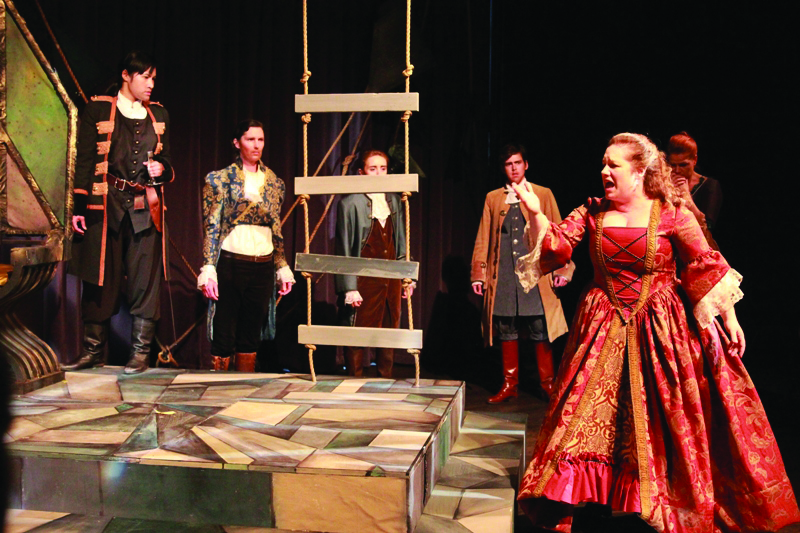
CMYK-Officer, Alchemist, Cleomenes, Dion, Emilia and Paulina (Donna Soares, Julia Siedlanowska, Jalen Saip, Joanna Redfern, Christina Wells Campbell) - photo Gaelan Beatty  sized

With summer in full swing, there are several Shakespearean productions that are being brought to life onstage. The Winter’s Tale is one such play that has been beautifully re-imagined by director Lisa Wolpe of Classic Chic productions, a company that is founded on the notion of creating a platform for women to explore great roles and opportunities in the acting world. 

Thus, this production of The Winter’s Tale features an all-female cast. The tale is unique in that it features a range of the story elements that the bard does best: his classic dark tragedy as well as some lighthearted comedy are incorporated into one of his most fascinating problem plays.  

The play is set in two separate locations with comedic scenes in the land of Bohemia transitioning into the darker events that take place in the land of Sicilia. The story centers around the insecurities of King Leontes of Sicilia, who becomes convinced that his wife Hermione is having an affair with his best friend, King Polixenes of Bohemia. Leontes’ jealousy manifests itself in his leadership with devastating results. 

Featuring swordplay, tyrants, dancing, and song, the production also has women cast in authoritative male roles. Corina Akeson plays the starring role of Leontes, the jealous tyrant who is held in a tight grip by his insecurities. 

She says of the play’s premise, “The themes of the play are very current. It deals with the issues of the general energy of male against female, and how a feminine divine energy is expressed in life. It also questions how they function against each other, or with each other, and what the repercussions of that are in society in general.” 

The play also provides opportunities for women to play “beautifully defined, strong, classic roles [. . . with] everything from clowns to kings,” according to director Lisa Wolpe. Seeing such a dynamic story performed by an all female cast is a rare one, especially considering the historical context of all characters in Shakespeare’s plays being performed by men, as it was once illegal for women to perform on a stage. 

Akeson echoes Wolpe’s sentiments and says of the all-female ensemble, “I think that this [play] gives women several opportunities in the field, both onstage and offstage.” 

The poetic language of Shakespeare, while eloquent and beautiful, is not easily understood by modern day audiences. “We have become such a monosyllabic society,” says Akeson, “but the human heart is still full of poetry. There is imagery in Shakespearean language. When people watch our performance, our bodies will be telling the story and effectively opening the portal to that language. “

Indeed, the vibrancy of this performance of The Winter’s Tale cannot be compared to a reading of Shakespearean works within a classroom setting. Rather, the bard’s work will come to life through the performances of a unique and talented cast. Akeson encourages people in the community to watch the play as she says, “If we continue to watch and support Shakespeare, we can make sure that his art form doesn’t die.”

 The Winter’s Tale will be presented by Classic Chic productions at the PAL Studio Theatre July 26 to August 9. For more information, visit palstudiotheatre.com.

Looking on the bright side

10

I believe in the power of positive thinking.

Before you discount this article as some mumbo jumbo about new age meditation, let me explain. You may have heard that if you just think positively, you will achieve your goals or get what you want. I don’t exactly believe that, but I think that keeping a positive attitude and believing that you will succeed will get you much farther in the right direction.

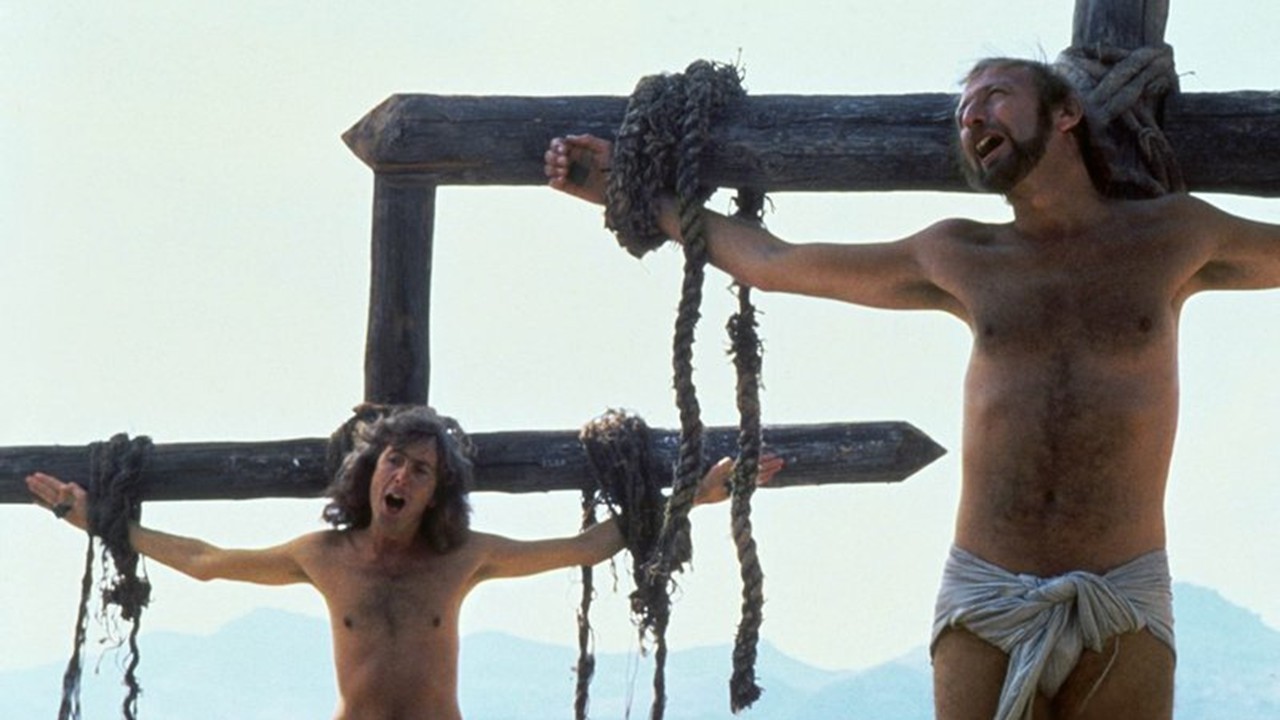
I’ve always been an optimist, and, in general, things tend to go my way. It’s not that bad things never happen to me, but when they do, I think having a positive attitude is extremely important. While watching the Monty Python cast sing “Always Look on the Bright Side of Life” during their reunion show live from London last weekend, I was inspired to expand on these ideas.

Looking on the bright side means being able to see the positive aspect of any outcome. For example, last week it took me three hours to get home by bus when the Skytrain stopped running. Instead of being grumpy the whole way home, I accepted it and used the time to relax and chat with other people who were in the same position. Even in situations that seem completely hopeless, there is almost always something positive.

Being led down a different path in life could turn out better than you expect.

Rejection is another thing that can be turned into something positive with the right attitude. When I first came to SFU, I auditioned to be part of the School of Contemporary Arts’ dance program. When I didn’t get in, I tried not to dwell on that rejection. Eventually, I ended up studying something else that I found incredibly rewarding. If you approach life with the attitude that things are meant to happen for a reason, you will be less devastated when they don’t turn out a certain way.

I have also found that a positive attitude leads to more positive outcomes. I’m not sure if there is any proof of this, but I believe that patients who stay positive and think they will get better actually help their body to do so. I am convinced this helped my mom when she was fighting cancer.

In a similar way, thinking you will succeed at anything will increase your chances of doing so, as you are guided by positive energy on the way there.

I don’t want to imply that you shouldn’t put effort into getting what you want, but a balanced approach of your best effort and a positive attitude will lead to happiness. Putting your mind to something and wanting it badly is important, and by doing this you will always get much closer to your goal than if you assume you can never reach it. At the same time, it’s important to remember that if your original plan isn’t successful, it means that you are being led down a different path in life. And this path will probably be better than you ever expected.

I guess what I’m trying to say is this: always look on the bright side of life. In the words of Monty Python: “When you’re chewing on life’s gristle / don’t grumble, give a whistle!”

Have a good sense of humour, don’t take yourself too seriously, and always look for the positive aspect of any situation. This will help you lead a happier, more productive life. And if that doesn’t work, just turn on some Monty Python.


Patients need to come first

2

Doctors are not slaves — they have rights, freedoms, and opinions just like anyone else. But they don’t have the right to deny care to patients in need. It is simply not the responsibility of the doctor to decide what is and is not an ‘urgent’ and necessary treatment.

Last month at a walk-in clinic in Calgary, a young women was told the physician on duty would not prescribe her the birth control pills she needed. While this treatment may not be a ‘life threatening’ one, the patient had decided it was essential for her all the same. Not many of us have time to drop by multiple clinics or come back a different day.

One of the reasons I love this country is knowing that if I needed medical attention, I would get it, no questions asked. But the policy review of the College of Physicians and Surgeons of Ontario may change that. Canadians need to feel safe in the system. No one should worry they will be turned away or judged by their healthcare professional.

Last week’s article mentioned that referrals would be issued explaining why patients were being refused care, and how, according to Carolyn McLeod, that would some how ease the humiliation. Well, according to Kate Desjardins — a young women who was given one of these letters in the middle of a busy walk-in clinic — it doesn’t.

If a doctor truly can’t do their job because of personal beliefs, then what attracted them to the public sector? 

As she rightly says, a piece of paper doesn’t make the walk out the door in front of a group of people any more comforting. Having a doctor explain to you that they will not help you because of moral reasoning and leave you nothing but a referral will only make patients feel embarrassed and vulnerable. Is that really how the system should work?

According to the Vancouver Division of Family Practice, there are 100,000 people living in Vancouver who do not have a family doctor. That is 100,000 people relying on walk-in clinics to service their medical needs. Many of these people are currently searching for family doctors, says the Vancouver Division of Family Practice, but will have no luck.

The sad reality is that there are not enough doctors to go around; the demand has surpassed the number of available physicians. One of the disadvantages of walk-in clinics is that you never know which doctor will be available to care for you. What this means for the ‘moral’ debate is simple: doctors need to care for whomever walks in their door. The system is already stretched thin, so why create more barriers for patients?

Canada’s medical professionals who, after all, work in a publicly funded system, should put the patient first in order to guarantee timely and comprehensive care for any patient in need. Police don’t choose whom they protect and teachers don’t handpick their students — doctors have the right to an opinion, but a responsibility to the patient.

Instead of getting mixed up in the ambiguous philosophical debate, people should focus on what is practical. And if you ask me, small inconsistencies throughout the system that make it difficult for patients to predict whether they will be cared for is neither practical nor ideal. If a doctor truly can’t do their job because of personal beliefs, then what attracted them to the public sector?

Until there are enough family doctors available, and everyone has the opportunity to select a medical professional who best aligns with their values, it is unreasonable to divide the system and open the door to possible discrimination, humiliation, inadequate care, and untimely services.


Eight reasons to look forward to fall

0

James McAvoy and Jessica Chastain filming in New York

1) Before I Go To Sleep– September 12

Featuring Nicole Kidman and Colin Firth, Before I Go To Sleep tells the story of Christine, who can’t remember who she is or anything about her past each morning when she wakes. With the help of her husband, journals, video diaries, and her doctor, she goes through the process of finding herself each day. Until the accident that caused her memory loss just doesn’t seem to add up… 

2) The Skeleton Twins  – September 19

Estranged twins, played by Saturday Night Live alums Kristen Wiig and Bill Hader, cheat death on the exact same day, and decide to try to fix their relationship. The Skeleton Twins is sure to be full of laughter and sweet sibling bonding moments. 

3) The Disappearance of Eleanor Rigby  – September 26

Featuring Jessica Chastain and James McAvoy, The Disappearance of Eleanor Rigby was created uniquely as a set of three separate yet interrelated films. “Them” will be coming out in theaters this year. “Him” and “Her” were screened last year at film festivals. All three tell the story of a relationship break down following a tragedy, from their different perspectives. 

4) Left Behind – October 3

The latest in our line of end of the world films, Left Behind is based on the series of the same title. It stars Nicholas Cage and Chad Michael Murray as some of the people who are left behind once a large population of the world suddenly vanishes, leaving destruction in their wake. 

5) The Best of Me – October 17

The newest in Nicholas Sparks’ line of romantic books turned into movies takes place in two timelines 20 years apart. High school sweethearts Amanda and Dawson are reunited when they are both visiting their hometown, only to realize they haven’t lost their high school love. The Best of Me stars Michelle Monaghan, Liana Liberato and James Marsden. 

6) Interstellar – November 7

Director Christopher Nolan’s latest, Interstellar, is a dystopian space adventure featuring Matthew McConaughey, Jessica Chastain and Anne Hathaway. In a catastrophic future, astronauts discover a wormhole they believe may lead to saving the fate of mankind. 

7) Foxcatcher – November 14

Foxcatcher follows the tragic true story of wrestling brothers Mark and Dave Schultz and their Olympic trainer, John du Pont. Starring Channing Tatum, Mark Rufalo, and Steve Carrel, this sports thriller already has Oscar buzz surrounding it. 

8) The Imitation Game – November 21

With everyone’s favourite Sherlock, Benedict Cumberbatch, and Kiera Knightly, this biographical drama is sure to be popular this fall. The Imitation Game follows English logician Alan Turing, who races against the clock to crack the Enigma code, which transmitted secret enemy messages, during World War II. 

Moonlight magic in the south of France

0

CMYK-Magic in the moonlight

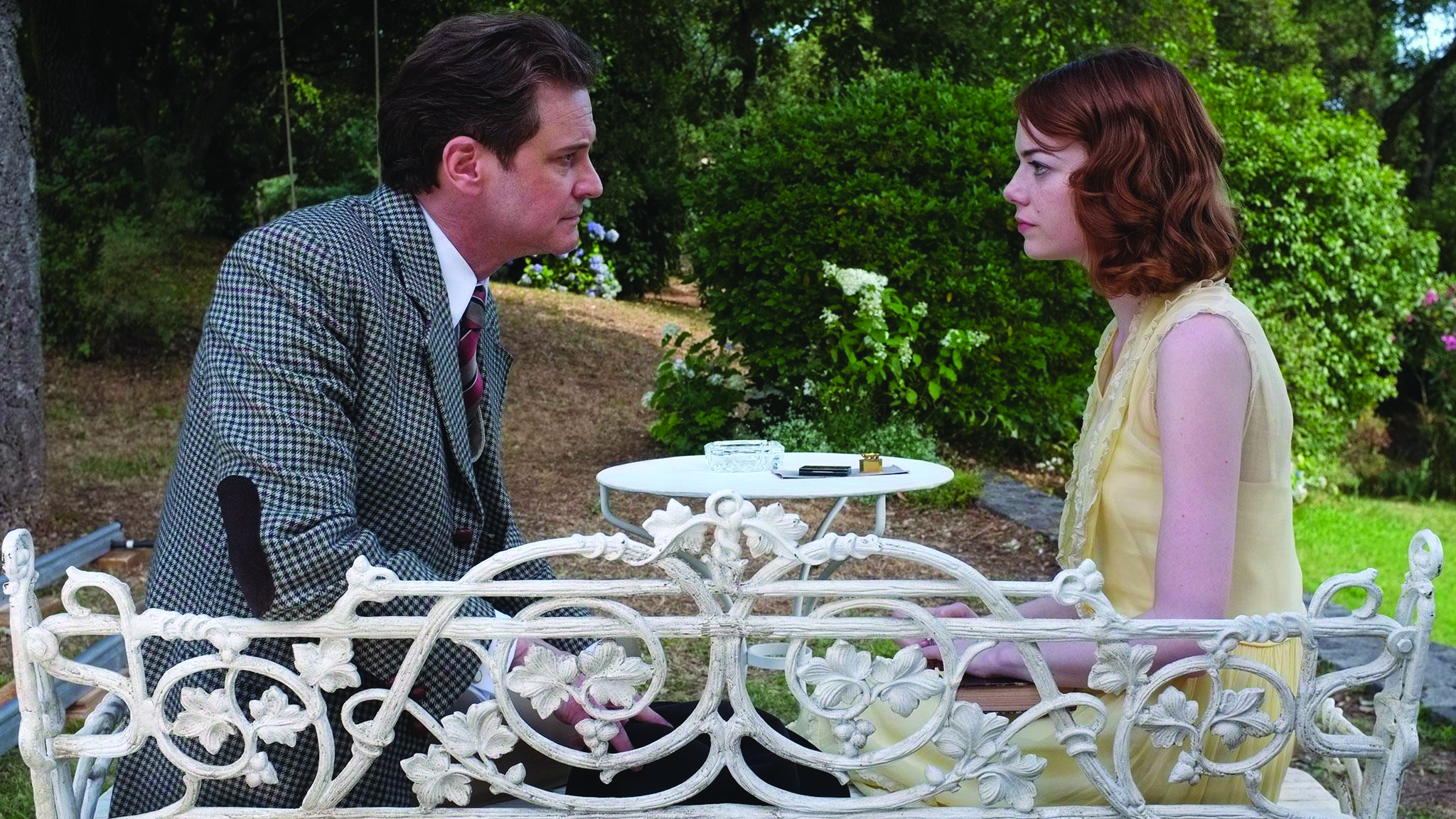
Woody Allen’s fascination with France in the 1920’s seems far from over. While in Midnight in Paris, Owen Wilson’s character travels back and forth between present-day Paris and the Paris of the Jazz Age, Magic in the Moonlight is set in the south of France during the late 20’s. The experience of watching Magic in the Moonlight is in some ways similar to that of Midnight in Paris: there is a lot of jazz music, Gatsby-like costumes, and a picturesque French setting.

While the visual experience of the two films may be similar, Allen presents a very different and — as with most of his other films — original story in Magic in the Moonlight, offering a welcoming respite from the summer blockbuster films that often regurgitate familiar storylines.

Stanley (Colin Firth), a renowned illusionist and a rigid rationalist, travels to the south of France to expose a spirit medium named Sophie (Emma Stone) at the request of a magician friend. While Stanley is initially certain that Sophie, like all other people who claim to be spiritualists, is a fraud, he soon finds himself believing that her gift is real and begins to question his own worldview. 

One intriguing aspect of the film is its constant juxtaposition of spirituality and logic. It seems to ask if it is worthwhile to be an unbending rationalist if that leads to a hopeless, pessimistic life, or if it is better to live a more meaningful life as a spiritualist, even if it means that we may have to believe in illusions. 

While Magic in the Moonlight raises these thought-provoking questions, it also oversimplifies the spirituality versus rationality debate. Yet, that may be intentional on Allen’s part. The film is filled with humour (it is supposed to be a romantic comedy after all), thus the very questions that it raises are perhaps not to be taken all that seriously.

 If there is anything close to magical in the film, then it is the performances by the lead actors. Emma Stone handles the theatrical, stereotypical character of a spirit medium nicely without making it seem ridiculous. 

 Colin Firth is brilliant as an arrogant rationalist. There are several moments in the film that showcase his talent, one of which is a conversation that his character has with his aunt near the end of the film. In the scene, Firth effectively juggles the various contradictions of Stanley’s character such as his wittiness, his ego, his rigid rationalism, and also his growing desire to heed something other than logical thought.     

While it may not be absolutely magical, Magic in the Moonlight is still entertaining to watch. Fans of Woody Allen will not be disappointed with this film, as it possesses the aesthetic feel that is unique to Allen’s work blended with some impressive acting and several amusing moments.