Home Blog Page 1144

Q&A with SFU author Eve Lazarus

0

eve headshot princess park web

Eve Lazarus, a published author and freelance writer, was born in Australia but calls Vancouver home. She earned her BA from SFU originally studying business, but switched to a major in communication, and also has a certificate in journalism from Langara College. Lazarus has worked in journalism and corporate communications for more than 20 years and has a passion for local history and heritage.

Her fifth book, Sensational Vancouver, focuses on the seedy underbelly of Vancouver, during the first half of the 20th century. The book launch will be later this summer, hopefully at the Vancouver Police Museum, and she will also be at Word Vancouver in September. Lazarus also blogs about the stories behind local buildings at Every Place has a Story.

The Peak: How did you get involved in local and provincial history and heritage?

Eve Lazarus: I fell in love with the idea that a house has a social history or a genealogy much like a person and I wanted to tell the stories of the house. I found that the stories that really fascinated me were the ones that weren’t in traditional history books — stories about rum runners and bootleggers and brothels and murders. I also discovered some really amazing women that most people never had the chance to hear about, and I wanted to change that.

Writing about history for me is all about the thrill of the chase. It’s about uncovering connections, it’s finding descendants of people who lived a century or more ago to tell you their stories, and it’s finding that nugget of information that no one knew was there.

I served on the District of North Vancouver’s heritage commission for four years, and part of the reason I write what I do is I hope that by telling the stories behind some of our old homes, we’ll be more inclined to save them.

P: Besides local history, what other topics are you drawn to as a writer?

EL: Women and murder. My next book is about unsolved murders in Vancouver. I also love writing about some of the amazing women that have carved out or are carving out their place in history and helping to change our world — most of whom have received little, if any, attention.

P: Can you tell me about your latest book, Sensational Vancouver (Anvil Press, 2014)?

EL: Sensational Vancouver is a fully illustrated popular history book about Vancouver’s famous and infamous filtered through the houses in which they lived. In many ways it’s a sequel to At Home with History: The Untold Secrets of Greater Vancouver’s Heritage Homes published in 2007, but in Sensational Vancouver I’ve organized the book into themes and told the story of Vancouver’s seedier history through real characters such as Joe Ricci, a kick-arse detective who joined the Vancouver Police Department in 1912, Lurancy Harris, the first woman police officer hired in Canada to patrol the high-end brothels, and Ray Munro, a reporter who brought down the corrupt chief of police in the 1950s.

It’s not all about Vancouver’s underbelly though, I’ve also written a chapter called a Century of Entertainment that includes Bryan Adams through his Gastown warehouse, Michael Buble and his childhood home, a chapter on legendary women and a chapter on West Coast architecture.

We’ve also included a map of the DTES, Strathcona, and Chinatown with the buildings that appear in the book. I’m hoping people will use it to go down there and really take a hard look at some of these buildings that formed a part of our history.

P: What is your writing and research process like?

EL: As far as research, I spend a great deal of my life at the Vancouver Archives, at Special Collections in the Vancouver Public Library and at their 5th floor microfilm, at the Vancouver Police Museum and finding and interviewing as many people that are connected to the homes and the characters as possible. For instance I found Joe Ricci’s daughter, now in her 80s, living in the house her father built in 1922. She was able to tell me tons of stories, loan me photographs for the book and boxes of newspaper clippings and letters that she’d saved.

Highest number of contraband cigarettes in BC found at SFU

0

WEB - cigarettes - SebastianA recent study conducted by the Western Convenience Store Association (WCSA) found that 17.2 per cent of cigarette butts collected in BC contained contraband tobacco, which refers to any tobacco that enters the country illegally, or cigarettes from untaxed or counterfeit brands.

The number one hot spot in the province for contraband cigarette smokers was a smoking pit at SFU, where they found that 51.6 per cent of the cigarettes were contraband.

In a province which has the highest compliancy rate for youth smoking in the nation, these statistics complicate combating underage smoking for Andrew Klukas, president of the WCSA.

Klukas explained the origin of these products: “Usually [contraband tobacco products] come from two sources: one is central Canada. [The] RCMP tells us that a lot of the contraband is found in Canada — it’s smuggled from the US from an area near Cornwall, Ontario that sits right on the border of New York and interior Quebec and it makes the perfect entry point for smugglers.”

The second source is here on the west coast. Klukas said, “BC is kind of unique because we’re right next to Asia. There are foreign products manufactured in Asia and they too shouldn’t be sold in Canada; they’re not taxed but they will appear here in a fair amount because we’re exposed to that.”

In the study, cigarette butts were taken from the ground and ashtrays, then shipped to Montreal for analysis. Legal cigarette butts have brand marks while the illegal ones don’t, so they are easily distinguished. Others are branded, but these are noticeably foreign or native brands that haven’t been taxed. Tobacco made on reserves in Ontario is not taxed, and while it is legal in Ontario, it is illegal in other provinces.

“It’s not very glamorous work, I’ll tell you,” Klukas laughed. “Sometimes [researchers] get hassled, but they’re very hands on, and what you see is what you get.”

For the WCSA, this study raises concerns over the issue of youth smoking. Age testing in convenience stores has shown that BC has an over 93 per cent percent compliancy rate, which is the highest in Canada. The tests are done by sending underage customers into stores to see if they are able to purchase cigarettes.

With contraband tobacco, however, underage customers are much more likely to be able to obtain tobacco products. “Contraband stuff is not subject to age testing, people selling it out of the back of their trunk or wherever they sell it are not asking for age. Often there are no warning labels, it’s stuff just sold in baggies and they’re really cheap so kids can get access. That undermines all of the efforts to prevent youth access to tobacco,” Klukas said.

With a 51 per cent contraband level at SFU and a 0 per cent level found in Kelowna, it raises the question of why this school is using illegal products more than half of the time.

“That was a real surprise to us but I suspect that it [occurs] if people go to school and they smoke, and university students are really good communicators and they don’t have a lot of money,” Klukas laughed, “So if someone says ‘Hey I can get pretty good quality smokes from over there for 50 bucks a carton,’ then word gets around.”

Choose life, not your cell phone

0

WEB-Cellphone-Nurzhan Kabdrakhman

Would you risk your life for your cell phone? I wouldn’t, but there are those who would.

American media website CNET reported July 20 that a woman from Houston, Texas had a mugger threaten to shoot her on the street if she did not surrender her cell phone. When the woman refused she then crouched to the ground in preparation for the bullet. The man shot and just grazed the woman’s head before she ran to her friend’s house to escape.

It saddens me that people are both willing to kill and be killed for a small electronic device.

I understand that many may initially find this a tough choice. A cell phone could almost literally contain someone’s soul. There are pictures, videos, passwords, and deeply personal information stored on them, information that is permanent and not locked away in the safe haven of our minds. With all these thoughts we’ve filtered out through our fingers, some people may choose death over exposing their personal or even embarrassing self, such as the lady in the news report.

These concepts can even be applied to a broader scale. In some impoverished countries there are people who designate most of their money to maintaining a cell phone rather than to their own families.

I would have taken alternative routes to saving my information, and immediately realize that it’s just a cell phone.

A couple years back I travelled to Sao Paulo, Brazil, where I visited a couple of Brazilian slums, known as favelas. Knowing that technology is expensive in this city, I was shocked to realize that many people in these impoverished communities owned and maintained monthly cell phones, but could barely afford homes, or provide for their families.

“They really don’t need cell phones,” my Brazilian friend claimed. “They just choose to put what little money they have toward them.”

We must remind ourselves that our lives — our real lives — do not live in our technology. In an instance where one must choose between life and death over a cell phone, if one chooses death, technology has won that person over. The second, intangible self has become more important.

As beings who create technology, we must pride ourselves on maintaining dominance over it. And as much as I hate to say it, this means surrendering the cell phone, whether to a mugger, to live a healthier life, or in any other circumstance.

Heck, with the way our society has become so digitally-dependent, we would probably all take bullets for our technology if given the ultimatum!

Seriously, if I found myself in this woman’s shoes, I would have gladly surrendered my phone. Yes, there are personal conversations and information that I would not want others to witness, but in the end I would have taken alternative routes to saving my information, and immediately realize that it’s just a cell phone.

So, take a good look at your device. Would you be willing to die for it? Do you have deeply personal information on it that would influence this decision? Perhaps we should be finding alternative ways to express personal feelings or to store invaluable information, rather than putting it all into the digital system. Letters on paper or a face-to-face conversation may be more ideal.

Give the mugger the phone, and think about what really matters.

Halving the Orange lacks emotional punch

0

HalvingTheOrangeCover200x300

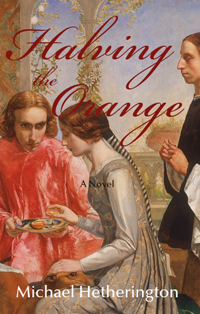
In Halving the Orange, Michael Hetherington forges a universe in which SFU’s medieval studies program is not a small rump, but instead bolstered by quirky, world-renowned, (and unfortunately fictional) Allenbeigh College. Amidst the seemingly idyllic academic environment, however, are the seeds for conspiracy, drama, and intrigue which slowly become more apparent as the plot progresses.

While Hetherington flips back and forth between over half a dozen different viewpoint characters, the bulk of the novel follows the journey of Isabella Allenbeigh, daughter of the college’s founders. Raised completely inside its walls, she is kept cloistered by fear of the outside and devotion to her parents’ wishes for her insulation. The crux of the novel’s plot revolves around Isabella’s deliberation about whether or not to challenge this status quo. These deliberations amount to an incredibly taxing personal struggle, intended to be emotionally evocative.

Yet Halving the Orange is not Isabella’s tale alone. Her story is complimented by a range of characters including her patriarchal father Richard, the wayward Malcolm, the mysterious Filbert, and even a flashback to the perspective of her deceased mother. One thing that shapes nearly all the characters, though, is their academic environment and association with the focused study of Allenbeigh College.

Many of the characters express anxieties and obsessions that we students should find all too familiar — worries about job prospects, enthusiasm for obscure books, and fixation on each other’s educational pedigree. Perhaps the greatest strength of Hetherington’s work is his ability to realize his characters distractions by mundane mental meanderings that readers like us will surely emphasize with.

Unfortunately, the ability of the characters to come to life on the pages of this book is greatly hampered by his narrators’ indistinctive voices. Each seems to approach the world in a matter-of-fact way. Dialogue and internal monologues alike seem to be more reminiscent of a technical manual than vibrant living beings, bubbling with emotion.

For example, when the gardener, Gregory is faced with an unsettling proposition, Hetherington writes: “He thought more about his predicament. He was not certain he would consider himself in a predicament, but that was the way he felt.  He had to be careful how much he disclosed.”

If one is to pick Hetherington’s chief literary sin, though, it is that he violates the sacred authors’ adage of ‘show, don’t tell.’ Indeed he has the subtlety of a rhinoceros, seeming to have absolutely no confidence in his audience to pick together anything on its own or draw the most basic conclusions. Every plot turn and character attribute seems to be directly explained, re-explained, and then re-re-explained once again.

Another deeply disappointing aspect of Halving the Orange is simply the prose itself, which is as flowery as a dry tumbleweed. Hetherington, with his three university degrees from two top-notch schools (as well as UBC), seems to bear the curse of an academic writing tradition that values concise clarity over any measure of confusion or floridity. This greatly undermines the ability for the story and characters to truly come alive on a visceral level.

The advantage of Hetherington’s style affords the reader a great deal of clarity. I do not think I was left confused about what was happening at any point in the book, despite the somewhat convoluted plot. While I believe Halving the Orange lacks the emotional punch Hetherington aspires to, anyone who opts to pick up a copy can fully expect to read something that is both complex and coherent.

Losing the Abbotsford Heat

1

Abby Heat - Mike Ivall Flickr

Did you know that there were two professional hockey teams in the Greater Vancouver region? Unfortunately, the key word here is “were.”

In addition to our NHL team, the Vancouver Canucks, there used to be an American Hockey League (AHL) team, the Abbotsford Heat. The AHL is a lower-tiered professional league that serves as a farm team. This is where either young players develop or where players who don’t quite cut it in the NHL play.

The Heat, who came to Abbotsford in 2009, served as a farm team to the Calgary Flames, which meant that fans got to see future NHL players rise to the Flames, like Sven Baertschi and Max Reinhart.

However, the team suffered from low attendance and presumably didn’t make too much money. On weekends, the attendance was pretty pitiful, and it was easy to shuffle from your lower priced seats to empty rink-side ones. I don’t even want to know how empty a weeknight must have been.

I understand why tickets didn’t sell.

To start with, they were the Calgary Flames’ farm team in Vancouver territory. I can’t imagine any Canucks fan liking the Flames. As a matter of fact, they are my least favourite team (aside from the Bruins, that is).

I would guess most don’t want to venture to Abbotsford to catch a game.

This may be a bit harsh, but I would wager that my sentiments are hardly unique. The players are being groomed to face the Canucks, a thing most fans would (an-’ould cheer for a team that wears, essentially, Flames jerseys? It doesn’t help that those jerseys are nearly identical to the Flames’, with matching colour schemes right down to the Flames’ unique shoulder flag crests.

It should be noted the few games that really did sell were those against the Canucks’ farm team — proof, perhaps, that being associated with the Flames probably hurt their sales.

However, it’s not all on the fact that the two teams are essentially the same. Location probably didn’t help too much either. Abbotsford is just not a good enough location for a pro team. It’s very small, and I would guess that most people don’t want to venture that far away to catch a game.

In the last few games, even the Utica Comets (the Canucks’ new AHL affiliates) did not draw that many people to the Heat. That’s the writing on the wall: if the Canucks can’t draw in fans, no one can.

Finally, Abbotsford was the only AHL team on the West Coast with the rest of the teams located in the east. This has no impact on the fans, but it may hinder player development, with extra travel time and odd schedules to accommodate.

You’re probably thinking I had some grudge against the Heat, but I loved going to games. They had cheap tickets (hovering around $20), cheap concession foods, along with an entertaining, high-level game to watch. Plus, they displayed the prospects of both the Flames and whoever they faced.

Sure, I cheered against them each time. I hate to say it, but with them gone, I find myself sentimental for the Flames. It’s no doubt the Heat will be missed.

(A)side jab: This year the Canucks actually have some prospects to watch on their farm team, and now the one way to watch them up close has been taken away. Really?

Travellers seek operations on vacation

0

CMYK-Medical-Anderson WangA new website created by the SFU Medical Research Group aims to expose the pros and cons of the medical tourism industry by sharing stories of people who have sought health care abroad.

The site, MedicalTourismAndMe.com, was created by Jeremy Snyder, associate professor in the Faculty of Health Sciences, in collaboration with geography professor, Valorie Crooks, as well as several other SFU master’s students and PhD candidates.

Canadian citizens enjoy the luxury of a socialized health care system; the tax dollars that people contribute to health care make treatment available to all who have need of it. One downside to the system, however, is the time people spend waiting to receive proper treatment. 

Crooks explained that some Canadians wait years for simple surgeries to erase chronic pain, or experience rushed diagnoses due to an overload of patients, making foreign health care an attractive option for some.

This is where medical tourism comes into play. Medical tourism is essentially the act of travelling to another country to receive health care due to cost or efficiency issues in one’s home country. 

MedicalTourismAndMe shares a variety of different stories from those who have procured health care abroad. Some are positive — getting approval from their Canadian physician and experiencing hospitals that were more like five star resorts — while others reveal a darker side to the industry. 

Crooks told The Peak that, before 2009, there was barely any existing research on this practice, which is becoming more common as rumors spread of spa-like hospitals in Asian and Central American countries.

After failing to find much academic research on the subject in preparation for a lecture, Crooks decided to take action and pursue medical tourism as a course of study. “It is a highly geographic emerging global health services practice, and thus as a health geographer I believed that I could make an important contribution to our knowledge about medical tourism,” said Crooks.

Crooks detailed some of the drawbacks to medical tourism, including not allowing enough recovery time due to being unable to afford the expense of staying in another country, as well as the guilt that could come with receiving five star health care in nations affected by poverty. 

Crooks was drawn to the fact that these injustices are so often glossed over, saying, “I have worked to establish the SFU Medical Tourism Research Group as the global leader in producing research-based insights into the ethical, equity, and safety issues associated with medical tourism.”

Snyder, a team member and developer of the website, said, “During our research, we learned that [those considering medical tourism] are typically unaware of many of the safety and ethical issues related to medical tourism.” When developing the website, he also noted that many of the sources of information for prospective medical tourists are biased at best. 

MedicalTourismAndMe uses personal stories rather than hard facts as a way to convey what researchers feel is a more honest point of view. The developers of the site decided that relaying stories from former medical tourists was one of the best ways to connect potential tourists with the social, ethical, and medical impacts of receiving private health care in other countries.

While the team continues to build the website, they are unsure as to what the future of this practice may be. “Industry reports suggest that medical tourism is growing. [However,] I have learned to question all numbers I see about medical tourism for a number of reasons. Because of this, it is difficult to articulate specific future impacts,” said Crooks.

Our new relationship with art

0

technology-art-interference-project-1

Taste in art can differ among personalities as well as social and cultural lines, but the human spirit shares the capacity for greatness and innovation. To some degree, creators trick us into watching what they have done, but at some point one needs to understand that art really is a social need.

Art is food for thought; it is a way to let our brains ‘breathe’ a little, a way to get inspired as well as an emotional loophole (catharsis). Because of this, it is essential to rethink one’s approach to art to better appreciate it. In a day and age where jobs may consume our lives, art is all the more important in that it may be one of the only refuges we have left.

However, the psychology of art has changed in a negative way. On the one hand, going out to see a movie or a play means engaging, and presumably thinking about what you are seeing, but the use of a computer to watch a movie, on the other hand, means watching it in a totally different mindset. One might stop midway and pick another film online for instance. One is likely to be multitasking, at least at some point.

The point is, we live in a culture with a growing attention deficit. Commercial movies adapt themselves to that reality, and cuts are multiplied as the attention span of the average audience has decreased.

All of this changes the way we approach art, and technology may, in that sense, have decreased the quality of our artistic experience. As Moby put it in PressPausePlay, there is a danger on the side of the production as well, much like the sci-fi scenario of grey goo: “Art and culture potentially might succumb to that same principle where if everybody is a musician, everybody is making mediocre music, eventually the world is covered with mediocrity. And people start to become comfortable with mediocrity.”

In the same film, author Andrew Keen states, “When you fall into the trap of confusing the artist and the audience; when you believe that the audience knows more than the artist, [. . .] then art ends and you have something else: cacophony. You have simply an apology for radical democratization, and it’s wrong to confuse democratization in real or political terms with the creation of art, which is, by definition, for better or worse, an elitist business.”

These days, the danger of a cacophony, and that of getting comfortable with mediocre art is greater than ever before. Especially online, it is hard to imagine virtuosi of the past being able to break through the mass of garbage that exists on Youtube for instance. In this sense, while technology has been a blessing for many artists in their creation and distribution processes, it has also changed the distance there used to be between the artist and their audience. While that isn’t a problem on an individual level, at the social level it means that as art is less revered, it is devalued.

That is why I believe it is really important to take our artistic experiences out of the virtual realm. This means taking steps to “sanctuarize” our experience of art. Whether you choose to go to exhibits more often, to a public performance of some sort, or just to shut your email and put your phone away when doing something similar at home, it’s all up to you. Just as you work more efficiently when you are in a neutral place with few sources of entertainment, your artistic experience is better when you focus on it. Paradoxically, it may help you open your eyes to what is happening around you.

Bill C-36 does nothing for sex worker rights

0

The federal government has recently taken steps to introduce a new piece of legislation regulating prostitution. After the Supreme Court deemed previous prostitution laws unconstitutional, the Conservative government proposed Bill C-36, a bill also known as, “The Protection of Communities and Exploited Persons Act.”

Unfortunately, the sex workers the bill is supposed to protect are now in greater danger because of it.

The bill follows the premise of a Nordic or Swedish model in which the pimps, johns, and clients involved in the trade are criminalized, but the actual sex workers aren’t. The aim of this course of action is to target those who fuel the demand for prostitutes so that the industry will eventually die out.

However, this is hardly the case. Rather than prostitution dying out, it will just move elsewhere — a more dangerous elsewhere. Since the bill forbids communicating and offering sexual services, street-based sex workers can be arrested for advertising. This clause will certainly force them to conduct their services in secret, spending longer hours looking for clients, and being forced to choose worse clients, thus making them more vulnerable to rape and violence.

The bill ignores the fact that there are many who work in the sex trade willingly, and enjoy what they do.

The term “sexual services,” which is used regularly throughout the bill, is broad and vague. Sexual services can define a stripper’s line of work through dancing at a bachelor party just as much as a prostitute selling sex on the street.

Bill C-36 is one-sided, targeting prostitution as a form of male sexual violence, when this is just a small portion of the type of sex work which goes on in the industry.

All in all, the bill seems to suggest that human dignity can only be realized when one is no longer working in the sex trade. This ignores the fact that there are many who work in it willingly, enjoy what they do, and take pride in their work.

A reasonable alternative to consider, which is currently enforced and working, would be the legislation in effect in New Zealand. New Zealand has decriminalized prostitution and it operates under public health laws. There is still regulation in place as prostitution that is not consensual (for instance, in terms of human trafficking) or involves a minor is still illegal. Yet sex workers under this model receive protection, support from police, and better working conditions.

This system is in line with how WorkSafe BC would protect workers in any other line of employment. It protects sex workers from exploitation while still respecting their human rights.

People can forget that sex workers are also human beings. A bill that is involved in regulating their line of work should also include their voice, and not just target the pimps who run their businesses. They deserve respect like any other person, which this bill does not provide. Nobody, regardless of their occupation, should have to live in fear.

Read it before you watch it

0

book-to-film web1) Outlander

Twenty-three years ago Diana Gabaldon published Outlander, a novel that was mostly historical fiction, but included some romance fantasy aspects, making it hard to place genre-wise. Now a bestselling series, the eighth novel was released this July, and Outlander was optioned for television last year. 

The story begins with Claire Randall, a British Army nurse post-WWII on a trip with her husband in Scotland. Claire is mysteriously swept back to 1743 and her world is turned upside down putting her life is at risk. A headstrong woman, Claire’s attitude makes her a fantastic foil to Jamie Fraser, a young Scottish warrior with a strong sense of chivalry and honour. 

What begins as a forced marriage quickly develops into a deep bond between the two. The television series premieres in Canada on August 24, 2014 on Starz network. 

2) Gone Girl

On the morning of Nick and Amy Dunne’s fifth wedding anniversary, after preparing her annual treasure hunt for Nick, Amy goes missing. The novel by Gillian Flynn is set up with dual narratives of Nick in the present and entries from Amy’s diary over the past five years. 

Gone Girl unravels the mystery, as opposed to solving it. With two chronically unreliable narrators, Flynn provides interesting twists, clues, and perfect planning. Directed by David Fincher, the film has a different structure from the novel and a reworked ending. 

Ben Affleck stars as Nick, Rosamund Pike is Amy, and both castings feel spot on. The film is set to premiere at the New York Film Festival in September, with theatrical release on October 3, 2014. 

3) Maze Runner

The novel begins with an incredibly intriguing, mysterious maze to be solved: mysterious deliveries of children, and evil monsters that come out at night. The reader is just as clueless as the characters, which makes for good suspense.

 The first in a young adult (YA) series by James Dashner, Maze Runner begins with a young boy waking up in a lift with no memory. Thomas is led from the elevator by a group of boys, who welcome him to the Glade. None of them have memories from before they arrived, but every morning the stone doors surrounding the Glade open to a maze, and every night they close. They receive food deliveries, and every 30 days a new boy arrives, until the day after Thomas arrives. On Thomas’ first day in the Glade, a girl is sent up the lift bearing a message with dire consequences. 

Wes Ball is directing and the still images released of the Glade match perfectly with my imagination. Theatrical release is set for September 19, 2014.

4) The Giver

An award-winning novel by Lois Lowry, The Giver was published in 1993. Jonas lives in a utopian society without pain, war, suffering, sickness, differences, or conflict. Every member has a specific role and Jonas is selected to be Receiver of Memory, who stores all the past memories of their society before Sameness. Jonas receives the memories from the Giver, and soon he understands the truth of his society’s past and realizes the power that is knowledge.

Jonas, only 16 years old, and the aging Giver must decide if they will continue the Sameness, or stand up and make a change. The movie comes out on August 15, 2014 and stars Jeff Bridges and Meryl Streep.

5) If I Stay

If I Stay by Gayle Forman follows the story of Mia who is in a coma following a catastrophic car accident. The teenager watches her friends and family visit her bedside, and she relives her memories. Ultimately, she has to decide if she wants to wake up and cope with the medical condition her life will entail, or slip away and die. 

The movie is set for release on August 22, 2014 and Chloë Grace Moretz is starring as Mia. Directed by R.J. Cutler, the screenplay was written by the author Gayle Forman, who also published a sequel in 2011 titled Where She Went

Representing the survivors of the DTES

0

CMYK-totem pole

Taking a walk down the Downtown Eastside of Vancouver, it’s easy to see the prevalence of pain; neglect and poverty is spread across a range of fragmented communities. While these diverse communities exist in a shared space, a local grassroots art project sees them as lacking a symbol to rally behind, a physical representation of their unity through oppression. Enter the Survivors’ TotemPole project.

The project aims to raise a totem pole somewhere in the heart of the Downtown Eastside. Spearheaded by Raven Haida Carver, Skundaal, also known by her English name, Bernie Williams, the Survivors’ Totem project aims to provide the Downtown Eastside with a physical manifestation of not just the communities’ struggles, but also their bonds. Symbolizing the resistance, persistence, and inclusion of their communities, the carving aims to combat the exact opposite: oppression, neglect, and exclusion.

I sit with Skundaal in the common area of the Sacred Circle Society. The workbench nearby is a hodgepodge of machinery and art supplies. The pool table is working double time as its backup, housing crafting tools and billiard balls.

“This community has a big history,” she explains. “The Survivors’ Pole is about the history of who we are.” Her confident demeanor carries the discussion forward. “It’s going up,” she says, “just pull the community together and start fresh.” This is at the core of the project, the joining of fractured communities that share a common struggle.

“I think you know that’s my big thing, because we are so divided out here. I think that this pole is just giving [people] that hope, that hope for everyone who wants some change here.” And according to Skundaal, people want change.

The Downtown Eastside faces many problems. Basic human needs such as adequate housing still aren’t being met. “It’s very scary,” she says, “When I talk to the homeless people up here, they’re afraid. They wonder where things are going, where they’ll be in the next couple of years.”

These basic needs are still lacking in the Eastside, and their absence has spurred activism in many of its residents. “They want the simplest things, basic human rights that everyone should have, and to have proper housing for themselves. And you know at the end of the day, that the people in this community have come together to fight for this.”

Skundaal often considers the perceptions of Vancouverites; she contemplates the outsider’s view of the Downtown Eastside. “There’s such a stigma down here,” she explains. “When they talk about the Downtown Eastside, they see the drunkenness, the addictions.” She believes that it’s hard for people to look past the common tropes that are applied to the residents of the area. “I am just mindful,” Skundaal says. “There is a reason why these people ended up down here, and they [all] have their own stories.”

It’s at this point  in the conversation that I all too casually use the term “homeless.” She stops me and speaks, “They are never homeless; they are houseless. They have a home. They are just needing a house to live in.”

The Survivors’ Totem aims to disassemble these common misconceptions. “It’s just this big stereotypical mindset. What [Survivors’ Totem] is trying to do is to go and educate. It’s all about education.”

The community of activists behind the project don’t see these people through the common lense. “I don’t take things for granted, because things can happen to you so quick out here, or even in your own home, and you could end up down here. It’s the most giving and welcoming community that I’ve ever been in,” expresses Skundaal. “They are wonderful people down here, but we have to lose this mentality.”

The medium behind the art has its roots in First Nations culture, specifically Haida, but it’s intended message is not exclusive to these nationalities. The pole, as a symbol, is intended to unite a plethora of cultures in the Downtown Eastside, some of which have been oppressed throughout Canadian history. “I’m hoping [that] this pole will unify us,” says Skundaal, “I think about the land we are on, [and] I would like to acknowledge the four Coast Nations here.”

The medium itself expresses these ideas through the materials and design. The lumber, dated to be over 982 years old, originates from BC’s own Haida Gwaii. Once completed, an eagle will perch at the top. “In my culture, the eagle is the closest messenger to the creator,” explains Skundaal. “Our prayers, they go with it.”

Underneath this eagle, a raven will sit. “The raven is about transformation,” she continues, “It’s about what all of us have gone through, and how we’re transforming [ourselves] everyday.” Nestled below the raven, will be the whale: “The whale is the largest mammal of the waters. [Their size shows] how strong they are, and this also [represents] the people,” she explains. At the base of the pole, holding the other animals up, will sit the mother bear.

“I’m a female carver,” she explains — a rare occurrence in Haida tradition — “So when we [other female carvers] carve it, we always put it at the bottom, where the women hold and carry [the weight]. This animalistic imagery intends to weave together the narrative of the people who have lived, and are still living, in the Downtown Eastside.

Creating a piece to represent all these ideas is a tall order, but Skundaal is determined. “We can never right the wrongs,” she explains, “but we can sure as heck make a statement and move forwards.”

You can support the Survivors’ Totem Project through its Kickstarter page at www.kickstarter.com/projects/695807368/survivors-totem-pole. They will be accepting donations up until August 3, and the pole raising ceremony will take place in September 2014.