Home Blog Page 1090

Gone Girl sees one mystery from two perspectives

0

Gone Girl is a loose adaptation of Gillian Flynn’s novel of the same name. Contrary to my usual preference, it was unexpectedly refreshing to delve into the novel after watching the film.

The film was intriguing in its own right, and as an adaptation, it draws wonderful parallels to the novel. A well-produced film adaptation does not necessarily mean that the final product will be identical to the novel, and despite the adjustments made to the plot and the structure, the film was able to remain true to the essence of Flynn’s style.

The story follows Nick Dunne (Ben Affleck) as he discovers that his wife is missing and struggles to uncover the real reason behind her disappearance. His wife, Amy Elliot (Rosamund Pike), is known by the public as Amazing Amy, a caricature created by her parents for a popular children’s series modeled after Amy’s childhood.

The narrative focuses on Nick’s perspective of the investigation, with entries from Amy’s dairy scattered throughout and, eventually, the film shifts to Amy’s perspective. The two perspectives create enough doubt that the audience is placed in almost the same situation as the public within the story. The truth gradually unfolds and the mystery unravels.

Despite the seriousness of the situation, some of the dialogue was amusing. Compared to simply reading words in a book and using your imagination, the element of visual representation found in film, along with mannerisms and tone of voice, add another layer to this story. Ultimately, humour becomes a counterpoint that makes the situation seem even more ironic.

Meanwhile, all the other little details remain consistent. The colour scheme, for example, remains relatively neutral throughout the film, never exploding into anything overly bright or vibrant. The camera also used wide shots, so the setting appears truly calm and unaffected. Even from the beginning, there is an air of oddity in the perfect setting and the feeling that something isn’t quite right.

In the end, it becomes harder to justify whether it is Nick or Amy who is in the right, or whether they even deserve to be shielded from the hidden truth. These two characters who love each other, yet can’t stand each other’s presence, are both missing something important, and they find it in each other.

Educating Rita is dead funny

0

What does it mean to get an education? When we hear the word, most of us picture the typical university lecture hall with a professor at the front sharing his or her wisdom, but there are other types of education to be had.

When Rita (Holly Lewis) shows up at Frank’s (Scott Bellis) university office wanting to “know everything,” it’s the beginning of a special relationship that has each of them learning more than they bargained for. Rita gushes about her favourite novel, Rubyfruit Jungle by Rita Mae Brown, and Frank tries to explain the merits of Faulkner and Blake.

Rita ends up as Frank’s student after enrolling in an Open University program where she visits a tutor once a week. Frank has never done this type of thing before, and he is not thrilled about the idea of an Open University — until Rita arrives. He immediately finds her fascinating and they both look forward to their weekly discussions about literature and the latest news from Rita’s job at the hair salon.

Written by Liverpudlian Willy Russell, I enjoyed the references to the city such as Rita complaining that people around her think they have freedom of choice because they can support Liverpool FC or Everton FC. Lewis’ Liverpool accent wasn’t quite right, but I think it’s a very difficult accent to imitate, and she at least kept it consistent throughout.

Set entirely in Frank’s office, the back of the stage was lined with floor to ceiling bookcases where Frank stashed all kinds of liquor. Scattered around the office were stacks of books and crumpled papers, and on the wall behind Frank’s desk was an old fashioned painting that Rita was quick to point out was quite erotic.

Between the bookcases was a tall window that showed the passing of the seasons as water, snow, leaves, and petals could be seen falling on the other side of it. For the transitions between scenes, director Sarah Rodgers uses music from British bands to add to the mood, as Frank smoothly changes from blazer to sweater vest.

Lewis and Bellis brought this well written script to life as the witty banter between Rita and Frank created brilliant chemistry on stage. As Rita gains confidence in her newfound knowledge and Frank descends into depression, there is a wonderful role reversal scene. Rita sits at Frank’s desk and explains that Rubyfruit Jungle isn’t as good as she once thought, and Frank sits across from her admitting that it’s actually not bad.

The relationship that develops between Rita and Frank is borne out of a shared passion for knowledge and a love of interesting conversation. When the two of them are in Frank’s office, the outside world seems irrelevant, and they both get an education.

Educating Rita is presented by Arts Club Theatre Company from September 25 to October 25 on the Granville Island Stage. For more information, visit artsclub.com.


Cypulchre is a dystopian tale of our technological future

0

Cypulchre follows Paul Sheffield, a former scientist in an alternate reality, who was involved with a revolutionary cyberspace called the Cloud. This invention allows individual minds to link to a central network of shared information, where users can essentially download or upload different information packages — in this realm of reality, the Cloud has become a catalyst of transcendent divergence in human evolution.

The novel’s title, a combination of cyber- and sepulchre, refers to the Cloud simultaneously broadcasting signals and receiving and storing incoming information from users as a sort of watch tower or gateway point where reality and cyberspace converge.

Paul’s character is modelled after the classic cyberpunk protagonist. He is crippled by schizophrenia, and he has suffered a devastating event that separates him from his family and his own creation. It is only through a series of unfortunate, or perhaps deliberate, events that he is forced to act on a bigger scale against the very technology he has brought to life.

Cyberpunk is a subgenre of science fiction. According to author Joseph MacKinnon, one of its fundamental elements is the exploration of the “inverse relationship between technology and quality of life.” The story is usually set in a dystopian society of the near future, where the relationship between high tech and low life is often defined by the barrier of advanced science.

The writing in Cypulchre is detailed and uses a wide array of illustrative and sometimes ornamental words; it is filled with the kind of techno-babble common in cyberpunk fiction. This collection of descriptive words and new vocabulary sometimes hinders the telling of the story. MacKinnon has acknowledged others’ criticism of his heavy use of detail, and although he stated that the book was written to be more readable, it still contains a fair amount of description.

MacKinnon’s writing style helps to paint a clearer image of the world, however, and the story ends up reading like an action film. He uses a mixture of first and third person perspectives, focusing mainly on third person and inserting the former in italics. Paul’s inner thoughts are audible, but the world is still largely perceived through a wide-view perspective, adding to the story’s action film visual vibe. “That’s great!” said MacKinnon, in response to this observation. “I wanted to write for an action game.”

One of the fascinating aspects about reading a cyberpunk novel is the introduction of a new world, new words, and a new form of immersion. As MacKinnon explained, “The word might be new, but the idea is not necessarily new.” For those who are unfamiliar with some of the jargon, the style could be a stumbling block. However, after becoming immersed in MacKinnon’s writing style and the world of Paul and the Cloud, the reader is suitably geared up for all the action-packed events leading up to the final moments.

Joe MacKinnon’s Cypulchre was an interesting read and would be an appropriate introduction to the realm of cyberpunk fiction. For those who decide to give it a chance and want to read more similar fare, MacKinnon recommends revisiting older cyberpunk novels such as William Gibson’s Neuromancer or Neal Stephenson’s Snowcrash.

Dances for a Small Stage collaborates with Music on Main

0

The role of the emcee in Dances for a Small Stage is to facilitate transitions and provide a continuous storyline throughout the evening. “I’m the sorbet,” laughed Billy Marchenski, comparing his role to that of a palate cleanser between dinner courses. In this case, the courses will be dance performances by many renowned choreographers including Holly Small, accompanied by classical music performed by Toronto’s Cecilia String Quartet and John Oswald.

This edition of Dances for a Small Stage is presented in partnership with Music on Main and has a new format featuring the quartet accompanying the dancers with works by Tchaikovsky and John Oswald. The emcee takes on a different form based on the theme of the show. For their Valentine’s Day edition, Marchenski was Cupid, and for this edition, he will play the role of maestro.

“I’m there to add some energy to transitions and facilitate introductions,” he explained. The emcee uses physicality and very few words to bring awareness to the humour in the pieces and provides a continuous storyline for the audience to return to between acts. The emcee’s focus on gesture also prepares the audience to watch dance in a different way than they would watch theatre or a film.

The emcee uses movement and gesture to tell a story and build a scenario that shows the character going through some kind of transformation. “You can tell a lot of story without words. I’m interested in that — how much you can say.” The familiar face of the emcee provides a continuous thread running through the evening. “I like to create ways to make short stories between pieces,” said Marchenski.

Commenting on the music and dance and putting the focus on them is also part of the emcee’s role. He frames the performances for the audience, giving them permission to laugh through his comedic performance. “Maybe, for some audience members, a string quartet is more formal than they’re used to,” said Marchenski. Similarly with the dance, he explained, “It can be a little intimidating if they’re used to a clear storyline, but they can just enjoy the movement — they don’t have to know what’s going on every minute.

“I’m excited by the possibility of using the emcee — it’s an art piece,” said Marchenski. With the emcee acting as a foil, a commentator, and comedic relief, there are many ways he can play his character while still framing the performances and challenging the audience. Although he may adapt the character to suit the audience each night, he won’t be doing improv. “I like to set things — I’m neurotic — with lots of room for spontaneity. I like to have a plan for a plan for a plan, and two back up plans,” he said.

With the focus on classical music in this edition of Small Stage, Marchenski thinks the emcee might be a bit different. “The emcee is generally seen as a comedic role. For this show it might be interesting to find a new dynamic.” He is interested in finding the inner life of the character, and in exploring the role’s layers. “The music we’re using has complexity,” explained Marchenski, which allows for the character to be portrayed in a more complex way.

Shows where dance and music collide always bring the two audiences of each discipline together, and they also provide an opportunity for artists to network, explained Marchenski. “There is a lot of cross-pollinating and connections that happen. Artists stay in touch and then they may work together again.” Interdisciplinary shows like this are how great collaborations often begin.

Dances for a Small Stage 31 is presented by Movent and Music on Main from October 23 to 25 at The Ukranian Centre. For more information, visit movent.ca.


Photo project explores human face of SFU

0
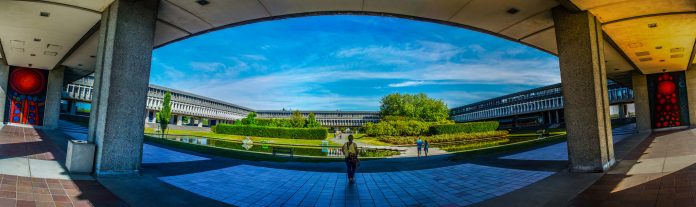
If a group of students approach you on campus, you may just be featured on their Humans of SFU page.

Don’t be alarmed. That group of students running around campus snapping photos is not the new paparazzi club; rather, four SFU undergraduates have taken it upon themselves to get to know their peers and gather tidbits of their daily lives using the Facebook group, Humans of SFU.

Inspired by the mega-popular Humans of New York (HONY) web blog and New York Times best-selling book, the Facebook-based photography project seeks to collect images of SFU and its community.

The Humans of SFU Facebook page has already garnered over 1,500 likes, and has received dozens of comments on each of its posted photos.

Already fans of HONY, page administrators Sukhi Birak, Stephanie Nguyen, and Ayesha Khaira — the fourth administrator chose not to have their name in the article — described their initial attempts at beginning a similar project here at SFU. Birak told The Peak, “When we first started, we were too scared to approach students, so we [spoke to] an older couple on campus. That was the same day we made the page.”

The team explained that working as a group of four makes the whole process slightly less daunting. Usually, two of the team members will approach the subject, ask for a photo, and if the individual agrees, begin engaging with them in a casual conversation. The photographs are accompanied by a caption which can range from a quirky observation to a heartfelt confession.

In most cases, the team begins an encounter with the classic inquiry, “So, what’s your major?” but they emphasize that their goal is to move the conversation beyond the surface to a deeper level. One student even opened up about his previous experience with cancer, taking them completely by surprise.

“When you see that person you would never know that they faced a battle,” Nguyen commented.

Already, the team said that they have been amazed at how willing some students are to share very personal anecdotes: “Sometimes, after we are walking away from someone, we have to compose ourselves because we are so excited to post it,” said Birak. “We wait for them to walk away before we start freaking out about how amazing that interview was.”

Even when they aren’t out taking pictures, the group members admit that they now see strangers differently. “Every moment is an opportunity. When people open up to you, you feel honoured to hear their story. They trust us and they trust the SFU community,” said Khaira.

The team also expressed their belief that the page will help to unify each of the SFU campuses. While students might never have taken a class at Harbour Centre, the Humans of SFU page can show them the kind of student life that exists there.

The team has been overwhelmed by the generosity of other SFU groups in supporting their venture, including the creators of the SFU Confessions Facebook page as well as the SFSS. “We still celebrate every little milestone. We love when people comment,” said Nguyen.

Khaira concluded, “Our whole point of the page is to build an SFU community and a spirit. SFU is unfortunately known as a school that doesn’t have a lot of spirit, so we hope that by having this page, we can ‘up’ the spirit of the school.”

Board Shorts

0

Women’s Centre report

The SFU Women’s Centre made its annual report to board last Wednesday, Oct. 8. The centre’s recent activities included a workshop on consensus decision-making, a chill-out zone, and a solidarity night walk.

The centre has many projects in the works, one of the most immediate being a collaboration with SFPIRG to organize a bike co-op in which young girls will be taught how to fix their bikes. Women’s Centre coordinator Nadine Chambers commented on how bike repair is “deeply gendered” — something that the program will attempt to challenge.

Other future plans include a Christmas hamper food drive to provide relief for families, as well as the Hot Pink Paper Campaign. The campaign has published a non-partisan elections guide to help bring women’s issues to the table in local politics.


$10/day Child Care Plan

Sharon Gregson attended the meeting as a guest speaker to advocate for the $10 A Day Child Care Plan, an initiative that seeks to provide financial relief to parents and guardians faced with increasing childcare fees by instituting a public system in BC.

“The cost of childcare becomes prohibitive to actually having children,” said Gregson.

The plan has already gained momentum, with backing from federal government representatives and student organizations.

Gregson, along with Chambers, requested that the board provide an official letter of support for the plan, or instead, grant the Women’s Centre permission to endorse the plan independently.

The board of directors moved to grant the SFU Women’s Centre the ability to support the plan as a separate entity.


Kinder Morgan intervenor status

The SFSS is applying for intervenor status in the Kinder Morgan Trans Mountain Pipeline project. This would enable the board to be privy to further information about the impacts of the proposed development through Burnaby Mountain.

“[The application] is neutral. It doesn’t say that we oppose it. It just says that we’d like to intervene because we are representatives of the students who attend this campus,” said SFSS president Chardaye Bueckert.

The board moved to approve the application for intervener status. Submissions to obtain the status are due on March 4, 2015.

Satellite Signals

1

Vancouver
A free book signing at the Chapters on Robson Street on the evening of Thursday, Oct. 9 featured SFU professor of biology and author Mark Winston. He signed copies of his new book, Bee Time: Lessons from the Hive, and gave a talk about the importance of bees to the environment, among other topics.


surreySurrey

Last week, SFU Surrey played host to the Vancouver International Film Festival (VIFF). The Westminster Savings Theatre presented three different VIFF films. The titles shown on Wednesday, Oct. 8 included Flowing Stories, about a Hong Kong family through the decades, and Just Eat It: A Food Waste Story, a film that examines the startling stat that 50 per cent of food goes into the trash. Friday saw a screening of Noble, a film about a woman who devotes herself to relief efforts during the Vietnam War.


vancouverHarbour Centre

The seminar, “Making Space for Religious Diversity: Controversies on places of worship and city planning in Montreal,” was held last Tuesday, Oct. 7 at SFU’s Harbour Centre campus. From the perspective of urban planning, the event discussed the emerging issue of finding space for the diverse range of religions practiced by Montreal residents. Admission to the talk was free.

SFPIRG series offers Canadian perspectives on Palestine-Israel conflict

0
The event addressed how we can discuss the conflict in a local framework.

The Simon Fraser Public Interest Group (SFPIRG), hosted a film and discussion series over the past two weeks called, “Palestine and the Creation of the State of Israel.”

The series, which featured talks titled “A Brief History,” “Life Under Occupation,” and “Breaking the Silence: An Ex-Israeli Soldier Speaks,” aimed to educate people on the Palestine-Israel conflict and raise awareness about the suppression that the Palestinian people face.

The ongoing struggle between Israelis and Palestinians began in the 20th century, and concerns the displacement of the Palestinian people after the establishment of the state of Israel. This extremely complex issue has since manifested itself in incidents such as the 1956 Suez Crisis, the 1967 Six Day War, the First and Second Intifadas, and the current conflict in the Gaza Strip.

The series put forth an additional message, tying the Palestinian-Israeli conflict to another form of oppression rooted deeply in Canada’s own colonial history — the oppression of Canada’s First Nations.

Kalamity Hildebrandt, SFPIRG member and the event’s organizer, stated, “For us, [social and environmental justice and the fight against oppression] means looking at all the different kinds of systemic powers and balances that are shaping our environment.”

She continued, “SFPIRG is committed to decolonization. We see a parallel between what is happening in Palestine and Israel and in Canada’s own history with regards to indigenous people being displaced from their land, confined to tiny portions of their traditional territories, and subjected to all kinds of violence.”

The series also addressed the reasons why Canadians should stay informed about the conflict in Palestine and Israel. Hildebrandt explained, “Globally, we are accountable to each other. As global citizens we should care when huge numbers of people are being oppressed — decade, after decade, after decade — especially when it results in countless deaths and grinding day to day suffering, such as what we see happening in Palestine.”

Hildebrandt stressed the conflict’s relevance, as it is a continuing issue in the modern Middle East, covered by daily news broadcasts.

However, Paul Sedra, SFU professor of history in Middle Eastern Studies, pointed out that there is very little in the media geared toward educating the public on the history of the conflict.

Sedra said that people need to look past conventional understandings around the conflict, and instead, become acquainted with the historical background.

“It’s absolutely essential for people to avoid the conventional wisdoms about a conflict that is rooted in religion, or rooted in ethnic differences.” Sedra continued, “This is really a conflict which is very much about politics and politics in the modern period. As long as we understand how the politics developed, and the history of that, we can understand the conflict itself and then begin to move towards a resolution of it.”

Looking at the current Gaza conflict, Sedra considered the broader questions that the struggle has presented: “I think there is a key question of how is it that we cope with violations of human rights. On an international level, how is it that we as Canadians should react to these sorts of violations of human rights that we saw in the Gaza conflict?”

SFPIRG suggests that, by looking back at our own history of indigenous oppression, Canada can take a stronger national stance on the current situation in Gaza.

Hildebrandt said she hopes that the discussion series will serve as a starting point for people to become better informed on the past and current situation of the Palestine-Israel conflict. She expressed that the main message SFPIRG hoped to convey with the discussion series was that people need to care, to be engaged, and to learn.

Documents reveal that BC university executive salaries exceed caps

0

Questions have recently arisen concerning salary pay for executives at post-secondary institutions in BC, after documents were released showing that executives at three institutions were paid beyond their salary caps for the 2013/2014 year.

In March, David Eby, edu-ca-tion critic for the NDP asked Amrik Virk, min-is-ter of advanced edu-ca-tion in BC to release the salary caps for post-secondary insti-tu-tions in the province at the Bud-get 2014 Esti-mates Debate for the Min-istry of Advanced Edu-ca-tion. At first, Virk denied that there was any over-pay-ment, but after releas-ing the doc-u-ments it was evi-dent that this was not the case.

Although Virk agreed to release the doc-u-ments for 22 schools, he has only released salary cap infor-ma-tion on four — Capi-lano Uni-ver-sity, Kwantlen Poly-tech-nic Uni-ver-sity, Uni-ver-sity of the Fraser Val-ley, and Van-cou-ver Island Uni-ver-sity. The documents that have been made public only report the salaries, not the caps, and make statements such as “the executive compensation paid out in the fiscal year 2013/2014 [. . .] is in compliance with the compensation plans approved by PSEC (Pub-lic Sec-tor Employ-ers’ Coun-cil).”

However, accord-ing to the doc-u-ments that were col-lected by the PSEC, exec-u-tives at these four universities were notably over-paid. For example, vice pres-i-dents at CapU were over-paid by between $31,794 and $162,910, over the past three years.

Total overpayment over the past three years between CapU, UFV and VIU was $1,083,830.97.

Similar information has yet to be released concerning SFU, UBC, and other schools in British Columbia.

SFU executive compensation is posted publicly on the board of governors website. The disclosure includes total base salary, plus employer-paid pension contributions, benefits, severance, vacation payouts, and all other compensation, including administrative leaves paid out in the fiscal year.

Andrew Petter, SFU president, earned $442,783, while the remaining four members of the SFU executive earned between $263,000 and $300,000.

According to Melissa Fiorucci, from the office of the vice-president, finance and administration, SFU has not exceeded any of its caps, although specific salary cap information was unavailable.

Considering this, The Peak asked Kathy Corrigan, NDP oppostition spokesperson for advanced education, why Virk might still be holding back on releasing the information.

“My guess would be — [considering] the information that we already gathered where we did get the caps for three institutions, in each case they were being paid more than the cap — maybe they’re trying to hold that information back because we would find out that they were going to be getting paid more than the cap,” Corrigan predicted.

Corrigan pointed out why this situation is confusing, asking, “How can you say whether or not an institution has gone over the cap when you don’t know what the cap is?

“I think [. . .] particularly at a time when tuition fees are pretty punishing, student debt is punishing, and funding to the universities is going down, that there should be accountability,” she concluded.

University Briefs

0

UBC students rally in support of Hong Kong Umbrella Revolution

The UBC Hong Kong Student’s Association (HKSA) continues to vocalize its support for pro-democracy protesters in Hong Kong after hosting the Operation Yellow Ribbon student campaign earlier this month.

The group handed out over 500 yellow ribbons, as visual representations of support, and tied over 275 metres of yellow ribbon to students’ wrists and backpacks.

HKSA president Patricia Poon told Vancity Buzz, “We offer full support to Hong Kong students and their spirit. It is ultimately for the people of Hong Kong to decide what is best for them in the upcoming days.”

With files from Vancity Buzz


Google harvests innovators from U of Waterloo

University of Waterloo has been named one of the top recruiting sites for Google in North America.

The university has one of North America’s leading computer science programs, which acts as a natural recruitment site for high-technological companies such as Google.

Steven Woods, engineering director at Google Canada, explained, “[There] is an amazing amount of technical talent in Canada, and University of Waterloo is the center of that [excitement].”

With files from Canada Business Review


Lab explosion sends two to hospital

Two researchers were rushed to the hospital last Monday morning after being caught in a small chemical blast at the University of New Brunswick’s Fredericton campus.

The explosion occurred in the Enterprise Building, a research facility. Assistant fire chief Dave McKinley said a “small glass vessel” exploded and the chemicals involved were non-volatile. He said that there was  a small amount of blood visible at the scene of the explosion, but no flames were produced.

The researchers had minor injuries, and the building was temporarily evacuated after the blast.

With files from The Silhouette