Home Blog Page 1077

Making the cut doesn’t cut it

0

Picture me in the fourth grade — a little girl in a bubble vest, sobbing over a report card while eating chocolate. I had failed to get an A in one of my courses, and all my shame and disappointment came in a flurry of tears and an amplified sweet tooth. I can look back at this memory now and have a good chuckle, but even as a child, I always set high expectations for myself.

These lofty expectations, you see, have been the love and bain of my existence. Growing up, my dad always pushed me to do my best, and fed my (then) ambitions to become a civil engineer-humanitarian lawyer, who also animated for Disney. I had big dreams for myself, and I thought that this was great. To have a goal to work towards is a healthy and beneficial thing, especially if it’s something that is meaningful to you. Self-efficacy — the strength of one’s belief in one’s own ability to accomplish tasks or goals — is also critically important to actually accomplishing these goals.

However, while high self-expectations motivated me to put forth my best work, I developed a cycle of confirming my own self-worth, in the process. Each time my work was assessed, I believed it was an assessment of who I was as a person, and as my parents’ marriage deteriorated, I began setting expectations for myself that were out of my control, and assumed responsibilities that weren’t mine to bear.

I believed that I could hold my parents’ marriage together by being the ‘perfect daughter.’ I had put their happiness into my own hands, and I tried to reassure myself that doing enough good things would fix our broken family; but when my parents finally divorced, I was met with the crippling truth that it would never be enough. To me, this translated as, “I’ll never be enough.” Though it felt good to earn that little ounce of self-worth from doing good deeds, a wave of shame and guilt for not trying harder would come rushing after.

When I began to self-harm, I had slipped into a major depression that made me all the more susceptible to feelings of worthlessness. I believed that every cut would compensate for each one of my failures. But of course, cutting didn’t solve any of my problems, and only made me feel more ashamed and empty.

Each time my work was assessed, I believed it was an assessment of who I was as a person.

As I look at my surroundings, I realize that we live in a society that tells us that we need to be more than who we are. We hear that we’re not pretty enough, or muscular enough, or smart enough, and it hurts. It takes a lot of effort to reach that bar, and when we miss and come tumbling back down, it takes a lot more to get back up again.

Yes, oftentimes I still slip, and fall, and it takes awhile to stand up. But I am grateful for my faith, and amazing friends and family who tell me that I am enough, and support me the whole way through. My ambitions have changed, but I’ve learned to revel in the big accomplishments as well as the small, intimate ones of daily life. Over time, I’ve become better at recognizing what I can and can’t handle, and on a good day, I’ll even get a decent amount of sleep. Though it’s a bumpy slope, I am ever so slowly learning to become more content with who I am.


Smothering Science

0
Mmph mmph!
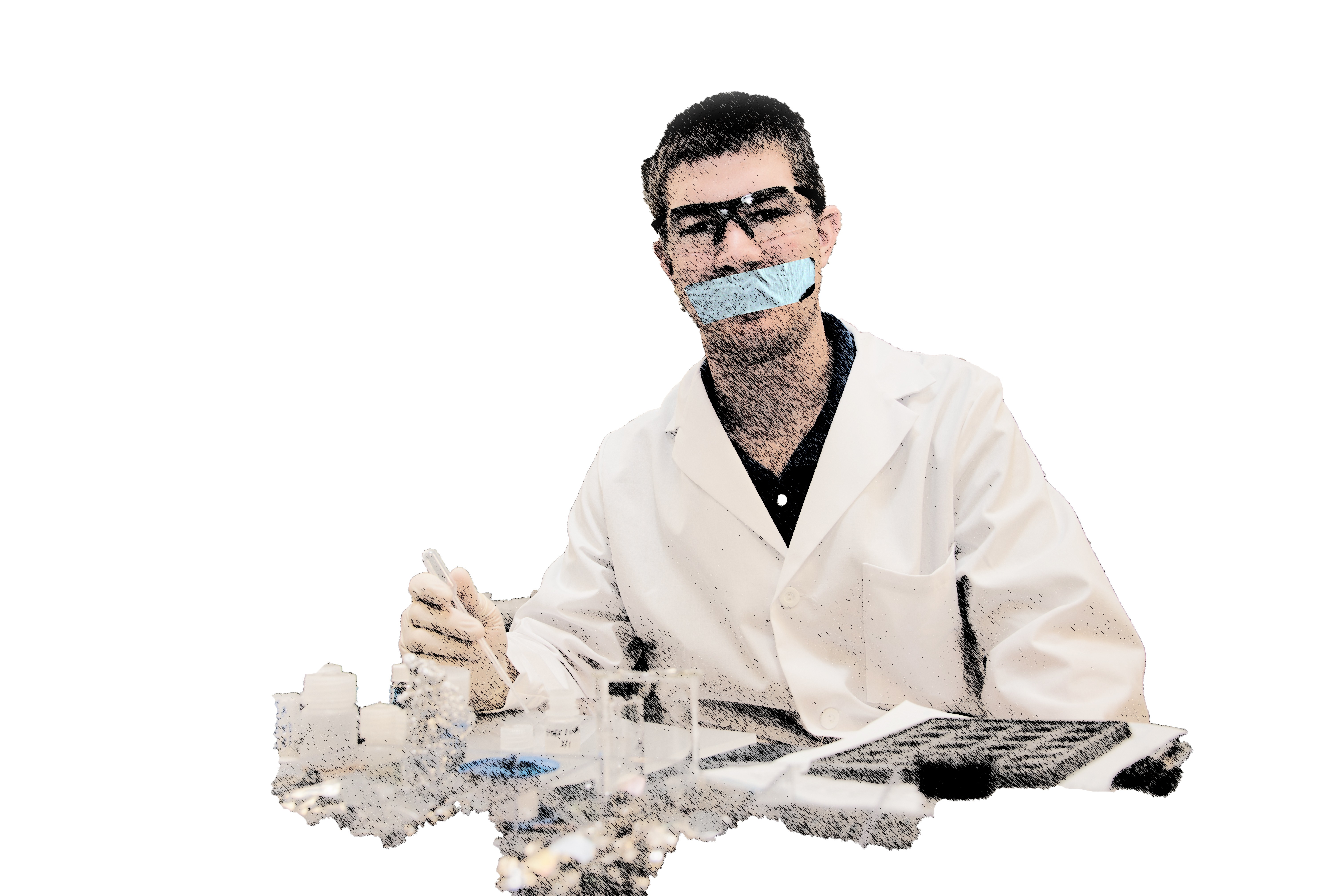
Across the country, scientists are kept from communicating with the media about their research.

“Everything here is important to me. This is my life.”

This was the answer that Dr. Patricia Sutherland, a federal archaeologist working on a site in Baffin Island, gave to her employer after being asked if there was anything important that she needed to get from her office. Sutherland had just been dismissed from the government project that she had been working on for many years. The reason for her abrupt dismissal? She had spoken to the media about her research without her employer’s approval — research which includes data proving that the earliest recorded contacts between Aboriginals and Norse explorers  occurred roughly 1,000 years ago.

The Canadian government’s attempt to maintain arctic sovereignty by promoting 19th century British naval expeditions proved to be at odds with Dr. Sutherland’s
project. Her findings also proved contradictory to the revamping of the museum where she worked, which was rebranded as the Canadian Museum of History, with a decreased focus on new research. She has since been denied access to her work by the museum.

Dr. Sutherland is only one of over 2,000 scientists and researchers who have been dismissed from their government jobs over the past three years after sharing their research with the media in spite of government policies.

These dismissals are the result of the enforcement of a country-wide gag order that prohibits federal scientists and researchers from talking to the media. Under our government’s system, journalists requesting interviews from federal experts are re-directed to federal government communications workers in the information services sector.  Their requests are then passed on to the government director of the relevant ministry, under which the researchers and scientists in question work.

“Canadians are being made more ignorant about our country and ourselves.”

Other processes used to limit the dissemination of information include having federal employees read off of a script during interviews or responding to a list of questions pre-approved by a communications worker, sometimes requiring that a communications worker sit in on the interview. This gag order policy effectively keeps scientists and researchers from providing information to the public, and as a result, has significantly harmed the average Canadian’s understanding of scientific research and advancements.

Two weeks ago, Karen Magnuson-Ford, a research assistant in SFU’s Department of Biological Sciences, released an analytical report on the issue of government muzzling of scientists and researchers. The report was published by Evidence For Democracy, a non-profit group promoting evidence-based public policies.

Dr. Magnuson-Ford said that she was driven to pursue the issue after hearing stories from some of her SFU colleagues who had been prevented by the government from talking to the media about their work. She felt that a formal assessment, made fully accessible to the public, was necessary to help solve this problem.

This report analyzed and graded media policies from 16 federal departments, based on how well they promote openness and timeliness of communication, how much protection they offer scientists from government interference, how well they protect scientists’ rights to free speech, and how much protection they offer.

Its conclusions were sad but predictable; the report found that government media policies did not support open and timely communication between scientists and the media, that they do not protect scientists’ rights to free speech and whistleblowing, nor do they protect them from political interference. In fact, 14 of the 16 departments assessed received a ‘C’ grade or lower, with five departments given a failing grade.

Dr. Magnuson-Ford explained that the public needs to be made aware of the consequences of government muzzling of scientists.
“Scientists are the ones on the ground doing the work in health and environment,” she says. “They need to get information to the public through the media without political interference.”

The work of scientists and researchers is crucial to our understanding of our world. They provide information on important issues, such as drug safety and climate change, and taxpayers have a right to know how the government is using science in its decision making. Furthermore, the government must be held accountable if their decisions are at odds with science.

Margrit Eichler, president of the collective Scientists For the Right to Know, argued in The Toronto Star, “Canadians are being made more ignorant about our country and ourselves. Good policies must be based on solid evidence. Democracy requires an informed electorate.”

Recently, several scientific reports — long kept under wraps by government constraints — have come out, showing just how valuable much of this research is to the public. Fifteen years of Dr. Peter Ross’ toxicology research on marine mammals in Canada’s north — specifically his discovery of the high levels of toxicity in fish that the Inuit were eating — had been buried for many years, much like Dr. David Schneider’s work on the pollution of the Athabasca watersheds in Northern Alberta, caused by the oil sands.

Though the government has created a huge problem by restraining communication between scientists and the media, Dr. Magnuson-Ford is confident that there are solutions. She explained that the federal departments need to work together, promoting policies which allow scientists more freedom to discuss their work. “Different policies had different strengths and weaknesses,” she says, based on the wide range of grades given to these departments in the report.

Next, she suggests looking towards the United States as a model of how to build a better relationship between the media and scientists. US departments regularly score much higher on scientist-media transparency than Canadian departments, due to improvements in policies made during the past few years.

Dr. Magnuson-Ford also asserts that the public can be part of the solution by sending messages to MPs, informing them that this is an issue that must be addressed. She suggests signing a petition on the Evidence for Democracy website, which sends a letter to government representatives in support of scientists.

“Scientists are the best spokespeople for their own work,” Dr. Magnuson-Ford told The Globe and Mail. “Barring rare instances where information is highly sensitive, it is essential that they be able to communicate their expertise to the media and the public.”


The week in comics

0


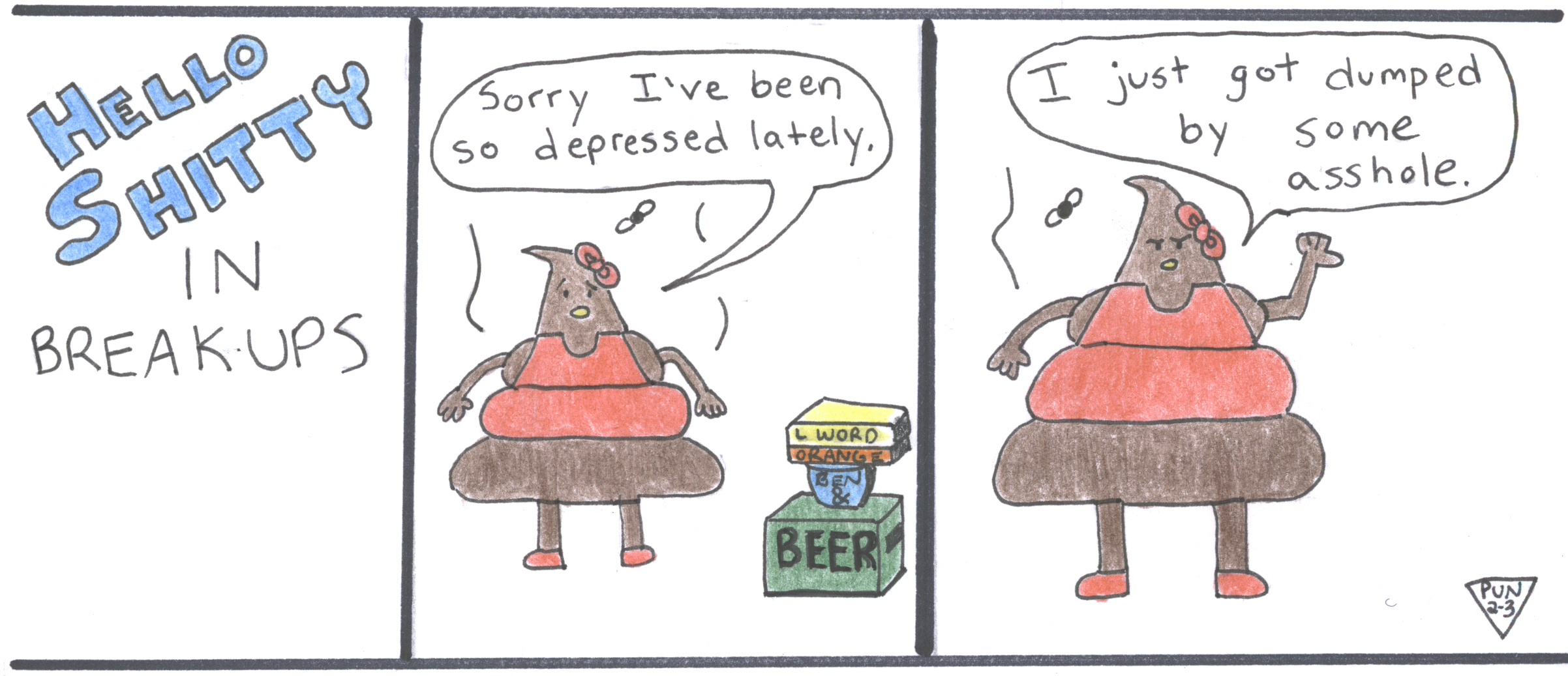
Pun 2 3 (by Sarah Walker)Comic_Pun 2 3 (Sarah Walker)

The Adventures of Agoraphobia Man: World Defender (by Jacey Gibb)The Adventures of Agoraphobia Man (Jacey Gibb)

Road Rage: Vancouver Edition (by Daria Evans)Road Rage Vancouver Edition (Daria Evans)

The five types of people you’ll encounter on the bus

0
Buses become an incubator of awful behaviour.

When riding the bus, you can’t help but notice an array of flamboyant personalities — and the backpacks they’re still wearing — being shoved in your face. It’s impossible to anticipate what kind of crazy you’ll encounter next, but here’s a brief cheat sheet to help you identify some of the various transit riders bound to spice up your commute.

Dwight Schrute: They know the exact location and degree of the angle at which the bus doors will open. Always at the very front of the line, they insist on being the first person to get on and inhale the intoxicating never-been-washed-or-disinfected bus smell. They keep their bus pass in a see-through pocket at a convenient location around their neck, on their backpack, in their jacket breast pocket, or stapled to their forehead. This isn’t their first rodeo — and by rodeo, I mean bus ride.

The Rebel: You know that person in your tutorial who never does the readings? The Rebel is similar, but only when it comes to reading signs. They believe they’re disabled, 50-years-old, and/or pregnant, so they’re clearly the most qualified to sit in the priority seating. Don’t worry though: once someone calls The Rebel out on their insensitivity, The Rebel will miraculously recover from his/her temporary dyslexia and plead ignorance.

’Murica: This person loves to shove their way through a crowded bus, take up the majority of the leg room, and use five hand holders. One of ‘Murica’s signature moves is to put their groceries on the seat beside them instead of on the floor. (In their minds, groceries are people too. People who just want to fit in with everyone on the bus and have a lot of feelings.) If you ask ‘Murica to move the groceries so you can sit down, they’ll react as if you just asked to cut their dog with a fork.

Window Tapper: In case you didn’t know, transit operates entirely on the Window Tapper’s schedule. If they ever see a bus leaving a stop without them, the Window Tapper will be profoundly shocked. Convinced this is the last bus that will ever leave from this stop again, the Window Tapper will use everything in his or her arsenal to get on the bus. Screaming, yelling, swearing, crying, waving, and (of course) window tapping, the Window Tapper will try everything, until going into shock and curling up in the fetal position — at least until the next bus comes eight minutes later.

Foodie: The soul-less individual who decided that their Subway tastes so much better if enjoyed while in an enclosed space, like a bus. Sweet onion chicken teriyaki, with extra onions please.

Of mutton chops and men

0
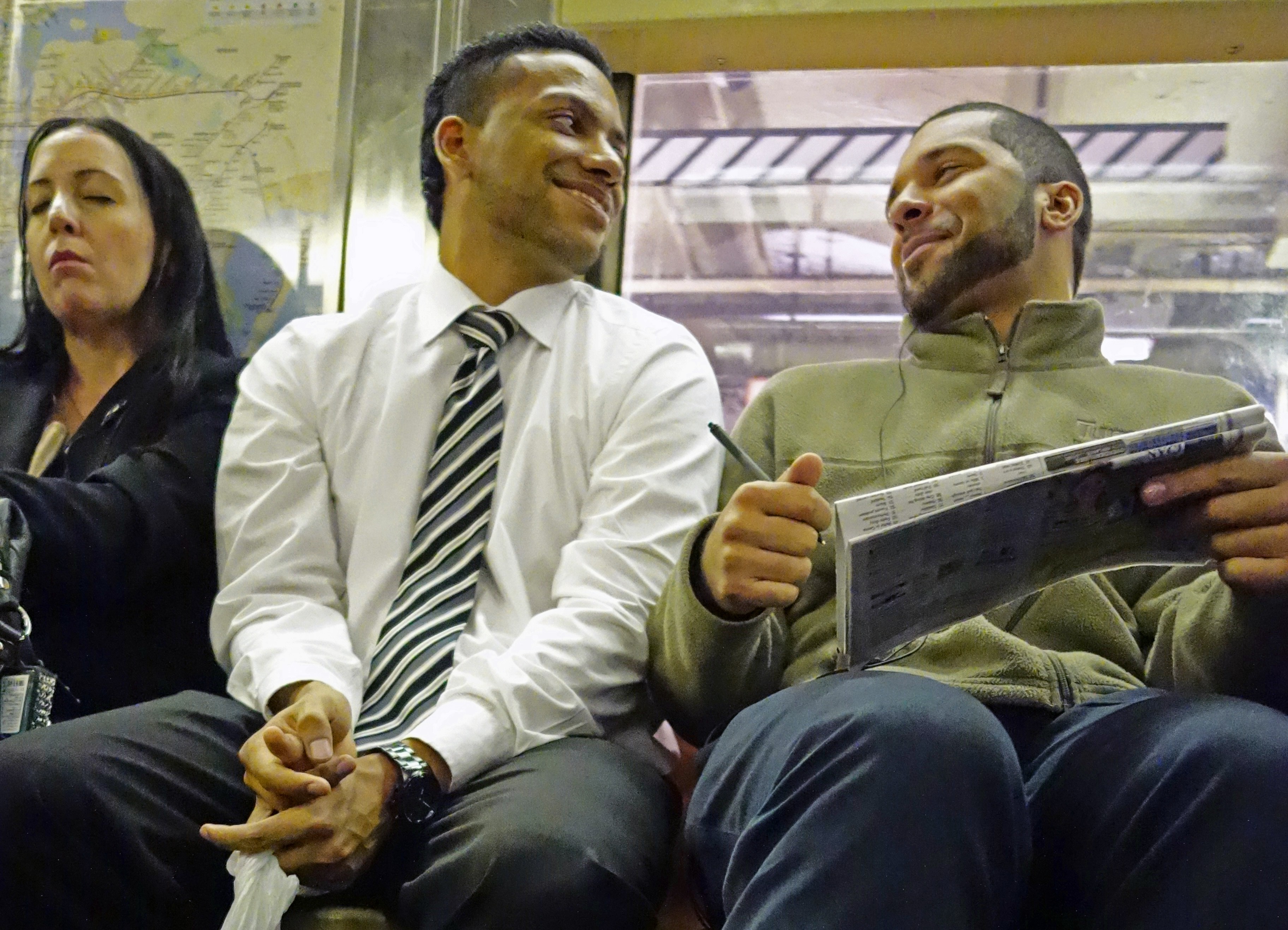
Settle down and snuggle up with a facial-haired fella like this hairy hunk.

Winter’s approach — perhaps faster than I would like — means different things for different people. For some, it means comfy sweaters, sipping hot drinks without sweltering, and fleece onesies; for males of the species, the colder weather leads to a tendency towards growing facial hair.

To say that I love facial hair is an understatement. Beards, moustaches, chin curtains, ducktails, or hulihees, facial hair is arguably my favourite thing. Men who can pull off facial hair in the least are glorious, though I believe everyone should try growing a beard at least once in their lives. Finding my love of facial hair hard to understand? Here are a few of the many benefits to sprouting facial follicles.

1. If I’m drunk and I want to kiss you, there’s something to guide me to your mouth. Like landing strips of the face.

2. One word: Movember. A dirty moustache is one of the prime forms of facial hair. Why not keep your upper lip warm and happy while raising money for a good cause?

3. When well cared for, it can be quite soft.

4. Lumberjacks are a West Coast girl’s dream. Ready for some rudimentary facial hair arithmetic? Plaid flannel + beards = a winning combination. Bonus points if you can also build a log cabin with nothing but your bare hands.

5. Makes you look older and more mature. If you have baby face, then you don’t need to worry — and neither do I.

6. In a moment of deep or reflective thought, you can rub your face without looking completely mad. You’ll actually look wise while doing so.

7. You’re probably not shaving as much, which means you can allot more time to my appreciation of your beard. I can also borrow your razor because mine is horrible.

8. Your general mouth region has more things to incorporate during any upcoming oral presentation, academic or beyond.

9. Food still left on your plate, or want to save some for later? Take it to go a la beard.

10. Emphasizes your jaw line, which we know is the most beautiful of naturally occurring lines.

Youtube server shutdown accidentally leads to increased productivity and havoc

1
Some streaming websites just want to watch the sworld burn.

Youtube’s servers were temporarily offline last Monday, leaving many devoted viewers and users in the dark. Following the 22 hours and 13 minutes of Youtube-less existence, news outlets across Canada reported increased business productivity, uncharacteristic substance abuse among teens, and several untimely deaths.

Multiple corporations — including the Royal Bank of Canada, Telus, and the Ford Motor Company — reported record-breaking productivity last Monday during the outage.  A district manager from Telus, who wished to remain anonymous, said that during Monday’s strategic planning session, his employees’ eyes stayed focused on the meeting and never once strayed to trending videos on their iPhones.

“It was a blessing to have my team focused on the meeting, and not staring down at their phones watching ‘May 2012’s fail compilation’ or ‘Cat jumps over gate. Though it was a little nerve-wracking to have everyone so attentive the whole time. It meant I couldn’t secretly text behind a notebook or under the table.”

Although Youtube’s day-long server shutdown led to unprecedented productivity in the business world, Cody Villain, chief of police in Sacramento, reports that drug use among teens and young adults skyrocketed. “If anything, Youtube has kept kids away from crime and drug use. Like television once did, it gives them something productive to do, a purpose in life,” said Villain.

Michelle Weeps was one such victim of Youtube’s server meltdown. A promising young student and athlete, Weeps was set to enter the Summer Olympics in 2016 for swimming.

“Every morning, alongside breakfast, I used listen to relaxing nature music on Youtube. This calmed me before training. When Youtube’s server was down, I didn’t know what to do. Without being able to listen to eight hours of nature sounds, I couldn’t relax. I saw no other way out, I turned to heroin,” said Weeps. Throughout the day, her Youtube withdrawal became worse.

“I was shooting up and drinking a 40 of Silent Sam every three hours that day, but it just didn’t  compare to the high I get from eight hours of soothing relaxation sounds,”  she explained.

On Tuesday, when the Youtube server came back online, Weeps quickly quit her heroin and alcohol binge — though she has since been hospitalized, after suffering a Youtube overdose. Doctors say she will never be the same as she has suffered cerebral hemorrhaging, a common side effect of a severe Youtube binge. 

Another report claims that a team of engineers failed to adequately fix a column of a bridge, leading to its collapse. After investigating an eroded column supporting the bridge, the team was stumped as to how to fix it. They admitted to going on Youtube and searching “how to,” but since the server was down, they were on their own.

Kevin Bobb, head of the team of engineers, turned to his undergraduate degree to find a solution. Looking at his old popsicle-stick and glue models of bridges, he determined that these didn’t offer any help.

“It seems like my whole undergraduate degree didn’t teach me anything useful. Everything I’ve learned was from hands-on training,” said Bobb.

Without knowing how to fix the problem, the team of engineers left the column untouched. Later, the bridge collapsed causing 1,654 deaths. The team of engineers is now filing a lawsuit against Youtube for its inability to provide life-saving information.

Women’s soccer falls 2-1 to Seattle Pacific

0
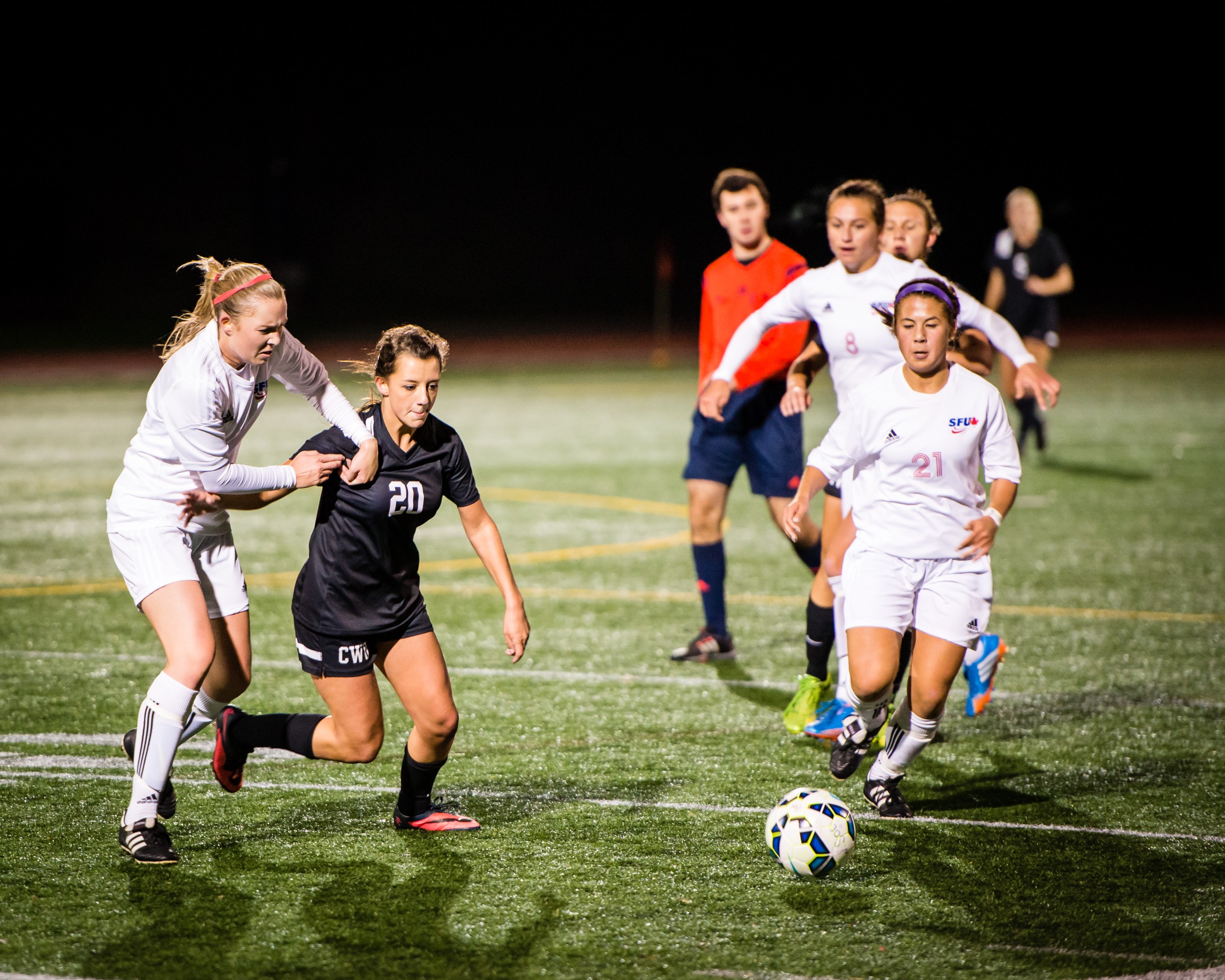
The Clan have not won a game since September, when they won two in a row — their only wins of the season.

On an incredibly wet Saturday night at Terry Fox Field, the women’s soccer team lost to the visiting Seattle Pacific (SPU) Falcons by a score of 2-1. The Clan came into the match with a 2-13 overall record, 2-9 within the Great Northwest Athletic Conference (GNAC). They were looking to play the role of spoiler against a solid Falcons side, who held a 9-4-2 overall record and a 7-3-2 record inside the conference, good enough for third place.

The Clan got off to a poor start in the first half, conceding an early goal in the seventh minute. Off a low cross, Seattle Pacific’s Isabel Farrell rang a shot off the right post. The rebound wasn’t properly handled by SFU, and Falcon forward Hannah Huesers put the ball into the net to make it 1-0 Seattle Pacific.Screen Shot 2014-11-06 at 3.40.49 PM

The only other great chance of the half was by the aforementioned Farrell of Seattle Pacific, who had a long range shot deflect off of an SFU defender and almost go in. It seemed like the weather was also affecting Clan keeper Priya Sandhu; twice, she had chances to get off her line and challenge for the cross, but elected to stay in her net, making for some nervous moments in the SFU area.

The visitors once again got an early goal in the second half. In the 47th, SFU goalie Priya Sandhu attempted to catch the ball, but it slipped out of her hands. Seattle’s Huesers once again gladly deposited the ball into the back of the empty net to make it a 2-0 lead for the visitors — just an unlucky play in pretty terrible conditions.

SFU managed to get one back in the 50th when Elishah Jilling took the shot off the bounce and put it past a sprawling keeper to make it a 2-1 game. SFU’s Sandhu made a great save off a terrific free kick in the 58th, but after that the Clan didn’t have any standout chances to tie the game up. They did seem to play with more purpose and intensity after the goal, though, to put them within one.

The Clan then traveled to Billings, MT to face Montana State University Billings (MSUB). They were shutout by a score of 3-0, and dropped to 2-15 overall, and 2-11 within the GNAC.

Questionable call the only blemish in great Whitecaps season

0
The Whitecaps expected 2014 to be a rebuild year, but instead, they made the playoffs.

It wasn’t supposed to end this way for the Whitecaps.

A year ago, they had missed the playoffs after stumbling down the stretch, winning only three of their final 10 games. Their offseason wasn’t much better. They lost star player Camilo Sanvezzo, who had 22 goals in MLS and should have won league MVP. They let go of manager Martin Rennie and brought in Carl Robinson, who was an assistant under Rennie. Most — myself included — foresaw a year of rebuilding for the ‘Caps. They had a young squad, and maybe the following year, they could contend for a playoff spot.

Instead, they found themselves in the playoffs after a stretch during which they went five straight games without a loss.  And that’s what made Wednesday night’s playoff matchup against FC Dallas such a treat — although perhaps a bittersweet one.

The Whitecaps came out very flat to start the game, and their only noteworthy chance was a 26th minute long range shot by Pedro Morales. The lone goal of the first half belonged to Dallas, and was due to a mix up between Kendall Waston and Andy O’Brien, which allowed Tesho Akindele to deposit the ball into the lower left corner.

The second half saw the Whitecaps push the pace to start. In the 57th, Morales — who had struggled mightily in the first half —  came off for Kekuta Manneh. This proved to be a brilliant move by Robinson, as Manneh’s shot in the 63rd deflected to Erik Hurtado who tied the game up.

But the big play of the game came in the 81st. Off of a throw in, the ball seemed to go off defender Kendall Waston’s hand in the box. But on the replay, it was shown to go off his arm, an unintentional play that resulted in a penalty. Dallas player Michel Garbini Pereira calmly scored to give Dallas a 2-1 lead. It was a brutal way to end the season — on a very iffy penalty that really shouldn’t have been called.

Despite the heartbreaking loss to Dallas, ‘Caps fans can take solace, as this appears to be a young team on the rise. After two great performances off the bench for Kekuta Manneh, it seems that he should, at the very least, be given a chance in the starting 11 next year by Carl Robinson. With Erik Hurtado starting up front in the most important game of the season, have we seen the last of Darren Mattocks? He’s only in his third MLS season, and at 24, there will be plenty of teams looking for his services. The Whitecaps have also found a star in Pedro Morales, an excellent player to build around, and one who should win the MLS Newcomer of the Year award.

The success of the Whitecaps this year was dependant on their defence. David Ousted led the MLS with 13 clean sheets, and Kendall Waston not only provided stability in the heart of the defence, he also gave the team a target on set pieces and corners. With Steven Beitashour, Jordan Harvey, Andy O’Brien (if they offer him a new contract), and youngster Sam Adekugbe, the defence looks to be set for next season.

The role of management now is to reinforce the front lines, as the Whitecaps lacked a true natural goal scorer this season. Whether it be through the annual draft, trade, or signing a designated player, they need to fill this hole in order to become an elite team in the MLS.

Wednesday night’s game was a bitter pill to swallow, but concluded what was the best season ever in the MLS for the Whitecaps, and what will hopefully be the first of many.

Blagojevic’s 15th goal in 16 games helps Clan win fourth straight game

0
Midfielder Ryan Dhillon notched one assist on the night.

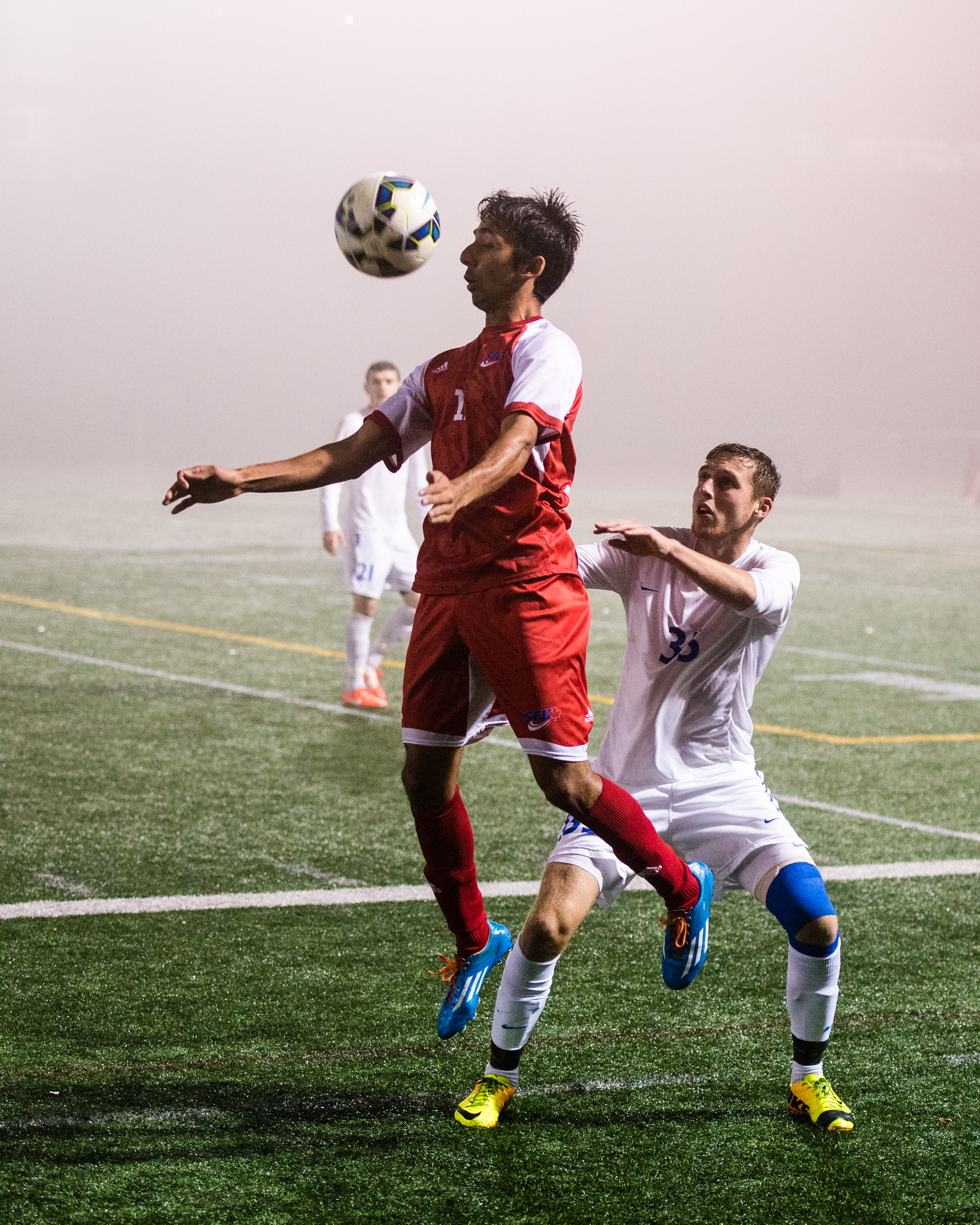
On a foggy Thursday evening at Terry Fox Field, the men’s soccer team picked up a crucial 3-1 win over the University of Mary (UM) Marauders.

Their fourth straight win sees the Clan jump to third place in the Great Northwest Athletic Conference (GNAC) standings, with the remaining pair of games to be played with a home advantage.

Thursday night’s match got off to a slow start in the rain and fog, but was not without excitement. Joel Malouf looked deadly after moving from his familiar post at right back to striker, and could have fired in an early lead in the opening minutes if not for the Marauders’ keeper, Michael Frenzel. Ryan Dhillon added to the Clan’s pressure with an effort shortly afterwards, stopped again by Frenzel.

DSC_4586

However, it was the Marauders who capitalized on their chances first, as Marauder midfielder Aaron Brennan was gifted space outside the box to thump in a 25-yard strike past Clan goalkeeper Brandon Watson. The Clan looked frustrated at the setback, with many players getting vocal to motivate a response.

Late chances in the final minutes of the first half would come, as Calvin Opperman’s dangerous shot into the area was blocked by the defence, before Jovan Blagojevic nearly headed home an equalizer from Joseph Martin’s cross.

After surviving the onslaught before the break, the Marauders could not escape a stunning comeback initiated by the play of Jovan Blagojevic.

DSC_4714

Less than 10 minutes into the second half, the Coquitlam native used his crafty footwork and deadly finishing to equalize. Immediately after, the captain scored again, achieving his conference leading 16th goal in
Cristiano Ronaldo-like fashion (celebration included). 

“He’s playing like a senior that has the ability to be a professional,” said head coach Alan Koch — who recently saw his SFU goal scoring record, notched as a player in 1998, overtaken by Blagojevic. “He’s turned games around and he’s been doing it all season long, he turned it around tonight and we’re grateful we get the three points.”

DSC_4931

Following the brace by the Clan’s number nine, Niko Schroettle buried the winning result, after heading in a corner kick from Robert Hyams in the 61st minute of play.

“These guys are mature enough now,” added Koch. “I think we learned early in the season that we were looking too far ahead, now we just go one game at a time, we took care of business, and we know Saturday’s game is just as big so we’ll need to take care of business again.”

DSC_4673

Men’s basketball play alumni game

0

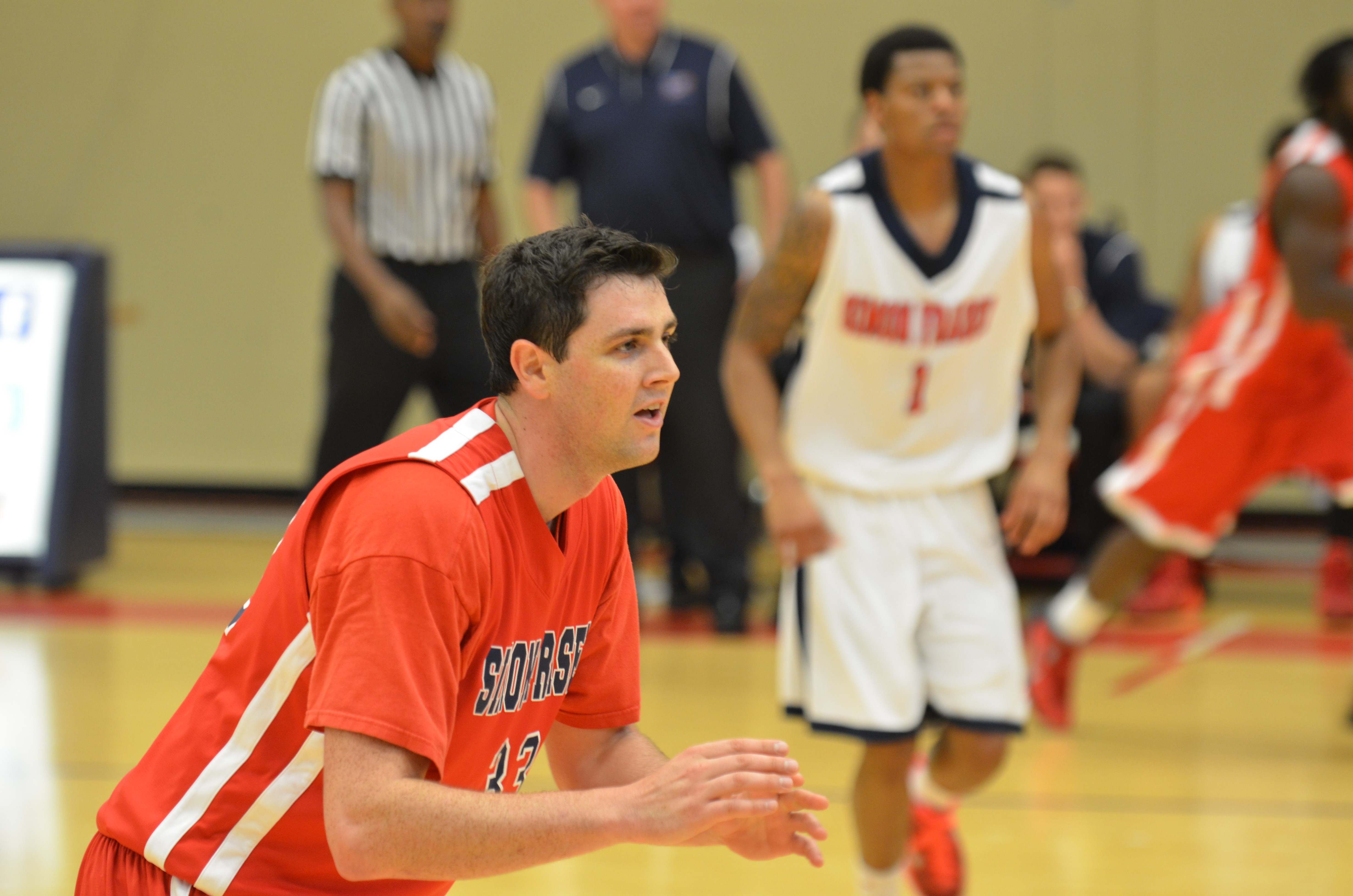
Men’s basketball opened their season at home with an exhibition game against SFU alumni. Although the game did not count for anything, it was a fun opportunity for the current team to play the stars of yesterday, and practice before the season gets into full swing.

“We’re trying to simulate games as best as we can,” said head coach James Blake. “[We’re] bringing in officials, playing with the alumni [who] are good basketball players, they’re a little bit out of shape, but they’re smart.”

DSC_8369

Indeed, the alumni team got the quick start scoring the first five points of the game. However, the current team quickly took the lead and slowly increased the gap, winning the first half 69-48.

“[The alumni] frustrated us in the first half because they were breaking our press, and we were getting hands and deflections on balls but we weren’t turning them over enough,” commented Blake.

DSC_8374

The alumni team featured former stars of the Clan including 2007 graduate Aaron Christensen, and 2010 graduates Sean Burke and Kevin Shaw. The team also had two players who played for the Clan just last year: Dillon Hamilton and Ibrahim Appiah.

Hamilton, who arrived at SFU as a transfer from the University of Western Ontario in December 2012 and graduated just last month, said of the team, “I loved it right when I came [here].”

DSC_8459

In his last season with the Clan, Hamilton led the team in free throw percentage, making 14 out 15 attempts.

“It’s funny,” he exclaimed, about playing against the Clan as an alumnus, “It’s just like being back on the team.”

DSC_8437

During halftime, Hamilton admitted, though, that it was a challenge facing his old team: “We’re just trying to keep up with them, they’re getting a lot of open three [pointers] because we can’t run back.”

The alumni had a hard time at the beginning of the second half, going long stretches without scoring, and at one point falling 43 points back to the current Clan. However, they were resilient, and with great play from Hamilton, Appiah, and Burke in particular, they cut the gap at one point down to only 22 points, at 111-89.

DSC_8498

In the end, the current Clan were too much for the alumni. With standout performances by Adam Westfall, Sango Niang, and Roderick Evans-Taylor, as well as freshman Patrick Simon, they won 122-91.

Coach Blake was pleased with the team’s play in the second half, saying, “As the game went on, we got some good reps and that pace that we want to play.”

DSC_8544

He stressed, however, that the team still isn’t playing to its potential: “We want to play a really fast, exciting style of basketball. We’ve done a little bit better job at it over last week, but I think we can play a lot faster.”

The Clan will get their first true test on the road, as they open their regular season in Moscow, ID, before returning to the West Gym for their home opener against Northwest Indian College on Friday, November 14.

DSC_8554

DSC_8486