Home Blog Page 1068

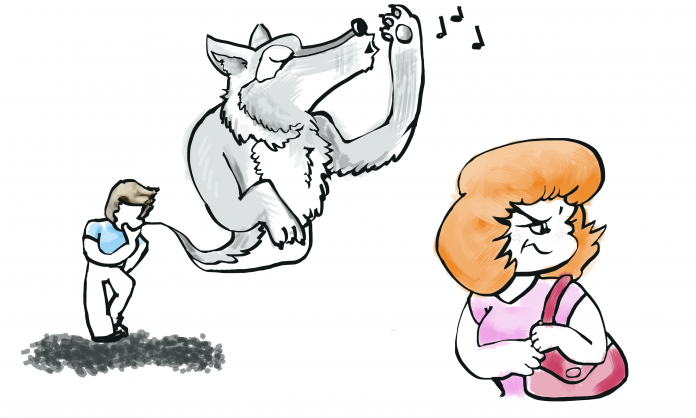
Why men objectify women

1
‘Mansplaining’ is borne from an individual’s sense of invincibility; that belief that “that wouldn’t happen to me.”

I’ve written before about the educational gap that exists between clueless-yet-prospective male feminists and established female feminists, which is why the now viral video posted by Hollaback (in which a woman, while walking New York’s streets for 10 hours, is verbally harassed by male bystanders over 100 times) is so revelatory.

I cannot speak to the universality of the subject’s experience, but there is no escaping the nakedness of the abuse via context. Seeing is believing, and the nauseating, concussive nature of the abuse bordered on suffocative.

In his now infamous interview on CNN, self-proclaimed ‘cat-calling expert’ Steve Santagati trotted out all the tired justifications of boorish male behaviour. While he was (quite rightly) castigated on air and in the public domain, Santagati’s bizarre protestations are illuminating of the adolescent mindset numerous men remain mired in.

‘Mansplaining’ is oft-quoted shorthand for the inability of men to relate to issues uniquely experienced by women, one that is regularly linked to presumptions of male privilege. This diagnosis does not entirely excavate the psychosocial root of the issue. Mansplaining is borne from a pan-gendered perspective — an individual’s sense of invincibility. The belief that “that wouldn’t happen to me.”

Men often deal with women through a prism that is entirely governed by sexual politics.

When the allegations against Jian Ghomeshi surfaced, the expected backlash rose against several of the women who continue to remain anonymous (with good reason): “Why didn’t they go to the police?” “Why didn’t they file a complaint?” It is extremely presumptuous for an outsider to place themselves in a victim’s shoes, particularly survivors of sexual or physical violence.

Feelings of shame, guilt, and fear of reprisal are commonly documented in victims, but are poorly understood because those who are unaffected simply cannot fathom how victims could not stand up for themselves.

This is particularly prevalent in men. The cult of masculinity is defined by physical and sexual prowess — “I can beat you up and get all the girls.” Men outside this mold are belittled as effeminate and fragile, ‘lesser’ traits that are not cohesive in the temple of maledom. This is manifested in the square-jawed, monosyllabic action hero — the paragon of masculinity  — who always gets the girl.

Thus, men often deal with women through a prism that is entirely governed by sexual politics. From an early age, men are conditioned to view women as physical objects to be appraised; this mindset tends to persist into adulthood, permeating every social relationship we build from that point.

A woman is not a person, she’s a W-O-M-A-N: an inanimate object that satisfies sexual desires and elevates one within the social order. The male identity is enormously anchored to such relationships, inasmuch that women now become property: baubles to be owned, ogled, and paraded. When women rebut sexual advances from men, they undercut their fundamental connection to masculinity, embarrassing them and precipitating careless, aimless anger.

So when Santagati says (and I’m paraphrasing) “admit it, you wouldn’t mind if the dude catcalling was hot,” he’s not so much missing the point as arguing something else entirely — acknowledging someone looks good makes that person feel good. But the context of such admonitions is key. Coping with relentless come-ons that run the gamut from mild to provocative to sexually gratuitous is a form of abuse alien to prototypically hetero men.

The male belief that “if some dude on the street harassed men, I’d kick his ass,” is a toxic and totally unrealistic fantasy. Santagati re-iterates this fantasy when he says “Well, if [women] don’t like it, [they should] do something about it.” Forget the threat of physical harm and “stand up for yourself!”

Though, standing up for yourself is not that easy.

Citizenfour documents Snowden’s quest to reveal the truth

0

Are you comfortable knowing that someone is reading your personal emails? Do you dismiss the paranoid crazies who holler about Big Brother watching you? Is national security a priority that trumps other concerns?

Before you answer these questions, watch Laura Poitras’ Citizenfour — an alarm clock for some people’s ignorant slumber.

One colleague in the media business said, “It’s all conspiracy theorist garbage.” Another person told me she had no problem with the government spying on her as she had nothing to hide. If you hold either of these views, or don’t even know anything about Edward Snowden and the bombshell revelations of the National Security Agency’s (NSA) excessive abuse of power, then Citizenfour may be the most important thing you will see in years.

This documentary primarily takes place over eight days in the confinement of a hotel room in Hong Kong, where Snowden and other journalists (including Glenn Greenwald) sort out how they are going to release the classified NSA documents in their possession.

Although Poitras contributes nothing aesthetically grabbing — the shooting is standard with on-the-fly framing choices and intuitive cuts — the flow of her editing melds together a plethora of material including encrypted messages, dishonest statements from both Barack Obama and the director of the NSA, and testimony from Snowden.

This creates a spy thriller made from real life with a fascinating and heroic protagonist at the centre. Snowden is charismatic and intriguing as we witness the surveillance of him and his partner.

Citizenfour shows the intimate struggles of Snowden and the results of the NSA’s lack of transparency. The portrayal of American security agencies’ search for Snowden cuts to the heart of the problem: the unconstitutional actions of the NSA and the lack of concern from the president who is trying to condemn Edward Snowden while also attempting to brush the issues under the rug. Sure, Citizenfour looks at the proceedings from a one-sided perspective, but I’m not sure there is any other honest way to approach this material.

The NSA has access to people’s personal emails; politicians try to minimize the extent of these crimes and deceive you into thinking that it is absurd to believe that things are as bad as they seem. National security is being used as an excuse to surveil millions of people who are not a threat. Citizenfour must not be seen for its artistic achievements, but for its informative condensing of recent history.

If we hit the snooze button and sleep through this alarm, the consequences will be far graver than missing a day of work.

Fashion’s transformation From Rationing to Ravishing

0

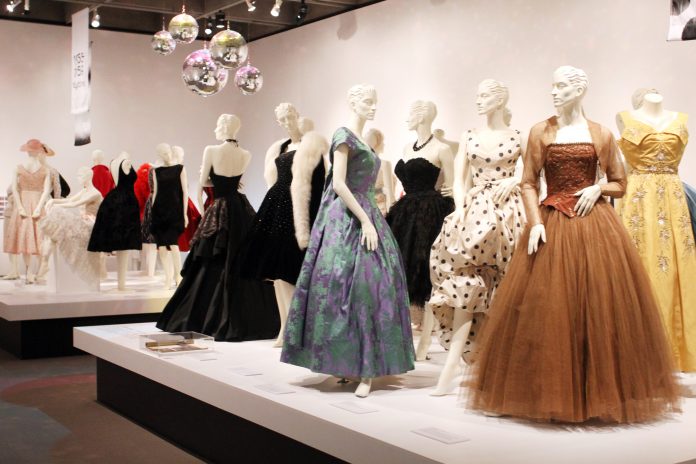
From Rationing to Ravishing, currently on display at the Museum of Vancouver, shows key couture pieces from the pre-war, post-war, and wartime eras, and focuses on how designers’ creations changed during these eras. While this may be the description given by the museum, we feel that the exhibit is not a story about the clothes, but a story of the rise of the fabulous independent woman.

The exhibit begins with a brief introduction to the ’30s, when outfits were practical and sentimental, just like the women wearing them. Having had their roaring ’20s truncated by the Great Depression, these women opted for slim waists, pouffed shoulders and a flattering and sensible A-line skirt. However, as World War II rolled in without caution, this one-toned reality of fashion for women was pushed away.

Out the door went sentimentality and soft shoulders; the woman of the WWII period embodied power and capability. As men went off to war, women seized their jobs in factories and became more empowered and independent than ever. Structured shoulder pads replaced puffed sleeves and pants replaced flowing skirts, creating the figure of an independent woman. However, femininity was not completely thrown out with the extra fabric. Slight accessories still adorned their necks and fancied blouses were worn in moderation.

The war did not only have an effect on the women wearing the clothes, it also had a profound effect on the people making them. As German forces stormed through Europe, they occupied many of the most fabulous places to shop. The undisputed capital of style at this point was Paris and during WWII the City of Light was firmly under the tight grip of the Nazis.

Madame Gres was a famous couturier who loved whipping up pleated full skirts and dresses with revealing cutouts. One particularly fabulous Gres dress in the exhibit was a black wool and satin number. The story goes that, to keep her seamstresses out of trouble with the Nazis, Gres replaced time-consuming pleating and fabric volume work with intricate cutting and complex construction. The dress had almost 80 pieces to it and was all done within the limits of fabric rationing mandates.

Times were tough, but so were the women! Wedding gowns that had previously been large and loufa-like affairs were slim and trim with an austere elegance and grace. For women of the day, frivolousness was unpatriotic. One such wedding gown from the exhibit was made out of an old parachute!

After much struggle and heartache, the exhibit moves into the post-war period. The war was over, frugality was thrown out, and with it, the fabric rationing laws. In short, women were sick of austerity and it was more than time for a rediscovery of fashion. Enter Christian Dior and his collections elegantly coined the “new look.” This way of dressing was a full-bodied alternative to the masculinity of the war years and matched the feelings of the women of the day. 

Our favourite room of the exhibit showed off all the evening wear from this period. Full skirts, tight bodices, and an intense amount of beading and feathers, dresses in this section were a treat for the eyes.

This exhibit, while small, is full of fascinating experiences and stories brought to life through the garments that illustrate how women’s clothing paralleled the times. It gives the observer a good look at women in the different eras and how their clothes changed, but more importantly who they changed into. For any lover of fashion, textile, or beautifully made garments, this exhibit is a must see.

From Rationing to Ravishing is at the Museum of Vancouver until March 8, 2015. For more information, visit museumofvancouver.ca.

In defence of ‘social justice warriors’

8

The past few months have been eventful. A prominent Canadian radio personality has been publicly condemned for sexual abuse and violence; a group of female celebrities’ personal photos was leaked and quickly spread across the web; a vaguely formalized community rallied against the changing tide of video game culture under the guise of an ethical crusade.

Tension surrounding the power dynamics of gender — especially on the internet — is generally par for the course, but in the second half of 2014, it’s hard to avoid just how much this dynamic structures our lives online.

Amid these seemingly constant crises, a new pejorative term has cropped up in online communities like Reddit and 4chan: the ‘social justice warrior,’ or SJW.

From what I’ve gleaned online — and there are literally hundreds of blogs devoted to this archetype — SJWs are generally young, white, and spend their time on social media condemning those who fail to live up to their own moral and ethical standards. This reclusive specimen is either hypocritically unaware of their own privilege in society, or overly general in their condemnation of an entire group of people, usually white men.

There are, predictably, plenty of memes and jokes to go along with the SJW figure. Most popular among them is Social Justice Sally, an affluent white woman and ad hominem abuser meant to stand as a symbol for SJWs everywhere — her relentless requests that you “check your privilege” are portrayed as cloying and generally hindering of meaningful online discussion. Other memes spoof the concept of checking one’s privilege entirely, or portray feminists as hateful, draconian banshees unwilling to engage in any critical discussion they can’t win.

Those who openly express support [for human rights] are vilified for their “hypocrisy” and “shallowness.”

It’s worth noting the many forms that SJWs supposedly take, if only to tear down each thinly imagined straw man one by one.

Problems that social justice advocates have been stressing for decades are finally finding themselves in the spotlight — issues of sexual abuse and coercion, objectification and sexualization, gender imbalance in the cultural industries — and this has forced those who cling to tired, oppressive ideologies to find an insult for those who dare to challenge the systems of oppression that have kept white, straight, able-bodied men on top of the heap. Hence, the social justice warrior.

We’re led to believe those who hold ideologies which fit under the umbrella of social justice — feminism, LGBTQ rights, body positivity — are attempting to dominate what should be a conversation and are forcing themselves into discussions in order to parrot rhetoric they don’t fully understand.

But what’s really going on is that those who do dominate the conversation are reacting with fear and confusion to the shifting tides of cultural acceptance and values. Female, non-white, LGBTQ, non-binary, disabled, low income, and other formerly silent voices are slowly gaining a foothold in our society, and those who openly express support are vilified and deprecated for their “hypocrisy” and “shallowness.”

The occasional overly pedantic Tumblr user targeting white men in power is dwarfed by the thousands of racist, sexist, and homophobic tirades which flood online comments sections every single day. Who’s the real problem here?

So, yeah, maybe not everyone who posts about social justice online gets every single detail right. But these ideologies are built to be open to the exchange of ideas, and evolve along with those who are a part of them. At the very least, the rise of the SJW shows that people are interested in advocating for a more egalitarian and open society in which power is shared rather than consolidated — and that’s a start.

Album review: Mother Mother – Very Good Bad Thing

0

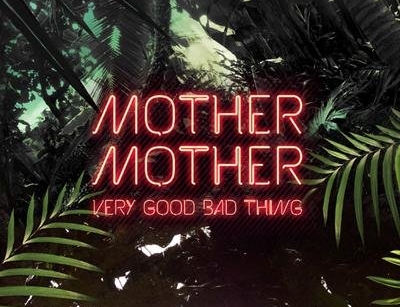
Mother Mother’s latest album, Very Good Bad Thing, showcases the juxtaposition of dark songs and upbeat tempos that fans of the local-bred band have come to expect. Much like their 2012 album The Sticks, VGBT shows off Mother Mother’s ability to produce both high-energy aggressive songs, and slow, slow songs that are like lullabies.

Lead vocalist Ryan Guldemond can take much of the credit for this. As Guldemond’s aim in creating Mother Mother was to create a band based on vocally- driven pop songs, his vocals are a key in every song, be it upbeat or slower moving.

The opening track on the album, “Get Out The Way,” is a jolting start: it opens with a blunt synth beat that continues through the song. The melody is bold and aggressive, just as the title suggests. While “Get Out The Way” is in no way Mother Mother’s most lyrically inspired song, Guldemond and back-up vocalists Molly Guldemond (his sister) and Jasmin Parkin still help to make the song high energy. The band does this type of song well, as shown throughout the album, including on the title track.

“Very Good Bad Thing” has a great dance beat (if you are into that sort of thing), and like the previous song, is very up-tempo. However, it differs from “Get Out The Way” in that its lyrics do not match the upbeat melody. It is really about control and an addiction to power that the narrator cannot give up, thus giving it a contrary nature as the lyrics clash with the melody.

The song “Reaper Man” takes the point of view of the Grim Reaper. As noted by Ryan Guldemond and drummer Ali Siadat, it is a “victorious song about being the misfit, the underdog.” The song’s narrator states at one point, “Oh, yeah, I’m an ugly mess/ Not in the face but in the head.” At face value, it is a self-deprecating song, and so it is interesting that the band perceives it as a victorious song. The combination of a slower melody and bleaker lyrics makes for a very dark pop song.

Mother Mother pulls the style off just as well as they do with the more upbeat songs. Their style is vocally-driven pop, and this latest album does not break from that. If you like high-energy, check out “Monkey Tree” or “Shout If You Know;” if slow is more your speed, I recommend “Alone and Sublime” or “Have It Out.”

They master both the bleak and the (seemingly) cheery songs. They have a different sound than their contemporaries in the pop music world, and it continues to be endearing. If you have not had the privilege to check them out, Very Good Bad Thing is your chance to do so — it shows the band at their very best.

The Theory of Everything is a poorly constructed biopic

5

Secular humanists groan when movies such as God’s Not Dead and Son of God gross millions at the box-office. “They’re preaching to the choir,” they scream in their own choir-like unison. These movies infuriate them to the bone. Why? Perhaps it is for the same reason that I detested The Theory Of Everything (admittedly, this biopic is nowhere near as alienating as the formerly mentioned films; however, its agenda lies deceptively in the background). It is unbearably maddening to see your worldview trashed in order to prop up a contrary one.

Although worldview analysis is a legitimate tool in the critic’s hand, it should not be decisive, as a film is more than just ideology.

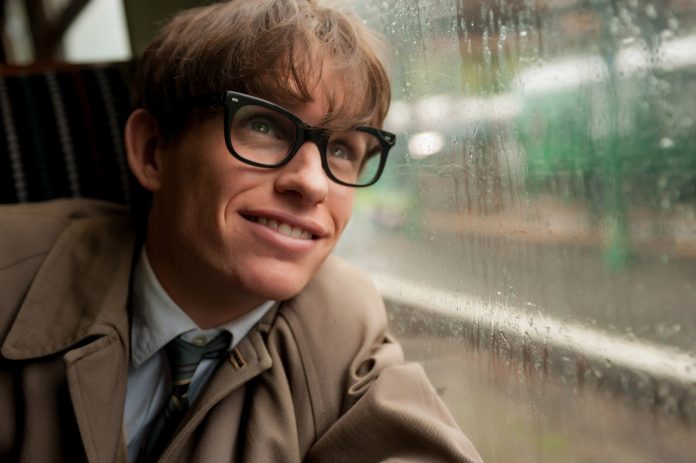
From a technical standpoint, this is not a dreadfully made film. The production design is authentic as it recreates the mid 1900’s; compositionally, the visuals are conventional but effective at highlighting the physical aspects of Eddie Redmayne’s admirable performance through close-ups. The film excels at visually capturing Stephen Hawking’s slow progression of being healthy to becoming wheelchair bound.

It is the writing and storytelling that make this film the worst kind of kitschy schlock. Stephen Hawking is a humanistic hero who is glorified as a patriarch of atheism, thus puffing up the atheistic spirits of the chorus already singing Hawking’s praise.

As this is a biopic, ask yourself, was his divorce from Jane Wilde done without any confrontation in the light of his demanding need for care due to his physical decay? Why is the abuse by Hawking’s second wife glossed over?

Conveniently, Hawking’s rumoured nights out at strip clubs are excluded. It seems a little too suspicious that the events the story skips over are the very ones which would make us see flaws in Stephen Hawking or those around him. Even in a scene that identifies his objectification of women through a pornographic magazine is played off as humourous. Everything feels fake and too nice.

Evidently, film critics such as Mike McCahill who cried, “ban this sick film,” in The Guardian regarding God’s Not Dead, will not say such things of this movie. Why? Because their worldview is being propagandized on-screen. I have no problem with banning abysmal Christian movies if they are abysmal, but equally I also have no problem banning The Theory of Everything because of its poor storytelling.

From a worldview standpoint, my main objection is that Hawking’s atheism is seen as rational (with no evidence given) and the theistic beliefs of his wife (Jane Wilde) irrational. There is an interesting exploration to be delved into here about a wife and husband with contrasting views on the natural and supernatural, but since this film leans so far to one side there is no struggle to be had. The film thinks it’s nice that she has her own beliefs, but that she is most definitely wrong and it never explains why. Jane is a smart woman, just not when it comes to her faith.

At the end of the film, even after Hawking preaches one of the most cringe-worthy speeches in recent memory — telling us the meaning of life — his ex-wife’s faith still has not been refuted nor has any evidence been marshalled for denying supernaturalism. Yet the choir will sing.

Antonia Hirsch: staring at nothing at the SFU Gallery

0

When looking at Antonia Hirsch’s exhibition at the SFU Gallery, John Carpenter’s 1987 film, Prince of Darkness, came to mind. Satan is portrayed as infectious green ooze imprisoned in a jar and kept hidden from the world by a secret Catholic brotherhood, so that he may not call forth his progenitor. This “father of Satan” or “Anti-God” resides in the realm of antimatter and is summoned through a mirror acting as a portal.

The film’s characters believe that this anti-being will bring about the end of the world through its negation of our universe. Hirsch’s exhibit brought to mind this realm of antimatter, represented as a space of negation accessed through mirrors.

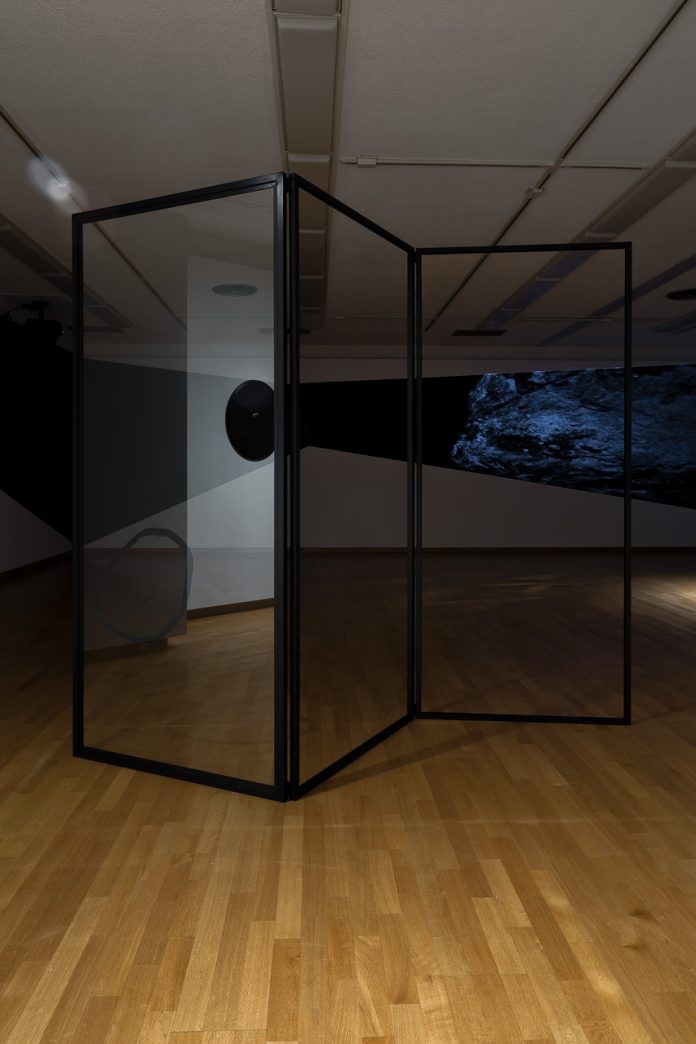
Under sombre lighting, the first reflection encountered in the exhibition is the viewer’s own. Framed in a three-part, room-dividing screen, an oblong glass makes the viewer aware of themself in the space, similar to the feeling of seeing oneself reflected in a street window while walking, but also allowing the viewer to see beyond the reflection.

The second instance is that of a black and white still image in a circular frame, reflected on a similar monochrome moving image on the far wall. The former image taken by NASA is of an asteroid, specifically 433 Eros, whereas the latter is a stop-motion-like succession of images taken of a withered potato in rotation. An outline of a shape (is it of an asteroid? a potato?) painted on the standing screen glass ostensibly connects these images.

Projected onto an anamorphic black shape painted on the far wall of the gallery, the potato resembles an asteroid, just as 433 Eros is potato-like in its shape. The asteroid refers to a space beyond that of our phenomenological experience, while the potato is terrestrial, literally from the earth. The convex frame around the asteroid alludes to portraiture framing, but it also refers to the sign-shaped sculpture positioned next to the tuber video.

Claude glass is a black mirror that was used by landscape painters before the widespread use of photography. Normally convex-shaped, it was carried in a pocket or in a satchel and positioned in such a way that the painter would have his back to the scene he was painting. Dozens of black mirrors, in the shape of smartphones, tablets, and other mobile devices, cover this sculpture that resembles a standing sign.

This work can be read as a comment on the prevalent and pernicious use of mobile devices in the contemporary moment, as most of us are constantly looking at the world reflected in our personal black mirrors.

Through social media, we project our narcissistic selves into the internet; a negative space that connects and distances in equal measure. If we are gazing into this void, who, or what, is looking back at us? Nietzsche states that “if you gaze long enough into an abyss, the abyss will gaze back into you.” What happens if we gaze into the abyss and only see ourselves?

Antonia Hirsch’s Negative Space is at SFU Gallery until December 13. Visit sfu.ca/galleries for more information.

Divinity: Original Sin deserves a second look

0

Divinity: Original Sin, which was released back in June, follows two heroes, or Source Hunters as they’re known in the game, on a quest to save the world from Sorcery. Larian Studios started a Kickstarter campaign for the game, and after successful fundraising, they brought us this delicious, old-school, classic RPG.

The thing that struck me right off the bat was how the game looked, played, and felt like an AAA game rather than a Kickstarter project. The lush and beautiful graphics consisted of detailed environments, beautifully designed monsters, and a vibrant colour palette that took my breath away.

Harking back to the old days of Fallout 2 and Wasteland, the game is rife with deep lore, fleshed out characters, and a high level of deep customization. The combat is unlike the traditional RPGs that we’re so used to playing these days (think Mass Effect or Dragon Age) in the sense that the combat is a turn-based affair. You initially control two party members, but you can extend your party to a total of four characters.

The game allows you to choose a specific predetermined character class from a list of classes — such as Knights, Battlemages, Wizards, or Rogues  — depending on your play style, but your choice is not binding. If you choose to start the game as a Fighter, you can easily turn him into an Archer/Cleric later on in the game.

This game harks back to the traditional RPG roots and reminded me a lot of Baldur’s Gate in that there is no hand holding. It does not tell you where to go, what to do next, or who to talk to. You have to talk to anyone and everyone to progress through the story, and you can take up many side quests along the way in order to increase your level and improve your gear and armour.

The combat is complex and addictive, and the environment plays a huge role. You can use a fire spell on an oil barrel to make it explode, and if the enemy is standing on a puddle of water, you can use lightning spells on the water in order to electrocute them.

A great deal of effort has gone into the soundtrack as well, and I can safely say it is one of the best soundtracks I have heard in quite a while, with slow, soft melodies playing in the background while you’re exploring a city and rising to a crescendo when in combat.

Perhaps the only drawback I found is the inventory system, which can be a chore as it is both frustrating and time-consuming to transfer items to another character.

This is not an easy game, but once you start playing it, it can be difficult to stop. New players are invited to get lost in this game’s hugely detailed world, but it also welcomes old players with open arms. If you’re an RPG fan, do yourself a favour and go get this game.

Dying for it

0
"Assisted dying helps people reclaim some control over their lives."

To be honest, I probably think about death too much.

My continuously growing list of unreasonable fears — including sharks, sink holes, stray bullets, black holes, and death by accidentally tripping and hitting the pavement with my teeth in a way that they go up into my brain — all share the noticeable theme of being death-orientated. I’ll also be the first to admit that just talking about death terrifies me. Few things in life are as guaranteed as the fact that we’ll all one day be dead, and that fact is simultaneously unsettling and reassuring in equal measure.

So why am I deciding to share all of this personal and otherwise useless information with you? Because I want you to know how uncomfortable the subject makes me, so that hopefully you’ll recognize just how strongly I feel about assisted dying.

There are a multitude of terms for it — assisted dying, assisted suicide, euthanasia — but they all result in the same thing. According to National Health Services, euthanasia is “the act of deliberately ending a person’s life to relieve suffering,” whereas assisted suicide is “the act of deliberately assisting or encouraging another person to kill themselves.” Both become options for consideration when a terminal patient is seeking a way to accelerate their death.

The decision should fall in the hands of those who it affects most: the patients themselves.

Why would someone want to end their life any sooner than they have to? There are many reasons, actually, but some of the most common are if a patient knows they’ll be in considerable pain and is against prolonging the process; the sheer cost of maintaining proper medication and treatment to delay the inevitable; or — one of the biggest points of contention for assisted dying supporters — wanting to reclaim control of their life and end it on their own terms.

Seems pretty reasonable, right? So what’s standing in the way?

Quite bluntly, the practice of assisted dying is illegal in Canada, and anyone who commits the offence could face up to 14 years in jail. The issue is currently in front of the Supreme Court of Canada, where the BC Civil Liberties Association is arguing in favour of “doctor-assisted dying only, and not assisted suicide at the hands of just anyone.”

By lessening restrictions on the practice and awarding it more legality, the BC Civil Liberties Association hopes that fewer illegal assisted suicides will take place and that there will be a reduced chance of said suicide attempts being botched or leaving the patient in even worse shape. Quebec is the only province in Canada to successfully pass right-to-die legislation back in June of this year, meaning that terminally ill patients over the age of 18 who are in constant pain and stand no chance of improving can submit a request for a doctor-assisted death.

So what does the rest of the country think about assisted dying? A 2014 poll conducted by national charity Dying with Dignity (DWD) found that 84 per cent of surveyed Canadians agreed that “a doctor should be able to help someone end their life if the person is a competent adult who is terminally ill, suffering unbearably, and repeatedly asks for assistance to die.”

Even more surprising is that 80 per cent of Christians and 83 per cent of Catholics polled showed support for assisted dying. The poll’s scope is admittedly limited in that only 2,500 Canadians were sampled, but DWD still calls it “the most comprehensive Canadian survey ever undertaken on the public’s perception of dying with dignity.”

In British Columbia specifically, a full 87 per cent of people surveyed were found to be in support of assisted dying.

Aside from the legality of assisted dying, a large chunk of opposition comes from various religious groups who entirely oppose the taking of another person’s life. The Death with Dignity National Center dedicates a large part of its website to listing which religious groups are against assisted dying, as well as specific reasons as to why it conflicts with their beliefs. Among these is the view that the “killing of a human being, even by an act of omission to eliminate suffering, violates divine law, and offends the dignity of the human person.”

However, some religions acknowledge that a person’s suffering and the need for compassion in terminal cases is important. The Mormon Church, for example, acknowledges that “when dying becomes inevitable, death should be looked upon as a blessing and a purposeful part of an external existence. Members should not feel obligated to extend mortal life by means that are unreasonable.” Again, we encounter the issue of set rules and beliefs coming into conflict with what might seem to be the morally right thing to do.

No one wants to hear they have a limited amount of time left to live — but when you factor in the hopelessness that comes with knowing your illness is terminal and that your quality of life will only worsen going forward, it’s no wonder people are rallying behind the right to assisted death.

As someone who’s not in a situation where I have to choose whether or not I want to pursue assisted dying, it seems condescending to comment on if it should be allowed or not. From the outside, it’s easy for me to weigh in on the topic and say what I personally feel is right or wrong. In reality, the decision should fall in the hands of those who it affects most: the patients themselves.

No one has a say in whether or not they will die one day, but assisted dying helps people reclaim some control over their lives. Dying is inevitable; having no say in how you die doesn’t have to be.

A child’s healthy diet is a parent’s inherent responsibility

0

Author Karen Le Billon believes in “taste training” — that we should condition children to enjoy healthy foods, rather than those loaded with sugar and fat. She elaborates on this concept in a book entitled Getting to Yum: 7 Secrets For Raising Eager Eaters, where she also examines the impact of junk food advertisements on children and their families — she feels that similar marketing slogans could be applied by parents to entice their children to eat healthy.

This is all well and good, but do we really need to use Le Billon’s strategies for a parenting tactic that should already be common knowledge in the 21st century? Yes, picky eaters can be difficult, but whose fault is this really? It certainly isn’t the fault of junk food advertising, which Le Billon and many other parents are all too quick to blame.

I know that advertising can have a profound effect on a young child’s mind, but it isn’t the demon that people make it out to be. Instead, the fault lies with the parents. Parents buy and cook unhealthy food, and then blame the food industry for making their children overweight.

Sure, these parents are quick to say that they must buy Kraft Dinner to prevent their child from throwing a temper tantrum, but that excuse is simply unreasonable. Parents have to lay down the law in terms of what their children can and cannot eat, and they should not be concerned with losing face if their child throws a tantrum in the store.

Parents buy and cook unhealthy food, then blame food industries for making their kids overweight.

Instead of using advertising slogan strategies (this broccoli is magically delicious!) to counter the effect that junk food advertisements have on their children, parents should consider saying “no” to their kids when it comes to unhealthy food. If parents are that concerned about advertising, then they should discard their cable television — something my parents did when I was born.

I understand that, in this day and age, communication technology is much more ubiquitous than it was 21 years ago — due to the internet and mobile handhelds — but parents can easily download apps such as Adblock for free, as well as limit their child’s access to certain games that may contain certain advertising.

Moreover, there are many websites that parents can use as educational resources to teach their kids about advertising. Many of these websites even have recipes for cheap and healthy meals that kids will enjoy. Parents should simply teach children what is unhealthy, limit their child’s access to ads, and watch which foods they purchase.

Parents do not need influences from the food industry to help them raise their kids, and we certainly do not need to read Karen Le Billon’s book, which  merely reiterates the obvious.