Home Blog Page 1064

The Homesman is a haunting, feminist western

0

There is an unforgettable moment in The Homesman when a pale woman living in a modest south-western style house during the 1800s takes what appears to be the corpse of a baby and walks it over to an outhouse. The camera tracks her in a single take.

Before arriving at the wooden shack, we hear the shrieking cry of the newborn — a cue that the baby is still alive. The woman throws the baby into the outhouse like some refuse and shuts the door. I was confused, lacking sufficient time to process the proceedings, and the shot then quickly cut to another character in a different part of the story.

What happens before this sequence has very little do with what happens within it, and what follows it feels unfitting, but for the brief moments when it lingered on screen, I nearly vomited in shock. I’m still affected by the power of the image.

This brief scene from the two-hour western encapsulates for the viewer the dominant idea of the film: the lavishing and the frustrating. This is a feminist western that follows Mary Bee Cuddy (the mother) as she journeys with a convict man to transport three mentally insane women across the country. The happenings on this journey are episodic encounters with different unrelated ideas.

The film concerns the living conditions of women in the 1800s. When women are not cared for, it is difficult for them to care for their children, and thus an inescapable cycle occurs where society becomes trapped in haunting psychosis. The first two acts of The Homesman depict this madness, as there is not a sane character shown. The only difference between each of them is that some are better at hiding their insanity than others.

The aforementioned young mother is alone, sick, and disturbed. Clearly, something has made her neurotic, but we remain unaware of the cause. For a film that attempts to depict the living conditions of women in the old west, all of the female characters remain cyphers and their problems take centre stage, overshadowing any depiction of depth in their character. They are one-dimensional, nothing more than their mental illnesses, which seems to undermine the entire point of the movie.

Most annoying are the wild tangents that comment on the class divide seen in the riches of the east and the poverty of the west. The film touches on the greed of the upper class, while indulging in common western tropes, such as threatening Native Americans. Consequently, it becomes a wildly uneven picture with fragments of ideas that hide the main theme.

The Homesman seems to wander in a desert of ideas and, in the end, you lose track of what the entire journey was supposed to be about.

On a plot level, the film is most certainly never boring, but from a thematic standpoint, the concerns developed in the scene where the mother kills her newborn child come across merely as violent imagery used to intrigue the viewer, but do not contribute to anything wholly satisfying.



Foxcatcher is ambitious but unfocused

1

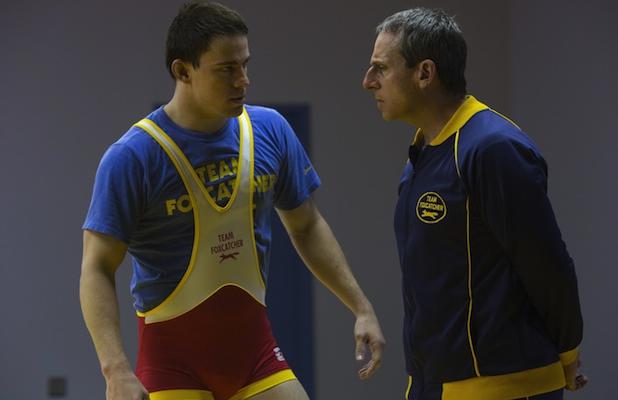
Foxcatcher, the latest film from director Bennett Miller (Capote, Moneyball), is a true crime story set in the world of wrestling. A cauliflower-eared Channing Tatum plays 1984 Olympic gold medalist Mark Schultz, who several years after his win finds himself depressed, broke, and unsure of where to go next. His brother, Dave Schultz (Mark Ruffalo), is a fellow 1984 gold medalist, and Mark continues to train in his brother’s gym but doesn’t seem destined to compete professionally again at the upcoming 1988 Seoul games.

Enter multi-millionaire John Du Pont — played by an eerily unrecognizable Steve Carrell — a wrestling enthusiast who recruits Mark to train at his luxurious, huge Foxcatcher estate. Du Pont begins a mentoring relationship with Mark, attempting to train him to win gold at the upcoming world championship and the 1988 Olympic games.

What begins as a typical coach-sportsman relationship slowly evolves into something more sinister, as Du Pont’s obsession with winning grows and his strange motives are explored.

There is a lot going on in the film. It’s incredibly ambitious, using the frame story of Du Pont and Mark’s relationship to explore incredibly lofty themes of patriotism, power, privileg,e legacy, capitalism, and pride. The script, by E. Max Frye and Dan Futterman, examines all of these themes to essentially paint a critique of the 1980s, and in a sense, modern America. These ideologies and themes, emblematic of a certain vision of America, are a lot to explore in one film.

This leads to plenty of overwrought, clumsy imagery. An American flag is seen in almost every scene. Du Pont refers to himself as “The Golden Eagle,” and his home is adorned with grandiose portraits of famous American leaders of the 19th and 20th century. The film fades to black with a chanting of “USA, USA” by an enraptured crowd.

With an exploration of themes as broad and unwieldy as patriotism and legacy, the film does not find enough time to focus on its characters. Surely, the film is character-driven, but they exist only to clumsily outline the story’s themes, from Du Pont’s constant monologues on America, power, and honour to Schultz’s obsession with competition and victory.

We do not get full portraits of the characters’ real personalities or psyches, which becomes crucial as the film progresses. Any potential tension that could have been built is lost, because it’s difficult to really connect to or care for the characters.

However, the actors certainly try their best. Steve Carrell is captivating as the wealthy, powerful Du Pont. His hushed delivery, and nervous stuttering brings a welcome sense of subtlety to a film that is lacking in this area.

Channing Tatum is also shockingly good, convincingly playing an athlete who seems to be past his personal and professional peak — the relationship between the two is the film’s most interesting aspect. There is a truly captivating story there, one that the film should have focused on, rather than clumsily framing it as symptomatic of America as a whole.

Broken Sex Doll returns to The Cultch

0

A smash hit in 2013, Broken Sex Doll returned to The Cultch for another phenomenal run this November. A sexy, hilarious ride from start to finish, this musical breaks down conventional theatre with brilliant irreverence.

The writer and director of this “sci-fi musical sex comedy,” Andy Thompson, spoke to The Peak about the show’s creation and its latest revival. Founder of the theatre company The Virtual Stage, Andy also directed the The Zombie Syndrome and Cruel & Unusual.

Andy explained that in 2011, The Virtual Stage was invited to participate in Theatre Under The Gun, a challenge to create a theatre piece using limited resources to prompt inspiration and the imagination. Andy described their inspiration material: “[It was] an essay, and the essay had a description of a futuristic world in which people could record and exchange their actual sensory experiences.”

He brought this concept to life in 2011 with a short version of the musical, but it was not until 2013 that the full length Broken Sex Doll debuted. Thompson describes the piece as an examination of the current trend of “advancing technology at an unparalleled rate, and the other flip side, where the human race is at socially, morally, ethically, and how these things are not advancing at the same rate.”

Discussing the controversies around Broken Sex Doll, Andy said, “I think I understand feminism, but the feminist reaction is split,” as he explained that some love the show and some leave offended. Andy stated that this is due to how he addresses patriarchy in the show.

“I am taking misogyny and going further with it. Men being in control is the normal,” explained Thompson. The show makes this statement with an intriguing use of symbolism: “Women get tossed in the trash, men are looking at women in society as goods and chattel, not people. The sex dolls are a symbol of that,” he said.

Despite the mixed reactions to the symbolism of the show, I found the musical to be a wonderful allegory for the struggle women face to find equality.

However, the main attraction of this production is its grandiosity. Interesting staging, mesmerizing audio-visual effects, stunning musical numbers, and an impressive cast created an awe-inspiring musical. The plot and dialogue took the audience on a ridiculously hilarious journey through a sex and technology crazed world.

Chelsea Rose Tucker who plays Ginger, the star of Broken Sex Doll, said that being in the musical has been “amazing, scary, and just the most fun I’ve ever had!”  Her performance was absolutely stellar, and she shared excellent chemistry with co-star Benjamin Elliot.

In all, this production was absolutely hilarious, deliciously entertaining, and an amazing way to spend an evening. It questioned society, creating an engaging and wonderful commentary on stage. Broken Sex Doll is a triumph for The Virtual Stage and all those involved. It’s truly successful in it’s goal to make the audience laugh.

Quidditch comes into its own in Mudbloods

0

Quidditch is a sport that had its beginnings in a fantasy world, but it is now played by hundreds of teams around the world. Directed by Farzad Sangari, Mudbloods: A Film about Quidditch is a documentary centred around the UCLA quidditch team and their journey to qualifying and playing in the Fifth Annual Quidditch World Cup in New York City.

Providing a window into the world of quidditch as a college sport, and as a space where athletic prowess meets a passion for the books, it not only captures days in the life of quidditch players, but also highlights the struggles they face in trying to be accepted as real athletes.

As a sport where players run with a broom between their legs, and the snitch is a tennis ball tucked into a sock and attached to the snitch runner’s waist, quidditch may be easily misconceived as child’s play, something fun but not serious enough to be a collegiate-level sport.

But quidditch is a full-contact sport, and the fact that players have to run with a broom between their legs means that they must play the game effectively with only one hand. That takes skill.

Ironically, the people who misunderstand the sport are generally other athletes. While it’s easy to see players as nerds and geeks when you’ve never played, as one UCLA quidditch player puts it, “Once you interact with it on an athletic level, you understand.” That is the main goal of the documentary, to spread awareness about the sport and to encourage its acceptance.

On a stylistic level, the documentary symbolically and smartly incorporates graphic art, reducing and inflating real three-dimensional, colourful characters into two-dimensional, black-and-white figures. Not only does this add a fun, artistic edge to the film, but more importantly, it represents the adaptation of an idea on a page into a real sport, as Sangari intended.

I think the film sends across a brilliant message: the end of a good book should not mean merely closing it, but lifting ideas right out of its pages and adopting them in your life.

The documentary is inspiring because it follows the struggle of the underdog. At the time of filming, quidditch players were a pretty marginalized group, on the fringe enough to have people video-taping them on the field as if they were doing something completely foreign and weird.

Incorporating the perspectives of the Commissioner of the International Quidditch Association, Alex Benepe, and Katie Aiani, the #1 Harry Potter fan as voted by Box Office Magazine in 2010, the documentary sheds light on the game of quidditch from a variety of angles, and captures the hard work and hopes of people who are passionate and driven enough to achieve their dreams.

It is a very uplifting film, the kind that makes you want to get up and found your own club, take your life into your own hands, and not let yourself be defined by people who don’t understand you.

At the end of the movie, the viewer discovers that Benepe brought quidditch to the London Olympic Games — I let out my own little cheer because, by then, I had come to think of quidditch as something worth fighting for, for all the things it represents.

I recommend checking out Mudbloods, and if you’re looking for something closer to home, consider joining SFU’s very own quidditch team.

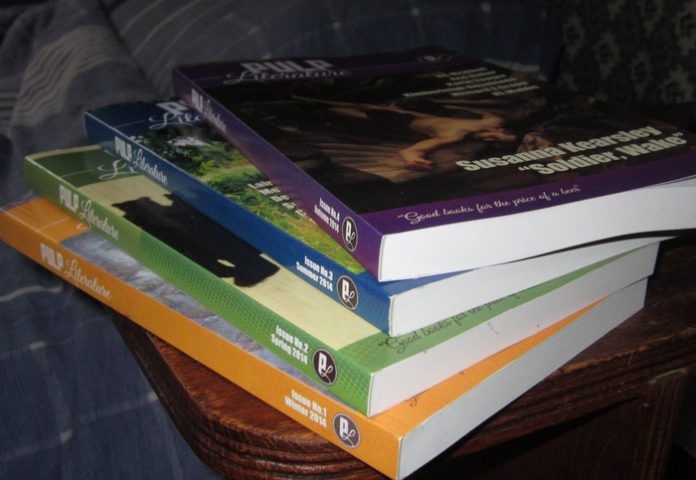
Genre fiction finds a home in Pulp Literature

0

As kids and young adults, our parents frequently rope us into doing things we don’t want to do — things like looking after our younger siblings, unloading the dishwasher, or vacuuming the living room. So when your mother is a co-founder of a literary magazine called Pulp Literature, you get roped into helping. At least, that’s what happened to Elizabeth Pieters, a second year engineering student at SFU.

“A lot of what I do is called working in the slush pile,” explains Pieters. “I essentially get to be the first person to read new incoming stories, and I provide a recommendation to the editors based on the quality of the story. I also do copy editing, which is checking the final manuscript for any typos or errors.”

Pulp Literature is formatted like a paperback book, and has a genre-bending focus. Genre fiction — such as sci-fi, speculative fiction, fantasy, and horror — is often denigrated as low-brow literature, but the founders of Pulp Literature magazine believe that genre fiction can also be literary. Featuring everything from short stories to novellas, poetry, illustrations, and graphic novels, the magazine bends the confines of these various labels.

For Pieters, being roped in isn’t so bad, as she actually likes what she’s doing. “I’ve always been interested in writing and stories, so this was a perfect opportunity to get involved in the writing industry. I think it’s really cool to actually be a part of a magazine and actually see how the selection process for each story works.”

Most people would associate these traits and this knowledge with an English major, not an engineer, but Pieters insists the skills she’s using and learning are essential for any professional.

“Having to evaluate other people’s stories has made me a lot more aware of what to avoid in my own writing, and how to make my own stories stand out. Writing and communication is one of the things that engineers stereotypically struggle with, yet it is a key component of engineering. Volunteering at a magazine like Pulp Literature really rounds you out.”

The nature of the slush pile means that it ranges from hidden gems to completely unsuitable submissions. “I truly dislike very few; most are fun to read, and once in a while you strike gold. It’s a great feeling to not only read a fantastic story, but to share it with other people too,” she says. Of course, that also means delivering rejections.

“The really good ones and the really bad ones are easy to decide on,” explains Pieters. “The really good ones grab you right away and don’t let go; it’s not even a question of examining the writing or plot, you know it’s good because you just can’t put it down.

“The really bad ones, likewise, are the ones that you have to force yourself to finish and that you never want to read again. Ever. It’s rating the ones in the middle that are more difficult, the ‘meh’ stories, the ones that might have potential or might just tank.”

The magazine seeks contributions from writers, poets, and graphic artists that fit into any genre fiction category, or cross-over genre, or those that haven’t found a home elsewhere. After their first successful year of publication, Pulp Literature is now fundraising for a second year.

Backers can get editorial feedback on writing, attend a writing retreat on Bowen Island, or receive a year’s subscription. Pieters insists that there’s something entertaining in every issue, and that you’re supporting local writers and artists in the process.

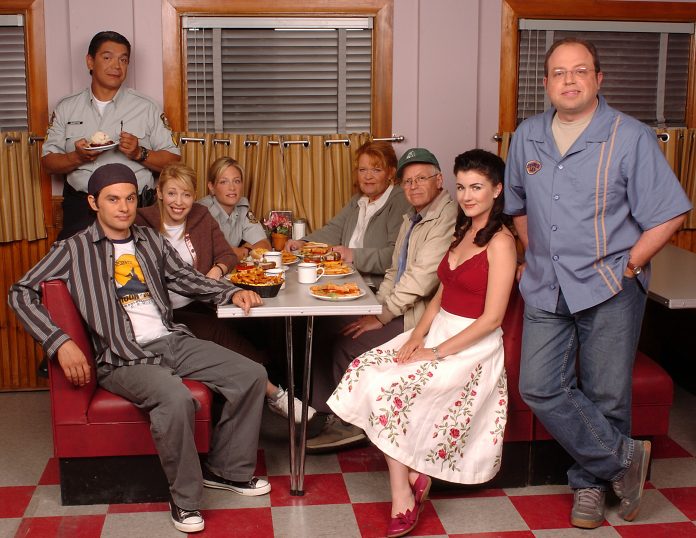
Corner Gas comes to the big screen

0

As the only gas station for 40 kilometres around in any direction, Corner Gas is the hub of life in the small fictional town of Dog River, Saskatchewan. Besides being a place that all of Dog River’s residents pass through at some point, it is a necessary pit stop for people low on gas passing through the badlands of rural Saskatchewan.

Corner Gas began as a highly successful Canadian sitcom created by Brent Butt (who also stars at the main character, Leroy), and the movie is due to hit the big screens in early December.

Corner Gas: The Movie follows the same characters as the television series. It is a feel-good film about the importance of community that can definitely be appreciated by everyone, but will be especially funny and exciting for people who have already seen the original television series.

The last episode of Corner Gas aired in 2009, so this movie is a nice extra tidbit wherein viewers get to revisit their favourite characters five years later, as they face their biggest crisis yet. Even if you never followed the series, this movie stands well on its own two feet; never wasting a minute, Corner Gas is propelled by riveting, well-developed characters and well-paced humour.

The movie features a cast of mostly loveable, very distinct characters, from sarcastic, deadpan Leroy (the owner of Corner Gas) to his best friend Yarbo, the unemployed perpetual dreamer often heralded as the village idiot, to Wanda, an incredibly intelligent — and brilliantly brazen — single mom who is always up to some crazy shenanigans.

The interactions between these very authentic characters are not only super fun to watch, but also provide a commentary, however light-hearted and comedic, about the struggle between community and the self.

This 90-minute feature explores the importance of duty to one’s community, even if it goes against one’s self-interest; through a tug-of-war perspective, it demonstrates both the good and bad consequences as its characters walk that line.

What I especially liked about the film was its location, and the fact that it focused on slow, small-town life. The fact that the main characters were not just friends but neighbours, and that much more intertwined, increased the sense of community.

I personally like the atmosphere of the prairie landscape that was the backdrop throughout the film — the sprawling, open plains, the electric powerhouse in the middle of nowhere, the tall blades of grass drifting in the wind.

Corner Gas displayed the breadbasket of Canada in an enthralling way; I would be very proud to call this a uniquely, distinctly Canadian film.

The pantomime tradition in East Vancouver continues with Cinderella

0

An annual event, Theatre Replacement’s An East Van Panto is back and more fun than ever. The stellar team behind last year’s Jack and the Beanstalk: An East Van Panto are back with Cinderella. Veda Hille, Amiel Gladstone, and Charles Demers bring their newest creation full of hilarious costumes, talented performers, and fun for the whole family to the York Theatre from December 3 to 28.

Taking inspiration from the original Cinderella fairytale, Theatre Replacement promises to woo the crowd with big laughs and big fun.

In an interview with The Peak, Veda Hille let me in on the details of the show. Veda is Theatre Replacement’s in-house composer and has been working with the company since 2003.

This year, Cinderella: An East Van Panto promises to “shake it up and do something very silly and fun,” says Hille. “We are doing a completely original show. We are really making sure it’s local and it’s us.”

The theatre company focuses on telling the story of living in East Vancouver with their annual pantomimes, this year focusing on “Fraser and Hastings, some hipster skewering, some craft beer, and some gelato,” says Hille.

Cinderella promises to follow the pantomime tradition of holiday musical comedy theatre, taking familiar stories and adding music, dance, and modern references to create exciting new performances.

The performance is guaranteed fun for everyone, both the young and the young at heart. As Hille states, “It’s a family show, it’s definitely great if you have kids from ages 5 to 12. Last year we had everybody, and reports were good.”

For fans of Disney’s version of the story, this version promises to be different in every way. However, this is where the excitement of pantomime lies, as audiences wonder how the classic tale will be transformed.

“There are some big, big numbers [in the pantomime],” said Hille, “lots of singing and dancing and lots of fun. It’s a seasonal tradition in East Van; something we can all get together and do before Christmas.”

For more information, visit thecultch.com.

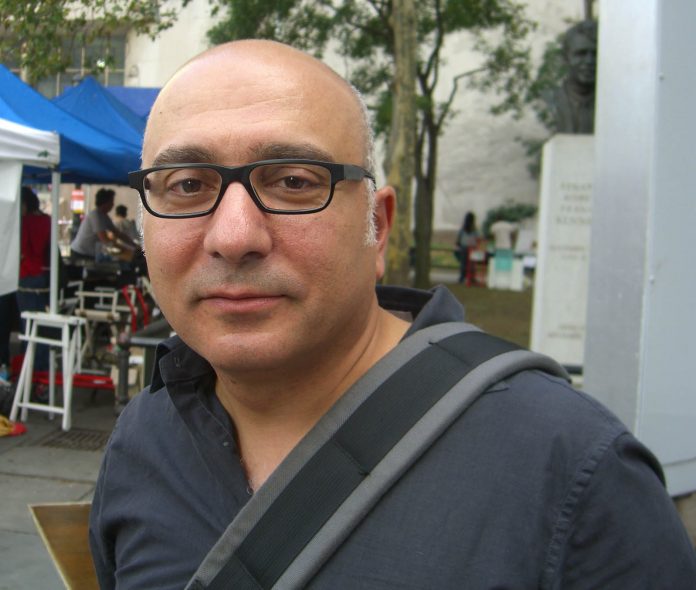
Rawi Hage is SFU’s new Writer in Residence

0

Award-winning author Rawi Hage is the new Writer in Residence in the English department at SFU. He recently finished a year-long residency with the Vancouver Public Library (VPL), which he says “was great because [he] was dealing with the public.

“It will be different [here], where it’s mostly graduates or students,” Hage says, “but because [the VPL is] open to the public, you get the whole spectrum. From the homeless guy who does some writing to the academic, the spectrum of people who aspire to writing is very very wide, so you get a broad view.”

These types of chance meetings seem to shape Hage’s writing — working as a taxi driver provided ample fodder for his latest novel, Carnival.

Having lived in several countries over the years, Hage has seen a broad array of people and events. Growing up in Beirut and Cyprus, he lived through the Lebanese civil war with his family, and his debut novel De Niro’s Game was deeply influenced by these experiences.

“[It] was inspired by living through the war,” says Hage, “I use experiential as a starting point usually. I find something that I have experienced, but then the book often takes different tangents.” Published in 2006, De Niro’s Game was nominated for the Scotiabank Giller Prize, and won the International IMPAC Dublin Literary Award.

His second book, Cockroach, was written from the perspective of an immigrant in Montreal, which is where Hage established his Canadian roots. After leaving Lebanon, he arrived in New York in the late 80s, and experienced loneliness, lousy jobs, and overt racism.

However, he did perfect his English and discovered he had a talent for photography. Hage moved to Canada in 1992 to study photography and visual art at Concordia and was encouraged to settle in Quebec because he is fluent in French (English is his third language after Arabic and French).

Although reading had always been a big part of his life — his Jesuit-trained father was well read and their home was full of books — he happened on writing in an unplanned manner, similar to his discovery of photography. While writing notes for a photography exhibit, the curator was impressed by his story telling, and encouraged Hage to explore writing fiction.

“I started writing short stories, and they kept growing, they became novels,” Hage explains. He submitted a manuscript to House of Anansi Press, “and it was picked up from the slush pile,” which is a rare occurrence.

Now living in Vancouver, Hage is working on his fourth novel. But don’t ask for any details: “I don’t talk about it,” he states bluntly. But he does say that being a full-time writer is frequently a question of finding time to write.

“I like to write in the morning. No conversation, a lot of coffee, and a laptop. That’s all. Geography is irrelevant,” Hage states. “I can’t write in cafes or with loud music or if someone is constantly opening the fridge. I require that [quiet], so the magical time is maybe 5 o’clock in the morning — I’m an early riser,” he laughs.

As the Writer in Residence at SFU, Hage will work on his secretive fourth book as well as mentor students.

“My priority is to work on my book, and that is part of the deal of the residency. About 70 to 75 per cent of my time should be concentrated on my own work. The rest of the time, I’m meeting with students. Eventually I will probably organize a public reading event, or something like that.”

Students can send Hage writing samples and make an appointment to meet him in person at SFU. For more details, see the Department of English website: sfu.ca/english/writer-in-residence

Trudeau is not ready to be Prime Minister

3

I don’t often have good things to say about Mr. Justin Trudeau, but I have to admit that I was impressed with him immediately following the shooting of Corporal Nathan Cirillo. For the first time since becoming leader of the Liberal Party, I actually saw him show characteristics that one would expect in a Prime Minister, someone who could actually lead the country. Fortunately for me, this was short-lived, as Trudeau went back to his standard operating procedure — acting and speaking before thinking.

It was bad enough when Trudeau accused the government of “whip[ping] out our CF-18s [to] show [. . .] how big they are” as his initial response to Canada’s involvement in the international coalition to stop ISIS from overrunning Iraq. This statement would have been an inappropriate and juvenile comment in any case, but his multiple follow-up comments continue to showcase his lack of understanding with regards to the situation in Middle East.

Around the same time that he made the previous statement, the ‘wanna-be’ Prime Minister was asked what Canada’s response would be if Turkey was attacked by ISIS, given our obligations under Article 5 of the Washington Treaty — the treaty that established NATO.

Article 5 has been called the backbone of the alliance; it establishes that if a NATO ally is the victim of an armed attack, each and every other member of the Alliance will consider this act of violence as an armed attack against all members and will take the actions it deems necessary to assist the ally attacked. Trudeau had to be told what Article 5 was before answering the question, and when he did answer, his response was that there would be a discussion before our nation fulfilled its treaty obligations.

Trudeau is setting himself up to create a party where dissention and free speech are prohibited.

To make matters worse, the Liberal leader also seems to think that in place of airstrikes against Islamic State militants, Canada should provide its winter expertise to aid “refugees, [and] displaced peoples fleeing violence who are facing a very, very cold winter in the mountains.” For reference, the coldest recorded temperature in Iraq is -3°C, which is warmer than it was when I woke up this morning to head up Burnaby Mountain. Somehow, I think they’re more concerned about the murderous terrorists.

Though really, we shouldn’t be surprised to get commentary like this from a man whose other foreign policy statements have included concern over Russian intervention in Ukraine due to their hockey team coming up short in the Sochi Olympics, and having a “level of admiration [. . .] for China because [of] their basic dictatorship.”

His domestic policies aren’t much better. His track record was already somewhat soured by his misguided beliefs that controlling and regulating pot would make it harder for young people to buy and that “the budget will balance itself.”

Though he was applauded as champion for women’s rights earlier this year after declaring “that future candidates need to [understand] that they will be expected to vote pro-choice on any bills,” this policy shows him to have no respect for the differing viewpoints that make Canada such a progressive nation.

By demanding complete adherence to his own opinions, Trudeau is setting himself up to create a party where dissention and free speech are prohibited — hardly something you would expect from a democratic leader.

As the country counts down the days until Canadians head to the polls, Trudeau continues to prove exactly what the Conservatives have been saying all along: he’s simply not ready. One can only hope that the rest of the nation realizes it before October.

Stores fight for early shoppers this holiday season

0
Once Halloween is over, retailers look to capitalize on early holiday shoppers.

If you’re frustrated about Christmas decorations appearing in the middle of November, an SFU professor has bad news for you — the retailers don’t care.

Lindsay Meredith, SFU professor of marketing, argues that retailers would rather risk alienating a few shoppers than miss competing in the busiest shopping season of the year.

“Big ticket durables like iPads, iPhones, cars and appliances are bought in the November period or early December,” said Meredith in an interview with The Peak.

After conducting extensive research about the customer-retailer relationship, Meredith has attributed aggressive holiday marketing to three major reasons.

First, the advent of internet shopping has made markets more competitive than ever before. Meredith remarked, “Canadians compare prices on the internet [. . .] The consumer is much more knowledgeable about the price [of a product].” This information means that consumers are more discerning when buying high-ticket items, which forces retail stores to compete by making products available for longer.

The internet has also increased online shopping and lessened trips to established “bricks and mortar” stores by shoppers who prefer to use credit cards or Paypal.

Secondly, Canadian retailers have to compete with businesses south of the border in Bellingham and Whatcom County. “We tend to have mark-ups that are higher than they ought to be, sometimes,” Meredith noted of the Canadian market.

By decreasing prices and marketing early and aggressively, retailers expand their window of opportunity to capture eager shoppers.

Lastly, and most importantly, Meredith explained that, in the end, it’s a competition. Retailers are scrambling for any share of the market and thus push each other to reach out to customers as quickly as possible. This means that retailers are chasing each other in a frantic attempt to grab the attention of Vancouverites.

“So, it’s kind of like a race — who is going to get into the consumer pocket first,”  said Meredith. “If you wait too long, the other guy gets all the loot and there are still consumers out there, but they’ve bought everything and you’re out of luck.”