Home Blog Page 1059

Guard.me arbitration results in no settlement

0

Negotiations between the Teaching Support Staff Union (TSSU) and the university regarding the Guard.me insurance plan will continue in 2015 after both parties failed to reach a settlement in early December.

The TSSU filed a grievance on July 16, 2013, regarding the Guard.me health and dental insurance plan, in which every international student is automatically enrolled.

The Guard.me plan costs $336 per semester, over twice the amount of the previous insurance plan, which costed $126. The coverage is required for the three months of residency in Canada before international students may sign up for the BC Medical Services Plan (MSP).

The TSSU and university administration entered into an arbitration over December 4–5, resulting in no settlement.

Aspects of the plan that were most concerning to the TSSU include automatic re-enrolment, the fact that SFU chose the most expensive plan available, the overlap period in services with legally required MSP coverage, and the five per cent returned to SFU out of every fee collected.

TSSU chief steward Reagan Belan told The Peak, “The disclosure that we were given has a lot of truly damning information about the motivation for implementing Guard.me in the way that it was, and the glib attitude International Student Services [ISS] has toward imposing unnecessary fees on the students they are there to serve. It doesn’t paint SFU or ISS in a positive light.”

The university administration was unavailable to comment before press time.

Following the mediation, the TSSU published a post on their website saying that, “Despite TSSU’s best efforts to find a reasonable and affordable solution and avoid a public airing of SFU’s dirty laundry in a hearing, SFU has remained unwilling to find a fair solution to the Guard.me problem.”

“We were disappointed that we didn’t get to a resolution after two days of mediation,” Belan said, frustrated over the results of the arbitration.

“The disclosure that we were given has a lot of truly damning information about the motivation for implementing Guard.me.”

– Reagan Belan, TSSU, Chief Steward


“Our dispute over Guard.me has been ongoing for over two years and we want SFU to stop charging our members this illegitimate fee and start refunding our members as soon as possible,” she said.

Belan continued that SFU withheld 1,700 pages worth of internal Guard.me documents — thrice the amount the university claimed to have provided — until a week before the arbitration, leaving “almost no time to sort through a mountain of evidence.

She pointed to this as an example of how SFU is trying to “bury” the issue: “This is the behaviour of an institution that is trying to hide, not an institution that is willing to settle a dispute.”

Both parties are now awaiting recommendations from a mediator on how to resolve the issue.

If no settlement can be reached at that time, the TSSU intends to pursue a formal hearing in which each party would make their case and leave it in the hands of a neutral third party arbitrator.

“TSSU is firmly of the position that SFU should avoid inflicting further financial hardship to its international student population and not renew its contract with Guard.me when it comes to term in August of 2015,” Belan concluded, adding that the university should seek to “properly facilitate [student] enrolment into BC MSP.”

Ask Professor Peak: Week 1

0

Are you an SFU student or faculty member who needs some relationship, student, or SFU related advice? In 150 words or less, send your issues anonymously by visiting the-peak.ca/professorpeak. Your entry could be published in our next issue, along with some helpful advice from Professor Peak!

_________________________________________

Help! SFU residence is ignoring my safety!

DEAR PROFESSOR PEAK: I’m a 21-year-old female and I live with three girls in a townhouse on SFU residence. Since we moved in, our front light has been burnt out. Our front door is not only secluded by trees, but is completely black during the night. This has been a big safety concern for me. I have sent the SFU housing department multiple requests asking for it to be fixed and, an entire semester later, nothing has been done. I even talked to my CA about it multiple times, but to no avail. I personally do not feel safe walking back to my own dorm, and SFU residence apparently doesn’t value protecting its female residents enough to ensure a safe walk back to their homes.  It makes me angry that my safety is being ignored.
ANGRY FEMALE RESIDENT

| | |

DEAR ANGRY: I suspect the SFU housing department does value their student’s safety; if something happened, it would be a PR nightmare for them. Try to understand the situation from their perspective: a single burnt-out lamp may not be high on their list considering all the time-sensitive things they have to deal with, like flooded bathrooms, broken beds, and insect infestations.

Your best option is persistence: send the request again and try talking to your CA about why it makes you feel unsafe. Until the light does get fixed you could temporarily put a lamp in the front window or carry a small flashlight with you. If you’re concerned with the safety of women on campus, I would also recommend getting in touch with the SFU Women’s Centre. They work to address the roots of gender issues like this one, and may be able to provide you additional resources and address your concerns further.
 
PROFESSOR PEAK

_________________________________________

Oh no! I need help but the communications department’s advising is terribly inadequate!

DEAR PROFESSOR PEAK: At the beginning of last semester, I went to the communications department for drop-in advising. There were about 10 people in the queue and only one advisor, who was working for only a few hours each day. As I waited, I realized that the advisor would spend up to 40 minutes with a student. You’d think that a faculty as popular as communications would employ a few more advisors, and for longer hours each day, especially during the start of the semester. I wasn’t able to meet with an advisor that day, and I left feeling very frustrated. Now that the semester is about to begin, I’m scared that the same advising inadequacies will occur. I considered writing a letter to the dean, but I feel I’m just a small voice in the crowd and it would be useless. What should I do?
FRUSTRATED COMMUNICATIONS MAJOR

| | |

DEAR FRUSTRATED: SFU bureaucracy can be extremely vexing, especially during busy periods. Unfortunately, students are often pitted against each other to get ahead of the game. This means you’ll have to trawl the communications department advising calendar for open appointments to book online, or angle for drop-in times other students may avoid. Better yet, plan to do your advising at the end of the previous semester to ensure you’re set far in advance.

That said, voicing your concerns about the system to the dean is a solid idea. Just make sure to do your research and reflect on potential solutions carefully. Consider, for example, whether additional advisors have enough work the rest of the semester to make it worth employing them. You could also try contacting the CMNSU to advocate on your behalf, or just to advise you on the best person to respond to your concerns!
 
PROFESSOR PEAK

A month (or so) in review

0

Cross country teams wrap up seasons at new heights

Image Credit: Kyle Terwilegar

In November, for the first time in the NCAA, the women’s cross country team finished first place in both the Great Northwest Athletic Conference (GNAC) championship and the west regionals. The men also broke new ground, qualifying for their first ever national championship.

While winning both the conference and regional titles guaranteed the women a spot at the national championship, the men just made the cut, placing sixth at regionals, as the top six teams qualified for the national championship.

At nationals, however, the women placed seventh, matching their previous year’s performance. They did beat their fellow regional competitors and GNAC rivals, Alaska Anchorage and Western Washington.

“We can’t be disappointed finishing seventh because we were the number one team in the region,” head coach Brit Townsend told SFU Athletics. “The course was slow, wet and muddy so it was tailor-made for the tough mudders. We are a team of track athletes running cross country so the course really slowed us down.”

Runner Jennifer Johnson achieved all-American status cracking the top 40 at 30th,  while Rebecca Bassett — who led the team at the GNAC and regionals — just missed the honour at 43rd.

Meanwhile, the men’s team, coming into the tournament unranked, placed 20th out of 32 teams. Sophomore Oliver Jorgensen led the team placing 88th, while runners Marc Antoine-Rouleau and Cameron Proceviat finished 128th and 129th.

Men’s basketball wows with high-octane offence

Image Credit: Ron Hole

The Clan men’s basketball have jumped out of the gate ending 2014 with a 6–3 record, winning their only Great Northwest Athletic Conference (GNAC) contest so far.

Although the Clan usually dominate this time of the year — having gone 6–3 to wrap up 2013 before finishing the 2013–14 season 10–16, struggling in the GNAC — it’s their offence that has been drawing attention.

Last year, even when winning all but one game against non-conference rivals, they only scored in the triple digits three times: twice non-conference and once in the GNAC. Their highest single game score was 112 points and averaged 78.4 points per game.

This season, they have not scored less than 90 points in any game, including the Division I exhibition matchups which did not count towards their record. In 11 games (including the exhibition games), the team has managed to reach 160 points twice.

Although the game was much tighter than much of their non-conference contests, in their one GNAC matchup in December they still managed to score 123 points.

Point guard Sango Niang leads the GNAC in scoring with 21.8 points per game while Roderick Evans-Taylor and Justin Cole are third and ninth in the conference, respectively. Niang ranks 19th in the NCAA.

Though it is usually the second half of the season that turns the record negative for the men’s basketball team, it appears that this year they might be able to keep it going.

Swim teams host Clan Cup

Image Credit: Hamed Yaghoubi Shahir

On the weekend of November 21–23, SFU’s swim teams hosted the 18th annual Clan Cup International. Both the men’s and women’s put up dominant showings, ending the swim meet first in total points with 1591 — with second placers Oregon State at 959.

Freshman Adrian VanderHelm became the the first member of the men’s swim team ever to qualify for an NCAA national championship, having qualified in men’s 200m freestyle as a result of beating the NCAA Division II ‘A’ standard which guarantees qualification. His time, 1:36.29, was the fastest time this season.

Now, SFU faces four more swim meets — four more opportunities for swimmers to qualify for the national championship — before heading to the national championship held in Indianapolis, IN on March 11.

Clan edge Yellowjackets on New Year’s

0

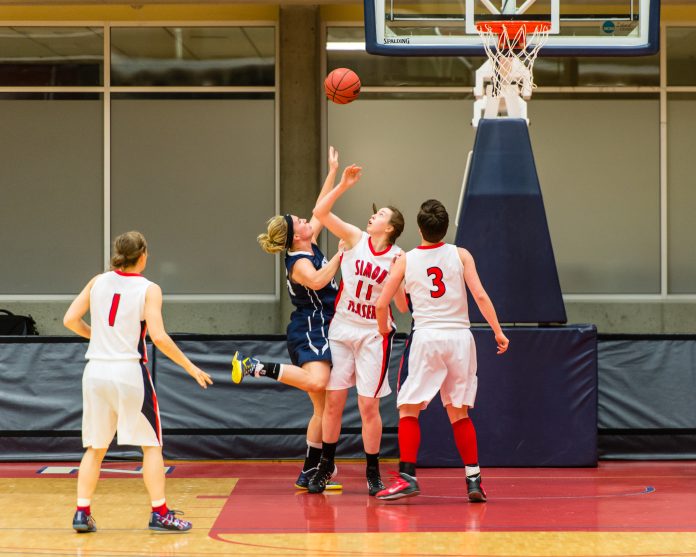
SFU’s women’s basketball team kicked off the new year with some fireworks as they put up 74 points and defeated Montana State University Billings (MSUB) by a single point in a home game.

Although the Clan had a comfortable lead heading into the second half, the Yellowjackets were resilient, overtaking them to grab a five point lead with less than four minutes to go.

Screen Shot 2015-01-02 at 10.55.15 PMSFU fought back hard and managed to regain their lead with only 1.7 seconds left on the clock, thanks to a Samantha Beauchamp layup off a superb dish from sophomore point guard Ellen Kett. 

“It was a good team effort, and everybody was clicking at different moments of the game,” explained Erin Chambers, who once again led the charge offensively for SFU with 22 points. “It was a good start to the new year.”

Chambers, who is averaging a GNAC-leading 24.7 points per outing this season, was a big part of the Clan’s comeback, as she converted on a crucial three-point play when the team was down 71–67 to bring them within one.

“[MSUB] is always a hard team,” Chambers told The Peak, adding that she was not surprised the game ended up coming down to the wire. “I knew it was going to be a battle from the get-go.”

The matchup certainly was not without firepower, as Chambers was joined by both the number two and number three scorers in the conference, MSUB’s Kayleen Goggins, who led her team with 25 points, and Alisha Breen, who had a disappointing performance with only 9 points.

Screen Shot 2015-01-02 at 10.55.30 PMFor the Clan, senior guard Katie Lowen impressed early with four three-pointers in the first half before cooling down in the second and ending the game 4–9 from deep. Beauchamp, on the other hand, was 5–5 from the field and also dominated defensively with a team-best four blocks.

The win moved SFU to a perfect 2–0 record in GNAC play and 6–4 overall. Chambers noted that the their performance was definitely a good sign for the year to come.

“We always want to be the hardest working team,” Chambers explained of any ‘resolutions’ for 2015. “We just want to keep pushing through as our season is starting off.”

Letter to the Editor

1

Dear Editor,

It is absolutely stunning that SFU still has not divested from fossil fuels. Despite calls from over 100 faculty members, the SFU Student Union, and various other SFU departments, student organizations, and associations, SFU continues to refuse to agree to fully divest. What is particularly frustrating is that after SFU said “no” at the Pipeline Rally last fall, the pressure increased to a point where any sane university administration would have reached out to Divest SFU.

What is concerning is that SFU is now leaving students, faculty, and organizations no alternative but to increase pressure to shame SFU on the world stage. Among looming Freedom of Information requests to find out exactly why SFU is so tied to fossil fuels will also come information on how much our university just lost due to the fossil fuel crash. We are tired of petitioning, rallying, meeting, writing, networking, and marketing this. We know that it must be done, not just for the future of our planet, but for the future of SFU’s income. How many millions were just lost from our coffers due to the stubborn refusal to divest? Enough is enough: drop the stocks.

Sincerely,

Cody Wicks


Bed bug traps may mean end to persistent pests

0

After enduring 180,000 bed bug bites over eight years of study, an SFU research team has developed the world’s first tangible bed bug bait and trap.

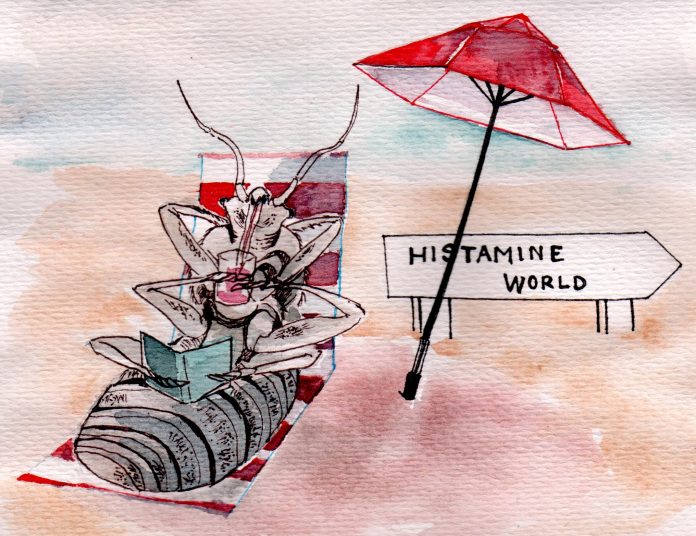
Bed bugs naturally produce a set of chemical attractants, or pheromones, that signal a safe home. A team of SFU scientists has now solved the structure of these attractants and shown that they can be used to lure the bed bugs into the traps — and most importantly, keep them there.

SFU biologist Regine Gries helped discovered the key to bed bug entrapment after letting over 1,000 bed bugs bite her arms each week for five years. Working with her husband and SFU professor of biology Gerhard Gries, along with SFU professor of chemistry Robert Britton and PhD student Michael Holmes, this team discovered the power of histamine.

Histamine is a chemical compound produced by our white blood cells in response to bug bites, as part of the human immune defense.

This chemical signals to the bugs that they have found a “safe haven.” Furthermore, once bed bugs come into contact with histamine, they remain there.

​However, on its own, histamine did not effectively lure the bugs to the traps. “It could stop them, but it wouldn’t attract them,” explained Britton, who was brought into the team to investigate what alternative chemical compounds might lure the pests. “In the end we needed an additional bouquet of chemicals to lure them to the histamine,” he said.

After months of additional research, the team discovered a set of five volatile chemicals that are effective at luring the bed bugs and, when combined with the histamine, create an effective trap. He explained, “When they smell these volatile chemicals it brings them to what they think is a ‘safe shelter,’ and once in contact with the histamine, they arrest.”

Since then, their trap has been successfully tested in bed bug-infested apartments in Vancouver.

The team is now working to develop the first effective and affordable bait and trap.

“We’re not sure yet if this will be a tool to rid apartments of [bed bugs], what we’ve come up with is a good way of quickly knowing whether you have them,” said Britton.

Because of the nature of the chemicals the team discovered, the costs of chemicals used in each trap is less than 10 cents. “This shouldn’t be an expensive device,” he said.

As such, he imagines that the traps could become widely used by students, tenants, travellers, and more. “Even if you’re going backpacking and you’re worried about bed bugs in the hostel, you could bring a trap with you and see if you have them in the room,” he said. “If you’re concerned about your apartment, a trap could provide proof to the landlord that there are bed bugs.”

The team is now working to develop the first effective and affordable bait and trap for detecting and monitoring bed bug infestations, which they expect to be available to the public some time next year.

Meet the Clan: Sango Niang

0
Senior point guard Sango Niang leads the team with his scoring average of 20.8 points per game.

Screen Shot 2015-01-02 at 10.27.12 PM“I’ve just got to teach them that they’re not going to start off playing good, but just keep your head up and be positive,” Sango Niang, now one of the captains of the men’s basketball team, explains what he feels he needs to teach his younger teammates.

Niang is now the bonafide star of the team, and it’s hard to imagine the senior point guard being anything less. However, the advice he offers his teammates comes from having gone through the process himself — perhaps through a harder road than most — in a true underdog story.

Sango was born in Paris, France, the son of an Olympian track and field runner. He moved to California with his family when he was six. “It was a hard adjustment because I didn’t speak English at all,” he explains.

Although he was athletic, running track and field himself, he didn’t even begin playing basketball until his freshman year in high school. Needless to say, he did not receive much playing time at first — in his sophomore year, he didn’t even make the team.

Despite missing the cut, he pursued the game with dogged determination: “I usually went to 24 Hour Fitness and just practice[d] by myself, and my parents would have to tell me to go home, do my homework, ‘you did enough for today.’ But I used to go outside in the rain, walk to the gym 10 miles away and just get my work in.”

However, despite his hard work, he had few chances to  actually play the game. Sango ended up making the junior and senior varsity teams at Summit High, but would have to wait for college to get his chance to shine.

“After high school, I went to junior college next to my house and I tried out [for the basketball team],” he says. “The coach told me I was going to redshirt because I wasn’t good enough yet.”

However, it would be here that he would finally get his chance: “[The coach] let me play in one of their tournaments preseason and I had 27 points. He told me, ‘You’re going to be my starting point guard.’

“I always kept the doubters at the back of my mind and always worked hard to prove everybody wrong,” he explains.

One of the challenges that remains for Sango is the distance from his family, who still live in California. “That’s the hardest part, being away from home.

“We’ll talk on the phone a lot,” he adds. “Before and after every game, I talk to my dad.”

His passion for basketball becomes apparent when he explains his cure for the homesick blues: “Basketball gets me through it. When I get homesick, I just go to the gym and get some shots up.”

Now, he is an integral part of a new high-scoring offence for the Clan, with the team scoring about 130 points per game so far. “It’s a more fun playing style,” he says.

A good part of the reason he came to SFU was head coach James Blake. “[Blake] believed in me first, and he gave me opportunities so I signed with SFU. We’re going to change the team, me and him together.”

However, Sango’s leadership role means he has to do more than focus on his own game — he also has to make the players around him better.

“I push them by being an asshole at practice, just talking smack to them, making sure everyone is practicing at game speed,” he explains. “If you aren’t practicing at game speed, it’s going to be difficult when you play the game. So I try to make practice intense and make it a real in-game situation.”

He explains that in order for the team to win, he can’t just be focused on individual achievements.

“I know other teams [have] me on the scouting report and they’re going to try and block me, so I try and get everyone involved. So when the time is right, I just get my points and try not to take bad shots,” he explains.

“I just play hard. If you play hard, you’re going to play good. It’s not just about scoring, it’s about winning. You’ve got to make everyone around you better.”

Sango enters 2015 with the knowledge that he will be playing his last games of college basketball, and that he’ll have to make an impression this year if he wants to play professionally.

Screen Shot 2015-01-02 at 10.26.31 PMTo get to the next level, he says, “I’ve just got to work harder, be a good leader, have a good season — a winning season.”

With the team ending 2014 at 6–3, and Sango averaging over 20 points per game, it appears that he is well on his way towards his dreams.

Sports Briefs

0

Men’s Basketball

Clan men’s basketball lost 108–86 to the Alaska Anchorage Seawolves last Thursday. SFU played a closer game than the score indicated, with much of the game neck and neck between the teams. However, a stretch in which they allowed the Seawolves to score 11 points in the first half created a gap which proved too large to overcome. This game marks the first time that the Clan scored less than 90 points this season (including exhibition). Freshman Patrick Simon led the team in scoring with 19 points.

Men’s Soccer

On December 2, SFU men’s soccer head coach Alan Koch announced that former Whitecaps midfielder/defender Kevin Harmse will join the Clan as an assistant coach. Harmse had played with the Whitecaps as recently as 2011 before retiring in 2013 due to injury.

With files from SFU Athletics

The week in Comics

0

CMYK-Peers
Peers (Leslie Lu)

Agoraphobia
The Adventures of Agoraphobia Man: World Defender (Jacey Gibb)


Everyday fears
Every day fears (Paige Smith)

Ski Ninjas

PuSh Festival fights winter blues

0

Over the past decade, the PuSh International Performing Arts Festival has become an acknowledged and respected event, both locally and internationally. 

For their 11th year, the PuSh Festival begins their next decade by reinforcing their motto, “cross the line.” The festival’s organizers once again bring together a diverse line-up of performing artists from local, national, and international communities. “I think this year is a bit of [a] transition year for us,” artistic director Norman Armour told The Peak. “It’s kind of a fulcrum point between the last 10 years and the next 10 years.” 

The PuSh Festival has undergone multiple changes this year, but each new feature contributes to the festival’s growing identity and serves as a development of its vision, values, and priorities. Connecting with the younger generation is an important aspect of the festival, and one of the organizers’ long-time desires is to collaborate with the Vancouver International Children’s Festival to open new avenues for innovative work developed for a younger audience.

This year the festival welcomes The Adventures of Alvin Sputnik with puppeteer and animator Tim Watts, a piece that is suitable for all ages — “that’s the kind of new thing that we seek to introduce this year, and it puts a new spin on the festival,” Armour explained.

The continuation of the youth pass program further shows the festival’s commitment to younger audiences. The program allows youth aged 16–24 access to rush tickets for $5. The festival also aims to sustain an open and inviting atmosphere where artists can seek opportunities, connections, and experiences.

For instance, local theatre company Theatre Conspiracy commissioned another local company, Hong Kong Exile, who will be presenting their show eatingthegame at Club PuSh. Hong Kong Exile was established in 2011 by three SFU contemporary arts graduates: Milton Lam (theatre), Remy Siu (music), and Natalie Tin Yin Gan (dance). Along with the headlining shows of the festival, Club PuSh offers additional avant-garde performances in the less formal atmosphere of Performance Works on Granville Island.

One of the biggest changes of the year was the relocation of the PuSh main office into the downtown core, where it will occupy a new facility with three other groups. To celebrate the transition is Sequence 8, presented by Montréal’s circus group, Les 7 doigts de la main. After the show there will be an outdoor dance performance in the Queen Elizabeth Theatre Plaza, Sylvain Émard’s Le Grand Continental, which involves 70 local community dancers.

The festival was created as a platform for innovative ideas to converge and develop. In a sense, the festival also provides a glimpse into some of the current trends and interests of performing arts in different parts of the world. As a place where artists can present their work side-by-side, it is an opportunity for relationships or connections to exist between “seemingly discreet and distinct disciplines,” explained Armour.

The festival presents “a concentrated glimpse into a particular scene” and the opportunity to view how multiple artists from the same art scene create unique and varying pieces. For example, Dutch artists Lotte van den Berg (Cinema Imaginaire) and Dries Verhoeven (Fare Thee Well!) actually knew of each other before becoming involved in the festival. According to Armour, they share many of the same resources, and there are “lots of parallel in terms of their work.”

Another pair who have preexisting knowledge of each other’s work are Belgian artists Lisbeth Gruwez (It’s going to get worse and worse and worse, my friend) and Kate McIntosh (Dark Matters). 

In order to gain the fullest experience from the festival, Armour encourages people to trust their curiosities and to choose something they wouldn’t normally see. At its heart, the festival aims to provide a challenge and an inspiration for Vancouverites and visiting artists alike.

The PuSh Festival will run from January 20 to February 8 at various venues. For more information, visit pushfestival.ca or pick up a copy of the PuSh brochure.