Home Blog Page 1051

SFU’s soccer sensation drafted by the Whitecaps

0
Blagojevic will trade in the red and white for the blue and white.

When it comes to the world’s most popular sport, the likelihood of attaining professional status is slim to none for soccer enthusiasts. Far more unlikely is the chance to play the beautiful game in your own hometown where the dream first started. For SFU’s own Jovan Blagojevic, this fantasy has become a reality.

The Coquitlam resident was selected by the Vancouver Whitecaps in the third round of the 2015 Major League Soccer (MLS) SuperDraft (54th overall), in what could only be described as a perfect situation by the 23-year-old.

“It’s been unbelievable, like I’m living a dream come true,” Blagojevic told The Peak. “I always wished it would have been Vancouver; it’s amazing to play professionally and stay home with my family. It’s great to have the comfort of people that I love around me [. . .] you couldn’t write a better story.”

The midfielder/striker modestly recalled wanting to finish his senior season with the Clan on a high point, and he did exactly that. In his 18 matches, he notched 18 goals, earning honours as the 2014 West Region Player of the Year and Great Northwest Athletic Conference (GNAC) Player of the Year.

The Serbian-born attacker made his mark on all his matches with the Clan, whether creating goals from nothing or poaching goals in all areas of the pitch with the support of his teammates. Blagojevic credits much of the development in his attacking qualities and leadership to the Clan coaching staff.

“When I came to SFU I was still a work in progress, and had some tweaking to do,” he said. “Coach Alan [Koch] taught me to be very direct in my play, and to always contribute to the flow of the game and to our team.

“When I was named captain that was also a great honour. I took it upon myself to lead the guys and do my best so that helped me have the season that I did,” he added.

Clan head coach Alan Koch expressed his congratulations for Blagojevic following the selection by the Whitecaps.

“It’s pretty cool for somebody who’s from Vancouver to be drafted by the hometown team, so it makes it pretty special,” said the coach. “He’s worked incredibly hard to get himself where he is and he deserves the opportunity.”

Apart from the skills Blagojevic brought as a player, Koch mentioned some of the mental qualities that contributed to his successes with the Clan.

“He absorbs information, is very self-reflective, and addresses his limitations. His hunger, his drive, and his passion, that’s what allows him to be good in big games,” he noted.

Fittingly, Blagojevic becomes the first player drafted into MLS from SFU — from any Canadian university for that matter — and he will continue to ply his trade in the blue and white of the Whitecaps.

Stop Drawing Conclusions

1

There is no way to justify the actions of the four men who savagely murdered 12 innocent people in Paris. Any reasonable human being -— whatever their denomination — can and should condemn such violence as pointless acts of terror.

However, distinguishing Muslims from fanatics is too subtle a line for some pundits, regardless of their politics, to negotiate. In the aftermath of the massacre, business magnate Rupert Murdoch condemned all Muslims as culpable for standing aside while a lunatic minority poisons the well. Bill Maher, who has a history of vilifying Islam, continued his campaign of misinformation by alleging that “the terrorists and the mainstream share a lot of [. . .] bad ideas.”

As a Muslim, it is deeply injurious to me and my faith to be lumped together with radicals who embrace violence as a negotiating tool while horrifically misinterpreting Islam. If you truly believe all Muslims spinelessly bow their heads in the face of extremist badgering or silently believe their actions are noble, then you are really not paying attention.

In the wake of the murders, prominent Muslim leadership groups in France, Britain, and North America immediately and vociferously denounced the killers. Even Sheikh Hassan Nasrallah, the head of a Lebanese Hezbollah group, condemned the Parisian attack “in the name of all Muslims,” and accused extremists of doing more harm to Islam than “anyone else in history.”

Though I am a moderate Muslim living in Canada, I am continually asked to speak for the action of fascistic killers whose line of thinking is alien to mainstream Islam. While some media sources, such as Vox and The Huffington Post, have decried the inanity of such racially motivated thinking, there is a deep-seated belief in the Western world that Muslims are not doing enough to voice our opposition to terrorism.

In The New York Observer last year, Nina Burleigh fired at Muslims while discussing our response to ISIS (despite, you know, Muslim countries actively fighting it): “Muslims might actually want to, if not apologize for, at least renounce, loudly and frequently, what’s being done in the name of their religion. Yet [. . .] to say that is to risk being accused of Islamophobia and much, much worse.”

Here’s the thing: while Islamist radicalism has raged destructively for years, assuming that Islam promulgates violence is completely wrong. The murders at Charlie Hebdo weren’t because radicals were upset about offensive illustrations of Prophet Muhammad (peace be upon him) — the cartoons were the tinder in a growing bonfire of sectarian and religious discord.

Let’s talk about the drawings for a second, because they are key to the current argument. In Christianity, Jesus has risen to the lofty perch of a divine being; every aspect of his life — from birth to death — is mythologized. In Islam, the Prophet took pains during his life to ensure that he would not be accorded divinity. He insisted that he was a normal man who happened to be contacted by God.

If you believe all Muslims spinelessly bow their heads in the face of extremist badgering, you are really not paying attention.

This narrative has become part of Islam’s core, despite the schisms that began to arise in the religion less than 50 years after the Prophet’s death. It has become a central tenet of Islam that glorifying the Prophet as anything more than a man is akin to idol worship; therefore, illustrations of him (whether in criticism, comedy, or praise) violate that tenet and deeply offend Muslims. It is an offense to us that carries the same weight as suggesting to devout Christians that Jesus was not divine.

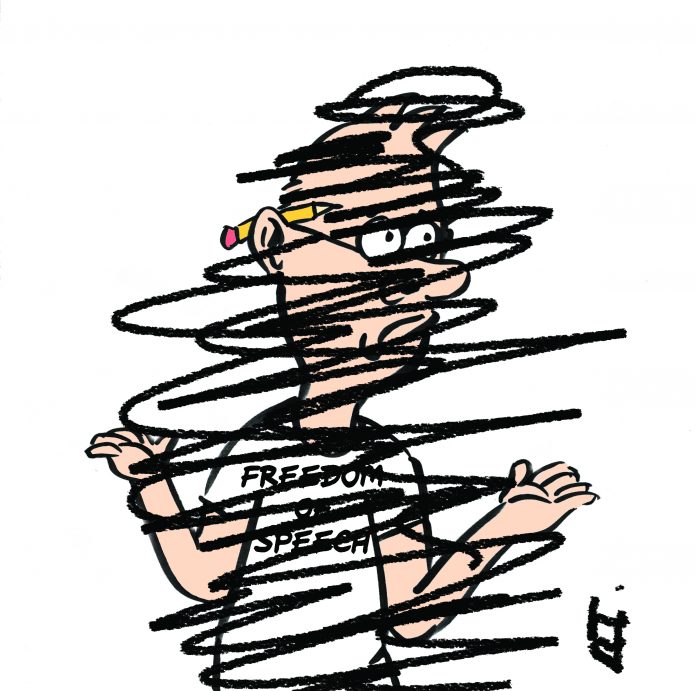
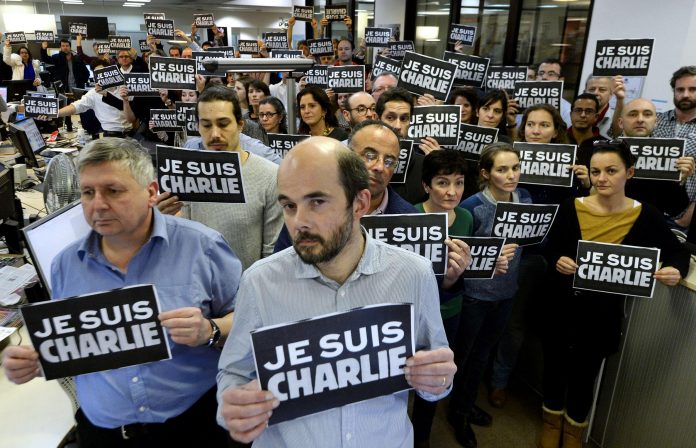
This is where all the folks carrying “Je Suis Charlie” billboards while demanding wholesale apologies from Muslims completely miss the point. The murders were not an attempt to repress freedom of speech or the press. This assumption simplifies Muslims as humourless fanatics who respond to pencils with swords. Islamic radicalism is connected to the Western societies that have bought into grossly distorted perceptions of Islam that reduce the humanity of Muslims.

In France, which has one of the largest Muslim populations in Europe, resentment has been bubbling for decades. In 1990, Le Monde reported that 76 per cent of French polled said that there were too many Arabs and Berbers in France. The hijab, a key element of the religious identity of female Muslims, was banned in France in 2010, resulting in insulting ‘security checks’ that incited multiple riots in 2014.

In 2010, the Telegraph reported that 28 per cent of the French population believed that Arabs were more likely to commit a crime than other ethnic groups. During the 2012 presidential election, the Front National Party — on a platform including harsh immigration policies and strict definitions of nationalism — captured 18 per cent of the vote. As of 2013, Muslims composed 10 percent of the French population but more than half of the prison population.

Young Muslims who have been reduced in French society and are hostile towards the majority are now easy prey for Jihadists and Islamist recruiters. They do not preach Islam. Not the Islam that I know, that my parents, grandparents and their parents practice and have practiced. Jihadists preach hate, and use alienation as the millstone for their sword.

The only way to ensure religious harmony is to address the root of the discord, which becomes difficult to do when tone deaf media outlets and populist politicians jump on outbursts of violence as a justification for the continually negative representation of Muslims and repressive policy-making.

This trend was starkly demonstrated in France just two days after the Charlie Hebdo attack, when pro-Palestinian demonstrations were outlawed. Such actions give fundamentalists further stock to recruit youth in a country that they feel has rejected them. When their national identity is stripped away by the nation itself, the adrift look to Islam — their only remaining identity — as a justification for revenge.

I condemn the violence of Muslim extremists without reservation. I condemn so-called religious leaders who manipulate lost youth with messages of hate. I condemn enemies of freedom, freedom of speech, freedom of association and the freedom to a dignified and peaceful life.

But I do not have the authority to speak for all Muslims. I do not know them, I cannot speak for them, and denouncing them on an endless loop to satisfy loaded questions from people like Nina Burleigh, Rupert Murdoch, and Bill Maher has no value.

Yet so it goes.

If famous romantic movie quotes were rewritten to be about pizza

1
And you thought movies based on Nicholas Sparks novels were already cheesy.

“You had me at stuffed crust.”

“Here’s looking at you, Pizza Garden.”

“Don’t forget: I’m just a girl, standing in front of a ham and pineapple pizza, asking it to love her.”

“So it’s not gonna be easy. It’s gonna be really hard. We’re gonna have to work at this every day, but I want to do that because I want pizza. I want all of the pizza, forever, me and it, every day. Will you do something for me, please? Just picture your life for me? Thirty years from now, 40 years from now. What’s it look like? If it’s without pizza, go. Go! I lost pizza once, I think I can do it again, if I thought that’s what you really wanted. But don’t you take the easy way out.”

“But for now, let me say — without hope or agenda, just because it’s Christmas and at Christmas you tell the truth — to me, cheese melted on top of bread is perfect. And my wasted heart will love pizza. Until it looks like this [picture of a not-so-tasty looking pizza]. Merry Christmas.”

“I would rather share one container of ranch with you than face all the dippable sauces of this world alone.”

“We’ll always have pepperoni.”

“I love that pizza gets cold when it’s 71 degrees out. I love that it takes me an hour and a half to decide which kind to order. I love that pizza gets a little bubble in the crust when it’s not baked just right. I love that after I spend the day with pizza, I can still smell its sauce on my clothes. And I love that it’s the last food I want to eat before I go to sleep at night. And it’s not because I’m lonely, and it’s not because it’s New Year’s Eve. I came here tonight because when you realize you want to spend the rest of your life with a certain food, you want the rest of your life to start as soon as possible.”

“I think I’d miss pizza even if we never met.”

“If, however, your feelings have changed, I will have to tell you: pizza has bewitched me, body and soul, and I love. . . I love. . . I love pizza. I never wish to be parted from pizza from this day on.”

“I wish I knew how to quit you, pizza.”

“Death cannot stop true pizza. All it can do is delay it for a while.”

“No, I don’t think I will eat pizza, although pizza needs eating badly. That’s what’s wrong with pizza. You should be eaten and often, and by someone who knows how.”

You should probably be doing stuff

0
Image courtesy of alexcoitus (Flickr)

“Life is what you make of it,” said some philosopher or other advice columnist at some point in all likelihood. They’re probably right, I guess.

You should make the most out of life and get out and do stuff, like be active in the community or some other crap like that. Maybe join a club, get active in student politics, or help fund student advice columnists. (Note that that last one is your best option.)

These kinds of things bring overwhelming self-satisfaction to who you are as an individual. They are valuable life experiences — notably that charitable donation to your friendly neighbourhood budding advice columnist. You need that kind of stuff to achieve a successful career and, of course, that stuff about being a complete person.

This is the sort of self-improvement that helps you meet people. I think. It hasn’t happened to me yet, aside from that time I showed up to a random club meeting for free pizza. But I hated everyone there — except the pizza.

But that doesn’t mean it can’t work for you! You should definitely do that stuff; it makes you feel better about yourself. (Again, I don’t feel better about myself, but I read in a book somewhere that that’s what’s supposed to happen.)

Or don’t. Sitting on the couch and watching television is pretty good, too. Actually, that’s probably what you should do. I mean, you don’t get to feel like a complete person from watching terrible TV shows, but who cares? I feel great about myself and I only cry myself to sleep half as much as I used to. Who needs life experience? The only life you need is Life. . . time specials ruining the images of now-dead celebrities.

But while you’re sitting on the couch, watching television, you should be sending your bank account information and PIN number or otherwise wiring me money. That will make you feel complete. It always helps me.

Well, that’s about all of the inspirational advice I have for this week. I think I’ll go take an early-morning nap to recharge my creative batteries. Think about what I’ve said here today. This counts as an advice column, right? When do I get paid?

Students reject Build SFU loan and levy bylaw addition

0
The SGM, held in the largest indoor venue on campus, cost the society approximately $7,000.

Undergraduate students denied the Simon Fraser Student Society (SFSS) board of directors the right to pursue a loan concerning the Build SFU Student Union Building (SUB) and Stadium projects at their Special General Meeting (SGM) last Wednesday.

The SGM was held after students complained that the SFSS’ last Annual General Meeting (AGM), held on October 22, 2014, did not accommodate all SFU students who wanted to attend and vote on the motions related to the projects.

As such, the SFSS held an SGM on Jan 21 to ask students to approve the Society’s pursuit of a loan — also known as a debenture — to fund the Build SFU SUB and Stadium.

The special resolution to approve the projects generated a lively debate, with students from both sides of the issue voicing their opinions.

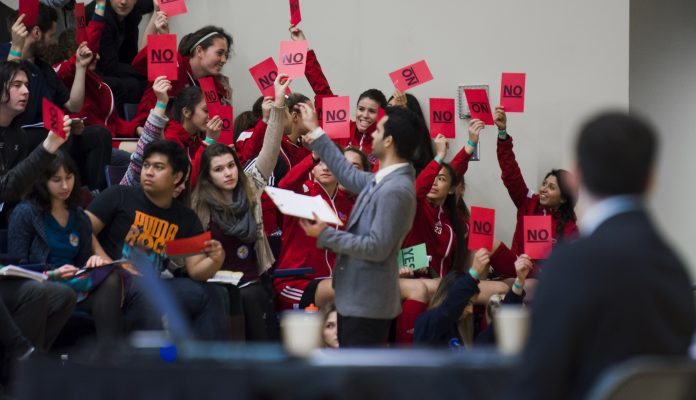
Members of NoToBuildSFU, a group advocating against the projects, were particularly vocal. One of the core members, Colin Woodbury, motioned that the issue be taken to referendum in order to allow all SFU students to vote. A slight majority of students rejected this idea, with 251 in favour of postponing and 261 opposed.

Other students were concerned with the amount of outreach done by Build SFU and the SFSS.

Over 630 students attended the SGM.

When SFSS at-large representative Rebecca Langmead responded that the Build SFU street team had undertaken over 4,800 hours of outreach, several members of the crowd began to heckle her.

Yvette Rancourt, an SFU student, took to the microphone next to speak to the financial pressures the levy that funds the building puts on students. “As students, we can always find a place to sleep, a place to study, a place to play video games, but one thing that is a lot harder for some of us is to find money,” she said.

Colin Woodbury of NoToBuildSFU spoke against voting on the motion at an SGM


She continued, saying she took issue with how the meeting itself was conducted. “I would feel a lot more comfortable [. . .] if we had an actual physical record of the votes cast that wasn’t being counted by members of the SFSS,” she said.

Adrienne Marino, president of the SFU concert orchestra, advocated for students to vote on the project at the SGM. “If this becomes a referendum, it’s a waste of my money, it’s a waste of your money,” she said. “The project is still approved, so even if we push back the loan, it’s going to cost us more money in the end.”

She continued, “This is huge. This is for us. It’s our community.”

After almost an hour and a half into the meeting, Nicholas Chapman, a student senator, moved to end the discussion and vote on the motion, stating, “I don’t know about you guys, but I kind of want to leave, so I make a motion to call the question.”

The special resolution ultimately failed, with only 65 per cent of votes in favour of approving the debenture. The motion required 75 per cent to pass. Soon after, a related motion to ensure that future SFSS boards cannot decide to cancel the student levy also failed to pass.

Woodbury was pleased to see so many students participating in the debate: “Now that many more students are really paying attention to the project, we have a chance to reform it or end it altogether.”

Students voted in favour of both the existence of Greek letter organisations on campus and retaining ownership of the SFSS Food and Beverage Services.


“It’s going to cause major delays for the project.”

Zied Masmoudi, SFSS VP student services


After the Build SFU motions failed, a large percentage of attendees exited the West Gym, despite the two additional non-binding questions on the agenda. Remaining students voted in favour of both the existence of Greek letter organisations on campus and retaining ownership of the SFSS Food and Beverage Services.

Following the meeting, SFSS VP student services Zied Masmoudi shared his thoughts on the outcome, saying, “I’m really glad to see people participating in the decision-making process and really glad to see people get involved, no matter what the results of the vote are.”

Nevertheless, the ‘no’ vote does mean that the Build SFU SUB project will be significantly delayed. Masmoudi explained, “It’s going to cause major delays for the project. We don’t know at this point how much that is going to cost us, nor how long that will be.”

When asked what the opposition at the meeting means for the society, Masmoudi replied, “I think it is time for us to probably take a step back and see what we can change about it.”

For now, the SFSS board of directors and the Build SFU project staff will work together on what their next steps will be.

Sports Briefs

0

Women’s Basketball

With a win against the Western Oregon Wolves on Saturday, January 17, Bruce Langford became the all-time winningest coach of the women’s basketball team with a record of 364–89 — surpassing his predecessor, Allison McNeill. “[McNeill] left a program with pride, expectations of excellence, and a closeness that seemed more like a family,” Langford told SFU Athletics. “I have tried my best to carry that tradition forward over the years.”


On Thursday night, the women’s basketball team earned Langford his 365th win with the team against the Alaska Fairbanks Nanooks. Erin Chambers led the team to a 78–70 victory, scoring 30 points of her own. The win puts SFU tied for second in the Great Northwest Athletic Conference (GNAC), with a 6–2 in-conference record.


SFU Athletics announced January 16 that the women’s basketball team has signed Argyle Secondary School forward Sophie Swant. “Her intensity and competitiveness are unrivaled,” Langford said in an SFU Athletics press release of the 5’11” forward, who will be eligible to play next season. “Her rebounding is outstanding, and in the competitive GNAC league that will stand her in good stead.”

Men’s Basketball

Men’s basketball continued their seven-game losing streak at home against the GNAC leaders the Western Oregon Wolves on Thursday. At 114–75, it was their lowest-scoring game yet. The Clan have yet to win a game in the new year.

Football Tryouts

SFU Football is holding open tryouts for both SFU students and high school students on Saturday, January 31 at Terry Fox Field. SFU students are required be taking at least 12 credit hours to try out, as well as pay a $30 registration fee. Registration will be held the same day in the VIP lounge at the top of the West Gym, and will require a completed medical and tryout consent form (found on the SFU Athletics website). All participants are recommended to contact defensive coordinator Abe Elimimian in advance.

With files from SFU Athletics

Sorry Vancouver, there’s no harm in smoking electronically

6

Imagine a product that could save you, your friends, and your family from having to suffer through the illness and potential death of a loved one due to tobacco smoke. Imagine that this product is safe for everyone to use. Wouldn’t we be foolish not to implement and promote it? While there’s no law against smoking electronic cigarettes in Canada, the device has, surprisingly, been met with animosity by politicians and consumers alike.

Last October, the City of Vancouver voted to restrict the use of e-cigarettes in public spaces. Following suit, the Ontario government passed a law in November to treat e-cigarettes like tobacco cigarettes. At this rate, it won’t be long before this product is restricted throughout the rest of the country. But these governments should withdraw their laws that ban public e-cigarette use, and should instead promote them as a safer, and even therapeutic, alternative to tobacco cigarettes.

While the medical community remains inconclusive on the safety of e-cigarettes due to a lack of evidence, a study published by scholars Zachary Cahn and Michael Siegel in 2011 states that e-cigarettes contain far fewer carcinogenic agents compared to their tobacco counterpart. The study also showed that few chemicals, if any at all, contained in e-cigarettes are a cause for serious health concerns.

A similar study published by Dr. Konstantinos Farsalinos and his colleagues in 2013 noted that 42 per cent of participants quit their smoking habits during their first month of using an e-cigarette. With this in mind, anyone with an ounce of sense should promote this device as one that can help people drop the tobacco. As more smokers turn to e-cigarettes, more are likely to eventually quit their smoking habits altogether.

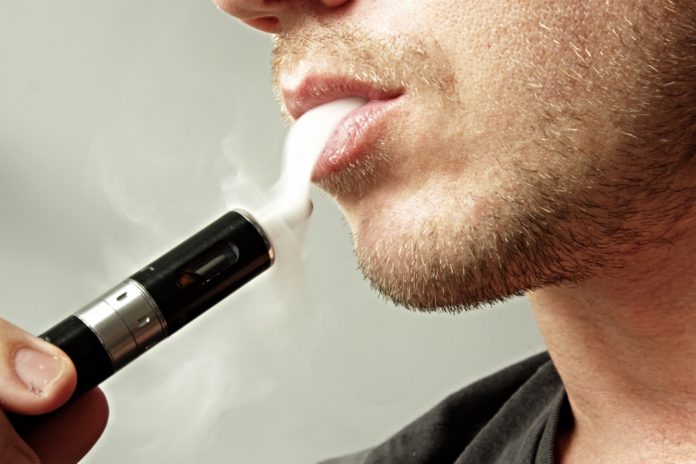
The e-cigarette allows users to mediate their nicotine dosage to a level that is just right for them.

Since they lack the harmful chemicals in tobacco cigarettes, e-cigs will also benefit those who wish to smoke in public. Because smoking is often a group activity that facilitates social connection, the e-cigarette, as a form of nicotine replacement therapy (NRT), would allow the user to remain connected to their peers during social gatherings, and to smoke in a way that would not disrupt the health and comfort of passersby.

Having friends who’ve tried several NRTs, all of them preferred the e-cigarette because of their ability to easily control their nicotine intake. Nicotine is the psychoactive substance sought out by most e-cigarette users. The Canadian Agency for Drugs and Technologies notes that NRTs, such as gum and the patch, vary in nicotine content, and their effectiveness in relieving withdrawal symptoms will depend on the users’ smoking history.

Thus, the amount of nicotine contained in a patch or in the gum may be too much for some smokers and too little for others — unlike other NRTs, e-cigarettes allow users to better mediate their nicotine dosage to a level that is just right for them.

Additionally, a February 5 article in Discover magazine cites research on nicotine which suggest the drug may have many positive effects, such as memory enhancement, improved focus, and resistance to diseases such as Alzheimer’s. With further research, nicotine’s negative effects may soon become overshadowed by its beneficial traits.

Given the current scientific evidence, one can confidently argue that e-cigarettes are far less harmful than regular ones. With this in mind, the city of Vancouver and other Canadian government bodies must consider retracting their legislative concerns, and should instead openly promote a product that has the potential to prevent the illness and death of millions.

TA successfully bluffs way through seminar without doing any of the readings

0
Illustration by Momo Lin

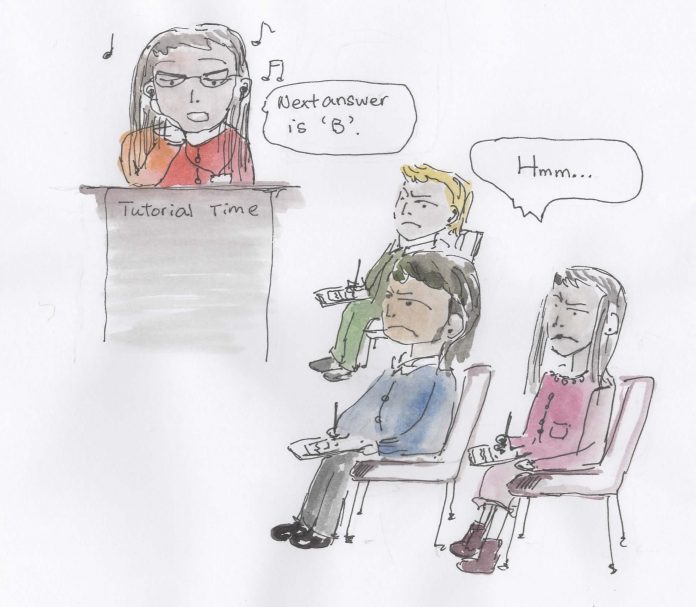
Proving yet again that just because something’s a “required reading” doesn’t mean you actually have to read it, a teaching assistant in SFU’s English department coasted through last Monday’s 8:30 a.m. seminar to a somewhat satisfying degree.

“It’s really not that hard,” TA Janet Ellis, 28, told The Peak after the harrowing venture took place. “I just listen to what the students are saying and then mash a few of their answers together to make my own response. I can’t believe none of them have noticed yet.”

While Ellis says that she tries to keep up with all of the course materials on her syllabus, she admits to regularly pulling information off of Wikipedia and browsing SparkNotes summaries to help maintain her knowledgeability. Ellis cites her busy work schedule and course load this semester as the main reasons why she’s already behind in most of her classes.

“I’d like to do all of the readings every week but there’s just so much of it,” claims Ellis. “I don’t know how my students expect me to keep up with this substantive workload I’ve assigned.”

Ellis also confessed that she’s been behind in readings since the start of the semester, when she asked students to come on day one having read all of Slaughterhouse-Five, as well as two hefty secondary readings: “I work incredibly hard during the semester so I take it easy over the break. Do my students really think I’m going to spend part of my time off trying to get ahead on readings? Let’s be realistic here.”

In addition to Wikipedia and SparkNotes, other strategies that Ellis swears by include avoiding direct eye contact whenever a student proposes a question to the class and giving answers that are really just cleverly disguised questions.

“I’m sure the students don’t notice how uninformed or evident it is when I haven’t done the readings,” says Ellis.

However, complaints from students of the ENGL 1919 seminar have already reached SFU administration, with claims that Ellis’ shortcomings are becoming more and more obvious.

“It doesn’t really affect me if she does the readings or not,” said Travis Burt, a first-year English major and one of the many who complained about Ellis. “You get out of a course what you put into it, so it’s her loss if she wants to just keep coasting. We’ll see how she does though come instructor evaluation time at the end of semester.”

In response to the recent accusations, Ellis is confident they’re unfounded, claiming the students are “being totally unfair” and are “just out to get” her.

SFU researchers investigate deadly liver cancer

0

A group of SFU researchers have collaborated with colleagues internationally to provide insight into the “mutational landscape” of a rare type of fatal liver cancer, which may allow them to identify its cause and improve its diagnosis and treatment.

Intrahepatic cholangiocarcinoma (ICC) or intrahepatic bile duct cancer, while only observed in five to 10 per cent of those with primary liver cancer, is very dangerous for those affected. This is because it is based in the bile duct, where it is unlikely to be detected.

A lack of diagnostic tools make it difficult to form a conclusive diagnosis in the early stages of the ailment. Therefore, it is usually detected at advanced stages when it is too late to be successfully treated.

Jack Chen, SFU associate professor in the department of molecular biology and biochemistry, worked closely with a research group at SFU, including postdoctoral fellow Jiarui Li, doctoral graduate Christian Frech, and master’s student Xinyin Zhao.

By understanding the nature of the mutations that are associated with ICC, Chen suggested that one can potentially learn more about the cancer’s cause. That way, “information could be imprinted in the mutation profile,” creating what is known as the “mutational landscape.”

As a group, they collaborated with researchers from Shanghai. The clinical and molecular biology components of the study took place there, while the sequencing technology and computational power were provided at SFU.

ICC is most commonly diagnosed in individuals who live in Southeast Asia. Chen explained that this is ”likely due to environments and the type of mutagens they are exposed to.” For example, ICC is diagnosed at an incidence 100 times higher in Thailand than the worldwide average.

Further research into this type of cancer is becoming increasingly important, as the incidence rates have risen globally from 0.32 to 0.85 per 100,000 people — a 165 per cent increase.

The study involved 103 ICC patients who underwent surgical removal of the tumour. Chen explained, “We sequenced the tumour genome and we also sequenced the normal genome from the same person, so that we can compare the genomes to identify differences — in other words, mutations that are specific to the tumour sample.”

With these findings, Chen and his colleagues will be able to understand more about the sorts of mutagens that are causing these harmful mutations, the types of mutations in the genes themselves, and finally, the types of cellular pathways that will be affected as an end result.

In the future, this information could be used to develop the tools necessary to increase diagnostic accuracy and hopefully improve ICC patient prognoses, giving patients more time to receive potentially life-saving treatments.

Why I am not Charlie

0
Photo courtesy of Anne-Christine Poujoulat (NBC NEWS)

Since the tragic shootings in Paris revolving around comics published by the French satire magazine Charlie Hebdo, many people on the Internet have tried to show solidarity with the victims and their families by prominently making posts with the hashtag “#jesuischarlie” — in English, “I am Charlie.”

While I sympathise with the sentiments expressed by these people and I feel terrible for the victims and their families, I’m afraid I cannot, in good conscience, use this hashtag. The fact is that I, Benjamin Buckley, am not Charlie. I have verified this by a brief glance at my birth certificate: my name is “Benjamin Nicholas Roland Buckley.” It is the name my parents gave me, and I have become rather attached to it.

In theory, it might be possible to legally change my name to “Charlie.” However, in British Columbia, this requires filling out a long form and paying a $137 fee, plus $25 for a criminal record check and fingerprinting. It would be unreasonable to expect me, let alone every member of our society, to go through such an inconvenient expense just to make a point about freedom of speech.

Even more troubling are the broad social consequences of a society in which every person is named “Charlie.” On the surface, living in such a society might seem more convenient. For one thing, it would be easier to remember everyone’s name. But it’s easy to forget that the reason we have names is so that we can tell each other apart. If, as these activists propose, we all call ourselves “Charlie,” then we will be left without a quick, simple way to identify ourselves. Even if we use variants like “Chuck,” “Charles,” and “C-Dawg,” it will be of little help.

I want to emphasize that I hold no ill will against people who are named Charlie. If you are named Charlie, that’s perfectly fine. Just keep it to yourself and don’t force your name down the rest of our throats. A tragedy, even one so symbolic of the fight for freedom of speech as the Paris shootings, is no reason to rob the world of all the diverse names it has to offer.

A person can believe in freedom without having to change their name to Charlie. It’s time for these online activists to wake up and realize that.