Home Blog Page 1049

SFU track and field surprises with historic finish in Birmingham

0
Image courtesy of SFU Athletics

It was a stellar showing for the Clan in Birmingham, Alabama, where the team achieved a top 10 finish at an indoor event for the first time.

Over Friday and Saturday, the team tallied a total of 24 points, 18 of them coming from women’s events.

Once again, SFU’s most impressive athlete was senior Lindsey Butterworth, who obtained her individual title in the 800-metre event in Saturday’s finals. On Friday, Butterworth anchored the distance meter relay finals and made up enough ground on her opponents to grab second place along with Jennifer Johnson, Chantel Desch, and Paige Nock.

With a total time of 11:28.28, the women set a new school record and also broke the Great Northwest Athletic Conference (GNAC) record set by Seattle Pacific University in 2010.

Johnson became one of four women to make history in the 3000-metre event, breaking a 30-year-old record. Her time of 9:26.82 puts her second in all-time GNAC history, and earned her a third-place finish.

The men’s team was not without its share of excitement, as Travis Vugteveen became SFU’s first male athlete to enter into the NCAA Division II finals for the 1500-metre event, eventually placing sixth.

Needless to say, the Clan made a tremendous impact, and head coach Brit Townsend felt that everyone involved has gone above and beyond the expectations.

“I’m really excited, everybody here ran personal bests or ran way higher than they were ranked,” said Townsend.

“To have a champion in Lindsey [Butterworth] as well, we really couldn’t have asked for any more with the small group we have.”

Townsend said that her team’s results were a reflection of previous results, and training that led to the indoor championships.

“They were focused from the very beginning on getting here and performing well. The [GNAC] conference championships were very successful for us as well,” she noted. “I think the team is gaining the confidence and starting to believe that they can compete at this level.”

One thing’s for sure: these endeavours by the Clan have started a trend of a setting the bar higher in each competition, and anticipation is high among the organization for what is yet to come.

Women’s golf aim to become GNAC contenders

0
Image courtesy of SFU Athletics

With their Great Northwest Athletic Conference (GNAC) Championship just over a month away, the SFU women’s golf team started the spring season off with a 10th-place finish at the Tim Tierney Pioneer Shootout in Vallejo, CA from February 28 to March 3.

The team hopes to build off the momentum given by their top 10 finish. As head coach John Buchanan puts it, “the group we have this year is knocking on the door,” and it’s reflected in the attitude and performance of the team.

This year, Buchanan and the team are planning on taking another step forward for the program. “Our goal is to make it to regionals, and continue to place better each tournament,” golfer Breanna Croxen (New Westminster, BC) said. “Ultimately, we want to carry on that momentum into next year and hopefully aim for something bigger.”

The golf program has a young core that holds promise for the years to come. This year’s team consists of freshmen Croxen, Kylie Jack, and Michelle Waters, sophomores Erin Farner and Katie Milligan, juniors Mackenzie Field and Kirstin Jorgensen, and senior golfers Jennifer McTeer and Rochelle Rezansoff.

As Waters (Qualicum Beach, BC) noted, “If everyone can come together and work hard, I think we’re capable of pushing this team forward and making SFU a competing factor in the NCAA in the coming years.”

Last year’s 2013–2014 GNAC Championship finish marked the best collective stroke average ever for SFU’s women’s golf program. And if the Tim Tierny is a sign of things to come — shooting a collective 654 strokes, just under 50 strokes better than last year’s 702 stroke finish — this year’s group will play even better.

This might just be the year where the team solidifies its place as a GNAC contender for years to come.

“The team has a fantastic work ethic and positive attitude,” commented Farner (Calgary, AB). “It’s exciting to see our team’s progress in our attitudes, which I predict will carry through to an improvement in team scoring.”


Dancers of Damelahamid presented the eighth year of the Coastal First Nations Dance Festival

0
Photo courtesy of Dancers of Damelahamid.

The performers at this year’s Coastal First Nations Dance Festival have embarked on a lifelong journey to revitalize their culture. The festival, held at UBC’s Museum of Anthropology between March 3–8, showcased First Nations performers from across North America. The groups themselves transcended boundaries, with artists from many backgrounds collaborating in an active and fluid cultural expression. 

Some of the dances dated back hundreds of years — to a point of cultural vibrancy in British Columbian history that was nearly forgotten. 

Simon Fraser University alumni Jeanette Kotowich debuted a spectacularly nimble, contemporary Métis solo. From the beginning, the audience could not help but clap in rhythm, mesmerized by Kotowich’s energy.

Git Hoan from Alaska showcased a chief’s welcome dance that was hundreds of years old. The dance featured headdresses filled with down feathers, creating puffs of swirling feathers around the dancers — it was a glimpse back into the spectacles of history.

Descendants of the Tsimshian, a culture uprooted from their home on the Pacific coast of British Columbia, revived a traditional dance that had been lost in the move away from their homeland. Git Hoan performed a dynamic and exhilarating set.

Each dance told a story that evoked a powerful array of emotions in the crowd, from enthrallment to apprehension. The story of mouse-woman featured a seven-foot, shaggy, masked creature slaying any man who did not heed the wise woman’s advice.  In another dance, masked raven dancers clacked their beaks over rhythmic drum beats and dove into the audience, calling to each other from their positions in the room.

Dancers of Damelahamid, of the Gitxsan nation in BC, wore customary button blanket regalia and performed contemporary interpretations of First Nations dance. The new and original dances featured this year were a mix of enchanting vocals and riveting choreography.

“It is more than just a practice, it is more than just an art form,” dancer Margaret Grenier sung over the first beats of their song. “All that I am is here.”

Urseloria and Nikollane Kanuho, Diné sisters from Arizona, were a flash of colours and sequins. Their set featured a show of female strength in the Women’s Fancy Dance. “[This dance was] originally danced by two brave women who were often booed,” Grenier explained. “[Many people] were opposed to women bringing such attention to their dance.”

The performance was a dazzling and deeply affecting assertion of female power at a time when violence against Aboriginal women in Canada is a serious concern. 

The artists put their culture and their hearts on the stage, and the intensity was felt by all in the audience. Against the backdrop of ceiling-high totem poles and surrounded by First Nations art, the museum’s Grand Hall was transformed into a moving shared experience for all attendees.

It was a taste of multiculturalism from British Columbia’s indigenous peoples, who continue to leave a dynamic legacy by educating the public about their history.

The Coastal First Nations Dance Festival was presented from March 3 to 7. For more information, visit damelahamid.ca.

Cinephilia: Merchants of Doubt presents a scientific argument without the science

0
Photo courtesy of TIFF.

Robert Kenner’s Merchants of Doubt follows the deceptive tactics of corporations who hire “experts” to publicly doubt scientists in order to continue selling harmful products for profit. Cigarettes, fire retardants, and man-made climate change; the film tracks the similarities between their PR scandals, before becoming as deceptive as the corporations.

During the 1960s there was backlash from scientists who began to strongly oppose the smoking of cigarettes. To combat this backlash, big tobacco hired scientists from unrelated fields to combat the evidence by casting doubt with lies. These “experts” were talented spin doctors who excelled at public speaking, while academics trying to expose the injustice struggled in the public forum.

The film traces similar occurrences with regards to the climate change debate. On one side, there are knowledgeable scientists, and their opponents are big, bad oil companies who ignore the scientific consensus so they can continue making profits.

Photo courtesy of TIFF.

As with cigarettes, if we wait too long and fail to recognize the harmful effects of climate change, there will be catastrophic circumstances. Merchants of Doubt aims to motivate the masses to stand up against major polluters and recognize how they have been manipulated by big corporations.

The film is not concerned with science, yet it tries to make scientific claims anyways. Its argument for man-made global warming comes from the way it frames the debate. The problem is that this form of argumentation is misleading and simply untrue. It’s ironic that a film that tries to expose deception ends up using deceiving arguments itself.

By framing the debate on man-made climate change as being scientists vs. non-scientists, the film asserts that there is no debate regarding how to interpret the empirical data. The film completely ignores any real scientists on the opposing side. Merchants of Doubt claims that those who don’t believe the inconvenient truth do so only for political reasons. During an interview in the film, Naomi Oreskes, one of the authors of the book on which this film is based, states that there is a consensus among scientists which proves that man-made global warming is a fact.

There are two problems with this line of reasoning. Firstly, the argument is classic ad populum: something must be true because most people believe it. Merchants of Doubt commits this fallacy by arguing that man-made global warming must be real because all scientists working in the field believe it.

The problem is that it’s not the number of scientists that matters, but the evidence that has convinced them. The movie wants to make empirical scientific claims without giving any empirical scientific evidence.

Secondly, the notion that there are no expert scientists who oppose the idea of man-made global warming is completely untrue. In 2006, a large group of Canadian scientists involved with research on climate change wrote an open letter to Stephen Harper that called into question what many, including this film, deem to be cold facts. They wrote “observational evidence does not support today’s computer climate models, so there is little reason to trust model predictions of the future. Yet this is precisely what the United Nations did in creating and promoting Kyoto.”

Merchants of Doubt aligns itself with the views of scientists, yet its argumentation is far from scientific. It wants to close the debate by ignoring its opposition while deceiving the audience with lies and fallacies. 

Food Finds: Steveston’s Shady Island has the freshest fish around

0
Photo courtesy of dinehere.ca.

Nestled in the heart of the historic Steveston village in Richmond is one of my favourite places to eat: the Shady Island Seafood Bar and Grill. The Shady Island will forever be a special place for me, as it was the last place I ate a meal before asking my wife to marry me; but this restaurant has excellence far beyond my association with it, and features the best fish and chips I have ever had.

With a view overlooking Steveston Harbour, the place has incredible ambience, especially if you get the chance to sit on the patio during the summer and watch the sun slowly fade into the horizon.

Photo courtesy of dinehere.ca.

Alternatively, if you’re there for an early summer lunch, you might catch a glimpse of kitchen staff walking down to the boats moored at the wharf to quite literally get the freshest fish available.

The place also has a rustic feel that melds perfectly with its historic setting. But enough about the ambience — you want to know about the food.

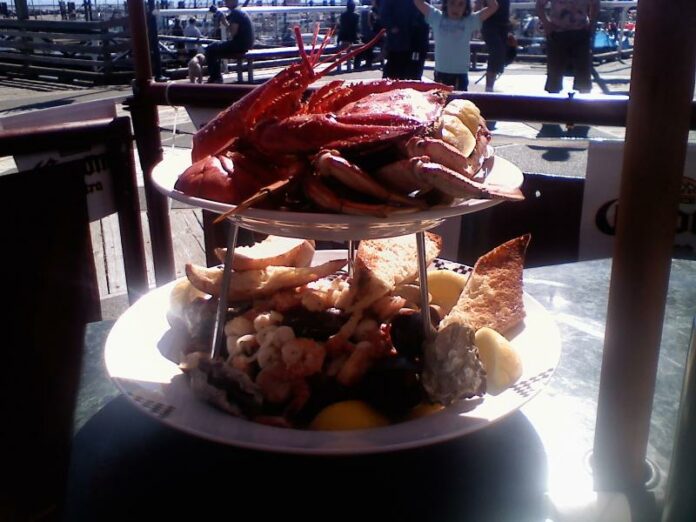
The fish and chips are expertly prepared with the perfect ratio of fish to batter and an enormous helping of crispy chips, and you have the option of cod, halibut, or salmon. Can’t decide? The Shady Island has got you covered with its Gulf of Georgia fried seafood platter for two, which features all three fish plus a helping of calamari.

The portion size is very generous for what you’re paying, and I’ve almost always ended up with lunch for the next day.

If fish and chips aren’t your thing, the menu also contains several signature dishes, including a seafood linguini that my brother, who worked as a high-end chef for several years, described as the best he’s ever had.

Though I tend to stick with the fish and chips, with the occasional venture into oysters and chips, I can say from experience that the warm seafood salad and Pacific prawn penne are also excellent choices.

If you’re a fan of fish and chips, or even just seafood with a great atmosphere, I encourage you to make the trek to Steveston Harbour and give this place a try.

Emily Molnar talks Trace and Ballet BC’s vision

0
Photo courtesy of Michael Slobodian.

“I try to create diversity,” explained Ballet BC’s artistic director Emily Molnar. “The range of the company is quite large, and I want to demonstrate that.”

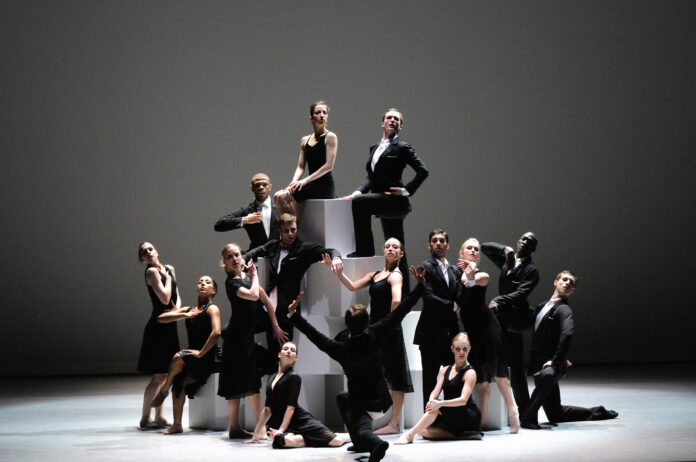
Ballet BC’s latest program, Trace, is a diverse collection of contemporary ballets. They will be presenting the Canadian premiere of William Forsythe’s workwithinwork, a world premiere by Italian choreographer Walter Matteini, and perennial audience favourite Petite Cérémonie by Medhi Walerski.

“Forsythe is at the forefront of contemporary ballet,” said Molnar, describing workwithinwork as an “intimate palette of his signature style.” The work was written for the Frankfurt Ballet and set it to Luciano Berio’s Duo for two Violins. With the music divided into pieces varying in length from 10 seconds to five minutes, the large group work is very episodic.

Molnar explained that Forsythe pushes the technical prowess of dancers, and this work is more theatrical than usual for his company. “It’s amazing that Forsythe came from a post-Balanchine beginning and went as far as he did. His range is astounding,” she said.

Ballet BC performed Matteini’s Parole Sospese in 2011, and now they’ve invited him back to choreograph an original work for the company. “The first time we work with a choreographer, we like to do a work that is new to us but not new to them,” explained Molnar. This allows the company to form a strong relationship with the choreographer.

This new work, whose Italian title loosely translates to “Let Me Weep,” is “about the opposition of light and dark in our nature,” said Molnar. Matteini is interested in human nature and the idea that we need an independent observer to truly understand ourselves.

Molnar describes Matteini as the type of choreographer who isn’t afraid to openly portray emotions through his choreography. “It gets to your heart,” she said.

After bringing it on their recent Eastern Canadian tour, Ballet BC is performing Petite  Cérémonie one last time before putting it in the vault. “It’s a goodbye to the work,” said Molnar. The piece was premiered in 2011 by Ballet BC and, as Molnar described, it showcases the company well because it was made specifically for them.

“It’s more in the genre of dance theatre,” she said. “It’s about the difference between the male and female brain. It’s playful and sophisticated, and audiences love it.”

They experienced plenty of this love on their eastern Canadian tour, especially in Quebec. “Quebec is an audience that appreciates dance,” said Molnar. “They were giving us ovations between pieces. The audiences were delightful and warm.” The last time Ballet BC performed in Quebec was 2002, and they are a very different company now.

Performing one day and being on a bus the next is not something the company is used to. “It was something we needed in our development,” said Molnar. “Touring bonds people. It pushes you physically.” They performed 10 shows in three weeks — more than they usually do in a normal season at home.

They have plenty of plans to take their work on the road, such as opening the Jacob’s Pillow festival this summer, a fall tour around BC, and dates in the United States next May. “We want to be relevant in Vancouver and BC, but be ambassadors as well,” said Molnar. “It’s all a part of our vision.”

Ballet BC will perform Trace from March 26 to 28 at the Queen Elizabeth Theatre. For more information, visit balletbc.com.

The 605 Collective preview Vital Few at the Vancouver International Dance Festival

0
Photo courtesy of David Cooper.

Inspired by the theory of the vital few, the Vancouver-based 605 Collective’s new work explores the dynamic of their company and how they work together. “The theory of the vital few says that a small proportion of any large group has the power to affect change,” explained Josh Martin, one of two core members of the 605 Collective. “You have to consider the vital few in any group or organization — the key people who can change things.”

The work explores which dancers play a crucial role at any given moment, and each has a turn at showcasing their individual qualities while controlling the direction of the choreography. They play with the idea of one person being able to enact change, even if it begins from a very small act.

Photo courtesy of David Cooper.

Martin performed at last year’s Vancouver International Dance Festival alongside the 605 Collective’s other core member, Lisa Gelley. They each performed solos on the free stage. This year, their company is presenting a preview of Vital Few, which will return in completed form for next year’s festival.

The Collective’s members have changed since the company’s formation in 2006, and they are always collaborating with new artists, but their process has remained the same. They draw on creative contributions of the whole group, and the creation is always a shared process.

This show will feature six dancers, and they are also sharing the bill with another local dance company, Out Innerspace Dance Theatre. Directed by Tiffany Tregarthen and David Raymond (the latter of whom has also worked with 605), Out Innerspace complements the collective’s artistic approach perfectly.

“Tiffany and David are old friends, and we’ve grown into our companies together,” said Martin. “We are each other’s biggest fans.”

Though the companies share many similarities, there are important differences in how they create movement. “Out Innerspace is a more theatrically-based company” focused heavily on exaggerated gestures and characterizations, explained Martin, whereas the 605 Collective’s style is more direct and varies between each dancer. 

Martin is excited that his company is a part of the festival, and admires the way the organizers have built its following over the years.

“It’s not easy to be a contemporary dance festival. It’s hard to get people to want to immediately buy into it,” he said. “VIDF takes a lot of risks, but the way they’ve built an audience is impressive.”

The Vancouver International Dance Festival runs March 8 to 28. For more information, visit vidf.ca.

Vancouver Poet Alex Leslie offers repeating melodies and intimate abstractions

0
Photo courtesy of Nightwood Editions.

“I, not here, write.” The magnificent The things I heard about you by Vancouver writer Alex Leslie is a book of thought-provoking poetry. A mixture of prose, narrative, and erasure poetry, things entices the reader with lyrical repeating melodies. As the poems get smaller, the words become so much brighter.

Shortlisted for the Robert Kroetsch Award for innovative poetry, this debut poetry collection is fresh and abstract. The relationship between the reader and speaker is intimate. “Knocking on Heaven’s Door,” for instance, is a throbbing tale of loss and the need for multiple covers of the song on an iPod in order to truly feel the sorrow.

Photo courtesy of Nightwood Editions.

Leslie borrows from the song and narrates in a prosaic manner while crafting delicate lines of poetry such as “all mantras are identical. A harness, a poem made too small. A trick of bearable limits, an exercise in the planned application of pain.”

Generally, in the realm of poetry, a word like ‘pain’ is seen as melodramatic, but Leslie pulls it off. The poem deals with the often melodramatic theme of sorrow, and turns it into a beautiful piece of poetry that melds the role of reader and speaker.

After each poem comes a smaller one. Leslie continues her exploration of borrowing and erasure, taking from each preceding poem to create a smaller poem that merges the reader and speaker closer together.

As the poems grow smaller, they become more abstract, yet simultaneously more precise. In particular, as “Knocking on Heaven’s Door” gets smaller, brilliant abstractions like these begin to emerge: “three months after your death: wet skin, bare ingrown dog, dark in the stasis, the demand to see thunder.” These abstractions are gems, and help guide the reader into the psyche of the speaker.

Leslie’s The things I heard about you is a masterful exploration of the blurred lines between writer and reader. Leslie explores social issues with enlightening subtlety that will leave you reeling.

Merging genres effortlessly, she explores the art of borrowing, and the erasure of her own prose into poetry. One might conclude that Leslie simply creates prose poetry only to narrow it down to the barest, most intimate essentials.

Faux SFSS election profiles

0
Photo courtesy of ^ |_ v-|- Ø (Flickr)

With the transit referendum engulfing the Greater Vancouver area and the upcoming federal election happening later this year, it’s refreshing to finally have politics worth paying attention to: the 2015 Simon Fraser Student Society (SFSS) elections.

You may be thinking, “Oh, you mean those elections filled with unelectable candidates whom I couldn’t care less about?” Yes, those! But as a journalist and an important member of society, I am obligated to ask the hard questions and aid voters in assessing which student leaders are the best fit for you. Thus, I have decided to do something radical and actually get to know these candidates.

Which brings me to SHWANGA, a platform of peculiar humans determined to make SFU a better place for you and me. Luckily, I had the chance of a lifetime to interview their six executive candidates; read on to find out more about these mysterious newcomers.

And please remember that not voting perpetuates apathy, and not casting an informed vote is a perpetuation of stupidity. Our fellow students need you to vote because they need doers who have dedication and decency. Bow to this emotional blackmail; it is your sacred duty.

Bob Village

Photo courtesy of ^ |_ v-|- Ø (Flickr)

Position running for: SFSS President
Last seen: Circulating a petition demanding that the university do more to foster student community.
Last heard saying: “Why doesn’t SFU have a more engaged student community?”
Motivation: Feels strongly about creating a community. He wants to contribute to creating community and is willing to help anyone who has the same goal of enriching the student community.
Phobias: Original ideas, having to back up claims with action.
Goal: To build a student community that will help the community and students.
Campaign speech excerpt: “I may be a man of few words, but they’re the words you care about. Like students. And community!”

Tim Walker

Photo courtesy of Emanuele Rosso (Flickr)

Position running for: VP External Relations
Last seen: Campaigning at the bus stop near residence on Burnaby Mountain.
Last heard saying: “I’ll just wait for the next one.”
Motivation: Tired of lousy TransLink bus services up and down the mountain; body odour on buses.
Phobias: bike lanes, standing while riding the bus, studying for his “N” test.
Goal: To advocate for improved bus services, transit police fines for people who just couldn’t be bothered to put on deodorant this morning.
Campaign speech excerpt: “We have been teased with this gondola pipe dream for too long. Now, I am taking the stand and saying we need better bus services on the mountain. It’s not fair for me to always have to ask my dad to come get me just because I hate riding on a crowded, stinky bus.”

Emma Kaching

Photo courtesy of  Chris Zebes (Flickr)
Photo courtesy of Chris Zebes (Flickr)

Position running for: VP Finance
Last seen: Shouting at Topshop assistants for ripping her off on expensive jeggings.
Last heard saying: “I have inspired 78 startups in the button-making industry alone.”
Motivation: Little to none, after her online/offline shopping addiction has left her broke and lethargic.
Phobias: Missing out on a good sale, getting mail at the end of the month.
Goal: To raise domestic student tuition rates so they are milking as much student money as international rates.
Campaign speech excerpt: “Why am I the only one concerned about the financial exploitation that international students go through? Everyone should be paying the same, lucrative fees. Equality for all!”

Hazel Omar

Photo courtesy of Alison Berto (Flickr)

Position running for: VP Student Life
Last seen: Spending several hours walking around on campus, trying to find anything even remotely resembling a party.
Last heard saying: “Maybe I should have gone to UBC.”
Motivation: Increasing student sociability, reducing the number of downers there seem to be during the rainy months.
Phobias: Vast amounts of overwhelming concrete, introverts.
Goal: Have the school be sponsored by PBR, transit buses replaced with party buses.
Campaign speech excerpt: “Our university needs to foster a more welcoming atmosphere. An atmosphere with more parties.”

Isabella Rommi

Image courtesy of Pedro Ribeiro Simões (Flickr)

Position running for: VP Students Services
Last seen:
throwing her arms up in frustration on the second floor of the Robert Brown Centre (RBC).
Last heard saying:
“I’ll tear the whole place down if I have to!”
Motivation:
Wants to make life easier for students who have classes in architecturally demonic buildings.  
Phobias include:
being late, the maze scene from The Shining.
Goal:
to install an interactive map at the entrance of RBC or bulldoze the building entirely — whichever students agree with most.
Campaign speech excerpt:
“I will provide a voice for the large numbers of disenfranchised students who are fed up with being sent to a building without a speck of compassion and being lost for hours!”

Benjamin Balunga

Photo courtesy of Silvia Sala (Flickr)

Position running for: VP University Relations
Last seen:
Sleeping in the library, using his textbooks as a makeshift pillow.
Last heard saying:
“Can I borrow your notes? I missed last week’s lecture.”
Motivation:
To improve student mental wellness and ensure proper academic success for all.
Phobias:
Winter, classes, anything that takes place before 9 a.m.
Goal:
To advocate for a Fall semester reading break and a second reading break during Winter semester.
Campaign speech excerpt:
“I can’t speak for the rest of students, but I for one am tired of being tired!”

Who needs spare time? Not me.

0
Photo Credit: Talha Qadir

Hello, my name is Tessa, and I’m a workaholic.

That might not sound like such a big deal, or even something very negative. But being able to admit this to myself recently has given me a new perspective on how I spend my time, and has gotten me thinking about how I might be able to work towards working less.

In the past, I would always justify my heavy workload as a result of having trouble saying ‘no’ to people, or I would tell myself that I needed to work more for the money, or because I was just ambitious and driven. But I have since realized that this is not what it’s about.

It seems that I just like to be busy. I’m learning to acknowledge it, control it, and accept that it’s just the type of person I am. Some people much prefer to stay at home, watch lots of TV, and have all their evenings and weekends free of any formal plans. There’s nothing wrong with that, but I’ve always been drawn to fill my time as much as I can.

One side effect of this sort of compulsion is that I have trouble relaxing — I mean fully relaxing. I don’t know what it’s like to not have a ‘to-do’ list hanging over my head, and I am always considering how to squeeze tasks in between other tasks until I have no room left to breathe.

I always consider how to squeeze tasks in between other tasks until I have no room left to breathe.

There are definitely upsides to this. I have learned how to be efficient and use my time wisely, but I’ve also realized that I tend to plan out every moment of my day, filling my time with so many activities that there isn’t time left for all the little things that I keep meaning to do “in my spare time.”   

Another upside is that I’m never bored. There are always things to do, and as an only child, I’ve always been good at finding things to occupy my time.

I used to always tell myself that after this semester, or after this assignment, my time would clear up. As soon as this particular task is out of the way, I’ll be free and life will be great. After a while I’ve come to the conclusion that, while those thoughts keep me motivated, they are untrue.

Other things always seem to fill those spaces in my schedule, and that’s just fine. I don’t need everyone to understand why I’m a part-time student with a full-time job, a part-time job, and many other projects on the go simultaneously. It’s worked so far, and becoming more aware of how I allocate my time will help to make sure I save time for myself and those I care about. 

Ultimately, as long as I can keep myself in check and don’t overdo it, and as long as I still enjoy what I’m doing, I’ve learned it doesn’t matter if I have a crazy schedule, and it most certainly doesn’t matter if others think so.