
Home Blog Page 1046

Stop — collaborate and listen

0
Photo credit: Brandon Hillier

Some people have trouble speaking up and voicing their opinion in a work environment. I get it — it’s awkward to have to share your own personal views, especially when it means criticizing a colleague and friend. At The Peak, we’re a pretty tight-knit group, which often makes it harder to switch into “work mode” and engage in the kind of real talk needed to get through production days.

I have the opposite problem. I just can’t seem to shut up.

It wasn’t always this way. Those at The Peak who knew me when I was a wide-eyed, fresh faced contributor will remember the pale, lanky kid who’d stay tight-lipped during collective meetings and whose correspondence would be strictly limited to emails and Facebook messages. Eventually, I came out of my shell and gained confidence in my ideas and opinions — something I still feel is crucial in an environment where everyone is learning and where making mistakes is encouraged.

The problem is that, somewhere along the way, I overshot my mark. Occasionally voicing my opinions led to dominating the conversation. Mustering the courage to voice difficult opinions led to overstuffed compliment sandwiches.

Often, I have to stop and check myself — or rely on others to do so for me — before I shove my foot too deeply into my own perpetually open mouth.

As much as I’m proud of the self-assuredness that my time at The Peak has given me, I’ve realised how much I’m missing by not taking the time to listen to others. Not everyone is as much of a motormouth as me, but that doesn’t make their ideas any less valuable — in fact, given that these people rarely get a chance to express themselves as fully as I do, it’s even more important for me to shove a figurative sock in it and pay attention to what others have to say.

Not everyone is as much of a motormouth as me, but that doesn’t make their ideas any less valuable.

Gradually dipping my toes into the Editor-in-Chief pool — where I will be swimming breaststrokes come this summer — has made me even more aware of my lopsided talking-to-listening ratio. It’s taken me a long time to think of myself as a real leader, and one of the biggest turning points has been realizing that I’m not the only person in the room with good ideas and strong opinions.

I’m still learning and constantly reminding myself of this, but I like to think that I become a little less of a loudmouth jerk as the weeks go by.

The Peak is and will always be a team effort, and not everyone expresses themselves the same way. I’d hate to think that we’re missing out on good ideas because people can’t get a word in edgewise, and I know that we wouldn’t be as strong a paper as we are today without the input of each and every one of our team members.

With all this in mind, I’ll keep it short and sweet. If you’re like me, do the adult thing and leave your ego at the door. Listen to others, and really listen — don’t just wait for your turn to talk. You’d be surprised how much everyone else has to say if you just give them the chance. I sure have been.
Debunked: Five commons arguments against online dating

0
Photo Caption: Brandon Hillier

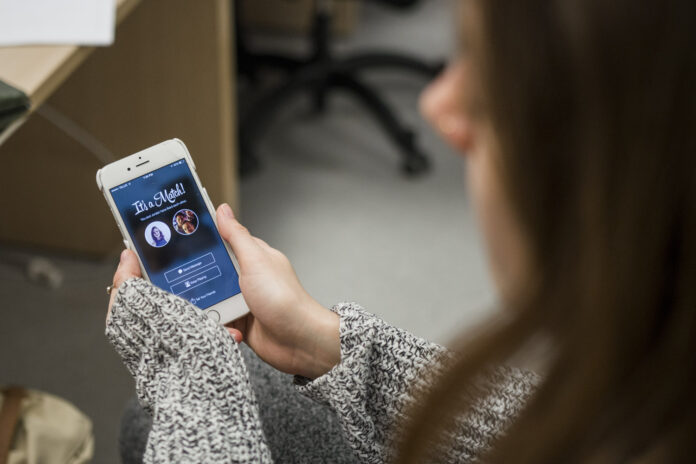
Last Friday my coworkers and I discussed our opinions toward all those dating applications out there: Tinder, Match, E-Harmony, OkCupid, Plentyoffish, Grindr, and the like. Being open-minded, 20-something-year-olds, I was surprised at the amount of hesitation some of them had towards online dating. As such, I want to present my coworkers’ common arguments against online dating, and reveal why they’re flawed.

Coworker 1: “Online dating is shallow! I’d rather meet someone in real life, like at a coffee shop, university, or through a friend.”

Me: That’s fair. But if you’re busy, you can’t constantly hang out at all the coffee shops and universities in the hopes of finding someone, nor can you expect your friends to always set you up. Dating applications and sites allow you to be connected 24/7 to a place where others are actively looking. You can match and chat with someone at any time in any place.

Coworker 2: “Online dating is for people who are there to hook up. Creeps only use these services.”

Me: You could use it merely for hooking up, but who’s to say that you can’t meet your life partner through one of these apps or sites? And yes, there are creeps who use online dating, but there are also creeps in real life!

Coworker 3: “All the people you meet on Tinder and other apps tailor their pictures to make it look like they’re better looking than they actually are.”

Me: That’s definitely possible, and a good strategy. But before you go on a date with him or her, you can ask them to send you additional pictures, check out their other social media platforms, Facebook, Instagram, and the like, or send live pictures or videos over Snapchat to get a better idea of how they look.

Coworker 4: “When you meet someone online, you don’t get to know who they actually are. They could be a psychopath and you wouldn’t have a clue until you’ve met them.”

Me: True, but you can survey their personality over a few days or weeks by messaging them before actually going on a date with them. You could even call them on the phone before going out with them. It’s still completely possible that they’re hiding some crazy aspect of themselves, but you’ll have a better sense of who they are after several lengthy conversations.

Coworker 5: “Online dating apps and websites take away the need to go out and socialize and meet people the old-fashioned way.”

Me: Yes, technology has changed many ways we go about our lives. It’s changed how we navigate, converse, do business, and how we date. Instead of opposing online dating, why not get with the times and take a chance?

Dating apps and websites are not new, and their popularity is continuing to rise. Since you’ve probably already thought about what it would be like to browse Tinder, Plentyoffish, or Grindr, why not give it a shot? You have nothing to lose.

Sports Briefs

0
Photo courtesy of SFU Athletics.

SFU Sports

SFU is currently ranked seventh-best school of 198 in the Division II Learfield Sports Directors’ Cup. The event ranks universities for overall athletic success via points awarded for NCAA championship finishes. SFU currently has 348 points, 30 points behind sixth place and 312 points behind Division II leaders Grand Valley State. In the previous two years that SFU was eligible, they placed 36th and 32nd. The final results will be released April 2.

Football

Eight Clan football players are headed to the CFL Combines this week: wide receiver Lemar Durant, running back/defensive back Chris Tolbert, wide receiver Bobby Pospischil, defensive back Matt Isherwood, wide receiver Kyle Kawamoto, defensive lineman Kristian Lawrence, running back Cole Tudor, and wide receiver Bibake Uppal. Durant and Isherwood are headed directly to the national combines in Toronto, while the other six are headed to the regional combine in Edmonton, AB on Monday where they will vie for a spot at the national combine.

Softball

On Friday, March 13, SFU’s softball team split a doubleheader against the Western Oregon Wolves. The first game marked the Clan’s first Great Northwest Athletic Conference victory at 5–3, while they narrowly lost the second game 6–5. “We stole one and we blew one,” head coach Mike Renney told SFU Athletics. “A split on the road is always welcome but right now we are riding an emotional rollercoaster that comes with a young team.”

Women’s Golf

Over last Thursday and Friday, the women’s golf team competed at the Augustana Spring Fling in Palm Desert, CA. SFU finished a collective +114, earning ninth place. Sophomore Erin Farner and freshman Breanna Coxen tied for the lowest score on the team with 169 strokes (+25), achieving 31st place.

With files from SFU Athletics

Why I’m experimenting with sobriety in university

0

alcohol

felt awful. My head was throbbing, I felt confused, I was completely lost, and I was wet. Really, really wet.

It was at this moment I realized that I had a problem.

No, not a drinking problem. It would take another couple of weeks before I entertained any of those thoughts. It was my phone; it wasn’t working anymore.

As I slowly figured out my way home, without Google Maps, winding my way through the streets of Surrey, I pieced together my night.

I remembered getting to my friend’s birthday party. I remembered saying I wasn’t going to drink. I remembered feeling socially uncomfortable. I remembered deciding to drink a little, just to feel okay. I remembered feeling depressed. I remembered Jagermeister. I remembered deciding to walk home at two in the morning. I remembered being in a lake. I forgot the rest.

This was the morning I first really began to question my relationship with alcohol. It’s been almost a year now and while I can’t say that we’ve officially broken up, I’ve at least transitioned from being “in a relationship” to “it’s complicated.”

I never imagined I would be someone who could have any sort of a drinking problem. My parents never drank more than a can of beer or a glass of wine, so my idea of alcoholics was based entirely off of fictional characters, like the barflies at Moe’s Tavern. I thought alcoholics were all complete losers — two-dimensional people who obviously had nothing else in their lives.

No matter how much I drank, I could always convince myself it was okay because I was still going to school, working, and trying to make something of my life. I only saw alcoholism as a problem if it destroyed your life on the outside, but as I’ve come to realise, even if it only affects you on the inside, it can still cause a lot of pain.

My early drinking experiences were fairly innocuous. I had my first sip of beer at a New Year’s Eve party and left the full can on the counter to get drained into the sink the next morning. My second drink was a shot of vodka at a friend’s house, and I didn’t feel anything.

The third time I drank, I blacked out and barely made it home. And it was incredible.

In one fell swoop, I broke out of my shell. Out of nowhere I gained the confidence to talk to anyone, and I had more fun than I’d ever had before. It was amazing.

From that point on, I felt nothing except this tremendous effect when I drank. I didn’t do it regularly, but every time I went out, I’d drink excessively — and for a couple of hours, I’d become a different person, and everything was great.

Unfortunately, in my third year of university, I was not experiencing this same success in my regular day-to-day life. I was struggling with social anxiety and depression.

I decided to seek help, and I did it the right way. I went to a psychologist who spoke with me and performed tests. He recommended medication and therapy. He assured me that my problems were curable, but it would take a lot of work and that it might be a long time before I felt any better.

I gave it my best shot. For about a month, that is, before I decided to implement my tried and true method for social success: Drinking. A lot.

For several months, this is how I lived my life. While I wasn’t drunk all the time, I was under the influence of alcohol more than I should have been and more than I still care to admit. I even pre-drank before I went out drinking.

It was a lot of fun, for a while. I made a lot of friends and started to feel more confident about my ability to socialize. I even worked up the courage to talk to the girl I had had a crush on for a long time. I eventually asked her out, something that had previously been unheard of.

Unfortunately, I quickly realised that this lifestyle was not sustainable. Though I continued to achieve success socially, I became more and more depressed. In the sober light of day, my attempt at a relationship was also quickly not working out, which only further contributed to my unhappiness.

In this state of mind, I went to that birthday party with the intention of staying sober. But with none of my problems even remotely solved, I couldn’t handle the situation, and ended up drinking more than I ever had before.

The next day, I not only had to deal with the consequences of the night before — which included replacing a $200 phone and a fair amount of other water-related damage — but it also happened to be the day I had my heart broken.

While I could’ve chalked it up to a shitty weekend and gone on with my life, I decided instead to use it as motivation to take my mental health seriously. While drinking may have seemed like the easiest and most fun way to escape my problems, I’ve slowly realized that confronting my problems head-on is way more rewarding.

In the last few months, I’ve taken my pledge even more seriously, and I’ve decided to completely eliminate alcohol from my life. With drinking so ingrained in so many facets of university life, it certainly hasn’t been easy — but for where I’m at right now, sobriety is the best thing for me.

While someday I hope I can drink just for fun and not as relief for social anxiety or depression, for now, I’m happy just having a Pepsi and working on real social skills and real happiness.

Alcoholism isn’t the same for everyone, and it’s not always apparent from the outside looking in. Alcoholics aren’t just Barney Gumbles, and more often than not you’ll have no idea that someone is suffering because this sort of suffering can often look like a lot fun.

I’m not sure whether I’m an alcoholic, but what I do know is that right now I don’t want to drink. I hope people can understand that, and not only respect my decision, but also be accepting of both me, and anyone else who chooses not to drink. It just feels like the right thing for me right now.

Plus, I like being dry. Really,

really dry.

This week in comics

0

agoraphobia 11 copy copyThe Adventures of Agoraphobia Man: World Defender (Jacey Gibb)

SeagullSquare11Seagull Square (by Jill Mandrake)
Signs of Spring (Serena Chan) copySigns of Spring (by Serena Chan)

UnicornCop

Woohoo, Boohoo

0
Photo courtesy of Jonathan Mueller (Flickr)

Woohoo: Being a bachelor

Being single in university, it’s hard not to feel a little lonely sometimes — especially with that couple in front of you sucking face during lecture. But before you chuck that watered-down Starbucks latte at their heads, just stop and think about all the great things there are about being single.

For example, there is actual cash in your wallet. And that new Nicholas Sparks movie? You’re not being dragged to go see it. You can put the toilet seat up with no fear of repercussions. You, sir, are a bachelor! And that means you get to pick the movie tonight. And it’s Die Hard, so yippee-kay-yay.

Throw on your comfy clothes, leave your hair as it is, and cherish these moments of freedom. They may not last forever, you sexy thing.

Boohoo: The Bachelor

Ahh, nothing in the world screams romantic like a 25-woman battle royale for a hand in marriage. Yes, it’s ABC’s The Bachelor, where we are introduced to a handsome, rich man who can’t seem to find a girlfriend.

For the last 13 years, this pimple on the ass of reality television has endured and perpetuated its unrealistic relationship standards the world over. Brought to us by the producer of Hostel and the Texas Chainsaw Massacre, it’s any wonder this hour-long program is a horror. This show does not deserve a rose, but rather a poison apple so it can be put to rest for good.

Embarrassing situations and how to respond to them

0
Image courtesy of Wikipedia

Embarrassing encounters are a part of everyday life, but that doesn’t mean you can’t totally own these moments and come out on top. Here are four embarrassing situations and ways you can make the most out of them.

The name game

A voice calls out to you while you’re waiting at the bus stop: “Hey, how’s it going?” Reality kicks in as you realize this person is addressing you. Crap. Your brain kicks into full-throttle as it struggles to produce a name for this inquiring soul. Finally, like a fight-or-flight response system, you respond with “Hey youuuuuu . . . ” Too late — the vagueness and prolonged “u” make it obvious you don’t remember who they are.
Solution: Commit to the memory lapse and use amnesia as a scapegoat. Say the reason you don’t remember them is because you don’t remember who you are. Use The Bourne Identity as a reference point and go from there — but try to avoid saying you’re a spy or anything like that.

The “ex” in text message

It’s Friday and you and your pals are ready for a night out.  Everything is perfect: your hair miraculously decided to cooperate; you’ve got some fresh threads. Next thing you know, it’s 10 a.m. and your credit card is $100 closer to being maxed out. Through squinted eyes you scan your phone and realize you’ve sent “I miss you” messages to multiple exes. Reluctantly, you look at your call history and notice the last outgoing call lasted 41 minutes. Who knew you and your ex had so much to talk about at three in the morning?
Solution: Break your phone and refrain from buying a new one indefinitely. You can’t drunk dial an ex if you don’t have something to call them with and the money you save from your cell phone bill can be allocated to next weekend’s tequila budget.

Staying at the party after being tardy

You’re running down the indistinguishable halls of the AQ, already 10 minutes later for your next lecture. After making sure the door closes quietly behind you, you take a seat near the back of the lecture hall and set up your notes and laptop before noticing something: none of these people look familiar. These aren’t your classmates, and this isn’t your lecture.
Solution: Just kick it until the break or even until the very end of class. All your stuff’s set up anyways and you already disrupted the class once by coming in late. What’s the worst that can happen? You learn something new?

Self-ie reflections

You’ve just walked into a washroom at school and you realize the lighting inside is too perfect to not use for a quick before-class selfie. Phone out, camera on, you’re close to hitting that two-arm bicep pose or that optimal cleavage shot when, to your horror, someone walks into the bathroom. You lock eyes with each other and wait for someone to make the first move.
Solution: Trick question. This isn’t an awkward situation, because nothing is embarrassing when you come out of it with a picture-perfect selfie. Post it and love it.

Support affordable student and family housing at SFU

0
Photo Credit: Talha Qadir

I used to live in SFU’s residence, and it wasn’t incredible. When I moved my bags into McTaggart-Cowan Hall, it was clear that not much had been maintained during the 30-something years the building has been standing. Walls had cracks, hinges creaked, the bathroom floor tile was discoloured, and the whole building smelled musty with age.

Later that semester, the old plumbing burst and our entire wing of the building flooded, causing 90 per cent of us to relocate for the rest of the school year.

For years, our provincial government has been consistently underfunding SFU, leading to a lack of maintenance measures. This is an unfortunate situation, especially since hundreds of students depend on this housing to complete their education. In this sense, I sympathize with the institution. However, I do not sympathize with the lack of transparency that Residence and the university have projected over this issue.

SFU’s Louis Riel Residence is one of the oldest student housing buildings on campus, and it shows. Standing in front of the building seems reminiscent of a real-life Tim Burton film — a grotesque, concrete structure that hollers ‘mould!’ before one even steps through the door. Those who move into residence at SFU are not allowed the chance to ‘pre-screen’ the rooms before move-in day, a policy I find oddly secretive for a university.

In light of the announcement of Louis Riel’s impending August closure, resident Teresa Dettling proclaimed to Global News, “We were all lied to about the condition of the building before we took possession of our apartments!” On SFU Residence’s website, photos of the kitchens and dorms either make the place look fantastic, or are too pixelated to really garner a sufficient understanding of its quality.

The photos of SFU Residence’s dorms are either too pixelated or make the place look fantastic.

My family and I were disappointed upon stepping into McTaggart, and I cringe to think of what reality hit the Louis Riel residents and their families upon move-in day — contract signed, no turning back for an entire year.

It’s upsetting that SFU has remained so hush-hush about the crumbling conditions of their original residences for so long. I’m unable to find any previous public contact surrounding the complaints residents have been making about Louis Riel for years, and there’s been no recent discussion of new affordable housing projects on campus. As a result, this diverse community of residents have been told they will be evicted in August — leaving many of them unable to find housing elsewhere.

For these reasons, I personally support affordable family housing at SFU. I support transparent discussion between these residents and the university, to ensure that their well-being is not overlooked due to financial gain. I support keeping these students and children on the mountain — the place where their contract promises they will remain — and that these new housing situations are accessible for the disabled. And I support the guarantee of a future for low-income, indigenous and international students to live in residence at this institution.

SFU publicly prides itself on diversity; it would be quite a shame to have to dismiss these students from the mountain when all is said and done.

SFU Residence and Housing have not yet offered a solution to this problem, which is unfortunate. A resolution had better be made quickly; with every day that passes, they’ll sour their reputation by digging themselves further into a hole — all because they chose inaction at the expense of the health and safety of their residents.

Women deserve an equal opportunity, not an equal outcome

0
Photo courtesy of Unesco

I’ve been labelled my whole life. Every kid gets labelled eventually, and my labels were “smartypants,” “genius,” “math whiz,” and “computer geek.”  I lived, ate, dreamed, and breathed science, technology, engineering and mathematics (STEM). Understandably, I found my calling in mechatronics.

The one label I was never branded was “just a girl.” Once I eventually figured out that I was a cute girl and developed a sexual identity, it was something I kept mentally separate from the genderless world of STEM. I had never experienced anything indicative of being disadvantaged as a woman.

I had heard the stories of famous female pioneers like Rosalind Franklin, Sally Ride, and Marie Curie. I appreciated that long before I was born, women fought for equal rights, and that’s why I was able to enjoy them today. Alas, in academia, the war is over and equality now reigns. In Western society, women are now more likely to get an undergraduate degree than men. If you limit your purview to science, then the split is precisely down the middle.

Everything changed a couple of years ago, while I was in university. Feminism became trendy and sororities sprung up, pointed a finger at us, and said “poor unfortunate girls! We must help them!” Suddenly people started putting me on a pedestal and treating me like I was a special little flower. I attended SFU’s Op Fair where employers went out of their way to point out to me how they are making the effort to hire more women, as if I cared.

Contrary to common sense, the push for equality is stronger than it has ever been, so what gives?

Everyone being created ‘equal’ is an ideal, not a reality.

The really unfortunate thing is that these pushes for equality are actually having negative effects on women in STEM. By telling women that rather than having made a free choice to go into early childhood education, or the humanities, or (perish the thought) being a mother, they were manipulated into these decisions by the ghostly hand of the patriarchy, you’re infantilizing them. I feel pretty objectified when I get the sense that I might be hired over an equally qualified male candidate in order to ‘diversify.’

The problem here is the conflation of equal opportunity and equal outcome. Why should it be that exactly 10 per cent of every company’s employees are from the LGBTQ community? Why should exactly 50 per cent of all jobs in a field go to women? Everyone being created ‘equal’ is an ideal, not a reality.

As long as everyone is given access to the open marketplace of ideas, then the world is fair. I don’t see anyone advocating for an increased male presence in female-dominated fields like environmental sciences, health sciences, or education.

The idea that I, as a woman studying STEM, need special measures to ensure my success is a deeply misogynistic view. The whole system should be genderblind; this is really all that’s needed to remove the spectre of sexism. Initiatives to expand the representation of women in these fields are turning into the worst kind of misogyny, especially now that it’s being perpetuated against women by other women.

I am quite aware that I am in a faculty whose undergrads are 15 per cent female. I don’t personally care, though. I’m too busy trying to get my code to compile to have time to bat an eyelash at the gender disparity.

Clan swim team shows marked improvement at nationals

0
Adrian VanderHelm blazed a trail for the Clan’s future male athletes. Image courtesy of Burnaby Now.

SFU’s swim team made a strong statement during the NCAA Division II National Championships in Indianapolis, IN. From Wednesday, March 11 to Saturday, March 14, the Clan were tested against the NCAA’s finest, with the women’s team showing a marked improvement by tallying 110 points and a 12th-place finish. 

Prior to the meet, head swimming coach Liam Donnelly made his intentions clear on finishing with a higher standing.

“Last year, with five women, we placed top 20, and when we left the meet we committed to finish top 10 this year,” Donnelly told SFU Athletics. “Our freshmen coming in have bought into the challenge.”

Although the team narrowly missed the top 10, they did make a splash with their first-ever male competitor. 

Freshman Adrian VanderHelm blazed a trail for the Clan’s future male athletes, earning a second-place finish in the 200-yard freestyle. The Barrie, ON native, who was the first male swimmer from SFU to qualify for the national championship, became the Clan’s first All-American male swimmer. VanderHelm continued to challenge the odds and took eighth place in the 100-yard freestyle on the final day of the championships.

Four out of the nine women sent to compete for SFU were seniors, and took the stage in Indianapolis for what would be their final meet for the Clan. Swimmer Carmen Nam turned in her personal best time on the 200-yard butterfly. Nam’s record time helped gain a berth into the “A” finals and bolster the team’s progress with a seventh-place finish.

Fellow senior Nicole Cossey made a strong push to follow up on her second place finish in the 100-yard freestyle event last year, but lost a place in the “A” finals by two hundredths of a second. In addition to her 14th-place finish, she helped sophomore Lauren Swistak, senior Alex Schofield, and freshman Maran Kokoszka place fifth in the 800-yard relay.

Schofield, Swistak, Cossey, and freshman Sidney Peake also teamed up for a 12th-place finish at the 400-yard freestyle relay.

“Every one of the girls on the relay elevated their performance and found a little extra to give to the team — and we needed it,” said Donnelly.

The Clan hopes to carry on the momentum from their performance in the championship towards future challenges.