Home Blog Page 103

“Racebending” discourse is thinly veiled racism

0
A dimly lit theatre with black silhouettes of performers against a red curtain.
PHOTO: Kyle Head / Unsplash

By: Yasmin Hassan, Staff Writer

The word “racebending” was originally coined by fans protesting against the whitewashing of Avatar: The Last Airbender’s live action cast. Nowadays, the phrase and its variations are often used in negative and even racist contexts. The phenomenon of production studios casting people with a different skin tone than their original character is often used as an excuse to attack BIPOC and perpetuate racism. 

This year, it was announced that Jamie Lloyd would direct a version of the famous Shakespearan tragedy Romeo and Juliet, starring Tom Holland as Romeo and Francesca Amewudah-Rivers as Juliet. After Rivers announced she would be playing the role of Juliet, what followed were multiple attacks on her appearance and the decision to cast her. Rivers’ social media page became flooded with hate-filled, racist comments, highlighting just how difficult the entertainment industry can be for Black women. Of course, this is all completely unjustified. Romeo and Juliet’s story would not be significantly affected as Avatar’s would be when “racebending” the cast. Even when characters are canonically dark skinned, like Rue and Thresh in The Hunger Games, and are casted as such, there has been internet backlash. This shows that these so-called “concerns” are only poor covers for being racist. 

This isn’t the first time the internet has reacted extremely toward “racebending” in modern media, either. Another example was when Halle Bailey was cast as Ariel in the live-action remake of the Disney film. Cultural background isn’t important to Ariel’s story, so excuses and concerns about her whiteness hinge on racism and prejudice. The film went through much criticism online, which was completely undeserved. Bailey herself said, “I want the little girl in me and the little girls just like me who are watching to know that they’re special, and that they should be a princess in every single way.” 

The concept of racebending can be problematic in itself, especially in the context of BIPOC performers. This discourse undermines actors’ talent by focusing on their skin colour. However, we also shouldn’t rely on remakes as a source of genuine representation. Casting a person of colour as the new face of an outdated white character isn’t the same as creating a unique story with actual significance to BIPOC. Hollywood is infamous for being unoriginal and running out of ideas; their quick fix is to just recast a pre-existing story. This rarely adds anything new when it comes to content and representation.

We should uplift marginalized actors instead of perpetuating the twisted narrative of “diversity hiring,” which claims BIPOC are hired more for their skin colour than skill. BIPOC have historically lacked representation in the entertainment industry for ages. Disney princesses, theatre roles, and film casts have been largely white and catered to white audiences. We should put an end to harmful, outdated trends of underrepresentation in film. 

Rivers is a well-seasoned professional who already has Shakespearean roles under her belt; she was the best person for the role. Concerns about “race swapping” are a baseless and irrational excuse for racism. But at the same time, we need to create and celebrate BIPOC stories. Media representation is more important than any attachment to a character’s original appearance.
Public transit is the way forward to sustainable cities

0
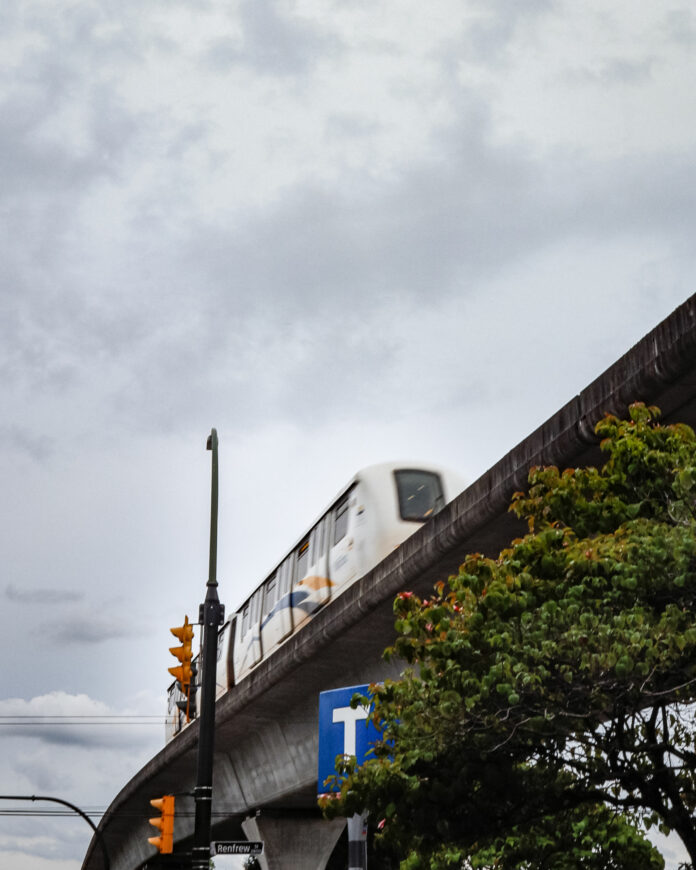
SkyTrain as seen from below on a cloudy day.
PHOTO: Victoria Lo / The Peak

By: Dylan Tonekham, SFU Student

As climate change remains a massive threat to humanity, the Canadian government has pledged initiatives to fight it, such as the 2030 emissions reduction plan. Though a noble plan to combat emissions, there’s a better solution that isn’t being pushed forward nearly enough: we’re in dire need of better public transit.

Unlike commuting by car, public transit can be inherently efficient when employed correctly. Take a look at any grid-locked street: you can only fit so many people into the space occupied by a car. Ironically, an old Saturn car ad demonstrates this inefficiency by replacing cars on the road with people. The excessive distance between everyone showcases just how much physical space cars occupy. Those who use transit are cars not on the road, and emissions that aren’t produced.

You might ask, “If emissions are the problem, what about electric vehicles?” Current federal initiatives push for consumers to buy “zero-emission vehicles” (ZEVs) in an effort to reduce individual gas emissions. As Canada was found to be one of the worst carbon emitters, this incentive makes sense on the surface. Commuters driving electric vehicles don’t emit nearly as many greenhouse gases as those in gas cars do. However, fuel emissions from driving are only a slice of a bigger problem — other components of ZEVs aren’t much better. 

Consumers are sold the idea of reducing their own carbon footprint with ZEVs, but other pollutants are seldom talked about. Tires rolling against roads release toxic compounds and material into the air, water, and subsequently our bodies. ZEVs are typically heavier than their gas counterparts, which “wears out tires faster.” Mass mining of metals for ZEV batteries also pollutes water supplies in South America, such as the “lithium triangle” of Argentina, Bolivia, and Chile — not to mention the ethical concerns of poor working conditions.

With TransLink servicing about 233 million trips in 2023, people are clearly moving through the network’s SkyTrain, buses, and other services. Yet, there’s plenty of room for service improvement. Frequent service should be plentiful wherever possible. Riders should be able to arrive at a bus stop and expect a bus rather than a long wait. “Don’t worry, it’ll come soon,” is an expectation only those boarding the SkyTrain or specific RapidBus lines can hold. 

Night service for when regular transit is inactive should also be available. Though TransLink runs their NightBus service, most lines are in Vancouver, such as the N19 bus from downtown to Surrey Central Station. Need to go anywhere south or east of that? Tough luck. Understandably, transit at night isn’t going to be as rapid or frequent as daytime service, but it must be better for those who need it.

This is more than an environmental issue. Cars harm us on a deeper social level, in a way access to public transit can rectify. Transit-oriented communities aim to increase density where there is rapid transit access. If housing is close to amenities such as grocery stores, community centres, education, entertainment, and more, residents can make use of them without the explicit need for a car. Those who cannot afford cars, who cannot drive, or who choose not to drive would have greater opportunities in their communities.

Canada has grown tremendously in recent years, with its population reaching over 40 million this January. With transit becoming increasingly overcrowded and adverse climate change effects looming on the horizon, it’s imperative that there is increased access to transit — our cities depend on it.

Banning the keffiyeh harbours support for genocide

0
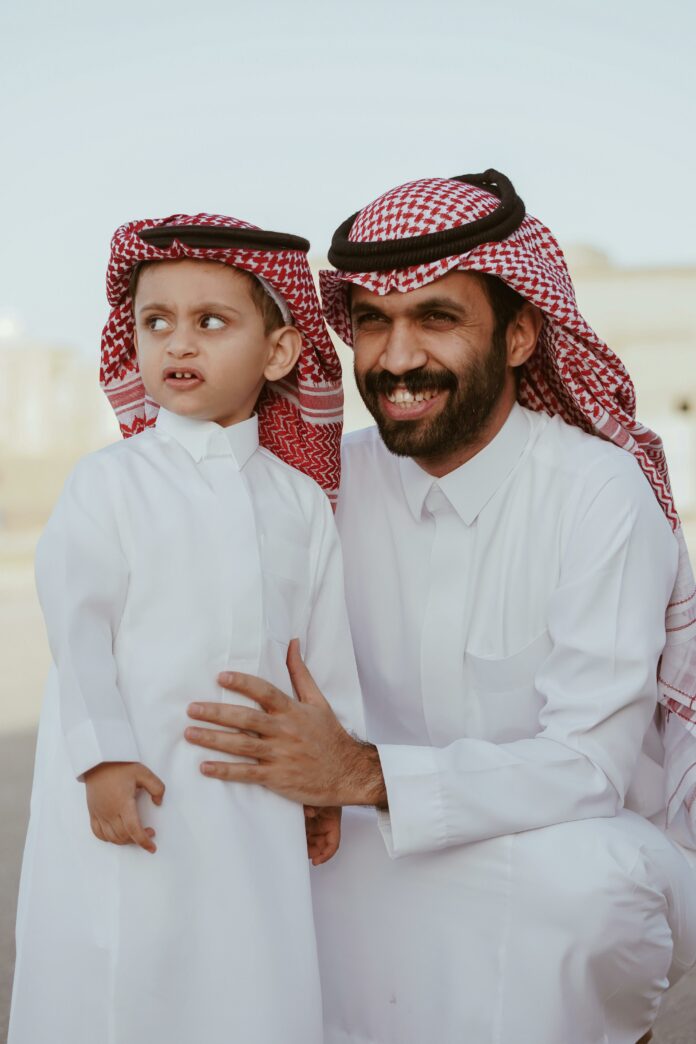
a man with his child
PHOTO: حثل / Pexels

By: Kaja Antic, Staff Writer

Across numerous mediums, there’s been a rise in censorship of Palestinian support through clothing and accessories, coinciding with the increased violence by Israeli forces against Palestinian civilians. Not only is this an infringement on freedom of expression, but it also silences those bringing attention to the ongoing genocide, uplifting the voices of those in favour of Israel’s crimes

Those in power hold a double standard when it comes to celebrating Palestinian and Jewish cultures. This April, Speaker of the Legislative Assembly of Ontario Ted Arnott announced the keffiyeh was effectively banned in the Ontario Legislature. The Palestinian keffiyeh is a traditional scarf, usually worn as a headdress, which has olive trees and fishnets in its pattern, reflecting roots to land. Despite calls for him to overturn this ban, he has refused, saying it makes an “overt political statement.”

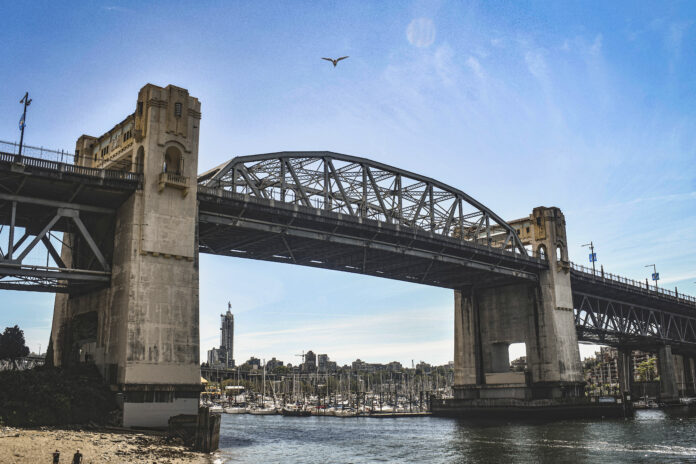
Shortly after, Vancouver mayor Ken Sim announced his support for the Burrard Bridge being lit up in support of “Israel’s 76th Independence Day.” Sim emphasized the city’s aim to “uphold fundamental freedoms of speech and the ability to peacefully

protest.” Yet, Palestinian identity and resistance remains controversial to the Canadian government — so much so that wearing a cultural headdress is disallowed. The keffiyeh is said to date back to 3100 BC, much before the establishment of Israel. Jewish people also used to wear keffiyeh, “because they saw it as part of the authentic local lifestyle.” It was only later that the keffiyeh “became an expression of Palestinian resilience against Israel’s treatment of Palestinians.” The hypocrisy goes to show how support for Israel is presented as neutral, while support for Palestine is seen as offensive and antisemitic. 

The keffiyeh ban is just one part of a wider issue with Palestinian censorship. Sarah Jama was formerly a member of the Ontario NDP, and was ejected from the caucus in October due to her comments criticizing the Israeli genocide of Palestinians. She was also censured by the Ford administration, which forbade her from speaking in the provincial Legislature, even if called upon to do so by the Speaker. This not only prohibits Jama’s support of Palestine in the Ontario Legislature, but also forbids her from speaking on any issue brought to the Assembly — silencing any advocacy for her riding of Hamilton Centre, which holds a population of 100,100 people.

The Ontario legislature is not the only political environment to ban keffiyehs. Parliament in the Australian state of Victoria has also forbidden members from wearing keffiyehs. Canada and Australia are British colonies, and while both have claimed to be committed to reconciliation efforts with Indigenous Peoples, their censorship indirectly supports settler colonialism in other regions like Palestine. 

Outside the political sphere, there’s been a sharp rise in backlash for speaking against the Israeli apartheid state since October. Others have been punished for mere expressions of culture. For instance, a grade seven student in Halifax had to involuntarily remove the keffiyeh they wore for their middle school’s “culture day” after being called to the principal’s office. Allegedly, he was told the scarf is “a sign of war,” despite trying to explain its cultural significance. While keffiyehs have multiple patterns, some feature olive leaves, as “The olive tree has deep historical and cultural roots in Palestine, and its branches have been associated with peace and prosperity for centuries.” This principal also falsely associated Palestinian symbolism with war — an incorrect correlation that’s increasingly being pushed to undermine Palestinian sovereignty. 

Banning the keffiyeh and censoring pro-Palestine messages obscures the violent actions of the Israeli government and amplifies the voices of those in support of the genocide. These entities are complicit in silencing opposition, and are standing on the wrong side of history in an effort to not offend a nation that has killed tens of thousands and displaced millions.

Rainbow rally urges government for action on global 2SLGBTQIA+ rights

0
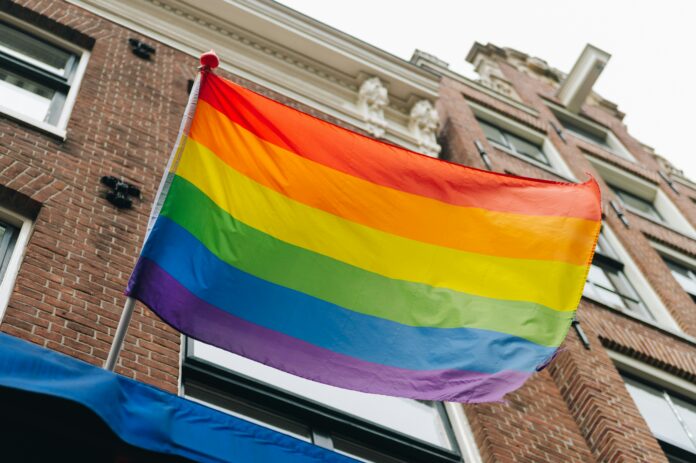
a rainbow pride flag hanging off a brick building
PHOTO: Anastasiia Chepinska / Unsplash

By: Yashita Dhillon, News Writer

On May 17, a rally for 2SLGBTQIA+ rights took place at the Vancouver Art Gallery. This event was led by the Society of Queer Momentum Canada, which is a movement founded by 2SLGBTQIA+ organizations to combat the challenges faced by the queer community. The rally coincided with the International Day Against Homophobia, Transphobia, and Biphobia. 

May 1117 marked the first National Rainbow Week in Canada, which is a movement of solidarity and advocacy for queer rights across the country, and calls for governmental actions and policies to protect these rights. Pride Month is celebrated internationally in June, which highlights the history of struggle the 2SLGBTQIA+ community and their achievements. Instead of commemorating the past, National Rainbow Week looks toward the future.

Throughout the week, over 25 rallies took place across the country, including in other major cities such as Ottawa, Toronto, Saskatoon, Winnipeg, and Fredericton. This week of activism was started by Momentum Canada, in partnership with Canadian 2SLGBTQIA+ advocacy groups Fierté Canada Pride and the Enchanté Network to urge governments and policy makers to promote equality and address anti-2SLGBTQIA+ hate.

The Peak spoke with River Pengelly, an organizer with the Vancouver Trans March.

“We’ve seen so many attacks from the far-right and establishment politicians recently. We wanted to demand better from our government on queer equality, trans healthcare, youth safety, as well as demonstrate Indigenous and Palestinian solidarity,” said Pengelly. 

Canada has witnessed anti-queer and anti-trans sentiment over the past few years. In Saskatchewan, a new law requires parental permission for students to change their pronouns. 

“It’s clear that the government policy and decision making on this issue wasn’t thoughtful or based on any evidence,” said Cee Strauss, a senior staff lawyer specializing in trans rights \with the Women’s Legal Education and Action Fund, noting a “an anti-transgender wave happening across the country.” 

Alberta’s new law plans to rescind protections for trans and queer youth, which many argue undermines their healthcare and bodily autonomy. “I have witnessed firsthand the struggles faced by children who are brave enough to express their true gender identity, said Catie Jones, a United Steelworkers Union member and mother of a transgender child in Alberta. “This is not just about my child, it’s about every transgender child in Alberta. Our children deserve the right to their own gender identity and expression, as well as rights over their bodies.” 

“Most importantly we want politicians currently in power to do more than pay our community lip service with pretty pink-washed words and to keep their promises and commitments to trans and queer rights,” Pengelly said. “We chose speakers from within our community whose intersections of experience we felt were necessary to hear from.”

“Queer rights are being used as one of many justifications for the ongoing Israeli genocide of the Palestinian people,” she said. “This completely ignores the fact that queer Palestinians not only exist but are dying far more quickly to Israeli weapons.” 

This references the belief that Muslim nations are inherently homophobic or misogynistic and in need of intervention from western nations. According to the Boycott, Divestment, Sanctions (BDS) movement, this exploits LGBTQIA+ rights to project a progressive image [of the west] while concealing Israel’s occupation and apartheid policies oppressing Palestinians.” The goal of the rally was to make sure that voices of “queer and trans Palestinians in our community were heard and centered,” Pengelly added.

The rally also highlighted the role of youth led justice in the campaign for 2SLGBTQIA+ community. “Youth are the ones who have to deal with this head-on, not only in school but also at home,” Pengelly said. “Their voices are incredibly important. It’s their future that is being determined and fought for right now.”

UBC students establish encampment in solidarity with Palestine

0
a barricaded encampment at UBC on the MacInnes field, with signs and flags in solidarity with Palestine
PHOTO: Amirul Anirban / The Peak

By: Yasmin Hassan, Staff Writer

On Monday, April 29, members of the UBC community set up an encampment at their MacInnes Field to protest the university’s lack of action for Palestine. The camp amassed “about 100 people and 75 tents,” with signs posted around the area like “Free Gaza” and “Palestine Forever.” The encampment and protest followed after the People’s University, a student-led movement for Palestinian liberation, presented their demands to the university. The demands included divestment from Israeli companies and academic boycotts of Israeli universities and institutions who are “complicit in the Israeli apartheid regime and in the oppression and genocide of the Palestinians.” 

Following the Israeli occupation of Palestine in 1948, Palestinians have been subject to violence at the hands of Israeli forces, being systematically displaced, harmed, and killed. In retaliation to the Gaza-based militant organization Hamas’ attack, Israel launched attacks on Palestinian civilians. This has been condemned internationally as a genocide by the UN, with over 36,100 Palestinian civilians killed at time of writing. 

Many university campuses across Canada and the US are hosting encampments in solidarity with Palestine. The University of Calgary, McGill, University of Alberta, and UBC are just a few, all calling for a ceasefire and urging a similar set of demands to their respective institutions. 

The People’s University continues to urge the university to divest from “companies complicit in Palestinian human rights violations,” despite a reaffirmation from UBC president Benoit-Antoine Bacon that they will not support the Boycott, Divestment, Sanctions movement. Companies such as Caterpillar, Hewlett Packard, and Lockheed Martin are some of which UBC holds shares in, which provide armored bulldozers, computer hardware, aircraft and ground artillery to Israel. 

In a statement, Faculty for Palestine SFU members pledged “support for the demands of the People’s University of Gaza at UBC and adherence to the community agreements” and that “faculty solidarity with student activism is entirely consistent with SFU’s mission of research, pedagogy, dialogue and debate in an atmosphere of social justice and liberation.” SFU also owns shares in war contractors and weapon manufacturers aiding the Palestinian genocide, such as CAE, Booz allen Hamilton, and BAE Systems. Faculty for Palestine SFU are a part of a broader network of university faculty “taking root in and across over 130 universities in North America,” and they continue to call on SFU to divest from military companies.

“Our immediate concern is for the hundreds of thousands of Palestinians currently facing full-scale military invasion in Rafah, and all Palestinians facing escalating violence and genocide at the hands of the Israeli military,” Anna Swanson, a member of Independent Jewish Voices said. With threats of intervention from university administrators and a growing police presence on campuses, Swanson stated, “If in their effort to protect one specific group of students in isolation, universities resort to policies and legislation that chill or silence freedom of expression, this could hurt the entire academic community.” 

Encampments are just one of the many ways students are taking action. Numerous student communities and organizations have responded to their institutions’ inaction through different forms of protests, marches, and rallies. A list of camp rules from the UBC encampment states, “We commit to grounding ourselves in the cause of this encampment: solidarity with Gaza and the Palestinian people who are facing genocide. We reject co-optations and centering of anyone but the people of Palestine.” 

This is a developing story that The Peak will continue to cover. 

Protest arises against city’s commemoration of Israel Independence Day

0
PHOTO: PHOTO: Amrit Kamaal / The Peak

By: Hannah Fraser, News Writer

Content warning: mentions of genocide and graphic descriptions of violence.

On May 14, Vancouver City Hall and the Burrard Bridge were illuminated with blue and white lights by the City of Vancouver to celebrate “Israel Independence Day.” While the day represents the establishment of a Jewish homeland for some, it is also a reminder that mass displacement and violence against Palestinians created the state  and continues to be ongoing. Palestinian rights activist groups and Vancouver residents gathered at City Hall to protest the city’s decision to put on the commemorative lights — but the lights still shined. 

The coalition of protestors expressed outrage that the city would choose to commemorate a country that has killed at least 36,000 Palestinians since October. Approximately “1.7 million Palestinians, nearly 75% of the population, are estimated to be internally displaced — with many having been displaced multiple times” by Israel’s invasion. 

Members of Independent Jewish Voices, “a grassroots organization grounded in Jewish tradition that opposes all forms of racism and advocates for justice and peace for all in Israel-Palestine,” joined the protest. The Peak corresponded with Rebecca Haber, a local member. 

“To me, it signals from the city an endorsement of Israel’s actions, which are violent and are causing unbelievable suffering of Palestinians,” said Haber. “We see the deaths, the injury, displacement, starvation, so in that, I do think it just shows a lack of regard for Palestinian life and dignity.”

Another local Palestinian rights activist, Tamer Abu-Ramadan, told the Vancouver Sun, “I find it offensive that after seven months of complete silence on Palestine, the City of Vancouver would add insult to injury by lighting the Burrard Bridge with the colours of the state committing what the International Court of Justice has ruled is a plausible genocide against the Palestinian people.”

Vancouver Mayor Ken Sim issued a statement on May 14 reading, “It’s important to note that this illumination does not imply or express support for the politics of any country.” 

Prime Minister Justin Trudeau remains firm in his stance on Israel’s “right to defend itself” after Hamas’ attacks on October 7, while “strongly emphasizing the importance of taking all measures to protect civilians and to minimize casualties.” Trudeau also stated he was “horrified” after the recent bombings of civilian tents in Rafah, leaving dozens of civilians to burn alive. He stated that “Canada in no way supports the military operations by Israel in Rafah.” According to CTV News, Trudeau did not reply on what Canada’s actions will be after the attack. 

The city’s website said they “reserve the right to decline requests from countries where there is political unrest or conflict.”

“It was surprising and disappointing that the city wouldn’t exercise that right,” Haber responded. “It definitely sends a signal.” Haber added, “What we need to be focusing on is the suffering and the humanitarian crisis in Gaza. 

“Things that may take away from that attention are definitely a problem,” she stated.

Trudeau also stated,This year’s celebrations of Israel’s independence come at a particularly challenging time for Jewish communities.” He added, “In recent months, we’ve seen a disturbing rise in antisemitism across the world, including right here in Canada. This must not continue.” Haber stated this response conflates “Israel with Judaism, and so when that happens it can lead to a place where people see criticism of Israel as antisemitism.

“That’s just so problematic and not correct,” she said.

Haber highlighted the importance of speaking out against countries like Israel that are killing tens of thousands of people, including over 14,500 children. “It’s very dangerous if you feel that you can’t criticize that or speak out against that because of a concern for antisemitism,” she expressed.

Joy Johnson realizes she took her guard down too soon

0
Corporate woman sitting at desk looking overwhelmed by the business papers two men are trying to show her.
PHOTO: Vlada Karpovich / Pexels

By: Freida Watermelon, SFU Student

Content warning: mentions of genocide.

Joy Johnson is exasperated because she does not know what more she could’ve done! The Board of Governors meeting was moved online to prevent any more annoying disruptions, but that did not stop those little rascals from causing a scene

She believes the university should be able to own shares in military equipment companies without all this fuss. This is not a good look for anyone. She has said it before and she will say it again: “SFU is committed to responsible investment,” not committed to being held responsible for its investments. That’s the tricky little nuance the hundreds of members of the SFU community calling for divestment don’t understand.

Suuure the Belzberg Library in Vancouver is named after a woman who equates criticism of Israel to antisemitism, but why is it so wrong to only want to talk about Israeli victims of October 7? Is it really hypocritical to say you “support freedom of thought” and then get angry when people see through Israeli propaganda? Johnson is truly saddened by this complex and tragic affair.

The mass displacement and dispossession of Palestinians” since 1948 is unfortunate, but must it disrupt business as usual (our fun little monthly dress-up chit chat sessions)? Johnson thinks that the incredibly diverse SFU community should be foregrounding difficult conversations to truly navigate these difficult times. (Without her, of course, her calendar is full).

For Johnson, it’s easy. When SFU says “engage with us,” they mean give us compliments, do not complain about layoffs, and pay increased tuition. There are plenty of opportunities on campus to talk about equity and freedom in ways that do not challenge the status quo. For example, Johnson plans on encouraging students to enroll in the social justice certificate program instead of participating in tangible acts of social justice. 

She’s also considering not releasing a statement about the students occupying the library because if she ignores it, maybe everyone will forget. She is so confused about what the protesters must’ve been thinking. You can’t just rename the library after someone who hasn’t given us money! 

Films to look out for at this year’s Vancouver Short Film Festival

0
PHOTO: Courtesy of Prapye Srisa-an / Streetcar

By: Izzy Cheung, Arts & Culture Editor

The Poem We Sang (2024) 
Content warning: mentions of genocide. 

Photojournalist, cinematographer, and filmmaker Annie Sakkab unearths the emotions and memories behind forced migration. The documentary delves into a family’s flight from Palestine during the Nakba bombings in 1948, as well as their eventual return to discover their home had been overtaken by settlers. It’s artfully shot in black and white as well as colour, “transforming lifelong regrets into a healing journey of creative catharsis and bearing witness.” 

What Good Canadians Do (2024) 

What Good Canadians Do is a culmination of creative efforts from Mi’kmaw poet Rebecca Thomas, Halifax-based artist Andrea Dorfman, and Indigenous artist Phyllis Grant. The short animated film features an original poem performed by Thomas which holds “Canadians accountable for who they believe, and say, they are.” Despite the topic, it is accompanied by Grant’s colourful, child cartoon-like designs. 

NIGIQTUQ ᓂᒋᖅᑐᖅ (The South Wind) (2023) 

Based on a true story, NIGIQTUQ ᓂᒋᖅᑐᖅ (The South Wind) explores Marguerite, a young Inuk girl, and her life as she moves away from her home in Nunavut. She encounters difficulties in assimilating to the culture of the South until she receives a letter from home that helps her “discover what’s really expected of her.” 

Streetcar (2023) 

Streetcar is a short film that follows an actor’s growth as they adapt to the characters they must present themselves as within their work. Kaylah Zander-Nuñez, a Latinx actor from Vancouver, stars. A key cog in the production of this film is Patrycja Mila Kamska, a Polish Canadian filmmaker who is also an SFU graduate. Follow along as themes of personal discovery are unfurled. 

Tiny (2023) 

Produced by Ellen Reimer, Tiny explores the life of ‘Nakwaxda’xw Elder Colleen Hemphill through intricate clay-based stop-motion animation constructed by Ritchie Hemphill and Ryan Haché. With its delicate designs and poignant retelling of Hemphill’s time growing up on the Pacific Northwest, the film is sure to move audiences of all backgrounds. The film has previously been shown at the DOXA Documentary Film Festival, Short Circuit Pacific Rim Film Festival, Grand River Film Festival, and more. 

What’s it like working at The Peak?

0

Four words that would be connected if they were different words is not a connection

0
Upset couple sitting on a couch. He has his arms crossed and she has her hand on her face looking exasperated.
PHOTO: Ketut Subiyanto / Pexels

By: C Icart, Humour Editor

An NYT Connections a day keeps the brain rot at bay. However, it may tear your family apart. It’s true! My barber’s gynecologist’s first cousin three times removed divorced her wife because she found out she was “cheating” by Googling the definitions of the words while solving the puzzle. There are so many more stories exactly like this, and I have compiled the testimonies. 

1. Friday, March 22, 2024

My name is Sam, and I am a victim of NYT Connections. I had never failed a single one until that terrible, terrible day in March. Breaking is the word that CNN puts in front of every news story to discourage people from changing the channel. Breaking is NOT an Olympic sport! Okay, technically it is but in this part of the world, we say break dancing and I still believe I should be entitled to financial compensation.

2. Monday, May 20, 2024 

My name is Ahmed and I used to be happy. That was before NYT Connections. Now, I spend my days feeling inadequate because I don’t know the names of movie directors. Purple used to be my favourite colour and now, I can’t stand it. The only Carpenter I know has no time to be on a Connections board; she’s working late because she’s a singer. I will be in touch with my lawyer. I believe I have a case for an emotional distress lawsuit.  

3. My name is Vanessa and my complaint is a bit different. I think the government should pass a law that makes it illegal to talk about the Connections in public until 9:00 p.m. Ears are curious organs that humans cannot just turn off at will. Being able to meaningfully engage in the cultural phenomenon that is Connections should be a human right. Logically, it follows that spoiling the Connections for other people in your community is impeding on their Charter rights. When you’re at the grocery store or on transit or in class, you don’t know who has and has not completed their daily riddle ritual. Please sign my petition to help enact real positive change in this country and punish those who are a menace to our collective well-being.

If any of these stories resonated with you and you would like to be included in a class action lawsuit please visit the website www.I’mMadAtNYTConnectionsBecauseIWasClickingTooFastAndDidNotSeeTheOneAwayNotification.com and join the movement today.