Home Blog Page 1010

HUMOUR: Top seven most incovenient fetishes

0
Photo courtesy of photognome (Flickr)

1.  A fetish for getting beheaded.

2. A fetish for getting beheaded by a helicopter.

3. A fetish for getting beheaded by a guy dressed up as your favourite Game of Thrones character.

4. A fetish for getting beheaded by an elevator shaft (a la Final Destination 2).

5. A fetish for being kidnapped by ISIS and getting beheaded.

6.   A fetish for having peasants revolt against you in 18th-century France and getting beheaded.

7.   A foot fetish. . . more specifically a fetish for a 70m-tall foot that crushes your head at such an incredible speed that it essentially  beheads you.

Laugh Track: Emma Cooper

0
Illustration by Saida Saetgareeva

From hosting a nude stand-up show to constructing a blanket fort in the Astoria every month, Emma Cooper’s resumé reads like the bucket list you never realized you wanted to have. The Peak catches up with the Vancouver comedian to discuss vulnerability, the comedic differences between male and female nudity, and why making people laugh is the sexiest part of being a comedian.

What are some of the ways you’re involved with comedy in Vancouver?

I host a monthly show in a blanket fort on the first Tuesday of every month called BlanketFort Storytime. We build a blanket fort together and then comedians tell stories in it. Along with Mark Hughes and Abby Normal, I also co-created a naked stand-up show called Exposed. I think we’re going to do that seasonally, so the next one will be at the end of August at 303 Columbia.

I think my role in comedy in Vancouver is to be a floater around different scenes and see what’s up/what I like and then pull stuff together. I’ve just been trying to figure out what’s happening so that I can interject comedy into other things.

What can you tell me about Exposed?

Mark Hughes posted in the Vancouver stand-up comedy forum saying, “They’re doing a naked show in New York. Who wants in?” and Abby and I both wanted to do it. The comedy was great because everyone who performed had sincere, honest sets. It was really nice and funny and the audience was on board right from the start. They realized that the performers were already vulnerable from being naked. What are you going to do, heckle a naked person? We forget that comedians are making themselves vulnerable all of the time, but they’ve just got clothes on. I’m glad the Exposed show worked out because I think there’s just so much more space for vulnerability in comedy.

What was it like performing naked on stage?

You just walk up naked and just do it. I didn’t think about it because people were primed for it. People joke that it’s cheap to get naked; it would be cheap if we hadn’t built an intentional space with it. We thought about it and, for me, it was about people trusting us more and that allows us to tell stories. That’s why the naked is happening — and if it’s just a novelty, flash in the pan, then no one will come to the next one and we’ll know everyone just came to see tits, clits, and dicks.

There’s been a rise in using male nudity to a comedic effect, such as in Borat or Forgetting Sarah Marshall. Do you think the same could be argued for female nudity?

Comedically, I think female and male nudity have different trajectories because they’re loaded differently. With male nudity, you’re exploring the idea of vulnerability but also being comedic with it. Female nudity, you’re deconstructing the male gaze. Both are coming at it like, “We don’t let men be vulnerable but we don’t let women be sexual,” so if it’s funny, you’re chipping away at some element of those assumptions.

So that’s why I’m naked on Robson Street for Vulnerability Vigils, I walk through the film Orgies Happening Tonight naked, I’m naked at Rent Cheque, I do naked comedy. I’m naked a bunch and in all of the contexts I’ve been naked in, I’ve always had power, and most people don’t know how to act when there’s a woman in power.

If you’re on the street naked, creeps will come up to you and be like, “Are you naked?” and you say, “Yeah, I’m naked and holding a sign” and they don’t know what to say and they just leave. But if someone was wearing a short skirt, then they would slap your ass or catcall. I’m not saying anyone’s asking for it ever, but there’s a pattern and if you’re breaking pattern, then you’re in control, which is where you need to be to get laughs too.

Because this will be in The Peak’s annual sex issue, could you give us an example of a time you drew on sex as a source for comedy?

I like telling jokes about sex because there’s a lot of humbleness that comes with sex and a lot of learning. I think that by sharing — and oversharing — you give people the opportunity to relate to your experiences and feel human. That’s one of my endgames for comedy. I think some people see it as brave, but it’s actually just my natural disposition.

What’s the sexiest part of being a comedian?

Making people laugh is sexy. Laughter is involuntary. You have to actually earn it, so when you have a genuine laughter response, it’s really great.

Emma Cooper’s next event, the monthly (and free!) BlanketFort Storytime, is happening on July 7 at the Astoria. Construction on the fort begins at 8 p.m. while the show starts at 9 p.m.

Africa is brought to life in The Lion King musical

0
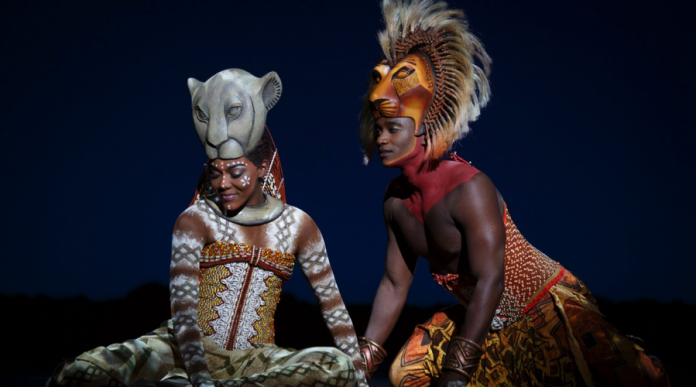
Nia Holloway as Nala and Jelani Remy as Simba. Photo courtesy of Joan Marcus.

The spectacle that is The Lion King musical is a non-stop adventure of song, dance, acrobatics, and larger-than-life props.

The show remained within the bright technicolor tones of an African sunset, and a mood was instantly set that sent the entire audience on their own African safari. Pride rock, the elephant graveyard, and the tree of life demanded awe with their size and beautiful detail. The beauty and detail of the production and props reflects the world we all know and love that Disney brought to us in 1994.

The cast paraded around as everything from elephants to buzzards. Cheetahs slinked across the stage as giraffes strutted with pride. The show, much like Simba, could not be constrained by the boundaries of the pride lands. Throughout the performance the cast traveled into the shadow lands of the audience and explored the entirety of the theatre. Birds were soaring behind and above us as a hippo waddled past our seats. The costume designers deserve endless applause for not only their realism with animals, but also the gorgeous traditional fabrics and outfits.

The cast of The Lion King are the definition of triple threats. Every line, note, and step was delivered with the grace of a gazelle and the beauty of Mufasa in the stars. Young Simba and Nala will be played by multiple young tweens throughout the tour. The skill displayed by these youth showed they just can’t wait to be king — of Broadway. The roars of the veteran performers would impress even Zazou.

The pouncing and prowling of the show was both elegant and fierce. Every leap was like an antelope and every stomp was as strong as a rhino. The spacial awareness and elegance of the performance on such a cramped stage showed great experience and skill.

The production offers value to the entire family with classic adult humour strewn throughout in true Disney fashion, and the story stays true to the Disney film. Finally, the classic songs you love are there for you to sing along to — everything from “The Circle of Life” to “Hakuna Matata.”

The Lion King is presented by Broadway Across Canada at the Queen Elizabeth Theatre. For more information, visit vancouver.broadway.com.

The Vancouver International Jazz Festival is Transcendental

0

The Vancouver International Jazz Festival is now one of the top ten jazz festivals in the world.

It is a beast of a music festival, open to everything from free-form experimental, to jazz-pop, to R&B. To Catch even just a few of the 300 live shows it offers is a mind-bending, transcendental experience.

The truly great thing about the Vancouver International Jazz Festival is that much of its musical ecstasy is offered for free, albeit while some of the heftier big ticket acts like this year’s headliners Erykah Badu and Chris Botti can drain the limited resources of starving students. That’s right: 150 of the live shows are free. There are also great deals like the three-show bundle for $36 at the Ironworks Innovation Series, which, hands down, was the place to witness the most enthralling jazz this year.

As I write this, the sprawling 14-day Vancouver International Jazz Festival is coming to a close on July 1, but I will let you in on a secret. Maybe because the festival is celebrating its 30th anniversary, or maybe because right now is an especially fertile period in the evolution of jazz, the Coastal Jazz Society, the non-profit behind the Vancouver International Jazz Festival, is planning a Christmas jazz festival, and they have returned to year-round programming.

I will give you budget-conscious students another heads up: if you join the Coastal Jazz e-mail list you can not only keep up with the massive jazz scene happening here in Vancouver, but also, from time to time, you can take advantage of the 30 percent off deals for jazz lovers under 30. These deals for select shows are a way to entice millennials into the hot world of jazz.

And it is so easy to be enticed. As I flip through my program booklet and think about all the unwanted decisions I had to make in choosing one stellar artist over another, I am reminded that my greatest surprise this year came, unexpectedly, with the Stanley Clarke Band.

Clarke became a legend in the jazz world for his skill and ingenuity with the electric bass in the great 1970’s rock-fusion quartet Return to Forever. But then he, as the saying goes, “sold out” to the commercial music industry and his jazz went from fiery and intense to lukewarm and flat. I stopped listening to him a long time ago.

I had a volunteer shift at the Vogue Theatre the night Clarke was playing (volunteering gets you free tickets to the big shows) and expected him to just dial out the music. Was I wrong! Clarke returned to his original instrument, the acoustic stand-up bass, several years ago, and he drew the impossible out of its five-strings all night long. I have never seen anything like it. It was a consciousness-raising experience.

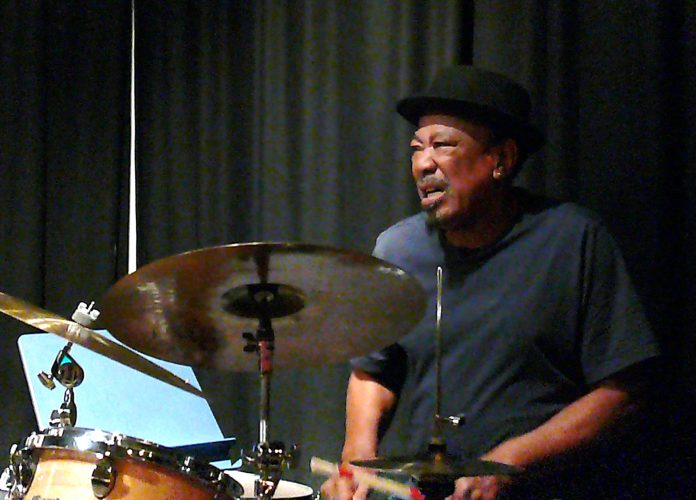
He also brought along three super high octane young players (his drummer Mike Mitchell is only 20 years old) who ripped into everything he handed them with so much heart and heat that they brought the place down.

People talk about “art moments” that come as flashes of insight standing in front of some monumental work. The jazz moments I had at the Vancouver International Jazz Festival are exactly the same. They change your life, and you know they do, because you remember them for a lifetime.

Mark the last two weeks of June in your 2016 calendar. Go. Have a jazz moment at the next Vancouver International Jazz Festival. It will be the best thing you have ever done for yourself.

Visit coastaljazz.ca for more information.

Photo courtesy of Chris Cameron, Vancouver Sun.

Jazz Festival Lore

Tales of a great stand-off between the legends Miles Davis and Wynton Marsalis at Vancouver’s International Jazz Festival in 1986 filled the Sutton Place Hotel Versailles Ballroom at the festival’s opening party. The story of their confrontation was picked up by the international media and it has forever marked Vancouver’s place in jazz history. Apparently, Marsalis had called Davis out in the media for diluting jazz just before both artists were scheduled to play at the Vancouver International Jazz Festival. On a dare, Marsalis walked on stage during Davis’ performance at the Expo Theatre intending to play, but an angry Davis kicked him off.

Icons of apartheid jazz at the Vancouver International Jazz Festival

0
Phioto courtesy of All About Jazz.

Jazz legends drummer Louis Moholo-Moholo and pianist Abdullah Ibrahim sit at opposite ends of musical expression in the struggle for black liberation in South Africa. Like many other black musicians, Moholo and Ibrahim left the country in the 1960s under apartheid, rather than endure the oppression, violence, and havoc of the time.

But if the harmonious beauty of pianist Ibrahim’s lyricism and vibrant, complex rhythms aims to lift and soothe, drummer Moholo’s free-jazz ensembles entwine the heartrending effects of oppression and dislocation into a savage, coiled beauty formed from intense, sinewy lines of abstract sound, scattershot with chaotic tonal clusters and explosive percussion.

Both masters were featured under the South Africa Now! series at the Vancouver International Jazz Festival, and as different as they are, both greats, still at the top of their game, continue to bring sublime power and versatility and unapologetically present jazz as pure and free expression, beyond all horizons.

Moholo-Moholo played an intimate set at Ironworks Studio that blended his effervescent hiss and pow with the monstrous talent of three of London’s greatest contemporary jazz musicians. The quartet works at a rare level where each player’s free experimentation merges perfectly with the group’s interdependent expression.

To say that Moholo-Moholo and saxophonist Jason Yarde, pianist Alexander Hawkins, and bassist John Edwards swing but also destroy doesn’t explain the half of it. These “4 Blokes,” as they call themselves on their new album, conjured almost overwhelmingly beautiful magic and tranquility out of chaos. I came away from the heat of raw emotion stoked in the Ironworks furnace, and the blaze of enraptured faces and wildly clapping hands, having witnessed, bar-none, peerless collective improvisation, and a most astonishing emotional experience.

Intensely musical, ecstatic, angry, sad, glorious, joyful, exquisitely muscular, and at times grimly self-reflexive, the glorious mesh of sound cast across the evening by The 4 Blokes was possessed of an inner necessity that made it seem definitive by chance. It was one of those mystical moments at the Vancouver International Jazz Festival this year, as though every colour, note, clash, and texture I could ever want to hear had been cosmically woven into the quartet’s mayhem, giving it an eternally fresh and timeless sound. Judging by the roar out of the full house at the Ironworks that night, I wasn’t the only one who felt that way.

Photo courtesy of The Vancouver Sun.

Abdullah Ibrahim’s Mukashi Trio (with excellent Noah Alexander on cello and double bass, and Cleave Guyton on clarinet and flute) performed chamber jazz from Ibrahim’s album Mukashi (Japanese for once upon a time) at the Vogue Theatre. Ibrahim is a spiritual composer and player, famous for his lyricism and impressionistic, visually evocative music poems and stories.

He is also a karate expert and devotee of the 17th-century Japanese samurai warrior Miyamoto Musashi. An interesting man, his lovely character is fascinating to watch onstage, as is his love to play. He performed uninterrupted and transitioned from piece to piece through tireless piano solos to produce a mellow and soothing hush among the audience.

Mukashi, his new and very good music, delicately evokes Asian colours among his many other influences. It brings a new sound to jazz that is spare and full of space, but still holds the warm sway of his Capetown sound. The evening was a set of luminous, warm, and mysterious sketches, dabbed here and there with gorgeous lyrical flight. It was deliciously fresh and calming.

Cinephilia: SFU alumnus creates a subversive, anti-romantic comedy

0

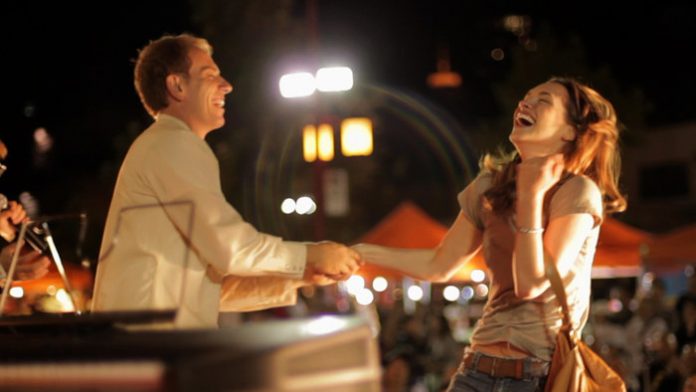
We know how this story is supposed to go. There is a guy, there is a girl. He is married, and she is too. His wife is boring. Her husband is adulterous. We see them laugh; we see them flirt; we see them passionately have sex.

By most movies’ standards, this is enough for us to care about them — we can forgive their transgressions if they want to be together. According to many filmmakers, this is love.

Martin’s Pink Pickle is a subversive, anti-romantic comedy that builds this fantasy while asking the deeper, harder questions that a more shallow film would forget. Rather than seeing, feeling, and living in a heightened world because it makes us feel better about ourselves, this film replicates the conventions of Hollywood wish-fulfilment only to explore what a more simplistic film would sweep under the rug.

This hyper indie and low-budget Canadian production was written by Curtis Woloschuk, a film critic and SFU alumnus who has evidently seen his fair share of mind-numbing, Nicholas Sparks-style romances. Instead of critiquing conventions with witty prose, he has attempted to transform the genre from within — to judge dumb clichés by making a film that respects its audience through a refusal to heighten its characters’ relationships and devalue their problems.

We don’t empathize with a fantastical cartoon; Woloschuk has written a screenplay that causes us to feel for the characters because we can’t escape to the warmth of simple contrivances and easy coincidences.

Woloschuk, a fellow critic, is probably familiar with Roger Ebert’s famous phrase, “it’s not what a film is about, but how it’s about it.” Martin’s Pink Pickle has a good cast with uniformly strong performances, especially considering the film’s microscopic budget, but it mostly succeeds for the reason opposite the style: the content.

Although director René Brar’s DIY style and detached visuals are fitting, too often the film’s cinematography feels amateurish. Some choices, like the wide shots that create depth and detachment by placing objects in the foreground that frame the characters and add another layer of separation between them and the audience, are interesting and give the film a contemplative tone. But too often the imagery is overexposed and fails to engage beyond the thoughtful compositions.

During its final scene, Martin’s Pink Pickle has a glimmer of superlative filmmaking: the style compliments the content in a masterfully expressive way. The two “forbidden lovers” have come to the end of their rope. They must decide to make out (and pursue love, because those two things seem to be synonymous in most romance flicks), or make a harder but more realistic decision.

Brar frames the couple on the edges of the frame to accentuate their separation but to also tease the audience — they would normally meet in the middle for a climactic kiss. It’s ridiculous and we know this isn’t true, but that’s why we go to these movies: to see, feel, and live something we can’t.

Martin’s Pink Pickle, however, is a poignant film because we, like the characters, remain stuck. There’s no easy way out and everyone leaves a little bruised. There is no final kiss, no easy healing, and no minor consequences. Unlike what most romance films would have you believe, not even a climactic kiss dressed in warm golden hues could heal that.

SFU professor Patricia Gruben wins Woman of the Year Award

0

In 1987, SFU’s Patricia Gruben and Colin Browne had the foresight to convince the BC government that developing screenwriters meant developing the province’s film industry. With a grant from BC’s Funds for Excellence in Education, they established the Praxis Centre for Screenwriters at SFU’s School for the Contemporary Arts.

A few years later, SFU stepped in to become the centre’s core funder. Over the years, as a centre for the professional development of screenwriters, Praxis has helped develop over 200 scripts — more than 30 of which have been produced as feature films.

In June, Gruben was honored for her contributions to Canada’s film industry at the Women in Film and Television (WIFTV) 2015 Spotlight Awards, where she was presented with the Teamsters 155 Woman of the Year Award. The award acknowledges her significant success in film as well as her mentorship of other women in the industry.

Carolyn Combs, Executive Director of WIFTV, noted that it was a pleasure and privilege to honour so many women at the Spotlight Gala for their high level of achievement, but that Gruben was well deserving of the award. “It honours her career,” Combs said. She added that Gruben has been “a key influence in the industry for a long time not just as a professor, but also as an artist.”

An associate professor with the School for the Contemporary Arts, Gruben is the Director of the biennial field school to India and the director of Praxis. She completed graduate studies in film at the University of Texas, and then moved to Toronto, where she established herself in set and art direction.

She also delved into experimental narrative film, and her work has screened at festivals such as Sundance, the New York Film Festival, and TIFF. In 1982 she moved to Vancouver to teach film production at SFU. She also helped organize WIFTV to create a way for women in film and television to support each other and advocate for better access to key creative and leadership opportunities in the industry.

In an interview with The Peak, Gruben reflected on the early days of WIFTV. “We used to get together and everyone else had these well-behaved baby girls who would sit nicely in their carriers. I had twins,” she said wryly, “and they were boys.” WIFTV now has over 300 members and is part of a coalition of 15 organizations representing women in Canadian media that has taken its concerns over the wide gender and racial gaps noticeable in public funding of media to the Canadian government.

Recently, Gruben’s interests in experimental narrative led her to conceive of an immersive transmedia experience inspired by the famed 19th century Russian occultist Madame Helena Blavatsky. One part play, The Secret Doctrine, and one part multi-media installation The Veil of Nature: Museum of Liminal Science, her project was a collaboration with Martin Gotfrit, composer, instructor, and Associate Dean of FCAT Undergraduate Studies, and Toronto-based designer Marian Wihak. Gruben is now working on two feature screenplays set in India and plans to do more installation work.

This year is a poignant moment for Gruben to be acknowledged for her work at Praxis, because the centre will soon be leaving SFU. In the wake of post-secondary budget cuts, SFU’s capacity to support Praxis has dwindled. In 2014, the program lost its last piece of funding, with which Gruben used to employ the program’s assistant, Liz Cairns.

Vancouver filmmaker Lynne Stopkewich, a Creative Advisor for Praxis’s Workshop Series for Feature Scripts, knew of WFF’s interest in promoting Canadian film and developing a space for emerging artists similar to the Sundance Institute. The first WFF-Praxis Screenwriters Lab was held during the 2014 Whistler Film Festival. Gruben plans to remain involved with the Screenwriters Lab and is investigating ways to keep access to the program open for SFU students.

For more information, visit womeninfilm.ca or www.praxisfilm.com.

Renaissance paintings, multi-media installations, and photography at the Vancouver Art Gallery

0

The three current exhibitions at the Vancouver Art Gallery, Of Heaven and Earth: 500 Years of Italian Painting from Glasgow Museums, How Do I Fit This Ghost In My Mouth? An Exhibition by Geoffrey Farmer, and Residue: Persistence of the Real represent a tour de force of both traditional and contemporary art forms.

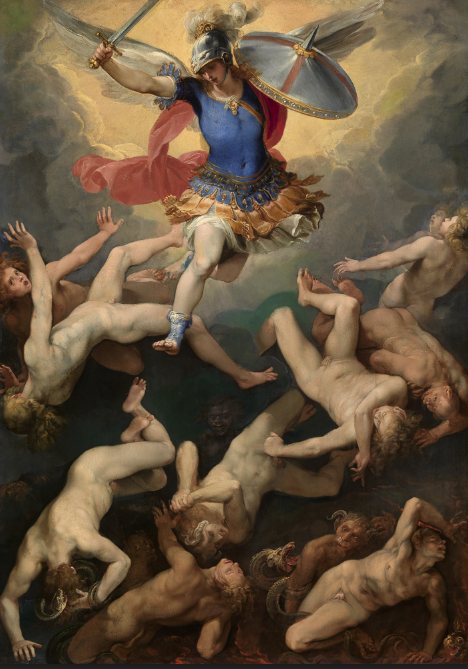
Of Heaven and Earth showcases works from the 14th to 19th centuries. This chronological approach allows the viewer to appreciate the changing styles of art from the earliest Renaissance paintings of a religious nature to the later paintings of secular scenes and portraits.

While works of Bellini and Botticelli are present, the two highlights of the show are both by unknown artists. Adoration of the Magi (c. 1503–1510) is beautifully painted and shows what can only be described as an intimate look into a famous Biblical scene. The other is Vanitas (c. 1650–1660), which highlights the heightened sense of realism that came out of the Renaissance. As such, all the objects on the canvas have a depth that makes the viewer want to reach into the canvas and pick them up. The opportunity to see these artworks in Vancouver should not be passed up.

How Do I Fit This Ghost In My Mouth? An Exhibition by Geoffrey Farmer embraces all that multi-media installations have to offer. There is a sense of memory that flows as an undercurrent throughout the entire exhibition. Memory is explored by using space and sound in conjunction with works that could be stand-alone pieces.

The unexpected and discordant sounds that play while one walks through the exhibition create a feeling of discord that shocks the viewer back into looking at the art. This is not an unpleasant sensation, but one that speaks to how memory and perception are linked and enhances the understanding of the work.

Although The Last Two Million Years (exhibition copy 2013) is impressive in scale and detail, it pales in comparison to Let’s Make the Water Turn Black (2013–2015) and The Surgeon and the Photographer (2009–ongoing). Let’s Make the Water Turn Black is homage to Frank Zappa and his developments in xenochrony or strange time. It is like stepping into a Tim Burton film in the best way imaginable — where light, sound, and sculpture are choreographed in a manner that changes the meaning of the work every time it is viewed.

The Surgeon and the Photographer is a time consuming work to look at. It consists of 365 individual small-scale sculptures, each with an accompanying story, poem, or title, located in a book that the viewer carries throughout the exhibition. It was fascinating to wander about and read the book before finding the matching sculpture.

Residue: Persistence of the Real is a multi-artist exhibition that focuses on photography and film, and the relationship that objects and ideas have to the perception of what is real and what is art. Featuring Babak Golkar’s Return Project (2014–ongoing) and Geoffrey James’ Inside Kingston Penitentiary (2013), the concept of the persistence of the real is explored to its full extent.

The photographs of these two works showcase objects and images that were not created by the artist, but simply photographed as a record of their existence. The physicality of this is most clear with Golkar’s work, while James’ focuses on the mental aspects by showing prison art and objects. This exhibition is well done, but I found it underwhelming in comparison to the previous two exhibitions.

I would recommend visiting these three exhibitions, but it would be best to start on the 4th floor and work down to the 1st to avoid an anticlimactic end to your visit.

Of Heaven and Earth is on until October 4, How Do I Fit This Ghost In My Mouth? is on until September 7, and Residue: Persistence of the Real is on until September 27. For more information, visit vanartgallery.bc.ca.

No surprises on Yukon Blonde’s latest album

0

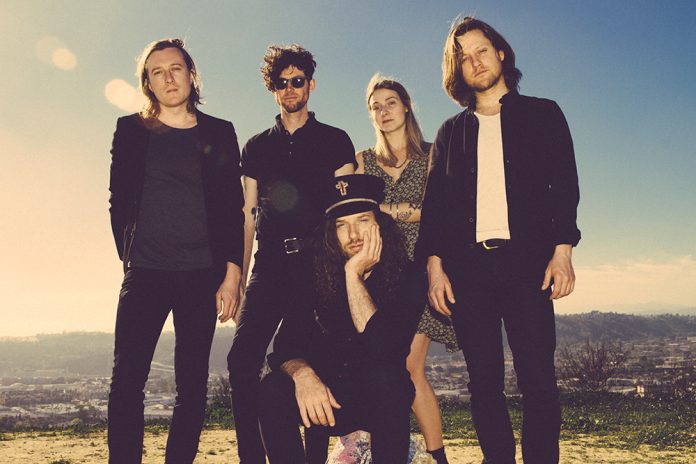
Kelowna’s Yukon Blonde hail from the class of indie rockers that captured the hearts and ears of young Canadians at the end of the last decade. At the time, the BC indie scene was exploding with great music from the likes of Mother Mother, Said the Whale, Dan Mangan, Aidan Knight, and Hey Ocean!

After a while, however, the winning streak ran out. The grit and soul that made the music indie was replaced by sleek synthesizers and slow, generic pop songs. No one would argue that early releases by Vancouver indie heavyweights Mother Mother and Said the Whale have been bested by their more recent releases. Yukon Blonde have fallen into the same trend.

Back in 2012, they had that indie soul and feel. “Stairway,” their second single from that year, captures that perfectly. It is something of a peppier version of The Arkells’ first album, Jackson Square. Yukon Blonde’s latest release doesn’t live up to their former glory. On Blonde is packed with woozy synthesizers and drum beats that seem to stick exclusively to similar kick and snare patterns.

Songs like “Make You Mine” and “Saturday Night” blend into each other and fade into a blur of mild grooviness that wouldn’t sound so awful if they weren’t the exact same thing for 30 minutes.

The album isn’t all bad though. Tracks like “Favorite People” see Yukon Blonde returning to a more rock-oriented sound — if only for a few seconds. The most interesting track is probably the goofy number titled “Starvation.” Lines like “They call you the shark / ‘cause you got the mind of an animal” might seem corny upon first listen, but the track really does display some inventive wordplay.

On Blonde won’t disappoint any fans who are already invested in Yukon Blonde or other artists like Mother Mother and The Arkells. You’ve come this far, so you might as well listen to the new album. However, know it won’t take you by surprise or show you a different side of the band.

Indie music is called indie for a reason. Real great music, indie or not, needs an edge — whatever that edge may be. Yukon Blonde’s latest album lacks just that. It’s a circle of an album.

Comic Connoisseur: Snyder and Murphy terrify readers with The Wake

0

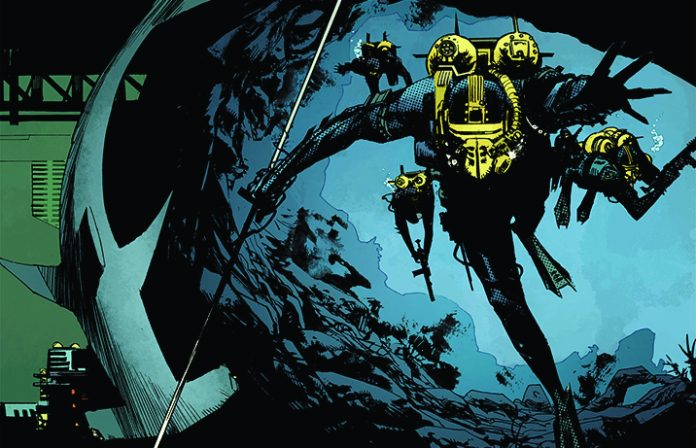
The Wake is a sci-fi story which takes place over the course of two generations. In its first half, we are introduced to a team of individuals tasked with learning the origin of a newly discovered and vicious underwater organism. When conflict erupts during their research, not only is the crew put in danger, but so is the rest of the globe. With time of the essence and their lives in constant mortal threat, this ragtag group including a scientist, a historian, and a poacher are forced to work together to understand a previously undiscovered race of marine humanoids.

The second act of the story shifts in tone considerably. Set 200 years in the future from where the story first took place, readers are introduced to a world formed by the consequences of years prior. As such, we follow the story of Leeward and her dolphin pal Dash as they scavenge and fight for survival in what’s left of North America.

When Leeward stumbles upon an old communique from one of the scientists from two hundred years ago, she is thrust into an outrageous adventure readers will have to see to believe.

The two acts of the story are parallel in tone, with the first part of the story reading like a deep sea horror thriller, and the latter acting, on the surface, like a swashbuckler. One story is dark, the other is bright and vibrant. Yet neither take away from each other: they complement with their differences.

Snyder crafts a story as thrilling as it is intelligently written. Amidst its well-paced arcs and cool characters are dabbles of scientific facts which enhance the experience of the whole graphic novel. On art, Murphy dazzles with his distinctive character designs and knack for world building. Every panel crafts the world of The Wake into a visually unique entity.

The Wake’s publisher, Vertigo Comics, at one time reigned supreme as the leader in cutting-edge graphic novels for mature readers. Founded in 1993, the company helped introduce audiences to notable works such as Neil Gaiman’s Sandman and Alan Moore’s Watchmen. That being said, Vertigo has garnered some serious competition in recent years.

Image Comics has dominated the market as of late and is arguably the new leader of adult-oriented comics. This has led many to question the future of Vertigo’s existence in the comic book industry. However, if The Wake is any indication of the company’s future, fans can rest easy. Vertigo shows no signs of tucking its tail between its legs just yet.

Killer Mermaids, Colossal Cruise ship tipping monsters . . . and a dolphin in body armour. This and many more wild and amazing things are what await readers who pick up the thrilling tale that is The Wake. While the story is far from perfect — notably, it suffers from a convoluted ending — it certainly comes very close.

Brought to you by prolific Batman scribe Scott Snyder and arguably the best artist in comics today (in this connoisseur’s eyes), is a testament to well-written science fiction horror the world over. It is also proof that with the right creative team, even something as previously child-friendly as mermaids can be made absolutely horrific.