



By: Alex Masse, SFU Student
When I say I’m a creative, that means a lot of things. I write articles, I write a lot of prose and poetry, and I’m also a musician. So when an opportunity to be creative arises, I take it — which is exactly how this new hobby of mine formed from an art project. I was doing a mentorship with a local theatre company before everything became remote. The initial plan had been a giant puppet of some kind, but then COVID-19 happened and I lost access to the resources. I still wanted to submit something, so I made a costume out of old clothes, craft supplies, and things laying around my room.
I tend to collect all things cute and quirky. My regular haunts were thrift stores and flea markets. I love figurines, vintage toys, and little knick-knacks. Maybe it’s my neurodivergence, but I’ve adored them for about a decade and they show no signs of going anywhere. All that’s really changed is I’m less embarrassed about them. Plus, I find them very inspiring, and as a creative, that’s really important.

I had maybe a bit too much fun. I took an old hat and gave it dangling pipe cleaner earths and covered it in shells and stones, bonding with my glue gun the whole time. After finishing that first project, I wanted to do more, and I realized there was a lot of stuff laying around my room I could use.
To tell the truth, I’d always been anxious about DIY and crafty activities. I didn’t have any real experience, and everything others made looked so . . . polished. But I guess, in a way, I DIY’d DIY.
My first crafts were experimental: they were made of random trinkets in my room — things that would’ve otherwise rotted in boxes forever. It was fulfilling in a strange way, gluing old knick-knacks together. Like I was giving them new life. They now rest faithfully on my bookshelves.
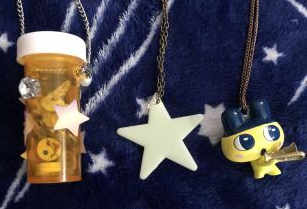
Inevitably, I moved beyond trinkets to put around my room. I made three necklaces: one out of an old Tamagotchi figurine, one out of a glow-in-the-dark star, and one out of my first antidepressants bottle. It was an interesting process; I used old scissors to make the holes for chains.
It became a challenge: how many things could I transform? I hacked up an old t-shirt and put it up on my wall. I cut some tights that were too small into knee-high socks. I turned an old melatonin bottle into a case for earplugs, because being neurodivergent, sometimes the world is too loud.
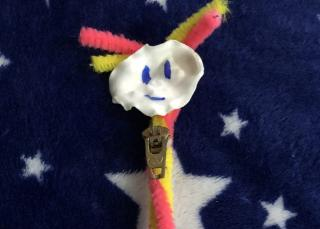
I know none of my projects look professional. They’re obviously the products of some sad teenager losing her mind to cabin fever. But that doesn’t take away from their value and charm. And honestly, I think we should embrace the aesthetic of imperfect crafts, especially now, when a lot of us don’t have access to more specialized resources. We’re breathing kitschy new life into old things! It’s nostalgic, it’s sort of recycling, and it’s a lot of fun. I haven’t spent a cent, either: everything was made with stuff around my house and never involved anything more complicated than tape, glue, or scissors.
This quarantine, let go of the internalized standards of what looks tidy and professional. Do stuff for fun and let yourself mess up! I once tried gluing rubber bands to a tank top. It bombed horribly, but I had fun and learned something.
Whether you’re the artsy type or not, it’s important to let that creative part of your mind cut loose and play sometimes. It’s healing and gets you thinking outside the box. I don’t think pre-COVID-19 me would’ve whittled a Tamagotchi toy into a necklace.
If you have the time, why not try it? See what you can make with stuff laying around your room. You might surprise yourself.


