Home Blog Page 996

Ten things to do while you wait for the next issue of The Peak

0

Your favourite SFU-based, student-run publication is going on hiatus until September. Here are 10 things you can do to fill the Peak-sized hole left in your heart in the meantime.

1. Follow us on Instagram (@PeakSFU).

2. Check us out online at www.the-peak.ca.

3. Check back again a week later to see if we’ve posted any online-exclusive pieces.

4. Hit refresh (just in case).

5. Clear your history cache, because sometimes new stories don’t show up unless you do that first.

6. Shake your computer screen/mobile device in frustration.

7. Vow to start your own student publication.

8. Realize the time and financial commitment something like running your own publication would cost you.

9. Power down, both your electronic device and your emotions.

10. Apply some sunscreen, grab yourself some form of fruity, alcoholic beverage, and take it easy until we return in September.

Students talk accessibility at SFU

0
Photo courtesy of SFU

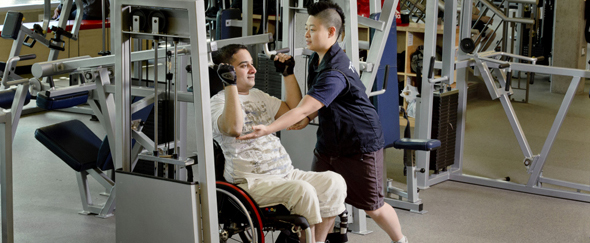
In a push to improve the organization’s accessibility, the Simon Fraser Student Society (SFSS) hosted an open forum for students to engage in accessibility dialogue.

Held over two days, the sessions saw a handful of student participants who gathered to discuss issues and brainstorm solutions to help accommodate the needs of a diverse student body.

SFU student Micaela Evans, who coordinated the event, was hired on by the society as the temporary Accessibility Project Worker. She will be working until the end of the month to put together a final report of her assessments and suggestions on how to address accessibility needs that are not being met.

Items of discussion at the focus group included revising SFSS Food and Beverage Services (FBS) policies, creating spaces for students with disabilities in the new Student Union Building (SUB), ensuring that clubs and Departmental Student Unions (DSU) make accessibility considerations, and putting a scent-free policy in place.

Conversations around the FBS addressed a need to better account for students with allergies and dietary restrictions. Participants shared their varied experiences and said that they have found it to be inconsistent. Evans said she will work on trying to firm up policy around this so it is not “changing all the time. I don’t think that’s very fair,” she added.

“Equity should be more important, because that means that everyone is on the same playing field.”

Micaela Evans,

Accessibility Project Worker, SFSS

They expressed a desire for venues dedicated to accommodating sensitivities, such as ‘nut-free,’ or entirely vegan restaurants. It was also suggested that SFSS food establishments keep a list of the ingredients that go into each of their items as well as possible cross-contamination information available to consumers upon request.

The focus group saw the SUB as a place to create safe spaces for students with accessibility needs. Some suggestions included a space with low sensory stimulation — a “zen room” — for people to escape foods or scents to which they are allergic, as well as overstimulation from things like fluorescent lighting and excessive noise. It was also brought up that there is a lack of 24-hour safe space for those who do not identify as women.

Evans remarked that Build SFU has expressed a willingness to dedicate space for disabled students, given that students expressed a desire for it and that Students United for Disability Support (SUDS) could grow its membership.

She commented that both SUDS and the SFSS Accessibility Fund Advisory Committee suffered from a lack of participation, saying that the committee does not meet regularly, only when specific items are brought to the table.

Aside from her final report, Evans is also compiling an event guide for clubs and DSUs that will help them make their events as inclusive as possible. She explained that while the SFSS can make suggestions, there is not a lot they can do yet to hold groups accountable for accessibility issues.

Evans noted that the SFSS website also needs some work: “Websites need to be looked at from a dyslexic standpoint, from a screen reader standpoint.” She explained the challenges of ensuring that screen reader programs will recognize and voice all words on the page for the visually impaired, also mentioning that it could prove difficult for students who struggle with dyslexia.

Much of the discussion centred around students’ experiences with SFU’s academic protocol and the physical layout of the campus. Students expressed a desire for professors to keep accessibility in mind when structuring their courses and suggested that the university provide optional education for faculty. One large concern was the challenges SFU poses for those with physical disabilities; It was also noted that there seems to be a lack of accessible pathways and safe zones for emergency drills.

While the SFSS cannot directly effect changes such as these, Evans intends to share the data they have collected with the university and give voice to the participants’ suggestions to the administration.

To conclude, Evans remarked upon the difference between ‘equality’ and ‘equity.’ She explained that equality is about everyone having the same tools, while “equity should be more important, because that means that everyone is on the same playing field.”

Woohoo, Boohoo

0
Photo courtesy of Beth Scupham (Flickr)

Woohoo: Life beyond earth

Outer space and extraterrestrial life have always fascinated me.

I contemplate civilization through the course of human history — our barbarisms, thoughts and choices, values and ideals, our survival mechanisms — and I’m always struck with probably the most simplistic but profound realization: we exist. We’re here, and this is all happening.

So, if life can tangibly inhabit this planet with billions of years of actions, motivations, achievements, and failures, why can’t life exist elsewhere in our universe? I guess there is a possibility that we could be alone — a solitary spinning ball of matter in a seemingly endless space of nothing, with a dizzying seven billion microscopic organisms, manipulating their personal spaces and affecting others with their life’s decisions — but I don’t buy it.

If it happened here, it can happen anywhere else.

The question is where? What kind of civilizations are out there? Are they more or less advanced than us? What do their planets look like? What could we learn from them? What could they learn from us? I’m frustrated that we don’t have answers, and that we might never have them. But we can dare to dream, and bask in the excitement of these amazing possibilities.

Boohoo: Life on earth

That being said, let’s face it. Mother nature, you fucked up.

You made us selfish, aggressive beings who formed a history moulded with shameless and brutish slaughter. You introduced disease, war and strife, and confined our biology to this ever-shrinking planet so that one day we would reproduce to a population so large that we’ll eventually kill ourselves off, if the products of our ‘intelligence’ don’t do it first.

Spawned from you are truly pointless things like Internet trends, celebrity gossip, belly buttons and appendixes, the re-boot of National Lampoon’s Vacation, fish porn, commercially sold pet rocks, and shoe umbrellas.

You introduced money, fame, love, politics — things that warmly cuddle us with their assurance, yet can rip us to shreds, Hulk-style. We’re left with the unfair challenge the of having to navigate ourselves through this turmoil of existence, and still survive with as much face as we can.

Sure, there are endless things to be thankful for and content with, but in the end I’m left wondering whether it could have all been different, or if this was always how it was going to be. Life on earth can suck, but we just gotta deal with it until some alien race swipes us off our feet!

Indigenous catering comes to campus

0
Photo courtesy of Cedar Feast House Catering

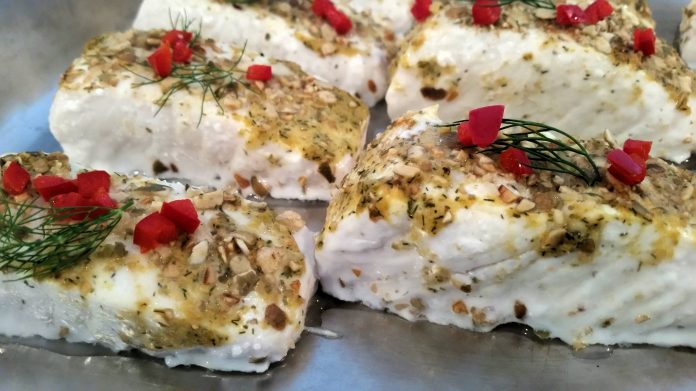
SFU has plans to rollout an on-campus Indigenous catering option on Burnaby Campus this September.

The university is in the midst of working out a contract with a traditional Aboriginal caterer that would be able to prepare and serve authentic cultural dishes, blessed by elders, at Aboriginal events on campus.

Due to the agreements that SFU has in place with its two current catering services, events on campus must be catered by either the SFU Dining Services and the Simon Fraser Student Society (SFSS) Food and Beverage Services.

This has posed a challenge for the Aboriginal community on campus since the provided services cannot offer the traditional foods typically served. The First Nations Student Association (FNSA) and the SFSS first brought this to the attention of administration nearly two years ago, and have been advocating for it ever since.

Tsatia Adzich, leader of the FNSA’s Indigenous Catering Initiative, explained the significance of having their own caterer. “Food is a very essential part of a celebration,” said Adzich. “Food brings people together and that’s really what this is all about. [It] is creating that community and that safeness.”

She expressed frustration at the length of time this has taken and what she sees as relatively little progress. Adzich stressed that this is a particularly important issue for the FNSA to have Aboriginal caterers at Aboriginal events, especially as SFU’s campuses are situated on unceded Coast Salish territory.

The SFSS issued an official letter of support for Aboriginal catering on campus last March, in addition to a similar statement in favour made by the SFU Office for Aboriginal Peoples. They, along with the Indigenous Student Centre, have also been in consultation with SFU’s Ancillary Services throughout the process.

For Dan Traviss, manager of SFU’s Dining Services, it has taken longer and been more complex than Ancillary Services initially expected.

He outlined some of the obstacles that the university has faced in bringing about the policy change, such as insurance and liability, food safety certifications, consultations with different stakeholders, and ensuring that an external caterer would respect SFU’s stance on sustainable packaging and fair trade.

Adzich voiced concerns about a lack of consultation with the FNSA. “I was very clear that I wanted to be an active member of the process,” she said. She added that they have had difficulties with arranging caterers with SFU in the past and she hopes they can continue to work together to resolve the issue.

She added, “If this process were approachable and easy to navigate for students in general, the relationship between students and administration would be better.”

Traviss responded to her concerns, “We tried to be as transparent as we could. [. . .] There’s a number of things that were important to us.

“It did take a bit of time, both with getting an agreement written out and with stakeholders, how are they going to order, who are they going to go through — all of those logistical things.”

He said that SFU is in talks with the preferred caterer of Aboriginal groups on campus, Cedar Feast House Catering, and that they are working to establish a “pilot agreement” with the company. The agreement would cover service to SFU’s Burnaby campus only, as the contracts with other campus caterers would require a different approach. The university’s catering agreement with its Burnaby caterers expires in 2017, at which time there will be the opportunity to re-visit the food contracts details before going out to tender.

He stressed that Aboriginal catering is the first priority and referred to SFU’s new Aboriginal Strategic Plan.

“We’re on Salish land. We see it as important.”

NHL expansion is a risky bet

4
Photo courtesy of Wikimedia Commons

The deadline for applications for expansion NHL franchises was Monday, July 20, and the two cities that have submitted a bid are Las Vegas led by business man Bill Foley and Quebec City led by media conglomerate Quebecor. The NHL will do their due diligence and look at the feasibility of both markets, but it is safe to say that both cities were not the first choices for the NHL.

Las Vegas and Quebec City rank 45th and 59th respectively in TV audiences, well behind rumoured expansion spots Toronto (for a second NHL team) and Seattle.

Quebec City could work as a site for an NHL franchise simply because they are in Canada. A team’s triumphant return to the city would generate tons of ticket and merchandise sales, but there would be some challenges as well. For example, the French language may be a hindrance in terms of recruiting free agents and keeping star players, as shown by Eric Lindros when he refused to play for the team.

As well, the Canadian dollar will have a large say in how viable the team can be. All NHL players’ salaries are paid in US dollars; with our dollar hovering around 77 cents, with the potential of going even lower than that, it would be difficult for small market Canadian franchises such as Quebec City to field a competitive team.

The French language may be a hindrance to recruiting free agents and keeping star players.

Las Vegas would be an even tougher market for the NHL to break into. As a non-traditional hockey market, it will be hard for the NHL to garner a fan base compared to other leagues such as the NFL or NBA.

There is also the question of local TV broadcasting rights. While Quebec City can package TV deals in both English and French, Las Vegas will more likely than not struggle with making a serious amount on local TV rights. Sports also fall low on the totem pole in Las Vegas. As anyone who has been to Vegas can tell you, the multitude of casinos and nightclubs constitute the main entertainment in the city. The NHL would be competing against this, and it’s a battle I do not think they can win.

Expansion is a high-risk move by the NHL. They are probably better off moving struggling franchises such as Arizona, Florida, and Carolina to more receptive hockey markets. The main reason for this push for expansion is most likely the supposed $500 million the NHL wants for each of these expansion franchises, which goes directly into the owner’s pockets.

All in all, though, Quebec City would be much better off than Las Vegas.

CJSF hosts alternative summer camp

0
Photos courtesy of CJSF

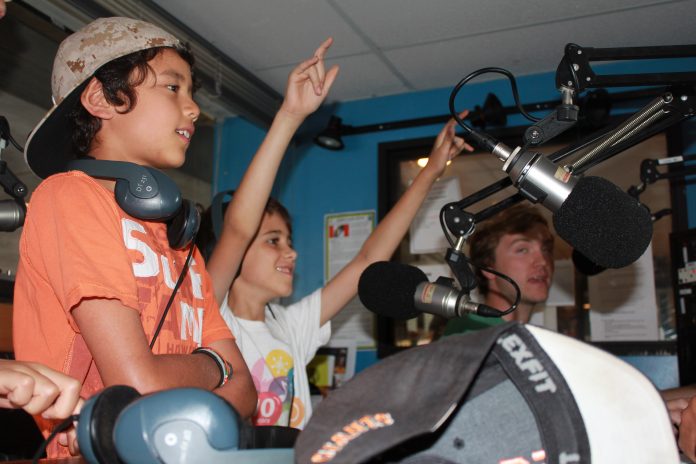
SFU’s campus and community radio station CJSF is holding their eighth annual Radio Kids Camp for children ages eight to 12.

The program gives children the opportunity to learn about the inner workings of a radio station, equips them with radio journalism skills to produce content, and allows them to take over the air on the final day of the camp.

This year’s camp will run from August 10 to 14 and will accommodate approximately 10 participants. “We wanted to do an alternative summer camp,” said CJSF program assistant Gurpreet Kambo.

Kambo explained that due to the nature of CJSF being a campus and community radio station, providing alternative content on air is both a key priority and requirement.

The theme for this year’s camp is magic. “There’s kind of a magic in producing audio,” explained Kambo. “With film or radio [. . .] you don’t necessarily know exactly how it came together, there’s kind of a magic to that. We want to go behind the scenes and break that down and give the kids access to that.

038“In terms of our philosophy, and being community-oriented, we feel that youth also have an important voice, and we want to be able to provide that opportunity,” continued Kambo. “We should be taking their intellectual and creative contributions more seriously.”

The camp will include workshops facilitated by CJSF staff and volunteers on storytelling, interviewing and field recording, beatboxing, and basic training in the “On-Air” studio.

The participants will also have the opportunity to do “streeters,” where they will approach passersby on campus to ask them a question of their choice.

A new addition to this year’s camp is a tour of CBC Vancouver’s Radio and TV studios on the third day. “It sort of fits into our magic theme,” said Kambo, “because it’s going behind the scenes to see what the magic is, and how the CBC comes together, because they produce such great stuff.”

On the last day of the camp, the participants will put their newly developed skills to use as they take over the station for a few hours. “They’re going to be the DJs, and the hosts, and the reporters, the interviewers, and they’re going to decide what music gets played and what are the important stories to tell,” Kambo explained.

In between all the hard work and training, the campers will also be making T-shirts and buttons, swimming at Kensington pool, hiking to Burnaby Mountain Park, and enjoying some sweet treats including pizza and ice cream.

Herself.com brings the female body back to reality

0
Photo Credit: Rachelle Tjahyana

Australian actress Caitlin Stasey recently released images of a conversation she had with a popular magazine’s editor who had refused to feature her when she turned down a nude photo-shoot.

According to Stasey, the editor of Good Weekend magazine assumed that because Stasey had appeared nude online before, she would automatically be willing to appear that way once again, without asking her.

Stasey co-created and administers the online community at herself.com, a space where women share their stories regarding their sexuality and feminist views, while appearing semi or fully nude in a completely non-sexualized manner. Those featured on the website come from across the globe, with varying body shapes, views, and sexualities.

She herself appeared in the first interview on the website, speaking on topics ranging from her pro-choice beliefs, polyamory, and her views on femininity and feminism. Baring her entire body, she took the power back from the over-sexualized media she had grown accustomed to as an actress.

In her own interview on herself.com, Stasey describes women within her terms: “a group of people of varying sexualities, ethnicities, body parts, and mentalities forging ahead despite the push back of centuries of oppression. Women are fucking durable and powerful.”

When approached by Good Weekend to do a feature about her recently launched website, Stasey enthusiastically agreed. However, she asked them to change the photo shoot when she realized that they had mistakenly assumed she would pose nude. Though nudity is the basis of her website, it is not to sell magazines. No profit is made from women sharing their stories and bodies on their own terms, and she did not agree to be sexualized for profit.

Consent knows no bounds and crosses all boundaries of decency.

Upon hearing Stasey wouldn’t do the shoot as they had assumed, they came up with excuses to postpone it, and eventually cancelled it completely. It was clear to Stasey the reasoning behind it, despite the editor denying that this is why the story was cancelled.

The editor made the assumption regarding consent that many do — that if a woman says “yes” once, she is expected to in all other situations. Consent is a global issue, no matter the situation or the culture. It knows no bounds, and crosses all boundaries of decency.

The issue of consent is ever-present within our hyper-sexualized media, the very same thing the website is trying to combat by showing non-sexualized bodies that do not exist solely for the misogynistic male gaze.

The idea of women bearing all online has become ingrained within our society, often for the wrong reasons. Sexuality is a common currency within the media, and consent is rarely considered to be appealing or empowering.

With sites like herself.com and people like Caitlin Stasey, women are finally getting the chance to choose for themselves how their bodies are being viewed, solely on their own terms.

What I’ve been missing all my life: a kitty

0
Photo Credit: Phoebe Lim

It was the summer of 1997. I visited my grandparents’ house in the quaint port town of Dover, England. On this particular evening, my sister and I had just come back from a long day of frolicking around the village and playing in the countryside.

We looked through the kitchen window overlooking the backyard and saw a neighbour’s cat scamper by. Now, I don’t recall how the exact conversation between three-year-old me and my seven-year-old sister went, but I know that within the hour, it was decided between the two of us that my new identity was a little black kitty-cat named Leaves.

Later, at dinner, I devoted myself to the role wholeheartedly by sitting on the ground throughout the entire meal and refusing to answer the verbal pleas from my mother with anything other than “Sorry, cats can’t talk” and meows. That night I ate from my sister’s hand feeding me under the table. The next day my grandmother managed to convince me to eat a full bowl of peas I had initially refused, by insisting that they were a primary part of a cat’s diet.

This event marked the dawning of my unfathomable love for cats. Unfortunately, as both my sister and father are extremely allergic to cats, my dream of having one for myself has never come to fruition. That, however, hasn’t stopped my determination of someday having a kitteh of my own to love.

I lament that this dream of mine will remain unfulfilled until I move out of my super-convenient free home, and that even then I may need to take some time to save money or find a place that allows pets. Luckily, in the meantime I can bond vicariously with my friends’ cats.

This event marked the dawning of my unfathomable love for cats.

One friend of mine has aptly named her cat Figaro, due to his resemblance to the cat in Pinocchio. I have worked hard to befriend this kitteh, and I think my endeavors have paid off. He no longer runs away when I’m close to him, and has come to sit by me to be stroked on multiple occasions. If you’re looking for a surefire way to merit validation from a kitty, worry not, I will tell you my method.

First, I got the cat used to my presence by sitting next to him and getting as many pets in as I could before he ran away. Next, I decided to make myself more relatable for Figaro by getting down on all fours and serenading him with the aria “Voi che sapete” from Le nozze di Figaro.

The song is sung in the opera by a youthful boy, suffering through the agony of continually falling in love. I feel that this song suitably resonates with my situation: I am constantly falling in love with cats, fluffy and sheared, docile and irritable, and know all too well that visceral clench in my heart that tells me this creature must be cuddled! I am sure that Figaro both understood and appreciated the parallelism and motif that underlined my tribute — make sure to take the cat’s personality into account for this step.

Finally, my most result-inspiring stratagem was to feed Figaro some Temptations (use whatever brand of treats is popular with your cat target) while returning all his possessive neck-nuzzles with some of my own. This ensures him that I am appreciative of his sign of affection, and consolidates our bond.

So if you are like me, and find yourself constantly infatuated with adorable kitties but without one of your own, do what it takes to make a connection. All it takes is ten to thirty minutes out of your day to have a meowing conversation and make a pawsible-someday friend.

Bring more plug-in cars to Canada

0
Photo Credit: Adam Van der Zwan

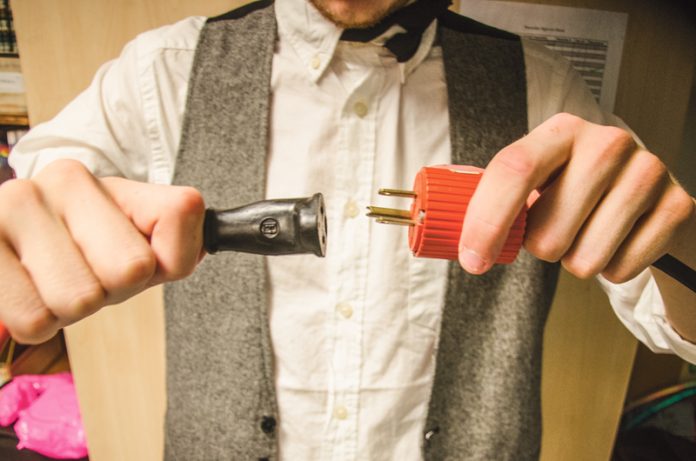
With the ever-steady rise in gas prices, driving my car from Coquitlam to Vancouver is costing more and more every day. As an individual looking for an alternative, the fabled electric cars caught my eye. Now here’s something that wouldn’t break the bank to fuel!

Despite optimistic research, a lighter strain on the wallet, and a removal of many harmful gas emissions, plug-in vehicles remain a rare sight. SFU environmental researcher John Axsen has concluded that over one-third of Canadian buyers want an electric vehicle, but less than one per cent of vehicle sales in Canada are electric due to “low consumer awareness and limited vehicle choice.”

Axsen hopes that if policymakers and politicians notice the studies, plug-in vehicles may be introduced to the Canadian market. And this makes sense! Considering the buzz that surrounds climate change and protecting the environment, using this clean source of energy would fit into the most hippie of standards.

However, there aren’t a lot of electric cars on the road, and companies seem hesitant to devote more than a hybrid-type vehicle to the pursuit of a cleaner drive. Why is this so? My tinfoil hat-guess would be that big oil companies are pushing against the electric car movement. It would make sense. If electric cars became the norm, oil tycoons would lose out on serious revenue.

If general consumers and public figures were willing to talk about the benefits of electric cars and drum up support behind them, companies would look to the potential serious money they could make. Not only would clean energy become prevalent with land transportation, it would be lighter on consumer wallets as well.

Instead of outsourcing our fossil fuels only to have them sold back to us for ridiculous sums of money, we would be able to produce our own electricity and skip the tycoon entirely. More money that is saved on transportation would mean more money to spend on other things, which would also mean more money could be injected into the local Canadian economy.

This would presumably result in significantly lowered greenhouse gas emissions for those who care about the planet, and lowered prices for those who want to save on daily gas money. It’s a win-win.

As the Canadian environmental activist David Suzuki said, “some argue we should get coal, oil and gas out of the ground as quickly as possible, build more pipelines and make as much money as we can selling it here and abroad. Their priorities are the economy and meeting short-term energy needs so we can live the lives to which we’ve become accustomed.”

With electric cars, we will be able to help the economy and continue our lifestyles, while accidentally helping the environment as well. So bring on the electric cars. While the initial problem is a lack of charging stations, that can be easily solved with the increased demand. I, for one, welcome our new electronic overlords.

New course explores the science behind science fiction

0
The class will explore the science behind your favourite sci-fi characters. - Anosha Ashfaq

SFU is offering a new course geared towards non-science students looking to fulfill their breadth requirements.

The department of Molecular Biology and Biochemistry (MBB) has introduced a new breadth science course, BISC 111: Mutants and Monsters — Cell and Molecular Biology in Science Fiction, to the coming Fall semester.

The syllabus aims to analyze and explain the scientific elements of science fiction, and to train students to recognize when a story becomes more far-fetched than based in science.

The course designer and instructor Irina Kovalyova has been teaching in SFU’s MBB department for the past 12 years.

Kovalyova considers herself a pioneer in this realm. She is a senior lecturer by day and a writer during her spare time. She told The Peak that she has always been interested in bringing the scientific and fantastical worlds together and she says it’s her mission to make this course convey science that is relevant to students’ daily lives.

One challenge that Kovalyova foresees will be to make the science component of the course accessible and yet substantial. Students will be learning about cloning, bioterrorism, epidemic outbreaks like Ebola, mutations, and DNA sequencing, among others.

Students in the course will be reading H.G. Wells’ The Island of Dr. Moreau and Michael Crichton’s The Andromeda Strain, and submitting written responses to their readings along the way. Kovalyova explained that Mary Shelley’s Frankenstein did not make the reading list for this course because it did not have enough scientific substance to it.

Kovalyova will be looking at each text and encouraging the students to differentiate between who is a ‘mutant’ and who is a ‘monster.’ She added, “Oftentimes, we are the monsters.”  She will encourage her students to pick out scientific inconsistencies in all the texts.

The course asks students to compose a short story as a final project. The short science fiction story must be informed and scientifically plausible, as well as integrating some aspects of the course content.

Kovalyova hopes that by the end of the course, her students “will be able to distinguish between science fiction that is plausible and that which is not.”