Home Blog Page 906

Run River

0

Run is agile,

moves earth,

strides capture the length of land

follow expansive pace;

spirals into pools of crystal

transparent hair string shape together,

into light mass

granules of fluid enter extremities,

she screams rapid with mist,

and fuses with debris

woodland poking at her curves,

roots bury their struggle in her liquid constitution,

ground revels in her violence

she thrashes with indifference

yet, her heart pumps shape into landscape

without asking

young foraging water

wants to pound,

fluid body make new paths,

an aggressive maker

is the inconsiderate elegance of moving,

and she

speaks sounds when streaming

low lying river

thrust

enmesh with gapping rock-bed,

push water muscle

foam and cuss

persist like mad living

vein a passage

water chiseling images of time,

be an ongoing picture

before you blend with ocean

and no longer sit in mind,

Run is a river,

liberating herself in action,

calm are her finger tips

as

she gestures life in,

films of fluid

glaze pebbles,

and

invite a young girl

to look down into aquatic stone

the girl’s body is flat with youth,

dressed neatly,

all she’s ever known is city.

Her body aches

from what seems like Run’s journey

her name is River,

named by her unusual parents

she left home

searching name

her title left dead,

hanging on school paper arbitrarily,

teachers repeatedly call “River” forward

and in their repetition she asked,

“what is my name, what is my title?”

River’s eyes fill with mosaic colour,

from the aquatic stone.

Run has ran her distance;

River met her at her stillness

Run’s water power exerted

and,

youth that lies beyond water

feels Run’s quiet hurting,

both bodies pain in desire,

Run & River hear each other’s call,

River peels off socks

tip toes into shallow water,

curls feet to pebbles

absorbs jagged experience,

palms squeeze erosion,

and she is able to feel Run’s journey.

River strums at her reflection,

and  submerges in shallow water.

 

Peakmo presents: Realistic New Years Resolutions

0

What resolutions university students make, and how they fail to follow them soon after the semester has started.

Created by Paige Smith & Eric Smith
Special thanks to the Peakmopolitan staff!

The Best of Everything of 2015

0

Click the image to enlarge

10-11 Feach (jpg)

New research chair to tackle avalanche prevention

0
Avalanches account for 12 deaths every year in Canada. - Photo courtesy of Reuters

Avalanches are a serious hazard for anyone venturing into the backcountry. To help better educate the public about the risks of avalanches, SFU has recently appointed Dr. Pascal Haegeli, an assistant professor in the School of Resource and Environmental Management, as the Research Chair in Avalanche Risk Management.

As chair of this project, Haegeli will look into the questions of “How do people manage this [avalanche] risk, and how can we provide them with better tools so that they can make better informed choices?”

Over $1 million in funding and support over the next five years will be received from Canadian Pacific, HeliCat Canada, the Avalanche Canada Foundation, and SFU. Haegeli will be working in collaboration with partners in the Canadian avalanche prevention community to learn from their professional expertise.

In return, he hopes to help them work more efficiently and safely. Together they aim to make the knowledge they uncover more accessible to the public.

In Canada approximately 12 people die every year in avalanches, and approximately 80 per cent of these fatalities occur in British Columbia. These deaths usually occur among skiers, snowboarders, and snowmobilers who venture out to explore the backcountry.

Haegeli’s research project will expand upon more traditional studies, which tend to focus primarily on the physical properties of the snowpack, and instead will take a more interdisciplinary approach that includes how the human element becomes a factor in avalanches.

“Ninety per cent of fatal avalanche accidents are actually triggered by the victims themselves [. . .] so that sort of highlights that people play a critical role in avalanche safety because they manage the risk by choosing when and where to travel in the backcountry,” explained Haegeli.

The snowy mountains may never stop alluring explorers with their awe-inspiring yet dangerous beauty. In his new position, Haegeli hopes to encourage people to continue exploring, but also to keep them safe.

Said Haegeli,  “There’s more and more people going out into the backcountry, so the goal of my research is to help people make informed choices.”

SFU study finds that “plus-size” models encourage obesity

0
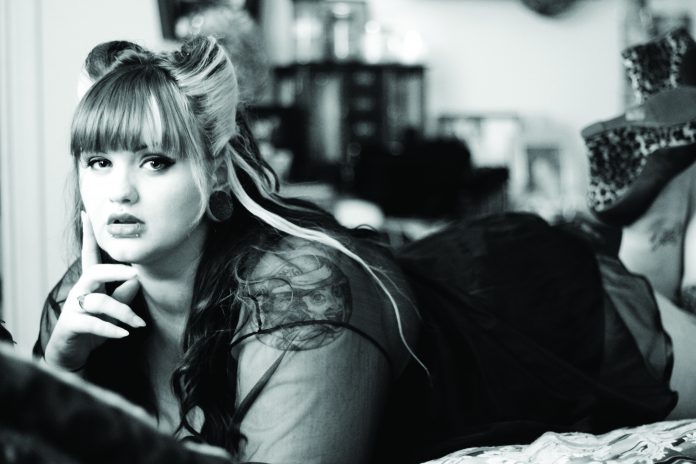
The study suggests viewing plus-sized models could lead to less healthy lifestyle choices. - Photo courtesy of Wikimedia Commons.

While much research has been done to demonstrate the harmful effects of using extremely underweight models on the average woman’s self esteem, there has been little to no research in regards to the other end of the spectrum: the effects of using overweight, or plus-size, models. A new study from SFU looks at just that.

SFU Assistant Professor Brent McFerran, in tandem with Cal State Los Angeles’s Dr. Lily Lin, recently published the study, “The (Ironic) Dove Effect: Usage of Acceptance Cues for Larger Body Types Increases Unhealthy Behaviors”, which concludes that the use of plus-sized models may be encouraging us to fall into unhealthier habits, thus promoting obesity.

The study was a collection of multiple smaller studies involving over 1,000 participants, each examining the effects of both cues of acceptance and stigmatization towards larger bodies, as well as the effect increased acceptance of obesity could have on legislation.

The study concluded that increased societal acceptance of larger body types may discourage individuals from eating healthily, exercising regularly, and engaging in other health-conscious behaviours.

It draws the correlation between seeing an image of a plus-sized model with acceptance cues such as the term ‘real woman,’ and the increased likelihood of eating higher calorie snacks, decreased intention to exercise, and other actions. The report describes how this may be because Western societies value the feeling of ‘belonging.’

When overweight individuals feel a sense of community among other overweight people, the study implies, there is less inspiration to lose weight. If this is the case, it could have very real impacts on legislation. According to the study, after viewing images of plus-sized models with acceptance cues, participants were much less likely to allocate tax dollars towards obesity prevention programs.

McFerran and Lin are very careful to explain that they do not advocate for the stigmatization of obese people in order to encourage them to lose weight, but instead argue “that drawing attention to any body size (large, small, or either) and suggesting it is an accepted standard [. . .] may be a poor idea.”

Additionally, they recommend the use of models who are a “healthy weight,” without drawing attention to the issue of size at all, although they admit that more work needs to be done to “calibrate what this ‘healthy’ image should look like and how it should be framed to increase well-being.”

The study has proven controversial, and has garnered some criticism. Laura Wells, a plus-size model from Australia, told news.com.au that the use of words like ‘real’ by the researchers may be detrimental, as all bodies should be considered ‘real.’

Wells referred to messages she’s received from fans that describe how her modelling motivated them to become healthier and have a more positive self-image, and so she disputes the conclusion that there is a link between plus-sized models and obesity.

Vancouver based plus-size model Ruby Roxx also critiqued the research on her personal blog, calling it “overly-simplistic.” Said Roxx, “Eating disorders don’t come from seeing a picture, and the same goes for obesity.”

Syrian refugees to boost BC economy, SFU students conclude

0
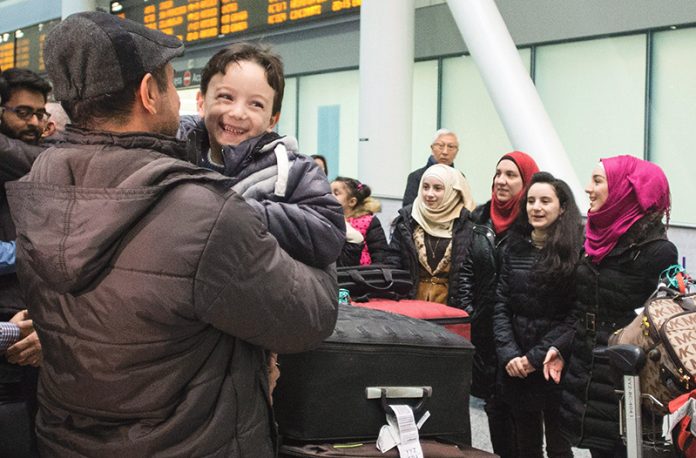
In 2015 Canada is estimated to have processed 10,700 refugees for resettlement.

Two SFU doctoral students have published a study that estimates that BC-bound Syrian refugees expected to arrive in the province before the end of February will generate approximately $563 million in local economic activity over the next 20 years.

Economics PhD candidates Eric Adebayo and Ricardo Meilman Cohn analysed Canadian and United Nations data as part of a study commissioned by the Vancity Credit Union’s humanitarian refugee initiative.

Adebayo and Meilman Cohn, both international students and second-year PhD candidates, used the limited information available on Syrian refugees through the UN High Commission for Refugees and coupled that with past Canadian immigration data to reach their findings.

“What we did was look at the age structure of Syrian refugees,” Adebayo explained. “Then, we looked at the previous earnings of immigrants and refugees [who] have come to Canada.”

The information allowed them to measure the economic activity that could potentially be generated by the 2,500 Syrian refugees expected to arrive in BC over the coming months.

The report, From Crisis to Community: Syrian Refugees and the B.C. Economy, released last month concluded that immigrants and refugees are 30 per cent more likely to start a business, have higher rates of self-employment compared to native-born Canadians, and tend to become consumers in their communities, growing the local economy.

“Throughout [places] like the United States, Canada, and Western Europe, immigrants make up a huge portion of the population, and we tend to find that they improve outcomes in economies,” explained Adebayo.

Other findings from the report suggested that immigration to Canada generally does not decrease wages nor increase unemployment in communities where newcomers are settled.

The vast majority of government-sponsored refugees who arrived in Canada between 2010 and 2012 remained in Metro Vancouver, choosing to reside mostly in Surrey, Coquitlam, and Burnaby.

The report also made key recommendations that could ensure the economic success of the recent migrants. These included access to language classes and settlement and training programs within the crucial first years after arrival. The report also recommended steps be taken to value the foreign-learned skills of refugees and reduce discrimination.

“We wanted to [show] that there is a positive impact on the economy from people of diverse backgrounds,” Adebayo said. “Refugees do contribute to the economy.”

One fact the report does acknowledge is that the amount of economic activity generated by recent migrants is lower than what would be expected of non-immigrant Canadians because of the difficulties refugees face initially adjusting to their new home. Still, the statistics on previous immigrants and refugees show a steady increase in economic activity the longer they remain in the country.

However, Adebayo cautioned against fixating on the numbers.  “The number is not a way to say that refugees are a good investment,” said Adebayo. “[They’re] fleeing a horrible situation and civil war.”

SFU Advocacy for Men & Boys club criticised as “anti-feminist” in open letter

7
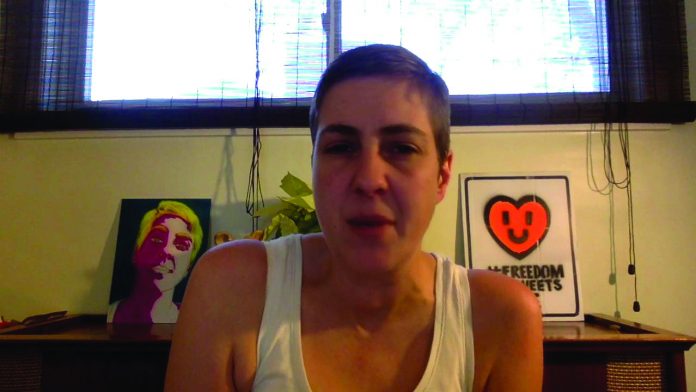
Karen Straughan (above) released a video response to the GSWSSU's open letter to her YouTube channel. - Photo courtesy of YouTube

The SFU Advocacy for Men & Boys (SFUAMB) club have become the centre of an ongoing controversy following an open letter penned by the Gender, Sexuality, and Women’s Studies student union (GSWSSU) claiming the club is “using men’s issues as a way to attack feminism.”

The letter was published on the union’s WordPress page on December 7, and was addressed primarily in response to SFU AMB’s November 8 event, “Toxic Masculinity & TOXIC FEMININITY.” The event was promoted with posters showing a biohazard sign over a venus symbol, a gesture the open letter alleges is “offensive, hostile, and aggressive.”

The main speaker for the event was Karen Straughan, a self-proclaimed “anti-feminist” and men’s rights advocate. Straughan is a prominent figure in the men’s rights activist community, as well as a well-known YouTube personality — her most popular video, “Feminism and the Disposable Male,” boasts over 1 million views.

The letter also mentioned that the Simon Fraser Public Interest Research Group (SFPIRG) and Teaching Support Staff Union (TSSU) share the union’s concerns, and claimed that the SFPIRG “will be releasing their own open letter soon.” As of publication date, neither group has released a statement. However, the SFU Women’s Centre did share the open letter on their Facebook page, thanking the GSWSSU “for taking the time and energy to write this thoughtful response.”

Three days after the letter’s publication, the SFUAMB responded with their own open letter penned by Theryn Meyer, the group’s president. The letter disputed many of the GSWSSU’s arguments, including claims that the group is “anti-feminist” and “anti-woman.” Writing on behalf of the SFUAMB, Meyer claimed the letter’s criticisms were “simply an attempt at maintaining a monopoly on the conversation.

“Here at SFUAMB, we believe in a free market of ideas — no idea goes unchallenged,” she continued.

Straughan also offered a response to the GSWSSU’s letter, criticising many of the author’s points. “You accuse me of inciting male hatred and anger toward women, but the majority of men who contact me tell me that it is my work that calmed all that shit down. That gave them reason to hope,” she said in a video on her YouTube channel. “And you think I’m dangerous.”

The controversy has attracted the attention of the Simon Fraser Student Society (SFSS) Advocacy Committee, who briefly discussed the matter during their December 10 meeting. However, Kathleen Yang, VP External Relations and chair of the Advocacy Committee, mentioned that the minutes  from the Dec. 10 meeting have not yet been ratified and “did not capture what was said at the meeting.”

Yang went on to note that the SFSS board of directors will be addressing the issue once they return from their holiday on January 4. “I shall be following up with our staff and committee members accordingly to ensure clarity in the future,” she said.

Yang went on that, “all approved student clubs have access to the same SFSS resources regardless of their mandate.” In response to the question of the SFUAMB’s status, she assured that to her knowledge the club is not currently being investigated, adding that “when SFUAMB applied for club status, it was agreed upon by the then-executives of the club and the SFSS General Office that the club would not act based on a mandate of anti-feminism or present itself as anti-feminist.

“Should SFUAMB break this condition, their club status would be revoked.”

In an interview with The Peak, GSWSSU co-chair Laura Scheck expressed support for the letter, though she clarified that its author wishes to remain anonymous. “The main point, from my perspective, of publishing this letter was to call public attention to the issues we have with SFU AMB, rather than keeping the arguments between us and them privately,” she said. “We wanted to call them out in a productive way [. . .] while also pointing out how their actions are more reflective of anti-feminist activism than actual men’s rights activism.”

In contrast, SFUAMB vice president Jesse Velay-Vitow echoed the statements of club president Meyer via email correspondence with The Peak. “The SFU AMB’s first priority is to increase awareness of and affect change concerning men’s issues,” he wrote. “If that can be done within a feminist framework, then great, but when it can not we will not hesitate to examine those beliefs and doctrines that harm men. Even if they are feminist.”

University Briefs

0
An alleged sexual assault that took place at KPU (pictured) in September, resulted in an arrest this past December - Photo courtesy of Kwantlen Polytechnic University

Sexual assault at Kwantlen Polytechnic University

[RICHMOND] – A 24-year-old man was charged with sexual assault on December 8, related to an incident that occurred on the Richmond Campus of Kwantlen Polytechnic University in September.

Norman Vincent Sagarbarrian, the alleged perpetrator, used the ruse of conducting a survey as a massage therapy student to approach a female student. According to the RCMP’s press release, he told the victim she won a “complimentary massage.” Instead however, “the victim was allegedly sexually assaulted by the male.”

With files from The Runner

Algonquin College spreads Christmas cheer through angel trees program

[OTTAWA] – Algonquin College recently ran a successful charity campaign in its Angel Tree Program, done in collaboration with The Boys and Girls Club of Ottawa (BGCO). Students, faculty, and staff could choose an angel from a tree that had the name of a child in need; they would then pledge to buy that child a present for Christmas.

The presents were given out to the children at a Christmas party on December 19 held by the BGCO; St. Nick himself stopped by to distribute presents.

With files from Algonquin Times

Stellar, Basic, or Humdrum: How epic was your New Years’ Party?

0

How late did you party?

a) What are you talking about? We’re still going hard here! (5 points)

b) Made it to midnight to watch the ball drop — you can all leave now! (3 points)

c) Who cares about the new year? I’m more concerned with maintaining my flawless sleep schedule. I was in bed by nine. (1 point)


Who was in attendance?

a) Beyoncé. Mutherfuckin’ Beyoncé. (10 points)

b) Only the closest of my friends got an invite. Who actually enjoys having to entertain 20+ people? (5 points)

c) My parents — everyone else had other plans. Actually. . . I don’t even know if my parents wanted to be here either.  (1 point)


What did you eat?

a) Drone delivered Beluga Caviar from the Caspian Sea (with a set of complementary crystal spoons). (5 points)

b) Pizza, but like, not Little Caesars. The good kind.  (3 points)

c) Heated up leftover casserole from Aunt Gertrude’s Christmas troth. (1 point)


What was the beverage of choice?

a) Champagne — only the classiest for Beyoncé! (5 points)

b) Sparkling apple cider. I’m not trying to have a rager. (3 points)

c) Sneaking sips of Pabst when my parents weren’t looking. (-5 points)


What was the playlist?

a) Hand-selected mix between pop and indie tracks to give off that perf hipster vibe. (5 points)

b) A premade Spotify playlist of the top 40’s finest (Except Pitbull. Fuck that guy). (3 points)

c) 2000 throwback jamz! . . . What? (1 point)


What was the dress code?

a) Black tie event. If my friends didn’t show up in tuxes, they weren’t let in. (5 points)

b) Jeans and hoodies, like every other day. Time is relative and we’re all going to die anyway. (3 points)

c) My snuggie. I was asleep by midnight. (1 point)


What was the aesthetic?

a) Chandeliers, drop-ball, glitter, sparklers, red lipstick. Very 1920s-esque. It’s not a party without a theme!  (5 points)

b) Balloons, party hats, streamers. I’m not Martha Stewart, but everyone loves a few decorations here and there. (3 points)

c) Noise-makers, 2016 sunglasses — every middle schooler’s dream! (1 point)


Results:


35 to 40 points: STELLAR SHINDIG

Now, you know how to party! The great Gatsby couldn’t throw even half the star-studded house wrecker you could. You even (probably) snagged Beyoncé, player! You run the world!


20 to 34 points: BASIC BLOWOUT

So you hung out with your friends on the last day of the year, ate pizza, and listened to fun music. Who needs champagne when you have the best possible company? Even if the New Year’s party was the same as every other party all year, you still had fun and ultimately that’s what counts.


0 to 19 points: HUMDRUM HOOPLA

You should be ashamed of yourself! That was boring as hell. Decorations were tacky, the guests (your parents) went to bed four hours before the ball dropped — everything was awful. The good news: in 365 days, you have a chance to redeem yourself! Luckily for you, the leap year allows an extra day for planning. Use it.

Share your results in the comment section below!

SATIRE: SFU Students call for early reading break, still hungover from New Year’s Eve

0

With the first week of classes underway here at SFU, it might come as a surprise — and disappointment — that the inaugural first classes of this semester were almost cancelled in favour of an earlier-than-normal reading break. All on the grounds that New Year’s Eve celebrations were so off-the-chain, they left the majority of students floored, quite literally.

Shortly after New Year’s festivities concluded, hungover SFU students from across the lower mainland and Metro Vancouver took to their email accounts begging administration to postpone the start of classes for just one more week. It is reported that hundreds of undergrads parleyed with professors also, albeit unsuccessfully — more than likely due to poor grammar and punctuation dictated in emails.

Despite the university’s strict policy towards reading break, SFU staff did congregate over the weekend to begrudgingly devise a solution to student whining which had left its administrative resources in nothing less than a shambles.

“SFU students cited that New Year’s Celebrations were — and I’m quoting this — ‘turnt as fuck’ and ‘cuckoo bananas.'”


SFU reported that its phone lines were in disarray due to an unprecedented influx of inaudible voicemails. Likewise, that university website nearly crashed when undergraduates took to the SFU live chat to regale administration with stories of their booze-fuelled bashes.

The Peak caught up with one SFU administrator who has been at the forefront of this event since the very beginning for further comment:

“SFU students cited that New Year’s Celebrations were — and I’m quoting this — ‘turnt as fuck’ and ‘cuckoo bananas.’ We suggested that students sleep it off and drink plenty of water, but they were unreceptive. The comments we got back ranged from  ‘Dude, do you even drink?’ to ‘Ain’t nobody got time for that, bitch.’”

Engineering student Ralph N. Chuck took the time to contact The Peak after his bedroom stopped spinning to advocate for his suffering fellow students in a brief and poignant phone call.

“What were asking for isn’t unreasonable at all, man. The placement of the reading break has never been helpful in the slightest — granted, that probably has something to do with leaving all my readings to the last minute but that is neither here nor there.

“I think I speak for everyone when I say students would rather have an extra week to recover after New Year’s, nursing the stupefying ramifications of nine rocky mountain bearfuckers and a pitcher of water that turned out to be ouzo then — [sound of dry heaving] — I’ll call you back.”

SFU reading break is slated for February 9–14 and shows no current signs of changing anytime soon, leaving a resounding sigh of disappointment throughout campus as party-weary undergrads drag their feet to their next unexciting batch of classes with thick pairs of sunglasses and advil-filled pez dispensers.