Home Blog Page 856

NEW MUSIC FRIDAY

0

By: Sarah Finley, Courtney Miller, Zach Siddiqui, and Jessica Whitesel

Follow The Peak on Spotify to stay up to date on New Music Friday.

“Small Voices” – Matt Gresham

Jessica Whitesel: I really like this song. It is still upbeat while managing to be chill. It has a really fun beat, and I like the usage of a different percussion sound.

Sarah Finley: Soft, gentle, slightly melancholic vocals combine with sad lyrics to juxtapose against upbeat instrumentals in the background. I can’t tell if the song is about an old lover, or a child he doesn’t get to see anymore, but either way, I can dig it.

Courtney Miller: I’m loving this. The bass fills out the song, his voice is gold. A really good sounding, chill tune with a powerful chorus.

Zach Siddiqui: Whimsical and almost childish until a dramatic chorus. I’m totally digging the dichotomy they’re playing with here, and I bet you will too. This one gets my endorsement!

“Paranoia” – A Day to Remember

JW: NOPE. NOPE. NOPE. I’m not a fan of whatever this is. I might have been when I was younger and full of unfounded rage, but now nope. I listened to about 12 seconds before I pushed skip. I too can yell over guitars, you are not special Mr. Lead “Singer.”

SF:  A Day to Remember is not really my cup of tea. While I can see the appeal to a kind of catchy chorus, I couldn’t even finish the song. It just reminds me of the kids who never left their middle school scene phase.

CM: Oh this takes me back to angsty high school days, walking through school in head to toe black and identifying strongly with Avenged Sevenfold. Harder rock with a hit of screamo — I’ve grown out of my screamo phase, but the chorus and parts without screaming were good, and the quick tempo makes it a good head-banger.

ZS: Not entirely my style admittedly, but for some reason I’m envisioning a sort of combat-heavy video in an urban fantasy setting set to this track. Forceful and intriguing. To be honest, it could definitely beat out some of my problematic musical faves depending on my mood.

“A Minor Life” – sir Was

JW: The video game sounding synth plinks in the background make for an interesting undercurrent with the mournful vocals. When it picks up pace halfway through it keeps it from getting monotonous. I would probably listen to this again, but as background music only.

SF:  Did this track really begin with bagpipes? This soothing track only gets better from there, although the bagpipes admittedly do persist. Not containing much in the way of lyrical content, this song makes up for it with calming and mystical instrumentals.

CM: Sounds like a carnival video game’s soundtrack. The vocals seem to clash with the music and are weak and unenjoyable. Doesn’t seem to go anywhere either.

ZS: A little grating at times, a little boring at others, but somehow it kept me listening for the best parts and I’m so glad about that — it’s a chilling and softly spellbinding song. It definitely created a mournful atmosphere for me, but like, an enjoyable mournful atmosphere. Go for it, fam.

“Fragile” – Kygo feat. Labrinth

JW: I really like this one. The vocals could be a little stronger, but I love when the hand-claps and layered vocals come in about two-thirds of the way through and the slow build again after. This is going into my regular rotation.

SF: While this isn’t a song I would save to listen to later, I did enjoy the singer’s powerful voice and impressive range. If you’re going through a breakup, this might not be the song for you.

CM: Love the soulful crooning over melodic piano and guitar. It builds powerfully to climax in falsetto, then mellows out before picking back up. Never a dull moment.

ZS: Soulful and thrumming with life, it builds up well and really commits to conveying a basic but universal feeling to the audience. Things break, people break, and while it’s a little cliché, you might like it.

“All Four Walls” – Gorgon City feat. Vaults

JW: It is a generic club track. I recall getting too drunk and dancing to songs that sound exactly like this one. It is a solid generic club track, but it is forgettable.

SF: This is the type of track that if you’re tipsy enough, you would definitely dance to in a sleazy club. It reminds me of a collab between Flume and Disclosure, despite neither of those groups being present. I’m a fan.

CM: I could see this as like one of the songs you play when you’re trying to turn your kitchen into a club with your friends. I mean, it’s got a decent beat and vocals, but other than that it blends into the rest of the pop scene.

ZS: It’s corybantic and emotional, but at the same time, I personally find it a little difficult to see what exactly makes it stand out from the rest of its genre. Not bad by any means though — definitely worth a listen!

“Arcadia” – White Sea

JW: You know it’s going to be a great song when it starts with lyrics that seem slightly reminiscent of occult teenage angst. The occultiness of the song aside, it is a pretty okay track. It’s sounds sort of like Fleetwood Mac, but crossed with modern musical sensibilities and electronica undertones.  

SF: Dreamy soft vocals and distinct percussion carry the track to its end. While entirely repetitive, “Arcadia” is still a song worth listening to.

CM: Alternative style track with haunting vocals and groovy bass. It’s unobtrusively mellow, has a steady beat, and would make great study music.

ZS: I found this eerily eerie (I think that made sense without being superfluous). It’s a piece to which I could definitely find the inspiration to write a devastating horror story. Check it out, unless you’re worried it might be #2spooky4u.

“Temple” – Baauer feat. M.I.A. and G-Dragon

JW: I’m not a fan. M.I.A. is on point but this song as a whole sounds like a really bad Missy Elliott track. It doesn’t really seem to make that much sense as a whole and just leaves me wondering why this is even a song right now.

SF: The beginning of this track had me confused, thinking a strange ad for a yoga subscription had popped up on Spotify. M.I.A. shatters this with her distinct, badass, perfectly sassy voice, and lyrics to the table. I’m sure the other artists in this track are cool too, but M.I.A. is really all I care about.

CM: The intro is super weird, like a robot telling you what to do with your life. Then the rap starts and I mean, the song itself is inoffensive but it’s also boring, monotonous, and frankly not worth the time.

ZS: A fast-paced song with an engaging beat. I was a little confused at points about what was going on on the lyrical end of things, but that doesn’t harm the song for me. Go wild with this at your next crazy event.

“Soft Like Clay” – Beaty Heart

JW: This is like a The 1975-sort of sounding song. I am really getting tired of saying this, but try new things. This is just another in a long line of knock-off sounding songs. Just because one band was successful with it doesn’t mean yours will. Try new things, if not for yourself for us poor unfortunate souls who are inundated with the same songs day in a day out. ~end rant~

SF: Don’t be fooled by the cheery sound of the lead singer’s voice in this track; the lyrics are about someone attempting to change him. Yikes.

CM: If this was a little better executed I think it’d be great, fun, chill song to have on the backburner for any occasion. As it is, it’s stilted and doesn’t seem to settle on a sound.

ZS: It makes crazy swings between minimal and low-stakes and sudden bursts of power, often enough to keep things fun. Instrumentally, it feels like a warm and cheery piece, and it definitely fits the recent sun. I’d sit in the AQ on a bright afternoon and have this as background.

“Woman Is A Word” – Empress Of

JW: I’m not really sure what these lyrics are, but the song has a really good beat — even if it generic. I just wish that the vocalist would push just a little bit more to explore their capabilities and what their proper range is.

SF: The song is essentially sliced into one minute chunks in each of which a lyric is repeated over and over again. Somehow, though, this track makes it work. Maybe it’s the delicate chord plunking in the background, or the unique percussion that’s intermittently dispersed, but whatever it is, I can appreciate it.

CM: If you need to get your friends in a fever of equality for women, this might be the ticket. It’s not terribly upbeat though — it’s actually pretty mellow — follow it up with Fall Out Boy’s “The Phoenix” at 1.5 speed. You’re welcome.

ZS: For a leftover from an album, it’s lovely. I’m a total sucker for songs that make an effort to address social issues through their lyrics, and the music felt mild but effective. I’d rank this decently high on my personal scale.

“When We were Young” – The Wild Wild

JW: This song reminds of 2011. I don’t know what exactly about it makes me say that but it does. I like that is kind of wistfully looking back, but it doesn’t really strike me as a unique or long lasting song.

SF: This song, as the title would suggest, made me more nostalgic than I was hoping to be on a Friday morning. Directed toward the singer’s beau, this made me reminiscent over all my middle school and high school loves. Don’t listen if you’re an over-emotional sap like me.

CM: It has a pop/alt/rock feel to it. Fun tune, optimistic yet nostalgic. Perfect for the average university student.

ZS: Adventurous and a call to my inner child, this song makes me regret becoming a reclusive, outdoor-hating, old-man 18-year old. It’s uplifting to the max and super adorable! Give it a listen on your next summertime morning jog.

“Once Forward, Twice Back” – Say Yes

JW: More like say no. This song is like peak Nickelback, Hinder, Thornley, Theory of a Deadman, and all related bands. It is not the mid-’00s anymore. This does not work. It doesn’t even pretend to be dad rock, which at this point will be better.

SF: The vocalist on this track sort of reminds me of Nickelback? And my opinion of the song doesn’t improve from there.

CM: Music-wise, I get a Riot-era Paramore feel. Vocally it’s more of a Three Days Grace kind of sound? It has that pop/punk style and is good for when you’re frustrated at life and midterms.

ZS: A dynamic intro and overall quite good. It doesn’t click with me especially strongly, but I’d call it a decent piece!

“The Last of Our Kind” – Rykka

JW: This seems like a cross between the ’80s, Disney, and current pop. It is doing to many things at once. I’m not a huge fan, but if it gets picked up by the right outlets I could see this being a successful song.

SF: The lyrics may be boring, but at least Rykka has a unique voice. Unfortunately, something was off about the chord changes between the verses and the chorus. Rykka has a lot of potential, but this one just didn’t do it for me.

CM: Her voice is flawless and the entire song has a hopeful feel in every aspect. Blast this once finals are over to feel majestic and untouchable.  

ZS: The lyrics touch on some high-stakes stuff but ultimately fall inherently flat for me — similarly, I wasn’t too impressed with the music. Not in the sense of being bad, but in the sense that it wasn’t what it could’ve been. It’s a bit vanilla, but not terrible by any means.

Trigger warnings are not an excuse to censor free speech

0

[dropcap]I[/dropcap]normally write for The Peak’s humour section, so something really has to bug me to put me in the den of seriousness. Lately that thing has been the overly-politically correct (PC) culture developing on college campuses.

Now, before I start raving on the topic, I’ll say that I consider myself a very progressive, left-leaning individual. I am an ardent supporter of Black Lives Matter, pro-Syrian refugees to a fault, and I’m a feminist. But unfortunately, a lot of the overly PC attitudes I see developing lately don’t feel all too progressive in my eyes.

What specifically bothers me is the notion of trigger warnings — that is, online warnings provided before content that could possibly trigger a traumatic feeling or memory — which I believe to be completely flawed and unnecessary in the university environment.

A trigger warning that irked me in particular was one provided before an English class that looked at the horrors the First Nations peoples had to face. Wow, if fragile students can’t face content that informs them of the evils committed against First Nations peoples by the Canadian government, then how can they possibly properly understand the issue properly? How can they fully understand Canadian history? How can we de-stigmatize ourselves from any potential real-life uncomfortable experiences we may encounter?

Safety is an illusion created in the mind. It’s reassuring, but not reflective of reality.

These ideas, combined with reading excellent coverage of free speech erosion on American college campuses by writer Conor Friedersdorf for The Atlantic, gave me a reason to speak out on the issue of trigger warnings. By potentially deterring people from viewing, listening, or reading important content, trigger warnings ultimately hinder the creator’s free speech.

As a part of the ‘bubble-wrap generation,’ coined due to how closely we’re mollycoddled by our parents and the rest of society, I can’t think of a generation that has been exposed to more warnings for content that divulges the cruel realities of the world. Instead of preparing us to deal with reality, they encourage us to create personal, safe, sheltered spaces for ourselves so we can avoid all around us.

The fact of the matter is the world is not a safe place; traumatic experiences happen every day. You could become seriously injured or die at any moment in an accident, contract a deadly disease or be mugged by a stranger on the street. Moreover, people both on our continent and overseas are being treated terribly under the conditions they live in today, not just conditions described in history books. Safety is an illusion created in the mind. It’s reassuring, but it’s not reflective of reality.

If your only means of dealing with your fears is to avoid them, how will you ever overcome any obstacle thrown your way? Any psychiatrist will tell you the only way to face your fears is to confront them directly. So instead of demanding to be coddled and sheltered by trigger warnings, we should work towards strengthening our emotional fortitude by facing harsh realities without throwing up a warning beforehand.

If words break bones, then how do you expect to survive reality’s sticks and stones?

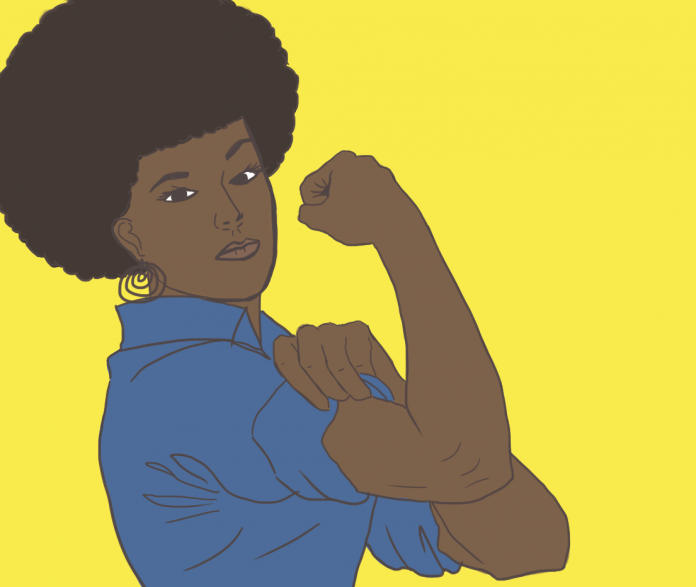
Why doesn’t mainstream feminism embrace women of colour?

1

Today’s feminist problem is that mainstream feminism often attempts to speak on behalf of the struggles of women of colour, while silencing them in the process.

A striking example was Patricia Arquette’s “feminist” Oscar speech in 2015, where she proclaimed that it’s time for “all the women in America,” “all the men who love women,” “all the gay people” and “all the people of colour that we’ve fought for to fight for us now.”

Even as we celebrated International Women’s Day a couple weeks ago, we celebrated achievements of women worldwide. The problem? Many women of colour are left out of the discussion because their voices, and their past and present struggles, are often silenced by mainstream feminism.

In society, the hierarchy of privilege tends to place men at the top, followed by men of colour. Subsequently come white women, and lastly, women of colour. If we celebrate strides for some women, we cannot celebrate this as a stride to equality if we do not recognize the struggles of women of colour, who are fighting to be equal with men, but are even still fighting to be equal to white women.

The gender parity cannot be solved by putting a woman on a board of directors, or on the prime minister’s cabinet — the multifaceted issues faced by women of colour are simply too great. In implementing gender quotas, racial bias is still prevalent, and we can’t solely focus on gender without racial diversity as well. If we advocate for more women in leadership positions, and fight for gender and pay equality, we must ensure that our feminism is intersectional. A white woman’s equality is not equality for all.

As a girl of Indian descent, for wearing a bindis, or having thick eyebrows, I would have been made fun of growing up.

Women run 4.6 percent of Fortune 500 Companies, and only a small percentage are women of colour. Having women in such roles is rare, but we need to recognize that these opportunities are lacking in number, and even more for women of colour, due to histories of colonialism, inequality, and marginalization.

Further, if we are going to promote body positivity, and the right for women to make choices with their body, we must also support the right of women to wear hijabs or niqabs, to wear their hair in box braids or dreadlocks, and for all to celebrate their cultural traditions freely.

As we fight back against unrealistic definitions of beauty for all women, we must also recognize that on top of this women of colour are subject to colourism — where their beauty, and even their worth, is decided by the closeness of their skin to the white standard.

Women of colour are subject to ridicule for things white women are praised for. For example, as a girl of Indian descent, for wearing henna or bindis, or having thick eyebrows, I would have been made fun of growing up. Now that it is adopted and encouraged in fashion magazines by famous white women, I no longer have to feel ashamed. This is ridiculous.

If we celebrate International Women’s Day, we need to ensure we are not just celebrating white ,middle class, cisgender women, but also the diverse women of colour with struggles that deserve our honour and respect. I hope to live in a world where having an Aboriginal female CEO or prime minister isn’t unheard of. In order for this to be a real possibility we must break this cycle of ‘one voice’ feminism and speak to the struggles of women of colour, and not on their behalf.

Dangling modifiers are more important than the US election

0

[dropcap]D[/dropcap]angling modifiers are more important than the US election, because I can change dangling modifiers. Modifiers are clauses that precede a sentence. They define the subject in the sentence that is to come. A modifier is dangling when it modifies a subject that it isn’t intended to. Here’s an example: “Being so fit, the 50 km run was easy for Manpreet.” This sentence says that the 50 km run is what is fit.

What we probably want to say, though, is this: “Being so fit, Manpreet ran the 50 km run with ease.” In this case, Manpreet, the sentence subject, is fit.

Dangling modifiers can be hard to understand, but they can be changed by Canadians. The US election is hard to understand, but can’t be changed by Canadians.

If I can control my grammar, I can avoid misinterpretations, and needn’t be afraid.

One odd thing about grammar, though, is that it’s inherently forceful. It’s tempting to force people to follow the rules according to a specific grammar rule book, of which there are many. I follow the Canadian Press style, because it makes sense to me. It’s also my job as Copy Editor to make decisions about these sorts of things, and I think it’s okay to enforce this to make a newspaper cohesive.

But this can be a problem when we marginalize and punish for people not following difficult rules that often don’t really make sense. Doing so lends itself to judging people who don’t follow specific grammar rules, but who can probably get a point across just fine regardless.

Doing so can be kind of racist — like a prominent US presidential candidate.

Fortunately, grammar can still be fun to discuss, because we can change it. If we look at it from an open point of view, we can discuss what does and doesn’t make sense, and we can change the way we speak. This, in turn, affects the way we shape the stories of our lives. It’s not like the United States’ inevitable demand for Canadian fresh water in the coming years, which we can’t control.

It’s like we’re France in 1920, and we’re watching Mussolini in Italy.

Grammar really can shape lives. Think, for instance, about being mad. If you’re mad, are you mad? Or do you feel mad?

Now, if you tell yourself every time that you feel an emotion, rather than you are an emotion, how might those words affect your thinking? You might be more inclined to think of your emotions as a passing experience, rather than a consuming identity. It might make emotions feel a bit less important, and sometimes we need that.

Clearly, grammar is fun. And important. Unlike the United States election.

The election is important, of course, but not to Canadians, because we can’t affect it. We can’t control, for instance, that a frontrunner openly promotes the violence that occurs at his rallies.

Remember last summer when we thought he was just a joke candidate? That he’ll probably just drop out, and we’ll all be like, “well, that was weird! We learned a lot!” And we didn’t have to worry. But we can’t worry, because we’re Canadians, and that’s fine. We can control other things.

Even if every Canadian moved down there and voted for Bernie, we’d only make up about nine percent of the population. Nine percent.

But then if any of us did move there, we’d have to worry about a potential president who promises “worse than waterboarding.” It’s like he has no idea what he’s saying.

It’s like we’re France in 1920, and we’re watching Mussolini in Italy, and we’re like, “hey, guys, just stop it, look hard at him, he’s evil,” and Italy is all, “we need a strong leader, and all that racist stuff was just sarcasm.”

But we can control what we have. I have my grammar. I can control my grammar. And also American is an entire country, and they’ll probably figure it out.

We’ll be fine.

Grace N. Howl on the SFSS Campaign Trail ’16: The Snides of March

0

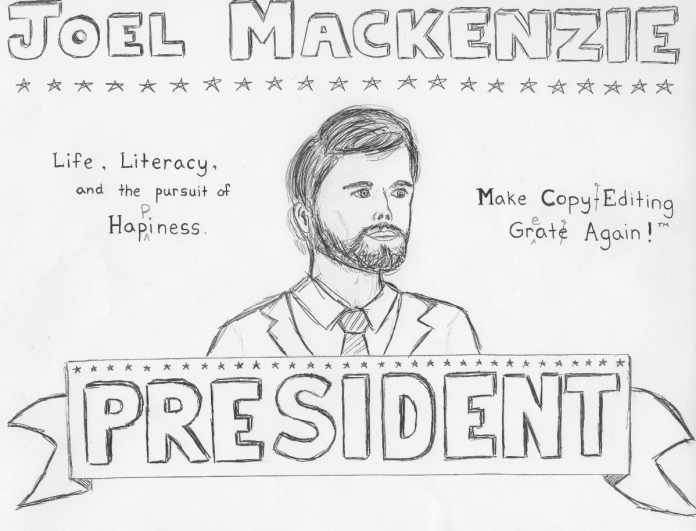
Hello SFU,

After a tiring week of debates and campaigning, I spent this past weekend reflecting on my work and what I had achieved so far. The elections are drawing closer, and with each passing day I can’t help but feel more confident in my campaign and my potential at being your next SFSS President.

While many candidates have spent a fair bit of time pitting themselves against their opponents and lamenting the fact that The Peak, again, brought out their candidate endorsements yet again, I can’t help but feel sorry for the student population. Do you really want a whiny president who gets their feelings hurt all the time? Some of these candidates make me think of Harper. You know why Harper always has that same expression on his face? It’s not lack of support or acceptance of defeat, it’s because I roasted him numerous times on literally everything — his policies, governing style, hometown, and musical ability (which is about the same as a donkey). Over time, he learned to just let the criticism just slide off his back. Potential SFSS presidents should be the same way.

I will admit that I am a little hurt that The Peak did not endorse me. BUT, I’m not complaining. I can do just fine without them; after all, I am the richest, the brightest and the most promising candidate that has ever run for this position.

With the elections coming, I think that there is a clear division separating me from the other candidates – a division that clearly shows that I am the only option for greatness.

Grace N. Howl

*All documentation has been personally received by Rachel Wong*

Want to learn more about Grace N. Howl’s campaign? Click here.

Check out the first entry of the web exclusive campaign diary here!

This year’s election “disappointing” according to SFSS Board members

1
Current SFSS President Enoch Weng questions candidates at one of the Burnaby debates this year.

At this point, those who have been following the Simon Fraser Student Society (SFSS) election know that there are a reduced number of candidates as compared to year’s.

This hasn’t escaped executive members on this year’s Board of Directors, either.

“Honestly, I’m a bit disappointed,” said Enoch Weng, current president of the SFSS. “There’s a lot less turnout in terms of both candidates running as well as people attending the [debates].

“People can blame dates, people can blame the general apathy of students, there’s so many factors involved that I really wouldn’t know where to start.”

He isn’t the only one who feels this way.

“It was a little bit disappointing to see the low number of candidates putting their names forth for this year’s election,” agreed VP University Relations Brady Yano.

“It’s disappointing that they will not have to necessarily work as hard for the position as many of us did on this current board.

“I think the campaigning process is a good way to see how individuals perform under pressure, and unfortunately many of the candidates will not be put into those pressured situations.”

VP Student Services Darwin Binesh believes the main reason is because of the lack of interest in multiple slates.

“Typically you see multiple slates in an election which are full, so what ends up happening by virtue of two slates with 16 seats to fill each is if they fill those seats, they automatically have 32 seats,” he said.

“In this case, you only have one slate that really tried to fill all the seats.

“There was no division on the board this year that led to multiple people running for seats against each other. Current board members are actually all on the same slate. Slates are definitely a big part of it.”

Regardless of the reason, the low amount of candidates has perpetuated the notion that students won’t come out to vote. It’s just another example of students not participating in SFU whether they want to or not, which VP External Relations Kathleen Yang believes is already a recurring issue.

“It’s a huge issue. Let’s just say that — there’s no need to make that politically correct,” said Yang. “It’s a huge systemic issue with the lack of students that come out to vote in the SFSS election.

“Really, that’s what it is,” she continued. “Transportation, food security, housing security, and income security. Those are the four major things that are ultimately preventing students from participating on campus.”

The reduced number of candidates means that many only have to convince students to say ‘yes’ to them.

Almost all positions have two or fewer candidates running, with the at-large representative race being the sole exception.

With that, the campaign process has felt underwhelming to Yano, who wonders if this election season has really given us a good sense of what these candidates will do if elected.

“In the debates, I did not get a sense from any individual candidate of the tangible steps they will take in order to get anything done. Instead, we heard very high-level talk, saying things like ‘We will engage students’ and ‘We will communicate,’” he said.

“I’m hoping that this next board, despite the ease of potentially getting elected, do take their role seriously and do build upon the existing work we’ve done this year and don’t take this opportunity for granted, ’cause they are essentially walking into the position.”

Whoever ends up filling the seats on the Board of Directors, Weng has a parting message for them.

“Be accountable. That can mean a lot of things to other people, but to me, it really just means do your best for students. Don’t screw up or don’t screw things up for them. Do things honestly, and don’t waste money.”

SFU swimmers thrive at NCAA Championships

0
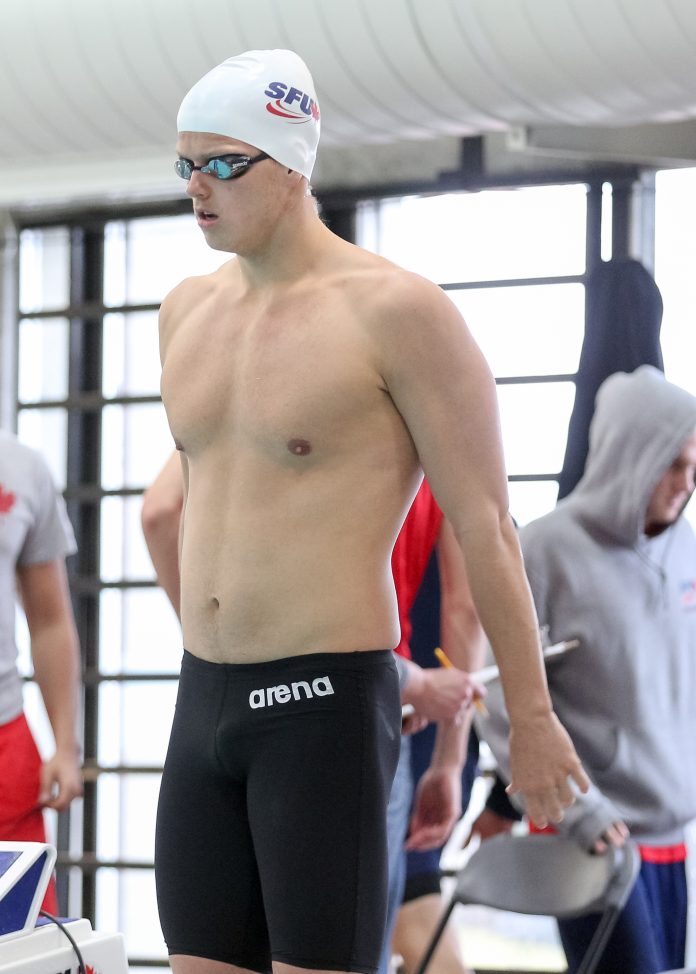
Adrian VanderHelm broke an SFU record in the 200 yard freestyle, and had the fifth fastest time in the 500 yard freestyle in Division II history.

From March 9–12, SFU’s swimming team competed in the NCAA Division II Championships. A number of SFU swimmers did very well individually and the team as a whole finished 10th — their best finish ever in the NCAA.

“Very well,” said Head Coach Liam Donnelly on his team’s performance. “It’s always a little tough to say how exactly things are going to unfold before you head in there. But our goal is to always improve and compete. I think we clearly did that, and we rewrote the record books a little bit on our team records. ”

Perhaps the standout performance of the championships was Mackenzie Hamill. He won the 1,650 yards freestyle second SFU swimmer, male or female, to win an NCAA national title. The first came back in 2013, when Mariya Chekanovych won the 100 and 200 yard breaststroke.

“For anybody to win a national title is impressive, freshman or non-freshman. I don’t think that was necessarily his absolute mission at this competition. It was going in there to be successful every time he touched the water.

“He was the seventh seed in the event, so he wasn’t necessarily expected to come through with the win, but we knew anything’s possible at these. It’s a tightly contested meet. Sometimes one arm’s length from first to 16th [can decide things]. So it’s a great accomplishment for him.”

Adrian Vanderhelm also had an extremely strong performance at the national championships. He finished third in the 200 yard freestyle while breaking an SFU record, and also finished third in the 500 yard freestyle, and in that race, finished with the fifth fastest time in Division II history. All of this going against some top notch performance.

“For him, outstanding” said Donnelly on VanderHelm’s performance. “To go the fifth in the history of NCAA in the 500 free [is remarkable]. It just happens that he’s up against some really tough competition. The guy who won is is a Dutch Olympian, top 20 in the world. Second place was Victor Poliakov, a Russian guy who’s had years of national team experience. So it’s a fantastic opportunity for him, but it makes it very challenging to win those events.”

With the season over, VanderHelm and others will set their sights on the Olympic trials for the 2016 Rio Olympics, to be held in Toronto starting on April 5. The Clan will send 12 different swimmers to the qualifiers.

“That’s a high level competition, it’s the most important event in our country. There’s no limitations on who can compete [. . .] at the olympic level, it’s open to everybody. So all of the best Canadian athletes, they can be training internationally, they come back and compete in the event. So it makes it very tough.”

Sports Briefs

0

Men’s Golf

SFU placed in second at the Notre Dame De Namur Argo Invitational. Kevin Vigna finished in second place individually, one back of the leader. Chris Crisologo finished tied for second with 12 birdies, and Michael Caan finished in 15th. Their next competition is the California Baptist Invitational from March 21 to 22.

Track & Field

SFU competed in the annual NCAA NCAA Division II Indoor Track & Field Championships with Cameron Proceviat finishing just over a second off winning a national championship. He was named a first team All-American, while five other SFU runners were also named.

Softball

SFU swept Central Washington University to win their seventh straight game. The Clan won the first game 10–9, with eight of SFU’s runs being scored in the first two innings. Nicole Ratel went two for three, and hit a home run. In the second game, SFU won 7–6, with five of the Clan’s runs coming in the second inning. Taylor Lundrigan led the team offensively in the second game, going three for five.

Men’s Wrestling

Junior Tyler McLean finished fourth at the NCAA Division II Wrestling Championships. In doing this, he became only the second SFU men’s wrestler in the NCAA era to achieve this honour. McLean finished with a 45–13 record, and is only the third wrestler in SFU’s history to achieve this in the NCAA.

With files from SFU Athletics

Five TV shows that went on way too long

1
Some shows just need to end before they jump the shark.

We’ve all have that one show.

You know, that one. It was on the air for a decade, but hasn’t had a good season since the third. It’s the same show that you have such a strong emotional attachment to that not even massive cast turnover and poorly executed sub-plots could make you stay away. If you are the fan of a terrible TV show that didn’t deserve to continue, and/or if you’re an easy crier, I don’t recommend you keep reading this piece.

Anyways, we all have that show. And if your show is on this list, I’m sorry. But the truth is these five shows just turned into utter shit as the seasons went by. And as a student journalist, I need to call them as I see them. Let’s get started.

5. Two and a Half Men

What started out as a show centred around weird, perverted humour that actually merited a chuckle or two became a hot mess by the time it went off air in 2015. Truth be told, this show should have wrapped up in 2009, before Sheen even got the boot. But they wanted to prove that even as an older show, they still had stamina. Spoiler: they didn’t.

4. Supergirl

This never should have made it past the pilot episode. Mediocre acting and been-done-before plot secures this show’s ‘gotta be canceled’ status. It has been a true disappointment. I’ve said it once and I’ll say it again: if you want to give us a badass female superhero, write her the new role AND story she deserves (see Agent Carter). Don’t just take old stories and put a women in the dude’s shoes. It’s boring and offensive.

3. Grey’s Anatomy

I can already hear the angry 19-year-old girls with pitchforks beating at my door. But honestly, we all need to take a deep breath and think long and hard about the state of this show. Once everyone calms themselves and puts down the glass of grapefruit-infused rosé, its hard to disagree with me on this one. This once very clever and dramatic show about doctors is now just a rollercoaster that takes you on a ride from hell for 60 minutes at a time.

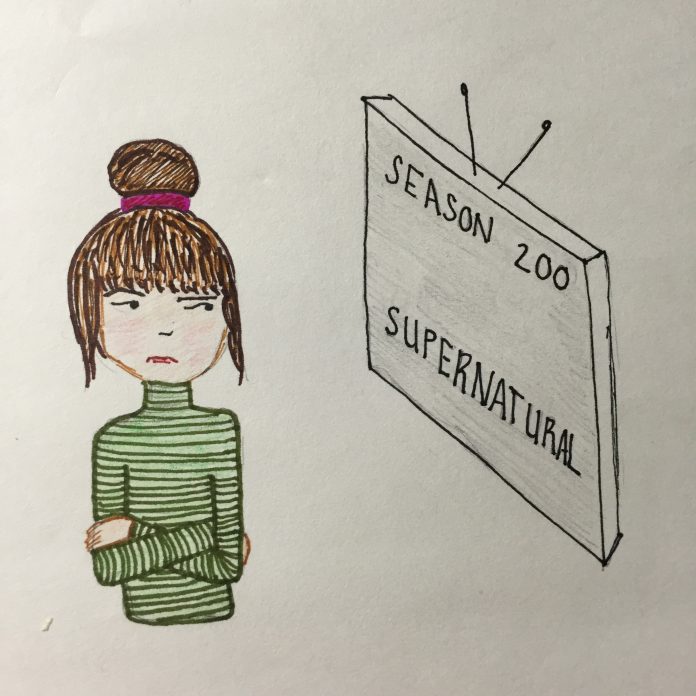
2. Supernatural

What is this show even about? I thought it was about two brothers fighting supernatural monsters, but honestly the latest seasons are over the top and just bizarre. . . this show could be about anything at this point. Everyone has died and come back to life so many times I wonder if the producers believe in the sanctity of life at all. This show is out of steam and material, and no amount of good-looking actors can change that. Get off the air already.

1. How I Met Your Mother

This show was that one show for me. I watched every episode religiously from 2005 straight through 2014 when the show finally went off air. With mixed emotion and pain in my heart, I will admit this show turned into total garbage. By the time they had milked the franchise for every last joke, there was nothing left for the finale. This is ultimately why the show also receives the honour of “worst series finale” on top of “show that should have ended way sooner.” The show jumped the shark in season four and never really recovered. So I’m sorry, HIMYM, but you will always be remembered as the show that disappointed a generation.

The Laramie Project to feature two SFU alums

0
The Tomo Suru Players are responsible for bringing The Laramie Project to Studio 1398.

From March 30 until April 3, with a preview on March 29, Tomo Suru Players will be performing their production of The Laramie Project at Studio 1398. First performed in 2000, The Laramie Project is a play depicting the actions surrounding the death of Matthew Shepard, a young gay man from Wyoming brutally murdered in a hate crime.

In an interview, Gerald Williams, director and founder of the Tomo Suru Players, discussed the motivations for the curation of this project. While speaking with a group of young actors, he realized that “many of them had never heard of The Laramie Project.” In that moment, he said, he understood that “the memory of this project is something that could be lost.”

“It’s such an important point in, I believe, the history of human rights,” stated Gerald. He continued, “I believe that part of the point of The Laramie Project is [that] it carries on. It resonates today as it did 20 years ago, it needs to be passed on generation to generation.”

With this production in particular, Williams stated, “The goal was to have the actors feel it. If the actors feel it, if there is that level of satisfaction and growth with them, everything else works.” Another massive goal of the production, says Williams, is “getting young people to see it.”

In an attempt to make this goal a reality, Tomo Suru Players are looking for sponsors for their Youth Sponsorship Packages. These packages give young people connected to LGBTQ+ and anti-bullying campaigns an opportunity to see The Laramie Project. They currently have 40 tickets to give out through community groups, schools, colleges, and universities — including SFU.

Working on a project like this certainly takes its toll. When Williams first heard about the tragic death of Matthew Shepard, he was living in Japan. “You think, ‘people don’t do this, in this extreme. . .’ apparently, we do. [. . .] Even though we touch the depths of horror, it ends positively,” says Williams. In an attempt to help foster an environment of open discussion, after each performance, the creative team and actors will be conducting a live talk with the audience.

Two such actors are SFU alumni Kelly Sheridan and Tony Giroux. The unique perspectives they have brought to the production were directly influenced by their time at SFU.

Sheridan states, “I was in the theatre program at SFU at the time when he [Shepard] was murdered, and Matthew Shepard and I would be almost the same age if he was still alive today.” Sheridan also brings a knowledge of the show stemming from her viewing the original off- Broadway production by Tectonic Theatre company, as recommended by an SFU professor

Giroux first learned about Matthew Shepard’s story in a class at SFU. “Part of the lecture was on how Matthew Shepard had been branded in the media,” he said. “It’s interesting to hear about it from a more analytical point of view in school, and now it’s really cool to be diving into the more emotional aspect of it.”

The importance of the piece comes from the real life events that it discusses, and the ripple effect those events had in society. As Sheridan argued, Matthew Shepard is “up there with Harvey Milk and Stonewall.” She went on, saying his story has “reverberated through our culture, where people who haven’t heard about him experience the effects of his murder, and the subsequent trial, because it’s changed the way that we perceive bullying.

“It’s easy to think that what happened 20 years ago doesn’t happen now,” Sheridan continued. But she warned, “There are opinions, there are values that are just as strong as they were 20 years ago [. . .] it’s important that we keep having that conversation.” The Laramie Project promises to be just that conversation starter.


Tickets are $30 for adults, $20 for students/low income, with half price tickets for the March 29th preview.