Home Blog Page 843

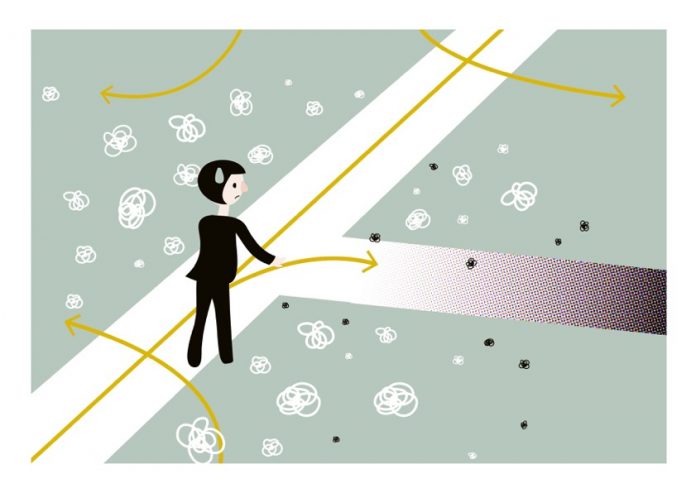
Taking (many) of the roads less travelled

1

[dropcap]T[/dropcap]o most of my friends, family, and others who run into me, I’m one of the few students who seems to have their shit together. I know exactly what I’m here for, how long it’ll take, which classes will take me there, and what my life after SFU will look like. It’ll look a lot like life here, actually, because I’m heading to graduate school and then into the world of archives and libraries.

But let me assure you that you don’t need to know all that while you go through SFU. You don’t even need to follow through with your studies at SFU at all. There are so many other ways to go through life; so many other careers that don’t require a degree, certificate, or other proof of education.

I left high school rosy-cheeked and eager for a different kind of life; preferably one that didn’t require me to sit in a dusty, drafty classroom (I’m talking about you, AQ 5014) for hours on end. So I went to Vancouver Community College’s culinary arts program. Even though I spent 11 months straight at school, five hours a day, five days a week, it wasn’t the same dry kind of learning — as in, not the kind we do here. I’m talking about learning something from a textbook, writing an essay about an obscure aspect of the class, and taking a final exam that’s just a regurgitation of what the professor taught.

Instead, I got to taste the fruits of my labour, gain some employable skills, and descend into the workforce after only a year of studying. . . rather than the four-year minimum commitment to a degree.

During my cooking endeavours, I also worked on several books. One, a poetry book, another a full-length adult fiction novel, and a third a collection of young adult short stories. Turns out, the writing industry is harsher than the safe, warm kitchen. I never got to the point of completing a book. I’m a huge perfectionist, and never thought anything was quite good enough to start sending around.

There is so much to learn and experience. . . we shouldn’t worry about commiting to one thing.

This was also during my rock star phase. I played open mics, wrote songs, and generally tried to be as badass as possible. The only problem was my crippling stage fright. But it is a lot of fun, and the rush of performing and people singing along is highly addictive.

I had a lot of fun writing, rocking, and cooking my time away, but decided that cooking wasn’t what I wanted to do for the rest of my life.

Cut to me filling out an application for SFU. I flip-flopped for a while between science and arts, because chemistry and I have always had a good relationship. I opted for arts and social sciences, thinking English would be a good fit considering my background in writing, and psychology would be a great compromise for sciences.

My first year was a roller-coaster. I took both science credits in my first term and fell in love with linguistics and philosophy. So I explored those departments, but philosophy turned out to be hugely depressing and a trigger for many existential crises. Linguistics was fun, but becoming a speech language pathologist didn’t sound like my cup of tea.

Then there was economics. The calculations were easy, the principles made sense, and it had real-world applicability in spades. Alas, no matter how hard I tried, I couldn’t see myself crunching numbers and running hypothetical economic simulations for the rest of my life. It just wasn’t exciting enough. So in the end, I decided on psychology and English.

There is so much to learn and so much to experience. It’s a shame we have to decide so quickly what we’re going to do for the rest of our lives. It’s a daunting undertaking and it’s unrealistic at best. Many people change their jobs more than once in their lifetimes, and a lot of people pursue an area that isn’t even related to their degrees.

So to any students out there who aren’t sure of the path they’re on, just remember you never have to conform to the societal expectations thrown on all of us as kids. Life is not about going straight from high school to university, completing university within four years, then going straight into graduate school, and finally getting a job that you will be stuck in for the next 30 years.

You’re allowed to experiment with different jobs, different educations, and different lives. So have fun with it, and maybe you’ll end up taking a road less travelled, too.

An interview with the woman behind the Veggie Lunch program, Kalarupini Koraljka Roy

4

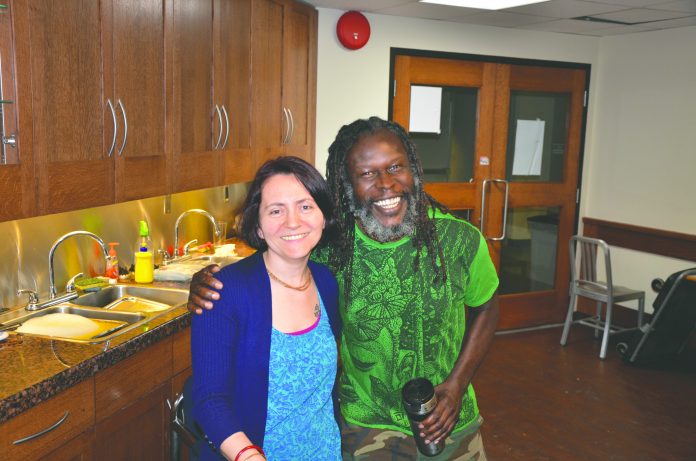
“It’s the best-hidden secret” at SFU, says owner Kalarupini Koraljka Roy, as she serves up a plate of mac ‘n’ cheese, curry, rice, and salad with calming, meditative music playing in the background.

Kala, for short, is referring to Veggie Lunch: a vegan lunch service that has been feeding hungry students at SFU Burnaby since 1992. Three times a week, Kala sets up in the Forum Chambers and dishes out heaping plates of delicious vegan food for only $6 a plate.

Kala lives her life in service of others. For her, charity is a way of life.

All the funds raised from Veggie Lunch help the less fortunate and fund services in the Downtown Eastside, such as their Women’s Shelter, the First United Church, and a soup kitchen and support centre called the Dugout. Proceeds also go to an orphanage in Udhampur, India. Kala also aims to assist Indian organizations with food distribution, as India has much greater food needs than Canada.

“It’s literally a full-time job,” says Kala, who rises early on Tuesday, Wednesday, and Thursday to prepare food for Veggie Lunch. She also holds a paying job to support her family, including a 17-year-old boy and a 13-year-old girl. When she isn’t tending to those responsibilities, she’s trying to start up a vegan catering service.

Kala took over the independent program at SFU in 2011 and her friend, Patrick, joined three years ago. Together, the program has gained a small but dedicated customer base with many “regulars,” including students, staff, and faculty.

“I always have people on my mind while I’m cooking,” says Kala. She switches up the menus to cater to allergies and preferences of people she knows attend on certain days.

VEGGIE_CYMK“It’s fresh, warm, cheap, and good for you,” touts Kala. She says eating vegan is good because it’s the “kindest possible food.” She is also concerned for the environment, given the meat industry’s considerable CO2 and greenhouse gas emissions.

The food is “karma-free.” It’s nutritious, clean, and Kala puts the food through a mantra meditation to purify while cooking.

Mantra means to “free the mind of troubles” to keep one happy and calm, explains Kala, who has been practicing yoga and mantra meditation since she was a teenager.

“That’s my life and I want to share it with others,” she says, especially at SFU where students are young, enthusiastic about life, and wanting to make a positive difference in the world.

When looking to make personal change, especially with diet, “it’s good to make steps that are consistent and not rash,” says Kala.

Personally, I am not a vegan — far from it — although I abstain from meat a few meals a week. When I eat Kala’s food, she describes me as a “flexitarian.”


There is a certain stigma associated with vegan cuisine, so many would be blown away at how tasty Kala can make mac ‘n’ cheese without using cheese at all.

“I always have people on my mind while I’m cooking” – Kalarupini Koraljka Roy

Aside from Veggie Lunch, Kala runs a community festival at Oppenheimer Park in the Downtown Eastside. The community there suffers from a lack of resources and low income, and is in need of “uplifting.” There, she serves food, leads meditation sessions, and gives haircuts and massages for the less fortunate.

This year, the festival will be held Saturday, July 9 from 11 a.m. until 4 p.m. SFU students are encouraged to volunteer if interested.

“It brings different vibrations to that area,” Kala says, adding that compassion is what the community needs to be uplifted. There is even a beauty night where Kala and her volunteers give makeovers for the women in the area. Manicures, haircuts, and makeup can really change somebody’s self-esteem, she says.

Kala is also a member of Kirtan Vancouver, a non-profit organization promoting healthy living through meditation.

“Canada is a country of possibilities” for Kala, who was born in Croatia and has lived in Germany, Switzerland, and India. Many other places are so individualistic, and people get so wrapped up in their own personal achievements that they will step on others for a leg-up, Kala tells me.

Kala estimates Veggie Lunch serves between 180–200 meals and raises around $500 weekly. Any food left unsold is brought to shelters in the DTES.

“I’m hoping to grow,” says Kala, who looks to a similar program at the University of Florida in Gainesville that serves thousands.

Most advertising is through word of mouth. Though the program is independent of SFU and the SFSS, Kala said she “would appreciate more support” from both.

“Where else can you get this quality and quantity for $6?”

BC needs a living wage already

0

[dropcap]W[/dropcap]e live in one of the most expensive cities in the country, so why is our minimum wage the lowest? British Columbia has been through this before. Unlike in many jurisdictions, our minimum wage has not been linked to inflation or the cost of living. It’s been on a roller-coaster ride from the highest in the country at $8 in 2001 to becoming the lowest in 2011, which prompted the raise to $10.25 in 2012.

We have once again been pushed to the back of the pack, as we currently sit at $10.45 per hour. The provincial government is attempting to catch up by increasing the wage to $10.85 this September, with another 40 cents promised in September 2017, to bring it to $11.25. By that time, of course, other provinces may increase their own wages further and BC may once again find itself in the same position.

The problem with our current wage and its measly increases is that those working full-time at this wage still fall well below the poverty line. An employee working 35 hours per week in this situation would only bring in $1,463 per month (before any taxes and deductions). Global News reported that the average rental rate for a two-bedroom apartment in Vancouver was $1,345 in 2015 — how is someone on minimum wage supposed to survive in this city?

Now imagine that person has a child or elderly parent as a dependent. It’s impossible to see how they would make ends meet. 

A study by the Canadian Centre for Policy Alternatives in 2015 found that the wage needed to live in Vancouver was $20.68 an hour — about double the current minimum wage. So what should the minimum wage be to ensure that nobody working full-time is living below the poverty line?

What would help Vancouver, and other BC cities with high living costs, is if municipal wage laws were passed to tailor income rates to these specific areas.

The BC Federation of Labour (BCFED) has led many wage increase campaigns over the years, and now they are leading Fight for 15, a campaign to raise the wage to $15. According to the BCFED, a $15 minimum wage would bring the average worker above the poverty line using all the regular poverty measures, including the Low Income Cut-Off, Low Income Measure, and Market Basket. Nobody working full-time should be living in poverty, and it’s time our provincial government recognized that. 

September’s wage increase is a step in the right direction to ensure that the wage is not left in the hands of politicians, and the vulnerable are not left to decade-long freezes; the problem remains, though, that the current wage is not high enough to cover the current cost of living in our province. 

In Seattle, where the City has the authority to pass a municipal minimum wage law, they brought in a $15 wage in April 2015, to be phased in completely by 2021. California and New York are now following suit.

Back in BC, we have an incredibly high cost of living and our minimum wage is not keeping pace. Instead of working to remedy this, our government is making paltry increases just so they can state that they are not economically last in the country. What would help Vancouver, and other BC cities with high living costs, is if municipal wage laws were passed to tailor income rates to these specific areas.

These 20- and 40-cent gestures are too little too late, and everyone suffers when our lowest paid workers are living in impoverished conditions.

TAs should be formally taught to teach

1

[dropcap]W[/dropcap]e’re all friends here, so we can all agree that a Teaching Assistant (TA) can make or break a course. I’m not suggesting that the university should function without TAs; they provide a crucial service to the school, and a shit-show would ensue if they stopped their work.

Classes would become exponentially smaller, particularly the lower division undergraduate courses with hundreds of students. There’s no way the professor could take on the workload alone. Thus, instead of the six years it might take to complete a degree (thanks to SFU’s shitty enrolment system), it could take several more years due to class unavailability. It’s more economically efficient to use TAs as ‘mini-profs,’ as they receive less pay and there are many grad students willing to take on the job.

But the problem is that SFU seems to let any and every interested student take the reigns on tutorials, and mark the assignments and exams that influence our success in class. Unfortunately, not giving TAs any formal education on teaching hinders everyone’s learning opportunities.

TAs run tutorials, clarify and expound upon material covered by the professor, and then they’re put in charge of our grades. Those grades impact our futures through our access to scholarships, graduate school, and employment. Having a TA who lacks proper teaching qualities, who doesn’t know how to clarify in multiple ways, or who delivers any explanation with condescension and a holier-than-thou attitude has ruined many of the first-year classes I’ve taken.

Just because a student has a high GPA and the time to take on the position, doesn’t mean they’re qualified to teach.

One of my psychology TAs would never give me a straight answer, or would just repeat back every question I’d ask, without actually helping me or furthering the discussion. An English TA I once had would expect our work to look completely different from what the professor had asked for — that class was almost the death of me.

Most faculties publish their TA applications online, and after having browsed through many of them I’m not able to find anything on these applications that asks about teaching ability. Not a single one placed specific importance on the applicants’ interpersonal abilities.

Now, as with any job, many prospective TAs are in it for the money, experience, and networking opportunities. But some of them also harbour plans to become post-secondary educators.

The school does both TAs and students a disservice by not requiring any prior teaching ability or graded professional development courses for the TA position. Of course, SFU’s TA Learning Guide states that TAs can attend free orientation and workshops every semester, but they’re optional. Maybe they need to be mandatory.

Moreover, we have a whole faculty devoted to education. Maybe SFU should find a mutually beneficial professional training program that gives education students experience in teaching people — specifically TAs — how to teach.

Just because a student has a high GPA and the time to take on the position, doesn’t mean they’re qualified. I know grad students have a lot on their plate, but if SFU invested more time and money in helping these students become better educators, it could pay off for everyone in the long run.

Fuck Donald Trump

1

[dropcap]I[/dropcap]n the wise words of rapper YG, “fuck Donald Trump.”

As an extremely left-wing liberal American, I am constantly baffled by the actions of the Republican party each election season. This year, however, took everyone by surprise.

Not one, but three prominent Republican candidates this time around had zero political experience: Trump, a reality television personality; Ben Carson, a brain surgeon; and Carly Fiorina, a businesswoman who faced rampant sexism from her own political side before dropping out.

Senator Marco Rubio was the son of a Cuban immigrant with seemingly inconsistent views on immigration. Governor Jeb Bush ran, as if the United States hadn’t been fucked over enough by the Bush family. Senator Ted Cruz, apart from becoming synonymous with the Zodiac Killer, ultimately fell to Trump as a niche and misleading candidate. And finally, Governor John Kasich, at first so unpopular that he was ignored in GOP debates, became the last man standing against Trump.

It’s safe to say that this year’s campaigning period is an utter shit-show.

Cruz, Bush, Kasich, and Rubio all have what Trump doesn’t: experience. Furthermore, they’re also much more aligned with the Republican party’s values. So why is Trump poised to win the nomination?

It’s no secret that the American political system is deeply flawed. While the two-term cap on presidents prevents dictatorships, it also means that if the president in question wants to rerun two years into the first term, they must begin campaigning instead of focusing their attention on actually being president. Furthermore, eight years is hardly enough time to do anything at all, especially when the Congress majority is stacked against you.

Trump’s presumptive nomination is dangerous.

The inability to pass legislation or make any real substantive changes leads to an impatient population of citizens who crave someone new. It makes sense that, after eight years of a somewhat liberal president, Republicans are more thirsty than ever for an aggressively conservative candidate. Hence, Trump.

Additionally, Donald Trump has a talent for catering to people’s fears. For example, say you’re a parent struggling to find work. You hear on Fox News that Mexican ‘illegals’ are coming into the US looking for jobs. You blame them for your bad luck. Then, this orange man with bad hair claims he’ll build a fucking wall on the southern border to keep them out. Problem solved.

Even better? He’ll get Mexico to pay for it.

It doesn’t matter that his proposals are both economically devastating and a probable cause for war. If you don’t do the research, you don’t know that. What you do know is that he’s the harshest GOP candidate. You’re wary of other candidates who all promise to do the same thing, but never do. So you put your trust in Trump.

Using his blatant lack of understanding for diplomatic relations and economic policy, Trump transforms himself from a celebrity with a net worth of $4 billion into a regular ol’ family man, appealing to the masses of struggling white families raised on conservative values. Families who are tired and distrustful of ‘career politicians.’

Trump’s presumptive nomination is dangerous. If he were to be elected president, his ignorant foreign policy to “bomb the shit out of [ISIS]” would result in outbreaks of war around the world. Trump has stated he’d prioritize businesses over the environment, and plans to make the US military “so strong, and so powerful, and so great.” His cuts to the Department of Education would result in closed schools and overcrowded classrooms.

Trump as president would be entirely devastating. Anyone with actual political experience would scoff at these proposals — and, for the most part, they do. Trump has very little respect from established politicians in even his own political party, let alone Democrats and moderates.

So, yeah. Fuck Donald Trump.

SFU study surveys indigenous peoples on how climate change affects them

1
Indigenous peoples from North America protested the Paris conference on climate change last year. - Photo courtesy of The Guardian

Researchers at Simon Fraser University’s Hakai Institute recently published a study entitled “Observations of Climate Change Among Subsistence-Oriented Communities Around the World.” The researchers attempted to quantify observations about climate change from 92,000 indigenous and non-indigenous peoples from over 2,200 places scattered across 137 countries. The researchers endeavoured to fill in “knowledge gaps” about climate change in areas where weather stations are either sparsely located or non-existent.

Lead author of the study, Dr. Valentina Savo, explained that this type of study is important for two reasons: observations can reinforce the data, or they can “give a different perspective in case there is not enough data. And if the data and the observations of people don’t match, it’s where you should probably look more into what’s happening.” Observations were focused on the weather, plants and animals, and the physical environment itself.

For the most part, the study’s qualitative data seems to match up well with Western quantitative data on climate change: around 70 percent of participating communities around the world confirmed changes in weather patterns that were already assumed or recorded by weather stations.

However, there has been pushback from other scientists in the field. Many climate scientists described the local observations as irrelevant, disregarding them as biased by media coverage. These scientists clash with scientists like those from SFU who prioritize the contributions of native peoples. Dr. Dana Lepofsky of SFU’s archaeology department, and a co-author on the study, noted that “this sort of information not only validates weather station data, it taps into long-term specific knowledge of subtle changes to ecosystems that you can’t get from a climate station.”

Dr. Savo stressed the importance of such qualitative data, saying in her interview with The Vancouver Sun, “It’s not theoretical [. . .] it’s very disruptive.” Changes to the climate affect these communities’ ability to fish, hunt, gather food, and plant and harvest crops.

Dr. Savo noted in an interview with The Peak that studying the social consequences for those who immediately depend on the Earth is essential. She said, “Living in cities, we don’t have a clear conception of what would be the social consequences. For us, it’s just ‘Oh, it’s nicer. It’s sunny, or it’s warmer, and so it’s more pleasant.’

“We can always go to the grocery store for food [. . .] But for other people, changes mean less food, travelling farther to find fresh water, and risks related to that. [. . .] Usually it’s women and children who are going to find water, so you can imagine the risks they face having to walk longer distances to find fresh water everyday.”

Sometimes, when the distances are especially unfeasible, the only option is to migrate. Dr. Savo described not only the devastation of leaving one’s home behind, but also how this can lead to more conflict when entire groups of people have to cross into other communities’ thresholds.

Despite the pushback, the researchers hope that the study will be noticed by not only other scientists, but also policy-makers. While she stressed that all elements of climate change research are important, Dr. Savo believes that “the more people who include social science in climate change, the better.”

Three terrible reasons you use to justify taking a summer semester

0

Screen Shot 2016-05-13 at 8.37.08 PM

1) You have developed an irrational fear of fresh air and UV rays.

Screen Shot 2016-05-13 at 8.37.27 PM

2) You’re a grad student who has promised to finish their master’s thesis for real this time.

Screen Shot 2016-05-13 at 8.37.41 PM

3) You actually thought it would be a good idea.


Vancouver’s housing crisis caused by foreign money and government, report says

0
Average house prices in Vancouver can reach over $1 million (data from Macleans)

Vancouver’s housing affordability crisis is caused by an influx of foreign money and poor political oversight, according to a report out of SFU.

Assistant professor from the School of Public Policy, Josh Gordon, said the BC and federal governments have done little to stop money, primarily from mainland China, that pushes domestic buyers out of the market and raises prices for properties. Gordon addressed the issue of racism, and assured readers that “the problem is that the money is foreign,” not that the money is from China.

Other contributing components were also included in the report. Historically low interest rates in Canada, coupled with Vancouver’s natural and artificial geographical boundaries are two key factors playing into the equation.

Gordon dismissed other common justifications for government inaction as “distractions,” like the supposed lack of social housing, bad zoning, and high “desirability” of living in Vancouver.

“Too often people [simply assert] this or that claim” and don’t back it up, especially “influential people connected to real estate and government,” Gordon said in an email to The Peak. He further stressed his intention to “confront the evidence in a careful way,” engage the interested public, and challenge conventional approaches.

Canada’s Business Immigration Program, specifically the investor stream, is a primary cause of the housing crisis, according to Gordon. This “cash for citizenship” program has allowed wealthy individuals (net worth $1.6 million or higher) to come to Canada.

Gordon cited a 2014 report by Citizenship and Immigration Canada, and one by UBC professor David Ley. He summarized the reports, saying that the program was an “unmitigated failure,” and the migration to Vancouver was “substantial, and consisted almost entirely of investors from Greater China.”

Roughly 48 percent of these immigrants’ business operations were “real estate and rental,” and only 10 percent of them had any self-employment income. Gordon also reported that the average annual income tax paid was only $1,400, compared to $7,500 for Canadians.

Between 1980 and 2012, an estimated 200,000 investor stream migrants came to Vancouver, representing 8 to 9 percent of the regional population. The program ended in 2014, but thanks to a “loophole,” an estimated 1,800 investor migrants have come to BC through Quebec since then.

Gordon pointed to a study by urban planner Andy Yan. Yan looked at 172 homes sold in West Vancouver from 2014 to 2015. His research showed that 66 percent of buyers had non-anglicized Chinese names, suggesting “recent arrival.” For homes over $5 million, it rose to 88 percent.

There is a significant “‘de-coupling’ of the Vancouver real estate market from local incomes” Gordon reported, thanks to the purchasing power distorting the market. Prices are inflated “across the board” as upscale buyers move to less high-end neighbourhoods and the effects continue, claimed Gordon.

Incomes in Vancouver have not significantly increased, nor are they at a level that would suggest a correlation with the skyrocketing housing prices, which the CBC reports has increased 30 percent in the last year.

In 2015, over USD $1 trillion left China for foreign markets. Gordon included a survey showing 14 percent of elite Chinese investors said Vancouver was their preferred location for real estate investment. Gordon concluded that “a massive amount of money from China entered the Vancouver real estate market in the past year or so.”

Gordon explained that there are severe consequences for Vancouverites. Intergenerational inequality perpetuates and millennial buyers are unable to enter the housing market in Vancouver, even into apartments and condos.BC has a highly leveraged real estate economy with “unstable debt foundations.” Construction and real estate services account for over 25 percent of BC’s economy, compared to roughly 20 percent for both Ontario and Alberta.

Increased housing prices cause individuals to assume more debt than they can afford. If interest rates rise more, this problem might worsen. Gordon explained that mortgage holders could owe more than their home is worth, putting them “underwater.”

Gordon said that communities suffer too. First-time buyers are pushed into the suburbs, farther away from their families, friends, and workplaces. Young professionals leave Vancouver, and there is an exodus of young talent because of the unaffordability of starting a life there.

Gordon presented two potential solutions to the problem: a progressive property tax scheme, and better tracking of foreign investment and laundering. The tax scheme would target foreign owners of high-end ($1 million and over) homes and would reduce demand in Vancouver. The Canada Revenue Agency and the Canada Mortgage and Housing Corporation also need to keep better records to allow for real tracking of foreign money pouring into Vancouver.

Gordon’s report is not peer-reviewed, and was “aimed squarely at the public debate.” He wishes to see “sensible policy action” from the government through public pressure.

Trottier Observatory able to see planet outside our solar system

27
An artist's representation of what Tau Bootis B could look like.

The Trottier Observatory has successfully detected a planet from beyond our solar system.

Tau Boötis B, also known as the Millennium Planet, is an exoplanet that was first discovered in 1996. Last summer, the Observatory’s team started trying to independently locate the planet and measure its properties.

With the aid of newly acquired technology, they utilized photometry (a method of detecting planets and stars reliant on light) and spectrometry (reliant on the speed of the planet) to locate the planet while measuring factors such as its diameter and mass. These allowed the astronomers to further calculate properties such as density and composition.

Despite the fact that Tau Boötis B is already relatively well-documented, the Observatory’s ability to perceive it themselves is an unprecedented step.

“I knew we wouldn’t be able to see [the planet] until the spring, and so I spent the winter learning how to use the [new] spectrograph,” stated professor Howard Trottier, discussing the journey leading up to the detection. “When the exoplanet was finally in our skies, I was ready to go.”

Once Trottier mastered the use of the spectrograph, he began teaching others with interest how to operate it through formal workshops. This group included SFU faculty and students alike.

In the wake of observing Tau Boötis B, Trottier hopes to include the techniques and equipment used in a future observational astronomy course, designed to accommodate students both within the sciences and outside of them. Although the professor has not yet submitted a proposal, he “knows the course [and its] structure.” Ideally, he hopes to be able to offer the class by Spring or Fall of 2017.

“One of the major functions of the Observatory is for students to use it to do things that they want to do,” he said. He went on to discuss the ramifications of the hypothetical class for non-science students specifically.

“The message to people is that science is not something over there that only somebody else can do. Anybody can do it,” he said. “[Astronomy is] accessible in that way.”

Trottier hopes to teach students how to operate the needed equipment, how to “find [their] way around the sky” using coordinates, and theory involving the instruments and working with data. This will culminate in an independent project proposed by students.

Aside from identifying exoplanets, Trottier noted that spectrometers can be used to study phenomena such as star movements and accretion disks, and to measure factors such as the distance between galaxies.

Trottier suggested the possibility that students would, in the future, be able to propose ways to take advantage of the Observatory’s equipment.

NEW MUSIC FRIDAY

1

By: Sarah Finley, Max James Hill, and Jessica Whitesel

Follow The Peak on Spotify to stay up to date on New Music Friday.

“THat Part” – ScHoolboy Q feat. Kanye West

Jessica Whitesel: I love how this is a more laid-back song — but that doesn’t mean that it’s a super chill song, either. It’s just really good. ScHoolboy Q and Kanye are comfortable with themselves as rappers and it really shows on this track. It might not be very innovative but it is still a banger.

Sarah Finley: I’m salty that I’m listening to a ScHoolboy Q / Kanye collab before Childish Gambino / Kanye, but whatever. Kanye takes over ScHoolboy Q’s intro with lyrics that failed to impress. Relaxed percussion and lazy vocals make the rapping sound repetitive, while echoing lyrics made the track boring and dull.

Max James Hill: Who says new Kanye isn’t fun? This one’s a banger — ScHoolboy Q has such a nice, natural flow, and the paranoid beat fits perfectly with the braggadocio. It’s definitely nothing new for either artist, but there’s enough confidence and quotable lines to make this a winner.

“Afraid of Heights” – Billy Talent

JW: I used to like Billy Talent — granted I was like 12, but still they used to be sort of OK. This is just kind of really sad. I wanted them to get in touch with their earlier sound. They didn’t do that, and it can just go under the genre of “I am an angsty 13-year-old trying to rebel, but also not so hard that I buy CDs with a parental advisory sticker on them.”

SF: Punk group Billy Talent released this angsty, guitar- and drum-heavy, rock-ish track. It’s indiscernible from every other almost-emo song I’ve ever heard. Hard pass.

MJH: As a former diehard Billy Talent fan (like, we’re talking 2005 here), this was a big disappointment. I already know that they’re bad, but at least they seemed like they were having un-serious fun on their earlier releases. Now it just feels like they’re trying to be super angsty and inspirational and My Chemical Romance lite. It’s not a good look.

“For What It’s Worth” – Kygo feat. Angus & Julia Stone

JW: This is pretty decent background music, but it is forgettable. I like Kygo and I like Angus & Julia Stone but sticking them together just really doesn’t work for me. Each artist was trying to sound too much like the other and it led to a pretty forgettable electronic-inspired track.

SF: Soft feminine vocals back up a deeper, masculine voice in the intro, segueing into head voice vocals. Beautiful piano chords combined with gentle cabasas provide the instrumentals. I give this peaceful and calming track a 10/10.

MJH: So boring. Literally not even worth writing about. I’m convinced no more than 10 minutes of effort went into writing, recording, and releasing this milquetoast piece of muzak.

“Dominos” – Peter Bjorn and John

JW: This is a fun song. Not as fun as some of their other stuff, but I can still picture people dancing to this and that is always a fun time. It’s not going to reach the level of “Young Folks,” but at least it sounds different than some of the music that is currently out there.

SF: Peter Bjorn and John take you on an adventure via an eclectic array of percussion, including a steady bass, heavy use of shakers, and the occasional muted snare. Having a chorus for the lyrics doesn’t hurt either.

MJH: Well, it’s not “Young Folks,” but I for one really enjoy the sense of levity and clear ‘80s influence here. Is it just me, or does the piano in the background sound a bit like the menu screen tune from the Super Smash Bros. series? Weird. Anyway, this isn’t worth more than a listen or two, but it’s cute and completely inoffensive.

“This One’s For You” – David Guetta feat. Zara Larsson

JW: So I now know why this song makes me want to forget how to hear. It is supposed to be an uplifting soccer tournament song — UEFA EURO 2016 to be exact — and it is just a no. Also the weird, vaguely Bollywood sounding parts and the crowd cheering. There is too much fake happiness and it makes me sad.

SF: Romantic lyrics typical of summer radio hits that are played way too many times for anyone’s good, combined with Zara Larsson’s heavily autotuned voice leave me wildly unimpressed. Get back to me when there are lyrics more original than “our hearts beat together, we stand strong together, we’re in this forever.”

MJH: Sounds like Rihanna with a head cold. I definitely have begrudging respect for how much Guetta is able to squeeze emotional gravitas out of big musical crescendos (see “Titanium” for the best example of this), but this one is pretty shallow and forgettable. Also because my heart is a block of ice I hate when the chorus of kids comes in. A note to all musicians: please stop trying to pull my heartstrings with singing kids.

“Final Song” – MØ

JW: I would dance to this song in a club with my best friend and only pay attention to the, “Don’t let this be our final song” part. But I can also see asshole club DJs playing this as their final song after last call because why the fuck not. All that aside it will probably be one of the songs of the summer because it is actually a pretty good song.

SF: MØ, one of my fave artists, is back with another beautifully done electro-indie-pop track. Her unique voice is gentle and high, singing desperate lyrics to beachy-dance-vibe instrumentals. Bless.

MJH: Now this I like: sure it’s formulaic and pretty derivative, but MØ clearly has pipes and her performance feels very genuine. The sound reminds me a bit of Carly Rae Jepsen and Charli XCX, which makes sense since MØ worked with the same producer as those two (Noonie Bao). It also helps that I love both of those artists, so this is a winner in my book.

“Warning Call” – CHVRCHES

JW: This song has really clean production. Almost too clean. It is a good song, but the amazing vocals paired with the really high production values make it sound like CHVRCHES got sent through a dishwasher on a sanitizer cycle. Also the end does this weird autotuned echo thing which is kind of weird.

SF: CHVRCHES is easily another one of my all-time favourite groups. Lauren Mayberry’s childlike voice is just as ethereal as always in this track, which keeps its very signature electro-pop sound. Someone buy me a concert ticket, pls.

MJH: I loved CHVRCHES’ first album, but it feels like they haven’t really evolved much since then. “Warning Call” is likeable — the production is immaculate, Lauren’s vocals are typically strong, and it’s immediately catchy without feeling manipulative. But I know that this band is capable of a lot more, and this feels like they’re just on autopilot. Meh.

“Burden” – Foy Vance

JW: I’m getting almost a gospel vibe from this. Also the sense that Vance was like, I really like “The Weight” but like I don’t want to be someone to cover it for the millionth time, so I will write this. If you want to listen to a song that is the Coors Light version of “The Weight” this is your song. But really just listen to the original.

SF: There’s a fine line between slow country songs and jazzy, folk-grass, blues songs. This track tiptoes on the line, dabbling on either side. Foy Vance’s deep voice sings optimistically caring lyrics to a slow, deep bass. I likely wouldn’t listen to this again, but it’s not like I hated the experience either.

MJH: It’s like the unholy matrimony of James Taylor and Brad Paisley. Except Irish.

“Superstitious” – MKTO

JW: Wut? Like I don’t know how I am supposed to feel about this song. It wants to be one thing then it’s another thing. It is just a hot mess and you really should just skip it if you know what is best for your ears.

SF: MKTO reminds me of the summer of 2014. I had just gotten my driver’s licence, and their track, “Classic,” was playing non-stop on the radio. Extremely similar to the rest of their tracks, MKTO definitely didn’t try anything new with “Superstitious.” This bodes well for fans, and irritating for non-believers. For me, Tony Oller sounds like he’s trying to be Adam Levine and Malcolm Kelly’s rapping could use a bit of work.

MJH: Radio Disney Music Awards nominees MKTO rip off Justin Timberlake in the sonic equivalent of a Klondike bar covered in maple syrup. Both are overly sugary and just leave a nasty artificial taste in your mouth. No thanks.


“A Little Rain (A Song For Pete)” – Arkells

JW: I want to really like the Arkells just because they are Canadian, but there is just something about them that reminds me of high school. I like the story behind the song and it could make for a really good “drinking with your bestie” song, but I’m not fully sold on it.

SF: Catchy guitar strumming, optimistic vocals sung passionately, and snare-heavy percussion create a top-notch summer driving track.

MJH: My high school sweetheart loved the Arkells, so I pretended to like them while secretly straining to tolerate their boring, nostalgic faux indie rock. This, thankfully, is an improvement on their early work: it feels like they’re doing their own thing, even if it is mostly a Springsteen ripoff with less bite than a teething Chihuahua. It’s listenable.

“Move Together” – Somewhere Else feat. Majid Jordan

JW: I just don’t really have that much to say about it. Just that maybe Somewhere Else should be a place and not a just band name, and that Majid Jordan should move there with them. Maybe probably.

SF: This track couldn’t decide if it wanted to be EDM-y, or classic sad pop. The bass drops are too timid and lead to vocals that sound like they were intimidated right before singing. Words to describe this track: bland, vanilla, stale, dry.

MJH: I imagine listening to this song while shopping in a Wal-Mart and thinking, “Oh fuck. This one again?”

“Alone” – Marshmello

JW: This is super ravey feeling, but like in a mainstream pop way. It can’t function properly in either world, so therefore should just not be a part of this world. Also I can see 12-year-olds snorting Pixy Stix to this song thinking that were sooooooo cool.

SF: Are you an angsty tween in love? This track is perfect for you! Lyrics like “Nothing feels like home. I’m so alone. Try to find my way back home to you,” are autotuned to the point where I’m fairly certain Alvin and the Chipmunks were the inspiration.

MJH: Like Crazy Frog after popping molly. This song makes me want to eat an entire bag of M&Ms and egg my fifth grade teacher’s house.