Maple Batalia, pictured above, was murdered at SFU's Surrey campus in 2011.
Gursimar Bedi has been found guilty of being an accessory after the fact in the murder of Maple Batalia, as ruled by a BC Supreme Court judge on May 27.
This decision comes months after Batalia’s ex-boyfriend Gurjinder Dhaliwal pled guilty to charges of second-degree murder, as he shot Batalia three times at Simon Fraser University’s Surrey campus on September 28, 2011. Bedi, an acquaintance of Dhaliwal’s, has now been found guilty for his connection with the murder.
Batalia was 19 years old. She was studying to become a doctor, and was also an aspiring model and actress.
According to Crown prosecutor Wendy Stephens, Dhaliwal killed her because Batalia wanted to end their relationship, as he had been unfaithful to herseveral times.
The Crown prosecutors in the case also charged Bedi with manslaughter, but he was acquitted of those charges. They stated in the closing arguments that they could not provide sufficient evidence to prove the allegations against Bedi.
A few days before the murder, Dhaliwal had Bedi rent a vehicle for him which allowed him to follow Batalia without her knowing. A court order had prevented Dhaliwal from renting it himself, so he enlisted Bedi’s help.
Bedi also kept tabs on Batalia, letting Dhaliwal know where she was and if she was with a new man. Witnesses placed Bedi at SFU on the day of the murder, and his cell phone signal was also picked up by the nearbycell towers.
However, the Crown could not prove that Bedi was present for the murder, leading to the acquittal of the manslaughter charge.
Bedi will be back in court on June 9, where he will be sentenced. Dhaliwal is already serving his sentence, which is life in prison with no chance of parole for 21 years. He was sentenced earlier this year.
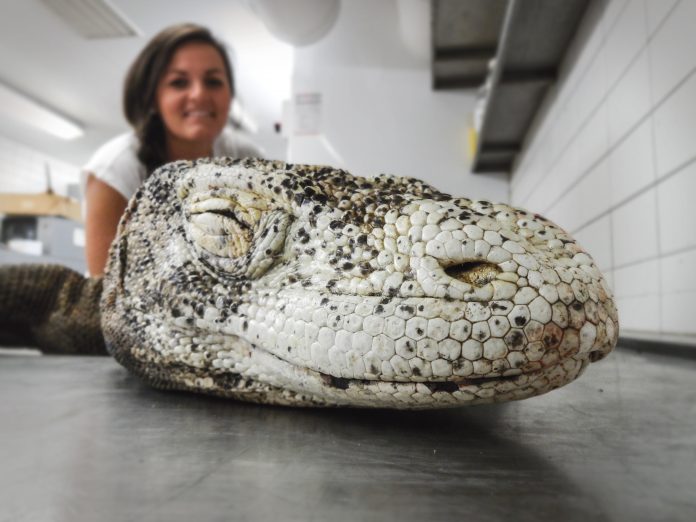
Imagine coming upon a giant lizard that’s five metres long and weighs 600 kilograms — could you escape by running away? This is a question that Australians have been asking ever since they came across the fossils of the extinct giant goanna, or Megalania. Recent insights by SFU researchers have shed light on an answer.
Giant goannas were a member of a diverse genus of lizards that include some of the smallest and largest living lizard species, such as the Komodo dragon. As the size of these lizards increases, so too does their mass. These animals have an unusual way of managing the stress of this increased mass that interested Taylor Dick, a PhD candidate in the department of Biomedical Physiology and Kinesiology at SFU.
The cross-sectional surface area and properties of muscles and bones increase at a slower rate in comparison to mass as the size of a species increases; because of this, their muscles and bones have to deal with the increased levels of stress required to support the body.
Giraffes, rhinoceroses, and elephants have all solved this problem by becoming more upright, as their legs are positioned directly under their bodies and take most of the weight. “[T]hey become upright so that their muscles and bones don’t have to deal with that extra mass and the stress of that extra mass,” explained Dick.
Dick observed that the group of lizards studied in the project did not become more upright over time as their size increased, “so you can imagine, moving around in a permanent push-up position, that’s really going to be difficult.” In order to learn more about why this is the case, Dick and her research group collected a wide range of species of lizards directly from the Australian Outback, and also worked with donated specimens.
To study the musculature of the lizards, they filmed them in front of high-speed cameras to learn more about how they run. Then they dissected the lizards to learn more about the properties of the muscle tissues themselves.
“The results were even more pronounced than [the researchers] thought they might be, suggesting that as these lizards get really really big they actually change the design or the architecture of the muscles, but that comes at a cost,” said Dick.
This cost is based on the fact that muscles can be built to specialize for two purposes: support or propulsion. If they are designed to support, then that will likely decrease the propulsion power of the muscles and slow the lizards down.
This brings us back to our original question: could you outrun a giant goanna and live to tell the tale?
Based on the models built using living lizards, Dick thinks that this is very possible, as the massive lizards would have had to trade off their propulsion abilities for increased support. Nevertheless, according to Dick, “you would not want to come across one.”
On April 29, 2014, the Government of British Columbia launched BC’s Skills for Jobs Blueprint, a program designed to facilitate the growth of BC’s liquefied natural gas (LNG) sector. Premier Christy Clark claimed that 100,000 LNG-related jobs would be created by the program. Two years later, skeptics are questioning the credibility of this program and where the purported jobs are.
One such skeptic is Burnaby-Lougheed MLA and NDP member, Jane Shin. She said that the BC Liberals’ promises during the election for the Skills for Jobs Blueprint were misleading.
Shin stated that “the grandiose promises were never going to be achieved in the timeframe she was promising,” claiming that if the Clark government were genuine in their assertion to help students transition from school to the workforce, they would avoid “dismantling public education, slashing supports for post-secondary, and gutting our apprenticeship and trades training system.”
Given the current circumstances in the LNG industry — dramatic price drops internationally and a glut in the market — many have criticized the Blueprint’s restriction of funding to only specialized post-secondary programs.
As president of the Federation of Post-Secondary Educators of BC George Davidson explained, this means that post-secondary institutions — which have been undergoing cuts to funding throughout the BC Liberal administration — must allocate their budget towards programs for jobs specified by the government.
“One hundred and thirty million dollars over the last couple of years has been devoted to this. Where are the jobs?” Davidson asked. “You’ve got a lot of students who are taking these programs, but there are no jobs when they come out at the end.”
“One hundred and thirty million dollars over the last couple of years has been devoted to this. Where are the jobs?” –George Davidson, President of the Federation of Post-Secondary Educators of BC
To this, Minister of Advanced Education Andrew Wilkinson stated that there will be almost a million job openings by 2024. “The Ministry of Advanced Education is aligning funding and programs to these high-demand opportunities in a variety of sectors. [. . .] Government invests an average of almost $5 million per day in the public post-secondary system,” he said.
Davidson stated that, with inflation accounted for, government funding for post-secondary operating grants has been cut by 27 percent since the BC Liberal government came into power in 2001.
He also noted that inflation for post-secondary education and healthcare is larger than it is for consumer price index industries. This reduction in funding has meant that post-secondary institutions must make cuts to programs, providing students with far fewer choices than there used to be.
When “you starve institutions of funding [. . .] there are only a few ways of making that up, and increased tuition is one of them,” said Davidson. “This year the government will take in through its institutions $1.92 billion in tuition. That’s more money than the government is putting into operating grants for institutions.” The current amount given is $1.82 billion.
International students in particular pay the price for this: “International student tuition makes up more money than the government operating grants at places like Langara and Douglas,” said Davidson.
According to Wilkinson, the total operating grants provided to post-secondary institutions has increased by 41.6 percent since 2001 — from $1.3 billion to $1.8 billion. He also noted that “Only 25 percent of operating grants to public post-secondary institutions will be specifically targeted to a broad range of in-demand programs.”
Additionally, Shin alleged that BC residents may not be the ones receiving work for the planned programs. “Most of the major LNG proposals plan to hire temporary foreign workers from overseas during the construction phase, meaning these jobs will not go to British Columbians as promised,” she said.
“One simple thing government could do is reinstate the requirement for companies working on public sector projects to have a minimum number of apprenticeship spaces.”
As for the future of BC’s LNG industry and the Skills for Jobs Blueprint, both Shin and Davidson are dubious of its potential for success. “BC’s economy is best when it is diversified. We should not put all our eggs in one basket like Clark has done,” said Shin.
Davidson stated that LNG is a short-term answer as it’s cleaner burning than coal, but that “we need to start looking at reducing greenhouse gases, and reliance on LNG in BC is now below the targets that the government has set [. . .] I don’t see how they can achieve those.”
Stuck in a hospital bed is an odd place for inspiration, but this was the case of SIAT student Henry Lo, who was diagnosed with lymphoma in grade 11.
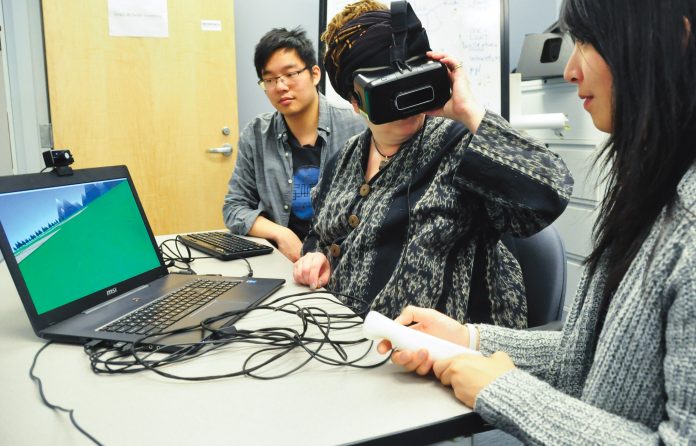
Now cancer-free, Lo has used his past experience as well as his studies in interactive arts and technology to give back to the community. Along with fellow SIAT grad Janice Ng, who also visited the hospital quite often due to a weak immune system, the two have developed Farmooo, a virtual reality video game for cancer patients.
Reflecting on the project, Ng said that she and Lo decided to take the course since they both wanted to make a game, but also wanted to create something for a good cause.
Farmooo — developed under the supervision of Dr. Diane Gromala, the director of SFU’s Pain Studies Lab — “is intended to help teen cancer patients get distracted during chemotherapy treatments. . . so [that] they will focus more on the activities inside the game, rather than the medical treatment,” Lo said in a statement to The Peak.
Inspired by popular online games such as Farmville and Gardening Mama, Lo and Ng were able to create this virtual reality game that helps cancer patients “by shifting their mindset into the game rather than their physical surroundings through immersion.
“[Farmooo] saturates patients’ minds with wonderful and cheerful sensations [so] that their mind is less prone to painful senses.”
“Simply, [Farmooo] saturates patients’ minds with wonderful and cheerful sensations [so] that their mind is less prone to painful senses,” Lo added.
Once they came up with the idea, the pair began looking for a supervisor who could assist them in the process. Opting to take a directed studies course landed them with Dr. Gromala, a professor who usually teaches at the graduate level. Dr. Gromala saw eagerness, intelligence, and motivation in both Lo and Ng. Lo recalled how “intimidating” it was to contact her to be their supervisor for the project. But for Dr. Gromala, taking them on was not a problem.
“I consider myself to have a rigorous screening process,” Dr. Gromala said with a laugh. “It was very obvious that they were talented, and had a lot of personal experience to bring to the project.”
Dr. Gromala said that Lo and Ng’s project comes at a special time, with technology continuing to advance each day. Further, she said that this is an excellent example of how SFU is able to engage students, and the community, through its research.
“This is a perfect way for them to give back to the community, to help patients benefit from what they are doing. It can also inspire patients, something like, ‘This game was made by someone who survived!’”
When asked about the future of Farmooo, Lo said he hopes that this project can help draw attention to virtual reality, beyond the scope of gaming or the entertainment industry. Ultimately, Lo would like to see VR being developed in the medical field. Ng echoed that sentiment, explaining that they hope to expand the game to adapt to different mediums and modes of interaction.
“We are currently working closely with BC Children’s Hospital to get our ethics proposal done, [and] eventually we see it being installed in the new hospital,” Ng said. If all of this goes well, Lo said that Farmooo could potentially be available for use by the end of this year.
In reflecting on his time at SFU and the excitement that has come with this project, Lo was thankful that SFU provided him and Ng with the opportunity to have their own “directed studies,” and urged other students to pursue their dreams and passions, and take risks.
“If Janice and I decided to just finish the normal courses and requirements and just graduate, we wouldn’t be having this conversation,” Lo said.
“Whether it is career choices, love choices, health choices. . . it is us who needs to work hard for it.”
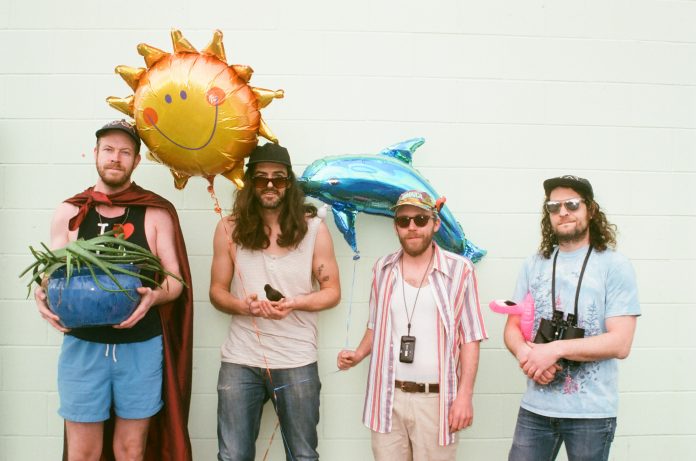
Get Music Wasted with Skyote and the rest of the super rad lineup!
It’s a Sunday night, less than three weeks before one of the biggest weekends for music in Vancouver — and the organizers of Music Waste are circled up in a living room, still working through the logistical headache of special event liquor licensing and scheduling conflicts.
“I’ll be at the Toast Collective to play on Saturday, but then I’m leaving to rep at Red Gate,” says Eleanor Wearing, this year’s festival director and drummer for local three-piece Gesture, as she works through the complications of being a Music Waste organizer as well as a participant.
There needs to be a Music Waste representative, or “rep,” present at each venue every night of the festival, and this has to work around which organizers are doing sound, who’s driving gear between venues, and who has their Serving it Right certification. Obviously a lot of hours go into organizing any event, and yet it’s still a surprising glimpse at how intricate the planning is behind a festival that prides itself on being the scrappy DIY underdog it is.
Everything but a fucking waste
Having made its debut in 1994, Music Waste initially started as a big ‘fuck you’ to New Music West, a heavily sponsored music festival taking place in Vancouver. Local artists, dissatisfied with how the festival was representing their music community, started the long-standing Music Waste in protest.
While New Music West is a thing of the past in this city, the independent festival is still going strong, and has even fostered an art festival, Art Waste, as well as the currently-on-hiatus Comedy Waste. Julie Colero, a fourth-year organizer who is also in charge of the festival’s finances, harkens back to the mischievous history of Music Waste: “Some themes prevail over the years, and one of the perennial favourites of Music Waste seems to be giving the middle finger [. . .] I’m not quite sure who we’re fighting against these days, but fuck ‘em.”
Tesstopia
Music Waste is a lot of things to a lot of people. For some, it presents itself as the anti-music festival, in a sea awash with $300+ weekend passes, filled to the brim with corporate-sponsored stages and more logos than a Super Bowl halftime show. Instead, a weekend Music Waste pass costs the same as a six-pack of decent beer — $15 — and every show for non-pass holders only costs $5.
“The passes are too small,” says Colero, half-jokingly. “There’s no space on there for logos.”
One of the reasons Music Waste has remained affordable all these years is the lack of overhead, as Colero explains. They pay their venue costs, their sound people, for a bit of promoting and printing, and give each of the bands a small amount for playing, but that’s it. Everyone involved with Music Waste, from the festival director to the door people at the venues, are volunteers — something Wearing believes is “fundamental” to the aesthetic of Music Waste.
“The grant conversation has been tossed around since I’ve been involved, and every few years it comes up, but the reason that it hasn’t happened is because Music Waste started as a ‘fuck you’ to that exact framework, that not every type of music or showcase has to be turned into this for-profit thing,” she says.
“I think that’s why people have always fought against it, because they think it would be selling out and going against what the point of Music Waste was created to do, which was not to make money; it was to showcase local talent. I think it’s kind of set in what it is.”
Hop on your bike and get wasted
While the inaugural Music Waste lasted a single night, the festival now spans four days (June 2–6) with multiple venues participating across Vancouver, though most are within biking or gallivanting distance of each other. This year’s lineup of over 70 bands, hand-picked by the organizers from over 200 submissions, features some acts that are well-established, with multiple Music Wastes already under their belts, but also bands who are playing their first festival ever. The lineup is a real grab bag when it comes to experience and genre, something Colero believes is part of Music Waste’s charm.
“It’s so cheap. If you see a terrible band, it doesn’t matter because you’re probably out somewhere you’ve never been before,” says Colero. “Maybe you’ve planned out everything you want to see, but usually things take you in a different direction, so there’s that element of surprise.
“It’s an adventure. It’s one weekend of the summer. Just get on your bike and go to some shows and take a chance and see what you can see.”
Adrian Teacher
And while the official Music Waste roster is limited, there exists a branch of the festival called Go Your Own Waste, where bands that weren’t chosen are encouraged to organize their own shows, which are then promoted through the festival and included under the weekend pass. Two years ago, a band that was rejected by Music Waste said they were going to host their own show, and even call it “Fuck Music Waste.”
The Go Your Own Waste shows are something guitarist Alie Lynch remembers fondly: “Years ago, there was a show called Bowl Your Own Waste at the bowling alley on Commercial, and it happened in the upstairs part, and you could bowl while Apollo Ghosts, Role Mach, and some other bands played. Adrian Teacher [of Apollo Ghosts] did this crazy move where he was singing and then ran down the alley, and grabbed a ball and bowled down every single lane while singing, then just ran back to the stage. I’ve never seen anything like that. It was the sickest stage move I’ve ever seen.”
An SFU alumni with a double-major in English and history, Lynch first played the festival in 2007 as one-quarter of the band Kidnap Kids, and has been a part of the lineup every year since then. This year she’s performing twice, as a member of both Supermoon and TV Ugly.
Aside from gaining exposure, Lynch feels like one of the benefits for bands playing Music Waste is its ability to bring the music community together, and help form relationships that might otherwise have gone unmade. “Sometimes if you play one genre of music, you’re just stuck the whole time playing with bands of that same genre, whereas Music Waste, they encourage a bit of mixing, especially when they have the big shows on the Thursday or Sunday where there’s a six-hour show with tons of different music. It encourages a lot more mingling between the different scenes.
“[The Vancouver music scene] can feel a little fragmented sometimes, because it does seem to happen that bands get lumped together, but Music Waste is nice because someone external is organizing it, so you’re not just hitting up your friends to set up shows.”
Don’t waste the local artists
But while much of Music Waste’s structure is routine by this point, one major departure this year is on June 2, the festival’s first night: Music Waste will be taking over Fortune Sound Club, including both floors and each of the venue’s side rooms, with a combination of music performances, art displays, and even one room set up for karaoke.
“Normally we start the festival smaller on Thursday, with the Art Waste group show in one place and a few shows elsewhere,” explains Wearing, “but this year it just made sense to try and do things in one place, and Fortune was super keen to be involved. It’ll be cool to have the group art show in the same place as the music show, so you get more people and it’s going to be this big kick-off night. It’s been a long time since everything’s been in one place for the Thursday.
Mark Mills
“We’re activating all the rooms, as Fortune has put it.”
At the helm of Music Waste spin-off Art Waste this year is an all-new four-person crew, after the previous duo of organizers retired last year. Lauren Ray, a recent graduate from Emily Carr University, is one of the four people in charge.
“There was a need for somebody, and I was keen, so it was just as simple as that,” Ray describes how she landed the role of co-organizer. “It’s been a real delight to work with my friends who’ve also never done Art Waste before. As Katayoon, the former organizer called us, we’re ‘fresh blood’ to this whole thing. I’ve been lucky enough to have my work in the festival before, but I now have an even greater appreciation for those who organize it. There are a million details, coordinating venues and artists is such a big responsibility, but I feel very stoked and honoured.”
Traditionally, every Art Waste has had an overarching theme for submissions, with this year’s being “Strange Magic,” though Ray assures me that the motif was more of a “nice suggestion, a little tap” than a requirement. This year’s submissions range from photographs and illustrations to sculptures and films, that Ray says will be mostly on display at Fortune on the Thursday, while the films will be on Friday at Red Gate.
Art Waste is also hosting a zine fair on the Saturday and Sunday for anyone — part of the festival or not — to come out and trade zines at, with the fairs happening at Lucky’s Comics and the Wise Hall, respectively.
Waste of time
Not everything has been high-flying fun for the festival: last month a local booker claimed via an Instagram post that people shouldn’t “go to Music Waste this year. The shows are not interesting” — included was a show poster that read “The people who organize Music Waste are so inept they could screw up a two-car funeral.”
Ray shares a similar experience, where someone on her Facebook feed posted a complaint about their friend’s piece not being accepted to Art Waste. But with a jump in the number of submissions from last year, the organizers had the difficulty of whittling the group down to a smaller, cohesive batch. Every year there are critics who launch their complaints against the festival, which Colero sees as unproductive more than anything else.
“The basic framework exists, but from year to year it’s a totally different group of people, with a different way of approaching things. [. . .] I guess what I hope is, when you have these naysayers, is they figure out that it doesn’t serve a great purpose to have a grudge against Music Waste, because it’s different every year.”
Next generation Wasters
Wearing’s earlier words of Music Waste being “set in what it is” ring loudly, as interviewee after interviewee confirms that, yes, the festival isn’t perfect, and there are general hiccups that take place every year, but the organizers are overall content with how the festival runs. The general pattern is fresh-faced volunteers join the hullabaloo, help steer the festival for a few years, and then pass the reins down to the next generation, in an ever-repeating cycle — and it’s a loop that Wearing’s happy to be a part of: “You get what you put into any community that you’re a part of, so something like Music Waste, if you support it and you’re excited about it, and you don’t take yourself too seriously, then it can be something really positive for the rest of the community.
Doppleganger
“It’s really easy to be critical of things happening in Vancouver, and people like to have conversations about all of the shitty things in this city. And while I think that’s sometimes true, Music Waste having existed for 22 years is a great testament to the fact that people have continued to care and put their time into it.
“As long as people continue to raise it up and support it, Music Waste will continue to exist. It’s just a perfect example of a community generating itself, and that’s a lot of time and work and hours for a lot of people. Not just the organizers, but the bands and anyone that’s trying to support it in any capacity, but I don’t think people would be doing it if they didn’t want to, so that’s really cool. I don’t think you find that a lot in the world, but I’m 23, what the fuck do I know? I’m literally a year older than this festival.”
And with that, the next generation of Music Wasters begin making their mark.
Eight hundred thousand YouTubers can’t be wrong — or can they?
The original 1984 Ghostbusters is not a classic. In fact, that’s what makes it so enjoyable. It’s got little to no character development, a poorly paced and thinly drawn plot, and fewer funny lines than you remember. It’s essentially an hour-and-a-half Saturday Night Live sketch, with all of the charm and irreverence that comes with that description.
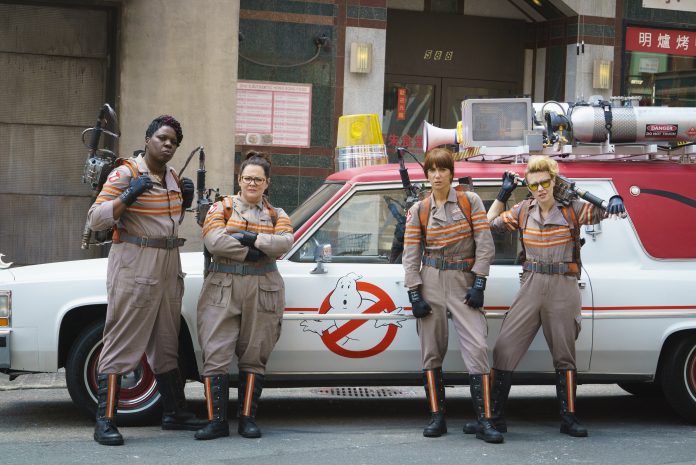
Which is why it’s weird that there’s been such an organised and vitriolic backlash to the film’s upcoming reboot. At time of publication the film’s first trailer boasts the most dislikes in YouTube trailer history, and several diehard fans have even suggested boycotting the film. Seriously. People hatethis movie, and they are dead-set on telling you so.
To an extent, I get why. I personally don’t think the trailers look great, and though that isn’t always a good measure of a film’s quality — one of my personal favourite films, Eternal Sunshine of the Spotless Mind, has one of the all-time worst trailers ever — I can see why people are angry that their favourite movie might be remade as a lazy box office bomb.
That makes sense. What doesn’t make sense is just how much people are against this film. The general reaction seems to be that it’s a disaster of Biblical proportions: human sacrifice, dogs and cats living together, mass hysteria.
So, when was the last time a crappy remake generated this much hatred and vitriol? The fanboys didn’t riot over last year’s Fantastic Four reboot, which The Atlantic called “a dull, sour, claustrophobic mess.” They didn’t riot over 2012’s Total Recall reboot, which Time named as “totally forgettable.” And they didn’t riot over 2013’s Oldboy reboot, which Screen Rant quipped was “second-fiddle in nearly every way to its South Korean inspiration.”
All of these films are remakes of beloved franchises with predominantly male fanbases. And yet Ghostbusters is the first to earn a trailer with a majority of dislikes.
By now, I think you know as well as I do why this film is getting the hate it’s getting. But just to clarify, let’s take stock of the top rated YouTube comments on the film’s first trailer. Here’s a personal favourite: “Let’s ruin an original movie and make all of the characters women JUST to please misandrist feminists! If that’s not sexist, I don’t know what is.”
Surprise! It’s misogyny on the Internet.
Of course, many of the fanboys — the ones who realise that it’s 2016 and it’s not ‘acceptable’ to be openly sexist anymore — will deny that their hatred has anything to do with the film’s female cast. Many of them might even believe that.
Some have even brought up annoyance with Leslie Jones’ character’s stereotypical mad black woman schtick, which would be a fair criticism if it were matched by similar organised outrage towards all of the otherracistbullshit Hollywood churns out every single year. (Spoiler: it isn’t.) And that ignores that the exuberance of Jones’ character seems to match most of the other characters she plays, as well as the tone of her standup.
I call bullshit on all of these excuses. There’s a difference between passively thinking a movie looks bad and actively making videos and sending tweets about how angry you are that it’s being made. The source of this anger is plain to see, even if those who spread it can’t see it for what it is: a fear of women dominating a historically male franchise.
Hating the new Ghostbusters trailer doesn’t automatically make you a sexist. But before you subject your friends to your next rant about how the movie is going to ruin the ‘spotless’ legacy of your favourite comedy masterpiece, stop and ask yourself: what are you really angry about?
By: Max James Hill, Courtney Miller, and Natalie Serafini
Chance the Rapper – Coloring Book
Chance the Rapper will take you to church with his third mixtape. Whereas 2013’s Acid Rap was full of youthful longing for Rugrats VHS tapes, Coloring Book tackles more mature themes — fatherhood, religion, identity — without skimping on any of Chance’s charm or contagious enthusiasm. It’s a hell of a victory lap.
Like all of Chance’s work, the album is a joy from start to finish. “No Problem” is so delightful and energetic you’ll almost forget it’s a song about threatening music producers with violence; on the other hand, Peter Pan tribute “Same Drugs” is as tender and thoughtful as the rapper’s ever been. Chance shows an impressive amount of range throughout the mixtape, while recurring themes of devotion to God and loved ones keeps everything grounded.
Less self-absorbed than Kanye, more accessible than Kendrick, and more inventive than Drake; with Coloring BookChance the Rapper might just steal the hip-hop crown while no one is looking. –MJH
Ariana Grande – Dangerous Woman
Ariana Grande returns with Dangerous Woman, the third release from the powerhouse singer. Her sound hasn’t changed much, it’s simply been refined and elevated to a higher standard of music. Many critics say that it’s her best album yet, and they’re right.
Her maturation and confidence fully shine through in lead single “Dangerous Woman.” The entire album seems to have been bumped up in sex appeal with some of her most sultry songs to date, such as “Everyday” and “Side to Side.” Her pop anthems and ‘90s R&B combine with other styles, like reggae in “Side to Side.” A host of other artists — Nicki Minaj, Macy Gray, Lil Wayne, and Future — are all featured on different tracks throughout.
Is it a musical masterpiece? No, but it’s easy to listen to and the vocals are always on point. Maybe soon Grande will embrace her full potential and give us the dynamite record her previous albums only allude to. –CM
Oddisee – The Odd Tape
Rapper and producer Oddisee takes an odd turn on his latest album: there are no vocals. No raps, no rhymes, no finely crafted lyrics. Instead, the album bleeds from one jazz-infused tune to another.
He hasn’t pulled a complete 180 musically, though. There is still a significant amount of hip-hop and soul influence on this record. If you’ve heard Oddisee’s previous works — including Alwasta and the addictive The Good Fight — you know that he’s long flirted with jazz, hip hop, and soul mixology.
Where The Good Fight was perfect get-up-and-go music for the day, The Odd Tape is a sexy set of tunes for the evening. “Right Side of the Bed” feels ready-made for cocktails and dimmed lights, while “Out at Night” is full of hip hop influences. Don’t think this is an album that bounces between styles, though. The album progresses organically: there are no jarring switches from jazz to hip-hop and back. Oddisee takes firm beats and marries them with complex melodies.
The Odd Tape is a must-listen for any jazz or hip hop aficionados. –NS
Once upon a time, a show called Once Upon a Time aired the finale to its fifth season on May 15, and there was mild celebration. Evil was defeated (mostly); the curse was broken (temporarily); the heroes learned to accept their shortcomings (again); and, even though the cast has doubled, it’s been another year since they’ve even mentioned your favourite character.
First airing in 2011, Once Upon a Time is a show which, for reasons confusing and irrelevant, brings all the fairy tale characters you knew and loved into the most mundane and magic-less land in existence: Maine.
Heck, where else can you see an episode with the Wolf (of Little Red Riding Hood) helping Dorothy (of The Wizard of Oz) to bring a potion ingredient back to Mulan (of Mulan) so she can help save Captain Hook (of Peter Pan) from Hades (of Hercules)? (Don’t believe me? Check out the episode description here.
So, if you already watch the show, or if you want to experience the Land of Uneven Storytelling, here is a drinking game to make the show easier to handle.
Fire up Netflix, pick an episode at random — or, if you’re feeling adventurous, start from the beginning — and drink until you forget everything that happened this season (just like the characters).
Drink when:
A character loses their memory.
A witch or fairy wears an outfit that draws attention to their cleavage.
The Evil Queen makes a fireball.
+1 if she doesn’t throw it.
The Evil Queen cries or feels guilty.
A heart is pulled out of someone’s chest.
+1 if it is not done by the Evil Queen.
Rumpelstiltskin offers to make a deal.
Rumpelstiltskin says “dearie.”
Rumpelstiltskin giggles.
Someone says “magic comes with a price.”
+1 if it is said by Rumpelstiltskin.
A character turns from evil to good.
+1 if it is Rumpelstiltskin.
A character turns from good to evil.
+1 if it is Rumpelstiltskin.
A portal is opened.
A new incurable/unblockable/unstoppable weapon is introduced.
+1 if it is cured/blocked/stopped a few episodes later.
+1 if it is cured/stopped by Rumpelstiltskin.
A new magical object is introduced.
If they don’t know what it does, but their first guess is exactly correct, Finish Your Drink.
An old magical object is reintroduced, but with new powers not previously mentioned.
A named character is killed.
A character is brought back to life.
+1 if the explanation takes less than a minute.
A new character is introduced.
+1 if they are a Disney character.
+1 if they are wearing their Disney costume.
+1 if they are white.
A character from one fairy tale is revealed to be another character in a different fairy tale.
Someone is cryptic when they should be direct.
A hero tells a villain too much information.
A character makes a huge leap in logic.
+1 if another character makes the same leap in the very next scene.
A magical character wants to use magic but can’t.
The characters consult the Once Upon a Time storybook.
They say the name of the town.
They make a Disney reference.
They make a Lost reference.
Finish your drink when:
A curse is cast.
A character is added to the Snow White/Prince Charming family tree.
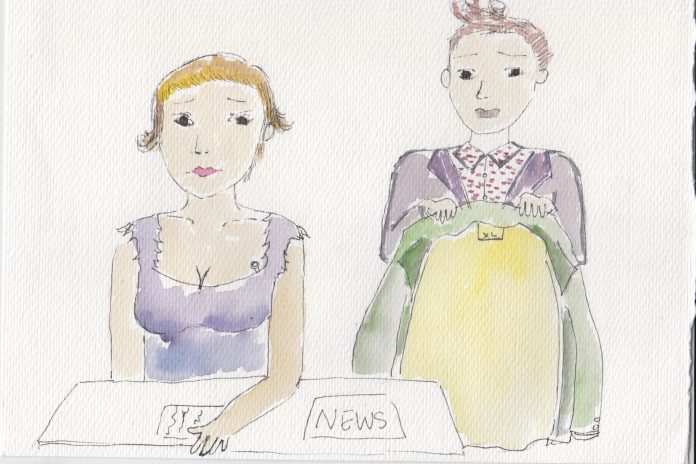
[dropcap]T[/dropcap]he morning weather report had never been so sexy — until recently. Last week, Liberté Chan, a meteorologist for KTLA in Los Angeles, was so harshly criticized by viewers for wearing a ‘cocktail’ dress on the morning weather report that her colleagues coerced her, while on the air, into putting on a cardigan to cover up.
The whole incident is a blatant example of sexism, and I want to both condemn those who have insulted Chan and applaud her on her maturity during the unfortunate incident.
Wearing a thinner-strapped, black beaded dress, slightly cut above the knee, Chan is simply conducting her morning report when an off-screen hand holds out a cardigan.
“What’s going on?” she asks before taking the cardigan. “You want me to put this on?”
Another hand then reaches in to help Chan put on the sweater. “We’re getting a lot of emails,” replies a male voice.
“What? Really? OK,” she says. “I look like a librarian now.”
And while you’re watching, shocked that this is happening, the man off-screen delivers a painfully sexist comment: “It’s a librarian who’s gone to a cocktail party.”
Within minutes, Twitter and other social media platforms rightfully exploded with anger at the incident.
Firstly, while the comment was probably intended to be innocent, it really demonstrates, on television, that blatant sexism endures in the workplace.
This incident outright discourages women from entering news broadcasting, and delivers the message that women must be very careful in displaying stimulating body parts — such as shoulders, arms, and knees — in a professional environment.
Secondly, I believe that KTLA viewers have no right to comment on the appropriateness of Chan’s outfit. The dress was not overly revealing in any way, and wasn’t distracting during her report. But even if the dress was inappropriate, KTLA viewers should have simply flipped the channel instead of outright insulting Chan via email.
Think about it: do you go up to every individual who you see wearing something you find distasteful, in order criticize them about it? No. You simply keep walking.
However, Chan displayed perfect humility in a response to the incident by saying that she is not insulted by her colleague’s comment; nor did she seem hurt by the overwhelming number of distasteful comments she has since received online. I believe that Chan’s modesty and positive response to the incident should be recognized and applauded.
While Chan didn’t deserve the comment, or the criticism from viewers, she acted very maturely. She serves as a role model to women everywhere on how to dismiss sexism and negativity in the workplace.
A previous editorial in The Peak outlined symptoms of worsening quality of education SFU students’ experience. As SFU students and members of TSSU’s contract committee, we’ve seen these symptoms progress despite our best efforts to reverse them. The driving force behind these symptoms is not TAs or professors, who both work long hours to fulfil SFU’s teaching and research mission. Rather, it is an austerity agenda implemented by a cadre of highly paid administrators who control and consume much of the university budget.
The Teaching Assistant system was borne of three needs: for a greater availability of workers able to perform the grunt labour of education; for graduate students to have a means of supporting themselves in their studies; and for an academic system that granted future academics opportunities to gain teaching experience prior to graduation.
Over time, as the university system has morphed, so have the job descriptions of TAs at SFU. Many students enrolled at SFU now spend more time talking to their TAs than their professors, with those TAs, who are students themselves, rarely being given the opportunity to be mentored in their teaching.
The purpose of the TA job as a training and support role for future academics is directly laid out in the Collective Agreement between SFU and TSSU (Article XIII F.2). Since learning to teach is part of the purpose of these jobs, teaching experience cannot be a qualification for TA positions.
While practice is an obvious means by which TAs can improve upon their teaching, TAs will become better teachers much faster with a proper mentorship and training program. To date, the only large-scale training of this nature SFU provides is the biannual TA/TM day — an event that would not even exist had TSSU members not given up monetary benefits to cover the cost.
It is particularly worrying that more and more departments at SFU have begun to deny TAs the opportunity to attend TA/TM day. At the bargaining table, TSSU has consistently tried to negotiate improved access to training and mentorship only to be told it would cost too much.
The effects of austerity on teaching at SFU can be quantified from data available through SFU’s Institutional Research and Planning department. Over the last five years, the number of full-time equivalent students at SFU has increased by five [percent], while the number of TA hours has decreased by two [percent]; combined, this equates to a seven [percent] cut.
This number does not reflect a decrease in the amount of time TAs spend teaching and marking compared to previous years, but instead a reduction in the hours allocated for TAs to plan their tutorials, meet their supervisors, attend lectures, or receive training — all of which reduces the ability of TAs to deliver quality education. The effects of these cuts are particularly concentrated in younger departments, such as the mechatronics engineering program in Surrey — here, TAs have 40 [percent] less time to do the same work.
While this response may paint a bleak picture of the teaching situation at SFU, these cuts could be reversed, and a true teaching mentorship program implemented, at a relatively small cost. TAs account for only $14 million of SFU’s$500 million budget, [SFU’s budget is listed as $488 for the 2015–16 fiscal year – ed.] or 2.8 percent. Offsetting the aforementioned 7 [percent] cut by increasing TA hours would come at the price of a mere 0.2 [percent] more.
Students have tremendous power to force change at their universities, yet are often reluctant to wield it. Your TAs, TMs and Sessional Instructors will continue to fight for a better SFU education; we hope many Peak readers will join us.
Sincerely,
Derek Sahota and Tania Arvanitidis, Teaching Support Staff Union (TSSU)