Home Blog Page 809

The Nix is a raw and real portrayal of life in America

0
Nathan Hill's debut novel does not read like one. It reads like one from a veteran author.

Reading good novels can be challenging. At points they may be tough to get through, even if they are still gripping and engaging. Those points eventually make the ending that much more meaningful and poignant. Such is the case with Nathan Hill’s The Nix.

Your average familial and political novel has all the hallmarks of real life. There are struggles with identity, mental illness, belonging, friendship, coming of age, and what it means to love and be loved by others. Yet, through these struggles, there is an underpinning of tragicomedy. In The Nix, characters Pwnage and Guy Periwinkle provide a sense of comic relief from the drama-filled lives of dual protagonists Faye and Samuel Andresen-Anderson, a mother and her son.

It is this mastery of understanding real life that makes Nathan Hill an author who is sure to go far in his career. His writing comes across with the casual grace of an astute observer of the human condition. This is seen most clearly with how familiar the events in the book feel. Although mainly set in Chicago in 1968 and 2011, there is a clear relation to the America of right now.

Though the novel is a complex political drama that spans decades, it is the journey of self-discovery and familial understanding that makes The Nix a powerful statement from this new writer. It doesn’t have a fairy tale ending, or a needlessly destructive one — though by definition the end is “happy,” it does not feel like a classic happy ending. Like real life, it is full of meaning yet lacks closure. The characters continue on past the stopping point of the novel; there will be more successes and failures in their lives, save for the parts of their lives that became entangled with the political end.

The first page of the book is a passage from Inspired Utterances of the Buddha: a famous tale that focuses on blind men describing an elephant to a king. Each man feels different parts of the animal, create different meanings from each part, and defend their descriptions to the end. The Nix is the elephant, and we as readers are the blind men grasping onto whatever meanings we draw from the novel’s 620 pages. This is what makes Hill a great author: he gave us an elephant, and we can take away whatever meaning we choose from it.

Build SFU stadium cancellation grows into controversy for the SFSS

4
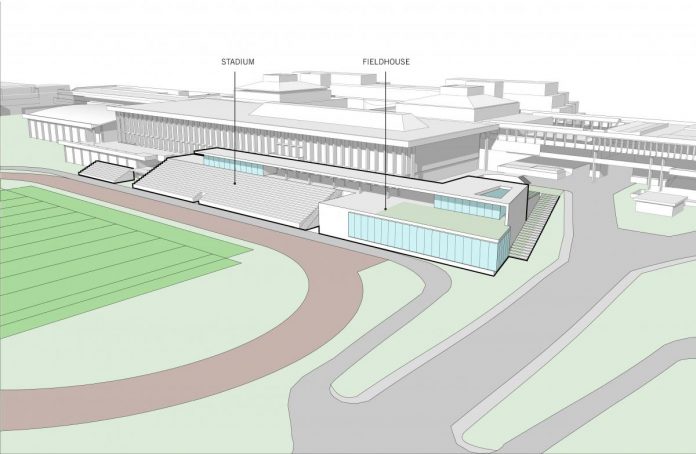
The blueprint released by Build SFU, previous to cancelling the stadium

What was originally a simple press release has become the biggest issue to date for this year’s Simon Fraser Student Society Board of Directors, and classes have only just begun.

Since the news broke of the Build SFU stadium being cancelled, student athletes have swarmed Simon Fraser Student Society (SFSS) board meetings, the transparency of the board of directors has been called into question, university officials have accused the SFSS of reporting misinformation, and calls have been made for Build SFU GM Marc Fontaine to be removed from the project.

All of this started with the decision at the August 11 board meeting to terminate the project.

Upon receiving the estimates on how much it was going to cost to build the stadium, the SFSS decided to scrap the project because it was deemed to be unfeasible. According to Arr Farah, VP university relations for the SFSS, the cost was going to come in at around $30 million.

“Our budget was only [$]10 million — that’s all students approved,” Farah told The Peak on August 16. “So it was safe to say we just couldn’t afford this project anymore.”

Ryan Yewchin, a former SFU wrestler and a part of the Student Athlete Advisory Committee (SAAC), brought forward his concerns on August 24 over the project’s cancellation and how it was being handled by the SFSS. He was told by SFSS executives that he “was quite frankly the only student who had expressed any displeasure.”

The next day, Yewchin and over 70 other student athletes and SAAC members showed up to the SFSS board meeting to protest this. They came with a letter from SAAC president Olivia Aguiar asking why the SFSS wasn’t willing to compromise and negotiate for the stadium before just outright cancelling it. Aguiar also accused the SFSS of “[using student athletes] as a fulcrum to pass the Build projects, to only take the stadium away.”

Yewchin and company are looking for both a solution to the stadium conundrum and answers as to how the situation became so dire so quickly. They have been left feeling unimpressed with the SFSS’s efforts.

“One of the frustrations with the last meeting was that the SFSS was able to say ‘That’s conjecture, that’s not true, you’ve been misinformed,’ even though they wouldn’t go on the record,” Yewchin said. “We don’t know what the SFSS has discussed, we don’t know what they know, we don’t know what they don’t know, so by far the biggest issue with this has been trying to get information from the SFSS to the membership.”

This theme was echoed in a letter from Tim Rahilly addressed to Larissa Chen on August 25. Rahilly, the associate VP students for SFU, told Chen that she and Farah had reported misinformation about the stadium project. He added that his offers of support had not been interpreted as he intended and, perhaps most importantly, that SFU still believes in building the stadium.

 “I can think of three or four decision points during the SUB [Student Union Building] discussion where the project could have failed. What saved that project was a mutual willingness to engage in problem solving,” Rahilly wrote. “Please know that the University remains committed to the Stadium portion of the project. I personally believe there is a way forward achieve [sic] the vision outlined when students voted on this.”

It isn’t just SAAC that is upset with the SFSS, as SFU Athletics are not pleased with how the situation is unfolding. Theresa Hanson, senior director of athletics and recreation at SFU, said in an interview with The Peak that she’s very disappointed with the SFSS’s decision.

“I’m actually really disappointed for our student athletes, for the student clubs, for the student population in general. I’m saddened by the decision that was made by the SFSS,” she said. “SFU students deserve better.”

She said that she was “not in the loop at all” with the project’s progress or lack thereof, and there were no warning signs that the stadium was going to be cancelled. She found out that it had been cancelled via Twitter, further fuelling the claims that the SFSS hasn’t been communicative during this entire process.

“I’m not convinced that the SFSS has been as upfront with all the information to the students, not just the student athletes. [The] decision came at a time in the summer when there were no students around,” she said. “[It is] really important for the SFSS to see that students actually care about this project.

“My understanding is that the university is very committed to wanting the stadium to happen, and to continue to make it happen. As I said earlier, I think our students and our community deserves better.”  

Despite campaign promises from board executives to be open and communicative about what’s happening with Build SFU, the Facebook and Twitter accounts for the project haven’t been used since January. Keeping students updated through these means were part of Farah’s campaign, and in the meeting, he was called out for failing to follow through.    

On top of that, much of the information from board meetings has been discussed during in-camera sessions, meaning there was no way for any outside parties to know what is happening.

The most recent meeting between SAAC and SFSS officials saw students call for the removal of Marc Fontaine, the current general manager of Build SFU who has been involved with the project since its inception.

Fontaine responded to this by saying, “If board wants to replace me, that is their decision. But I don’t feel that they should.” He said that the SFSS and Build SFU are both teams, and that the responsibility for any successes or failures doesn’t fall on one person.

However, Fontaine was criticized for failing to address the concerns of the student athletes, who asked repeatedly why the SFSS felt it was capable of taking on such a project. Fontaine’s response was that the SUB is coming along nicely, but many involved feel angered at the apparent prioritization of the SUB over the stadium.

It is too early to tell what exactly will happen with the stadium, and what the next steps will be moving forward. It could be that the stadium will be revived and altered to fit a smaller budget, or that the current project will be thrown away entirely and work will begin on plans for a completely new stadium.

As for right now, though, the impression from the SFSS is still that the stadium project will remain terminated. Students will have to wait and see if that decision is ultimately the final one.

With files from Nick Bondi.

Juno award winners Metalwood return after 14 years

0
After a 14-year hiatus Canadian electric jazz band Metalwood is returning to the music scene with Twenty.

Just when we thought they were gone for good, Canada’s premier electric jazz group Metalwood explodes from a gooey, melted mélange of bass-heavy funk, bubbling brass, and rambunctious drum medleys that defined their recordings at the turn of the 21st century.

The two-time Juno award-winning band is now back from a 14-year hiatus with Twenty — an album that pays homage to the 20 years it’s been since the band formed — through an all-new track list that’s pure caramel. Trickled with prominent hues of Weather Report and Miles Davis, Twenty is already being hailed as arguably the band’s best album.

In the midst of preparing for the album’s tour, trumpeter Brad Turner told The Peak how the band first came to be: one day in 1996 Turner expressed to bass player Chris Tarry that he wanted to experiment more on his Rhodes piano. After concluding they would form a band, the musicians reached out to Toronto saxophonist Mike Murley and New York-based drummer Ian Froman, who soon flew out to Vancouver to rehearse.

“We really just started the band to have a good time and play some music that’s — on the jazz spectrum — more electric. [. . .] Then we went into the studio, made a record, and we won a Juno!” said Turner. Their invigoration of improvisation-heavy tunes pioneered a new wave of groovy jazz, which quickly garnered an international fan base nourished with five succeeding albums.

Picking up from where they left off in 2003, Turner said that recording Twenty was all smooth sailing, apart from the fact that it can be difficult to physically bring the band members together to record, given their geographic locations and busy schedules. “We recorded out of a nice studio in Toronto,” Turner explained. “We had 11 tunes to learn in just one rehearsal, that we hadn’t played before. Whenever we have new music, rarely do we have the luxury of having three or four days ahead of the gig to rehearse — it’s basically one two-and-a-half-hour rehearsal.”

Nonetheless, Turner is proud of the album sculpted from this quick rehearsal, and said that he easily noticed how, over the past 14 years, his bandmates’ compositional writing has grown. “They’ve tried to push their compositions in a bit of a newer direction that sort of highlights some of the stuff that I, myself, have (also) been thinking about, musically.

“If you listen to some of our earlier stuff and compare it with our new album, you’ll notice that there are quite a few details that just weren’t there when [we] were younger.”

On a more personal note, Turner said that prominent jazz artists such as Wayne Shorter influenced his compositions in the new album. “It’s more the aesthetic of how he writes — strong melodies, interesting harmonies, things that sound relatively simple but if you try and play them, it’s not as easy as you might think.”

When asked if the band had plans to continue recording new albums regularly, Turner replied with, “It’s possible! Mandate number one is that we make sure we’re having fun while we’re doing this because that’s initially why we started it in the first place. But there really hasn’t been much discussion at all; we figured that if we could get away with doing one every 14 years then there’s no rush apparently.”

Reserve your live fix of Metalwood at Frankie’s Jazz Club in Vancouver, September 9–11.

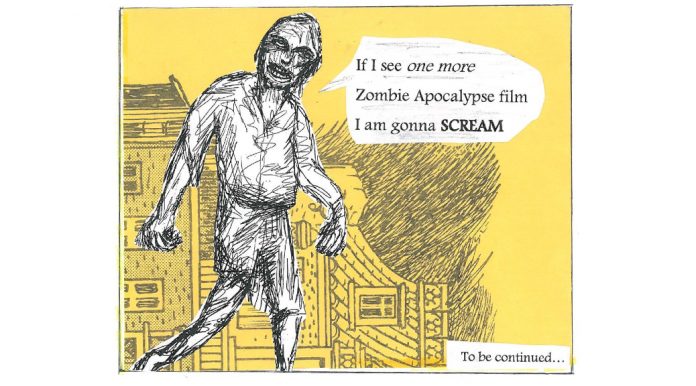
COMIC: Seagull Square-Zombie Haiku

0

SFU to build data research hub with funding of $8.35 million

0
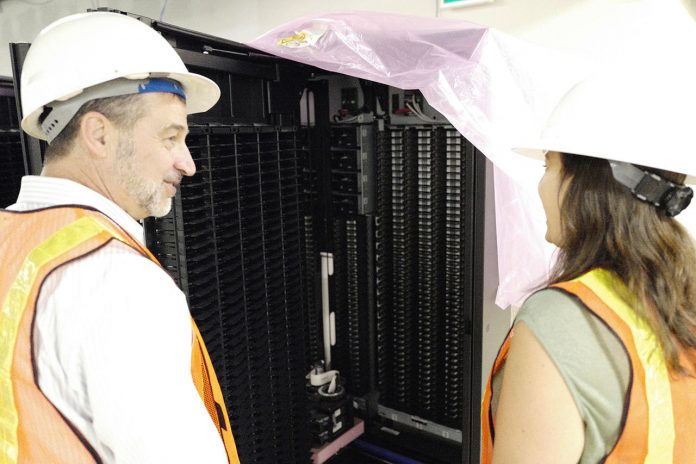
First looks at the new storage system with infrastructure services director Lorenzo Costantino and his colleague

The technology that we rely on as students could not exist without the innovation and data storage capacity required for big data projects. While computers may be faster, smaller, and more intelligent than ever, data storage is integral to expand the groundbreaking research that can come from high-powered, reliable computing technology.  

SFU has received over $8 million in funding from the Canada Foundation for Innovation (CFI), Major Science Initiatives program, and provincial research and development organizations. This funding will help to build a data storage hub.

This sponsorship means that major computer research projects can now be directly conducted right from SFU’s Burnaby campus. By 2017, according to SFU News, the project conducted by Compute Canada is intended to have approximately 62 petabytes (that’s 62 million gigabytes) of consistent data through four storage platforms from SFU, University of Victoria, University of Waterloo, and University of Toronto.

What is data storage and what does this mean for SFU research capabilities?

According to CFI, a program created by the Government of Canada in 1997, comprehensive data storage is an integral part of maintaining fundamental research and investment across sectors. While this funding is fairly recent, the foundation has invested roughly $360 million in Canada over the last 16 years. The capabilities of data research are abundant and allow for SFU, as one of Canada’s top research universities, to directly aid the growing number of researchers in the field. A report from Compute Canada confirmed that the number of advanced computer researchers has more than doubled in the last five years.

What research will SFU be capable of producing?  

Data research popularity has further garnered attention across media in its abilities to decipher particle physics’ greatest questions, such as the discovery of the particle Higgs boson in 2013 by CERN or continued discoveries in human genome testing. In 2015, Forbes released a list of the top 13 computer research topics, including artificial intelligence research, producing educational tools for students, and better understanding how organisms function through computational neurobiology — all of which rely on dependable computing infrastructure.

SFU isn’t smashing atoms together just yet, but this investment certainly supports the Big Data Initiative approved by the SFU Board of Governors in March. The initiative aims to expand and support big data research across the university.

Through the funding received from the CFI, the Ontario Research Fund, and the BC Knowledge Development Fund, reliable infrastructure is now being built to hold approximately 1,000 GPU devices, 25,000 CPU cores, and 15 million gigabytes of storage disks at SFU Burnaby. In plain terms, the new cyberinfrastructure has the storage of about 12,500 regular dual processor computers. That’s some big data.

Compute Canada’s involvement with the data storage investment at SFU will involve work with companies such as IBM, Scalar, and DDN to build the most up to date form of cyberinfrastructure storage. This funding also provides increased data security within Canada: Compute Canada’s chief technology officer, Dr. Greg Newby, said in a press release that data hubs like this one are “a great solution to address the data explosion we are currently experiencing in Canada and globally.”

With this project, SFU is taking another big step into the 21st century.

Everything you missed during summer vacation

0

The Summer semester is often much quieter than the Fall and Spring semesters. But if you decided to tune out while away on summer holidays, you missed out on some pretty important news stories.

For starters, the man elected to serve as the president for the Simon Fraser Student Society (SFSS) at the end of the Spring semester barely made it a month before resigning on June 3. Deepak Sharma failed to meet eligibility status, and the president seat has been vacant ever since.

Larissa Chen, VP student services, has been filling in as the interim president in the meantime. She has already said that she won’t be continuing on as president, which means that students will participate in a by-election to fill the position (and the vacant environment student representative position) that will take up the first four weeks of the Fall semester.

That hasn’t stopped the SFSS from making some big decisions, with the most recent being to scrap the stadium portion of Build SFU. Upon getting the estimates back and realizing they were three times as much as the allotted funds for the project, the SFSS decided the project wasn’t feasible and cancelled it within a week.

This move has not sat well with many student athletes, as well as the Student Athlete Advisory Committee (SAAC), and those students who are invested in the Build SFU project. The last board meeting of the semester was stormed by upset members of all these parties, and meetings have been held with the SFSS and SAAC to determine if the whole project will remain cancelled or if a stadium can still be salvaged.    

While those battles have been going on concerning the student side of the politics of SFU, the administration has been forced to deal with the alleged mishandling of multiple sexual assault accusations that took place on campus over the past school year.

After a column by Daphne Bramham appeared in The Vancouver Sun which broke the news, SFU administration went on the defensive, with SFU faculty calling for them to be held accountable for not being transparent throughout the accusations and investigations.

All of this took place while the campus is formulating its sexual violence and misconduct policy. They have held town halls and are actively encouraging feedback on their progress. Many concerned students and staff are waiting to see what this policy will end up becoming.  

It wasn’t all bad news, though. Two recent graduates made some big noise for creating a virtual reality game for cancer patients, inspired by their own experiences with health issues. SFU engineers built a bionic arm for the upcoming first-ever “cyborg Olympics.”

The school’s athletics department also hired Steve Hanson to be the next men’s basketball coach, on the heels of Virgil Hill’s resignation last spring.
Time will tell if the upcoming semester will be as noteworthy.

Women’s soccer ready to make this season count

0
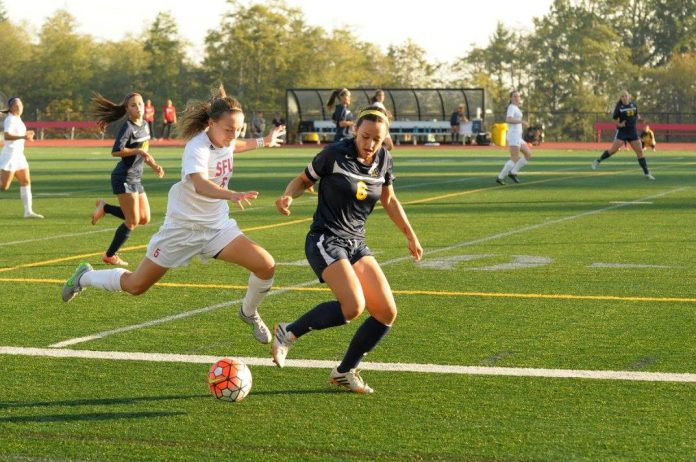
Christina Dickson is expected to score the goals, but will have more of a supporting cast this season

Last season the SFU women’s soccer team showed remarkable improvement. After ending the 2014 season 2–16, the team roared back with a 7–6–2 record in 2015.

However, it was how last season ended that has the team fired up for this year. The team needed a win in their final game against Western Oregon to finish in the top four, in order to qualify for the playoffs being held here at SFU; they ended up losing 2–1 in overtime.

“They don’t ever want to feel that way again,” said head coach Annie Hamel, referring to how last season ended. “I think that heartbreak fuels you for nine months, that you have to wait for that chance again, the chance to do better and to reach goals that you set out to reach.

“For the last nine months they’ve been preparing and thinking about that, and you don’t forget that type of pain. It’s been a good motivator, especially in the off season, and it’s shown because the kids have come out more prepared than ever before for preseason.”

“I actually think once [we] start believing in [our]selves [we] are going to be very difficult to stop.”

The Clan is a young team this year, as there is a total of 12 freshmen and sophomores to start the season. Despite this, Hamel is convinced that last year’s experience will help the team grow even more.

“Our freshmen last year weren’t true freshmen in the sense that they got minutes here and there,” she explained. “They were starters, so there’s a lot of experience there even though they’re young. Even the growth they’ve made in the spring is incredible. They’ve all improved so much from last year to this year.”

SFU will be led this year offensively by Christina Dickson, last year’s unanimous pick for GNAC Freshman of the Year. However, she’ll have more help this year with the addition of Emma Pringle, whom Hamel called a “true number nine,” and Monpreet Heer. Both players are expected to score goals and help compliment the offence.

Hamel and her team will not have an easy start to conference play. Their first home game after four on the road will be against Division II semifinalist and conference champion, Western Washington. Last season, SFU lost 9–0 over both games, including a 5–0 thrashing at home which saw them concede all five goals in the space of the first 15 minutes.

“The first area of business with that is not soccer, it’s mental,” said Hamel. “I think our team has given Western [Washington] a little too much respect in the past, and it’s almost like you don’t believe you’re going to win the game. The games that we play before that are going to serve confidence to see that we are a quality team, and they’re going to learn who they are as they lead up to that.

“At the end of the day there’s nothing they’re going to see with Western that they will not have seen the previous four games,” she continued. “It’s really a mental thing with Western. Don’t get me wrong, they’re a good side, but I actually think once [we] start believing in [our]selves [we] are going to be very difficult to stop.”

With over nine months of preparation and plenty of motivation, SFU will be looking to improve on a promising 2015 campaign.

Last season: 5th

Preseason prediction: 5th

University Briefs

0

[VANCOUVER] – Six sponsored student refugees will be attending UBC this fall, aided by a collaborative effort between UBC and the World University Service of Canada. This is not the first time that UBC has supported refugees: the school established its refugee program in the late 1970s.

UBC recently doubled the number of students it can accept into the program, in part to help student refugees from Syria. UBC’s student refugee coordinator, Akuechbeny Kuol, said the school will do its best to support the incoming refugees, offering free campus housing as well as additional help in finding employment.

With files from The Ubyssey

[OTTAWA] – A congregation of University of Ottawa students have rallied together after Ottawa police killed Abdirahman Abdi, a Somali man who was autistic. Protesters expressed their outrage against the alleged police brutality that took place back in July.

Leila Moumouni-Tchouassi and Faduma Wais, university students and members of the Ottawa Black Diaspora, led the event. Similar rallies calling for an end to anti-black violence were held across Canada. The Ottawa rally featured chants, and acknowledgments of the values of not only black lives, but also those of First Nations people.  

With files from The Fulcrum

[TORONTO] – Humber College has announced that it is the recipient of over $21 million in federal government funding. This funding — along with investments from the Province of Ontario and Humber College itself — will be used to support the school’s sustainability initiatives.

Over $15 million of the funding will be dedicated to the Centre of Technology and Innovation, which is focused in advancing energy efficiency. Another project will be the Integrated College Energy Master Plan, an attempt to drastically decrease the school’s energy use by 2034, and reduce greenhouse gas emissions.  

With files from CBC News

[BC] – Camosun College’s Gilbert Noussitou, chair of culinary arts, has created a program to educate students and revitalize Camosun’s edible garden, due to the vandalism and neglect the garden has faced.  

He intends to use signs to instruct the student body on how to use and properly maintain the edible garden. Noussitou hopes that the culinary students will be able to use the program every day by using herbs to create fresh menu items. He stressed the economic, health, and environmental benefits that come from eating and cultivating an edible garden.

With files from Nexus

Sports Briefs

0
Mamadi Camara had a goal an assist in a dominant win Thursday.

Men’s Soccer

The Clan won their first competitive game of the season Thursday, beating California State San Bernardino 3–0. SFU’s goals were scored by Pascal Schmidt, Adam Jones, and Mamadi Camara, who also added an assist. SFU was dominant defensively, not allowing the Coyotes a single shot on target the entire game. The team’s next game is against Notre Dame de Namur University in Bellingham, Washington.

Football

It’s now September, and the two SFU football alumni who were drafted into the CFL have taken quite different paths. Quinn Horton, drafted by the Calgary Stampeders 68th overall, signed for the Okanagan Sun of the BC football conference. Meanwhile, Michael Couture has had a promising start to his CFL career. The 10th overall pick has started all nine games on the offensive line for the 5–4 Winnipeg Blue Bombers.

Cross Country

Both men’s and women’s cross country have been ranked high in the annual GNAC preseason coaches poll. The men’s team was picked to finish second in the conference, behind six-time defending champions Alaska Anchorage. Meanwhile, the women have been picked to finish third in the conference. The team’s first meet is September 10, at the Ash Creek Invitational.

Board Shorts

0

Stadium cancellation

After hearing about the stadium cancellation, over 70 student athletes attended the SFSS board meeting to express their frustration. A letter from Student Athlete Advisory Committee president Olivia Aguiar was read by spokesperson for the group and football player Ante Litre. The letter criticized what Aguiar called the SFSS’s lack of transparency and information given to the SFU Athletics students leading up to their decision to cancel the project. See here for the latest stadium update.

SFSS staff update

Antonio Daling made his final announcement as student organizer for the SFSS. He has served the SFSS for 10 years. Adrienne Marino and Pierre Cassidy will be sharing his duties and office hours, and will become a point of contact for the Fall Kickoff.

SFSS approved support of community consultation to shape a new sexual violence policy

The Women’s Centre, Simon Fraser Public Interest Research Group, and the Gender, Sexuality, and Women’s Studies Student Union have organized a series of events. These events include discussion of sexual violence policy, sexual violence workshops, and film screenings for the upcoming semester. These talks will take place from September 13–28. The SFSS expressed their support of these events.

SFSS approved a budget up to $4,200 for Fall Kickoff Week

Project leads are also approved for the upcoming Fall Kickoff celebrations: Mudi Bwakura will be project lead, with Blossom Malhan as alternate.

Did you know you can attend SFU Board of Directors meetings? Join the SFSS September 9 at 2:30 p.m. in Forum Chambers for the latest SFSS discussion and news.