Home Blog Page 802

Shit misogynists say

0

“Mansplaining isn’t a real thing.”

Oh yes, please tell me all about how your personal experiences as a heterosexual, cisgender man are an accurate representation of how society treats everyone. Oops, I mean . . . I’m sorry I didn’t mean to interrupt your interruption as you clearly have the authority over this topic since you’re the all-knowing man. Please, continue.

“I don’t date feminists.”

Well, good for you, feminists probably don’t want to date you either. That’s probably why you made up and/or are perpetually stuck in the “friend zone.”

“Don’t be crazy.”

Unfortunately, I don’t have the sufficient funds to recreate Taylor Swift’s “Blank Space” music video. If I did, then you could call me crazy! Who cuts their cake like that? What a waste of perfectly good cake! Anything less than a full-blown reenactment of that music video probably isn’t crazy.

“Are you on your period or something?”

Maybe I am, punk.

Whatever you said is still offensive regardless of whether I may or may not be shedding copious amounts of blood and uterine lining which is pretty badass in itself.

“Feminazis.”

I don’t know about you, but I don’t see the connection between genocide and advocacy for social, political, and economic equality for women. Maybe you should put down your Mountain Dew and think before you take out your sexual frustration by belittling people on the Internet.

“We don’t need feminism because we already have equality!”

Please excuse me while I put my eyeballs back into their sockets — they fell out because I rolled them with too much vigour. Perhaps current events aren’t your thing (in which case I don’t know why you’re reading a newspaper), but the news will certainly inform you of myriad equality issues that people everywhere face daily.

“You’re not like those other girls.”

A half-assed compliment that belittles my peers? Come on. You don’t know me, maybe I am like those “other girls” and maybe, just maybe, I am far worse. Maybe I’ve committed floorcest, maybe I’ve slept with more people than I can count on my fingers, maybe I haven’t done anything and I just watch trashy rom-coms. But what difference does it make?

“She’s been around,” “She’s used goods,” “Like throwing a hot dog down a hallway,” or anything else that alludes to a woman’s personhood being determined by her alleged sexual history.

She can do what she wants with her body, and that has nothing to do with your silly hot dog toss. Why are you throwing them around? It seems very wasteful and inconsiderate to those walking in the hallway being subjected to your flying wieners.

“Women aren’t funny.”
Yeah, well, you know, that’s just, like, your opinion, man.”

Humour is subjective and so is your shitty opinion.


SFU writer in residence Anosh Irani launches his latest novel

0
Anosh Irani's latest novel explores catharsis, belonging to marginalized communities, and what identity is.

September 13 was SFU world literature’s writer in residence Anosh Irani’s book launch for The Parcel, hosted at the Vancouver Film School Café. It was a big turnout, with every seat in the café filled with close friends and family of Irani’s, as well as SFU staff and students.

Fellow BC-based author Aislinn Hunter gave a warm introduction for Irani, celebrating his newly completed novel. She sang Irani’s praises, noting that he as a novelist is a storyteller, and in being a storyteller Irani becomes a guide who takes the reader to a new world.

The world of The Parcel is the red-light district in Bombay, which Irani spent his childhood across from and which he returned to as an adult. The Parcel follows the story of a retired transgender sex worker. As Hunter said, “It’s not always an easy book to read,” as it deals with the brutal realities of sex trafficking and poverty in India.

Despite the dark subject matter, Irani still manages to wield prose that Hunter called “honey in the mouth.” Hunter, amongst other writers and critics are calling this a very important book; one that gives readers a special insight and reveals what a community needs to hear as Irani bridges the gap between worlds with The Parcel. “The world is a village,” said Hunter, and it is as important as ever to share the history of our diversity.

Following Hunter’s introduction, Irani took the stage and thanked his supporters, along with the teachers who encouraged him along the way. Irani has a new appreciation for his teachers, given that he’s now a teacher himself. “God help them,” he said with a laugh.

Irani then delved into his novel, explaining how he was searching for an entry point to begin his writing. He’d found the first point of entry when he interviewed a sex worker in a Bombay brothel, telling her that he had grown up not far from where she was now. She had looked at him, stunned, and said, “Do you think I get out of this place?”

This exchange jarred Irani, bringing him to the realization that we are often so consumed by our own realities that we forget the realities of others.

It was at this point in the evening that Irani treated the audience to a reading of an excerpt of The Parcel, where his vibrant prose filled the air and transported us to a place thousands of miles away. There is such clarity to the setting and to the protagonist, Madhu, that you cannot help but envision them right before your very eyes.  

Carefully crafted, The Parcel was an emotional odyssey for Irani, and to be finished this masterwork has left him with a strange feeling. Asked how he feels about his novel finally being finished, Irani told the audience, “I don’t know how I feel yet, it’s too soon.” Having put his heart and soul into this work, it’s difficult to imagine the surreal feeling that envelops an artist after their work has been completed.  

As for Irani’s future plans, he said that he will return his focus to his upcoming play Men in White, which debuts February 2017 at the Arts Club Theatre Company. As an established playwright and novelist, Irani enjoys alternating between the two artistic forms, because it gives him a refreshed mindset as he delves back into a familiar style.

Having spent six years working on The Parcel, it is time for Anosh Irani to return to the theatre.

SFU’s Academic Women discuss sexual violence policies

0

In light of recent controversies surrounding sexual assault, SFU is working to develop better sexual assault policies.

Although the administration has been criticized for its alleged lack of response to sexual assault allegations, organizations at the school have been uniting to work towards this common goal. On September 13, SFU’s Academic Women organized a talk with the Ending Violence Association (EVA) to discuss how to create a proactive way to deal with sexual assault on campus.

The university has previously held a series of Town Halls to work on this goal, complete with an advisory committee.

The main speaker, Tracey Porteous, is the executive director of EVA BC. Porteous has been fighting to end gender-based violence for decades.

In her talk, Porteous argued that victims of sexual violence have the right to be outraged, as reports have shown that assaults are almost always premeditated.

When creating effective sexual assault policies, Porteous stressed the need for university leadership

When asked what sparked her passion for change on this issue, Porteous revealed that she too is a survivor of sexual assault.

EVA has been working with schools and groups all over the province to develop action plans to prevent sexual assault, as well as the policies and resources to effectively deal with the aftermath.

When creating effective sexual assault policies, Porteous stressed the need for unwavering leadership which, she argued, SFU administration has not provided.

SFU’s sexual assault policy reads: “All forms of sexual violence jeopardize the mental, physical, and emotional well-being of our students and our employees, as well as the safety of the community. Sexual violence violates our institutional values, in particular, the right of all individuals to be treated with dignity and respect. SFU will not condone or tolerate any form of sexual violence.”

Porteous argued that all members of the SFU community should be involved in the making of these policies, including Residence Life coordinators, all ResLife and Housing employees, as well as professors, security employees, and university president Andrew Petter. She recommended that “all Simon Fraser employees be cross-sector trained in responding to assault.” Porteous stated that it is “common to lack the literacy or language” when someone discloses an assault.

The EVA offers educational seminars to schools and organizations regarding consent, giving students the tools to stand up for each other and recognize when a situation is dangerous. 

Porteous stressed that just one of these solutions isn’t enough. It must be a comprehensive compilation of education, prevention, and leadership. She noted that SFU currently has the ear of its students and staff on this issue in a way it hasn’t ever before.

James Nizam’s work puts movement at the fore

0
James Nizam's gallery show Ascensions of Time makes photographs move despite their static nature. you can see Frieze at the BAF Gallery until October 22.

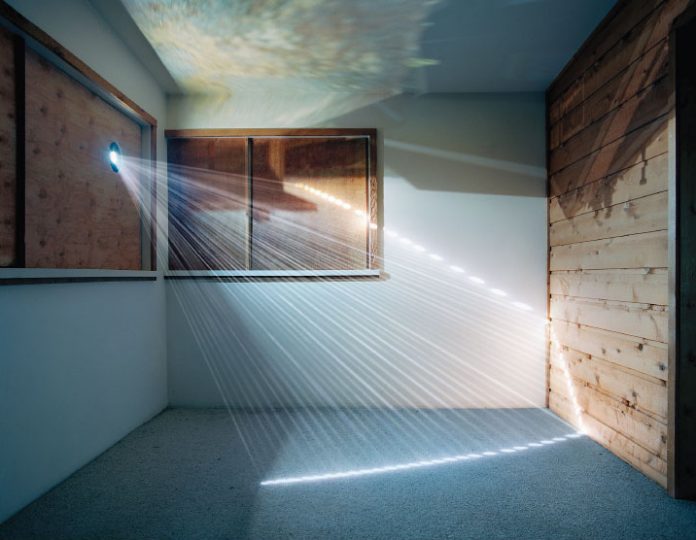
James Nizam’s Ascensions of Time at the Burrard Arts Foundation Gallery is both superficially and conceptually engaging. By subverting our expectations in his photography, Nizam expands our conception of what the medium can convey.

Photography is normally seen as an artistic medium that uses light to capture an image of some space in a single moment. With this view, physical space is all that a photo captures; it cannot capture time in the same way that a film can. And so, maybe film can be said to have more expressive power than photography.

I personally have always preferred film to photography, in part because of the temporal limitation that photography has. In a film, you get a series of rapid frames that give the effect of elapsed time — or the movement of light. In a photo you have a single frame that can only capture a single moment with static light. But Nizam aims to question this distinction by showing us that time, through physical and metaphorical means, can be shown in a photograph.

He chooses architecture as the backdrop for his project. And what better subject than architecture, an archetypical symbol of physicality and space. But his photos aren’t straightforward pictures of rooms and buildings.

By projecting upside-down images of an apartment building on the walls and ceilings of a room, or taking the negative of a negative of a photo, Nizam disorients the viewer, even as the subject of the image is common and recognizable. In warping these images, he demonstrates that a photo of a room can be more than just a photo of a room.

Each photo looks highly constructed and aware of itself as being a photo. Of course it doesn’t seem natural for pictures of houses to be projected onto the walls of a room, and the projections of light are so deliberately positioned. Things like the juxtaposition of the outside of a house on the inside of a house feel unreal, and in a single image we can be inside and outside all at the same time.

In this way Nizam captures multiple moments in a single shot — film gets this for free.  But in film, movement in a “shot” is only an illusion. A film shot is really discrete photographs quickly flashing before our eyes. It is only the very small changes from frame to frame that create the appearance of continuity. But still, each individual frame is a static photograph.

It is only the succession of multiple frames that makes film dynamic — and what Nizam manages to do is make a single frame dynamic.

Think of a photo as an imprint or copy of the light in a room at a given moment. By projecting light onto the walls of a room, Nizam changes the composition of light in the room. Thus, in a sense, he changes the physical architecture of the room. But the image that is projected onto the walls is itself a photograph of light taken at an earlier time.

By projecting the light from this image onto the walls of the room, Nizam embeds the light from the earlier physical space into the light of the current physical space. The result is a single frame of physical space representing physical space from more than one moment. Thus through metaphorical means, Nizam subverts the common conception that a photograph can only capture a single moment in time. 

Yours Truly is taking the K-Pop dance world by storm

0
Dance group Yours Truly has found fame on YouTube, but wouldn’t be where they are without SFU clubs.

Yours Truly is a five-piece team from the Lower Mainland with a deep love for dance. The core group consists of Kim, Theo, Stephanie, Kiki, and Frances. Together they take part in dance competitions and events, as well as covering dance choreographies from popular K-Pop songs and uploading them to YouTube. They have amassed over 7,000 followers on YouTube, with views rising over 1.5 million. The Peak reached out to the girls from SFU’s Hip-Hop Club.

The Peak: How did Yours Truly meet?

Theo: Steph and I met each other in [a] K-Pop dance class back in 2009, while the rest of us met each other through the SFU Hip-Hop Club. Frances attended our friend’s dance studio and was recruited for one of our covers. We ended up bringing her in for more covers and she became a permanent member!

Kim: We had started out as two friends who wanted to learn K-Pop dances for fun. We figured it would be fun to film what we learned and share our love for K-Pop with the rest of the Internet!

The Peak: Why K-Pop?

Theo: When it comes to K-Pop, the performances are always very inspiring to us because the idols are all multitalented. They can sing, dance, and even produce their own music and choreograph their own dances. Majority of these idols have been training since they were young and their hard work definitely pays off. We love not only K-Pop but we also find Korean culture very interesting. We love the fashion, food, and history of Korea.

The Peak: What are the competitions like for you?

Frances: For our competition in LA at KCON, it didn’t really feel like a competition because we were practicing on our usual schedule. I didn’t feel too pressured, because I still wanted to dance and enjoyed learning and practicing our sets. It wasn’t until it got closer to the date when I felt I had to really work on details like facial expressions and stamina, and then it felt more like a competition.

The Peak: What are some of your favourite dancers/groups and artists?

Kiki: I come from a dance background and started getting into K-Pop because of the fun dances which accompanied the songs. I fell in love with a boy group called SHINee back in 2010 because their choreographer at the time was my favourite dancer, Rino Nakasone. The fact that she got to work with SHINee made them my favourite K-Pop group as they made her choreography look so good!

As for Yours Truly as a team, we tend to gravitate towards complicated dances from K-Pop groups because we can showcase our ability this way. Some of our members are hardcore BTS A.R.M.Y. [fanclub members] and we make sure that we do a BTS cover every time a new single comes out.

The Peak: What is the group’s goal?

Stephanie: It started out just for fun, but now that we have grown so much, it’s motivated us to aim higher. This year we joined a few competitions, including the KBS K-Pop World Festival and managed to get second in the US Finals. We’re proud of what we’ve done, but next year we’re aiming for first so we can compete in the World Finals in Korea. Beyond that, we’re simply enjoying continuously growing our channel and producing bigger and better videos.


If you are interested in finding out more about Yours Truly, check out their YouTube, Facebook, and Patreon pages.

For anyone interested in checking out the SFU Hip-Hop Club, meetings are held every Tuesday, starting September 20 from 7 to 9 p.m in front of Bubble World in MBC. Single drop-in classes are $2, and entry for the whole semester is $10.

COMIC: Peers

0

Sports Briefs

0
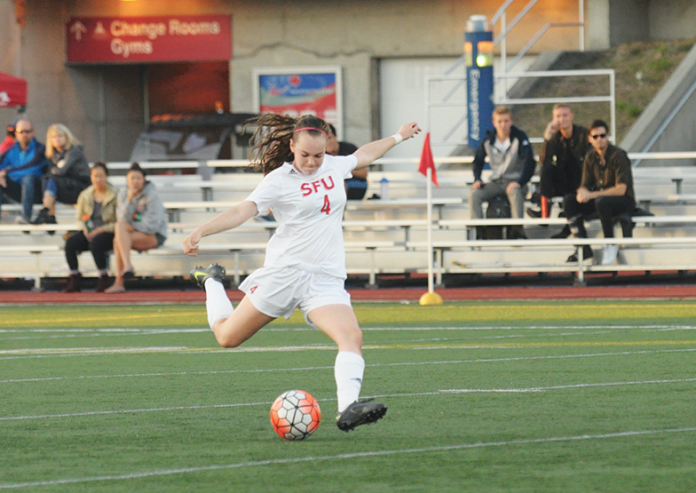
Women's soccer is now 2-1-1 on the season.

Men’s Soccer

SFU won 2–1 over BYU-Hawaii Thursday night. Michael North got the last-minute winner in the 89th minute. This came four minutes after BYU tied the score at one, and that goal was the first conceded by SFU in non-conference play. The win keeps the Clan undefeated on the year. The team’s first home game is against Seattle Pacific on Thursday.

Women’s Soccer

On Wednesday, the Clan lost 4–0 to Concordia University Irvine. The Eagles had 10 shots on goal in the contest, compared to only two for SFU. The loss is the first for the team this season. Their first home game is against Western Washington on Saturday.

Track and Field

SFU has announced that Bradley Graham will be the new throws coach after Garrett Collier’s departure. Graham previously founded and led the Dynamo Throwers Club, based out of Maple Ridge.

With files from SFU Athletics

University nap rooms are telling of an overburdened student population

1

[dropcap]I[/dropcap] am way too tired to listen to some BS argument for why SFU needs a napping room. With universities looking at safe napping spaces as a real solution for student exhaustion, we’re left asking ourselves why the fuck are we all this tired to begin with?

BCIT is dreaming of a better tomorrow

BCIT’s sleep pods have caused a huge discussion on the sleeping habits of students. Two isolated pods in the campus library are available to BCIT students who wish to take a nap without fear of being disturbed or having their stuff stolen.screen-shot-2016-09-16-at-5-11-55-pm

For BCIT, a school whose full-time programs generally require the student’s presence for 25–35 hours a week — not to mention lots of homework and self-study time — a safe place for students to catch some Z’s between study groups makes a lot of sense. It’s not always the best decision to transit home for an hour’s rest when you could just take a nap at school instead and use your time more efficiently.

At BCIT, the pods are in the library for human and video surveillance to keep occupancy to one person and to try to make them as safe as possible. There aren’t a lot of spaces around campus that are both quiet and have heavy traffic to help with safety.

While there’s buzz about these two pods at BCIT, we have no real room for pods here at SFU.

Rock-a-bye students on the mountain top

The question on many minds at SFU is this: would sleep pods be a good idea for any of the SFU campuses?

The short answer is no. SFU is not a campus that needs safe napping spaces.

With the pods clocking in at several thousand dollars, it’s a pretty serious investment that, frankly, shouldn’t be necessary. That’s not to say that we at SFU don’t have long commutes or packed schedules with lots of homework — we do. But the main reason that sleep pods aren’t a good idea, and in the end won’t really solve anything for us, because sleep pods treat the symptoms, not the cause.

There is currently space being allocated in the new Student Union Building (SUB) for students to catch some afternoon snooze. The napping room — which will be quiet, with soft spaces to sleep, and have lockers to protect personal items — will mitigate any need for a sleeping pod. But even a napping room does not make sense for SFU students.

Students shouldn’t have to take naps in between classes just to make it through the day. Our exhaustion has reached absurd levels. And building a napping room is proof of that. The National Sleep Foundation (USA) reports that young adults aged 18-25 should be sleeping seven to nine hours a night. But I don’t think any of us can confidently say that we’re getting that much rest at night. But students aren’t sleeping less by choice, more often than not students deprive themselves of sleep because they have no other choice.

Bachelor of over-exhaustion

All details aside, we have to ask ourselves: why are students so exhausted at school?

Sleep pods, nap areas, and any other sleeping place shouldn’t be a necessary academic tool. Students shouldn’t be so overworked that they need to sleep between classes or spend nights on campus in order to fulfill a course syllabus.screen-shot-2016-09-16-at-5-11-49-pm

The conversation should instead be about the overuse of homework. I’m talking about readings and question sets that we are all supposed to do, but for which we can’t find the time. Of course, practice helps, but at a certain point the cost-benefit ratio is no longer in favour of homework.

It is rare to find a student these days who is only a student, who doesn’t have a job or other obligations eating away at their time. When assignments are handed out and the course schedule is reviewed in the first class, it’s easy to believe that professors don’t understand that or don’t realize that many students take more than one class.

According to the Government of Canada, in 2012–13, students in Canada had $2.6 billion in student loans. And those loans add up quickly. The Canadian Federation of Students reports that the Canada Student Loan Program is now owed $19 billion, and the number is growing by approximately $1 million more every day. CTV also estimates that the average individual student’s debt is more than $25,000.

Young Canadians are enrolling in universities and other post-secondary institutions with the hope that they will leave better off than when they started — and 20 years ago, that was the case. But it’s becoming clearer that young Canadians are being bogged down with so  much student debt, financial stability seems unattainable.

In 2011’s Master Report, the Canadian University Survey Consortium found that more than 50 percent of students had a job during their studies, working an average of 18 hours per week.

OK, let’s work with this. At 18 hours a week, on average, and a hypothetical full course load of 15 credits, we’re at 33 hours a week. Plus, SFU recommends that you study three hours per credit hour attempted per week. That’s another 45 hours. We’re up to 78 hours a week, and that doesn’t even include all the extra time you have to put in when papers and projects (especially the ever-dreaded group project) come around.screen-shot-2016-09-16-at-5-12-13-pm

Seventy-eight hours! That’s the equivalent of working two full-time jobs, and doesn’t factor in eating time, which is approximately an hour a day (and that doesn’t include cooking time). Eighty-five hours. Not to mention many students also hold down real jobs to pay their tuition. And we can’t forget about transit time — SFU says that each student spends about 45 minutes on transit. Multiply this by two to get to school and back, and that clocks in at roughly 1.5 hours. Five days a week, that’s another 7.5 hours. The total is now up to 92.5 hours.

With long commutes being an issue for SFU students, we then have to look at early start times as another problem. It’s hard enough to get into the classes you need to graduate, none of us are in a position to be picky about the class start time. While 8:30 a.m. classes might be doable for people living on or near campus, anyone commuting from outside of burnaby will have to wake up extremely early to make it up the mountain during morning rush hour.

You get the picture, I’m sure. A napping room won’t fix the fact that we’re working two jobs and taking out loans to pay for a degree that won’t get us a real job anyway.

screen-shot-2016-09-16-at-5-12-06-pmThe point is, you run out of time in a hurry. I’m an English student. I often have 20 novels — or the text equivalent — to read in a semester, in addition to writing papers, working two part-time jobs, and contributing to this lovely publication. Let me tell you, it’s a struggle to find time to do all that and sleep an appropriate amount of time every night. More often than not, sleep is sacrificed. Of course, others don’t read the readings or even buy the textbooks, choosing instead to get extra sleep time.

So while it would be nice to have a more secure location to sleep in than, say, the sixth floor of Bennett or around the AQ. It’d be like putting a bandage on a stab wound and saying you’re healed.


[poll id=”2″]

Drop your toxic friends and never look back

0

[dropcap]U[/dropcap]niversity is a time for higher learning, to develop the skills we’ll need after graduation to live our best possible lives. Or something to that effect.
This is the time in our lives where we are making the friendships that’ll last for decades, after we pay way too much for regalia and receive those pieces of paper that we’ll frame and then never look at again. This is also the time where we should be learning how to cultivate our friend group. We need to learn how to cull the toxic friends from our lives.

But what is a toxic friend?

A toxic friend is someone with whom you interact on a continual basis and who may possess any number of the following traits: being insulting, manipulative, negative, inconsiderate, insincere, envious, possessive, unsupportive, selfish, unavailable, or rude.

They may act a way that seems kind and genuine when you interact one-on-one, and then become almost an entirely different person when in a group setting. These friends are most dangerous because you feel guilty for thinking badly about them in group situations, since you know the “real” version of your friend.

Toxic friends are the ones you keep around because they’re not that bad. They may make you feel taken-for-granted, or used, or like you’re just kind of a filler for their afternoon, but everyone needs friends somewhere between acquaintances and best-friends-forever.

We’re all very quick to judge potential significant others — we ask ourselves whether or not they deserve us and if we deserve them. Yet we are shockingly lax about who makes the cut into our friend circles. We spend mountains of time interacting with our friends. They influence us and help shape the way that we as people grow and mature. We need to hold them to a higher standard.

I have lost track of how many times my friends have called me late at night, usually in tears, because of their other friends. Please, if any of this sounds familiar, really think about dropping these ticking time bombs from your life before they blow up in your face.

Of course, sometimes things happen in life and we fuck up in our friendships. But if stuff like the examples below happen to you more than once or twice with a certain friend, it’s quite possible that they’re toxic.

“I’ve been feeling like there’s something off between us, but he says I’m imagining things. Then when I call him on how he’s been avoiding me for the past few weeks, he gets all defensive and tells me he’s only doing that because I won’t let it go that something’s amiss. Maybe he’s right? Maybe I’m blowing this all out of proportion. I feel so stupid.”

No, no, no. He does not get to tell you how you feel, or that what you’re feeling is invalid just because he’s too self-centred to realize that he’s being insensitive and dismissive of you

“I offered to drive my friend around once because she was going to be late for work and she needed to stop at a store on the way, and now it seems like almost every day she expects to be there to drive her around. I don’t want to stop helping her out, but like — I have things I need to do, too, and she’s stopped saying thank you or really even talking to me at all aside to ask when I’ll be at her house.

“I’ve tried to bring it up, but then she gets mad saying that I don’t have to help her if I don’t want to, that she thought I was a better person than her other friends. So I feel like I need to keep doing it for her even though I don’t want to.”

Get out. She is using you and then manipulating you when you try to stand up for yourself.

If you don’t feel good with someone you call a friend, or you keep questioning if they are your friend  at all, then it’s a good idea to reevaluate the relationship.

If you feel comfortable talking to them about your feelings, do so. If you don’t, then they probably aren’t your friend. If they’re open to the conversation, but shut you down, make you feel guilty, or make you feel like your feelings are wrong, then there won’t be much improvement.
Friends are the only family we’ll ever get to choose. So let’s be more selective of who we bring into our inner circles.

If they aren’t boosting you up, and aren’t even trying, then you need to cut them out of your life. Otherwise, the cycle of negativity will never end.

World News Beat

0

INDIA – Paralympian ranked third in the world
Devendra Jhajharia broke his own record in the Paralympic Games in Rio. The paralympian, husband, and father of two children is now ranked third in the world for the men’s javelin throw. Not only did he beat his own record, but he also won India’s second gold medal in the Paralympic Games.

With files from BBC News

UNITED KINGDOM – It won’t be easy for Britons get into the EU

Following Britain’s vote to exit the EU, Brexit negotiations have begun to show what this departure might look like. Reports have indicated that France and Germany are in support of an arrangement similar to the Electronic System for Travel Authorization (ESTA) in the United States, which requires a $14-visa for those wishing to travel to and from the US. Later this year, the European Commission will release its report on the “EU travel information and authorization system” (Etias), similar to ESTA. As Britain will no longer be part of the EU, experts suggest that Britons may require a similar visa to travel within the Schengen zone, along with their passports, saying goodbye to free travel across European borders.

With files from The Guardian


NEW ZEALAND – Firefighters perform haka at 9/11 ceremony

Firefighters from New Zealand attended the Memorial Firefighter Stair Climb in honour of over 300 firefighters who perished in the tragic 9/11 attack, and the 57 New Zealand firefighters who have died on duty. This year marks the 15th anniversary since the attack in 2001. At the top of the Stair Climb, the firefighters performed the traditional Maori dance, descended from the Indigenous Polynesian people of New Zealand. The powerful chant was often performed in times of war, and is now typically seen at ceremonies, sporting matches, and weddings.

With files from Yahoo New Zealand and Tourism News Zealand