Home Blog Page 801

Clan drops home opener 56–24

0
The Clan are now 0-3 to start the 2016 season.

Hope. It was the thing missing in the two previous games in which the SFU football team was blown out by a combined score of 115–10.

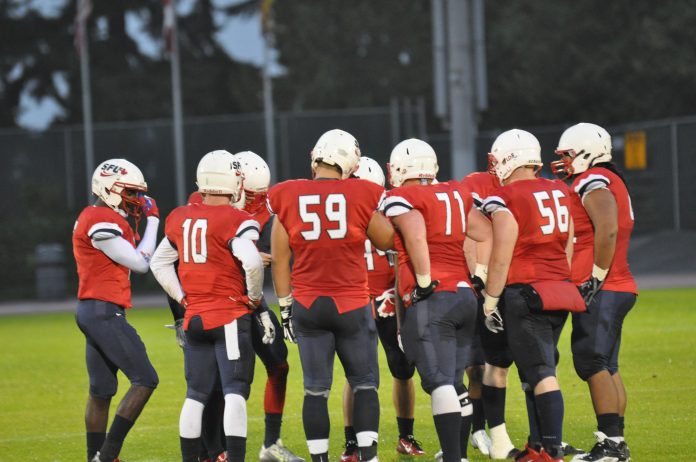
While far from a victory, the Clan’s 56–24 loss on September 17 to the Humboldt State University Lumberjacks showed more promise than the final scoresheet displays. The team came back from a disastrous first half which saw them down 35–3, managing a 21–21 tie in second half scoring.

“We were finally able to put some points on the board and show what our defence can do when we give them a rest,” said head coach Kelly Bates. “But when we don’t give them a rest, like in the first half, they’re on the field so long and it’s tough to stop the offence.”

A large part of the Clan’s hope beginning this semester came in the form of running back Jalen Jana, a transfer this offseason from Cheyney University where he redshirted and played his freshman season. Normally number two on the depth chart, he was the go-to guy as Ante Litre did not play due to injury. With 262 rushing yards, he made a solid case for the future of SFU’s offence.

“You can see in the second half, we really moved the ball well, the offensive line blocked great, and there were some big holes,” said Jana after the game, humbly giving the offensive line credit for his performance.

“Depth is an issue, but the guys out front there are working hard, blocking hard, and playing well, so when their confidence is up, I’ve just got to read it, and it makes my job really easy.”

Jana’s talents weren’t just limited to the running game. In a surprising play call, he was lined up as quarterback not once, but twice. The second time, on a third down on a drive at the beginning of the fourth quarter, Jana threw a 14-yard pass to wide receiver Tom Franklin for a touchdown.

“We were working on that all week,” said Jana with a laugh. “And then we just put it in, and we wanted to use it in the redzone. We tried it the first half, and the safety stayed, so I kept it, but the second half the DB [defensive back] wasn’t paying attention and our receiver beat him, so I threw to him, and my guy got the ball.”

Bates said that he had devised the play on the way home from the game against Texas A&M Kingsville the weekend before.

“We started studying on the way home. We had a long layover in Houston,” he explained. “They’re score zone plays trying to create leverage, just like every other play, that’s all we’re trying to do — trying to create leverage and confusion. It was something new for us, something they hadn’t seen, and something they can’t prepare for.”

Jana wasn’t the only player to put up some solid numbers. Wide receiver Justin Buren put up 108 passing yards, while Franklin made two touchdown passes. Quarterback Miles Richardson, despite a shaky start, threw for a respectable 167 yards.

“I think the kids need to prove it to themselves. We feel they have the talent — we wouldn’t recruit them if they didn’t have the talent.”

One could argue that much of this happened in the second half when the opposing team was up 35–3 and with a quarterback struggling through injury. But at least it wasn’t the train wreck that home town fans in the nearly packed Swangard Stadium saw in the first quarter.

Coming off two straight blowout losses, SFU was looking for a much different result in their home and conference opener. It wouldn’t be easy. Humboldt State trounced SFU 57–0 last season. The team currently holds one of Division II’s best offensive players in Ja’Quan Gardner, who led the entire Division II in rushing yards last season.

Humboldt State was also the only team from the GNAC last season to qualify for the NCAA Division II playoffs, before losing in the second round to the eventual national champions, the Northwest Missouri Bearcats. The Lumberjacks were the first GNAC team since the 2009 Central Washington Wildcats to qualify, and fittingly, the Wildcats also fell to the Bearcats in the second round, while the Bearcats went on to be national champions.

And Humboldt lost last week.

The game actually had a decent start for SFU. Richardson made two plays that gained yards. He was sacked on third down, and overthrew when they went for it on the fourth down, but was gifted a first down thanks to a Humboldt pass interference. They followed this with another first down, but SFU struggled to make yardage and kicked the punt.

Not a bad opening drive — but that’s where the fun ended in the first quarter.

The first play on Humboldt’s first drive, Gardner showed why he’s such a threat with an 87-yard run for a touchdown. From then on, until the beginning of the second quarter, SFU’s drives were unfruitful and lasted less than two minutes each.

SFU’s defence found its feet in the second quarter, stopping an HSU drive. The offence didn’t put up points until it was down 35–0, and a field goal was a disappointing end to their first visit in the redzone.

SFU finally achieved its first offensive touchdown of the season in the third quarter, thanks to 30-plus yard plays by both Jana and Buren. Franklin finished the job by receiving a four-yard pass from Richardson.

The fourth quarter was all Jana, with a 14-yard touchdown pass and 52-yard run for SFU’s final touchdown of the night.

In the end, the Clan looked like a much better and more confident team than the one that had entered the game.

“I think the kids need to prove it to themselves,” said Bates. “We feel they have the talent — we wouldn’t recruit them if they didn’t have the talent. They need to show themselves they can do it, and I think tonight there were glimpses of that.

“We’ve got to find the positives, but still understand the reality as we move forward.”

The reality was that it was still a 32-point loss. Richardson was sacked four times, threw two interceptions, and really, threw a few more passes that were lucky not to be interceptions. He struggled with some of the plays as a left-handed quarterback. SFU’s still 0–3 so far, and the team’s been winless since October 2014.

SFU’s got a tough matchup this Saturday taking on Azusa Pacific next week on the road. Azusa defeated Humboldt 38–27 the week before, and is currently 3–0, and 2–0 in the conference, having beaten Central Washington 27–17 Saturday.

But there was hope Saturday. If the second half wasn’t just a mirage — and it very well could be — SFU could be competitive, if not too successful in the win column.

WEB EXCLUSIVE: NFL Blitz with Jason Romisher Week Three

0
The New England Patriots are in a bit of trouble with Tom Brady suspended and Jimmy Garoppolo (above) injured

Last Week: 7–9

Season: 16–16

Last week was tough for my predictions, with my best pick being Minnesota at home over Green Bay; which was not an upset by any means. I warned you though that the Rams and Chargers were dangerous, and that was the case. This week features four heavyweight tilts between teams that posted winning records back in 2015. There may also be increased demonstrations by players during the national anthem because of the tragic shooting of an unarmed African American man by police in Tulsa, Oklahoma.  

Denver at Cincinnati, Sunday 10 a.m.

Last year these teams met in Denver in week 16. Peyton Manning came off the bench to lead the Broncos to an overtime win. Last week Pittsburgh limited the Bengals ground game and locked down star receiver A.J. Green. The Broncos accomplish this objective but are undone by a late Trevor Siemian turnover to lose in frustrating fashion.

Prediction: Bengals 17 Broncos 14

Minnesota at Carolina, Sunday 10 a.m.

Both teams lost their starting running backs to injury last week. The Vikings though, lost first ballot hall-of-famer Adrian Peterson from a unit that has struggled all season to produce. Their defence has done a terrific job though despite their offensive struggles. The Vikings keep it close but Cam Newton leads a late fourth quarter touchdown drive for the victory.

Prediction: Carolina 20 Minnesota 19

Oakland at Tennessee, Sunday 10 a.m.

Tennessee has momentum after a big win over Detroit last week and the Raiders should be fatigued after bouncing from New Orleans to Oakland back east to Tennessee the first three weeks.

Prediction: Tennessee 31 Oakland 23

Cleveland at Miami Sunday, Sunday 10 a.m.

Josh McCown played well for Cleveland in a close loss to the Ravens. He got injured though and rookie backup Cody Kessler — officially deemed “not ready” by the coaches — is the next man up. This could get ugly against a strong Miami defensive front.

Prediction: Miami 24 Cleveland 0

Washington at New York Giants, Sunday 10 a.m.

Upset special! The 2–0 Giants at home versus the 0–2 Redskins. Washington is in disarray with rumours swirling that the players are frustrated with quarterback Kirk Cousins. The NFC East is a weird animal. The teams always play each other tough regardless of the situation. However, Washington will win this one.

Prediction: Washington 33 New York Giants 30

Arizona at Buffalo, Sunday 10 a.m.

Arizona is travelling across the country to take on an angry and desperate Bills team staring 0–3 in the face. Arizona will not fall to 1–2 against a team of this calibre despite the cross-country trip. Buffalo’s only hope is an early snowstorm.

Prediction: Arizona 28 Buffalo 24  

Detroit at Green Bay, Sunday 10 a.m.

The Packers almost never lose to Detroit at home — other than last year. I still can’t pick the upset.

Prediction: Green Bay 24 Detroit 21

Baltimore at Jacksonville, Sunday 10 a.m.

Baltimore is 2–0 with wins over the Bills and Browns. Much like the Eagles, they are not good enough to start 3–0. Jacksonville rebounds at home for the win.

Prediction: Jacksonville 31 Baltimore 28

San Francisco at Seattle, Sunday 1:05 p.m.

This used to be the best rivalry in football a few years ago. Now, not so much. Hawks in a close one.

Prediction: Seattle 24 San Francisco 20

Los Angeles at Tampa Bay, Sunday 1:05 p.m.

Does anyone remember the 1999 playoffs when these teams met in the NFC Championship game? That was eons ago in football time with both teams nowhere near contender status. When in doubt, pick the home team versus a team travelling cross-country with Case Keenum at quarterback.

Prediction: Tampa Bay 26 Los Angeles 16

New York Jets at Kansas City, Sunday 1:25 p.m.

Two good football teams that play unexciting ball clash in this contest with the loser falling to 1–2 on the season. Alex Smith rises to the challenge with a big fourth quarter to lead his team to victory.

Prediction: Kansas City 27 New York Jets 24

San Diego at Indianapolis, Sunday 1:25 p.m.

There’s just something about the Colts I don’t like. Oh yeah, it’s the bad offensive line, lack of a running game, and poor defence. San Diego builds on last week’s throttling of Jacksonville with a solid road win.

Prediction: Chargers 30 Colts 24

Pittsburgh at Philadelphia, Sunday 1:25 p.m.

Philadelphia is 2–0 with wins over the Bears and Browns. Here comes a dose of reality when they meet a true Super Bowl contender. This will be Carson Wentz’s welcome to the NFL moment.

Prediction: Steelers 38 Philadelphia 13

Chicago at Dallas, Sunday 5:30 p.m.

Jay Cutler is hurt and the Bears have played poorly with their much-maligned gunslinger in the lineup. Look for Dallas to take an early lead and grind the Bears into submission.

Prediction: Dallas 24 Chicago 9

Atlanta at New Orleans, Monday 5:30 p.m.

Two dome teams and division rivals clash in what should be a high-scoring affair. New Orleans has lost two very close games to start the season but will finally get in the win column against an Atlanta team coming off a road win at Oakland.

Prediction: Saints 39 Falcons 35

GAME OF THE WEEK:

Houston at New England, Thursday 5:25 p.m.

This game is so intriguing because of New England’s quarterback situation. With Tom Brady suspended, backup Jimmy Garoppolo played lights out until injuring his shoulder last week. It looks like rookie Jacoby Brissett will get his first NFL start with wide receiver Julian Edelman serving as the backup. Houston has played solid football led by their stellar defence and a new dynamic on offence with the addition of free agent quarterback Brock Osweiler and impressive rookie receiver Will Fuller. No way I will pick against New England, even if their kicker has to play QB.

Prediction: New England 23 Houston 19

How responses to SFU Confessions highlight rape culture on campus

1

It’s 2016.

I get it, you’re probably tired of hearing about “women’s issues” and more angry ranting about the plight of “angry feminists” — but if this is you, then you’re literally part of the problem, so you’re just tired of yourself.

This is another piece about rape culture, why we need to realize it exists, and why we can’t ignore it.

I was scrolling down my endlessly entertaining Facebook newsfeed when I came across this post on SFU Confessions. If you aren’t familiar with the page, it’s basically the cesspool of SFU students’ angst, hilarity, and heartwarming stories, all in one place. Sometimes, however, there are very serious confessions — and this was one of them.

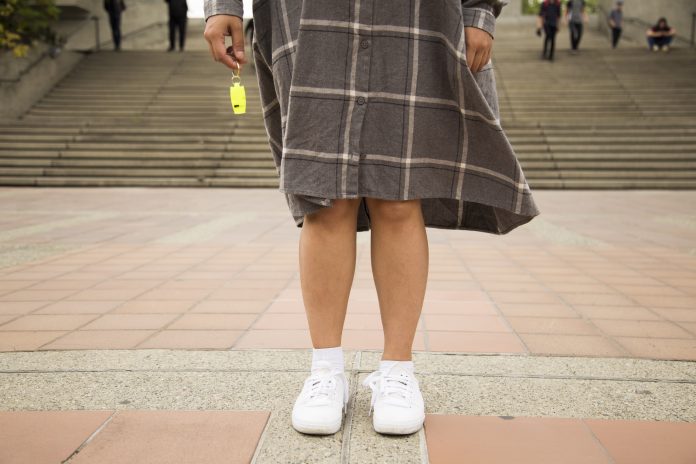
The confession featured a girl who had asked one of SFU’s security guards for a safety whistle, only to find her issues trivialized by what she said was his sarcastic, mocking demeanour. Not only is this totally unacceptable (even on a purely professional and non-political level), but it’s just downright rude. Well, you would think so anyway, right?

Wrong.

From what I saw, most of the comments on the thread were unsympathetic to the confessor, mocking the anecdote and basically telling her to suck it up. This made me incredibly livid. For the students of a school that is supposed to be liberal and progressive, it was just sad to see.

To recap, some of the comments said things along the lines of rape culture is a fantasy, and that if we (women) were concerned about our safety we should just . . . learn martial arts?

What the —?

Another said that we should “carry around a knife” (isn’t that almost like revoking the gun laws that we Canadians pride ourselves on maintaining?) and that a “university campus is one of the safest places out there.” Double what?

Let me just break this down. This kind of thinking is exactly the reason why rape culture exists. It all leads back to the same place: trivializing the issues of the victim, and blaming them for what happened.

My boyfriend worked seven-plus years for his black belt in karate. Sure, if I had that kind of time and passion for this art then yeah, I would devote myself to it entirely and learn self-defence so that at least I wouldn’t be the one raped if such a potential situation arose. At least I’d be able to protect myself for just enough time that my rapist would go away and find someone who didn’t devote seven-plus years to karate. In that case, yeah, this logic would keep me safe.

But what about the other victim? What about the victim that doesn’t have all of these strengths?

The fact of the matter is — and you’ve heard this so many times I’m sure — we need to teach that rape is not OK. Even if we provide self-defence classes, self-defence weaponry, and literally every form of self-defence there is out there; rape is still not OK.

It happens everywhere. Not just in alleyways or clubs or stinky bars, but on campus, in your home, in your loved ones’ homes. Rape culture doesn’t only exist in the form of rape; it’s the condescending, mocking tone of a security guard who doesn’t do his job to make all individuals feel safe. It’s the words of the commenters who belittle her and her experiences.

Rape culture exists, and I’ve only barely scraped the surface on why. It exists, and it’s because of you.

Point / Counterpoint

0

No, demand from the student body isn’t as strong as it appears


By Tanya Humeniuk


The story of the Build SFU project is best-described as a tragicomedy. Nobody wins, and the characters’ absurd actions bring about a disastrous end. Fittingly, the lack of transparency regarding the project has left the events behind the controversy with an air of mystery.

As the plot unfolds, it’s clear that building the stadium would be a mistake — just like the entire Build SFU project.  

To set the scene: the Simon Fraser Student Society’s (SFSS) Build SFU project originally consisted of two parts, a Student Union Building (SUB) and a stadium. As stated on the SFSS website, “this $65M project aims to redefine and enrich the student experience at SFU.” It will include things meant to appeal to “the student experience,” like a napping room and a DJ-karaoke space.  

The SFSS introduced a new student fee to finance the project, which would increase over time. During last September’s Annual General Meeting, students voted to pay the fee and proceed with building both structures.  

A year later, construction of the SUB is underway. If you haven’t noticed, it’s that giant eyesore of a mud pit jammed between the AQ, Convocation Mall, and SFU Theatre. Meanwhile, the construction of the stadium has been cancelled due to infeasible costs. The final estimate for the stadium was roughly $30 million, greatly exceeding the original $10-million budget.  

Unsurprisingly, this news has upset the Student Athlete Advisory Committee (SAAC). Some have claimed that the SFSS used the promise of a stadium to con student athletes into supporting Build SFU, only to cancel that aspect at the last minute. Their rationale is that the vote for the project only passed because many participating students were athletes wanting a stadium.

Without sufficient funds for both buildings, the society’s chucked the plans for the stadium, despite those plans being largely the reason that the project passed. But what this controversy has brought to light is that the Build SFU project doesn’t have adequate support from the student body anyway.

The only students upset about the cancelling of the stadium are SAAC members and student athletes. Everyone else either doesn’t care or, like me, is relieved. If it’s true that most students at the meeting were athletes, then I question the legitimacy of the vote passing the project.

Decisions as major as green-lighting expansive projects like Build SFU shouldn’t depend on who decides to show up to a meeting. This allows decisions that concern all SFU students to be made by groups that are hardly representative of “the student” at SFU.  

If there was a motion to award mathematics majors $1,000 each, obviously all of the math majors would show up and vote “yes.” Word would spread amongst math majors, but no further than that (why tell anyone who might vote against it?). Meanwhile, nobody’s paying attention to motions that don’t obviously concern them.

When one person catches wind of an issue, they only inform their peers. And unfortunately, SFU has a very disconnected student body. This leads to decisions that only represent the needs of the most clearly involved groups, even when less-visible consequences exist for others.

The denouement: those largely responsible for Build SFU’s approval don’t even get what they wanted. The SFSS executives, who would’ve had a nice achievement for their CVs, are left with only an ordeal steeped in controversy. All that “the student” gets is a rising semesterly fee and — let’s not forget — a DJ-karaoke room.

Yes, but students shouldn’t be the ones paying for it


By Jessica Pickering


As someone who admittedly had — and still has — some objections to the Build SFU project as a whole, I do believe SFU needs a stadium. After all, SFU has a certain standard to aim for as a member of the National Collegiate Athletic Association (NCAA). However, the cost of those expectations shouldn’t be students’ responsibility.

Since Build SFU’s conception, the Simon Fraser Student Society (SFSS) hasn’t advertised the stadium component as much as they could or should have; many didn’t even hear about it when first learning about the project. The only fully informed demographic was the student athletes. Obviously, as the facility’s would-be primary users, they had a vested interest in the plans — only to be left high and dry.

As an earlier Peak article quoted Olivia Aguiar, president of the Student Athlete Advisory Committee (SAAC), the SFSS “[used student athletes] as a fulcrum to pass the Build projects, to only take the stadium away.” Having attended multiple AGMs, including the one where the vote took place, I vividly remember how many athletes were present. While there’s no telling whether they all voted “yes,” based on the current outcry from that corner on social media, it’s safe to assume that most did.

Now the stadium’s cancelled — not without reason, perhaps, but questions remain. Why didn’t the SFSS get an estimate before the vote? Why didn’t they inform SFU Athletics and the athletes directly? And why is there no public discussion of other ways to keep the stadium project alive?

The main issue is obviously that the price is no longer feasible. Don’t get me wrong; I’m thrilled that the SFSS isn’t going to simply charge us the difference between the previous and current estimates. However, there has to be another option.

Alumni have sponsored many buildings on campus, with the donors’ names proudly displayed on their walls. Meanwhile, our athletic teams are a point of pride, especially for those who played on them before graduating. It seems unlikely that there aren’t any alumni who would like recognition on the side of a stadium.

Corporate sponsorship is another popular avenue. It’s not unheard of for businesses to buy NCAA stadiums’ naming rights: Gillette Stadium in Massachusetts, Hard Rock Stadium in Florida, and Heinz Field in Pennsylvania, to name a few. Beyond that, if the stadium was completed, the SFSS could sell advertising space, vending services contracts, and more.

Then there’s the fact that SFU has allegedly offered to pay for part of the stadium should the SFSS go forward with the plans. As a student, this is less appealing, as it’s still my money paying for it. On the upside, it’d be a significantly more visible manifestation of what our tuition pays for than the school’s usual expenses.

If I alone can suggest these options, an entire team of people committed to this project should be able to come up with even more. It seems more than probable that there’d be a way to fund the project, if its creators were to invest more time and effort into adapting to the changed circumstances. Finances take time, and a loan of the size necessary for this venture is no matter to rush into. The way the stadium has been dropped is disappointingly short-sighted, though.

I would highly encourage the SFSS to continue seeking funding options (preferably ones that don’t raise student fees) in spite of the recent setbacks. SFU’s athletes trusted and supported you; you should reward them for that. You owe them that much.

American border authorities unfairly weed out weed users

0


Marijuana has become widely accepted as both a recreational and medicinal drug. While weed is becoming more socially accepted here in Vancouver, our American neighbours have been less lenient.

In a recent interview with the CBC, Canada’s Public Safety Minister Ralph Goodale discussed how Canadians who admitted to border guards that they had smoked pot without a medical licence were barred from entering the States.

Those banned can enter the States, but only if they apply for permission to enter beforehand, which costs about C$752, and will be raised to C$1,195 later this year. The expiration dates on provided permits vary, and those dates are all up to the officer who reviews the application. Once it’s expired, you have to apply again, and pay the fee again.

I understand that countries deserve the right to set rules on who can or cannot cross their borders. This particular restriction only affects people who admit to having smoked marijuana without a medical marijuana licence. But what infuriates me about this rule is that it’s not a real ban at all.

The barrier is one that anyone can circumvent provided they have the money. It’s not about following the rules, or being morally sound, or even hiding the so-called “reefer madness” from young children. No, it’s about squeezing more dollars from citizens.

To be clear, the problem here isn’t that border guards stop individuals from bringing weed over the border. It’s that they’re stopping people simply for previous use of pot. It’s akin to stopping every American adult and teenager who has illegally drank before at the border and only letting them over if they pay a hefty fee. The situation reeks of irrelevant, antiquated policies from years long past.

Where does that leave us Canadians? While I’m not a ganja user, I know people who are; we live in Vancouver, after all. It’s nicknamed North America’s Amsterdam for a reason. Many users here and elsewhere swear by marijuana’s medical properties in terms of managing pain and helping insomnia, treating the eye disease glaucoma, and reducing pain and nausea from chemotherapy.

Past marijuana use shouldn’t affect travel into the States, especially with several states, including Washington, having legalized marijuana. With many Vancouverites driving directly into that state, it seems contradictory to prevent individuals who can use the legalized drug on both ends of the border.

Whether we like it or not, the herb is quickly following in the footsteps of alcohol, with our government gradually introducing rules and regulations towards the legalization of pot. Canadians who use marijuana should not be punished as a result of archaic rules that can be bypassed with money rather than morals or logic.

We can only hope Canada and the United States open a dialogue regarding the matter soon. The ban prevents the flow of people and goods across the border, both of which are vital to maintaining a cordial trade relationship with our southern neighbours, as Erin O’Toole, public safety critic, told the CBC.

Border regulations on weed need to go up in smoke.

Status isn’t a good enough reason to pick Apple

0

If you haven’t heard, people are getting growly about Apple’s decision to omit the headphone jack from the iPhone 7. Instead, they’ll supply customers with EarPods that connect through the Lightning port, along with an adapter to convert that port into a jack for those who can’t be parted from other earbuds. The developer is also rolling out AirPods — wireless earbuds retailing for US$159.

Many have called out this latest iPhone decision as an example of Apple’s price-gouging, skating by on their reputation, and relying on their fan base to keep buying into and enabling Apple’s production of made-for-disposal electronics. However, the argument isn’t as black-and-white as some people make it out to be.

Of course, $159 for earbuds — wireless or not — is ridiculous. But let’s be honest: no one needs to buy them. You can use the adapter to continue using your own earbuds, whether they’re $100 or $10. With Apple touting the 7 as having the best battery life of any iPhone (two hours more than the 6s), you should be able to get by without the battery port.

The truth is that Apple is a business, and charging customers for brand-new, cutting-edge products is their job. Technology evolves and improves, pushing out its lacklustre predecessors, and it’s still heading toward wireless, compact devices and accessories — that’s why tape decks are no longer standard issue in cars.

People are averse to change, and that’s all technological improvements are. Yet despite natural human fastidiousness and the Internet community’s outrage, I doubt people will stop consuming these particular changes anytime soon.

Apple products are a status symbol, and people will buy them for as long as they give the impression of being well-off, happy, and trendy. When someone doesn’t have one of the most easily recognized smartphone brands (Apple, Samsung, etc.), we question them on why they don’t have a phone, or why they have the specific kind that they do.

A few years ago, when smartphones had only been marketed for a year or two, I had this great Nokia brick. It was an inch thick and four inches long. I thought it was the coolest thing because I could flip up the number pad to access a full keyboard. I thought I was hot shit.

Then everyone around me started getting iPhones with big screens and easy-to-use Internet capabilities, and less than a year later, I joined the bandwagon. It wasn’t because I didn’t love my phone, but because I’d grown tired of people asking me repeatedly why I had such an antique.

This interrogation can make a person feel crappy about their financial situation. That societal pressure to conform to the same belief system as everyone else — that smartphones equal financial stability and are therefore essential possessions — is intense and difficult to overcome.

Apple has come to rely on its brand reputation to keep them a top-seller. Their accessories, like the wireless headphones, are not different from other available items; for instance, wireless earbuds have been around for a while at significantly lower prices. They take advantage of the perceived status that accompanies their products, knowing that their customers will remain loyal — regardless of cost — so long as that result, that status, is attained.

Feel outraged about Apple’s price-gouging, by all means. But nothing’s going to change, unless we open our minds to other brands instead of criticizing their users.

How to live like royalty at SFU

0

Universities have long been a stronghold for the elite and prestigious. Having a degree makes it much easier for the common folk to relate to pure divinity. With the increase in international students’ fees, it seems likely that SFU will join the likes of Cambridge and Eton in acquiring illustrious attendees eager to splurge on their tuition.

But what are monarchical students to do when attending this school they must share with the plebeians? Sit in the same seats? Eat the same food? Study the same materials? What blasphemy!

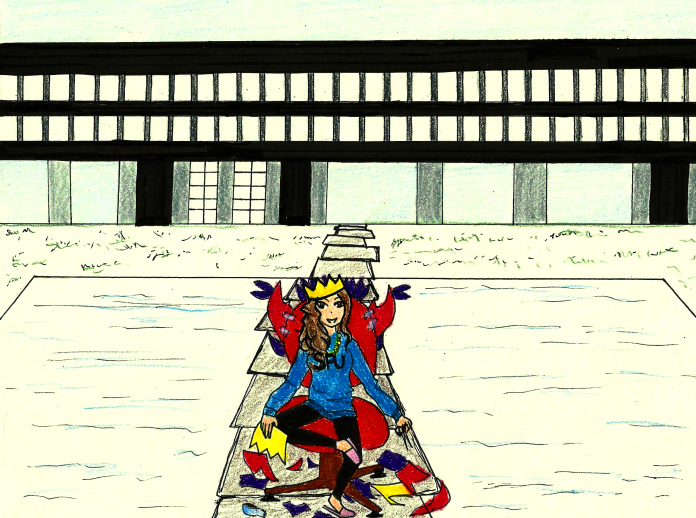
Thankfully, yours truly has comprised a survival guide for how to properly live as royalty at SFU in preparation for when I decide to take over as Supreme Eternal Empress of Canada. These simple tips and tricks will help you find a balance between making the masses realize how philanthropic and prodigious you are, while keeping your hands clean of the dirty commoners.


1) Identify those worthy of being your servants

If you’re coming here from another country and left your personal attendants behind in an attempt to fit in better, make sure you at least learn from your mistake. Scout out servants based on how easily you can buy their loyalty.

2) Never return your library books on time

True royalty transcend the need for “deadlines.” The library should recognize your importance and hand over possession of all their book collection for free. Think of it as your personal bookshelf and storage space.

3) Never pay for tuition on time

Paying for that extra six percent on school fees like it’s no big deal is a great way to not-so-subtly flaunt your wealth to the student services admin. Timing shouldn’t matter for the elite.

4) Only wear SFU swag

I know it will be tough to downgrade from your regular quality of clothing, but wearing all SFU clothing will make those “spotted” photos all the more satisfying for the common folk back home. Additionally, it will signal to other SFU students that you are just like them, only richer.

5) Find the right throne for you

Many SFU classrooms contain only hard, uncomfortable seating. Make sure to contact your personal furniture procurer beforehand and have them install a throne for each classroom you’ll be using this semester. Put your citizens’ taxes to good use, and bear in mind that proper back support is essential — you’ll be sitting on it for several minutes a month, after all.

6) Buy off your TAs

The best way to get good grades is the age-old practice of bribing your TA. Remember that here, TAs are only one social notch above slaves, and with a donation of a small fraction of a royal jewel, you can sustain them for over 50 years. Philanthropy is important for future rulers.

7) Always get the guacamole

It may seem like just some mashed avocado and chopped cilantro, but it’s really so much more. Getting that dollop of guac at the burrito place represents prestige, represents pride, represents luxury. Whether you’re the long-lost Prince of Tuvalu or Queen Elizabeth signing up for continuing studies, this assertion of wealth is a must.

Anosh Irani’s prose makes for an emotional experience

0
Anosh Irani's latest novel explores catharsis, belonging to marginalized communities, and what identity is.

I’ve been staring at a blank page for hours trying to figure out how to put words on the page to describe Anosh Irani’s latest novel, The Parcel. I am beginning to realize that, although it’s a novel, it isn’t about the words that appear on the page, but the feeling that those words create in the reader.

The Parcel is a novel of emotions. From the reactions of the characters to the hardships that they face daily in Bombay’s red light district, to the visceral emotional response that I had in the final pages. It isn’t rooted in plot, although that does help keep the story from turning into an expressionist experiment; it is rooted in emotional action, reaction, and inaction.

Never once, as I was being absorbed into the worlds of Madhu and the parcel, did I feel an urge to stop reading. I was pulled along by the nature of the characters who were always moving forward. I felt compelled to follow their example and move along with them.

Anosh Irani’s style is one of restrained profusion. He knows when to use five dollar words and when to drop them entirely, to be replaced by the language of the streets of the red light district. This is one of the standout features of this novel: it doesn’t stay tied to one singular, defining characteristic.

The Parcel weaves themes of family drama with romance, mystery, yearning, change, and erasure in a way that pays careful attention to each. The end is positive, but it is not happy. There is no final, joy-filled moment for any of the characters. It is an ending that almost prompted me to call my parents at an ungodly hour in the morning to tell them thank you and that I loved them. Reason stepped in before I pushed call, but the response was one that I doubt I will forget.

The weaving in and out of transgender and cisgender sex workers is done in a way that doesn’t vilify or deify either group, and instead works to portray the transgender hijra as victims to a lack of understanding, and the cisgender women victims of being born as the easily commodifiable gender.

Even though at its core it’s an emotional novel, it is also a novel about female power and how it can be wielded even when society rejects this as something that should be celebrated and accepted.

The Parcel functions in a third space, much like Madhu and the rest of the hijra of the red light district are members of the third gender; it is very real and present in this world, but also very transcendental and existing in many places all at once.

As the housing market falls apart, stakeholders build a plan

1
Provincial and Federal governments start to create a stronger housing plan to help combat housing crisis

By: Maya Schofield

Rising housing prices in BC have become the topic of serious discussion across the province. On September 14, A diverse panel of housing operatives in British Columbia came together to discuss the province-wide housing crises at SFU’s Morris J Wosk Centre for Dialogue.

The attendees spent the day sharing and brainstorming methods that would create more social housing and reopen the market to renters and potential homeowners.

After roughly 30 years of being hands-off in the housing market, according to some reports, the provincial and federal governments are beginning to work with stakeholders and advocacy groups in order to create a thorough National Housing Strategy.  Discussions held at the housing crisis initiative centred on building and renovating new social housing sites, working with landlords, modernizing transportation, and generating housing for rural and urban indigenous communities.

The housing crisis in BC is a very unique one in Canada, and is pronounced in Greater Vancouver in particular.

The housing crisis in BC is a very unique one in Canada, and is pronounced in Greater Vancouver in particular. David Hutniak of LandLordBC explained that the real estate industry generates $10.6 billion in revenue yearly.

However, most British Columbians are not gaining much of this profit, as many are being pushed out of the housing market, the rental market, and social housing. The provincial and federal governments are trying to find a viable strategy to balance these conflicting realities.

BC Housing Minister, the Honourable Rich Coleman, opened up the conversation by stating that “housing strategies are not just about housing.” He cited the need for additional transportation to reach more rural areas, and for government on the provincial and federal levels to “think outside the box on housing [. . .] as housing is the connection to the people we serve.”

Coleman also noted that the $150M over two years that the new Liberal government has promised, in addition to provincial funds, will help deal with immediate issues in British Columbia, though he stressed that a long-term plan is essential. He went further by appealing to attendees, promoting “heart, humanity, and innovation” as the key tenets to dealing with issues pertaining to social housing, rental, and home ownership issues.

In keeping with this new culture of innovation, Kishone Tony Roy, chief executive officer of the BC Non-Profit Housing Association, pushed the importance of transit near social and rental housing.

“The provincial government should be attentive about where they’re building transit lines, and to make sure they are near social housing,” he said. Roy further stressed that a modern transportation system would be a key component to the success of future social housing, as it would give tenants more opportunity to commute to work or education programs.

According to Hutniak of LandLordBC, the price ceiling in BC for rental homes is slated to rise another 2.9 percent this year, which is the government-controlled price limit. This means that we can expect to see the median cost of rent increase as British Columbians continue to look towards rental housing as an alternative to home ownership.  

Given this information, millennials should be looking forward to paying an extra $50 or so for the same ratty apartment (sometimes literally), and contentious roommates (usually literally).

An intrinsic theme of the discussions centred not only upon the pervasive housing inequities in BC, but also the effects of a lack of accessibility and affordability — now and in the future. “There are businesses in Surrey struggling to stay open because workers can’t afford to live in the area,” Hutniak said, bringing us back to Coleman’s opening comment that “housing strategies are not just about housing.”  

In the eyes of the panel members, the problem surrounding housing does not only implicate British Columbians in need of affordable housing. It has generated economic problems in the tertiary economy, as more people choose to move out of fiscally inaccessible neighbourhoods, leaving cafés devoid of baristas and local companies struggling to keep up with larger businesses.

The Government of BC is seeking to further partner with investors and the federal government to create a realistic and, more importantly, unique plan for the future. They hope to relay their unique strategies to the National Housing Strategy. The strategy should be put into effect next year, in hopes of inspiring gradual changes in the accessibility of housing.

Until then, a 450-square-foot apartment is called a “cozy bachelor pad” and a closet a “homey den,” so settle in.

ALBUM REVIEWS

0

By: Max James Hill and Courtney Miller

Skeleton Tree by Nick Cave & the Bad Seeds

Even for a Nick Cave album, Skeleton Tree is dark. Partially recorded after the tragic death of Cave’s son, the album is an unfettered glimpse into the singer’s grief and turmoil. But it’s also as beautifully realized and hauntingly poetic as any of the band’s records, and though it’s oftentimes heartbreaking, it never feels burdensome.

The Bad Seeds have always had a knack for album openers (“Into My Arms,” “The Mercy Seat,” et al.) and first track “Jesus Alone” is no exception, a solemn invitation set to Ennio Morricone strings. “Girl in Amber” is similarly melancholy, featuring one of the best vocal performances on the album.

But it’s the record’s centrepiece “I Need You” that stands out. Over a soaring synth background, Cave gives us the album’s thesis: “Nothing really matters / When the one you love is gone.” It’s one of the best songs the band’s ever done.

Skeleton Tree is not an easy listen, but it’s an essential one. – MJH

Wild World by Bastille

Bastille opens strongly on its sophomore album Wild World with “Good Grief,” which also happens to be the lead single. The thing I love about Bastille is the depth in their instrumentation and lyrics. It’s a beautiful combination that never disappoints — just like this album.

The news-type snippets throughout the album might throw off or even turn off some listeners, but everything the band does is for a reason. “Two Evils” has an eerie echo of Leonard Cohen’s “Hallelujah,” and really gives a majestic quality to the album.

The theme song for 2016 could be “Warmth,” with its reflections on current politics. “Blame” has a hard rock intro and keeps a low and foreboding feel throughout. Any university student can resonate with “Campus,” which is basically university life in a nutshell, with dependable Bastille twists.

Bastille may be classified as indie-pop, but the band branches into so many other genres that pretty much anyone can find something to like from them. This is an amazing record; play it anytime, anywhere. – CM

Big Mess by Grouplove

Grouplove opens “Welcome to Your Life” (and thus Big Mess) with a bubblegum pop intro, before gradually transitioning to a rockier style. The whole album goes back and forth like this, making it a bit of a stylistic rollercoaster. There’s the constant indie thread throughout the record, and I’m a big fan of indie, but it feels unfinished; like there’s something missing that would really cement it as a record to return to time and time again.

At times it almost seems purposefully immature, particularly on “Traumatized,” where the complaint is that the chores never end — despite naming only one chore. “Do You Love Someone” gets a little screechy at times, but for the most part it’s still an enjoyable song.

The opening riff to “Standing in the Sun” is the best part of that song, frankly. That’s how this record works. Some songs have really good parts but that’s all you get: a tease. – CM