Home Blog Page 788

FOOD FIGHT: Say “aloha” to the Poke Guy

0
Poke is the perfect way to depart from your regular lunch, and take a flavour vacation to Hawaii.

If you ever want to experience a Hawaiian vibe in the middle of Raincouver, ditch the plane tickets and get yourself down to the Poke Guy, located in Gastown.

Poke (pronounced po-kay) is raw fish salad served in Hawaiian cuisine. Typically tuna or octopus, poke has expanded to include different proteins like salmon and shrimp. Vancouver’s poke scene is growing steadily, with places such as Poké Time in the West End and Pokerrito in the downtown core, in addition to this conveniently located poke stop (pun intended) by SFU’s Harbour Centre campus.

To add to its Hawaiian feel, the 20-seat restaurant has a very beachy feel with clean white walls, wooden furniture, and vibrant green plants. There are colourful leis everywhere, and with every bite of the poke, you can feel the sunshine beating down on your face and the flavours coming alive.

What I love about the Poke Guy is the amount of choice you have when it comes to what you want to eat. First off, you get to choose the size: the little guy, which has of two scoops of protein and up to five sides, or the big guy, which has three scoops of protein and unlimited sides. There are daily proteins that rotate, though, like tako (octopus) and shrimp, as well as mainstays such as ahi tuna and Lomi Lomi (marinated salmon).

There is also the choice between white and brown rice or a salad base, and a number of sides such as imitation crab, avocado, corn, and fresh mango. You also get a choice of dressings as well as “crunch” toppings like nori (seaweed), crispy onions, and pork rinds.

I tried the little guy with half white rice and half salad, Lomi Lomi (fresh salmon marinated with vinegar, tomato, parsley, and onions), and added imitation crab meat and mango, topped with nori. The fish was undeniably fresh since they bring it in every day. I wanted to be super bold, so I added in mango. I worried it would be a bad mix, but it turned out to be the best decision I made that day. Sweet mango pieces mixed with the saltiness of the fish, and the warm sushi rice was like a hug of Hawaiian sunshine in my mouth. Bold, flavourful, and just downright delicious.

Aside from serving up what one worker called “seriously healthy brain food,” the restaurant’s utensils and packaging are compostable. The staff is also incredibly patient and helpful, and you can sample the different proteins to see which one you like.

With poke becoming so popular in the city, the lunch rush at the Poke Guy means that the popular proteins and sides get sold out quickly and aren’t replaced for the rest of the day. However, they are looking to add more food options and potentially be open for dinner as well. Take note of this place, and be sure to stop by for lunch if you ever find yourself at Harbour Centre!

This piece was originally published on Delicious Destinations.

American Honey is everything but sweet

0
Sasha Lane and Shia LaBeouf star in American Honey, an acid-rap fuelled trip across America.

American Honey, directed by Andrea Arnold, shines like the backlit summer-scape of your mind. Its visceral and concrete insight into the underbelly of the American dream submerges the viewer. The long shots of sunrises and sunsets over the rolling American landscape, and flashy scenes of grey highway somehow manage to both lull and unsettle.

Dumpster diving with her two young siblings, the protagonist, Star (Sasha Lane), stands in the rubble of discarded meats and vegetables, and watches a white van pull into the Kmart parking lot. Clearly captivated by the rat-tail wearing crust-punk Jake (Shia Labeouf) and his gang of miscreants, Star gets rid of the kids with the promise of Mountain Dew and finds herself in a checkout line courtship. “We Found Love in a Hopeless Place” blasts over the supermarket speakers and that familiar, primal feeling of the chase fills the theatre: Arnold turned fluorescent lights and welfare cheques into raw passion.

So begins American Honey.

With nothing to lose and never looking back, Star joins the crew of lovely dirtbags in their mandate of selling magazine subscriptions all over America — if you thought the travelling salesman lifestyle died out with the benzo-popping trucker faze, according to American Honey, you were very wrong.

The mastery of this film lies in its choice of acid rap and imagery, which Arnold uses to build the characters into the patchwork American landscape. The crust punks are filthy beautiful with shorn, bleached hair and deplorable manners that steal the hearts of the audience. The groping wisdom and quirky platitudes thrown around the white van voice the adolescent confusion of the 21st century.

Star’s journey through the American dream takes us through the backwaters of the United States where she sees homes that, like her own, have fraying photographs pinned to stained walls. America’s hidden welfare state is subtly conveyed through the children, who are blind to the poverty in which they live.

Though Arnold does not attempt an overlying political message, the contrast between the sunny, wealthy suburbs and grey towns shape Star’s experiences. The edgiest scenes between Jake and Star take place in the more prosperous towns.

The nostalgia I felt watching American Honey clung in my throat and made me buzz, like I was back hitch-hiking down stretching highways clinging to the top of logging trucks. Through its simple articulation of human emotion, American Honey reminds the viewer of the frenzied passion that lives in each of us if we feed the fire of freedom

Erica Fae makes her debut with To Keep the Light

0
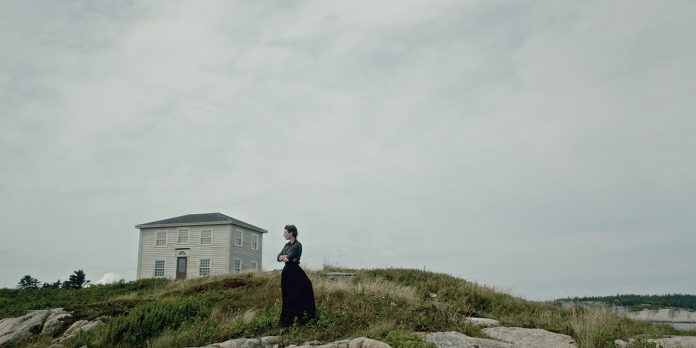
Erica Fae (pictured) showcases her immense and multidisciplinary talent in a still from To Keep the Light.

To Keep the Light is at once simple and beautiful, a film that reflects the history that comes with the rocky and turbulent landscape it depicts. Both a geographical and period piece, the story pushes forward on a contemplative tone and tempo.

The film centres on Abbie Moore (Erica Fae), a woman living by a lighthouse off the coastline of Maine in 1876. She cares for her bedridden husband while fulfilling his position as the lighthouse keeper — a prestigious post not traditionally given to a woman. After a rough storm, Abbie finds herself in the company of Johan (Antti Reini), a Swede washed up on the rocks.

“[Abbie] is a very recognizable character in New England,” explained Erica Fae. “A sultry, hard-working, I-will-do-it-all, kind of women, and also doesn’t make a big show of herself.”

For a piece where much of the story moves through visual and nonverbal elements, the concise nature of the script draws attention to subtle details — from the slow replay of bodies moving, to wind brushing the grass, to string instruments weaving between the sound of waves against rocks.

Directed, written, co-produced, and performed by Fae, To Keep the Light marks her first feature film. The success of which can be seen in her strong portrayal of Abbie and the two festival award nominations the film has received thus far.

Fae expressed her fascination with the intersection between the public and personal for women who became lighthouse keepers due to their circumstances. Often times, these women found themselves fulfilling the non-traditional post when their father, brother, or husband became indisposed — by sickness, injury, or death.
The main character, Abbie, is herself a composite of several historical women.

Interwoven in the plot is the story connected to Johan and the once-mentioned town of New Sweden, where the fear of others was visible even in the 1870s, and immigration was rare.

When asked about the process, Fae pointed out the huge learning curve in making her first feature, and the realization that the process was, in a way, backwards from theatre. In theatre, rehearsal and editing go hand-in-hand and the product is fully realized during a performance. With film, however, “The performing was just the beginning.

“That was an interesting process for me, just artistically, to get into the editing room and [think], ‘Oh my God, we’re just in rehearsal now.’”

From the visuals to the score, the writing to the editing, all of the film’s elements weave seamlessly with one another to create a surprisingly layered yet beautifully composed work. To Keep the Light captures and highlights these finer details beautifully.   

While the film may not be suitable for every wandering mind, it is well-worth it to follow Abbie’s journey through all the moments until the end.

SFU swimming in for improved success

0
Lauren Swistak was named to the CollegeSwimming.com 2016-17 Division II Pre-Season All-America team.

SFU’s swim team saw massive achievements this past spring, and head coach Liam Donnelly has hopes for a bigger win for the upcoming season. The team consists of an equal spread of 13 swimmers on the men’s and women’s teams this year, with nine new recruits. “Everyone on the team get[s] along and care[s] for each other,” said Donnelly. He also commended the strong leadership skills among the freshmen and sophomores.

The men’s team finished 10th at the National Collegiate Athletic Association (NCAA) national tournament last season — the best placement that SFU has had in recent history — and it aspires for a better placing at this year’s NCAA National Championships set for March in Alabama. With only five months until then, the team must “focus on building and maintaining a high level of strength and fitness while also making technical improvements in the pool,” said Donnelly.

The swimmers spend up to a total of 18 hours training in the pool, along with other strength and core development routines. However, the coach’s concerns extend to the academic success of the team as well. “We would like to couple this with a very high academic team average over the fall and spring semester,” he said, adding that one of the most difficult obstacles is to find a balance between a rigorous academic schedule along with training and competitive demands.

This year, the swimming team consists of many competent swimmers from last season, such as Mackenzie Hamill who won the national title for the 1,650-yard freestyle in March. Another member, Adrian Vanderhelm, secured a third spot in 200- and 500-yard freestyle in the same competition. In addition, Lauren Swistak and Hamill had finished in the top 10 at the Canadian Olympic trials in April.

When sports information director Steve Frost was asked about the best achievements by the team this year, he remarked on the women’s team’s success. A season-opening dual meet saw victory for the SFU women’s team on October 23. The team won 10 of 14 short course metre races collectively, while the men’s team wasn’t able to come out as strongly.

The freshmen of the team have already started to show competent skillsets that are essential for a holistic performance. “I feel very confident about this year’s team in retrospection of last year,” said Frost. “We anticipate it is very realistic to improve our National Championship team placings this year.”

Donnelly believes that the only way of achieving these goals is by staying alert. “The varsity team will have to pay close attention to keeping their health and maintaining consistent routines. Nutrition and sleeping patterns are areas that need to be observed and implemented meticulously.”

SFU is hosting a home meet from November 18–20. The SFU Clan Cup International is taking place on the Burnaby campus, with the final sessions commencing at 5:30 p.m. on each day.

SFU Student Learning Commons: shaping success

0

[dropcap]A[/dropcap]t first glance, SFU’s libraries might look like any other silent study space. Venture a little further, though, and you will find something truly great: students helping students to achieve academic success. This is the Student Learning Commons (SLC), which is celebrating 10 years this year. While the reach of the SLC has grown quite large in recent years, the questions on many students’ minds are still: what is the SLC, and how does it help you?

Satisfying a requirement but fulfilling a need

Any SFU student today is all too familiar with the Writing, Quantitative, and Breadth (WQB) requirements, but these pesky academic must-dos haven’t always been apart of an education at SFU. In 2004, the Senate at SFU adopted the recommendations presented to them by the Undergraduate Curriculum Task Force. These recommendations led us to the WQB system. Effective September 2006, all students required these credits, along with whatever coursework is needed for their particular program, to graduate.

The current head of the SLC, Donna McGee-Thompson, gave The Peak a sense of the SLC’s trajectory, from its beginnings in 2006 to today. “At the time, there was a lot of discussion around the importance of additional support for students [. . .] after looking at various models and seeing how they would fit in the SFU context, [the task force] arrived at the SLC model,” McGee-Thompson said.

“It brings together writing, learning, and English language support into a centralized, accessible, neutral location on campus, and the library was the perfect fit for that as students already came to the library to study.”  

As the need increased, the SLC began to diversify its programs. Soon, collaborations and partnerships were introduced between various departments on campus as a way of supporting students in different ways. McGee-Thompson stressed the fact that the SLC is not a “little operation run on the side,” but a broadly reaching initiative that is run by dedicated staff members and student volunteers.

The peer-to-peer model

The peer-to-peer model is a casual, low stakes way for students to get support for their writing and learning. This is the type of atmosphere that peer educator Marton Jalkoczi hopes to bring to each of his consultations. Jalkoczi, who is an international studies major, told The Peak how the SLC helped him throughout his degree.

Before going to the SLC, Jalkoczi described himself as a “shy person,” whose biggest hurdles coming out of high school from Hungary were tutorial participation and time management.

“First year wasn’t a positive experience [. . .] I felt too young to be here,” Jalkoczi said. “I would start early on assignments, but it would take me ages to read a journal article or digest lecture material.”

Enter the SLC, which Jalkoczi stumbled upon when he wanted to apply for a job. While the SLC provides help with cover letters and resumés, they did not provide support around applying for jobs. However, Jalkoczi remembered how kind the volunteers were and how they pointed him to the right resources. As he spent more time in the library to seek the SLC’s help in essay writing, Jalkoczi quickly realized that the SLC wasn’t going to do the work for him.

“I was disappointed,” Jalkoczi laughed. “In the first 10 minutes of the consultation, I found out that my paper wasn’t going to be written for me.” But as the peer educator showed Jalkoczi different resources, disappointment became empowerment.

“After the consultation ended, I ran to the computer lab to continue working on what I had learned,” Jalkoczi said. “It helped me realize that I could do things on my own.”

Currently, Jalkoczi serves as a peer educator and shares his experience with the university community, something that fellow peer Ken Ip sees as a valuable result of the SLC structure.

Ip, who is majoring in world literature, said he enjoys the social aspect of the SLC, where students can interact with each other. One of Ip’s favourite parts about the SLC is that through the sharing of knowledge, you can learn “how to teach others to build their own academic skill set.

“Being part of a structure like the SLC means that I can see the processes of sharing taking place beyond the classroom,” Ip added. The enthusiastic peer educator also encouraged other students to get involved as a peer educator so that they can work with other like-minded students as well as help others with their academic needs.

So what’s next?

As the SLC celebrates 10 years of supporting students, McGee-Thompson has high hopes for the future. With various projects and pilot programs in the works, she says that all of this is inspired by feedback from students.

“We take the feedback that we receive very seriously, finding areas where we are meeting students’ needs and where we need to adjust,” McGee-Thompson said.

Ip echoed that sentiment, encouraging students to voice any academic concerns that they may have, to see if the SLC has any resources for them. Many times, Ip said, resources are built as a result of suggestions from students.

There is a hope that more students will know about the SLC sooner rather than later: “You shouldn’t have to hit rock bottom before you come to see the SLC,” McGee-Thompson said. “Be proactive, and know that we are here to support you throughout your degree.”

Update: SFU Residences in the heart of Vancouver

0

The new SFU building, Charles Chang Innovation Centre, sits on the corner of Hastings and Hamilton (308 West Hastings Street). Situated at the heart of SFU’s downtown campus, located between the Goldcorp Centre for the Arts and Harbour Centre, and within walking distance to the Segal Graduate School of Business.  

“It’s a vibrant and neat place to be [. . .] with a nice urban community,” said Tracey Mason-Innes, director of Residence and Housing at SFU.

The facility was a three-year collaborative operation between SFU’s residence and housing, facility and operations, and the Beedie School of Business. “The collaboration worked very well and everyone had an input,” said Kirk Hill, assistant dean of alumni and external relations at the Beedie School of Business.

The development of the initiative was further influenced by SFU alumnus Charles Chang’s donation of $10 million earlier this year. Chang donated the money towards a new building in support of innovation and to accelerate entrepreneurship throughout the university.

The new building was developed from a Beedie perspective and with Beedie students in mind. Priority was given to providing residences for students in the graduate programs. Undergrad students were not eligible to apply for the building.

The demand for housing is consistent and there will be a constant catch-up, said Mason-Innes.  

In September, Mason-Innes expressed to The Vancouver Sun her concern for available housing for students, explaining that Burnaby campus housing experienced a larger than normal wait-list this fall.

Hill also expressed his concerns for lack of student housing. “The problem that some people don’t know is that the provincial government doesn’t like to allow universities to have debt,” he explained, “[but] there is definitely a need and the university recognizes it.”

It becomes a matter of “who do we focus on first” and determining what each campus needs, expressed Mason-Innes.  

In a recent feature in The Peak, Tim Rahilly, vice-provost and associate VP students at SFU, addressed the issues allowing universities to run a deficit. He provided a document from the province stating that this could only happen “under extraordinary circumstances.” Associate VP finance, Alison Blair, said that SFU has been denied to borrow money over the last four years.

There is also a need driven by students’ concern over affordable and accessible housing around the campuses. Since the closure of Louis Riel House in 2015, graduate students in particular only have one dedicated building up on Burnaby Mountain, Hamilton Hall, with a limited capacity of 103 residents and a rent of $3,252 per term.

With the Charles Chang Innovation Centre, the university has provided apartment-style accommodations for the SFU graduate students downtown. There are 68 rooms available for the students, with 36 studio suites and 16 two-bedroom units. Some studios come with an extra study attached. “Of the population, around 60 percent are Beedie graduates while the other 40 percent were students from the other 14 graduate programs,” says Hill. “It’s a once in a lifetime opportunity to get a piece of land downtown.”

The residences are offered at per term rate of $4,800 for the single studio, $3,400 for a two-bedroom, and $3,800 for a two-bedroom with an additional study space.

The campaign to attract residents, which began in June, was very quickly sold out by September. A few students arrived during the summer, but the majority moved in September. There has been positive feedback from the residents living there. Hill mentioned, “[It’s an] immense way to bring students together.”

“It’s self-sufficient [and the] community is really tight,” said Mason-Innes.

The second floor is the base of the Innovation Centre, and moved into the building around the end of August. It is the home of Radical Ideas, Useful to Society (RADIUS), a special innovation lab and venture incubator that aims to support SFU students and social innovations at all stages of their career.

“There are a few technical details still to work through, but the centre is largely up and running and the programs are happening,” said Hill.

There is a fellowship program for social innovators that will soon be recruiting for its next Radical Doing program. Then, in January, a new certificate of science and technology commercialization is being offered as a joint project between UBC and SFU.

The first floor on the ground level will be occupied by a third-party, operating a café called Nemesis. The café was developed by Jeff Reno after two years of research. At its base, Nemesis will offer gourmet coffee and will be partnering with rising chefs from around the city.  The cafe is set to open in November.

Both Hill and Mason-Innes agreed that there is a demand for space, and perhaps more could be established and expanded upon for the different campuses — Burnaby, Vancouver, and Surrey. Rahilly told The Peak in September that talks have been conducted with UniverCity to build “low end of market” units in place of Louis Riel. Currently, SFU has approximately $11 million every year in “need-based funding.”

In looking towards the future, SFU’s Residence and Housing plans to continue evaluating what needs to be focused on. It will be a slow progress, said Mason-Innes, but part of the plan is to build a new graduate building on SFU Burnaby as soon as possible.

Satellite Signals

0

Woodward’s

On November 2 at 7 p.m., Joe Sacco, author of Palestine and Footnotes in Gaza, will be at Woodward’s to discuss his career as a comic journalist, as well as the extraordinary experiences that shaped his success. Tickets are on sale now for $13 online or at the door.

https://www.sfu.ca/sfuwoodwards/events/events1/2016-2017-fall/AnEveningwithJoeSacco2.html

Harbour Centre

On November 2 at 4:30 p.m., Harbour Centre will be hosting a discussion on Coast Salish protocol and territorial acknowledgement. As Canada transitions into an era of indigenous reconciliation, the event will provide insight into what Canadians can contribute to the reconciliation process.

http://www.sfu.ca/humanities-institute/public-events/public-events/2016/coast-salish.html

SFU Surrey

On November 15, the Central City Student Community Engagement Competition will showcase its finalists. Attendees will experience a presentation of the partnerships between the Surrey community and SFU students. Students can attend this event by registering online through the SFU Surrey website.

http://www.sfu.ca/engagement-competition.html

World News Beat

0

RGENTINA – Women marching against violence

Tens of thousands of women held a demonstration on October 19, marching in the streets of Buenos Aires to protest violence against women. The event was organized under the #NiUnaMenos movement (“Not one less,” meaning no more women lost to domestic violence), after the rape and death 16-year-old Lucía Pérez. The country passed a law specifically punishing “femicides” and other crimes targeting women four years ago. However, according to a national government organization that supports survivors of violence against women, every 30 hours a woman is killed in these crimes in Argentina.

With files from The Guardian

FRANCE – French government starting to demolish the migrant camp in Calais

The French government has started to dismantle the “jungle” of Calais, in northern France, where a reported 6,400 migrants currently live. The authorities were given one week to send migrants to centres all over the country by bus, where they might claim asylum. Many national government organizations oppose the operation, arguing that the authorities will not be able to ensure migrants’ security and that children could be harmed by police’s tear gas. Moreover, they contend that demolishing the “jungle” will not prevent migrants who want to reach the UK from getting there, or building other camps.

With files from Le Monde & The Guardian

VENEZUELA – Pope Francis calls for a dialogue between the president and the opposition

The Venezuelan National Assembly seemed to be heading towards a recall referendum on President Maduro, successor of the late Hugo Chavez. However, this effort was stopped by the National Electoral Council. Henrique Capriles, leader of the opposition, immediately called this move “a coup d’état.” Maduro met with Pope Francis, who called for a dialogue with the opposition to improve the well-being of the population. Venezuela has faced a dramatic economic collapse due to the sharp fall in oil prices and residents have suffered food and medicine shortages. The International Monetary Fund has projected an inflation rate of 1,660 percent in Venezuela in 2017.

With files from CNN

Promises and performance: How the Trudeau government stacks up

1

[dropcap]I[/dropcap]t has been a full year since seven million Canadians, charged to action by bright-eyed optimism, voted for real change, social progress, and a really great haircut. On October 19, 2015, the Liberal Party of Canada was elected to not only lead the country, but to do so with a landslide majority government.

For almost a decade, Canada has struggled with a prime minister and cabinet whose attitude towards transparency and the media bordered on contempt. After years of being unable to hold the government fully accountable for things like unbridled spending and a callous attitude toward equal rights lobbyists, Canadians fought back and demanded “Real Change.”  

In the interest of full disclosure, I must mention that I am a member of the Liberal Party of Canada. But like many other Canadians, I am deeply concerned with what my government is doing and not doing for me in Ottawa, all partisan objectives aside. Trudeau gained unprecedented support promising social progress, defence of civil rights, a strong middle class, and a Canadian government that would be transparent and accountable to the public. A year later, we know the prime minister’s luscious locks and popularity are still going strong — but how are his promises holding up?

Canadians need know what promises our government is keeping, and which ones they’re sweeping under the rug.

We will have to wait another three years to pass a final verdict on the Trudeau government. After the first year in power, though, what progress has our government made toward the platform we elected it on? After all, a total of 219 campaign promises does not leave much room for a slow start.

Don’t worry, it’s not as tall of an order as it once was: the government has already achieved 34 and broken another 26 of them. Do you know which category the changes you voted for have fallen into?

The following is a sample of some of the key issues that arose over the course of the 2015 election, and the actions that have been taken to follow through on these promises. If they should convince you of one thing, it is not the vices or virtues of the Trudeau government, but the importance of keeping our government accountable.

Canadians have been offered a luxury that we aren’t especially used to: government transparency. More than ever before, Canadians not only have access to the information necessary to monitor our government’s activities, but have endless mediums available to speak out and keep them accountable to our needs and their promises. With these changes comes a new responsibility for Canadians to stay informed and voice their concerns.  

To stay informed on developments with the specific policies I have mentioned — as well as the other promises the Trudeau government made upon taking power — you can visit the Trudeau Metre website: a citizen-run accountability campaign which allows voters to analyze and report on the government’s progress toward its election promises.  

The Promise: “We will repeal the problematic elements of Bill C-51, and introduce new legislation that better balances our collective security with our rights and freedoms.” – Liberal Party of Canada

Real Change: None.

In October 2014, Canada fell victim to a terrorist attack which ended in a dramatic shoot-out on Parliament Hill and left Nathan Cirillo, a Canadian serviceman, and the attacker himself dead. Canadians were shaken to the core and the Conservative government (in power at the time under the leadership of Stephen Harper) answered with Bill C-51, which promised to empower the Canadian Security Intelligence Service by allowing them greater access to citizens’ personal information and permitting them to detain any citizen for up to seven days on suspicion of terrorism.

This became a strong point of contention in last year’s election, as the Conservative government touted the importance of national security and the NDP took up the fight for civil liberties. Meanwhile, Trudeau’s Liberal Party believed that Canadians could defend their cake and eat it too.  

The Trudeau government promised that, while it would not fully repeal the Anti-Terrorism Act, it would make significant amendments to ensure that the civil liberties of Canadian citizens would be protected. Now, a year later, with no amendments proposed, one has to wonder if this was a case of Trudeau’s campaign writing cheques his government can’t cash.

Promise: “[Our government] will ensure that government science is fully available to the public, that scientists are able to speak freely about their work, and that scientific analyses are considered when the government makes decisions.” – Liberal Party of Canada

Real Change: Alain Vézina, regional director of science at the Bedford Institute of Oceanography, confirmed in an email to the CBC on November 6, 2015 that scientists’ exchanges with media were no longer restricted.

At the best of times, the relationship between the Harper government and the Canadian media was cold; at worst, it drew unfavourable comparisons to George Orwell’s 1984. Under the Harper regime government, scientists were permitted to speak to media only if it was approved by federal communications officers who would field interview requests to approve questions, answers, and which scientists would be spoken to — a system which was cumbersome and impractical, if not outright oppressive.

In one instance, the CBC reported 110 pages of email correspondence with 16 different government communications officers for a single interview with a single scientist. This not only created an iron curtain between the Canadian public and our scientific community, but it created a reluctance among the global scientific community to work with Canadian scientists for fear of being tied down by government regulations.  

Within a week of taking power, the Liberal government lifted this communication ban, allowing Canadian scientists to speak openly about their work at home and abroad.liberalballon

Furthermore, on February 29, the Royal Society of Canada confirmed the Liberal government’s appointment of a chief science officer of Canada. The officer’s primary mandate is to maintain scientists’ freedom of speech, facilitate government scientific activities, and advise the prime minister and his cabinet on policy decisions.  

Promise: “Public policies affect women and men in different ways. We will take these differences into account when making decisions in Cabinet.” – Liberal Party of Canada

Real Change: Canada’s first gender-balanced cabinet . . . because it was 2015.

To many, Trudeau’s appointment of Canada’s first cabinet with equal numbers of men and women seemed more like a social statement than an imperative government policy — and a lot of Canadians felt that was reason enough to appoint them. However, this decision was significant to more than just gender equality, as it addressed the issue of demographic representation.

Canada’s population has long been divided, very equally, between men and women. In fact, as of the 2016 Canadian census, the balance of men and women in the population differs by less than one percent. With this in mind, the former government’s cabinet (which was never a 50/50 split) not only displayed inequality in the opportunities it offered to women, but also devalued the voices of over 15 million Canadians. A gender-balanced cabinet is necessary not only to Canada’s social conscience but in order for us to be a true and effective democracy.  

Promise: “We will bring an end to the discriminatory ban that prevents men who have had sex with men [MSM] from donating blood.” – Liberal Party of Canada

Real Change: Hardly. On August 15, Health Canada implemented a policy which would allow gay and bisexual men to donate blood — provided they have abstained from sex for at least one year.

This seems like a hollow victory to begin with. Consider as well that the existing policy was not a complete ban on blood from MSM donors, but a requirement for five years of abstinence. The question on the minds of many members of the LGBTQIA+ community is, in today’s society, why is high-risk sexual behaviour still regarded as a gay problem?  

“Sadly, it was gay men who first suffered the initial epidemic of HIV through risky sexual behaviour and it is this stigma, that all gay men touch HIV in some way shape or form, that terrifies the general population about the use of our blood products,” said Kristopher Wondga, a nursing student and self-identified gay man. “I see first-hand just how important blood products are to those who use them, and I wish that I could help. Have I had sex in the past year? Yes, I have. Have [I] conducted my sexual behaviour in a way that lower[s] my risk of HIV infection? Yes, I have. Have I been tested for HIV at least once in the last six months? Yes, I have.”

To change the terminology of this policy which is — as the Liberal Party has previously described — discriminatory, without changing the policy itself, is simply putting a new label on an old problem.

Promise: “We are committed to ensuring that 2015 will be the last federal election conducted under the first-past-the-post voting system.” – Liberal Party of Canada

Real Change: Not only has no change taken place, but the government’s motivation to follow through with this promise has weakened — and it’s our fault.

At least, that was the explanation recently given by Prime Minister Trudeau. In an interview with Le Devoir, Trudeau said “Under Stephen Harper, there were so many people unhappy with the government and their approach that people were saying, ‘It will take electoral reform to no longer have a government we don’t like,’” and that “under the current system, they now have a government they’re more satisfied with and the motivation to change the electoral system is less compelling.”

The first-past-the-post system elects a government by allowing citizens to vote for members of parliament (MPs) who will represent their riding. Each MP is a member of a political party, which has elected its own leader prior to the election. Once Canadians have elected their MP, the party that won the most ridings will take power and their leader will be sworn in as prime minister.

This is a perfectly effective approach to a bipartisan election but the rise of the NDP, Green Party, and Bloc Québécois has created a glitch in the system. With votes in each riding split between candidates, a party not only does not need support from the majority of the country to win the election — it doesn’t even need it to win a majority government!  

Last fall, the Liberal Party won by a small margin in so many ridings that, after earning 39.5 percent of votes, it now occupies 54 percent of the seats in the House of Commons (184). On the other end of the spectrum, the Green party gained 3.5 percent of the vote and won one seat, while the Bloc Québécois earned 4.7 percent and won 10.

A broken clock is still right twice a day, and it seems misleading for Prime Minister Trudeau to equate a popular government with an effective electoral process. While the overall result of last year’s election may have been what the majority of voters wanted, there is still a distinct contrast between who Canadians voted for and who is governing them.

Since his interview with Le Devoir, there has been mass outcry, and Prime Minister Trudeau has back-pedalled a little to say that the Liberal Party will look into alternatives. The fact remains though, that we might not get to see any “Real Change” in the next election.


Big things expected from women’s basketball

1
Elisa Homer is expected to be a key contributor for the team this season.

The 2015–16 season did not start in the most idyllic way for the Clan. One of SFU’s forwards, Meg Wilson, was forced to take a medical redshirt after only two games. The team also went through an injury crisis, ending up with only six healthy players.

However, the team defied all expectations and changed the narrative in its favour. The Clan ended up with a 13–7 conference record and even made it to the Great Northwest Athletic Conference (GNAC) semifinals. Simon Fraser took fourth place in the GNAC.

“I think we had success, but we would like to have more success,” said head coach Bruce Langford. “Last year was a little bit of a slippage in terms of where we really would like to get to.”

Not only did SFU women’s basketball find its way to the semifinals five years after switching to the National Collegiate Athletic Association (NCAA) Division II, it has arguably been one of the most prosperous teams at SFU. “We were supposed to be a two-year transition from the CIS [Canadian Interuniversity Sport],” observed Langford. “We ended up losing six kids, but we recovered from that nicely. We had a really nice run where we made the nationals the first year we were eligible and made the nationals a couple years in a row.”

The team will now be able to rely on a good calibre of players, as coach Langford explained. “We recruited five high school kids and we have one transfer. I would say that our youth is the best we’ve had in the last 10 years. The kids are multi-skilled in different ways. Two of them are better defenders, which should help us defensively.”

The Clan has set the bar high once again. Coach Langford is “not only looking for the winning record,” but has also established an intense non-conference schedule and made it challenging to physically and mentally brace the girls for NCAA rhythm. The first part of the preseason will consist of three games in three days. The girls will be facing California Baptist University, Augustana University, and Colorado School of Mines in the Disney Tip-off Classic on  November 4–6.

Coach Langford will be able to rely on more than his main three-pointers this season. SFU welcomed talented recruits and added to its frontcourt transfer Tayla Jackson, who played all 31 games last season for NCAA Division I UC Irvine. Jackson will be joined on the court by 2014–15 All-GNAC Honourable Mention Meg Wilson — who “has been such a good example of leadership in games as she has come off from injury” — as well as the team’s leading scorer Elisa Homer, and Ellen Kett who was top five in the NCAA in assists.

While the Clan seemed to be fairly dominant offensively on the court throughout last season, coach Langford reflected on the changes that need to be made for the upcoming season.

“We have been young every year since we have been in the NCAA. I don’t think we are consistent enough. I don’t think we rebuilt well enough. Those are two areas we really need to improve on.

“Last year we weren’t deep in certain positions. Some players were careful on the court about getting fouls and not being too physical. We have addressed those issues with our new recruits.”

The quest for the GNAC Championships starts on December 1 against Alaska Anchorage on the road.