Home Blog Page 779

$5 a Day Challenge: Things are getting plain — and burnt

0

This is the fourth post in a week-long web series that documents Kevin Rey’s experiences living off of $5 worth of food a day. Check back daily for another post.

So maybe eating the exact same thing for lunch every day isn’t quite as fun as I imagined.

I mean, it’s reasonably nourishing and filling, but after eating those beans for the past while, I’ve started to notice that they’re just slightly burnt. You just can’t un-taste that.

I’m also sorely regretting the fact that I didn’t buy fruit or vegetables. Alternating between pasta and beans isn’t exactly a refreshing diet. I think basically anyone would have made some better shopping choices than me, but hey, I’m still getting used to this whole “planning ahead” thing.

Not being able to snack on things is also strange to deal with. Normally I’d be munching on something between meals, but because I didn’t plan out my spending very well, I’ve just had to go without. Don’t get me wrong, I’m doing just fine without the usual granola bars or chips, but not being able to forage for food in my pantry is an odd feeling. A few times now I’ve gone over to my shelves by force of habit, only to stare longingly at all of the food I’m cut-off from.

Takeout is also obviously out of the question. Depending on the restaurant, I could eat for a few days or a week with the money that I would spend. I wonder if I did this challenge long term whether I’d be able to scrape up enough money to go out with friends. Buying alcohol seems completely impossible.

Yeesh. Let’s try to ignore just how much of my privilege is showing and move on, shall we?

So, in the grand scheme of things, this exercise has been going well, and has changed the way I think about my food.

The strangest example is that I look forward to having my toast and jam in the morning. Which is kind of sad, let’s be real.

Like, if I rush out the door without eating breakfast, I remember that I haven’t had my toast yet that day, and I look forward to having it when I get home. I think it might be due to the fact that the jam is the only thing I bought that has sugar in it.

Actually, it’s genuinely concerning that my sweet tooth is so strong. That, or the lady at the market straight up laced the jam with something.

But otherwise, so far so good.

Hitman forgoes traditional one-and-done release

0
Following some divisive releases (Hitman Absolution) and beloved ones (Hitman Blood Money), IO Interactive has brought Agent 47 back by way of episodic release.

By: Vincent Justin Mitra, Peak Associate

Hitman, also referred to as Hitman 2016, is a stealth action game released by IO Interactive earlier this year. It’s the sixth entry in the series, following the divisive Hitman Absolution (2012) and the much-beloved Hitman Blood Money (2006).

The initial release back in March was tainted by negative fan response over the game switching to an episodic release model. Rather than releasing the game with a set of game maps and have more released later on, the game would instead be released at a lower price and with just a single proper map at a Paris fashion show, with an additional map available for purchase each month. There was also a reduced rate for subscribers.

Some fans feared that this was primarily a cash grab by the developers, who would drip-feed their player base with low-quality maps at obscenely high prices. This anxiety was potentially due in part to lingering disappointment over Absolution, whose missions were more narratively linear and restrictive, and was an unwanted departure from the free-form and largely unconnected missions of Blood Money.

The benefits of the episodic model did not become widely clear until the first additional map had been released. This map took players to the fictional village of Sapienza, off the Italian coast. As in Paris, players could explore every room of a palatial mansion, but Sapienza also included a secret underground science lab, and a large part of the nearby coastal town, all in a single map. Sapienza showed players the scale of the content they would be receiving each month.

It was followed a month later with an equally large level set in Marrakesh with a crowded marketplace and high-security consulate building, and a detailed Bangkok hotel the month after that. This was all in addition to further small-yet-complex Escalation Contract and Elusive Target challenge modes for each map.

If the developers had released all the maps at once, not only would the maps be far less detailed, but the player would also likely play each map just once or twice and assume they had played the whole game. Instead, having the maps slowly rationed out, players were forced to explore the hidden attics, alcoves, sewers, and tunnels to better understand the range of possibilities in each episode.

While the first batch of maps have all been released, and new players could theoretically play through them all consecutively and without delay, there is now an abundance of missions and challenges available for each map, and the detail and scale in each is already apparent.

The final episode, of what IO Interactive calls their “first season,” was released on October 31 and sees Agent 47 track his latest targets to a private and extremely high-end resort hospital located in the snowy mountains of Hokkaido, Japan.

There, Agent 47 works to minimize the damage caused by a mysterious Shadow Client who has secretly manipulated 47 and the International Contract Agency (ICA) into helping him wage a war against the equally mysterious organization known as Providence.

This episode is unique from previous instalments in that 47 is initially unable to bring his usual toolset with him due to the heavy security. The need to find tools and weapons to perform the assassinations forces players to be more creative in their attempts, rather than to simply rely on the same strategies they may have developed over the previous five episodes, and is a fitting challenge to close out the first season.

The episodic release model has been a success for IO Interactive, winning the trust of all but the most unbending fans, and a second season has already been confirmed.

While the game is not perfect — the accents, or lack thereof, of incidental civilians stood out for some fans — the game prospers in all the ways a game about a stoic bald assassin with a barcode tattoo on his neck needs to, and is a fantastic return to form for video gaming’s best-dressed assassin.

The Great Canadian Tire Money Caper is great Canadian magic

0
Corin Raymond (pictured) managed to raise $7,000 in Canada's unofficial currency for the recording of Paper Nickels. The Great Canadian Tire Money Caper is that story.

Imagine going through security at the airport with $500 in stacks of Canadian Tire Money in your bag.

As Corin Raymond watched his bag go through the X-ray machine at YVR, on his way home to Toronto after a concert tour of BC, he couldn’t wait to see the look on the face of the security agent. “I thought, they’re gonna want to check this out,” said Raymond. “I was so excited about them finding this criminal amount of Canadian Tire Money in my bag.” But they didn’t spot it, and Raymond boarded the plane feeling like a gangster getting away with some kind of heist.

That was in 2012 when “the caper was at full blast,” as Raymond described. No, he didn’t rob a Canadian Tire and make off with the famed currency. It all started with a line in one of Raymond’s songs, “Don’t Spend it Honey,” in which he sings “Don’t spend it honey! Not the Canadian Tire Money!” and describes all the items he was saving up for. The song inspired fans to start donating their Canadian Tire Money (CTM) to him during performances. Once he found out that the Rogue Music Lab in Toronto, where he had already planned to record his next album, actually accepted CTM as a form of payment, that’s when everything came together.

After about 15 months Raymond ended up with over $7,000 in CTM and was able to fund the recording of his album, Paper Nickels. The experience inspired him to write his second one-man show, The Great Canadian Tire Money Caper, which he first performed in Hamilton in 2014 and has toured to fringe festivals across the country.

“It was a perfect storm of beautiful circumstances, of music, art, community, and generosity,” according to Raymond. As the donations of CTM flooded into his mailbox, so did the personal stories and pieces of people’s lives. They would include cards, artwork, and letters explaining what they had originally planned to spend the rewards money on. “People could get involved in this project for five cents, and they were investing in art,” said Raymond. The 150-page booklet that comes with Paper Nickels includes many of the letters and artwork Raymond received. “It’s humbling and inspiring to be on the receiving end of so much love,” he said.

Once media got wind of this story, Raymond was doing all kinds of interviews with outlets such as the CBC, The Globe and Mail, and the Toronto Star. He was even on the cover of The Wall Street Journal, who sent a correspondent to see the stacks of money for themselves.

“Canadian Tire got a lot of really great press. I know their stock increased in value during that time, and I think I had something to do with that,” he laughed.  

Raymond gives credit to James Paul of the Rogue Music Lab for accepting the currency to pay for the album in the first place. Paul had been accepting CTM for 20 years, and Raymond said, “I think in the back of his mind he hoped someone would pay for an album with it one day.”

The Great Canadian Tire Money Caper is a piece of theatre about Raymond’s unique experience — something that could only happen in Canada. It’s also about the value of art and small acts of generosity. Not everyone will understand the poetic beauty of this story, and that’s a pity, but just like the $500-stack of bills that went through security unnoticed, therein also lies its magic.  


 The Great Canadian Tire Money Caper will be presented at the Surrey Arts Centre Studio Theatre on November 18, and Raymond will be in concert at the China Cloud in Vancouver on November 15. For more information, visit corinraymond.com

Staff Favourite Albums

0

Good Grief by Lucius: One of my biggest regrets of 2016 is that I didn’t see Lucius when they were in Vancouver. Twinsies power duo. What more could you want. – Natalie Serafini, Copy Editor

1989 by Taylor Swift: She’s a snake but what can I say? She’s got the talent that brought her to fame and the money to prove it. – Matthew Fong, Layout Assistant

Absolution by Muse: The only good thing to come out of 2003. – Tamara Connor, Features Editor

Cults by Cults: The happiest music for hating yourself, and I’m all about that. – Alexa Tarrayo, Photo Editor

I Can Hear the Heart Beating as One by Yo La Tengo: The coziest album of all time by the best band you’ve never heard of. – Max James Hill, Editor-in-Chief

Andrew McMahon in the Wilderness by Andrew McMahon in the Wilderness: I met him and he is a pure little cinnamon bun whom I want to protect. – Jessica Pickering, Burnaby Distribution Manager

Grace by Jeff Buckley: Buckley’s voice, poetry, and face are absolutely fucking beautiful. – Janis McMath, Humour Editor

Take Care by Drake: Moody, introspective Drake with bangers. The best of both worlds. – Nick Bondi, Sports Editor

Soon it Will Be Cold Enough by Emancipator: I’ve written so many scripts with this album playing in the background. Good times. – Adam Madojemu, Multimedia Editor

Pilgrim’s Paradise by Daniel Caesar: Only Daniel Caesar could make angsty lyrics sound this beautiful. – Linda Shu, Layout Assistant

Vestiges and Claws by José González: He’s Swedish, he’s lovely, and this album is everything you want from indie folk. – Jessica Whitesel, Arts Editor

The beauty of math through the eyes of SFU’s Peter Dickinson

0
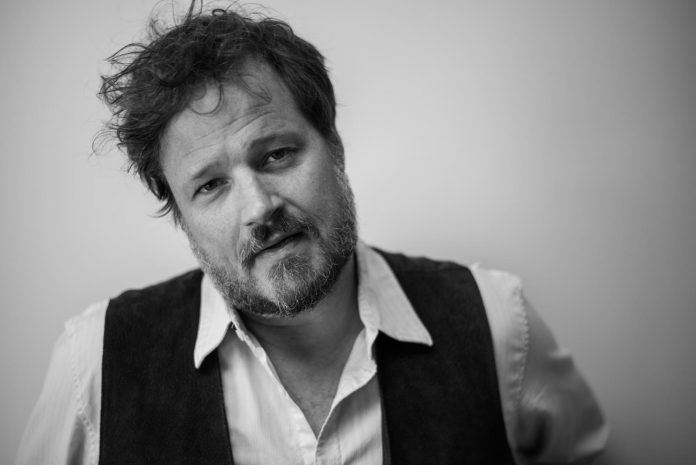
The concept of writing a play that is about math might seem odd to some, but for SFU professor Peter Dickinson (pictured) it is par for the course. His latest play Long Division came out of one of his previous works The Objecthood of Chairs.

You may not think to look at the circumstances that bring people together as a mathematical equation, but Peter Dickinson, SFU professor in the department of English and the School for the Contemporary Arts, has written a play in which love is looked at through the language of math.

The impetus for Long Division comes out of one of his previous plays, The Objecthood of Chairs. “It’s about a relationship between two men, told through chair design,” said Dickinson. One of those men, Paul, is a high school math teacher. Dickinson wanted to explore this character further, along with six others, and use mathematical concepts to explain the way all of the characters come to be aligned. “The story unfolds as a mathematical equation,” he explained.  

The play begins with the language of a word problem that you might find on a standardized test — figuring out who will arrive first with different people using different modes of transportation. This is how the characters come to meet up at a bar, and the story maps out their relationships mathematically.

“I tried to strike a balance between mathematical language and a lot of mathematical references while explaining it in a human way that people can understand,” explained Dickinson. “There is a way in for specialists and others to appreciate it too; I’m playing with mathematical concepts but trying not to make it too complex.”

For example, set theory is explained using cliques in a high school, and various concepts such as the number zero, infinity, and the Fibonacci sequence are referenced. The science of patterns, and how they relate to the characters and the events that connect them, all form the basis of the play.

The story is set in the school where Paul teaches, and the other characters include parents, students, the school’s principal, a bar owner, and an Imam who uses the gym at the school. “I wanted to balance sharing who they are as individuals, through monologues, with the larger story as well,” said Dickinson. He can’t say much more about the plot, though, or it would give away the way everything coalesces at the end.

The theme of finding beauty in mathematics through things such as structural elegance and the golden ratio is inspired by a quote from mathematician G. H. Hardy: “Beauty is the first test: there is no permanent place in the world for ugly mathematics.”

According to Dickinson, math can be beautiful, and it can also be comforting. “You can count on numbers and count with numbers,” he said. They are reliable, unlike people, but we also have to learn to be comfortable in a space where there is uncertainty and we don’t know the answers.

“Infinity can be overwhelming,” said Dickinson. Some concepts are hard to wrap our heads around if we think about them too much. “We become intimately connected through chance events,” explained Dickinson. “There are only small spaces between us, and we’re only particles colliding into each other.”

The show also includes some elements of physical theatre, with choreography by Lesley Telford. Telford worked with director Richard Wolfe to find moments when choreographed movement could enhance the story. “The movement often shows us the psychological state of the characters during their monologues,” said Dickinson.

“I hope people leave the theatre thinking a bit more about random connections, and making something out of nothing,” said Dickinson. “These are just questions I’m asking the audience to ruminate on.”


Long Division will be presented by Pi Theatre from November 17 to 26 at Gateway Theatre. For more information, visit the theatre’s website.

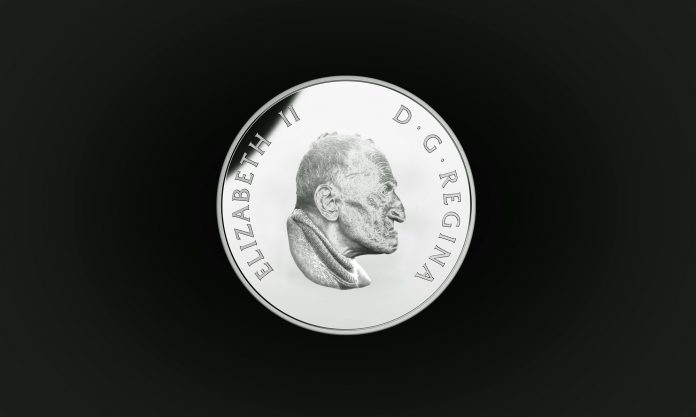
Canada doesn’t need nickels anymore

0

After the eradication of the penny began in 2012, Canadians naturally speculated about the potential removal of the nickel.

Some organizations, such as the credit union Desjardins, argue that the nickel should be eradicated in the next five years. The change would logically entail the adaptation of other coins, such as the quarter, to stop measuring five-cent increments of value.

A massive overhaul of our coin system would undoubtedly be needed, with perhaps 10-cent, 20-cent, and 50-cent pieces instead of 25-cent coins — an overhaul which, like any governmental initiative, is not without cost. For example, eliminating the penny cost Canada $38 million. Evidently, eliminating the nickel would be both costly and a hassle.

However, the costs of not eliminating the nickel are even worse. Minting it is a money-losing process: the similar American nickel costs 9.4 cents in materials to produce. Cutting government costs in the long run was one of the rationales for the Canadian penny’s removal, and it applies equally well to the nickel. It wouldn’t even be a novel move: countries such as New Zealand have eliminated five-cent coins, and others, like Australia, are strongly considering following suit.

The building effects of inflation render them further unnecessary. One needs look no further than the original reason that our country created such small denominations of currency to realize that society no longer needs such a low-valued piece.

The Bank of Canada targets two percent inflation each year, causing money to be worth less than it was the previous year — a process familiar to many frustrated consumers well-aware of ever-rising prices. While the annual change in value may be relatively small, over time, the effects of inflation grow drastic, with a dollar regularly losing half of its value in 35 years.

The Bank of Canada keeps records of the inflation experienced by consumers since 1914. From these inflation figures, we can determine the purchasing power of money over time. These calculations show that the value of the nickel in 1914 is equivalent to a value of less than a quarter of a cent today.

While it made sense for Canadians of 1914 to use nickels, they certainly never considered implementing a quarter-cent piece, simply because its value would be trivially low. However, today we mint and carry with us a coin worth less than a 20th of its original value. Canadians never intended or demanded such a low-valued coin, yet because we’ve failed to adapt to inflation, we pour money into minting these unprecedentedly useless coins.

Inflation is inevitable. While its eradication may have base costs, the resources we pour into making and carrying nickels each year will only add up as the value of the nickel goes down. Historical precedent shows that Canada has no need for a piece of such low purchasing power, so it would be best for Canada to leave the nickel behind as soon as possible.

Why going braless is flawless

0

I hate bras. I have never been the type to buy cute, lacy, sexy, appliqué-smothered boob prisons. All my bras are black, plain, and push-up, because up until this point, society has told me that I need big, perky breasts to be attractive.

I am unfortunately a member of the itty-bitty titty committee, and have small boobs compared to my family and friends. While they boast double Ds, I struggle to make do by smushing my B-cup breasts into tighter bras with extremely high push-up promises.

Until recently, I consistently purchased overpriced fabric chest cages in hopes that I could better fill in dresses and achieve a perfect hourglass figure. But due to a mix of nipples coming into fashion again and my slacker tendencies, I decided to try going sans bra for a week.

The first day of my braless adventure wasn’t bad. I discovered that winter is a good time to start foregoing bras: since you’re wearing so many thick layers and warmth trumps cleavage, no one will ever know.

But my first time wearing a T-shirt without a bra was not so simple. I could prominently see my nipples showing through my shirt, awkwardly drawing too much attention to themselves like a millennial on Twitter (i.e. me).

I almost decided to stop my experiment, but luckily stuck with it. What I realized was that most of the time, no one actually cares. I got just about as much attention drawn to my breasts as I did with the push-up bras, which was a welcome surprise. I did get one pair of high school boys whispering to each other, “She’s not wearing a bra!” on the 145 bus, but my internal response was, “Yeah, and it’s awesome!”

The greatest change I have noticed after being braless these past few weeks has been in my confidence level. The once self-conscious, boob-oppressing me has become a boob-loving, self-assured woman.

I am not afraid of a little nip. After I stopped hiding my nipples behind layers of padding and fabric, I came to terms with the way my boobs looked. And I grew to like them. I stopped trying to morph them to look like what I thought other people wanted, and I let them be themselves. For years I thought I wanted bigger breasts, but all I really needed was an empowered view of my self-worth.

Sometimes I do have to make exceptions. It’s annoying to do physical activity without a bra. Even climbing up stairs really fast feels uncomfortable. So I do wear sports bras to the gym out of necessity, but change out of them when I’m finished. I’m not about to go burn all my bras, because sometimes they have a place in my wardrobe, but they are no longer an everyday accessory.

Life is so much easier without bras. My chest feels lighter, literally and figuratively. The feeling you get when you take off a bra feels so good. The feeling of never having to put one on in the first place feels so much better. I don’t have indents in my skin from having a wire poke me all day. I don’t struggle with loose bra straps. I don’t have to scoop my chest fat into place for optimum cleavage distribution, and I don’t have to feel bad for having smaller tits. I am free.

Give male birth control a shot

0

Acne unapologetically blooms across your skin. Your mood shifts rapidly and unpredictably. Your libido is up or down like a rollercoaster, and whether you realize it or not, you might be sinking fast into depression.

If you read this and thought, “How terrible and unreal,” because you’ve never experienced any of this yourself, then I’m happy that you’ve never had to worry about these symptoms of hormonal birth control.

Which is not to say, of course, that these problems apply only to users of birth control. I just want to draw your attention to the realities of a risk-riddled treatment that millions of women worldwide deal with, because those same long-lived realities were all it took to kill a study of male birth control.

The Journal of Clinical Endocrinology and Metabolism recently dropped this bombshell, revealing the development of “birth control shots” for males. These shots were 96 percent effective, but apparently, one of the review boards was in quite a tizzy over a different percentage: the three percent of males who experienced depression while on the shot.

Thirty percent of women experience depression while taking female birth control, as Indiana University Bloomington biology professor Elisabeth Lloyd told CNN.

I’m confused. Did the people who cut this project just . . . not know what hormonal birth control entails? Or do they just not care that these symptoms have affected people who aren’t cisgender men for, like, ever?

Because when a birth control option has a depression rate roughly 10 times lower than the one preceding it, that’s not cause to stop looking into it. That’s great! That should be like Mardi Gras in your mind! That’s progress.

As a boy, who therefore has never had to take birth control, I don’t want to overtake the voice of a demographic that I’m not part of. I do, however, want to note all of the men who participated in this study who thought the birth control shots were a great idea.

Out of 320 participants, about 75 percent were down to continue with the contraceptive. Even among those who heard about the study and weren’t interested in the shots, there were men who spoke positively of making them publicly available. Public health major Timothy Lee, told CNN that the shots should be “a personal decision” as long as the potential effects were made clear.

Some doctors, like urologist Seth Cohen, talked about how hormonal birth control is just problematic in the first place. Cohen told CNN this breaches medical ethics, that “young people’s” brains are vulnerable, and that this really just means we need to take a closer look at women’s contraceptives and their problems.

To me, a breach of ethics is expecting women to subject themselves to worse health risks than what men would have to suffer for the exact same result. It’s expecting women to be the ones who most likely pay for that birth control, because not everyone has the luxury of condoms.

If you exist in a time and place where you have access to birth control when you need it, then you’re probably able to make an informed decision about whether or not the risks are too much for you to bear, and you have a right to do so.

If women have been doing this for decades, and men are willing to start, then I don’t know why we need to complicate this issue any further. There are people worldwide who would kill for such convenient, advanced birth control methods. Give us the option, if it’s there. And if you think there are better and brighter solutions? Look for them in the meantime.

Rent’s 20th anniversary is here

0

Is Broadway a little too far and a little too expensive for you? Were you even born when Rent hit the musical scene 20 years ago? Never fear, fans of musical theatre: URP (formerly Uncle Randy Productions) has got you covered. For one week, November 15–20, URP has assembled what director Richard Berg called, “One of the strong[est] casts of any show we’ve ever done.”

Both Berg and the production’s lead, Darren Adams, spoke to The Peak to give us all a little taste of Broadway before they light up the stage at North Vancouver’s Centennial Theatre. They’ve been rehearsing for months — Berg’s favourite part of the staging process — while Adams is super stoked to step into the big shoes other actors have left for him.

For many people here in Metro Vancouver, seeing Rent has been a distant dream, despite there having been tours and other almost-local tours of the production. Berg has been able to see not only the original production, but the Canadian tour, and the original Broadway cast tour when they visited Seattle several years ago. Meanwhile, Adams has never been able to see a live production of the show, so he is going make the role of Roger his own. “It’s kind of a pros and cons sort of thing,” he said. “I don’t have anything to compare myself to other than the recorded tracks [. . .] I’ve known the show inside and out forever.”

It’s safe to say that Adams is a fan. Berg is as well, although his love for the show is more nuanced. Despite being a director of musical theatre, Berg admitted that, “I’m one of those odd people in musical theatre, in that there are more musicals that I dislike than I like [. . .] I tend to be drawn to the more rock/pop-based ones and the ones that are more performance energy-focused, as opposed to heavy plot-driven ones.”

Rent has always been one of those musicals that most people enjoy, and that a lot of people fall in love with. On the characters, Adams said that “Collins and Angel are kind of everyone’s favourite characters . . .” Adams’ single favourite is Collins and, despite the fantastic original performance by Jesse L. Martin on Broadway (and in the movie), the production’s own Chris Olson “does an amazing job as well.”

Berg and Adams also agreed on their favourite number, both overall and from their own production. “Another Day” tells the story of Mimi finally convincing Roger, as put by Adams — a guy who’s been “going through a lot over the past year or so up until the point of the show [. . .] all the demons that he’s wrestling with” — to get out there and start living again. She convinces him that there is positivity and life even when you’re diagnosed with AIDS which, if you’ve seen the musical or know the story, is an integral plot of the show.

The scene “is one of the strongest in our production,” Berg noted. He added, “[Adams]’s a very gifted performer and does a phenomenal job in this show, but that’s a number where he really shines.”


Don’t miss your chance to catch Rent. Who knows when it will come back, and a 20th anniversary edition is bound to be extra special. More information at URP and tickets at Centennial Theatre.  

Students get a discount: $36 instead of $44 for regular shows November 16–20, or $28 for the preview performance on November 15.

NEW MUSIC FRIDAY

0

Follow The Peak on Spotify to stay up to date on New Music Friday.

“We the People . . .” – A Tribe Called Quest

Jessica Whitesel: I always forget how great rap can be. When there is focus on social justice and issues that black and POC communities face, it’s straight fire. That’s the focus of this song and while it isn’t going to be the soundtrack to getting lit in the club, it still is a banger nonetheless.  

Tegan Gallilee-Lang: Daaaang, it is so baller when the backtrack cuts out like that. All the lyrics in this song had me going “Boooooom. Equality, bitch!” Must add it to my post-election angst playlist.

“Me and Your Mama” – Childish Gambino

JW: This song is stupid long and doesn’t really do too much as a standalone song since it is cinematic as fuck. This wouldn’t be out of place on any number of soundtracks, but it is too long to just sit and listen to.

TGL: DONALD GLOVER JUST PUT OUT A NEW TV SHOW WHERE DID HE FIND THE TIME TO DROP NEW MUSIC!!?? That man is a superhuman. The track is really great though. When you’re listening don’t give up on it too quickly, it really kicks in about halfway through. The screamy-singing is definitely a departure from Gambino’s usual mellowness, but I dig.

“Immigrants (We Get the Job Done)” – K’naan feat. Snow Tha Product, Riz MC, Residente

JW: After the disaster that was the US election earlier this week, this song has so much more urgency than if it was just another song from Hamilton. Also I’m a sucker for rapping in Spanish so that’s pretty great.

TGL: Yo, this week’s playlist is T-O-P-I-C-A-L. The Hillary dig stings, but the song overall has empowerment potential. It makes me happy that all these different people got together to rap and sing about their shared struggle, ya know? The Spanish rapping is the definitive highlight, though.

“Dandelion” – Sad Eye

JW: I guess it’s OK, but it’s been done sooooo many times already. Girl sings in a weird strained lower voice, bass and electronic plinks come in, then the backing track drops out, and then she starts to sing super high and the song stops. It’s old and not really worth listening to.

TGL: Her singing and melodic lines remind me a lot of Tove Lo — but a lot better? Like she definitely sings with more nuance. The song is super catchy, too. I would turn this up and jam out to it in the car.

“Cocoon” – Milky Chance

JW: It’s classic Milky Chance, but kind of slowed down and I can’t decide if that works for me or not. It’s not a bad song, but I might have to listen to it a few more times before I can make any sort of call on this being either a good or bad song.

TGL: Nothing special. I would probably come to like it if 102.7 The Peak made it one of those songs they play non-stop.

“Ghost in the Wind” – Birdy

JW: I want to like Birdy because she does have talent, but I just can’t. There is something about either the production or the type of songs that she ends up singing that I just don’t like. This is another one of those. It’s too slow, too high, and doesn’t go anywhere until almost the very end, but it’s too little too late.

TGL: I don’t like the piano’s sound. Too tinny. Otherwise, the song really builds. I was reluctant to keep listening, but the payoff was worth it. Loved the contrast between solo Birdy and Birdy avec ghost chorus.

“On Hold” – The xx

JW: I guess that this an OK song, but I’ve tried listening to it about six times now and all I’m getting is background music. So maybe it isn’t that great.

TGL: The rhythmic singing in the chorus is so cool! Otherwise kind of a dud. I was still thinking about Birdy.

“I Would Like” – Zara Larsson

JW: This sounds like every other Zara Larsson song and by extension every other pop song out there right now. It’s OK but it isn’t new and doesn’t stand out.  

TGL: Song about sex because that’s what will sell, right? Wait, Zara Larsson, you would like to get to know me under where? I didn’t catch it the 30th time. Bleh.

“What the World Needs Now Is Love” – Rumer

JW: I mean, the song is correct, the world does need some love right now, and I did think about this song right after I found out that Trump won. I would have maybe liked a version that was sped up just a touch, but this still is a good version.

TGL: This is a high school choral arrangement waiting to happen. That I would want to hear.

“Secret Stash” – Dragonette feat. Mike Mago

JW: This is a fun song and I would dance to it at the club, but if you are trying to get anything done, I would say skip this one.

TGL: Stash of what? I missed it. I would probably only ever listen to this song about drugs (or it could be Halloween candy, who knows?) again if I was on drugs. So not great chances.

“The Valley” – Keshia Chanté

JW: I didn’t know she was still making music. I remember her from when I was in middle school or something like that. It doesn’t seem to really go anywhere — kind of like her career.

TGL: Dang, I was excited when I saw this song was by Keshia Chanté. “Been Gone” was some A+ shit. This sound is a lot like Banks’, which is cool for Keshia Chanté but for the music world is nothing super innovative.

“Overture” – Dave Grohl feat. Taylor Hawkins, Nick Raskulinecz

JW: I’m confused as to where this song is coming from. I know that the Foo Fighters are currently on hiatus, but this is also 2/5 of the band. It’s great drumming and guitar playing, but that’s about it. I guess it is what it says it is — an overture — but unless you have a part written in for cannons like “1812 Overture” you can sit the fuck down and stop.

TGL: This a rock thing that I’m supposed to know about, right? Why is there no singing? What an anticlimactic ending to an otherwise actually-OK-this-week playlist.