Home Blog Page 773

“Santa is real,” and other acceptable lies to tell children

0

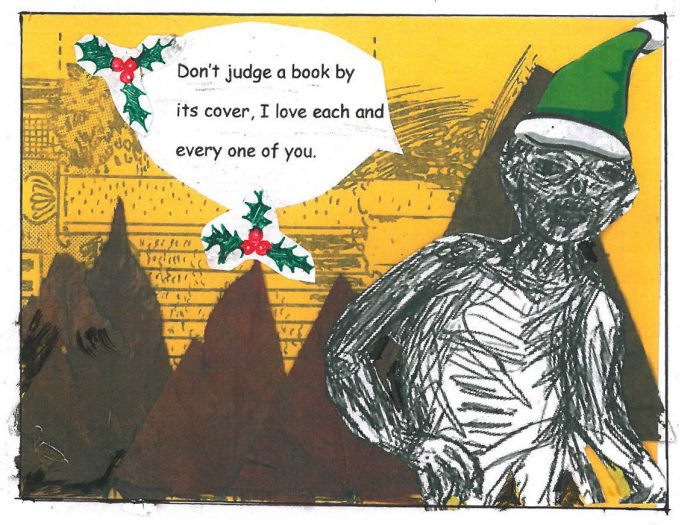
I don’t have a favourite child

Those of us who have siblings remember a time when our sibling received special treatment, and out of jealousy, we accused our parents of preferential treatment. Depending on how well your parent lied, you either walked away knowing that wasn’t the case, or hardened and emotionally scarred.


We later grow up to learn that parents do, actually, prefer one child over the other, and that changes depending on circumstance. Remember that time when you yelled and screamed because you didn’t want broccoli and your brother ate his without any fuss? Yeah, you were not the preferred child in that situation.  


I do it because I love you

Ah, if it isn’t the old justification for corporal punishment.  This one is often interchangeable with “This hurts me more than it hurts you” — as if Mom pulling down your pants and giving you a spanking somehow injures the moral fabric of her soul.  

“I do it because I love you” translates more directly to “You’re being a shit and I’ve run out of ways to express it.”

They don’t sell batteries for that toy anymore

Remember that one musical toy you kept winding up and letting go while Dad was trying to get work done? You may appreciate how annoying that was now (and also find that some of your colleagues never grew out of the behaviour), but back then the lie was traumatic and heart-wrenching. You mean I may never experience the joy of Simon the Cymbal-playing Monkey again? The one that Uncle Stan got me for Christmas?


Your parents never told you at the time, but it’s very likely they never got over their hatred of Uncle Stan.

The important thing is that you participated

Remember the first time you went to a track meet, and you came dead last in the 100m dash closely following Carl, who easily managed to outrun you despite having a stunted leg? Mom or Dad may have hugged you and told you that winning doesn’t matter, but that’s only because they’re hoping that your high grade in math would somehow help you in the job market, and that the glory showered down upon the winner of the race was as short-lived as possible.

Your parents basically learned to play the long game at an early age, but that isn’t to say that winning something athletic would hurt every now and again.

You can’t have sex before marriage

Perpetrators of this lie tell their children that they can’t have sex before marriage as if it is a universal, physical maxim that all society follows innately.  

It actually holds just about as much truth as “You can’t have any dessert until you finish your vegetables.” You can, in fact, have sex before marriage just as much as you can steal the tub of ice cream from the freezer while Mom isn’t looking.  

At some point, you grow up to learn that your parents’ morals aren’t universal truths, and vegetables, like sex, can be consumed in whichever order you please.


12 Days of Finals

0

On the first day of finals
The stress brought to me:
At least one mental breakdown.

On the second day of finals
The stress brought to me:
Two-day extension
and at least one mental breakdown.

On the third day of finals
The stress brought to me:
Three hours sleep
Two-day extension
and at least one mental breakdown.

On the fourth day of finals
The stress brought to me:
Four study groups
Three hours sleep
Two-day extension
and at least one mental breakdown.

On the fifth day of finals
The stress brought to me:
Five failing grades
Four study groups
Three hours sleep
Two-day extension
and at least one mental breakdown.

On the sixth day of finals
The stress brought to me:
Six snack plates
Five failing grades
Four study groups
Three hours sleep
Two-day extension
and at least one mental breakdown.

On the seventh day of finals
The stress brought to me:
Seven cups of coffee
Six snack plates
Five failing grades
Four study groups
Three hours sleep
Two-day extension
and at least one mental breakdown.

On the eighth day of finals
The stress brought to me:
Eight more readings
Seven cups of coffee
Six snack plates
Five failing grades
Four study groups
Three hours sleep
Two-day extension
and at least one mental breakdown.

On the ninth day of finals
The stress brought to me:
Nine hours of Netflix
Eight more readings
Seven cups of coffee
Six snack plates
Five failing grades
Four study groups
Three hours sleep
Two-day extension
and at least one mental breakdown.

On the 10th day of finals
The stress brought to me:
10 weak excuses
Nine hours of Netflix
Eight more readings
Seven cups of coffee
Six snack plates
Five failing grades
Four study groups
Three hours sleep
Two-day extension
and at least one mental breakdown.

On the 11th day of finals
The stress brought to me:
11 late assignments
10 weak excuses
Nine hours of Netflix
Eight more readings
Seven cups of coffee
Six snack plates
Five failing grades
Four study groups
Three hours sleep
Two-day extension
and at least one mental breakdown.

On the 12th day of finals
The stress brought to me:
12-page papers
10 weak excuses
Nine hours of Netflix
Eight more readings
Seven cups of coffee
Six snack plates
Five failing grades
Four study groups
Three hours sleep
Two-day extension
and at least one mental breakdooooown.

Best Hanukkah traditions I just made up

0

Wintertime in North America is a fun time for goys, as you deck your halls and also everything else to the point where there is almost no room for Hanukkah, the only holiday with as many days as ways to spell it. Outside of the Rugrats, there aren’t even any family-friendly television specials! (Don’t talk to me about that schmuck Adam Sandler.)

Instead of just kvetching about it, it’s time to educate all you heathens of the best Hanukkah traditions you’ve never heard of, because the Festival of Lights is a de-light to celebrate. This goes beyond eating a latke and singing the dreidel song; this is a Hanukkah that the Hebrew Hammer can get behind.  

Are these traditions real? Honestly, who is to say? It would be rude to imply these are just bupkes, but I can’t promise these are necessarily all kosher.

(Editor’s note: Nathanial Rossman worked at a synagogue for many years, rode the chair at his Bar Mitzvah, and has never eaten bacon so he is a great source on all things Jew-ish.)

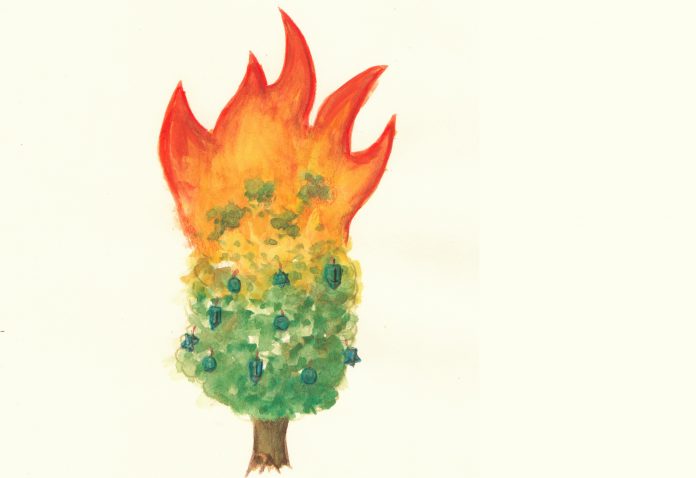
Find a Hanukkah bush and light it on fire

Hanukkah has always been forced to compete with Christmas, which is a little unfair seeing as Christians stole Jesus from the Jews. Gifts weren’t even that customary until the holidays went head to head, prompting the Jewish faith to be forced to add a little chutzpah to even things up.

Seeing as Christmas trees have become symbolic, the Jews needed something to even the odds. The most famous shrubbery in the Torah is the burning bush, which was then chosen to be the new symbol for Hanukkah, seeing as the holiday is all about lighting things on fire. Every year, it is considered a mitzvah to bring a bush into your home, and let it burn for all eight days. Sure, it’s a fire hazard, but not celebrating with a Hanukkah bush is an even bigger hazard to Bubbe.

Start a dreidel gambling ring and and go for broke

Aaaahhh, dreidel. The one time Jews are encouraged to gamble because they did it to avoid being murdered in the story of Hanukkah. While you should teach the game to children using gelt, it is much more encouraged for adults to bet using real money. The higher the stakes, the better the game.

Historically, the Jews bet their lives that playing dreidel would fool Antiochus and all his soldiers. In honour of that, it wouldn’t be fair if you didn’t wager your life savings on this game of chance. While you watch the dreidel spin round and round and pray for a gimmel, remember that miracles are what Hanukkah is all about, and a miracle of Maccabean proportions is what you desperately need.

Attend the Matzo Ball for Jewish singles in your area

The Matzo Ball is “an annual Christmas Eve nightlife event and party held in a number of major cities in the United States and Canada targeted primarily at young Jewish singles and organized by the Society of Young Jewish Professionals.” It’s perfect for when you start feeling lonely at Hanukkah and have no one to share your Manischewitz with. Bless these nice mensches for organizing such a lovely night for you! I have it on good authority that the Molotsky boy is going to be there, I hear he’s on his way to being a great doctor!

Listen to the Curb Your Enthusiasm theme on repeat for eight days

That Larry David is such a nice boy! He used to be on the television so much, and now we have the CNN and the Modern Family and the America Sings and Dances, but sometimes you just yearn for a nice Jewish boy to be on the TV again. So what if he says he’s an atheist, we all get tempted by shikses every once in a while.

Make sure to play just the theme of Curb Your Enthusiasm, because the episodes already sound too much like the conversation you’re going to have over brisket and kugel and it will be too loud to even think with all the people talking at once. Bonus: the rhythm is the perfect tempo in case you want to get up and stretch those Israeli dancing legs.

Literally do any research on “חנוכה” before you start talking about it in public

You look like a real shmendrik when you talk about lighting the Menorah for Hanuka. That’s for Shabbat! You light a Hanukkiah for Channukkah. Try and learn something new about Chanuka this year, and show some love to your mishpocheh.

Mazel Tov.


SFU alumnus raises over $56,000 for Kickstarter campaign

1

SFU alumnus Thomas Plywaczewski has a new way to customize helmets. The product is a luminescent cable that is charged by a detachable, water resistant, USB-rechargeable controller called LightMode. The cable can be put on the helmet in any pattern, and when seen in the dark, looks like something out of the movie Tron: Legacy.

After graduating from SFU engineering, Plywaczewski went into “job-hunting mode.” The next eight months he had “many interviews, but no job offers.” During this time, he began developing LightMode out of his passion for motorcycles. He added that his “friend told [him] about Kickstarter and that’s how the idea to start a ‘Tron helmet’ business was born.”

LightMode ran its first Kickstarter campaign in August 2014. This campaign raised roughly 11 times the original funding goal, at just over $26,000. As Plywaczewski explained, “[. . .] that was the original ‘Tron helmet’ Kickstarter campaign, and the birth of my full-time business.”

The company’s latest campaign has developed a new version based on customer feedback. Plywaczewski and fellow SFU engineering alumnus and LightMode team member, Jordan Angelov, created prototypes using 3-D printing in an effort to optimize the design. Plywaczewski also spent six months in “scripting, planning, filming, and editing [his] Kickstarter video.”

The current Kickstarter campaign, as of publication, has raised more than $56,000 from 389 backers. Most of LightMode’s customer base is in the US, according to Plywaczewski, since it has “warmer weather in general, making it a more optimal region for motorcycle riding.”

While Plywaczewski said that “we may have heard back from one customer out of the thousands that they got pulled over,” he added that he has driven past many Vancouver Police Department and RCMP officers with the LightMode on, without any issues.

The products are currently in retail stores, and LightMode is now looking at US distribution channels as it expands. LightMode has also worked with Canadian plastics and prototyping manufacturers, as well as offshore ones. The company is now looking at manufacturing new controllers in Taiwan, while still sourcing some of the other kit components in the US and Canada.

Plywaczewski has some simple advice for students wishing to start their own business one day: “Listen more than you talk, and learn from people’s mistakes, not just their victories.”

World News Beat

0

Philippines – Marcos burial draws anger

Protests have erupted in the Philippines over the burial of the late dictator Ferdinand Marcos in the National Heroes’ Cemetery in Manila. Marcos died in exile in the United States in 1989, but his body has been on display in his home city of Batac since 1993. Marcos was the former president of the Philippines from 1965 to 1986. He was deposed by popular revolt and forced into exile. His administration is accused of kidnapping, torturing, and killing opponents, as well as stealing billions from the country. The burial was carried out in relative secrecy, with the support of current president Rodrigo Duterte — himself accused of human rights violations.

With files from Al Jazeera and BBC

Syria – Children’s hospital bombed in Aleppo

An air raid hit another hospital in rebel-held east Aleppo, causing structural damage and forcing the evacuation of patients, mostly children. According to NGOs based in neighbouring Turkey, all hospitals in east Aleppo are out of service. Civilians are reportedly too scared to use any remaining facilities, generally makeshift clinics that have been moved underground in the wake of the constant air raids. Eastern Aleppo is under near constant bombardment from Syrian government forces, which are allied with Russia. Both governments deny deliberately targeting hospitals, and Russia claims that its air force is not active in Aleppo.

With files from Al Jazeera and BBC News

Bolivia – Bolivia declares national emergency over drought

Bolivian President Evo Morales has declared a national emergency after a prolonged drought in the country has caused lakes to dry up and reservoirs to rapidly decline. The capital city of La Paz only has water for three hours every three days day, due to water rationing that local authorities have now declared to be permanent. Residents of El Alto, near La Paz, briefly held local authorities involved with water distribution hostage in response to the outages, though they have since been released. Protests have sprung up across the country, while it is reported that the main Ajuan Khota dam is currently operating at only one percent of its total capacity.

With files from Al Jazeera and BBC News

The need for a comprehensive sexual assault policy at SFU

1
(Tiffany Chan / The Peak)

SFU’s sexual violence policy consultation

After failing three survivors of sexual assault in the past year alone, it’s fair to say SFU has a lot to learn about sexual violence policy.

Following reports of the University of British Columbia and the University of Victoria mishandling allegations of sexual assault, the BC government introduced a bill last spring that mandated all post-secondary institutions implement a sexual assault policy by May 2017. Simon Fraser University currently has no official policy in place, but has been drafting one that will  be reviewed by the University’s Board of Governors this February.

The working group for the sexual assault policy at SFU is comprised of frontline people with considerable experience, as well as an advisory group, which is comprised of graduate students, faculty, and staff creating guiding policy principles. Consultations on the policy have been open to students, but attendance has been disappointingly low.

“Students think that, ‘It’s not an issue that affects me.’ Aside from those who are survivors and activists, we haven’t had any other students show up,” said Charis Lippett, Graduate Student Society representative on the advisory group. “There’s the assumption that someone is going to these consultations, so someone will go and somebody else will fix it. But this is a policy that is going to affect everybody at SFU.”

According to Simon Fraser Student Society (SFSS) VP external relations Christine Dyson, “the point of the student consultations is to have students share their thoughts on what they would like to see included in the policy.” Raising awareness and involving students in composing the draft has been a high priority for the university since the consultation process began in May of this year.

Jonathan Driver, former VP academic and provost, is one of the people responsible for putting this draft together. “One of the purposes of the new policy will be to ensure that there is clarity about how the university will respond to reports of sexual violence and misconduct,” said Driver. He believes it will “make it easier for anyone to report or disclose an incident, to get help, and to understand what options are available to them as a survivor.”

So what’s going on right now, other than the consultations?

As for how cases of sexual assault are currently dealt with at SFU, there are a few options available to make personal disclosures and reports. One readily accessible resource is SFU Security Services.

Julie Glazier, director of community safety and personal security advisor, noted that anyone involved to any degree with SFU can come forward and use these resources. Even if a survivor has no affiliation with SFU, “we’ll do an investigation on anything that’s brought forward and requested to be investigated upon.” Though, she noted that a survivor with no ties to SFU may not be eligible for Health and Counselling Services.

However, one important detail mentioned by Glazier is that if the perpetrator of sexual violence has no affiliations with SFU, the security office will not have legal grounds to investigate them. “If somebody works just somewhere in the Lower Mainland, we wouldn’t necessarily have investigative oversight on that. Getting them to come in, give a statement, that would be entirely a police investigation, as opposed to either a police or university or both.”

Whether you want to report an instance of sexual assault or just discuss your concerns with someone, Glazier said the Personal Security Office is a good place to start. She commented that you don’t have to commit to requesting an investigation just by coming in. People are encouraged to come to disclose their experience, seek assistance, or request an investigation. “It’s really driven by the survivor as to what path they want to take and what they want to have happen,” Glazier added.

Some suggestions that were brought up were the possibility of a separate sexual assault centre at SFU. A working group for a Sexual Violence Prevention and Support Centre (SVPSC) is currently developing the logistics for doing so in the future, and they were unable to provide comment for The Peak as of publication time.

“After the policy has been completed, we will go back to the community to get their feedback. We want to be prepared, not scared,” explained Larissa Chen, SFSS president. “We want explicit examples of what support [for students] would look like.”

Anyone interested in contributing to the policy may do so by email ([email protected]), anonymously via online form or at SFU’s Health and Counselling Services, or in person by attending a discussion group held on campus. Additionally, the feedback received by the university thus far can be reviewed online.

How to support survivors

We live in a culture that undermines survivors’ value and self-worth. Practices like victim blaming place shame on the survivor and make them feel that what happened was their fault. It is crucial, then, to support them and prioritize their agency in moving forward and healing from trauma. Here are the steps on how you can do so:


  • Tell the survivor that you believe them. Thank them for sharing their story and let them know that you see them and believe them. Far too often, if they get up the courage to disclose what happened to them, they are dismissed and not believed. All it takes is this simple status to validate their feelings and experiences. Reassure them that what happened was not their fault and they are not to be blamed in any way.
  • Inform the survivor about the resources and options that are available to them, and ask them about which next steps they may want to take. A survivor may choose to report the incident or may choose not to, and that decision should be respected regardless. “Because reporting does involve RCMP, SFU can’t do much as they can’t interfere with the investigation, and we need to make that process clear,” said Chen. “We do have to comply with the investigation, but that doesn’t mean that we can’t continually check in on the survivor to make sure they’re safe.” The SFU Women’s Centre, Health and Counselling, and Campus Security are also resources that are available, but it is worth noting that students may have also had negative experiences with services.
  • Check in with the survivor and ask how you can best support them moving forward. Support can manifest itself in many different ways, from offering a shoulder to lean on, to giving a person space if they need it. Part of respecting a survivor is asking them what support is needed from you.


Options at SFU to seek assistance or report sexual misconduct

  • Campus Security: 778-782-4500
  • Personal Security: 778-782-8473 or [email protected]
  • Health and Counselling Services: 778-782-4615
  • Police: 911
  • SFSS Women’s Centre: 778-782-3670
  • Out On Campus: 778-782-5933
  • SFU Employee and Family Assistance Program: 1-800-663-1142
  • Women Against Violence Against Women (WAVAW)
    • 24-hour crisis line: 604-255-6344
    • Toll free: 1-877-392-7583

You can’t catch Rebecca Bassett

0
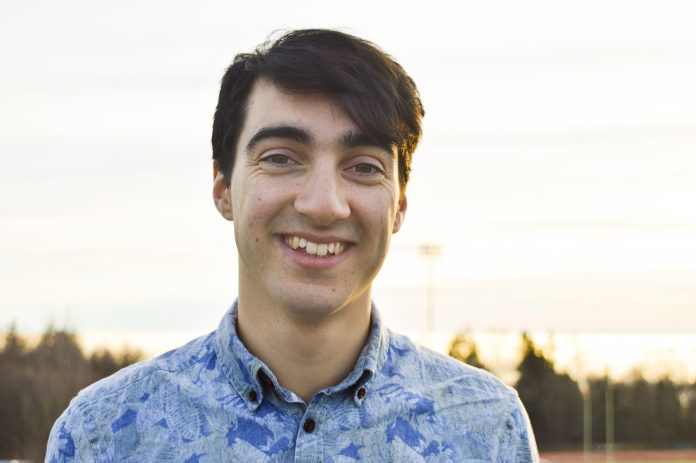
This year Bassett finished 23rd at the national championships, leading SFU to their best ever finish.

Rebecca Bassett has been nothing but consistent since coming to SFU.  The track and field team has qualified for the National Championships every year since she came to SFU in 2012. Her passion for running has taken her to competitions in Washington, Kentucky, Missouri, and most recently Florida.

Bassett plans on combining her love of fitness and nutrition together with the goal of becoming a dietitian, but also plans to keep on running competitively as long as she can. Being an athlete, she knows the importance of proper nutrition and coaching.

Bassett grew up in Nanaimo and took part in running activities at a very young age. Upon realizing she was great at it, she began to dream of competing professionally.

“In high school I started competing provincially, which led to my hopes of competing on varsity teams in university, which led me here.”

Bassett ran in the National Collegiate Athletic Association (NCAA) Division II National Championships on November 19, placing 23rd in the 6 km race against more than 200 other girls.

“It was my last and fourth Cross Country National Championships that I competed in. It was a tough race, but it was good. I came 23rd overall, which was the best I have done nationally, and we also came sixth as a team, which is the best we have ever done at a national championship.”

“Looking back on it, I don’t think I would change anything.”

When comparing her first national competition to her last one, Bassett feels as though she has greatly improved as an athlete. In her first competition, she placed 122nd in 249 runners, then placed 24th and 23rd in subsequent national races.

“Last year I was the only girl to make nationals at SFU. Each year I raced with the top girls and gave it my best. Definitely having more experience helped with that. Knowing who I’m competing with, knowing what I have to do, and also just having fun. Since it was my last race, it was very emotional, but I loved it and I don’t have any regrets.”

When reflecting on her time at SFU, Bassett has had many wonderful experiences that she would do all over again. “Looking back on it, I don’t think I would change anything. Everything that I have done has led me to be a better student and a better athlete.”

Being on the only Canadian team to compete in the NCAA, it’s easy to feel like an outsider. However, Bassett has had nothing but positive experiences.

“Many don’t know that there is a Canadian school in the NCAA — SFU is the only one. Everyone who I’ve met at competitions has always thought that it was really awesome meeting me as a Canadian. I have never had any negative feedback from it. “

In addition to running, Bassett also used to compete in gymnastics, swimming, and figure skating before sticking to running full-time. “I used to compete in gymnastics, dance, swimming, and figure skating. I still swim sometimes at the SFU pool. I definitely prefer individual sports over team sports.”

When running on the treadmill, Bassett enjoys listening to Drake, Rihanna, Beyoncé, Justin Bieber, and Rae Sremmurd. “I listen to music when running on the treadmill, but not during practices or competitions. Although it is allowed, I find it too distracting.”

If Rebecca could have any superpower, she would pick super speed and flying.

COMIC: Peers

0

Undergraduate students vote yes to Embark levy increase

1

Just over 63 percent of students voted yes to increase the levy that undergraduate students provide to Embark, SFU’s independent environmental sustainability organization. This includes increasing the levy for full-time students from $2 to $3.50, and $1.50 to $1.75 for part-time students.

According to Embark’s website, “The referendum that was [previously] passed did not account for rising costs over time related to inflation and program expansion.” The increased levy would allow Embark to make a greater commitment to sustainability for students studying at all three campuses.

Deven Azevedo, chair of the board of directors for Embark, explained to The Peak that expanding and improving services on the Vancouver and Surrey campuses would be a key part of their plan to increase the not-for-profit organization’s effect.

Azevedo added that “The work that [Embark] do[es] is valuable to students,” in regards to the positive outcome of the referendum. He stressed, however, that with the lower voter turnout — just 200 votes over what would constitute approval of the referendum — that “we need to be mindful that there are other students that may not feel the same way.” He added that the organization plans to prove to the 36.6 percent of students who voted “no” that they will benefit from the increased levy.

Now that the referendum has been approved, Azevedo explained that they are in the strategic planning phase to improve the organization. He told The Peak that while Embark is still in the planning stages, they intend to hire a communications coordinator to increase “advocacy efforts and ensure effective advocacy takes place for our programs.” These programs include over 95 no-cost events, as well as the Food Rescue Program, Zero-Waste initiative, Learning Garden, and a peer education program.

Embark also provides two sustainability grants which encourage social innovation and sustainable community projects. Any SFU student can apply for the Sustainable Community Grant and Social Innovation Grant. However, Azevedo explained that the organization has in the past had difficulty meeting the demands of these grants.

“We will now be able to meet those demands” that these grants require, he said.

Embark will also be holding a referendum with the Graduate Student Society, where graduate students are invited to vote between November 29 at 8 a.m. to December 1 at 11:30 a.m.