Home Blog Page 760

Men’s basketball falls six points short of first conference win

0
Hidde Vos played a season-high 32 minutes, collecting 16 points while going four for six from behind the arc.

Down by 12 at the end of the first half Saturday night, it seemed like a recipe for a boring second half that would see SFU double that deficit.

Instead, in front of 650 fans in the West Gym, the Clan came back with a vengeance in the second half and made a game out of it. By the 11:04 mark, SFU had tied the game. From that point on, they were neck-and-neck with the Northwest Nazarene Crusaders, and even took the lead once.

However, a 47–41 second half victory wasn’t enough to take the game, and SFU fell 80–74 to the Idaho-based rivals for their 14th straight loss.

The game started off slow, with Northwest Nazarene putting up the first points on the board 3:18 into the game.

Northwest Nazarene was able to slowly build up a lead in the first half, ending the frame with a 39–27 lead.

Three-pointers were the story in the second half for SFU. After going one for eight in the first, Clan shooters sank seven threes in the second half. Redshirt senior Hidde Vos continued a hot streak, putting in four threes and putting up a season-best 16 points, beating Thursday’s 15 against Central Washington.

Vos’ three marked the tying score at 49–49.

Tyrell Lewin got the Clan the lead at 55–53 with a layup at the 8:31 mark of the second. However, Northwest Nazarene responded with a seven point run, which padded their lead. For a span of just over three minutes, SFU couldn’t get closer than five points to Northwest Nazarene.

With 59 seconds left, JJ Pankratz put SFU within two, but with the remaining time, Northwest Nazarene outscored SFU 10–5 to hold on to the win.

SFU went six-for-15 (40%) from the free throw line, and only sunk two in the second half.

“We played a good 30 minutes tonight, [. . .] but we’re just not at 40 yet,” head coach Steve Hanson told SFU Athletics. “[Free throws were] really the difference. We didn’t turn the ball over much, but we turned it over in crucial times.”

Kedar Wright led the team in scoring with 25 points in 32 minutes played, and also had eight rebounds. Michael Provenzano also put up double-digit points with 11 in a whopping 38 minutes played. Vos, who came from the bench, played a season-high 32 minutes (he averages 18.3 minutes per game).

Redshirt freshman Graham Miller played his first game since December 19, returning from an injury sustained in practice. He played 12 minutes, and collected three rebounds and a point on a free throw attempt.

Andrew Williamson, Vinnie Safin, Bowen Bakken, Aleks Vranjes, and Bongani Moyo did not play.

TONIGHT: The Men’s Basketball team make the short drive to Bellingham, WA to take on Western Washington University.

Western Washington has the best record in the conference with a 91 Great Northwest Athletic Conference record and 153 overall record. They are also the best offensive team in the conference, averaging 90.7 points per game.

However, they are seventh in scoring defence, allowing 78.8 points per game.

In the last matchup at home, SFU found the strong offence-weak defence combination to be a favorable matchup and came out with their closest conference loss, falling by five points to a score of 10398 — their best offensive output.

Tip-off is at 7 p.m.
The problem with boys who only kiss boys to get laughs

1

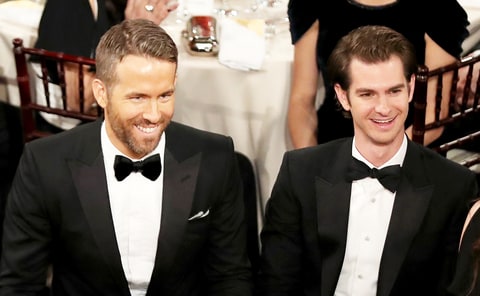
The Golden Globes clip I played on repeat was Meryl Streep’s lethal political takedown; the one I avoided was the infamous kiss between Andrew Garfield and Ryan Reynolds. Bless the fangirls and their rekindled hopes for a Spiderman/Deadpool rom-com, but personally, I cringed, remembering my first time at a bar.  

I’d just graduated and was traveling Asia with a group of volunteers doing construction work in developing villages. During a night in Vang Vieng, we ended up at a local hotspot.  The DJ was great, and so was I — until I saw two girls I was traveling with, girls who, to my knowledge, very much identified as straight, grinding on the dance floor, cheered on by friends and strangers alike.  

I left the dance floor and anxiously waited for somebody to walk back to the hostel with. It took me ages to figure out why that sight bothered me so much.

My high school’s GSA had kids who only attended once a month, fearing that somebody would figure out why they disappeared every Monday. I hadn’t had a serious relationship yet, since so few of us were open at that school. And two months prior to that night, a nightclub full of queer lovers and dreamers had been filled with bullets and bodies.

Yet who was I to police who should be kissing who?  Who am I, now, to assume that Reynolds and Garfield don’t call someplace on the LGBTQ+ spectrum home or have fluid sexualities?  Nobody, I suppose. But I look at these snapshots and see the foundation of a much bigger problem.

Take Garfield’s statement about the kiss on LIVE with Kelly Ripa. The second Ripa brought it up, Garfield became clearly bashful; when asked about the story behind it, Garfield explained that he and Reynolds had planned it as a funny moment should Reynolds win, since cameras were on all nominees.

That, right there, is my problem. Not that two grown, consenting men decided to kiss despite identifying as straight (with the blessing of Reynold’s wife, by the way), but that the kiss was a complete joke — and an effective one, since Kelly’s studio and the entire Internet laughed.  

I’m sure that those two girls I traveled with, grinding on the dance floor, saw that instant as a joke, too.  But it’s insulting to see somebody so effortlessly possess a moment that the public immediately labels grossly inappropriate, should it involve people who genuinely desire it.

I forgot how to dance after seeing two straight girls grind in a bar.  Seeing my marginalized sexuality thrown around so cheaply made me re-evaluate the way I fit into the normal social code for physical interaction and contact between women; and question where, when, and how I should dance, move, behave, or touch others.  

Why do straight girls get to have what gay girls are taught to hide or hush?  Why do straight men get to meaninglessly kiss each other when gay boys are still subjected to shock therapy and psychological abuse? Is our society still just homophobic enough that they can accept a kiss between guys only if there’s no meaning in it?

Comedy relies heavily on physical play, and sex always sells, but that doesn’t justify the  overwhelming amount of men kissing on camera as a punchline. Just as black actors deserve diverse roles on television to avoid being universally stereotyped as gangsters, slaves, or sassy ladies, non-heteronormative love deserves the same respect and seriousness as its alternative.

What would the Internet be doing had Garfield kissed, say, Natalie Portman that night?  It certainly wouldn’t be as funny or shocking.  If love was as universally accepted and accessible as we claim it is, the Garfield-Reynolds kiss wouldn’t be so funny at all.  

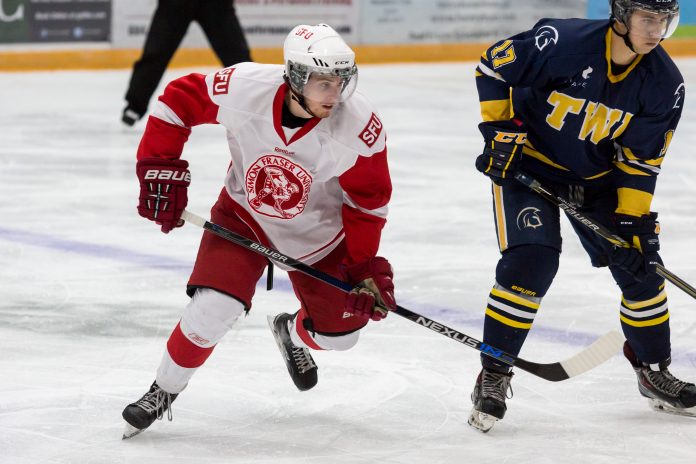
SFU hockey win 6–3 over Trinity Western

0
SFU is now 12-3-2 on the season, and is three points ahead of Trinity Western in the standings.

In what seems to be a common theme in SFU hockey games, first place in the BC Intercollegiate Hockey Leage (BCIHL) was on the line Saturday night against local rival Trinity Western. With SFU only ahead of the Spartans by a single point — and considering that Trinity Western had a game in hand — an SFU loss would have likely given Trinity Western control of their own destiny heading down the stretch in the race for first.

However, a revived Clan powerplay gave SFU a big 6–3 win to give them a three point cushion and their twelfth win of the season.

“The first ten, Trinity were good, they came out and battled hard,” said head coach Mark Coletta afterwards. “They took it to us and I think we kind of absorbed it and started playing and I think we took it to them for 80% of the game. Overall, it was a good game.”

In the first, it looked like it was shaping up to be a low scoring contest, as SFU had only five shots; Trinity, only seven. However, Daniell Lange scored on the powerplay with 18 seconds left on the clock to give the Clan a 1–0 lead heading into the break.

In the second, SFU struggled to start as Florian Niedermaier and Dirk de Waal scored — the latter shorthanded — to give the visitors the lead. Just under 30 seconds after, Daniell Lange struck again on the powerplay to tie it up. From there, SFU would score five straight, three on the powerplay, to give SFU the win.

It was a night of rejuvenation for the SFU powerplay. Coming into this game, the powerplay was five for 31 since the season started up again in mid-January, including a game where they had 16 attempts. This game, they were four for seven and looked dangerous.

“I think it’s confidence and moving the puck well” said Coletta on what made the powerplay click. “We’ve got a good bunch of guys that can really play the game. They’re skillful, [and] I think sometimes they think too much and they get a bit of pressure knowing last night they couldn’t score. I think they did a good job of moving the puck and getting to those open lanes.”

Another major development to come out of this game was the status of Mitch Crisanti. SFU’s leading goal scorer before the game, he will no longer be with the team due to academic reasons. It will be up to the many weapons that SFU has up front to make up for his goal scoring abilities.

“I think the first semester we were scoring by committee, so I think we’ll continue with that” said Coletta. “We’ve got guys like [Scott] Patterson and [Adam] Callegari and all these guys who can do what they should be doing. But everybody has to come on board and start scoring. I think we’ve got a bunch of offensive guys that can do a real good job. I’ll give them all the creativity they want on the offensive side, as long as they don’t turn the pucks over and do a good job in our D zone.”

With the SFU defence now seemingly healthy, it begs the question of whether Brandon Tidy will slot back into defence once he returns to the line-up. A natural forward, he was playing back out of necessity early in the season when SFU was particularly hurting on the blueline. Coletta was non-committal on where he will play when he comes back.

“I think it’s confidence and moving the puck well,”

–head coach Mark Coletta on what’s changed on the powerplay

“He’s one of those players that does everything well,” said Coletta on the SFU captain. If he makes us better on the backend, we’ll keep him on the backend. If he makes us better up front, we’ll play him upfront. It depends on how healthy our six or seven are.”

Next Game: SFU doesn’t play again until Thursday, February 2, in a rematch against Trinity Western. After that however, they play Eastern Washington on the February 3 and Selkirk College on the February 4 — a stretch of three games in three nights.

“Well the health part and taking care of their bodies, that’s on our guys,” said Coletta on how the players will handle the compact schedule. “We give them plenty of rest. They should know and be responsible on how to make sure they’re doing good things.

“When it comes to being physical and in shape, we’ve been working them hard since August. They’re good athletes, they’re in shape, [and] we push them every practice. There’s not just one or two days of hard work; they work five, six days a week. I’m not worried about the three in three, it should be fine.”

All three games start at 7 p.m.

I know my rights, and I’ll never take off my hijab

5

To the bully who targeted me for my hijab: you must’ve been so happy to make me afraid like never before. You took my innocence, and my excitement at enrolling in university. It was a struggle to gather myself and get back to who I am: a strong, fearless woman.

“Go back to where you came from,” you said. You looked at my headscarf and told me it wasn’t accepted here, told me to “remove it or go back.” I felt helpless, not knowing whether to run, scream for help, or just do nothing. I recited every prayer I could in my heart, begging for God’s mercy.

As if sent from heaven, an angel of an old man came to my rescue. He walked straight to where you were tormenting me, and you left calmly, like nothing happened, sure that you achieved whatever you had in mind.

I remained, devastated and traumatized, having no words to describe what just happened. I couldn’t properly reply when asked if I was okay; all I could do was nod and walk away, short of energy, and unsure of who to trust.

That happened after barely two months in this country. My high expectations of my time here went down the drain. I asked myself: how safe am I here? Who do I turn to? To whom do I tell the story of what had happened to me?

I hadn’t yet made friends at SFU. My mother came to mind, but I ended the call before she picked up. I realized that I’d regret telling her, because she’d worry that I wasn’t safe in my new faraway “home.”

I spent days in my room with no food and no contact with anyone, just lying down and sobbing. Afterward, I became anti-social, and never felt ready to talk to new people. I wouldn’t walk anywhere alone. Whenever I saw bigger guys, I found myself moving quickly away.

It wasn’t something I could control, and I didn’t like that. I questioned those behaviours every time, promising myself that they wouldn’t happen again, but I couldn’t help it for a long time. I’m normally social, joking and ever-joyful; now, I can’t stop thinking about the many happy moments I missed during that period.

To the bully who targeted me for my hijab: I don’t know who else you hurt before coming for me, but you’ve opened my eyes to the real world and made me see things as they are. I came here excited to feel safe and secure, able to exercise my rights and privileges, but even in one of the “safest countries” in the world, I still don’t have the power to choose what I want to do.

You’ve reignited my fire, and despite the fear you tried to inflict upon me, you’ve empowered me. I know my rights better now, and I’ll never take off my hijab just because you or anyone else wants me to, or because it’s “not accepted here.” It is my dignity, my respect, and my honour, and I will never trade it for anything.

I speak for all the women out there who, like me, have faced racism and Islamophobia without knowing how to deal with it; who kept their grievances to themselves because of fear; who didn’t know where to report the injustices. We’re in this together, and nobody should feel abnormal for it. Racism and Islamophobia can happen anywhere, and it’s no fault of the targeted individuals.

Insecure, unwanted, and unsafe: that’s how I felt that day. But I won’t let it stop me from speaking my mind — everyone assumes that all’s well, when it’s not even close. I tell my story not because it’s unique, but because it’s what many women face. I choose to tell my story today, tomorrow, and every day after.

Canada, stop nannying your people

1

For many people, university is a freeing experience. You might be living on your own, or living your life with a greater degree of freedom than you had in high school. You’re staying out late, drinking on Wednesdays, and skipping classes because of the previous two things. Yes, your parents may not have as much control of your life as they once had, but the government’s control is still as strong as it ever was.

Governments across the world regulate pretty much every part of your life, and our federal and provincial governments here in Canada are no exception. These parts often include activities where you’re the only potential victim, from how much exercise you have to get in high school to how hot your milk has to be cooked before you can drink it.

These kinds of regulations might be in place to keep you healthy, but shouldn’t people have the ability to make their own decisions about their bodies? If not, why doesn’t the government ban smoking, or drinking, or risky sexual practises entirely?

Because it can’t, and it knows this. Too many people smoke and drink for an outright ban to work. Just look at the absolute failure that alcohol prohibition was in every country where it’s been tried. From 1920 to 1933, the US attempted to control its citizens’ use of alcohol, leading to increases in two areas: criminal activity associated with the production and sale of liquor, and mortality rates linked to alcohol.

If you take away people’s freedoms too quickly, they start to notice and do everything they can to get around the barriers — often to detrimental effect. No, the more effective path is to just make it as inconvenient as possible to partake in these acts until the people decide of their own volition to stop. So laws such as plain packaging and the Smoke-Free Ontario Act are designed to nag you into compliance.

Health Canada goes as far as patrolling garage sales to ensure that “electronics are packaged with instructions for safe use.” If you think this a good idea, I’d like you to find all the instruction manuals for the electronics in your house. Manuals that you probably threw away immediately, particularly in cases where they’re easily available online.

I agree that things like smoking are pretty bad for your health. I’m just not willing to forcibly browbeat people into quitting. We’ve already seen attempts to extend this logic into areas as mundane as soda pop regulation outside Canada: New York City tried to limit the maximum size of a soda to 16oz.

Sure, sugary drinks cause obesity. So does chocolate, and lack of exercise. The sun causes cancer. Sex can cause STDs. Walking can cause falling, driving can cause crashing, and eating can cause choking.

Being an adult means taking on the responsibility of weighing life’s risks and rewards when making a decision. If you want to live an ascetic lifestyle, without drugs, or fatty foods or sunlight, that’s your prerogative. But don’t advocate forcing that on the entire country. It should not be the government’s responsibility to protect adults from the consequences of their own choices.

Let’s Talk about the corporatization of mental health

0

Mental health in the media is never messy. Portrayed sufferers tend to be bored white people who spend their time indoors with the lights off, until they find the perfect medication for them. Then it’s all bike rides, swingsets, and walks on the beach. Symptoms are clean and treatment is simple: all it takes is the perfect pill, and wham, instant relief.

But anyone who has lived with mental illness, or has a person in their life living with one — which is pretty much everyone — knows this is bullshit. There’s no easy fix for mental illness, and if there were, it probably wouldn’t be sold in a box. Recovery requires a steady support group, help from a professional, a hell of a lot of effort, and, most of all, time.

It’s work worth doing, but it is work, and it’s a struggle that is almost never portrayed in the media.

Which brings me to Bell Let’s Talk, a program that advocates for mental health awareness and destigmatization. Every January since 2011, Bell has devoted a day to sponsored support of mental health initiatives, donating 5¢ for every tweet, text, Instagram, and Snapchat sent with a #BellLetsTalk hashtag. It promises aid through vague, but positive-sounding slogans like “Be Kind” and “Language Matters.”

The campaign comes with a who’s who of celebrity survivors, including Deal or No Deal host Howie Mandel and decorated Olympian Clara Hughes, the latter of whom has her face plastered on seemingly every bus stop in the city. It’s clean, it’s stress-free, and it comes with testimonials from your favourite TV personalities. What more could you want?

I would love to believe that Bell has only our best interests at heart. And to their credit, they do end up raising a lot of money — about $6 million in total to approved charities including the Canadian Red Cross and the Canadian Mental Health Association.

But let’s not forget that Bell still charges customers for all texts sent during the day, and gains plenty of positive media coverage throughout their campaign. Every tweet you send serves a double purpose: it’s a donation to charities that also promises more pocket lining for high-paid media executives.

As with any company, Bell has a product to sell. It’s the biggest telecommunications company in Canada, and about 28 percent of all media and communications revenues in the country as of last year were Bell’s. Canada’s media concentration is among the worst in the G8, and Bell has been targeted for charges of censorship and increasing the monopoly of Canadian media by a handful of companies.

All of this is to say that, for better or worse, Bell has the ability to significantly impact how Canadians see mental health. And the company’s portrayal of Mental Wellness™ is as adulterated as they come, implying that depression is just a case of the blues, and the cure is a hug and some friendly conversation.

It also focuses primarily on young middle-class whites, while mental illness disproportionately affects seniors, the homeless, those in lower income brackets, and those with substance abuse problems. And most Canadians with a serious mental illnesses are also unemployed, meaning that their access to Bell services is likely limited — leaving them out of all the hashtag hype.

To be clear, I’m all about sharing your experiences on social media, and pretty much anywhere else. I’m a chronic oversharer myself. Visibility is important, and stigma is a real barrier to acceptance.

But the medium is the message: every discussion of mental health spurned by Bell Let’s Talk is mediated by the needs and wants of a multi-billion dollar corporation that’s more concerned with your wallet than your wellness.

Seal it about the seal dish controversy

0

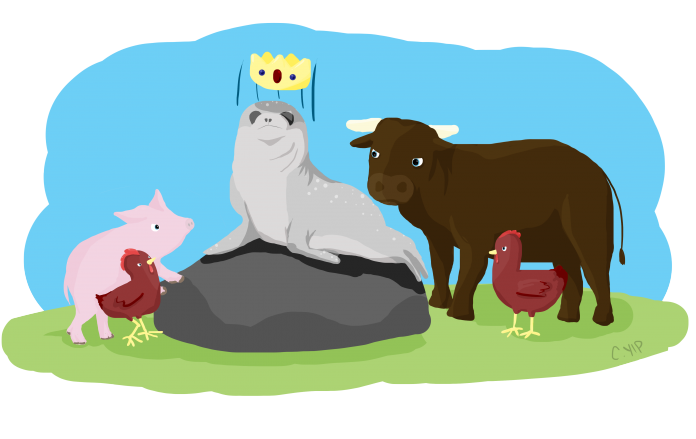
Chef Eric Pateman of Edible Canada has been receiving a lot of criticism for the dish he’s serving for Dine Out Vancouver — Newfoundland seal pappardelle. Activist organizations are asking for the marine mammal to be taken off the menu, claiming that seal hunting practices are inhumane and that the dish supports the cruel hunt.  

Are the hunts cruel and inhumane? As a certified cries-at-dog-recovery-videos wimp and leaf-eater (vegetarian), of course I believe that the hunts are awful — but that’s not my issue with the controversy. My issue is with the anger and irrationality that many so-called activists seem to have in common.

These sorts of voices seem to be causing a lot of noise, screaming at the restaurant in hopes of getting their way — PETA being a prime example.  The animal rights organization staged a demonstration of a costumed seal writhing in a pool of blood in front of the restaurant to express their beliefs about the seal hunt.

It’s true that, while I do disagree with their methods, PETA isn’t unjustified in the anger they feel.  In 2008 alone,  an estimated 218,000 harp seals were killed with high-powered rifles, shotguns firing slugs, clubs, and hakapiks (traditional hunting tools comprising of long sticks with sharp hooks on either end).

The practices used to kill seals are reportedly more “humane” than others. Yet animal rights advocates claim that many seals are skinned alive, and that working conditions make killing seals quickly very difficult, so many pups suffer greatly during the hunt.   

These facts are awful, but the seal hunt is legal, along with many other cruel practices towards animals. The people who follow and work within these laws, business owners and average citizens, aren’t the whole issue — they’re simply byproducts of a problematic system.

Sure, they are perpetuating a bad practice, but don’t we all? We’ve all got smartphones up the wazoo, and we know that every time we break one in a wonderful first world country, a child suffers in a third world country helping make a replacement. We definitely should all be held accountable for our actions, but we’re often so overwhelmed by the power of big business that it can seem impossible to live ethically — so we give in.

This is what many of the voices that cry out seem to be neglecting, and their ignorance is my issue.  While the restaurant is definitely enabling an often-cruel practice, attacking it for simply selling the meat is rude, pointless, and does absolutely nothing to protect the seals. The only things that these types of protests seem to accomplish is the destruction of the credibility of actual activists, making their causes look like a joke.  The angry and entitled attitudes of these protesters seem to completely halt them from taking a step back and acknowledging the reality of the situation.

If you’re looking to actually make a difference, do the work to make that difference. Organizations like Harpseals are committed to ending seal hunts, and they suggest that you volunteer your time, write letters to those who can help (e.g. government officials, tourist businesses, etc.), and ask your friends and family to join your fight for the cause.  Change the world with your actions and not your ignorance.

How to gracefully deal with your mortality

0

You are going to die.

Yin and yang. Life and death.  You can’t have one without the other.  So, instead of bitching about it, here are a few tips to dealing with the concept of your inevitable death.

Forge ahead

Have a free moment? Trick question — you’re a student. You can’t sit there and contemplate the possibility of an afterlife; you’ve got a paper on communication below the threshold of awareness to write! If that doesn’t keep you busy, I’m sure staying up all night with your math textbook will be enough to keep your mind off it.  

Delegate

Why worry about these things at all?  You (probably) won’t have to deal with your death for at least another 50 years — why not simply put off the anxiety and delegate the responsibility to your future self?  Instead of worrying about lowering your lifeless body into the ground, simply wait and ponder these thoughts while you’re dealing with other pleasant questions like “what have I done with my life?” and “why doesn’t anybody love me?

Have a one-night-stand

Nothing like the adrenaline rush and thrill of a hook-up with a perfect stranger, or even someone you know for that matter.  Rather than thinking about the fact that next to nobody dies peacefully in their sleep, instead think about the many joys and pleasures of sex.  As you both fumble for protection, try not to fixate on terrifying statistics such as how 0.6% of all sudden deaths occur during sex.

Eat

What are questions of life and death when compared to a full box of Oreos? Worthless.  Science fiction writers used to imagine a gun that could erase memories. Had they known that they could accomplish the same thing with a box of pizza, they may have saved themselves some time. Instead of wondering why we bother to do anything at all if it’s all going to end anyway, think instead of the sweet, sweet taste of Charleston Chew.  


Ultimately, the only thing we can do to gracefully deal with mortality is to understand that mortality is inherently graceless. To finish, I’d like to leave you with a line from the BBC’s
Blackadder, which I believe has the whole thing right: “I am therefore leaving immediately for Nepal, where I intend to live as a goat.”


Werld News Headlines

0


South Korean president, Park Geun-hye, impeached

North Koreans: Wait, you can do that?!


Donald Trump’s advisors want Ivanka for government position in White House, while Trump wants her for reverse cowgirl position in White House bedroom.


Stoners panic over where to find weed in Vancouver as Richmond councillors reveal plans to block marijuana dispensaries.


Vancouver’s Night Nation Run described as “all night, outdoor EDM dance party” by organizers and as “the reason we’re moving to Coquitlam” by anyone living nearby.


Canadians torn over whether Kevin O’Leary running for Conservative leadership is a bad idea or awful idea


What your textbook says about you

0

Classes are in session, and students across all SFU campuses have been dishing out the big dollars to get their hands on textbooks that fit their lifestyles — and their courses. But what does your textbook say about who you are? Find out below!


ARCH — Archaeology

*Monkey noises*

Why are monkeys monkeys? Ponder this and many other butt-scratching questions by reading a textbook on archaeology — the groundbreaking study of old dry things. Just like other close relatives of australopithecus afarensis, you most likely use bipedal locomotion and are manually dexterous.


BUS — Business

“I
really want to be rich.”

Luckily for you, most business textbooks are well-written and designed, if a little pricey. You gotta spend money to make money, am I right? These textbooks showcase your wild entrepreneurial spirit. Except for the Practitioner’s Income Tax Act. It’s best to burn that book after use.


BPK — Biomedical Physiology and Kinesiology

“The only bottoms I own are sweatpants.”

Studying the body means that you know how to be nice to it, and one of the best ways to do that is to keep it comfy in sweats. Don’t worry, they don’t make your lumbo-pelvic hip complex look anteriorly rotated.


CMNS — Communication

“I’m probably kinda lazy.”

Some communication majors are exceptional students, eager to learn about media theory, political economy, and telecommunication. Then there’s the other 98% who want a degree and decent GPA, but also have other things they’d rather do with their time. Statistically speaking, you’re probably part of the latter.


CMPT — Computer Science

“Beep beep boop.”

You probably either spend most of your time on a computer because it’s your interest, or feel overwhelmed because all of your classmates are so tech-savvy. Remember that your textbook and online practice resources are your best friends, as most CMPT profs are about as experienced with teaching as a Vancouverite is with heavy snowfall.


CRIM — Criminology

“I don’t sleep at night.”

You probably watch gratuitously gruesome horror movies at the end of the day to wind down from all the fucked-up shit you learned about in class earlier. Don’t worry; you won’t get consumed in your research and go crazy yourself. . . probably.


ECON — Economics

“My hatred for graphs is steadily inclining.”

Sure, you get to do it with models and closely inspect their curves, but the demand of ECON courses is just too high. Kudos to Doug Allen for single-handedly keeping Voltaire’s Candide in print, but you should probably just the read the SparkNotes summary for those ECON 103 bonus questions.


ENGL — English

“I have lots of books.”

English classes provide you with the opportunity to carry around 25 books at a time for the first two weeks, only to give up by the third week and just lookup the summary on Wikipedia whenever a text is referenced. On the bright side, all those classics you have stockpiled at home are DIY interior decorating projects just waiting to happen.


IAT — Interactive Arts and Technology

“I literally shit aesthetic.”

IAT courses probably have some of the coolest, most beautiful textbooks out of all disciplines. Unfortunately, they’re so beautiful that you wouldn’t want to run the risk of damaging them by reading them. Find the information you need for class online and instead use your textbook as the statement piece on a coffee table to compliment your room’s chic minimalist look.


LANG — Language

“I already speak this language.”

If you’re taking a language class and don’t already know a fair amount about the language, you’re doing it wrong. These classes work best as GPA brownie points for people who are already fluent in that given language.


MATH — Mathematics

“I always differentiate myself.”

Taking Math is about as rational as pi. These poor textbooks always look sad because they have so many problems. You’re most likely the sort to go off on tangents, in the hopes of integrating yourself with others, when really, you’re differentiating. Just take care to ensure carrying that calculus book doesn’t give you scoliosis.


STAT — Statistics

“I’m a sexy masochist.”

Stats textbooks average about 80lbs each. Lugging those mammoths around all day ensures that you have stellar quads. You can usually buy a stats textbook for the price of all your savings, your soul, and your first-born child. All your axes are are probably mean or average — yeah, that’s right, we know your type.