Home Blog Page 550

Exclusive interview with long-dead SFU dungeoneer

0
Illustrated by Marissa Ouyang

Sandra Swiftfoot is a third-year wizarding student with a minor in roguishness. She died exploring the labyrinthine corridors of SFU over 10 years ago. Thanks to the recent removal of the campus ban on necromancy, The Peak was able to raise Swiftfoot from the dead for an interview.

After some initial whining about being turned into The Peak’s zombie thrall, Swiftfoot agreed to talk to us about her findings.

“I heard a rumour going around that SFU was originally constructed as a prison for evil wizards,” Swiftfoot related. “Bored by the ramblings of my Lawful Good professors and their tired old refrains of ‘never use magic as a weapon,’ or ‘whatever you do, never go into the haunted crypts underneath the school’ I decided to skip my dungeoneering class and head off for a little spelunking of my own. I’m more of a hands-on learner anyway, and I wanted to find out if the rumours were true.”

According to Swiftfoot, she then gained access to the crypts under SFU through a tunnel near the still-unfinished husk of the SUB called “the undergrounds.”

“Once inside, I fought my way past several animated skeletons, a colony of living mould, and a golem made out of solid gold — a forgotten pet of the student society, created as a means of demonstrating their power to spend student dollars however they please.” Swiftfoot then used a Detect Evil spell to guide her towards what she hoped was a prison full of “badass wizards.” What she found next was chilling.

“I had just finished rummaging through the pockets of a deceased first year who foolishly triggered a spike trap, when I found a series of strange markings on the wall. I only found one gold piece, but the markings led me to a doorway with runes inscribed above it.” After using a Decipher Script spell, Sandra saw that the runes spelled out “SUB.”

Inside, she found a fully furnished student union building, complete with a naproom and vending machines full of beer. “Beside a dusty floor-to-ceiling portrait of Archmage Arthur Erickson, I found a note ordering the immediate shutdown of the SUB and the creation of a new one on top of the site.” According to Swiftfoot, the note was dated as being issued in 1990, with the reasons for the closure cited as “inappropriate use of the naproom, binge drinking, and a minor goblin infestation.”


The note also touted the closure as “ . . . an opportunity to build a new SUB, which could take years, provide jobs, and give student politicians the illusion that they’re actually getting something done.”

When asked why she didn’t report her findings immediately, Swiftfoot said “I died, remember? Just before I left, I reached for one of the beers in the vending machine — which was still ice cold, I might add — setting off a poison dart trap which struck me in the leg.” Swiftfoot almost made it out, but eventually succumbed to the poison. Thankfully, her body was recently found by a group of archeology students.

As the interview wrapped up, she stated to The Peak, “Oh yeah, and I also accidentally let out a centuries-old lich who was trapped down there. He said something about ‘engaging the world,’ you might want to look into that too.”

Adulting 101: Fall produce and how to eat it

0
Illustration credit, Tiffany Chan

The fall solstice was officially September 21, but the season’s coming doesn’t really feel real until Thanksgiving, Halloween, and midterms start to loom on the horizon. Luckily, you can turn autumn into your best food season yet.


Apple

How to pick: Check for firm apples which aren’t bruised — though scuffs and specks may be normal. While this may be weird to do in the middle of Nesters Market, or wherever you buy your produce if you don’t live at SFU, make sure your apple has a good smell to it too.

What to make: Wash, peel, and slice your apples, and toss them in cinnamon and brown sugar. Wrap your apple slices in Pillsbury Crescent dough triangles and bake following the instructions on the package. Serve hot. Bonus: drizzle with caramel for additional yumminess.


Beets

How to pick: Look for smooth, hard, rounded beets. Dwight Schrute does not approve of beets that have cuts, bruises, moist spots, or shrivelled skin. If you’re going to be cooking or roasting them, try to size them evenly for even cooking.

What to make: My mom loves, loves, loves pickled beets, so you could try your hand at pickling and canning them, since canning makes for a handy gift. You can also peel and slice your beets and dry them out in the oven at 350°F to make beet chips. Bake your chips until the sides of the beets begin to dry out (this should take about 20 minutes), and rotate your sheet in the oven. Keep doing that until they’re completely crispy.


Broccoli

How to pick: You want your broccoli to be bright green, for the florets on top to be clustered together, and for the stalk to be solid.

What to make: Broccoli makes for a great pasta salad. Chop up about two crowns of broccoli and mix that with six ounces of pasta, a chopped-up bell pepper, cheese cubes if you wish, apple slices, and anything else lying around your kitchen, like cranberries, sunflower seeds, carrots . . . You can use a store-bought dressing if you have some, or mix up mayonnaise, olive oil, and dijon mustard. This soup is also delicious and filling for all you meal-preppers.


Brussel sprouts

How to pick: Bright green, no yellow leaves (that means they’re aged), or black spots (don’t panic, but that might be a fungus). Also, make sure the leaves are packed together. If your brussel sprouts are giving you tulip vibes, they’re passing their prime.

What to make: Brussel sprouts are a stupid easy side once you roast them in the oven. Trim and half your brussel sprouts, toss them in olive oil, layer on your baking pan, and sprinkle with salt and pepper. You can dress them up with parmesan cheese, bacon bits, maple syrup . . . It’ll be 16–20 minutes in an oven at 425 degrees Fahrenheit. Feel free to load them up on rice with other veggies and proteins.


Cabbage

How to pick: Your cabbage should be compact, with no leaves flopping off. Colour depends on the kind of cabbage that you’re picking.

What to make: My first job included mixing industrial quantities of coleslaw by hand, so I stay clear of that stuff now. Instead, may I suggest making cabbage rolls.  Cabbage rolls can be deconstructed into no-nonsense one-pot meals, and yes, there are vegan versions out there too.


Carrots

How to pick: The bigger the carrot, the sweeter it’ll be, because it spent more time in the ground and developed more sugar. They should be smooth and firm, and the carrot and leaves should both be deeply coloured.

What to make: These carrot muffins are my favourite (without the raisins, of course). You can also try shredding carrots and tossing them in overnight oats with cinnamon, nutmeg, cloves, and a bit of brown sugar to have carrot cake for breakfast.


Cauliflower

How to pick: No black spots, and the cauliflower should be firmly packed.

What to make: You might have heard about the Pinterest craze that is cauliflower rice. I recommend this roasted veggie pasta for the weeks when your budget needs to be stretched to Elastigirl levels.


Crabapples

How to pick: Like an apple, but smaller. Look for firm, crisp crabapples. The colouring depends on the species of crabapples, so be careful.

What to make: Jelly! It sounds scary but it’s pretty straightforward, delicious on crackers with cream cheese, and makes for a cool gift.


Cranberries

How to pick: You can get cranberries canned or dried in bulk, which is easy. While it’s rarer to get fresh cranberries, fresh cranberries should be bouncy, firm, and deeply coloured.

What to make: Throw them in literally any salad, or just snack on them while you study. Alternatively, make your favourite chocolate chip cookie recipe but substitute your chocolate chips for white chocolate chips and add a cup of cranberries.


Eggplant

How to pick: Your eggplant should be smooth and shiny. If you push your thumb into your eggplant (it’s weird but bear with me), the flesh should give a little but return to the original shape once you stop applying pressure.

What to make: Eggplant and black bean sauce stir fry. You can cheat on this recipe with store-bought black bean sauce — nobody will judge you — and you can also add tofu or chicken to this dish. Serve on rice.  


Ginger

How to pick: Smell really helps here: your ginger should be spicy and spicy. The skin should be thin and there should be no soft spots.

What to make: Now that it’s Fall you’re going to get sick; boiling ginger to make a tea will help. Other than that, this carrot apple ginger soup is foolproof and delicious.


Green Beans

How to pick: Should be bright green and smooth.

What to make: These green beans bundles are a great side or addition to a potluck because, plot twist, people like bacon.


Kale

How to pick: Kale should be moist and unwilted. The smaller the kale leaves, the more tender and mild the kale.

What to make: In a large skillet, caramelize some onions. Chop up one apple, and throw that in. When the apple is softening, drain a can of chickpeas and add it to the skillet. Drizzle the whole thing with maple syrup or agave or honey or whatever you’ve got and mix, before throwing in a bunch of kale, chopped in large chunks. Cover the pan with a lid and give the kale about five minutes to wilt. Delicious hot, but will make for a good leftover.  


Leeks

How to pick: Look for leeks that are light green and white, with as little dark green as possible. Smaller leeks have the best taste, but anything firm with crisp and undamaged leaves will be good to go.

What to make: My roommate and I got really obsessed with this leek and sweet potato and rosemary soup recipe. It freezes amazingly too, so you can make a big batch and treat yourself during exams.


Mushroom

How to pick: This depends on the type of mushroom you’re looking at getting, but make sure that you check the stem and the cap to avoid surprises.

What to make: This wildly depends on what kind of mushrooms you pick up at the grocery store or market, but creamy pastas like this one are killer, and mushrooms combine really well with spinach.


Pumpkin

How to pick: Unlike for jack-o’-lantern purposes, cooking pumpkins should be on the smaller side. It should be brightly coloured with a dried out stem, and when you tap against the pumpkin the sound should be hollow.

What to make: I see your pumpkin spice latte and raise you chocolate pumpkin swirl brownies. Or carrot pumpkin muffins, to which you may add grated apples or chocolate chips or both. I have no shortage of pumpkin recipes. Boom, pumpkin soup. Go find this piece online for links.


Squash

How to pick: Your squash should be heavier than it looks. It sounds dumb, but the idea is that if the squash’s flesh is moist and healthy, it’ll be heavy. If the stem looks damaged or wet, the rest of the vegetable probably isn’t that great either… Also, make sure that your pumpkin’s flesh is dull — shininess usually means that the vegetable was picked too early.

What to make: Butternut squash mac and cheese. Hands down. Here’s a vegan version that can easily be made gluten-free if you have dietary restrictions.


Sweet potatoes

How to pick: You’ll want medium-to-small sweet potatoes (big ones are starchier) boasting evenly and deeply coloured skin.

What to make: Sweet potato fritters. Grate three cups of sweet potatoes and squeeze out all the liquid. This step is super important, because without it, the consistency won’t work. Mix with four whisked eggs, salt, pepper, and paprika. Heat some butter in a saucepan over medium heat, and create little balls with your sweet potato mixture (thicken up with flour as needed). Drop them in, and make sure to flip every five minutes until your fritters look crispy and brown. They’re delicious with spicy mayo, or when topped with avocado. This won’t help you cook or anything, but you should know that this is Michelle Obama’s favourite fall vegetable. So bonus.


Zucchini

How to pick: Once again, the smaller, the better. Big zucchinis are watery and have larger seeds. Look for vibrant colouring, whether your zucchini be green or yellow.

What to make: Disney made you believe that ratatouille was difficult to make, but this is a lie. French ratatouille is usually a kind of stew, but you can also elegantly slice and bake veggies like in the movie, by following this recipe. Don’t be shy about making chocolate zucchini bread for dessert either.


 

SFU women’s soccer coast to 3–0 win against Saint Martin’s Saints

0
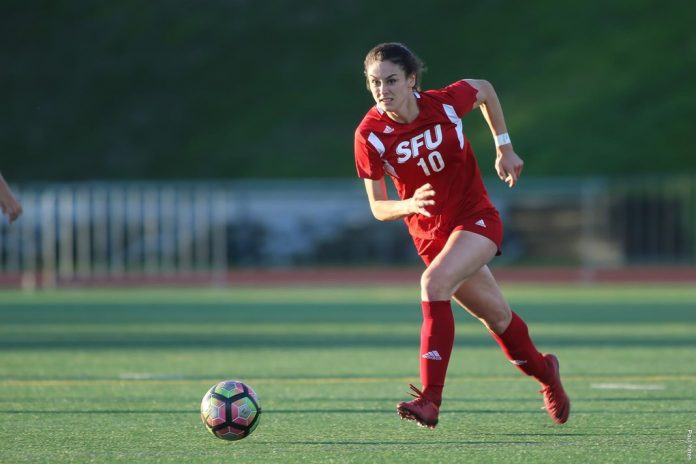
Emma Pringle leads the GNAC with 11 goals this season. (Photo courtesy of SFU Athletics)

On Tuesday night, the SFU women’s soccer team hosted the Saint Martin’s Saints. The Clan controlled the game from start to finish, but only Emma Pringle was able to find the back of the net, doing so three times.

In the game’s early moments, the Clan flirted with scoring multiple times, controlling the ball in the Saint Martin’s half. In the 16th minute, Pringle scored the highly anticipated first goal of the game, taking a perfect low-driven cross from Katelyn Erhardsen down the right wing and sliding it into the net.

Shortly after, Pringle controlled a cross from the left side of the field, this time via Jenna-lee Baxter and tapped it in for her second goal of the game, a mirror image of the first. The assist gave Baxter her league-leading 23rd point of the season, in only 13 games so far this season.

The Clan went into halftime with a 2–0 lead, and all the scoring chances in the game.

Pringle completed her hattrick eight minutes into the second half, once again after handling a cross from the wing. This time, her goal required more effort, as she dribbled to her left and chipped the ball over the keeper’s right arm and into the net. Shortly after, she was substituted out — likely to rest her before SFU’s next game on Thursday.

The Clan played out the rest of the game, controlling possession and denying the Saints chance after chance for the remainder of the second half.

Despite controlling the game, head coach Annie Hamel was not quite satisfied with the team’s performance.  

“I thought our overall play wasn’t up to our standard,” Hamel noted. “The decision-making was poor and we got out of good habits because we were playing a lesser opponent, and the girls’ mindset was different because they knew they could get away with more.”

This is the mentality of good teams; they’re always looking to improve. SFU has had a fantastic  start to the season, and are now 9–3–1 overall with a 7–1–1 conference record. The only team they’re trailing in the GNAC is Concordia University, who have a 7–0–1 record.

“The senior leadership is extraordinary,” said Hamel about her team. “The experience the six seniors come with is the difference from the previous years.”

What’s next:

The Clan will now host Seattle Pacific on Thursday night, who are currently fourth in the GNAC with a 5–3–0 record. Kickoff is at 5 p.m.

“The scheduling from the GNAC needs to get sorted because that’s just not safe to play this much in such a short period of time. It will be a tough match-up and certainly a day full of emotions as it is senior day!” said Hamel.

Peak player of the game: Emma Pringle

Whenever a player has a hattrick, they are going to be noticed. Pringle’s three goals were the difference on the night, and now give her a GNAC leading 11 goals. Despite the effort, Hamel still thinks she has more to offer.

“[Pringle] didn’t play her best game. She’s a special player, there’s no doubt, but today she struggled getting into a rhythm. Still, when you’re as special as she is, an off day can still result into three goals.”

Adulthood 101: Voting in the 2018 Burnaby municipal election

0
Illustration credit, Tiffany Chan

The Burnaby election campaigns have been underway for a few weeks now, and this weekend, we’ll be voting for one mayor, eight city councillors, and seven school trustees. The mayoral race mixes old and new faces, and three out of four candidates are independent. While many of the candidates have overlapping interests, each of the four has different priorities and different ideas on how to bring change.


Practical information

Voting day is on Saturday, October 20. You can vote if you’re 18 or older, a Canadian citizen, and a B.C. resident for at least the past six months. You also need to have lived in Burnaby for at least 30 days before voting day.

If you haven’t voted in one of Burnaby’s municipal election before, you must register to vote. Registration is a quick, minutes-long process you can do by phone, mail, fax, email, or here at the Elections BC website. You can also register in person on the day you vote. On voting day, you can vote conveniently at any of the 34 voting locations between 8 a.m. and 8 p.m.


Mayoral candidates

Derek Corrigan

Derek Corrigan, Burnaby’s current mayor, hopes to win his sixth election this year, backed by the NDP-affiliated Burnaby Citizens Association (BCA). His priorities include opposing the Kinder Morgan pipeline project, creating affordable housing, reducing traffic in Burnaby, and sustainable economic growth.

Over his past few mayoral terms, Corrigan has opposed the Kinder Morgan pipeline and has challenged the federal government in court. In his interview with Burnaby Now, Corrigan expresses on multiple occasions the complexities and power dynamics between the three levels of government in Canada, and how he thinks Burnaby can fit into these.

Another issue that Corrigan considers important is affordable housing. He explained in his interview with Burnaby Now that federal and provincial governments do not invest in social housing, and so the burden often falls on municipalities. The problem, in Corrigan’s eyes, is that cities don’t have enough power to do much.

However, he noted that his office has done what they can, including “building 1000 new below-market rental units in 16 new projects,” and taking “advantage of the new provincial rental-zoning authority to maintain and increase affordable rental units.”

Aside from having five mayoral terms’ worth of experience, Corrigan has been an influential public figure in the Lower Mainland. He beat Gregor Robertson to become chair of the Mayors’ Council on Transportation in December, and sits as chair on Metro Vancouver’s Climate Action Committee.

In his candidate profile, Corrigan states that: “In addition to my sincere commitment to help ensure Burnaby has in place policies and programs that reflect citizens’ needs and aspirations, I believe that my years as mayor, dozens of experiences as a community volunteer, and training as a lawyer all help me to achieve this goal.”


Mike Hurley

Mike Hurley, an independent candidate, seems to be Corrigan’s biggest competition. The two are closely tied among voters, according to a poll commissioned by the International Association of Firefighters. Of the decided Burnaby voters polled, 43% supported Corrigan while 42% supported Hurley.

Hurley, a former firefighter, he was president of the Burnaby Fire Fighters and of the B.C. Professional Fire Fighters. He has also been active in the community, helping start charitable programs such as the Healthy Snack Program and the Burn Fund Centre.

Hurley’s mayoral bid has the support of the United Steelworkers and the Greens. In fact, to support Hurley in beating Corrigan, Green candidate Joe Keithley dropped out of the mayoral race.

“I am stepping aside, as I believe the best way to make positive change in Burnaby is to defeat Derek Corrigan and elect a new mayor,” Keithley said in a news release. “I believe that Mike Hurley is the best candidate to achieve that. I recently met with Mike and we both realized that our goals for Burnaby were really not that far apart.”

Hurley’s campaign platform prioritizes affordable housing, health and wellness, and safety in the community. He has released a Housing & Affordability Action Plan and a Health and Wellness Action Plan, both outlining specific measures that he intends to take to improve Burnaby.

In the Health and Wellness Action Plan, he suggests creating a mayor’s council of “top notch doctors, nurses, and wellness professionals,” expanding and upgrading Burnaby Hospital, and setting up health care services that are closer and more accessible to citizens, among other things.

Part of his Housing & Affordability Action Plan includes banning demoviction in the city. More specifically, he wants to “place a moratorium on developments not yet approved until accommodation at the same rent levels can be found for residents who are being forced from their homes,” as Hurley’s website states.

Hurley outlines other goals there too, including public safety. He wants to “make our transit stations, parks, and streets safer and ensure adequate policing.”

Hurley opposes the pipeline, but in a press release, he asserted that “this decision will be made in the courts, not in the Mayor of Burnaby’s office.”


Helen Chang

Helen Chang is another independent candidate for mayor. She was a Burnaby school trustee from 2005 to 2008 and now runs a small business. She has organized community forums on issues like hate crime, school bullying, immigration fraud, medical fraud, and women’s issues, and has done victimology research works on several of those topics. In 2010, she tabled a petition in Parliament for Canada to implement a Hate Statistics Act.

According to her interview with Burnaby Now, Chang’s top priorities for things she’d address as mayor are increase accountability in the Burnaby municipal government (she mentions “loopholes in our system” and “root causes of corruption” in municipal government), housing problems, and the Kinder Morgan pipeline situation. However, she plans to take a different approach on the pipeline than Corrigan’s.

“Instead of wasting time and taxpayers’ money by engaging in litigation where there is almost nil chance to win, I will cooperate with the federal and provincial governments and try to reflect the needs of our communities involved in this project to reach a most reasonable solution for everyone in Burnaby,” she told Burnaby Now.

“For the last 20 years, I’ve been working for myself, our community and people who cannot defend themselves due to systematic corruption and discrimination,” Chang says. “I believe this will make me a good mayor.”


Sylvia Gung

Sylvia Gung is the last independent mayoral candidate. This is her third time running for mayor after receiving less than 1% of the vote in the 2014 election. Her occupation is listed as “newspaper promoter,” and she has spent a lot of time “wandering in Vancouver’s Downtown Eastside, exploring the services and mental health programs provided by various organizations or governments in this painful neighborhood.”

The three main issues that Gung hopes to tackle are corruption in the municipal government, high taxes that she believes should be lower, and enact changes in the school system.

In her previous campaign running for mayor in 2014, Gung controversially proposed a ban on public kissing. She believed that those who engage in public displays of affection are insecure, and that she could “help these people understand themselves.”

In her interview with Burnaby Now, Gung explained her equally controversial desire to abolish municipal elections. She declares that municipal elections are costly and that election procedures are “broken” and “awkward.” Instead, she proposes that: “Replacing election campaigns with the quarterly InfoBurnaby and debate sets will not just hit the hard core of the corruption but will also solve the housing woes.” In her official bio, she notes that “abolishing municipal election campaigns can solve housing problems.” In addition, she also wants to terminate the local school board.

On the question of schools, after volunteering as a parent classroom assistant for a year, she believes that schools should include more physical activity and arts and less “job training” in their curriculum. She also explained to Burnaby Now that “job training includes the essay writing training, which damages each student’s innate curiosity and creativity skills.”

“I have overcome or almost overcome 60 years of debilitating depression,” Gung told Burnaby Now. “My policy is keeping people healthy and happy regardless material wealth, which is the true function of the sustainable government.”

SFU Sports Analytics Club runs successful VanSash event for second consecutive year

0
Roughly 100 students participated at this year's VanSash event. (Photo courtesy of Arshika Chandranath and Justine Crawford)

On Saturday, September 22, the SFU Sports Analytics Club hosted the second instalment of VanSash at SFU Harbour Centre. The event was well received by student participants, as well as judges and mentors from organizations such as the Vancouver Whitecaps and Best Buy.

Students created teams of around four people and entered one of four streams: business beginner, business experienced, soccer beginner, and soccer experienced, based on their experience and skill level. The students used exclusive data from the Vancouver Whitecaps and ORTEC (a data-analyzing company with which the Whitecaps are partnered) to create a project based on the data. At the end of the day, they would present their project to judges and compete for prizes.

SFU Sports Analytics Club co-president Dani Chu MC’ing at the event. (Photo courtesy of Arshika Chandranath and Justine Crawford).

VanSash is run by students, for students, and was created to help students get their foot in the door with professional sports organizations. Roughly 100 students participated at the event this year, with another 20 or more judges, mentors, and organizers attending the event. Originally, the event focused on sports analytics, but newly added business streams “open the door to even more students,” said Dani Chu, the SFU Sports Analytics Club’s co-president.

Students who didn’t know soccer created fascinating projects that captivated Whitecaps representatives and other judges and mentors. For example, one project analyzed traffic flow in BC Place to find ideal spots for merchandise stands.

Soccer-savvy students also built many projects, from an index to rank players’ crossing abilities to a way to find the most frequent scoring locations on corner kicks for different MLS teams.

“This just shows the range of projects that students were able to complete with the data they were given,” said Stephen Jeske, Vancouver Whitecaps club analyst and representative. “The goal for us in the event is two-fold, really. We hoped to get some ideas — and we did! — […] but really, what was more important for us is to give the students the opportunity to apply their learnings to a real-world data set.”

While it was certainly an enjoyable experience for students and organizers, it was also enjoyable for judge/mentor volunteers. “I had a great time at VanSash. My favourite part is just talking to and mentoring the student groups,” said Jeske.

“I love seeing the thought process of each team trying to tackle the problems, and witnessing how they’re able to apply their own unique lens to both the data and challenge at hand is really enjoyable.”

Students were invited to the Vancouver Whitecaps game on the following day and shown on the big screen. (Photo courtesy of Ramona Chu)

Participants were also invited to attend the next day’s Whitecaps game. Winners of the streams were shown on the big screen at BC Place, and given an opportunity to present their projects to Whitecaps representatives. Giving these opportunities to students is one of the main goals of VanSash.

As Jeske mentioned, “not all of the business/soccer analysis problems can be solved in eight hours with a limited data set.” However, students were able to work with data that would be impossible for them to get otherwise, and able to get their foot in the door in an exciting industry.

“One of the key strategic priorities of Vancouver Whitecaps FC is to unite and inspire communities, and I can’t think of a better way to accomplish that goal within the Metro Vancouver statistics/analytics/business student community than through collaboration with this event,” said Jeske.

We will definitely be seeing more connections between SFU students and professional organizations such as the Whitecaps, and VanSash will be a big reason why.  

SFU clinic waitlisting app wins third place in BC tech start-up contest

0
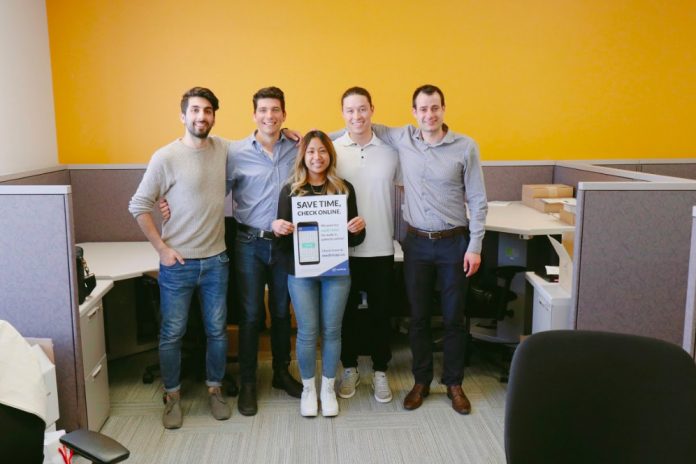
(Photo courtesy of Medimaps)


SFU VentureLabs start-up Medimap has been awarded third place in 2018 Innovate BC-New Ventures Competition, with a prize of $35,000. The annual competition, run by non-for-profit organization New Ventures BC, is open to early-stage startups and aims to support innovation in BC.

Medimap is an app that lets users check wait times at nearby walk-in clinics and add their names to a waitlist remotely. Clinics must opt in to be listed on the app, and they must have staff updating the wait times often. Users are able to see the most recent wait times posted as well as the time of update.

In turn, users of the app may wait from wherever they are and spend less time in clinic waiting rooms. According to Medimaps’ BC New Ventures company profile, there is often uncertainty around walk-in clinic availability and wait times. Patients looking to circumvent wait times may seek medical aid from emergency departments unnecessarily or decide not to seek medical aid at all.

Not only does Medimap make it easier for people to receive care, but by giving users access to wait-time information, it can allocate patients across local clinics more evenly and efficiently. According to a New Ventures BC email press release, Medimap aims to reduce wait times at walk-in clinics by more than 50%.

“[Medimaps] is an entry point into the primary care system for patients that need access to care,” said CEO Blake Adams in a phone interview with The Peak. He explained that he and co-founder Jonathan Clark “wanted to make it really easy for people to get access to care when they need it. We are trying to give people the information and tools they need to save time.”

Medimap is one of the many Vancouver-based start-ups that have taken advantage of SFU VentureLabs, a technology business accelerator program located in Harbour Center. VentureLab’s website states their mission as “scal[ing]-up world-class technology companies by powering up these ventures with amazing talent, technologies, entrepreneurial expertise, research capacity, access to capital, government. assistance programs and international market expansion opportunities.”

Adams found working with VentureLabs to be a great partnership. “They’ve been super supportive and it’s a great opportunity to work alongside other innovative startup companies. They provide a lot of mentorship as well as connections within the industry,” he said. He also noted that working out of the Harbour Center office space allows them to network and collaborate with other tech start-ups.

Currently, Medimap includes clinics from across B.C., Alberta, Saskatchewan, Manitoba, Nova Scotia, and Ontario, but they hope to expand their reach across Canada. Adams explained that in the future, they will focus on building up both sides of the user base, meaning the patients as well as the clinics.

“We are now focused on expanding our presence across Canada and working toward the goal of ubiquity in the walk-in clinic industry,” said Adams. From there, they will focus on looking at what other services they can provide for patients in need of care.

The student oath

0
Illustrated by Alisha Lee

The night after the last convocation ceremony finished and graduates had taken their thousandth photo of the AQ pond, as the mystical glow of moonlight fell over the Convocation Mall, another ceremony was taking place. It was less glamourous, and it was done for a smaller and less illustrious, but no less important, audience.

After finishing their first month at SFU, cloaked in the blood-red of the institution’s colours, the new students are finally ready to partake in the all-important Student Oath where they will pledge themselves to work, research, and hardship in order to reach . . . enlightenment? They pledged as well to begin anew the student scholar lifecycle. Undergraduates will be led by perennial sixth- and seventh-year undergraduates, while graduate students will be led by their Principal Investigators (PIs). The Peak managed to cover this solemn event and record the words of this sacred oath.

The Undergraduate oath

I, [name, institution, and student number] pledge that from this day hence, as a student, I will be diligent in telling the masses how much I need to study rather than actually studying. I shall never forgo a class except to spend time studying for that same class. Therefore, I will ask for aid should I require it, but only via email at 3 a.m. just before exams. To no less than 10 clubs will I give fealty and my SFU email in my first semester, but I will remain faithful to only one by my second. All the money I have earned or won with blood, sweat, and tears to pay for my education shall I give freely to the many caffeine merchants who sell me their wares. All this swear I, on the mercy of the gods of the curve and upon thy Holy Avocado.    

The Graduate oath

I, [name, institution, and student number], hereby declare that, having entered the service of [name of your PI], I promise to provide them as much data as they desire by dedicating all my ability and endowments to my research and forsaking all others until happy hour at Club Ilia. No seminar within my discipline will I forgo, as long as coffee and snacks are granted there with my attendance. Likewise, I will submit my work to any research conference, so long as it takes place in some equatorial promised land. Remembering where I came from, never will I turn away undergraduates who seek my wisdom, but I shall bear no blame if they leave as befuddled as when they came. Upon my beloved Burnaby Mountain, do I call to witness, to give me the strength to fulfill this oath.

The USMCA will do nothing but harm Canada’s trade and independence

0
Photo by Doug Raflik / USA TODAY

After months of uncertainty regarding the North American Free Trade Agreement (NAFTA), we learned this past week that it is officially dead, and will be replaced with the United States Mexico Canada Agreement (USMCA). Essentially, NAFTA 2.0, but with several new challenges for Canada’s economy and international trade.

NAFTA was in place for 24 years with few significant problems, so why the change? In short, because U.S. President Donald Trump wanted it. One of his campaign promises was that he would kill NAFTA, citing it as one of the “worst trade deals” in U.S. history.

This is one of the few promises that Trump had made about trade, alongside removing China from the World Trade Organization and raising tariffs on imported goods. It still has to be approved by the U.S. Congress, but it’s estimated that the deal will be signed into law before December.

So, what was the United States able to achieve with their new deal?

American automotive industry push

The USMCA stops manufacturers from getting automobile parts from other countries, so that more production can take place within the U.S. As well, new wage rules mean that the average minimum wage in automobile factories will be $16 going forward. Under NAFTA, there were none of these restrictions; tariffs were low on car parts and there were no caps on automobile imports. This is likely meant to make American automotive companies more productive.

Canadian dairy protections lost

Canada’s also lost some of their dairy protections under the new deal. Under NAFTA, Canada had protections that gave their dairy farmers the edge in both the domestic and international markets, allowing Canada to set their own tariffs. Under USMCA, Canada is forced to give U.S. dairy farmers access to Canada’s domestic markets. If America offers cheaper products, this may provide brutal new competition for Canadian farmers.

No private trade agreements

Possibly the most concerning trait of the USMCA comes with section 32.10, which requires Canada, Mexico, and the United States to inform the others when they are pursuing a non-market trade deal without them. This could allow the U.S. or Mexico to veto the trade deal. China in particular is concerned about this, calling it another part of their ongoing trade war with America. They also fear that the United States will most likely try to veto any potential trade agreements between China and either Mexico or Canada.

Canada was also able to keep chapter 19 of NAFTA in the new deal. Chapter 19 gives all three countries a forum to discuss dispute resolution mechanisms, which ensures that both Canada and Mexico aren’t completely defenseless against to the United States should conflict arise.

But even with this, things are bleak. Letting another country veto your own trade deals is tantamount to giving up part of your country’s sovereignty — part of  your country’s ability to be free and independent from outside pressure. The United States could threaten to kill the USMCA any time Canada doesn’t do as they say.

Mexico also lost a lot under USMCA. While they had initially negotiated a bilateral trade deal with the U.S. back in August, a lot of what had previously been negotiated was forgotten. While it is easier for Mexican labourers to unionize under USMCA, they are being backed into a corner with the new minimum wage being placed on automobile factories. Mexico’s current minimum wage is $5.53 CAD and the increase to $16.00 will be one that most factories simply will not be able to afford. This will probably result in production being moved back to the United States, therefore costing Mexico jobs.

As far as the United States is concerned, this is a win. It’s also one of the only campaign promises that Trump has been able to fulfill. The USMCA shows a concerning power that the United States has over its neighbours. They essentially negotiated a deal that gives them huge oversight over Canada’s and Mexico’s actions, and brings several seemingly minor changes to two of our largest industries. This is a frustrating example of what a continent can become when some businessman, not a politician, is running one of its largest countries.

“Helpful” advice to get you through midterm season

0
Illustrated by Irene Lo

It’s that horrible time of year again: midterm season. Students like you once again bury themselves beneath mountains of notes and retreat into the depths of the library, hunting for the perfect spot to study, and each one dreading the sight of the Scantron sheet that signals their slow three-hour death.

It is in these moments that you wish you had some helpful advice or a mantra to keep you sane. The last thing you want in your inspirational mantra is more lies. Honesty is the best policy. Fear not, poor students, because The Peak has got you covered.


  • You are enough . . . for now


Each of you little snowflakes are perfect just the way you are. But of course, if university philosophy has taught us anything, it is that we are always in the process of becoming. So in times of hardship, remember you are the best person you can be . . . at the moment. You could be better, but for now you are . . . OK.


  • If at first you don’t succeed, RELAX or you will probably fail again


This is something to keep in mind during tests.If you don’t succeed on your first midterm, chances are you’re going to mess up the next one too if you don’t “let it go.”


  • The journey of a thousand miles begins after you decide to actually get out of bed


Just some motivation to make sure you stick to your schedule and don’t get too distracted. When all hope seems lost and procrastination has taken over your life, it’s important to remind yourself that you actually have to drag your lazy butt off the mattress and park it at your desk if you’re going to try to get any work done today. Some work done is better than no work done, even if the only thing you’ve written on your 1000-word essay is your name. 


  • Go in there and give up


It’s 4 a.m. and you can’t study anymore. At this point even showing up to the exam room would be an accomplishment. Treat it as such! It’s not worth the overstressing anymore. Just go in there, regurgitate any information you’ve absorbed and leave knowing that you gave up. You won’t spend hours obsessing over whether you did well or not, because you won’t care.


  • You will only stop failing when you succeed


Just stating the obvious. The key to success is to simply not fail.


  • You don’t got this


What you do got is improper grammar. If your grammar is as bad as it is in this inspirational quote, then you better take a long look at your life choices and proceed to do absolutely nothing to fix it.

Staying In, Nostalgia Edition: Firefly

0
Image courtesy of Amazon

Best For tags: Star Trekkers, Space Privateers, 1-Season Bingers


Firefly is one of my favourite shows, and after a weekend with it, it’ll be yours too.

        Firefly is a short adventure series featuring loveable characters and a deep, meaningful story. After only one season, the show garnered a massive fanbase of people like myself, immediately enraptured by the unique setting. It’s very similar to the well-loved anime Cowboy Bebop, which also features what effectively amounts to space cowboys.

         Starring Nathan Fillion and a host of other skilled and recognizable actors, Firefly follows Serenity (a starship), and its crew: a band of smugglers taking on passengers to disguise themselves as a transportation vessel. In a fantastic blend of futuristic sci-fi and old westerns set five hundred years in the future, the crew — unofficially referred to as “space-cowboys” by fans — go on great adventures, hunting for excitement and wealth.

         While Firefly can be watched as a simply comedic drama, viewers will note that it employs social commentary to which discusses social issues like race, gender, sexual orientation, and belonging. The show forces the viewer to stand witness to tough moral decisions, ultimately providing that viewer with a broader world perspective.

        Firefly is also home to some of the best costumes, set design, and sound design I’ve seen in anything short of Star Wars, which is notable for a small, one-season show. Its effects may be somewhat dated now, but I find it only adds to the show’s charm.

         I’ve watched Firefly three or four times now, and you really need to in order to fully grasp all it has to offer. It’s silly and light-hearted but there’s a lot to take away if given the chance. When you finish the meager one season, you’ll be pleased to know that a full-length movie, Serenity, was released as a pseudo-sequel for your next binge weekend.


Firefly is available on Google Play, Hulu, and Prime Video. Firefly’s movie adaptation, Serenity, is available on Netflix, Google Play, Prime Video, iTunes, YouTube Movies, and other streaming services.