Home Blog Page 543

Students demand that “SFU Freeze Tuition Now!” as the university plans fee hikes

3
(Srijani Datta / The Peak)


SFU is proposing an increase in tuition fees, but students are not happy.

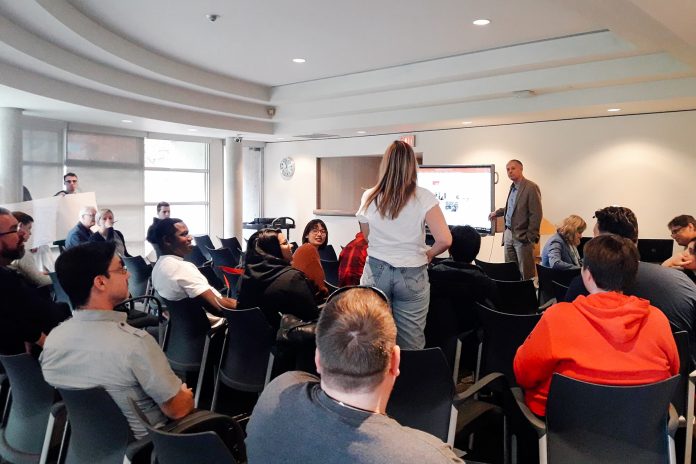
On October 23, SFU administration emailed students to invite them to a consultation session on their proposed tuition hikes, which would be held from 10 a.m. to 11:30 a.m. on October 30. Roughly 20 to 30 students attended the event.


The proposed fee increase

If approved, the proposed hike would be in effect from Fall 2019, and it would entail a 2% general tuition increase for all domestic undergraduate students. For all continuing international undergraduate students, there would be a 4% increase.

The highest fees would apply to incoming international undergraduate students. With the added 4% increase, most of those students would face a total increase of 12%. Those taking computing science, engineering science, or mechatronics courses would instead face a 16% increase, and those taking Beedie courses would experience a 20% increase.

Domestic and most international students in graduate programs will see a similar increase of 2%, except in those programs which have a different tuition rate for international students, in which case the increase will be by 4% for the international graduates.

Protesters reminded the audience that while the plan to raise fees would hit some students harder than others, it would ultimately affect every student at SFU, current and future.

“This proposed hike is dividing and conquering us,” said undergraduate student Giovanni Hosang. He explained that the hike was pitting the domestic students against the international students, while in reality, all students were facing a fee hike.

“We should stick together as a united front,” Hosang continued.


“SFU Tuition Freeze Now” campaign surfaces

As a response to the proposed hike, the Teaching Support Staff Union, SFU Left Alternative, and SFU Students of Caribbean & African Ancestry mobilized members of the SFU community to attend the consultation and give the school feedback.  Members of these groups organized a Facebook event called “SFU Tuition Freeze Now!”, intended to gather students to protest the fee hike and represent student voices at the consultation. The organizers also distributed pamphlets and put up posters across campus.

“Considering the current state of tuition costs, the proposal is absolutely unacceptable. Whether you are a domestic, international, or grad student, the price of tuition is already too high,” read the Facebook event description.


Consultation held on Burnaby campus

On October 30, the consultation took place at SFU’s Burnaby campus. Student activists mobilized by the “SFU Tuition Freeze Now!” campaign met prior to the meeting to organize support and entered the consultation premises in a procession, chanting slogans such as “No students are cash cows! Freeze Tuition Now!”

During the consultation, Martin Pochurko, vice-president finance and administration, and Peter Keller, vice-president academic and provost, headed the discussion as representatives of the SFU administration.

Keller and Pochurko presented on the financial breakdown of SFU’s budgetary needs and highlighted the lack of funding from the provincial government.

“The provincial government is paying the university for a set number of domestic undergrads and grad students. That means we have a set target of how many undergrads and grads we are expected to enroll at SFU. But SFU has exceeded that target by the most of all universities and colleges in B.C,” explained Keller.

“Currently 35% of domestic students are unfunded by the provincial government.” – Peter Keller, SFU vice-president academic and provost

Later, Pochurko stated that tuition fee increases for domestic students were currently capped at 2% a year. Keller noted that because of this freeze, raising international tuition fees is the only way for the university to compensate for its current lack of funds.

Keller and Pochurko stated that the university was committed to helping students in financial need through bursaries and scholarships.

In response, Hosang pointed out that bursaries were not a solution for students in extremely difficult financial situations with no major alternative source of funds.

Bursaries are awarded to applicants based on their financial needs, but with the added clause that they cannot be the “primary source of funding” for applicants to qualify.

“I am too poor to be eligible for bursary,” said Hosang, referring to his lack of other primary sources of funds.

Following Hosang’s statements, undergraduate student Jane Buckshon noted that not only did earning too little money disqualify students from receiving bursaries, but so did earning too much.

“If you get a job, you also don’t get bursaries,” Buckshon said, arguing that students who work a full-time job to pay tuition are often deemed ineligible for bursaries, because the pay from their job implies that they are no longer in financial need.

Students also collectively pointed out how the combination of full-time work and school negatively impacted students’ mental health and grades.

As a third year international student, Ong explained that she would have to drop out of university if her tuition fees went up by 4% every year.

“Don’t make education a privilege for those who can’t afford it.” – Ong, SFU third-year communications student 

“I will have no future at all if the tuition keeps going up.” said Ong. “My scholarships don’t cover a fraction of my tuition, and I still have a few years in school.”

The tuition increase is currently only being proposed for the 2019/20 academic year. It is unclear whether tuition will continue to increase at the same rate in subsequent years.


Students push for alternative budget solutions

In response to this explanation from the SFU administration, student members of the audience asked the administration to look for alternative sources of funding.

Matt McDonald, a PhD student in SFU’s economic department, cited figures from the university’s previous fiscal year, questioning the administration’s reasoning for the fee increase.

“Last year, SFU had a budget surplus of $65.3 million. Of that, $19 million went to the endowment, $35.3 million to ‘tangible capital assets,’ and $11 million toward increased ‘operating commitments,’ said McDonald. “Even if we assume that purchase of capital assets (buildings, vehicles, etc) was a good idea, that leaves $30 million.

“The administration claims that in 2019-20 the tuition increases along with related fees will bring in $11.8 million, which is around a third of the non-capital asset portion of the surplus.”

McDonald asked if SFU could use this surplus to make up for the provincial funding lag, rather than impose a new fee hike on students.

In response, Keller commented that the surplus was meant to go into the endowment grant for future hires.

“What’s the goal here? Educate students as cheaply as possible or pump money into endowment?” – Matt McDonald, SFU PhD student in economics

“Education is being talked about as a commodity here,” expressed Jade Hu, a PhD candidate in the education department, as she asked the administration to rethink the effect of the proposed hike on students.

Students also expressed the feeling that the consultation demonstrated the university’s poor communication with its students. Students pointed out that the chosen consultation time was inconvenient, being during midterm season, and asked for better communication from the administration on issues concerning the community.

Students stated their willingness to work with the administration towards a mutual solution. “How do we move from here? What do we do next?” asked Andrea Jones, a fourth-year health sciences student. She directed the question to Keller as she requested the administration work collaboratively with students.

Keller and Pochurko expressed that they understood and sympathized with students’ concerns, and that they would consider them during future consultations with other stakeholders of the university.

Acknowledging that the administration understood the students’ plight,  Buckshon asked Keller whether the top administration of SFU, “would take a fee cut to help the situation?”


Following the Consultation

At the end of the consultation, Pochurko stated that the “detailed budget will be approved in March 2019.”

Following the consultation, Kayla Phillips, a MA student in political science, said that while it is clear there are other options available to the university which could be used to address the  projected costs rather than hiking tuitions, the university administration seemed “simply unwilling to explore those.”

Referring to SFU’s financial information from over the last three years, McDonald stated in an email interview with The Peak that, “the SFU administration has been very consistent for years in claiming that tuition and fee hikes are necessary to maintain a balanced budget, rarely deviating from this theme.”

McDonald explained that, during annual fall semester consultations, SFU  budget projections show tuition hikes as the most viable way to avoid financial loss. However, annual financial reports from the last three years show that SFU has made annual surpluses between $31.9 million to $65.3 million, large portions of which go to the endowment fund. Over $18 million was contributed to the fund last year while the tuition hike is supposed to bring in $11.8 million.

Acknowledging that in the long run, either tuition will have to go up or the provincial government will have to step in to bring tuition relief to all students, McDonald concluded, “The SFU administration can choose to minimize financial stresses on students and cut us a break instead of cutting a cheque to the endowment fund.”

Sanjana Ramesh, MA political science student said, “We want to be able to trust their intentions, but based on the ‘consultation’ it seems clear they are unwilling to address our concerns.”

After the consultation, the students in the audience proceeded to Freedom Square to protest the proposed fee hike.

Flowchart: Should I bother doing my assignment tonight?

0
Layout by Timothy Chow

Never forget: Stories for Remembrance Day

0
Image courtesy of Simon & Schuster Canada

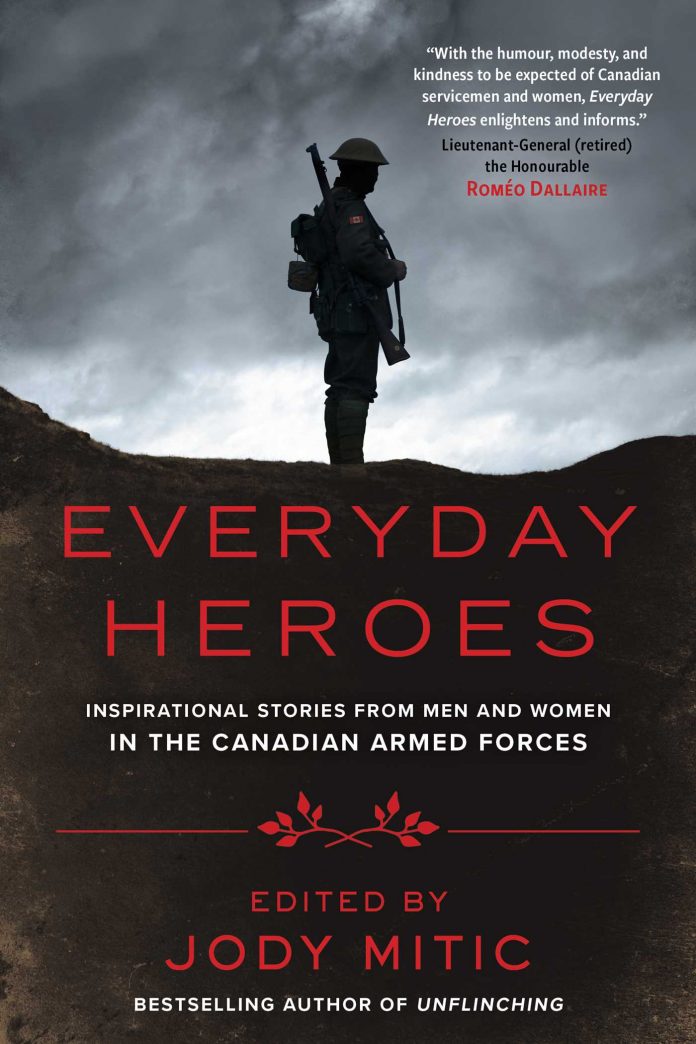
Everyday Heroes

Everyday Heroes: Inspirational Stories from Men and Women in the Canadian Armed Forces is a collection of stories of Canadian Forces personnel edited by Canadian army sniper Jody Mitic.

        The service members themselves, who wrote their own stories, served in a wide variety of conflicts from the recent war in Afghanistan to the Second World War. Some of the writers did not serve in any conflicts, thereby providing a rare example of military life outside the war zone.

        The contrast between the experiences of those who served in conflict zones and those who did not creates an interesting counterpoint and differing sets of perspectives. This however was expected from men and women who served in different places and at different times. However, a similar sense of gratefulness emerges from the voices of each character describing how the Canadian military changed them and how much they valued their time spent with their fellow service members

        This creates an interesting counterpoint and differing sets of perspectives. This however was expected from men and women who served in different places and at different times but a similar sense of gratefulness emerges from the voices of each character describing how the Canadian military changed them and how much they valued their time spent with their fellow service members.

       An issue for me was that many of the stories are quite short, and do not go into as much detail as I would like, especially concerning the lives of the service members after leaving the military. However, the book still achieves its goal of sharing a wide range of stories from service members from all walks of life. – NT


Indigenes

Released to English audiences as Days of Glory, this French film tells the often glossed-over story of the North African soldiers — primarily from Algeria and Morocco — who fought and died for France during the Second World War.

        Western films about the Second World War often ignore the contributions from allied peoples other than the US, Russia, and the UK. While these are stories that are very much worth telling, it is important not to forget the great sacrifices made by other nations, many of which were colonies of France or the UK at the time.

        Indigenes is a war film that acknowledges those sacrifices made by nations such as Algeria and Morocco, and indeed from all across Africa, during one of the most horrific conflicts humanity has ever seen. The film does not shy away from dealing with themes of racism, the harsh realities of war, and the way that veterans were discriminated against by the colonial powers they fought for after the war ended.

        If you aren’t fluent in French or Arabic, you’re definitely going to need some subtitles for this film. However, even if you don’t normally watch subtitled films, I strongly recommend Indigenes for its honest portrayal of French colonialism during the Second World War. – AB

Joyeux Noel

If you want to watch a film about war that won’t leave you completely disillusioned about human nature then Joyeux Noel is the film for you.

       Taking place during the First World War, it tells the real-life story of the French, Scottish, and German soldiers who decided to put down their arms and celebrate Christmas together. Of course, being about war, it still deals with incredibly heavy themes, so it isn’t an easy watch — but no war film should be.

       Joyeux Noel follows characters from all three of the aforementioned nations, humanizing all sides of the conflict. There aren’t “good guys” and “bad guys,” just people. The film also adds another layer of respectfulness, in that all the characters speak their own languages, rather than having all the characters speak English in cheesy accents.

      Joyeux Noel is one of the few films that reliably brings a tear to my eye, and is filled with poignant moments of love triumphing over hate. One of my favourite parts of the film, for example, is when the no man’s land between the trenches is converted into a makeshift soccer pitch so that both sides can come together for a friendly game.

      What makes this film so touching is that it actually happened. Soldiers from opposing sides of one of the deadliest conflicts in human history saw through all the propaganda and hate and acknowledged each other’s common humanity. – AB

Honourable Mention: Passchendaele

Believe it or not, but the word “Canadian” used to strike fear into the hearts of battle-hardened soldiers.

      During the First World War, Canadian troops developed a reputation amongst their foes for being particularly effective soldiers — especially at the Battle of Vimy Ridge, where they captured ground that older nations had failed to take. Passchendaele tells the story of the battle by the same name, where Canadians once again proved their determination at great cost: laying down their lives in the mud and blood of the European theatre.

        While this film by Slings and Arrows’ Paul Gross isn’t perfect by any means, it is good to see representation of Canada’s involvement in the war. One Rotten Tomatoes review described it saying, “[Passchendaele] crudely welds the grisly verisimilitude of Saving Private Ryan to the contempo cultural revisionism of Pearl Harbor but can’t forge the disparate tones into a powerful whole.” It’s worth taking it with a grain of salt, and the melodramatic love story Gross wrote for his character wasn’t warranted, but at the very least, Passchendaele is a high-budget film that acknowledges the sacrifices of Canadians during the First World War. – AB

What’d I miss?: Electoral Reform in B.C.

1
Photo by Chris Ho / The Peak

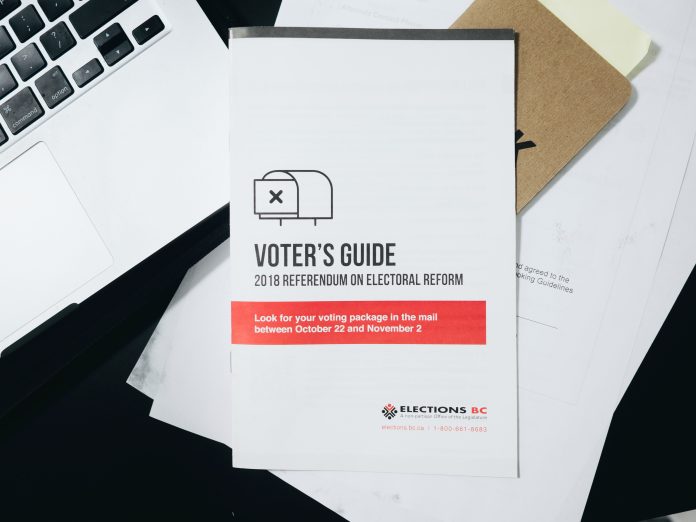
Have you noticed the ballots and pamphlets in your mailbox? B.C.’s upcoming 2018 Referendum on Electoral Reform will decide whether we keep our first-past-the-post system (FPTP) or switch to one of three proportional representation (PR) systems. This is following two previous referendums, one in 2005 and one in 2009, neither of which brought any changes.

Voting in the referendum could entirely restructure B.C.’s politics, but currently, about one third of British Columbians are undecided about how to vote. Anyone who is a Canadian citizen, is 18 or older, and has been a resident of British Columbia for at least the past six months is eligible to vote. The voting packages will be delivered until November 2, and ballots must be returned to Elections B.C. by November 30.

The referendum ballot will ask you two questions. First, it’ll ask whether we should keep our current system or switch to PR. Then, voters will be asked to rank all three proportional representation systems in order of preference on a separate ballot, so that we’ll know which system to switch to if the answer to the first question is “yes.” This second question makes it important to have an understanding of all of the systems, even if you would rather stick to first-past-the-post.  


Current: First-past-the-post (FPTP)

BC’s current voting system is first-past-the-post (FPTP).

FPTP splits up the province geographically into electoral districts, or ridings, which each elect an MLA to represent them — in this case, in the provincial legislature. Voters choose one candidate for their district, and a candidate needs to win the most votes to win their seat. So, there’s one seat in the legislature for each district, and for each district a party wins, they also win a seat; the breakdown of individual votes for each party is irrelevant. FPTP is currently used in many countries, including the United Kingdom.

Critics FPTP point out that under it, legislature does not proportionally reflect the votes. This system often favours candidates from large parties, and often results in single-party majority governments (meaning that a single party holds more than 50% of the seats in the legislature and therefore holds enough votes to overrule any decision made).

Advantages of FPTP include how easy it is both for voters to to use and understand, and it is easy to administer and manage as well. Some fans of FPTP also argue that this system bars extremist or fringe parties from gaining political power.


Proportional Representation alternatives

According to Fair Vote Canada BC, “proportional representation is a principle underlying a voting system: People should be represented in proportion to how they voted.”  

In other words, under proportional representation, a party would receive roughly the same percentage of seats as they do votes.

While there are many different systems designed to yield proportional results, the three that we will be voting on in B.C. are dual-member proportional (DMP), mixed-member proportional (MMP), and rural-urban proportional (RUP).


Dual-member proportional (DMP)

Dual-member proportional representation would rearrange B.C.’s electoral districts to reconfigure how our MLAs are selected. Most ridings, aside from large rural ones, would fuse with an adjacent riding. These new ridings would each have two MLAs.

During an election, in an urban riding, each party could run a primary and secondary candidate, and voters would select their party of choice, rather than their preferred candidate. The winning party’s main candidate is elected as one of the MLAs. Independents would only be elected if they place first or second in the riding.

The second MLA is chosen by comparing the winning party’s secondary candidate to the other parties’ eligible main candidates, except that now the winning party’s secondary candidate is given half of their party’s votes. From there, seats are proportionally distributed across ridings based off of each party’s performance on a provincial level, with some extra caveats that you can read more about on B.C. Elections’ website.

CBC explains that while “this system would favour primary candidates from the party that finished second in a riding [ . . . ] sometimes, a secondary candidate from a winning party would get in if the party did both really well in that riding and across the province generally.”

DMP was developed in Canada, but is currently not used anywhere in the world.


Mixed-Member Proportional (MMP)

In mixed-member proportional representation, voters would elect one local MLA (as we do now), as well as MLAs representing a new kind of riding called a region. About 60% of the MLAs would be local, and the remaining 40% would be regional.

Under MMP, voters would choose their preferred local MLA as we do now, and the local candidates would be elected as they are now under first-past-the-post. In addition, voters would also choose their preferred regional candidate from a party list, and the regional candidates would be elected to ensure that the overall composition of MLAs reflects the proportions of the vote. Similar to the DMP system we talked about, a party must get at least 5% of the vote to gain a regional seat.

This system is currently used in Germany, New Zealand, and Scotland, among others. The specific size and limits of future electoral districts and regions have not been decided yet; these will be designated by a legislative committee if MMP is chosen in the referendum. This committee will also decide if voters have one vote or two under this system, since both are in use internationally.


Rural-urban proportional representation (RUP)

Rural-urban proportional representation merges two other systems, MMP and single transferable vote (STV), to ensure that urban and rural voters are represented equally.

In rural areas, voters would elect local and regional MLAs with the MMP system. In urban (geographically small but densely populated) areas, voters would use STV to elect their MLAs.

In STV, multiple ridings would be merged into one multi-district riding in which voters would elect a small team of MLAs. Instead of voting for their single favourite candidate, voters would number off the candidates on the ballot to indicate how much they liked each one (so you would mark your favourite candidate number-one, your second would be marked number-two, et cetera.) Parties could run many candidates per district as well.

If RUP were to be chosen, an independent commission would determine the boundaries of all the various districts. British Columbia would also be the only place in the world using RUP system, though MMP and STV are both used individually.

Michael Bublé’s intent to retire is refreshing in a toxic pop culture

1
Photo illustration by Chris Ho/The Peak

Hollywood is becoming a bit of an ego-fest. Between celebrities like Khloe Kardashian advertising a “Flat Tummy Tea” on her personal Instagram and Kanye’s short-lived political career, it’s refreshing when we come across an actor or musician whose fame hasn’t afflicted them with a penchant for narcissistic antics.

Recently, Michael Bublé has certainly been one of these breaths of fresh air, and one we should really appreciate.

Like other artists of his calibre, Bublé regularly used online platforms like Twitter and Instagram. When his son was diagnosed with cancer two years ago, though, Bublé took some time out of the public gaze, and his highly active Instagram, in order to focus on the health of his son and the well-being of his family.  Now, as his son’s cancer has (thankfully) gone into remission, Michael Bublé is gearing up to release his new album, Love, in November.

In an interview with The Daily Mail, Michael discussed how he sees narcissism as an inevitable part of the music business, and that it gets in the way of his art and his efforts to be a more genuine person. He claimed that his time away from the spotlight led him to question his career and identity, going so far as to ask himself questions like, “Why are we here?” He concluded by stating that that would be his last interview, and that he’s retiring from the music business.

Weeks have passed since this interview was published, and since, Michael Bublé’s team of publicists have issued a statement which expressed that, despite these claims, Michael would not be retiring from the music business. Whether Bublé proceeds with leaving or not, it speaks to how toxic celebritydom is that the most attention-grabbing thing he wished to do was just escape.

I’ve never drank from the fountain of fame and fortune, but it’s easy to imagine many members of pop culture having similar problems and desires to leave. We’ve seen the pitfalls of former child actors (Lindsay Lohan) or pop icons (Britney Spears), individuals who have fallen into crises as the public’s vast love and adoration ceased, and their sense of identity appears to have faded with it as well. This would be crushing to anyone, and yet our media is designed to sensationalize it.

In reading that one of the biggest artists on the planet feels a need to leave, it shows just how frivolous Instagram and fame can be. I can’t help but feel grateful that there are people in pop culture who understand that the glitz and glamour truly isn’t what it’s made out to be. Instead of genuine, emotional human beings, their personal lives need to be maintained like a long-running work of fiction.

It’s unfortunate that Michael Bublé came to this revelation through the horrific experience of his son’s battle with cancer. These are heavy experiences and heavy questions, but his recognition of how fame and popularity exist in popular culture is something to keep in mind. His reasons for leaving are something for all of us to keep in mind, both in how we love ourselves and how we look at those in the spotlight.

Political Corner: By leaving the INF Treaty, the US is abandoning peace

0
Image courtesy of AP Photos

1987 Cold-War era Intermediate-Range Nuclear Forces (INF) treaty. The announcement came after multiple accusations by US officials that Russia has repeatedly violated the treaty since its conception.

The INF was established in the 1970s when Russia began to replace their older intermediate-range SS-4 and SS-5 missiles with a new intermediate-range missile, the SS-20. These new missiles had a firing range of up to 5000 km, far enough to reach all of Europe and northern parts of Northern Canada.

With the impending new threat, the North Atlantic Treaty Organization (NATO) began to negotiate an arms freeze with Russia, eventually resulting in the INF treaty. This created a framework for both the US and Russia to start to permanently eliminate their more powerful long-range nuclear missiles. There was also a regulation committee put in place to monitor both parties’ compliance with the treaty.

Much of why the US is dropping from the INF is due to US national security advisor John Bolton. Bolton carries a less informed attitude of American global nuclear power, showing disinterest in any compromise with potential threats to the US. His dislike towards agreements like the INF are strong enough that even his memoir is titled Surrender is not an Option.

Leaving the INF is a continuation of a pattern for the US, as they appear unwilling to be in any deal that promotes international peace. They’ve already pulled out of the Anti-Ballistic Missile (ABM) treaty, and it seems the Obama-era New Start treaty could be at risk next.

Very quickly, President Trump’s advisors are dismantling arms control with their incredibly biased advice. Peace does not appear to be something the US is interested in maintaining.

The Pittsburgh shooting is a symptom of normalized anti-Semitism in social media

1
Photo courtesy of Jeff Swensen/Getty Images

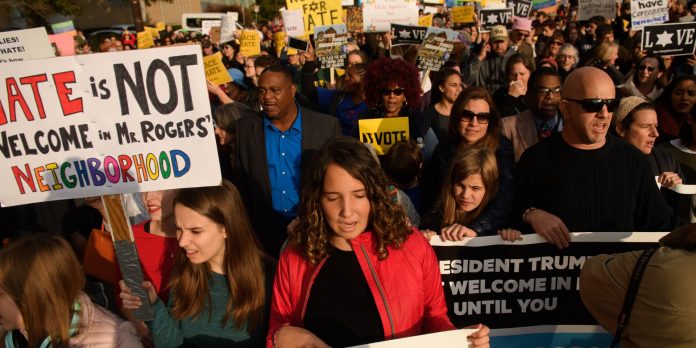
On October 27, a gunman entered Tree of Life — Or L’Simcha Congregation, a synagogue in Pittsburgh, Pennsylvania, and opened fire, killing 11. It’s currently being considered by the Anti-Defamation League as the deadliest attack on the Jewish community in US history.

Being raised Jewish, this news has made me feel distressed and unsafe. At the same time though, I can’t shake that first reaction I had of total lack of surprise at such violence towards the Jewish people in America.

Besides the severity, nothing about the Pittsburgh shooting comes across as unexpected or unusual. Anti-Semitism in crime and culture is an inherent and constant part of the Jewish experience.

This feeling comes mostly from the outlet for anti-Semitism that most of us encounter daily — social media. The events of Pittsburgh were closely tied to this problem, as just before the attack the perpetrator made a number of threats and comments on Gab, a Twitter-style social media site with a large alt-right population.

Unfortunately, little can be done to end these hateful spaces. Remove them from one place, and they’ll easily find another. Microsoft even threatened to remove Gab back in August, but evidently, it very quickly found a new home.

But aside from specifically hateful places, there’s also an equally concerning steady stream of anti-Semitism on more typical social media sites like Twitter and Facebook. Offensive jokes and direct threats are all too prevalent in every kind of post about Jews. I’ve seen these sorts of comments on every subject, from serious political posts about hate crimes to Jewish or Israeli celebrities like Gal Gadot.

In other words, seemingly any mention of Judaism is likely to invite offensive users, and makes it impossible to find a space that’s truly safe or welcoming for Jews. It’s something Jews naturally have to put up with, as anti-Semitism is something we just expect from our online culture. It’s an inevitability of the Jewish experience.

Many of these websites and apps have policies in place to discourage hate and threats, but few sites moderate their users enough to stop it from spreading. After vandalism of a synagogue in New York, Twitter initially listed “Kill All Jews” as trending to display how people were talking about the event. This was likely an automated update to the site rather than an intentional error, but letting an automated system make decisions about your site means you can only reverse them after it’s too late.

The solutions to these problems on major social media sites are also painfully unrealistic. The best suggestion I’ve heard is hiring more moderators to manually make and assess reports, as automated reporting systems can result in a huge flurry of false positives. But there’s no telling just how many employees this would require, and with the internet being active 24/7 worldwide, there’s no physical way to deal with this problem.

It also doesn’t help that there’s much deceptive language about Jews embedded in anti-Semitism that wears a guise of “discussion.” A prime example is the use of the word “globalist” to imply a conspiracy that Jews secretly run the world, which has grown in use after Trump used it to describe Jewish billionaire George Soros. These words and contexts aren’t properly detectable by any automatic reporting system, and they’re a trend of ingrained anti-Semitism that can’t be effectively tackled.

This isn’t to say the world is exclusively hateful towards Jews. The protests in Pittsburgh have made a strong statement that many are indeed against anti-Semitism and violence. There’s also been much support from other minorities online, such as Muslim groups Celebrate Mercy and MPower change, who’ve so far crowdfunded over $225,000 for the victims’ families. That sort of solidarity among frequently victimized groups is both welcoming and refreshing.

Regardless though, anti-Semitism is a normal part of Judaism right now. This has been true throughout history, but the events in Pittsburgh show that we have every reason to be afraid and jaded. It’s horrible to me that those fearful attitudes can seem so reasonable to others.

Huge second period sets tone for SFU hockey in 8–3 rout of Mariners

0
The Clan scored eight unanswered goals in their blowout win. (Photo courtesy of SFU Athletics)

On Friday night at the Bill Copeland Sports Centre, SFU hockey inched closer to first place in the BCIHL standings with a dominating win over the Vancouver Island University Mariners. The Clan overcame a weak first period that saw them down 3–1, and managed to secure a huge win that will set the tone for tonight’s second game of the weekend series. The Clan, now 4–2 on the season, sits only one point behind the Mariners for top spot. If the Clan can win again tonight, they’ll overtake the Mariners for the league lead.

In the first period, the Mariners got off to a hot start and quickly potted three goals to take a commanding lead. However, it was all downhill from there for the Mariners. Cracks began to show in the first, as they allowed the Clan back into the game on a defensive breakdown late in the frame. The Clan soon covered the score sheet with ink during the remaining two periods, scoring eight unanswered goals across the final two frames to secure a blowout win in game one of the weekend double-header. SFU forwards Mitch Ledyard, Cole Plotnikoff, and Jordan Funk all put home their first career BCIHL goals as part of the offensive outburst.

Forwards Nicholas Holowko, Brendan Lamont, and Jordan Funk all tallied multi-point nights as the Clan benefitted from offensive input up and down the line-up. The second period saw 11 Clan skaters tally a point, as the team found their legs and throttled the opposition in what was most likely the Mariners’ most embarrassing two periods of hockey this season.

In the third, with their feet already firmly planted on the necks of their Vancouver Island opponents, the Clan would add two insurance markers for good measure on Plotnikoff’s first career BCIHL goal and Funk’s second of the game. Overall, the Clan promptly overcame their weak first period with an offensive outburst that made for the story of the night.

In goal, Michael Lenko secured his second win of the season with a solid performance that earned him first-star honours despite the offensive outburst up front. Lenko, expected to start Saturday evening as well, looks to get on a roll in his first season with the Clan as the team moves closer to first place in the league standings.

“When we are on and playing to our potential, there is no team in this league that can come close to playing with us,” said assistant coach Matt Grassi after the game, emphasizing the team’s performance over the final two periods.

Backup goaltender Ryan Sandrin echoed these sentiments. “If the team can find a way to consistently reproduce the effort that allowed us to score eight unanswered goals in two periods, the sky’s the limit for us,” Sandrin said.

The excitement in the room after the game was palpable as, throughout the roster, players new and old alike are realizing the enormous potential the team has to fight for a BCIHL league title in the coming months.

Simon Fraser now prepares for a rematch tonight at Bill Copeland, as the Mariners complete their two-game weekend visit to Burnaby. After the second game of the double header on Saturday, the Clan will look ahead to a key match-up with their rivals, the Trinity Western University Spartans. The Clan looks to start the year by breaking TWU’s perfect 4–0 record.  

Most Romantic Spots on Campus

0
Illustrated by Momo Lin

When thinking of the most romantic places in the world, Paris, Italy, and New York are just a few places that might come to mind. But you’d be forgetting one of the most underrated romantic destinations of all time: Simon Fraser University . . . The most romantic destination this side of the Pacific, the sights here are ones you just can’t miss, and for a fraction of the price!

Can’t afford that fancy trip to the Alps this winter? Don’t worry, you sad, pathetic, hopeless romantic; The Peak has got you covered. Here are the top little-known romantic destinations at SFU:

  1. East Lot

Your S.O. wanted to go somewhere new, right? Well, head over to the far-off majestic land of East Lot. A million miles away from most of the SFU population, a parking lot actually exists.

East Lot represents one of the greatest semi-natural romantic locations SFU has to offer. Filled with “N” drivers who are still so nervous about parking that they’d rather just pull through a space, you and your S.O. will never have felt closer . . .  Let’s be honest, near-death encounters caused by erratic driving will keep you on your toes, and there is nothing like the fear of being hit by someone’s beat up Honda Civic to bring a couple together.

  1. The fifth floor of the WAC Bennett Library

Is it the eerie silence or is it merely being in your partner’s presence that’s got you feeling like you’re holding your breath? Perfect for napping or just sitting and enjoying one another’s company, nothing will render your S.O. speechless quite like getting lost in the stacks on the fifth floor of the library.

  1. Robert C. Brown Hall

RCB gets a lot of hate for being an ugly, dark, Wi-Fi-less concrete abyss. But sometimes you just need a change in perspective! Like a real-life escape room, RCB will test your ability to put up with one another and your spatial awareness as you try to navigate the maze. Let’s not forget that this is a 100% cell phone-free zone; you couldn’t get service down there if you tried. Who needs to go to horror movies or haunted houses to get your S.O. to hold your hand when you can struggle to find your way through the horrors of Robert C. Brown Hall together?

  1. The Stairs leading up to Saywell Hall

They say hikes can provide a sense of clarity and freshness for your relationship, and there’s nothing more romantic than admiring that picturesque view once you get to the top. The same goes for the climb up to Saywell Hall. Here, you get a better view than anywhere else on campus of the detailed renovations going on beneath that giant white tarp. Construction workers, broken tiles, a dark and sweaty tarp. What more could you want from a view? So whether you are celebrating an anniversary or trying to impress someone on a first date, Saywell Hall is an experience made better by being together.

  1. Math West

A relatively new building at SFU, Math West has plenty of natural lighting, but what makes this spot so appealing has to be the ambience for sure. Math West exudes a romantic aura that has left a lasting impression on the soul and life of numerous students, students whose tears watered the surface of every piece of furniture in sight as they suffered through their math assignments. This space truly is one to visit so you can experience the celebration of raw human emotion and struggle.

SFYou: Katrina Chen’s road to becoming Burnaby-Lougheed’s MLA

0
Katrina Chen, photo courtesy of Burnaby Now

Fast facts

Name: Katrina Chen

Pronouns: She / her / hers

Department affiliation: Political science and history

Hometown: Chen was born in Taiwan, but has lived in British Columbia for many years

Occupation: Aside from serving as Burnaby-Lougheed’s MLA since 2017, Chen is also the Minister of State for Child Care


In the midst of midterm season, finding a source of motivation in the long nights of caffeine consumption and studying can be hard. School may be a dreary journey at times, but the greatest incentive to persevere can be looking at how academic and social student experiences can empower us on our quests towards community and societal improvement. A good example of this is the story of SFU alumna Katrina Chen.

Katrina, Burnaby-Lougheed’s MLA, has found herself in an immensely busy season of her career with the Proportional Representation Referendum arriving in British Columbia — especially since she represents the BC NDP, who ran on a platform of electoral reform in 2017.

Katrina is an advocate for proportional representation, and during our phone interview, she talks about why she’s been working so hard to reach out to her community about the referendum.

“During the past 10–11 years of working in the community, I always hear people say that they don’t feel like their vote counts, the issues that they care about [are] not reflected in the government policies, or that the government just isn’t listening to them,” Katrina says.

“Part of the reason for this is because we don’t have a better electoral system. Proportional representation is about fair representation of seats in the legislature. I think that it is an important time for us to look at our current electoral system and see how we can improve it.”

Additionally, Katrina speaks on how important it is to take provincial politics, including events like the referendum, just as seriously as what transpires on the federal level.

“I think the three levels of government each have different responsibilities and I think we’re equally important because we serve different areas. I also think it’s important to have partners from different levels of government be able to work together.”

Referendum and current political business aside, the most inspiring element of Katrina Chen’s story for me is how a little over a decade ago, Katrina was, like us, an SFU student with big plans. Katrina’s recollections of her experience at SFU shows how much she cherished her time in university, the community she found here, and the education she received.

“I’m fortunate and very thankful that I had a lot of support from my family to be able to help me finish my education,” Katrina recalls.

After graduating with a bachelor’s degree with a major in political science and a minor in history, Katrina dove right into her community as she sought ways to improve the lives of those around her.

“After I graduated, I stayed in my community to work in a local non-profit organization,” she said. “My first job was to knock on doors, and that really opened my eyes and helped me learn local issues, like how families are struggling with high costs of living, housing, childcare, and transportation. These were all things that could be impacted through government policies. Through this experience, I became motivated to get involved in my community more.”

Now, as the MLA of Burnaby-Lougheed, Katrina’s entire job is enhancing the community she loves so much.

“My background has always been pretty much on the grassroots level, and now I feel very honoured and very thankful that I have the opportunity to work in Victoria with the provincial government and also as the Minister of State for Child Care,” Katrina said of her current career path. “My goal now is to bring in the universal child care plan to support families, to support our children, and to build a stronger foundation for the future.”

As the MLA for Burnaby-Lougheed, Minister of State for Child Care, and the mother of a four-year-old, Katrina seems to do it all, and to do it well.

When I inquire about her hectic schedule, Katrina chuckles. “There’s a lot of things happening. I enjoy and am thankful for the opportunities in this work. I have a great team of staff, and I’m very thankful that I have amazing people working around me and supporting my work. We try to prioritize things so I can better manage my schedule and also keep a little bit of time for my family.”

Katrina stresses that a huge reason why she’s so busy is that she has to juggle her time in the legislature with her time in the community, and the ways she can stay connected to Burnaby-Lougheed’s residents. In spite of how much time she spends in Victoria, Katrina lets me know that, whenever she finds herself in Burnaby, she’s always more than willing to meet face to face with community members.

“I love knocking on doors whenever I have time in Burnaby. When I’m back in Burnaby, I love reconnecting with people and continuing to stay on the grassroots level and hearing their stories. Like I said, I can bring their voices and stories back to the legislature and see how our policies can work for people in our communities.”

More than her impressive work ethic and strenuous workload, I notice how positive Katrina is. Upon asking what the highlight of her position is, she cheerily responds, “I would say the best is that I’m learning so much every single day. I’m thankful for that opportunity.”

Katrina articulates how much she adores how diverse her community is, expressing that the greatest attribute of such diversity is that it encourages its inhabitants to learn from each other. As an Asian-Canadian woman, Katrina acknowledges the significance of diversity in her field, and how imperative it is to have political leaders reflect the citizens of their communities.

Katrina is earnest about how huge the issue is to her, and on how proud she is that the current provincial government’s cabinet is gender balanced and diverse.

“Our own experiences helps to improve the work that we do as elected officials and to be able to bring a different perspective. So these diverse voices help when we’re talking about an issue because, before we make decisions, we need to ask how is it going to impact the different people in our community.”

As we complete our conversation, we come to the subject of university students and our incentive to be informed about local politics. With the same vehemence she expresses for her job, Katrina stresses the importance of B.C.’s young people being involved and informed, including with the proportional representation referendum.

“Whoever you are and wherever you’re from, every one of us has a unique experience and all of our voices and votes count. I would encourage for youth to get to know about your local government and local elected officials, and to be more engaged because everything that we do— the taxes we pay, the water we drink, the food we eat, and the schools we go to are all connected to government policies.”