Home Blog Page 543

Canada can and should better support Venezuelans

0
Photo by George Castellanos/Getty Images

Written by: Tatum Miller, Peak Associate

The worst humanitarian and economic crisis in the history of Latin America is currently unfolding in Venezuela. Much of the population lacks access to food or medicine, poverty is reaching all-time highs, and infant mortality is on the rise. Tensions are rising, as both Venezuela and the international community are entangled in a leadership dispute and a military schism. Canada’s response, while a strong start, should be broadened to mitigate the consequences of Venezuela’s crises.

More than three million Venezuelans have already fled, with some economists forecasting that that number will rise to eight million in the next few years. To compare, an estimated six million Syrians have fled since their country. The majority of Venezuelan refugees have arrived in Columbia or Brazil, who are struggling to cope with the massive influx of people. How can it be that the Syrian refugee crisis stoked such debate within Canada, but as a crisis unfolds close to home we barely mention it?

The crisis was caused by decades of poor economic planning that has left the Venezuelan economy in freefall. Nine out of 10 people are in poverty, and hyperinflation has eclipsed one million per cent, rendering the country’s currency absolutely worthless. The average person can only afford just 900 calories per day, far below the nearly 50,000 they could afford in 2012. The plummet has no end in sight.

Government responses to regain control of the economy have included price controls, minimum wage increases, and even issuing a dubious new cryptocurrency to replace the Bolivar. These solutions will have no effect under hyperinflation, and the oil dependant economy will continue to slide.

Opposition leader Juan Guaidó has declared himself interim president in opposition to Nicolás Maduro, and is urging the military to join his camp. This could spark a civil war if the military becomes further divided. Guaidó has gathered support from Canada, the USA and other Western powers, but Russia and China still support Maduro. Experts are drawing parallels with the Cold-War.

International responses, both to aid the people and to coerce the government into reforms, have been ineffective. This certainly hasn’t been helped by Venezuelan President Maduro’s repeated denial of foreign aid, appearing intentionally ignorant to the depth of the country’s situation. Canada, the USA, and allies have levied sanctions against Venezuela and are supporting the opposition in order to pressure Maduro, though the Venezuelan people will still suffer in the short run.

This denouncement of the Venezuela government is a step in the right direction, but there are multiple strategies that Canada should also consider.

First, we should begin reviewing Canada’s refugee policy to include Venezuela alongside Syria. The Liberal Party proudly promotes welcoming Syrian refugees, and this should include Venezuelans as well. In the upcoming 2019 election, this opportunity to provide international relief could be a major platform opportunity for any candidate.

Second, Canada should increase cooperation with the Organization of American States (OAS), the Lima Group, and bolster neighbouring countries that have already taken in refugees. The crisis will become worse before it gets better, and in the wake of this catastrophic socioeconomic breakdown, civil war or total state collapse is not far-fetched. The region must be stable to minimize spillover effects.

Canada historically has taken in refugees during times of crisis, from the Vietnam war to the recent Syrian crisis. We pride ourselves on giving humanitarian aid and we continue to do so in many countries today. It is urgent that we shift our gaze to the dangers faced by Venezuela and make a positive impact where we can.

SFU hockey clinch playoff spot with big win in Victoria

0
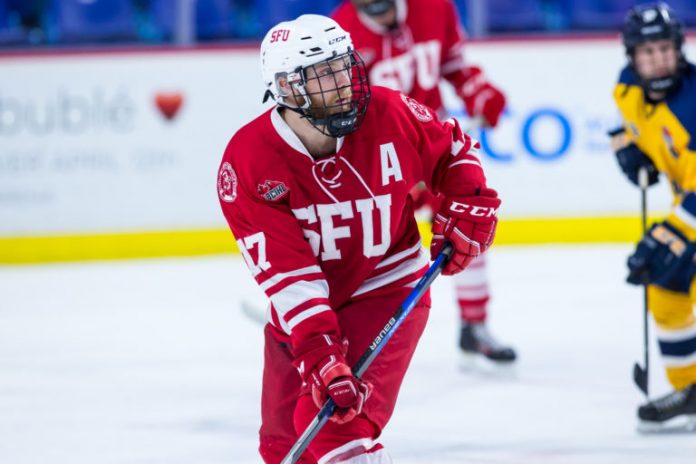
Brendan Lamont had a goal and a assist over the two contests. (Photo courtesy of SFU hockey)

By: Dylan Webb

After a rollercoaster first three quarters of their BCIHL season, the SFU hockey team was finally able to clinch a playoff spot on Friday night in Victoria. Defeating the UVIC Vikes for the third time in four games, the Clan officially closed the book on any faint playoff hopes the Vikes were holding onto. As their three-win season winds down, the Vikes will visit SFU for their final two meetings of the season on February 22 and 23.

Firing just seven shots on the Clan net through two periods, the Vikes were unable to generate substantial offense throughout the game. On the other hand, SFU benefitted from an offensive outburst that included three power-play tallies — two from leading goal-scorer Mitch Newsome and one from forward Mac Colasimone. Complemented by even-strength goals courtesy of forwards Jakob Krannabetter and Brendan Lamont, SFU would outshoot the Vikes by a final margin of 44–17 in a dominating 5–1 win, punching their ticket to the first round of the BCIHL playoffs.

On Saturday night, as the Clan’s focus shifted to securing favourable playoff seeding for their first round series, they rolled into Nanaimo to face a much stiffer challenge in the second-place Vancouver Island University Mariners. This much was evident after the first period as the Mariners threw as many shots toward the Clan net in the first period as the Vikes did in the entire game the previous night. Fighting back from a two-goal, first-period deficit with goals from forwards Mitch Newsome and Nic Holowko, the Clan were able to maintain a tied game until late in the third period.

With just eight minutes remaining in the final frame, VIU forward Brett Witala continued his strong offensive season with a power-play tally that put the Mariners up for good. Adding two empty netters in the dying minutes allowed the Mariners a bit of breathing room toward the end of the game, and the final push from the Clan wasn’t enough to tie the game.

With this loss, the Clan now find themselves in an uphill battle for playoff positioning. While they now sit a full six points behind the Selkirk College Saints for third place in the league standings, the Clan do have two games in hand which makes catching the Saints for third, or even the Mariners for second, a challenging yet feasible task.

Having started both games for the Clan over the weekend, goaltender Ryan Sandrin had one of the best weekends of play in his BCIHL career. Stopping 52 of 56 shots he faced over the span of both games, Sandrin stayed sharp on a slow night in Victoria and followed up the winning effort by giving his team a chance to win on Saturday in Nanaimo. Facing a barrage of 17 shots in the first period in Nanaimo alone, Sandrin kept the Clan within striking distance throughout and appears to be solidifying the starting role as playoffs rapidly approach.

Discussing the biggest differences between the Clan’s playoff spot clinching win over the Vikes on Friday and their loss to the same team just a week before, Sandrin emphasized that the team simply had “much better puck possession and execution.” Pointing to the fact that the team collectively “clogged the middle in the defensive zone and pushed everything to the outside,” Sandrin was appreciative of the strong effort by his teammates that allowed him to face only 17 shots in the contest.

What’s next:

SFU now faces another extended break from regular-season action, this time a full twelve days, before returning to the ice on Vancouver Island with another key matchup against the VIU Mariners.

At the risk of over emphasizing the importance of a single game in a 24-game regular season schedule, it’s possible that SFU’s playoff positioning could be largely determined by the result of the game on February 15 in Nanaimo. With a win, the Clan would inch toward both VIU and Selkirk for the second and third playoff seeds whereas a loss would all but guarantee a fourth-place finish for the team.

Following the game in Nanaimo, the Clan will host the league leading Trinity Western University Spartans for a Family day matinee game. Puck drop is at 3 p.m on the February 18 Family day holiday at the Bill Copeland Sports Centre.

SFU men’s basketball split road trip against Seattle Pacific University and Saint Martin’s University

0
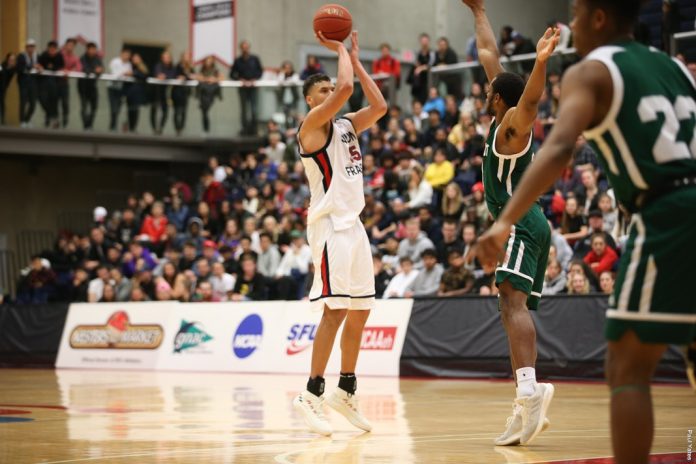
Roche's last minute jumper was the difference in Saturday's game. (Photo courtesy of SFU Athletics)

From Thursday, January 31 to Saturday, February 2, the SFU men’s basketball team travelled down to the states for a two-game road trip against the Seattle Pacific University Falcons and the Saint Martin’s University Saints. Given that these are two of the top teams in the GNAC, coming away with one win would be considered a success for the Clan. After losing against the 8–4 Falcons, the Clan bounced back for an impressive win against the conference-leading Saints.

Game 1:

In this one, SFU just didn’t have what it takes to beat the Falcons. Consistently one step behind Seattle Pacific throughout both halves, they would eventually fall 92–76, in a game where the Clan could do nothing to stop the Falcons’ attack.

On the offensive end, however, some players were able to get it going, particularly Othniel Spence. The Clan sharpshooter was firing on all cylinders in this one, exploding for a game high 26 points on 9–17 shooting. He also hit four threes in the contest, and hit all four free throw attempts.

Off of the bench, Jordan Muir-Keung also had a fine game, scoring 16 points on 7–14 shooting. Michael Provenzano was the only other play in double digit scoring for SFU, finishing the game with 10 points.

The Clan defence just wasn’t able to keep up. The Falcons shot 31–55 from the field (.564) including 10–19 from three (.529). SFU also gave up 11 offensive rebounds.

Game 2:

The second game of the road trip could not have been more different for SFU. Particularly on the defensive end, the Clan brought their A-game against the conference-leading Saint Martin’s Saints.

SMU only shot 20–58 from the field (.345) against SFU’s defence, including only going 11–34 from three (.324). This is particularly impressive given that the Saints are known for their offensive prowess.

On the offensive end, Julian Roche was an absolute beast. After having a quiet night on Thursday (seven points and three rebounds), Roche carried SFU on his back on Saturday. He finished the game with a 23 point, 10 rebound double-double, and was a force on the inside all night. He also scored the game winning bucket with five seconds remaining in the game, putting the Clan up 61–59.

They would pull off the win after a missed three-pointer by Saints player Luke Chavez.

With the win, the Clan are now 4–8 in the GNAC conference this season.

What’s next:

SFU will now return home for three games. The first comes against the tough Northwest Nazarene Nighthawks, who are tied with Saint Martin’s with a 10–2 conference record. The game is February 7 in the West Gym, with tip off at 7 p.m.

SFU women’s basketball comeback falls short against Alaska Anchorage

0
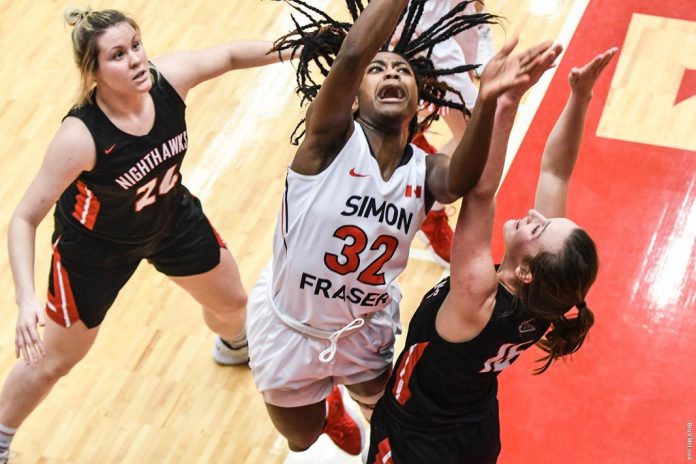
Ozioma Nwabuko played a game high 39 minutes in this one. (Photo courtesy of SFU Athletics)

By: Brandon Braich

On Saturday night, the SFU women’s basketball team hosted the number 11-ranked Alaska Anchorage Seawolves at the West Gym on Burnaby Mountain. The Clan, winners of six straight, faced a tough test against one of the top teams in the league.

SFU (12–7) fell in a heartbreaker, losing 68–63 to the Seawolves. Alaska Anchorage led for most of the night, with their lead growing to as large as 10 in the third quarter, but a furious SFU comeback lead by hot shooting from Sophie Swant (20 points) and Taylor Drynan (13 points) fell just short.

After the first quarter, the Clan found themselves trailing 21–15. SFU struggled to generate offense against the physical Seawolves defense. Alaska Anchorage forced 27 turnovers on the night leading to 17 points.

“We overpenetrated a bit, and when you overpenetrate you get yourselves into trouble sometimes,” SFU head coach Bruce Langford said. “They were very aggressive, and I think we had a couple of people playing a bit nervous.”

SFU picked up the defense of their own, holding Alaska Anchorage to just two field goals in the second quarter. Ozioma Nwabuko connected on a three-point play at the buzzer closing the gap to 31–28 at the half. Nwabuko was a warrior all night, playing a game-high 39 minutes and finishing with 12 points and seven rebounds.

The third quarter started with several sloppy plays by the Clan, as Alaska Anchorage’s full court pressure stymied any ball movement. The Seawolves quickly pushed the lead to 10 as they took control of the game. Hannah Wandersee was a force inside for the Seawolves, finishing with a game high 28 points.

But once again the Clan responded.

Kendal Sands broke the lid on the rim with a put back on an offensive rebound. After a defensive stop Swant found Samantha Beauchamp wide open under the basket for an easy two. With the crowd of 332 feeling the momentum turning, Swant hit a three before the buzzer to pull the Clan to within one going into the fourth quarter.

The Seawolves responded, starting the quarter with a couple of quick baskets of their own. But Swant responded with a three, and then after Nwabuko stepped in to take a charge, Swant hit her fourth triple of the game to give the Clan their first lead.

Alaska Anchorage responded quickly though, finally shaking their three-point drought and hitting a couple of clutch shots from long range.  Multiple three’s by Drynan kept the Clan within striking distance though, even after Swant fouled out.

With seconds to play, Jessica Jones hit a deep three, pulling the Clan to within one. When the ball was inbounded, Sands intentionally fouled — however, after video review, it was determined that it was a flagrant foul, effectively ending the game.

“She hit her face slightly,” Langford said.  “I think it probably looked worse on tape then it was in real life.”

Wandersee hit her free throws putting the game out of reach.

Despite the loss, Langford seemed optimistic of his team’s play.

“I thought we were close, I thought we did a lot of things well,” He said. “We took away their three-point shooters for most of the game.”

“We were just a little bit unlucky at the end, a couple of things didn’t go our way.”

What’s Next:

SFU will hit the road for the next two games. They’ll visit Concordia on Thursday and then Western Oregon on Saturday. The Clan will be back home on Valentine’s Day as they face off against Seattle Pacific in the West Gym.

SFU hosts a discussion about consent and bystander intervention

0

Written by: Henry Tran, Coordinating News Editor

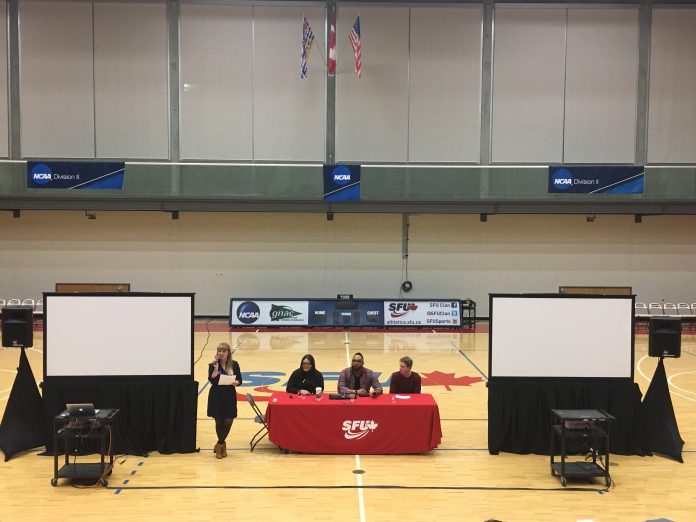
On January 30, Simon Fraser University’s Sexual Violence Support and Prevention Office (SVSPO), SFU Athletics, and SFU Residence and Housing, hosted a community dialogue about the importance of consent and bystander intervention. The dialogue was hosted at the Lorne Davies Complex by JR LaRose, a former BC Lions football player and current motivational speaker.

During the discussion on consent and bystander intervention, LaRose shared some statistics about sexual violence. “25% of women are assaulted in college, with most of the assaults occurring in the first eight weeks of classes, and one in three Canadian women are sexually assaulted in their lifetime,” LaRose told the crowd.

LaRose then provided analogies in the form of educational videos and personal anecdotes to educate the attendees on the concept of consent and bystander intervention. For example, he played the viral “tea and consent” video posted by Blue Seat Studios to demonstrate how saying no to having sex is the same as saying no to drinking tea and the importance of respecting that individual’s decision in either situations.

Following the presentation, there was a question and answer period where two designated SFU students, Sarah Law and Ryan Stoyls, asked LaRose questions regarding the topics of consent and bystander intervention. Law is a community advisor in SFU Residence and Housing; Stoyls is the vice-president engagement for the Student Athletic Advisory Council.

Stoyls asked LaRose what is the best way to assist someone who has experienced sexual assault but aren’t able to seek professional help. LaRose replied, “The best way to assist somebody that’s gone through it [ . . . ] is to let them know that it wasn’t their fault.”

“I think far too often when we wanna be there, be their support system, we ask questions like what were you wearing, what were you doing, how much did you drink. Screw all that,” Larose stated. “How about let’s be a real friend and support that person because they’re broken and that’s the last thing [they want] to talk about . . .”

Following that, Law asked: “Why are we as a culture so focused on how not to get raped versus not rape?” Law was wondering why women are held responsible for their own trauma, such as having to dress appropriately and go out in groups to protect them from being sexually assaulted.

LaRose responded, “This isn’t a women’s issue, it really is a men’s issue. Men should be the ones [holding] each other accountable for this . . . We as men need to really reshape what it is to be a man.”

Afterwards, LaRose answered questions asked by the general student body. Raffle prizes were drawn by the SVSPO staff at the end of the night to thank the students and staff for their attendance.

The discussion was part of the SVSPO’s Sexual Assault Awareness Month, a series of engagement opportunities that educates SFU students, faculty, and staff about sexual violence. The month-long initiative is a partnership between the SVSPO and other community partners such as the Simon Fraser Student Society and the Graduate Student Society, according to Ashley Bentley, an educator at the SVSPO.

Sexual Assault Awareness Month took place during January 2019 and consisted of a series of community outreach events and social media activities, according to the SVSPO’s website. This is the second Sexual Assault Awareness Month hosted by the SVSPO since its inception in March 2018, according to Bentley in an email interview with The Peak.

Bentley also explained that due to the academic calendar, the SVSPO has decided to move the Sexual Assault Awareness Month from March to January. It will run at the beginning of every January starting this year.

When asked what the SVSPO’s purpose was in organizing the Sexual Assault Awareness Month, Bentley replied, “It is a learning opportunity for people to engage in the topic in a low barrier and accessible way. The hope with creating communication campaigns and hosting events is to engage the entire university community on the topic of sexual violence, and to share some ways in which people can be a part of creating a culture of consent, care and respect at SFU.”

A guide to avoid hypersexualizing Black bodies

0
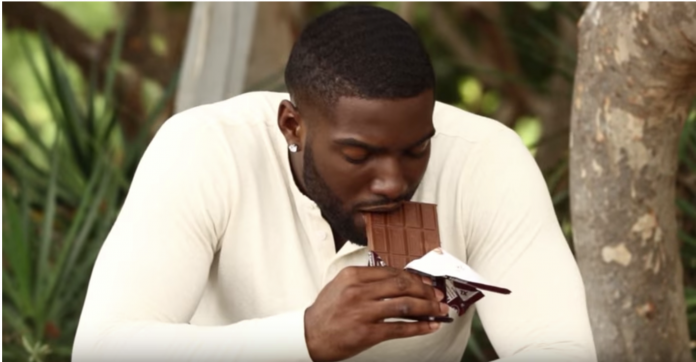
Screenshot from Donnell Blaylock Jr Hershey Chocolate Teaser Video

By: Youeal Abera, Staff writer 

As a young Black man who lives in Vancouver, a city where African-Canadians constitute 1.2% of its population, I discovered what it means to be “visually different” at a very young age. When I hit puberty, and when my friends began to date, things took an interesting turn.

On my hockey team, in my high school, or even in my church, my white companions would talk about Black bodies in ways that, as a youth, left me profoundly confused. I wondered why the timid white girl in my grade 11 class emphasized her need to exclusively date dark-skinned Black men. I wondered why a leader in my church scoffed at a Black teenage boy holding hands with his white girlfriend, stating that “Black guys always know what to do to get white girls.”

Now, as a young adult, I’ve become actually aware of the hypersexualization of Black men and women. It’s also not a new phenomenon: take for example the story of Sara Baartman, a Khoikhoi woman born in the late eighteenth century in what is now South Africa. Baartman was brought to Europe as a human exhibit after supposedly signing a contract she probably did not sign well-informed and out of her own free will.

Placed in front of vast crowds across Europe, Baartman’s large buttocks were presented to millions of European eyes within human “freak show” exhibits. She became infamous and ridiculed. White people would travel long distances and pay fees just to gawk at Baartman’s Black body.

Her brain, skeleton and sexual organs remained on display in a Paris museum until 1974. Her remains weren’t repatriated [to South Africa] and buried until 2002,” explains Justin Parkinson, a BBC writer, in a historical feature on Baartman.

The story of Sara Baartman is one of the most tragic examples of Black hypersexualization.

In our present, I understand that this kind of hypersexualization often surfaces as a backhanded compliment, like when white women express how fun it is to “get with” Black men. This fetishization mirrors the sexual curiosities of individuals who, after long ingesting poorly represented media content, yearn to explore Black bodies as if these bodies are theirs to conquer.

In the end, the hypersexualization of Black bodies is rooted in the tremendously problematic ideology that whiteness is the norm and that Blackness is of the “other.” It is propelled by a shameful desire to partake in the fallaciously depicted “deviancy” of Black sexuality.

I also know what it can do to Black men and women. Many damaging stereotypes are derived from this hypersexualization: Black women have bigger behinds and breasts than white women, Black men are brutes in the bedroom… Although some may conceptualize these as “positive” stereotypes, they actually lead Black individuals down an unhealthy path where unrealistic expectations and underlying worries become ingrained into romantic relationships and self-images. Take, for example, a recent Vice article that dove deep into ugly scenarios where Black women were hypersexualized within their interracial relationships.

Black people, time and time again, are forced to navigate offensive and awkward situations. Keeping this in mind, I thought it’d be helpful to curate some do’s and dont’s when it comes to discourse regarding Black bodies.


Do:

  1. Understand that we, just like you, are humans. We appreciate and practice sexuality just like anyone else.

Like you, we bleed. We also love sex. However, we don’t f*** like animals. We do understand that sexuality, practiced respectfully and consensually, is beautiful. Forget what you’ve heard: our sex looks exactly like your sex. Issa Rae said it best when discussing how Black actors perform sex scenes in her hit show Insecure: “We don’t get to see Black lust in a normalized and natural way that isn’t hypersexualized. For HBO, we have so much license to show Black people loving and f*cking. Why wouldn’t we take advantage of that?

2. Going on a hike is an “adventure.” Dating a Black person isn’t.

I will never understand why white people think that dating Black people is “exciting.” Going on a rollercoaster is exciting. Kendrick Lamar dropping a surprise single — THAT would be exciting. However, dating Black people is just like dating people from any other race: you have your honeymoon phase, you secretly hate your partner’s parents, and you even develop their bad habits (I still watch Netflix with subtitles on). However, insinuating that we are “exciting” really just means that we are “the other,” and that’s a horrible thing to think.

3. Know that we have different shades of skin.

There are many shades of Black skin. Therefore, it’s erroneous to state that a light-skinned Black man is “the handsome type of Black” or that a dark-skinned Black woman isn’t the “beautiful type of Black.” Whether it’s Zendaya and J.Cole or Viola Davis and Morris Chestnut, all Black skin radiates with a beauty that can’t go unspoken.

4. Understand that the amount of sexual experience we have varies greatly, just like with individuals of any other race.

Some of us have had a lot of sex, while others haven’t.

5. Call us Black, not “chocolate” or “caramel.”

There seems to be a wildly misinformed conception that Black folk enjoy being referenced to as candy? If you aren’t Black, please don’t refer to us as food — we don’t exist to sate your sexual appetite.

6. Respect that the physical strength and athleticism of Black men varies.

Please understand that if a Black man doesn’t know how to play basketball . . . he’s still Black. If a Black man doesn’t have a natural inclination towards sports, he’s still Black. The age-old notion that Black men have “super genes” is actually more racist than you think. Understand that not all Black men are 6’11’’athletes who can give you the life of a “basketball wife.”

7. Understand that you don’t have to tell a Black woman that they look like Beyoncé or Rihanna to compliment her.

We all obviously know how gorgeous Queen B and the Badgal are. However, Black women are diverse and their beauty is versatile. To be quite honest, when you tell a Black woman that they look like Beyoncé or Rihanna, it really just shows how narrow your knowledge and perception of Black womanhood, and Black beauty, really is.

8. Understand that if a Black woman had plastic surgery or otherwise altered her body, it wasn’t to “look more Black.” She did so because she wanted to.

I’ll never forget the confusion and shock I felt when I was talking to a group of (non-Black) friends and realized that they all believed that Black women in hip-hop got body enhancements to look more like “Black women.” Realizing that there was a lot to unpack in these comments, I simply stated that Black women, just like women from any other race, have complete autonomy to do what they want with their bodies. When a Black woman undergoes plastic surgery, it’s a sign of her agency, not her racial image.

9. Know that a Black woman’s hair whether it’s natural hair, a weave, a wig, or is bald doesn’t determine her Blackness. She’s Black because she is Black.

To be completely honest, I’ll never understand where white and non-Black people develop their fascination with a Black woman’s hair. Comprehend that whatever is on her head will NEVER negate, or accentuate a Black woman’s blackness. Case closed.

10. Understand that a Black woman’s curves doesn’t have any indication or influence on her sexuality.

We’ve all heard the stereotype of Black women and their butts. Whether small or big, a Black woman’s butt should never be indicative of her race or affect the respect you give her.


Don’t:

  1. Say “Once you go Black, you never go Back.”

I’ve been hearing that since my childhood. However “amusing” or positive this stereotype may seem, it perpetuates the stereotype that Black men and women are foreign creatures and their bodies are so majestic that once you have sex with them, you’ll never settle for anything else. It actually reinforces the notion that Black people, and their sexuality, is Other.

2. Call Black bodies “exotic.”

Don’t assume that Black bodies can give you different experiences than what you’re used to.  We are humans, just like you. Nobody has ever taken “exotic” as a compliment.

3. Ask Black women if it’s “really better” with Black men.

Again, this coincides with the notion that Black men are beasts who, in accordance to your racist fantasies, can leave you sexually satisfied. White women are usually the culprit of this crime, and it almost always stems from stereotypes shown on TV or in movies.

4. Assume that a Black woman’s Blackness is defined by the size of her behind.

One more time for the people in the back: a Black woman will always be Black and she must always receive your respect.

5. Proclaim that a Black woman is being lascivious for wearing any type of clothing.

Growing up, my church would watch the Super-Bowl halftime performance every year. One year, Madonna performed and no one from the (predominately white) congregation said anything about her costume. The next year, Beyonce performed and a number of church members (who know I’m a fan of Bey’s)  told me that she dressed like a “prostitute” who needed to “class it up a bit.” Historically (ever since white slave-owners raped and abused the bodies of Black women), people (especially white men) have felt entitled to speak on how a Black woman must conduct herself. White women slut shaming Black women isn’t foreign, either. Black women can wear what they want.

6. Feel entitled to make assumptions on the origins or motivations of an interracial relationship that involves a Black individual.

At the end of the day, love is love. Who are we to tell anyone who they should or shouldn’t date? An interracial relationship between two consenting adults doesn’t require your assumptions. Ever.

7. Assume that light skin Black men/women are pure and that dark-skin Black men/women are sexually aggressive.

This is a testament to how the issue of colourism (particularly in the Black community) is so rampant. An individual’s shade of Blackness is never an indicator of how they’ll behave. This is not that hard to understand.

8. Claim that Black men and women within the LGBTQ21A+ community aren’t “real” Black men or women.

Like in every demographic, homophobia unfortunately still exists within the Black community. Homophobic attitudes deriving from both the Black church as well as years of toxic masculinity mean that the sexualities of Black LGBTQ21A+ individuals are still demonized and validated. Karamo Brown, when speaking about making history as the first openly-gay Black man on television, stressed how problematic this homophobia is: “That’s just the unfortunate truth with many people in our community. We have been told that we are not good enough, that we are less than.” We must always respect and cherish the Black individuals within the LGBTQ21A+ community, and we must understand that Blackness is not invalidated by queerness.

9. Attribute sexual deviancy to Blackness.

Again, Black people have sex just like individuals from any other race. When you depict Black sexuality as something abnormal, you explicitly or implicitly apply a deviancy to its nature.

10. Touch our hair. Like WTF? Don’t.

I’m so tired of this shit. We are not your personal petting zoo. Imagine how crazy I’d look if I walked up to a white man on the skytrain and fondled his herbal-essences, hipster hair. For the love of Black Jesus, don’t touch our hair.

If you follow these integral Do’s and Don’ts, you’ll be on your way to becoming a master of evading the hypersexualition of Black bodies. As one last piece of advice: whenever you decide to compliment the beauty of a Black person, always make sure to ask yourself where your admiration comes from. Is it the person themselves, or the stereotypes that have plagued their race for centuries?

“The need for safe space”: SOCA publishes letter on ongoing space conflict

0
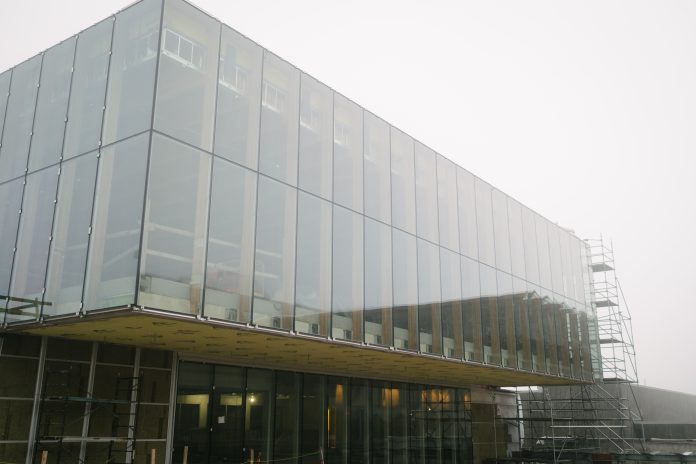
Photo Courtesy of Chris Ho

On January 16, SFU Students of African and Caribbean Ancestry (SOCA) published a letter on their Facebook page directed at the SFSS, regarding the issue of space in the new Student Union Building (SUB).

The letter includes a quote of support from 1997-98 SFSS president Joey Hansen. “I urge the SFSS to continue to find and supply space to the various groups on campus engaged in [anti-oppression activism],” Hansen wrote.

Previous Internal Relations Officer Panther Kuol allegedly stated, “I am saddened by the news that SOCA has been given notice to vacate its long held space. I find it highly disturbing.”

In the letter, SOCA writes that “we hope that this letter brings a heightened understanding of the need for a safe space for the Black community on this campus and is followed with a shift in priorities within the SFSS board.”

This letter follows the statement SOCA released to the public on December 13, calling on the continued support of their fellow students to advocate for space in the SUB.

Along with SOCA, the other Rotunda groups who have not been granted space in the SUB are campus radio station CJSF and Simon Fraser Public Interest Research Group (SFPIRG).

On November 23, 2018, the SFSS announced that they would allow CJSF, SFPIRG, and SOCA to stay in the Rotunda on a month-to-month basis until the SUB opens, as opposed to being evicted in April. They confirmed that the groups would not be getting permanent space in the SUB.

Giovanni Hosang, president of SOCA said in an interview with The Peak that the last time they officially met with the SFSS was at a board of directors’ meeting on September 14, 2018, which the group left feeling good about. Since September, they had asked for more meetings; however, they had been “categorically ignored, then finally denied, on November 23.”

Craig Pavelich, director of communications at SFPIRG, said in an email interview with The Peak that they “have attempted to engage the SFSS through formal letter communications, by meeting directly with them, and by attending their Board meetings,” however are consistently “met with attempts to avoid dialogue and accountability.”

Magnus Thyvold, station manager at CJSF, said over email that CJSF hasn’t “been given much opportunity to interact or have contact with Board members regarding this matter of space.”

Samer Rihani, acting president of the SFSS said, “We’re still discussing alternate methods, we want to look into other options with the university, and so we felt that [sic] it was just going to be a similar dialogue to the September 14 meeting, which was a lot of history [ . . . ] As it’s been stated, we politely declined because we’re still in the works of figuring out how is it that we want to do it.”

Former SFSS president Jeff McCann wrote to SFPIRG in 2012 discussing the SUB and promising to recommend a lease extension for their current space in the Rotunda. McCann finished the letter by stating that “I will personally recommend a lease extension until both organizations move into the new student union building.”

In response to this, Rihani said “based on asking our staff, I’ve never gotten a document that had written anything in stone.”

He acknowledged the email sent by McCann in 2012, but added that “from Jeff McCann’s time into our time, we’ve had a lot more clubs come up, a lot more interest [ . . . ] so for us it’s difficult.”

Rihani also elaborated on the SFSS’s decision making process, explaining that “we don’t want to prioritize anybody, regardless of the background of the club, how long you’ve been here, the services that you do. Clubs and student unions on campus all offer something different and we want each student to feel like there [is] available to them a safe space and an open space for them to access.”

Board Shorts

3
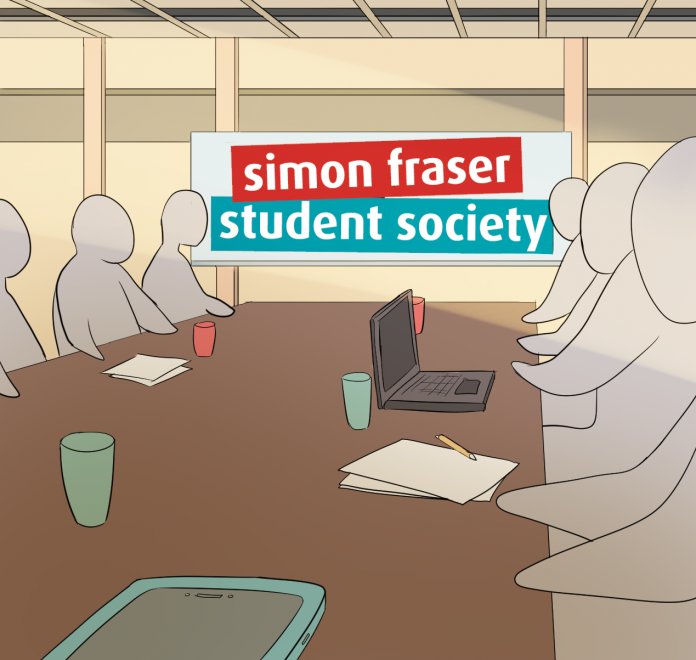
Irene Lo / The Peak

Written by: Henry Tran, Coordinating News Editor

Meeting minutes will now note which director is abstaining or voting against a motion

At the latest Simon Fraser Student Society (SFSS) board of directors’ meeting on February 1, the board passed the motion to keep a voting record for all future board meetings.

The motion was brought forward by Kia Mirsalehi, applied sciences representative. Mirsalehi stated that: “If we make it obvious on who’s voting against or who’s abstaining from a motion [it] adds transparency to our motions and means that we can’t [hide] behind any sort of barrier.”

Jackson Freedman, vice-president university relations mentioned that the disadvantage to this new protocol is that it might make some directors vote out of fear. “I don’t want to put our board member in a position where they may have to vote out of fear [. . .] because there are some board members who may be afraid to put their perspective forward.” However, Freedman made it clear that he was not against the implementation of this new practice.

Giovanni Hosang, president of the Students of Caribbean and African Ancestry (SOCA) stated that: “This is a good way to track people’s voting record [ . . . ] We get to see who is voting what, where, and if people are voting [differently] because [of personal reasons].”

SFSS to officially recognize February as Black History Month

The SFSS board of directors has formally agreed to celebrate February as the Black History Month, starting this year. According to the SFSS meeting agenda, Black History Month is an important event to recognize the contributions that black Canadians have made to the nation and remind “all Canadians that racism is not a matter just of the past.”

Balqees Jama, internal relations officer of SOCA gave a presentation on why Black History Month is of importance to the SFU community.

Jama stated that: “Celebrating Black History Month honours the leaders of this country in the black community [ . . . ] I think a lot of people forget that Black people exists in Canada especially in the West Coast just because we’re not as visible compared to the Black community in the East Coast.”

At SFSS community events such as Munchie Mondays, the SFSS will be providing educational pamphlets as well as a list of existing certificates and courses that SFU students can take to learn more about the history of the Black community.

Board approves shared-space model for the new Student Union Building

Following the space allocation discussion that the SFSS directors had previously, the SFSS directors have agreed to use the shared-space model to allocate space to student organizations and student unions in the new Student Union Building (SUB).

Under this model, clubs and student unions will be allocated space in one of the four suites and eleven offices in the SUB on a semesterly basis, according to Freedman in a follow-up interview with The Peak.

In response to this announcement, Hosang said: “This model is one logistical nightmare. There are 300 clubs on campus and based on the current model, only [a limited amount of] clubs will get a suite each semester.”

Hosang further commented that, “There are 22 other bookable rooms in the building. I don’t understand why you are pushing so politically for a shared space model. It is not efficient.”

Freedman then clarified during the meeting that the SFSS has received only 66 applications for space in the SUB, so not all 300 clubs require space in the new building.

Aiswariya Sunder, an SFU undergraduate student said to the board if clubs have to apply for spaces in the SUB through these application processes, it means that the SFSS is “indirectly stating that one club is better than the other.”

“Organizations like SOCA, SFPIRG, CJSF, need space to run on a day to day basis. Clubs don’t. Clubs meet once or twice a week or biweekly. I’m part of three clubs. We meet every two weeks, sometimes once a month. Clubs do not need [a] permanent space,” she further said.

Samer Rihani, acting president of the SFSS said in a follow-up interview with The Peak that after the semester has ended, the SFSS will conduct an internal review to determine if they should extend the space usage to the group who is currently occupying that suite.

“It’s still a bit of a rough plan as to exactly how it’ll look, but we’ll be sure to communicate this to students well in advance,” said Rihani.

Freedman also stated to The Peak that the board of directors is currently exploring different options to ensure that every SFSS group have a chance to use space in the SUB. An option that Freedman had in mind was to make ownership for three out of the four suites rotate every semester, he shared. However, this hasn’t been brought forward to the board yet.

Physical altercation during break

As the board meeting transitioned from an open session to an in-camera session (where only the SFSS board of directors are permitted to attend), a physical altercation took place between two non-board members. The altercation took place during the 10-minute break.

According to a public statement by the SFSS, the involved individuals are non-SFU students. Campus Security and the RCMP have been contacted and the individuals remain unnamed for the time being as an investigation is underway, according to Rihani.

As a result of this incident, the SFSS will be making changes to ensure that future board meetings will be safe for its membership to attend, the statement further adds.

Two-Minute Turnoffs

0
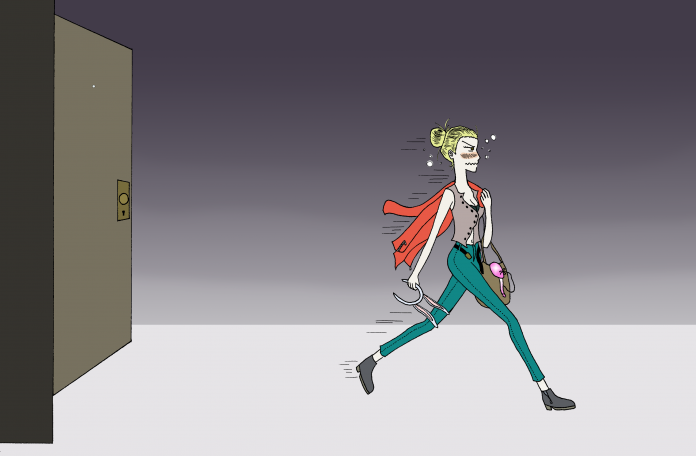
Illustration by Alice Zhang/The Peak

Written by: Gene Cole, Gabrielle McLaren, Winona Young

People who wanna bring out the big kinks on the first date

Don’t get me wrong, kinks can be a hell of a time. Lots of people love to be a little extra, get a little more intense, or roleplay someone besides themselves. Opening up to a partner with these can be a stressful experience, and while it’s important to be proud it’s an intimate and important part of your private life. It’s a relieving and worthwhile moment when you finally do open up, and from there you can start communicating and preparing for the night of your dreams.

So excuse me if I’m taken aback when they ask to go all 50 Shades in their twin bed after the first date.

It certainly ain’t wrong to be open and brave with your private interests, and I can definitely applaud you for being brave enough to ask to be choked after the first passionate kiss. But there’s definitely a way to ease into it, and there’s no rush to start on them; if we’ve been leg-rubbing under the table for this long, we can wait until the second date for the weirder stuff.

Besides, rushing into it breaks the first rule for intense kinks, and for crossing the road; safety first! I want to be sure of what your bed looks like so we aren’t gambling when we try tying each other onto parts of the bed. We have to make sure we’ve got any safety tools we might need, like scissors or first-aid. We need time to buy stuff for aftercare, like tea or snacks. I’m cool to get extreme, but please don’t rush through these things. -GC


Straight guys close-minded to pegging

This callout is mostly aimed towards straight boys. You’re absolutely allowed to be uncomfortable and have boundaries but also: ya boring.

I’ve seen so much hetero porn of guys alternating between anal and vaginal sex with women, but not once has a guy ever gone, “Hey, why don’t we try it the other way around?”

And why is that? Many men have great behinds, and it’s a downright waste, nay, a downright travesty not to enjoy them.

Such close-minded men will never know the wonder that is the prostate or the intimate feeling of personally getting rammed into the mattress. The only mainstream representation we’ve seen of pegging was Ryan Reynolds getting pegged by his partner in Deadpool looking mildly uncomfortable. The man being on bottom isn’t degrading or humiliating — like all sex, it’s supposed to be fun. For the close-minded, all I can say is, you are truly missing out. Try it, or at least think about it a little more. -WY


Guys who don’t moan

I don’t know ‘bout y’all, but I be in my guy’s ear like, “Ooh ee ooh ahh ahh ting tang (walla walla bing bang).”

Really, nothing is more boring to hear from a man in bed than hearing occasional grunts and a self-satisfactory sigh after two and a half minutes. Where’s the moaning? Where’s the passion?

Apparently nowhere, because your ass is “too manly” for moaning. I’m sure there’s a whole lecture I can go on about how it’s more acceptable for women to moan because they’re the subject of desire, et cetera et cetera. But when you get down to it, lack of moaning to me just translates as “I’m not willing to be vulnerable and vocalize how much pleasure I’m feeling from you right now.”

It’s an insult to your partner! By moaning, you are giving them a great verbal signal of “I’m loving this! You’re great! This is better than the free pizza I got for lunch.”

Grunting is okay. Whimpering, whining, wailing, and/or sobbing in pleasure is all fine. Full-on moaning, though, is too rare and needed. It’s a perfect way to say to your partner, “I’m here right now, and I’m focused on nothing but us.”

Also, moaning is just really hot. -WY


Straight men seeking lesbians

This phenomenon is even more flabbergasting to me when it happens on dating apps where you specifically know what the person you’re talking to is after, but it happens in real life as well.  Sometimes I just think to myself: why are you fishing in this pond, sir? Actually, I have a lot of questions.

Hunter, what is it that’s so great about you that it will fundamentally change my queer identity? Think to yourself, Brad, “is my penis really that great?” Luke, would you be creeping me and my significant other so hard on public transit if I promised we weren’t going to start making out?

When I told you I was gay and you said, “that’s because you’ve never been with me,” I heard you, Jason. And yet, inexplicably, I remained gay. Dare I say, maybe I became gayer. On the bright side, when you told me I was too pretty to be gay, the flesh-mask Aphrodite cursed me with melted away from my face and revealed my true form as Darth Lesbian—so thanks for that, Jared.

Jokes aside, nobody has time for this kind of tomfoolery and shenanigans. Not only are you being a huge pain in my ass, wasting my time, and polluting the small wedge of the electronic dating scene I access, but as a bonus, you’re also tapping into the phenomenon of corrective rape (the sexual violence against queer folks in order to “turn them straight”) and the dismissive and disrespectful mentalities that make such violence possible. So, kudos.

I don’t mean to imply that this kind of thing doesn’t happen to other LGBTQ21A+ folks. I’m just saying I’ve met more than my fair share of straight men who can’t fathom the idea of an off-camera lesbian wearing clothes and not existing specifically for their viewing pleasures, and I can only speak from my experience.

So from the bottom of my heart: get out. And if you ever get lost and end up in the wrong aisle or barking up the wrong tree: accept this answer, apologize, and leave. -GM

Age-Well Innovation Hub revealed at SFU Surrey

0

Written by: Youeal Abera, News Team Member

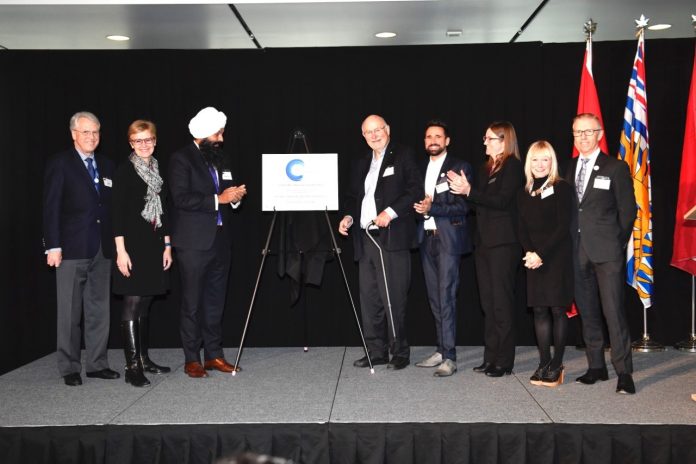
Simon Fraser University Surrey‘s Age-Well Innovation Hub, a newly manifested resource launched by the technology and aging company AGE-WELL Network of Centres of Excellence (NCE), has received $3.5 million dollars in federal funding.

The hub, which was first revealed to the public at SFU’s Surrey campus on January 17, received the funding from the federal organization, Western Economic Diversification Canada.

Created with the incentive of introducing medical solutions to elders within the province of BC, the Age-Well Innovation Hub’s mission is to “engage a range of stakeholders in a specific location to advance innovation and (the) adoption of technology-based solutions, policies and practices for healthy aging”.

Dr. Andrew Sixsmith, a gerontology professor at SFU and Age-Well’s scientific co-director, stated in a media release by the university that the contributions of the Age-Well Innovation Hub will help both caregivers and those of an older age. In describing the primary geriatric objectives of the hub, Sixsmith stated, “Our aim is to leverage the extensive resources already established in B.C. to spur the development of technologies and services in the digital health sector.”

According to SFU’s media release,  Associate professor of professional practice at SFU’s School of Interactive Arts and Technology (SIAT), Sylvain Moreno, will lead the conduction of the Age-Well Innovation Hub. Versed in neuro technologies pertaining to cognitive health solutions and interactive digital medias, Moreno spoke to the impact that the hub aims to have on the residents of B.C.

Moreno articulated, “The Digital Health Circle’s focus on translating knowledge into new technologies is essential for BC to strengthen our research and innovation while growing the health technology sector in B.C. The hub will coalesce these objectives to deliver real impact and improvement to the aging population in B.C”.

In addition to Moreno, the Age-Well Innovation Hub will be comprised of a comprehensive leadership team consisting of several SFU staff. The Hub will incorporate the leadership of Thecla Schiphorst, both SIAT professor and vice-president design and community engagement, as well as Carolyn Sparrey, vice-president research and training and associate professor of SFU’s School of Mechatronic Systems Engineering (MSE).

The medical care of seniors has been a significant topic of discussion for healthcare workers and their patients in BC. An article published by the Globe and Mail presented statistics pertaining to the low rates of service BC seniors receive within residential care facilities. In the article, BC Seniors advocate Isobel Mackenzie stated “provincial guidelines require 3.36 hours of daily direct care services such as bathing or therapy for each senior but data shows just 15 percent of all facilities met that standard last year.”  

In further discussing the ramifications the Age-Well Innovation Hub will have for the province, Carolyn Sparrey said, “By training the leaders of tomorrow to be prepared to address the challenges of healthy aging, we will develop new talent that meets the demands of B.C. technology companies while driving economic growth”.

Additional information on the Age-Well  National Innovation Hub can be found on their website.

With files from the Globe and Mail, AGE-WELL, and SFU News