Home Blog Page 482

The Raven Boys is an enchanting story of fantasy, friendship, and captivating characters

0
The Raven Boys is the first of four novels in The Raven Cycle series. Image courtesy of Scholastic.

By: Kelly Chia, Staff Writer

The Young Adult (YA) fiction genre has always been a means to escape from my mundane school life. YA novels often feature themes of fantasy and adventure, which is rad for any sixth grader. As I’ve gotten older, my obsession with YA has veered from escaping through these books to becoming a clucking mother hen over their characters. I took on that role yet again through the dynamics presented in Maggie Stiefvater’s The Raven Boys, the first novel in The Raven Cycle series.

The premise of the book already has pretty cool stakes: the titular “Raven Boys” try to wake up a supposedly dead Welsh king, and Blue, a girl born into a family of psychics, knows that she will one day kill her first love. The plot in itself is pretty neat, but I hesitantly asked, “Where’s the substance?”

To that question, Stiefvater smacked me in the face and invited me to meet her charming characters. She sat me down for two days straight as I maddeningly sped through the book getting to know them. It was a losing battle; I had no choice but to declare these children my children.

Indeed, the most riveting part of The Raven Boys is watching the tight-knit bond grow between our main five: Blue, Gansey, Adam, Ronan, and Noah. Not only are these characters appealing, but Stiefvater delivers depth to all of them and draws attention to how they need each other. Reading about how their relationships unfold in the story is rewarding, and for me, this aspect of the story definitely trumps all of the cool things the plot set up. The plot details feel like a bonus rather than the backbone of the story, and surprisingly, I really enjoyed that. I don’t get to read character-driven stories too much, but Stiefvater reminded me why they’re treasures.

As an example, let’s take a look at the character of Richard Gansey III — known as Gansey — who is repeatedly established as the leader of the Raven Boys. Gansey has a big noisy car, is super rich, and sometimes comes off as super cocky. While these types of characters are pretty common, I don’t really care for them that much. They are often caricatures, and their redeeming trait is very singular. 

Here, however, Gansey is packed with genuine insecurity and a heartfelt devotion to find something real in his vapid life through the Welsh king and he is determined to protect his boys doing it. Gansey really cares, and he’s not perfect, but the book never establishes him to be. His relationships with the others feel like they progress at just the right rate, which is truly rare to find in a story.


Stiefvater has a way of making you believe that these characters are meant to be together; she works to tell you why through her characters rather than hiding it behind a well-dressed plot. Yes, there’s an undercurrent of destiny that leads these characters to find each other, but I love me some outcasts finding a family with each other. Stiefvater happily delivers in this department.

All of this is to say, I LOVED this book! I can’t remember the last time I devoured any book — it made me feel like I was in seventh grade again, when I would go through book after book at a rapid pace. It is an excellent saga (there are four books in the series in total!) to add to your bookshelf. And for even more reading material, Stiefvater reprises some of these characters in Call Down the Hawk, the first novel in a Raven Cycle spin-off trilogy, which was released on November 5.

The Peak recaps SFSS discussion on not housing Rotunda groups in SUB

2
Image courtesy of sfss.ca

By: Paige Riding, News Writer

At the SFSS Board meeting on November 1, president Giovanni HoSang’s proposal to house the Rotunda groups in the upcoming Student Union Building was defeated by a 7–5 vote of the Board of Directors, as previously reported by The Peak

A large audience attended the meeting to view the discussion and vote, and as a result there was a palpable sense of tension in the air. A lengthy discussion preceded the vote, with many members of the audience speaking in support of housing the Rotunda groups in the SUB. 

Though HoSang’s motion failed, a second motion for them to be housed in the Undergrounds and Forum Chambers in the Maggie Benston Centre, did pass. According to the proposal, the projected cost of $320,000 would be covered by the SFSS Space Expansion Fund, the Accessibility Fund, and $120,000 that “CJSF has been collecting [ . . . ] to prepare for a move out of its current space. . .” 

Members of the audience voiced their concerns about the displacement of the Rotunda groups, and the decision not to house them in the SUB. 

Before the Board began their discussion on the motion, a guest named Annie Bhuiyan spoke on the impact Simon Fraser Public Interest Research Group (SFPIRG) has had on her as a university student. 

“SFPIRG [ . . . ] gives a space to feel at home on campus, and mak[es] me feel safe on campus. It lets me know that I can just go somewhere if I needed a space, if I needed something [ . . . ] or if I just needed someone to talk to. And the thought of them getting pushed out, or getting put in this situation where they’re uncertain about where they’re going to hold their meeting or where they’re going to have an office is awful,” she said. 

“Unfortunately I haven’t had that sense of community from the SFSS, who would be an alternative kind of institution that could give me those resources,” Bhuiyan claimed in front of the Board.

Matt McDonald, Director of External Relations for the Graduate Student Society, provided financial reasons why HoSang’s SUB allocation would be preferred. 

“If the Rotunda groups are not housed in the SUB, SFU has indicated to us that it will be prohibitively difficult for them to house them elsewhere on campus. The main idea was to use the Forum Chambers and Undergrounds, but they are old and need major renovations to be usable at all,” he explained.

“SFU has estimated the cost of this: originally it was $800,000, now they’ve bumped it up to 1.5 million because of the increased costs of construction in Vancouver. As you know, [the] Student Societies have been negotiating affordability and other issues [with regards to] the SFU budget . . . If we add one more expense, this is about the equivalent of a percent hike in international student tuition.” 

McDonald proceeded to explain that, due to the structure of the building as it is, accessibility will remain an issue even after hefty renovations of these basement rooms. He touched on how problematic it would appear for the SFSS to prioritize video game rooms and nap rooms over “environmental and social justice groups to organize on issues, unique student voices heard and important information spread by radio, and for Black students to have a place to build community and advocate for their rights.”

CJSF Station Manager Magnus Thyvold’s statement explained that “SFU provided land [for the SUB]. When they provided that land, a commitment was made to provide housing for the independent, non-profit student societies. The language may not have been strong enough, but everybody knew what was meant when those commitments were made. 

“That’s why our groups were asked to participate fully in the planning process . . . SFU had indicated to us [ . . . ] that they would not have provided the lease to let this whole project go forward had they known that this commitment was going to be withdrawn,” he said. 

To have “long-standing, active, progressive organizations in support of students and providing opportunities for students on campus for decades” in jeopardy of being pushed off campus is a mistake, according to Thyvold.

Jennifer Chou, Arts & Social Sciences Representative, spoke about her experience volunteering in the past for one of the Rotunda groups potentially being displaced: Embark Sustainability. She noted their positive impact on the SFU community through Community Kitchens and free produce distribution to students. She also spoke positively about her experiences with SFPIRG and how they are a “hub of resources that are valuable to the community.”

Simran Uppal, Science Representative, stated that “SFSS Student Union groups should have priority over external groups.” This was a recurring answer from those who voted against the motion.

Tawanda Nigel Chitapi, VP Finance, said that “over time, I’ve learnt that not everyone is [extroverted] like me [ . . . ] and these groups of students, especially international students, they’ll just come here, they don’t have family, so a space such as this would be very beneficial to them. It brings a sense of home, a sense of community, around people that they relate with and can understand each other [ . . . ] I think it’s important that there be a space for students to get together and find a home.”

Following the vote, a necessary break, and other business, the Q&A period allowed guests to ask questions in a 20 minute block of time.

The Peak asked Board members to explain why they voted against the alternative allocation, particularly because most of the comments during the motion’s discussion were from those voting in favour of housing the Rotunda groups. 

Only VP External Relations Jasdeep Gill answered this question, explaining, “I would like to preserve as much space as possible in the SUB for bookable, shareable space for students [ . . . ] I do view the external organizations as external, but I am in favour of housing them in our Forum Chambers and Undergrounds.”

When the Board was asked about concerns over funding of the renovation by The Peak, Chitapi answered, that funds were coming from the Space Expansion Fund. 

“That’s the purpose of the fund, so they’re not being wasted, they’re being used for their [specified] purpose,” he said. “The focus of the Student Union Building was to make sure that there are as many spaces available for everyone, all of us here will have access to, instead of having some that are fixated for a certain group of people.” 

A student who introduced herself as Emma Lynne protested this claim that these spaces will be available for everyone. “I think we have learned time and time again throughout history here at SFU, here in Canada is that, for a space to be for everyone, sometimes you need to create space for interest groups. Sometimes you need to create space for people that don’t have space that is for ‘everyone’. For me, that excuse sounds similar to the ‘#AllLivesMatter.’ People say Black lives matter because we need to draw attention to that.”

Ricky Castanedo Laredo, CJSF Music Coordinator, stated “ultimately, SFU still belongs to the community at large. This whole idea that because we [CJSF] are an external group, suddenly we’re demerited in some way is ridiculous. You’re going to enter community life after this. This is not where your life is going to end. To not have groups that can bridge that gap in that building that is specifically being built for said groups . . . It’s a building that you have control over how it’s going to be filled.”

HoSang himself had to say that “that specific question isn’t being answered by the board at this time,” asking guests to move on. 

Another audience member pointed out that these groups already struggle to fulfill their functions in their current homes, and that the new arrangement would reduce their space.

Ana Lozitskaia expressed their concerns about the space’s accessibility, and how the new location would make these resources difficult to access for students with disabilities. They told the Board that, “by tearing those resources apart and placing them [where they] are inaccessible, you’re not only tearing us apart from the resources, you’re tearing us apart from ourselves because there is no place for us to meet,” they said. 

“There is no place for us to connect [ . . . ] Please represent all students. Please remember the students you encounter may not be representative of everybody else on this campus.”

 

Long Story Short: Friend breakups can be as painful as romantic ones 

0
Illustrated by Tiffany Chan

By Winona Young, Features Editor


I’m in my room in Vancouver, scrolling through my Instagram feed. In the pale blue glow of my phone screen, I see the new post that she’s uploaded from New Orleans: a picture of herself and some other girl. They’re in matching costumes and I scrunch my mouth. She never did anything like that with me, I think distantly. I double tap the screen on instinct. I continue scrolling, and try not to think too hard about how happy the person I once called someone my best friend looks with someone new. 


I’ve gone through some painful break-ups, but no one told me about how painful friendship break-ups can be. And even though I just got dumped this summer, the break-up that haunts me, and I believe will continue to stick with me, is the one I went through with my (now ex) best friend. 


I met my ex-best friend in high school — Let’s call her Elizabeth. Elizabeth and I became friends over a school play between rehearsals and running lines. When we both realised we had a shared love of Doctor Who and Tumblr (I know, please don’t bully me), we hit it right off. The next few months were filled with long sunny afternoons with her, whispered conversations in the darkness of movie theatres, and obnoxiously loud laughter at jokes no one else would understand. During that time, she even had a boyfriend briefly, but he often said that whenever us three would hang out, he felt like he was the third-wheel. And honestly? He wasn’t wrong. When I think back to high school, despite the horrible time I had, she was one of the reasons I recall those days with warmth. Her smile, her wit, and her; I still miss all three dearly. I wanted nothing more for this person to stay as my partner-in-crime, my commander-in-homie, my [insert any silly joke label here] — any name we’d call ourselves would do as long we stayed friends. 


We lost touch gradually — it was so subtle, I barely noticed it. Over the course of two years, it ebbed away slowly and quietly. The thing about friendship break-ups is that they fade in the corner of your eye. Calls were missed, inside jokes grew stale, and visits proved how wide the gap between us was. Neither of us acknowledge that anything has changed with how we talk. Instead of completely ignoring each other, we stay in each other’s periphery with an enthusiastic comment on a great Instagram post; these emotional equivalents to bread crumbs somehow made the break-up worse.


There are countless songs about heartbreak — ranging from singers feeling utterly gutted to victorious to bitter. But most of all, many break-up songs about your ex-partner are all about empowerment. You’re over that loser! Social media, witness my goddamn #FlexOnMyEx! The underlying message in each break-up anthem is, “I am better off without you in my life and I can’t wait to tell the world.” 


When I think of people I’m no longer friends with, when I think of Elizabeth, I’m not filled with a sense of victory, more so a sense of hollow emptiness. There are no break-up anthems about losing friends that empower you. Songs like “When She Loved Me” by Sarah MacLachlan just remind me of a deep psychic ache that I can’t quite shake each time I see she’s posted something new on social media. 


What I learned is that unlike the melodrama of romantic break-ups, a break-up between friends, however, is more ambiguous, more confusing. Because there can come a day where you can dive deep into a new partner, but the regret and sadness from a friend break-up lingers. It sticks with you in every new friendship made, every holiday passed, and the hope that maybe one day they’ll reach out still lurks. The sob story of being dumped by your good-for-nothing ex will always garner more sympathy and more understanding than trying to articulate how a perfectly great friendship crumbled over time. And it’s a shame we can’t mourn a friendship as publically. But both kinds of loss, at the end of the day, are equally valid and painful in their own dimensions

Netflix’s Carmen Sandiego is a fresh take on a nostalgic character

0
Carmen Sandiego’s second season premiered on Netflix in October. Image courtesy of Netflix / Bustle.

By: Prabhdeep Dhaliwal, SFU Student

The Carmen Sandiego franchise goes way back, beginning with the 1985 video game “Where in the World is Carmen Sandiego?” and expanding to include a children’s game show, two series of books by John Peel and Melissa Peterson, four comic books, and various board and card games. The newest addition to the franchise is an animated Netflix series featuring Gina Rodriguez (of Jane the Virgin) and Finn Wolfhard (of Stranger Things).

For those of you who have never heard of Carmen Sandiego, here’s a quick synopsis: the Netflix series follows Carmen Sandiego (Rodriguez), a former thief, as she travels all over the world stealing historical artifacts and valuable items. With the help of her hacker friend Player (Wolfhard), Carmen Sandiego seeks to retrieve these items before the infamous agency V.I.L.E. (Villains International League of Evil) can steal them. She then returns the items back to their rightful owners, continuously trying to foil V.I.L.E.’s evil plans while simultaneously being chased by two Interpol agents. Carmen Sandiego is recognized by her long red trench coat, big red hat, and tousled red hair.

Each episode starts by presenting the audience with some historical facts about the country or city Carmen Sandiego is in before she launches into her plan to stop V.I.L.E. Using intel from Player, as well as her own agility, quick reflexes, and ability to think on her feet, Carmen Sandiego time and time again manages to stop V.I.L.E. during their capers. 

Season 1 was released in January 2019 with nine episodes. During the first two episodes of the season, we learn about Sandiego’s transformation from a former thief into a kind of Robin Hood. As the season progresses, two allies, brother and sister duo Zack and Ivy, are introduced and join Sandiego’s mission. In these episodes, Sandiego is confronted with her past as she fights former thieves she had trained with. The audience also sees Sandiego struggling to find out about her roots in the first season. Season 1 ends with an unlikely accomplice helping Sandiego escape from V.I.L.E.

The second season of the show was released in October 2019 with 10 episodes. Season 2 follows Carmen Sandiego, Player, Zack, Ivy, and their new accomplice as they continue to foil V.I.L.E.’s plans. As this season came out just last month, I won’t go into too much detail so as to not spoil anything, but there are many twists and turns, and each episode keeps you wanting more. Season 2’s last episode ends on a cliffhanger, leaving viewers impatiently anticipating a third season — although it has not been confirmed yet.

I would give this Netflix series a 9/10 review. Though it is geared towards a younger demographic, adults will still find it entertaining. Carmen Sandiego offers the audience history tidbits about different countries and cities, and it has likeable characters, humour, and an overarching theme of good winning over evil.

200 photographs for 100 years: Kate Bird’s visual exploration of BC Sports history

0
Sidney Crosby seconds after he scored the Golden Goal. - Photo credit / CBC

By: Dylan Webb, Sports Editor

Kate Bird’s Magic Moments in BC Sports History: A Century in Photo’s provides an expansive and diverse perspective on the rich athletics history of British Columbia. While the book regrettably doesn’t undertake a substantive critical analysis of the role sports played in the formation and enforcement of a colonial state, it does do a reasonable job of, at the very least, paying significant attention to the role Indigenous communities and people, as well as other communities of colour, have played in a century of athletic achievement within the province. After receiving a copy of the work soon after publication, The Peak compiled a list of five of our favourite moments from Magic Moments in BC Sports History. 

Barbara Howard wins silver and bronze at the 1938 British Empire Games. 

As the first Black athlete to represent Canada in international competition, Barbara Howard did far more than simply win medals in track at the 1938 Empire Games in Sydney, Australia. Not only did Howard break colour barriers in the world of athletics, in 1941 she also became the first person of colour to be hired by the Vancouver School Board. Born on May 8, 1920 in Vancouver, BC, Howard died at the age of 97 on January 26, 2017 after spending a lifetime overcoming racist practices and social structures in sports, education, and society in general. 

Chief Dan George holds the 1936 Golden Jubilee International Indian War Canoe Championship trophy won by the Tsleil-Waututh Nation. 

Chief of the Tsleil-Waututh First Nation Dan George was known more famously for receiving an Oscar nomination for his role in the film Little Big Man than he was for his war canoe racing prowess. George is pictured on page 55 with the Golden Jubilee International Indian War Canoe Championship trophy, which cemented the Tsleil-Waututh Wolves’ reputation as one of the most successful war canoe racing teams in the history of the province and the nation. 

Nancy Greene wins Olympic gold in giant slalom and is then voted Canada’s female athlete of the 20th century. 

In the introduction to the 1960’s themed chapter of the book, Bird begins by noting the immense challenges female athletes faced in taking on societal attitudes that largely excluded women from taking place in competitive sports, and even vigorous exercise. In the face of attitudes such as those expressed by Pierre de Fredy, Baron de Coubertin, known as the founder of the Olympic games, who said that, “women have but one task, that of crowning the victor with garlands” and that, “in public competitions, women’s participation must be absolutely prohibited,” Nancy Greene engaged a fearless and aggressive approach to participation similar to her skiing style. After overcoming barriers, such as limited access to equipment and training facilities, Greene secured World Cup wins in 1967 and 1968 before taking two of Canada’s three medals at the 1968 Olympics in Grenoble. Because of these and other achievements, Greene was voted Canada’s Female Athlete of the 20th Century and later became a Senator. 

Rick Hansen completes his Man In Motion World Tour.

Not only was Rick Hansen widely acclaimed for his efforts to raise money for spinal cord research through his Man in Motion World Tour, he was also a pioneer in the development of disabled and wheelchair athletics in British Columbia. Hailing from Williams Lake, BC, Hansen wheeled over 40,000 km through 34 different countries over a span of two years to complete his Man in Motion World Tour. The tour was completed upon his arrival at Oakridge Shopping Centre on May 22, 1987, to the delight of thousands of supportive Vancouverites. 

Team Canada wins Olympic gold in men’s ice hockey at the 2010 Vancouver Winter Olympics 

On February 28, 2010, one of the most iconic moments in Canadian sports history took place at what is now known as Rogers Arena. After a battle in the corner resulted in Jarome Iginla digging the puck out of some skates and feeding it to Sidney Crosby just below the face-off dot to the right of the USA net, one of Canada’s greatest hockey players of all time scored one of the most important goals in Canadian sports history. With the overtime win over a rival American squad, Canada was, at least temporarily, able to bask in the glow of international hockey supremacy earned on home turf. With the moment known to this day as simply “the Golden Goal,” Crosby, Iginla, and Roberto Luongo who, at the time, was playing for the hometown Vancouver Canucks, secured themselves a place in the upper-echelons of Canadian sports history with an Olympic performance for the ages. 

Why must SFU Burnaby get the butt-end of the toilet paper roll?

0
Guests of Goldcorp Centre for the Arts are spoiled next to Burnaby Mountain. Photo: Andrea Renney/The Peak

By: Paige Riding, News Writer

In the “Whale of a Birthday” episode of the culturally impactful show Spongebob Squarepants, Squidward performs a song for Pearl on her sixteenth birthday. The monumental song won audiences over with the stunning lyric, “When my tear ducts give issue, I can’t use just any tissue, I need four ply, four ply, four ply, when I cry.” 

This song resonates with me to this very day. It shaped my expectations for myself and what I deserve in my tissues. You can thus imagine my horror, my dismay, my shock when I headed into my first washroom stall at the university I would call home for the next two-plus years to find the flimsiest quarter-ply toilet paper I have ever had the displeasure of using.

This sick, sad excuse for toilet paper exists in every toilet stall around the Burnaby campus. Unless students whip out their own toilet roll from their bags, the quarter-ply nightmare is inescapable atop this cursed mountain. From residential buildings to Blusson and beyond, the wretched rolls wreak their havoc. No one is safe.

Each dispenser possesses two humongous rolls that hardly fit. Despite its pretense, bigger is not always better. The hefty rolls get stuck after a pathetic amount of paper reaches the hands of SFU patrons. The desperate grasp for a sufficient amount of toilet paper results in little to no success. Like a pathetic attempt at confetti, teensy squares of TP find themselves in the hands of the betrayed, the stranded. 

In a cruel twist of fate, these pieces flutter forgotten to the floor where they belong. Users are left helpless on their porcelain thrones. Silent cries for help sound out as the only way to get more TP is to carefully, care-fu-lly, move the roll to reveal a little more of the paper. The stall floors of each washroom are covered in little snowflakes of failed attempts at attaining a sufficient wad of TP. Beside each scrap lies the tears of students who just want to feel clean, but can’t.

Rushing between classes and need to go? Good luck, kid. Wanting to speed up the prolonged time of a particularly predominant number two? Yeah, right. Everybody knows now. You should have done your business at home, I guess.

Less is not always more in the TP industry. The toilet paper rolls across campus echo the transparency of dollar store tissue paper for bagged birthday presents. Thin enough to view your own hand through it, this stuff requires at the minimum five or six bunches or folds to do a meagre job of things. If SFU really wanted to help the environment, or whatever they had in mind with this toilet paper monstrosity, the toilet paper decision makers would have put their heads together to realize that flimsier paper requiring twice as many layers (not including scrap waste on the floor) is more of a waste than a greater ply paper that requires less bunching.

To rub salt in the wounds even more, other SFU campuses have effective TP that is not see-through. Our downtown campuses boast double-ply TP for their toilet needs. For those formal meetings and important guests at Harbour Centre? They get to have have triple-ply! Maybe it’s the elevation getting to me, but is this not unfair for the students, faculty, and staff on top of Burnaby Mountain?

We need a thicker TP around Burnaby. The sorry excuse of paper we have currently is a waste of resources, and as far as preventing us from having to wipe with our bare hands, it scores a 3/7. With such thin material to work with, is the job really being done as well as it could be? As it should be? The fix is easy enough: it’s not impossible to find a thicker ply that works with the current dispensers. All we ask is for our toilet experience to be given the same amount of consideration as those at the Vancouver campuses. By phasing out the current abominations in our stalls, bums all over campus will be better off. 


Arguments can’t be “pro-life” if concern for life ends at birth

0
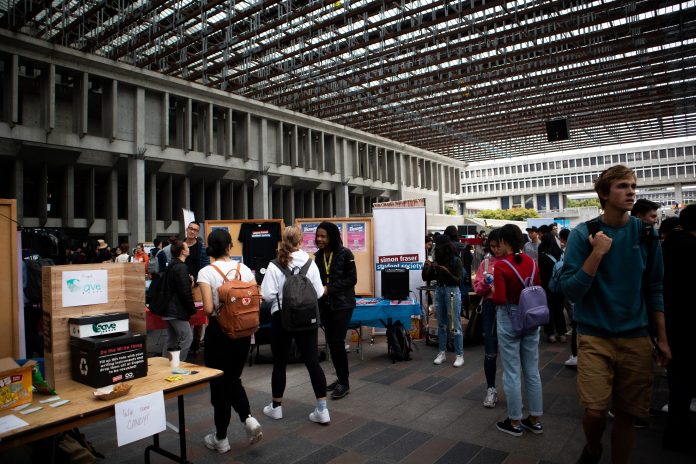
Seeing a pro-life club at Clubs Days was disturbing. Photo: Zeh Daruwalla/The Peak

By: Meera Eragoda, SFU Student

It all started during Clubs Days when I was wandering the booths. As I approached one, a member who was explaining the club to a passerby turned to include me in her explanation: “We’re SFU’s pro-life club.” It took me a moment to register her words but once I did, I turned around and nope’d right out of there. 

Since then, I have not been able to stop thinking about the insidiousness of the term “pro-life.” The definition of pro-life begins and ends with the birth of a child. Proponents of it don’t really care about the life of the mother or the life of the baby once it’s born. If they did, they would look at the bigger picture, and not focus on such a narrow view of what life is. This movement is anti-abortion or pro-birth, but what it definitely is not is pro-life.

The anti-abortion movement feeds into the classism and racism embedded in our society. According to an article made available by the National Center for Biotechnology Information, the most important factor in the decision to have an abortion reported to researchers were socioeconomic. For those already struggling with finding adequate resources to support themselves, the additional cost of food, childcare, clothing, medical expenses, a larger living space, etc. places a huge financial burden on women living in poverty. 

This economic insecurity is compounded by the fact that many employers view parents, especially new mothers, as unreliable—and parental leave in general as a negative thing. As a result, this leads to fewer employment opportunities for pregnant women or new mothers. The ensuing lack of job security and need for increased resources disproportionately effects poorer people, forcing them deeper into a cycle of poverty. And because poverty is also racialized due to structural barriers in employment and racist stereotypes, forcing women to carry their pregnancies to term furthers the marginalization of racialized folk as well. 

If anti-choice folks are so concerned about “loss of life” through abortion, there is a simple solution: create situations wherein parents are stable enough to have and care for children. Give them access to housing, food, better working conditions, child support, job security, access to mental and physical health resources, contraception, and better opportunities for education in general. The anti-abortion movement only succeeds in punishing people for perceived moral failings and furthering racial and class scorn.

Where in the anti-abortion movement is the concern for the conditions in which life is lived? Where is the understanding of the intersectionality of racial and class disparity and its effect on life expectancy

For anyone looking for pro-choice resources on campus, the SFSS Women’s Centre is one that is “committed to ensuring reproductive rights and justice for all, including non-judgmental information on abortion and pregnancy, and support for parents and families.” They provide a necessary, informed, and inclusive alternative to those who do not wish to be subjected to the myth-based morality judgments advocated by anti-choice groups. You can find them in the Rotunda, just outside of the W.A.C. Bennett Library.

Craving poké or ramen? Check out these delicious, budget-friendly restaurants

0
Poké and ramen are two popular — and often expensive — dishes in Vancouver’s culinary landscape. Illustration by Alice Zhang / The Peak.

By: Sara Wong, SFU Student

One of my favourite aspects about being a foodie is sharing my thoughts and experiences on a plethora of restaurants. Often, I get asked for recommendations on places that are both tasty and  student budget-friendly. When someone hears “student budget-friendly,” they often think of the stereotypical university diet of instant noodles and Hot Pockets. In other words, people believe there are limited options when going out to eat on a student budget. Well, I’m here to change that! If you want cheap eats that don’t sacrifice flavour or portion size, look no further than Riz Sushi & Poke and Kamamarui Ramen & Don.

Poké has been a popular food trend for a few years now, and Vancouver is still obsessed with this Hawaiian rice bowl. You’ll have no trouble finding a poké place in Metro Vancouver (there’s even one at SFU’s UniverCity), but none compare to Riz. The poké at Riz hits the poké trifecta: it’s affordable, delicious, and fulfilling! 

A small poké bowl here costs $10.50, which, compared to similarly-sized bowls at competing poké bars, is the cheapest I’ve found. Furthermore, compared to other poké bars, the flavours at Riz are unrivaled. They only use fresh seafood, which actually does make a difference. Another component of their poké that I appreciate is the sauce, which is evenly distributed. I usually get one of the aioli options because it adds a richness to the dish (as aiolis are mayonnaise-based), but if you’re more of a purist, you can ask for less sauce or opt for a ponzu instead of an aioli. If you need any more reason to visit Riz, their service is friendly and efficient. 

Ramen is another well-established food trend in Vancouver, and with that fame often comes higher prices. However, there are still a few places, such as Kamamarui Ramen & Don, where you can find flavour-forward ramen at an affordable rate. I highly recommend the black garlic flavour because it comes with a larger variety of toppings, such as tree ear mushrooms, bean sprouts, and an onsen egg. Additionally, the broth has multiple dimensions, meaning the flavour profile is not one note and you can taste a difference as you continue to eat. The aforementioned ramen costs around $10. 

Another menu item I’d recommend are the rice bombs, which are essentially balls of rice rolled in seaweed seasoning. The rice bombs are the perfect burst of umami to start your meal with. Besides its affordability, I prefer to go to Kamamarui for ramen because it is never too crowded. You won’t have to wait very long to get a table; this is a luxury I’ve yet to see at popular ramen places such as Jinya, where I have experienced wait times of over an hour. Once you’ve ordered, you never have to wait long to receive your food either. 

Sometimes it’s hard to go out to eat as a university student because of a lack of convenient location or a lack of funds. Both places I have mentioned do not fall into these categories, so go ahead and treat yourselves! We’re fast approaching the dreary, constantly rainy winter season, so what better way to cheer up than with good food? You deserve it — especially after midterms. 

Riz Sushi & Poke is located at 2887 East Broadway in Vancouver, just steps from Renfrew SkyTrain Station on the Millennium Line. Kamamarui Ramen & Don has two locations: 4219 East Hastings Street (along the 95 B-Line route) and 6514 Royal Oak Avenue — a short walk from the Royal Oak SkyTrain Station on the Expo Line.

This November 11 consider that history comes in more colours than white

0
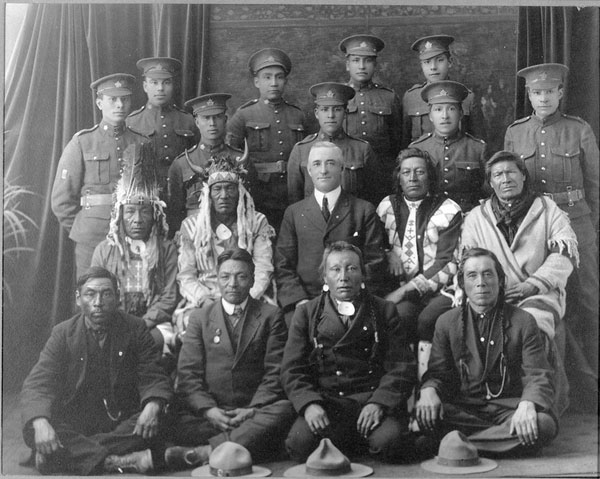
Every family has war stories — what are some of yours? Photo: /Veterans Affairs Canada

By: Jess Dela Cruz, News Writer

Right at the start of November, cadets in uniform appear in the malls or in front of supermarkets exchanging poppies for donations to support veterans and their families. People are encouraged to wear poppies this time of year to honour the lives of those who have served and fallen in war. Yet, the faces and lives that we remember on November 11 only tell a fraction of the past’s bravery, suffering, and loss.

In history classes, lessons are heavily focused on the Canadian, American, and British armies’ involvement in the First World War. This has meant that the causes, main actors, and victims of the war are told through the faces of white men. But countless communities of colour also served and gave their lives in war. For example, Indigenous communities in Canada were excluded and mistreated so poorly from war memorial activities that they created their own veteran’s day on November 8. Our whitewashed versions of history exclude and discredit the services of people of colour. Their stories and experiences are tucked away in the footnotes of textbooks and lecture slides.  

When we place a poppy on the left side of our jackets, we should remember not only the white men we see in our textbooks, but also the people of colour and marginalized communities who also served and were caught up in the horrors of war. These people deserve the same honour, respect, and credit that white veterans receive on November 11. 

My family does not have a connection to the Great War. But my mother tells me the story of her father, mother, and aunt who were caught in the middle of the Second World War when Japan invaded the Philippines in 1942. They were in Bulacan and hid in an underground hole covered by wood, dirt, and leaves. The hole was large enough to fit even the neighbouring families. I’m told that when the men of the community were taken, they would never be seen again. Women were raped and parents hid their children to prevent them from being taken away. My great-aunt and grandfather were left orphaned at age nine because of atrocities like this.

My paternal grandfather volunteered in the war effort and enlisted with the 15th Infantry, USAFI (United States Army Forces In the Philippines), and clerked at 1st Battalion Headquarters. He later transferred to a combat unit. His father was an enlisted United States merchant mariner who helped deliver war supplies to other US troops. Their ship, SS Susana, was torpedoed by a German submarine and their bodies were never found. These stories are often marginalized next to heroic retellings and visualizations of white soldiers. The unfortunate result is that these people of colour and their stories are forgotten on a day when we are called upon to remember those brave lives lost.

I share my family’s story because in one way or another, we all have a connection to war. It is important to find out these relationships to the past to have a deeper understanding of where we came from, the experiences that our ancestors lived through, and how these stories have brought us to where we are today.

We are rarely educated on the lives of people of colour who volunteered or dedicated their lives to help Canadian, American, or British troops. The lives of Muslims, Sikhs, Hindus, Asians, Indigenous peoples, black people, and other marginalized groups who fought and suffered are not honoured or remembered in publicized ceremonies. We cannot educate our children about our past without considering that history is not just white. 

I know I am incredibly lucky to have immigrated to Canada from the Philippines when I was two. I live in what I believe to be a safe place that has provided my family and I opportunities to start a new life. I do not want to come across as disparaging the lives lost in making Canada the country that has become our safe home. I recognize that I am extremely privileged to live in Canada. But I must also not forget my family roots and history and make sure that my ancestors’ stories are respected and honoured. 

On November 11, recall your own family’s narratives and experiences with war. Remember that history consists of more than what is televised and published in books. Don’t forget to honour the people that matter to your own history. Remember the wars that have touched your family, and the lives that were irrevocably changed. Most of all remember that our whitewashed history is made up of the lives of people of colour as well — lest we forget. 


Shakespeare is more torment than tranquility in an introductory class

2
It’s time to yeet Shakespeare out of first-year classes. Illustration: Nancy Chen/The Peak

By: Michelle Young, SFU Student

Whether or not Shakespeare should be taught in schools is often widely debated. Many maintain that Shakespearean sonnets and plays are indispensable pieces of English literature, as their themes remain timeless. Others argue that Shakespeare’s works are too boring, outdated, or challenging for students. There are positives and negatives in this discussion, and there’s no doubt that his writing is a valuable part of literature. But in a first year English class, though? Not so much. 

First year courses set out to provide a base for the rest of post-secondary education, focusing on fundamental concepts. English classes generally aim to teach students basic essay and writing skills, and the ability to critically analyse characters and themes within a story or poem. This is what the department expects students to do with Shakespeare. The problem is that Shakespeare isn’t entry-level English, so to speak. Students can’t start unpacking his complicated brilliance without some practice with more accessible materials first.

The English language has changed significantly over the years, and in that respect, Shakespeare provides historical insight into that evolution. However, with such a stark difference between Shakespearean (Early Modern English) and contemporary English, his writing doesn’t serve as a good example of how to analyse and craft effective writing in English today. Bringing Shakespeare into first year classes as an early introduction gives students the impression that analysing difficult pieces is just what the entire department is about. So many students have told me they hate reading or English as a subject because it’s hard to understand. In reality they probably just meant, “I hated reading Shakespeare, and that’s the only reading I’ve been introduced to.”

Shakespeare’s writing is typically difficult to read, even for avid readers. He’s enjoyed by literature and history buffs, but his work isn’t for everyone. For students who just want to get that English credit, hone their writing skills, or want to test the waters in the world of English, Shakespeare isn’t a great introduction. Shakespeare’s work isn’t the only example in the English canon that can teach students how to critically analyse English literature. There are so many diverse contemporary poets and novelists that are more engaging, that appeal to a wider audience, and can teach the same skills that professors want students to demonstrate. There’s Natsume Sōseki and Hermann Hesse, who deal with the complexity of change and the human heart in works such as Kokoro and Demain. There’s Sarah Kay and Ocean Vuong, who weave simple words together to create intricate poems of loss and love. These works are easier to read, and in no way are inferior to Shakespeare. 

English is more than difficult plays or poems; it can provide students with new worldviews, improve writing skills, and impart knowledge in entertaining ways. Contemporary works can assist students in learning what any introductory course aims to teach, so why not diversify the options and explore beyond Shakespeare?