
Student withdraws emotionally from classes, is refunded only 50% of their emotions
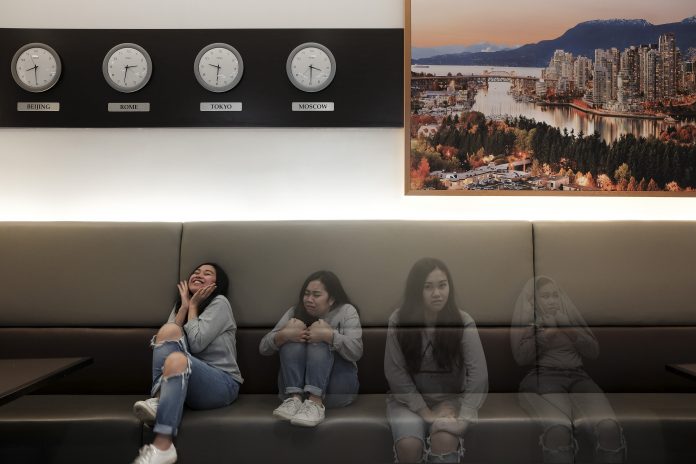
After three weeks of struggling to love education, an SFU student withdrew emotionally from all their courses on Friday morning, choosing to not care at all for their academic performance this semester. Unfortunately, due to SFU policy on refunds for course withdrawals, the student was only reimbursed 50% of their emotions.
“I used to have such a wide emotional range,” drones Catherine Venison, a fourth year sociology honours student. “Happy. Sad. Scared. Pissed off. I had it all. But three weeks into fall, I just don’t feel much anymore.
“My smiles when CTRL + F finds me the answers to seminar questions aren’t even that smug or narcissistic these days.”
Venison’s friends and family report that Venison had previously been quite emotive. Camille Ford, Venison’s long-time roommate, related to The Peak that even after several semesters of gradual disenfranchisement with the school she’d loved so much back in 2014, Venison had remained something of a “firestarter.” Reportedly, near the end of her hot-blooded days, Venison replied to an “outrageously unhelpful ‘Sent from my iPhone’ email” from her honours supervisor with a full, condemnatory nine-dot ellipsis (“. . . . . . . . . ”).
However, this semester’s 18-credit course load rapidly drained what was left of her feelings. Left high and dry in mid-September, unwilling to actually withdraw from her classes for fear of missing her chance to convocate, Venison says she reviewed her options “carefully and with conveniently calmed judgment.”
Her final decision to emotionally withdraw came after she realized that this way, at least some of her feelings would return, like her indignation at goSFU’s horrid user interface.
Venison says she expects her emotional range to replenish over the course of the Fall 2019 semester, provided that she is frugal with the damns, shits, and fucks she has to give.
“But I think it will all be gone again by February,” she tells The Peak. “By then, I’ll be spending all my emotional energy on my honours thesis. At least, that’s what I tell myself, whenever I have enough juice saved up for a few minutes of false optimism.”
Your weekly SFU horoscopes: September 23–29

Aries — March 21–April 19
Your superiority complex is in full blossom. And you need to manifest it. Irritate your sketchiest, most unstable friend until they lop off your head and impale it on a stick, Lord of the Flies style, looming from the height of SFU’s tallest tower. The entire campus will bear witness to your glory, and you’ll ascend to the blazing throne Satan abdicated when he started sitting in on SFU history seminars.
Taurus — April 20–May 20
September’s ending, you morally besieged belugas. Green Day can’t protect you anymore. Wake up.
Gemini — May 21–June 20
You’ll get lost this week. Google Maps will try to direct you to your destination, so that you don’t find yourself at an active crackhouse like Sunshine Corazon from season 2 of Glee. Don’t listen, though. Like Kanye would say, this is just another fear tactic used to manipulate your free thought.
Cancer — June 21–July 22
People are going to misinterpret your intentions a lot this week. Congratulations: you’ve finally succeeded as a compulsive liar.
Leo — July 23–August 22
You’re mildly insecure this week. Doesn’t that shock you? You think your classroom crush might want a quieter, more reserved bae. Prove to SFU how silent and thirstworthy you can really be. Before their fantasy-sparking eyes, strip down to your socks, “Blow Us All Away” style, and douse yourself in cups of boiling French vanilla from Simon C. The scalding of your newly honeyed supermodel flesh will keep you too distracted to talk.
Virgo — August 23–September 22
Haters are your motivators. But you don’t have any haters at SFU right now. If you really want to secure the bag, you’ll need to reconnect with your friend’s ex and tell them the real reason they were dumped. The motivation you get outta that will be piping hot.
Libra — September 23–October 22
Sorry . . . you don’t get a horoscope this week. The stars don’t commune with cold-blooded lizards.
Scorpio — October 23–November 21
Your friends think you’re being jealous and possessive. But I’m sorry to tell you that you’re actually just being possessed. Since it’s far too late for you to enrol in ENGL 383 and ask Buffy the Vampire Slayer for assistance, you have one other option. Craft yourself an amulet out of soil from the Burnaby Mountain woods and stem cells “borrowed” from one of SFU’s biology labs.
Sagittarius — November 22–December 21
Wanderlust and dissatisfaction lurks in your bone marrow this week. Infiltrate another local post-secondary institution and pretend to be a student there. Maybe there’s someone there who can love and understand you, someone who has the benefit of not knowing your real self.
Capricorn — December 22–January 19
The truth is everywhere you look this week. No one’s facades are safe. For your karma’s sake, babe, use your powers for good. Call a bitch out when the student clogging up the library computers plays it like they’re not just wasting time using the keyboard as a coaster.
Aquarius — January 20–February 18
Dress how you like this week. Even if that means scandalizing your profs with your perfect replica of Lady Gaga’s 2010 meat dress. Don’t let educational class gateways win.
Pisces — February 19–March 20
Your obsession with “________ Reads Thirst Tweets” videos on YouTube either has hit or will hit its climax this week. But are you projecting onto the hot celeb reading the tweets or onto the innumerable fans who’ve been writing the mildly petrifying missives? Spend your next lecture reflecting on that antinomy.
What Grinds Our Gears: Dorm showers are part science lab, part horror show

The Pauline Jewett Tower is where I get to call home this school year. I knew, in theory, that the Towers have shared washrooms for the entire floor to use. What I didn’t know was that, while the co-op showers in these washrooms may only fit one person comfortably, they also contain some extra gifts no one signed up for.
Picture a tastefully placed used condom gracing the floor of the stall. At minimum, three to four spiders and other buggy buddies provide emotional support during crying sessions. At this point, I’m not sure if the fuzzy black contents in the corners are deadly or not.
Combine all these aspects with the horror movie-esque greenish lighting above and a shower transforms from a relaxing time to a race against the giant clump of another person’s hair running down the side of the shower towards the drain and, inevitably, towards your feet. Here’s to hoping shower shoes were packed.
While the washrooms across all three Towers are being renovated, those that have yet to complete construction — more specifically, the washroom nearest to my room — are just dingy. One would think with all these residency fees, a girl could get a shower without water damage threatening to collapse the ceiling. Maybe I’ll head to the gym just to use the showers there. Yeah, right.
Affordable, convenient transportation is possible without the problems of ride-hailing

As Vancouver’s public transit system continues to leave transportation needs unmet, private corporations such as Uber and Lyft are looking to fill these gaps. Unfortunately, these services have a history of leaving workers with much less profit than anticipated after operational costs are taken into account. Subsequently, we need to ask ourselves whether or not the labour downsides are worth the increased convenience should Lyft and Uber begin operations in Vancouver.
Uber, the premier ride-sharing company, is actually a ride-hailing technology company. The difference between the two is that ride-sharing is essentially carpooling — sharing a ride with others who have similar departure and destination points. Ride-hailing, on the other hand, entails hiring a paid employee to drive people directly to their destinations. This distinction is key to understanding which parts of the gig ride-hailing model (such as those used by Uber and Lyft) can benefit transportation seekers and workers. It also provides insight into which parts we can and should leave behind if ride-hailing were to come to Vancouver.
For example, Uber’s current business model relies on increasing profits through side-stepping transportation regulations and undercutting driver wages. By presenting themselves to regulators as a communications platform rather than a ride-hailing service like a taxi, Uber is able to avoid costly regulatory protocol and shift most of the operational expenses like fuel, licenses, and vehicle maintenance to the drivers themselves. This reliance on exploitative working conditions is what makes ride-hailing technology services so problematic, and what makes the search for alternatives so necessary.
A lack of transportation that is both affordable and reliable is definitely a problem in Vancouver. As SFU students who need to commute to campus, this is especially frustrating. Having an easy to use, press-of-an-app service to call a ride in an emergency would definitely take some of the pressure off of the already strained system. However, before we jump at the first opportunity to invite problematic ride-hailing services in, it’s worth exploring some alternatives.
Existing taxi companies could, for instance, integrate this technology into their existing systems. In doing so, drivers are still covered under existing labour laws, and private citizens wouldn’t be required to cover the costly expenses of operation — including the class 4 license BC requires for all ride-hailing services. Vancouver commuters could therefore enjoy the benefits of ride-hailing systems that are convenient and potentially create jobs — more jobs that, at the very least, meet minimum employment standards.
In an ideal world, these solutions would supplement a robust, properly funded public transit system. These solutions would allow SFU students to benefit from more convenient and affordable transportation options without the poverty wages and risk for workers that Uber and Lyft’s business model relies on.
Four things that clubs can do to make joining easier

For many who attend SFU, student life on campus seems nearly nonexistent. One often repeated reason for this is that most students commute to campus and therefore don’t really want to stay longer than they need to. Students who want to be active on campus are told to join clubs, proactively engage with student unions, or volunteer with the school. But this advice ignores the legitimate reasons students may have for not joining — many of which are barriers produced by student groups themselves. The onus is thus on student groups to make volunteering and active participation as easy as possible, so that students who want to join and be active, can.
SFU student groups who engage more with other students benefit themselves, and also the entire university. Here are four things that student groups do that improve their visibility and attractiveness to the student body:
- Advertising
From conversations with other students and from personal experience, many of us don’t know what options are actually available for university engagement. Without scrolling through the SFSS website, there is little chance to organically find out what is happening on campus. Facebook updates help a little, but not all student groups are active on social media — and not all students have or actively use a Facebook account. Advertising broadly is a great way to make students aware of what is happening at SFU. This goes beyond just stapling a flyer onto a notice board and hoping someone sees it. Post wide and often, digitally and physically; students today get their information from a lot of different sources.
- Be active
It seems that a lot of what goes on with student groups happens out of sight from the rest of the school. Some groups organize and host fun and creative events publicly during the day in the Convocation Mall — this should be done more often. Passersby who are interested may decide to join a group that is visibly active. Not only would this bring in more members, but it would also make the campus atmosphere livelier.
- Reach out!
Because students may not know executive members personally, joining a student group out of the blue may feel like intruding on relationships that are already established. It can be hard to insert oneself into a social group without being actively invited, resulting in some students feeling unwelcome before they even join. However, if group members actively reach out to new students themselves, those students may be more likely to join. This is done best when it’s an ongoing effort, not something that just happens during Clubs Days. Current members could hand out flyers to students who they feel could be interested, or have conversations with potential members in class. In addition, introducing new members to group initiatives and current members with a fun event makes a club seem more approachable.
- More convenient meeting times
Finally, holding meetings outside of when most students take their classes would be beneficial. Class conflicts can prevent those who want to join a club from attending. Meetings in the evenings during weekdays would be a lot more convenient for students (at least for those who do not also have part-time jobs). Scheduling meetings too early in the morning may discourage students from joining by forcing them to wake up way too early, and meetings late at night may be daunting for students who have to travel by transit.
Student life is an important part of the university experience. Joining student groups matters not only for more lines on a resumé, but also to have social support systems for the student population. This could even lead to better performance academically, as some studies have shown that students who participate in extracurriculars tend to be better students.
It’s up to current leaders and members of SFU student groups to facilitate student participation. While I’ve only listed four suggestions here, there are possibly many other additional ways to improve student engagement. If we come together to implement these ideas, our university will begin to feel a lot more connected.
Research assistants aren’t represented as university employees — here’s why they should be
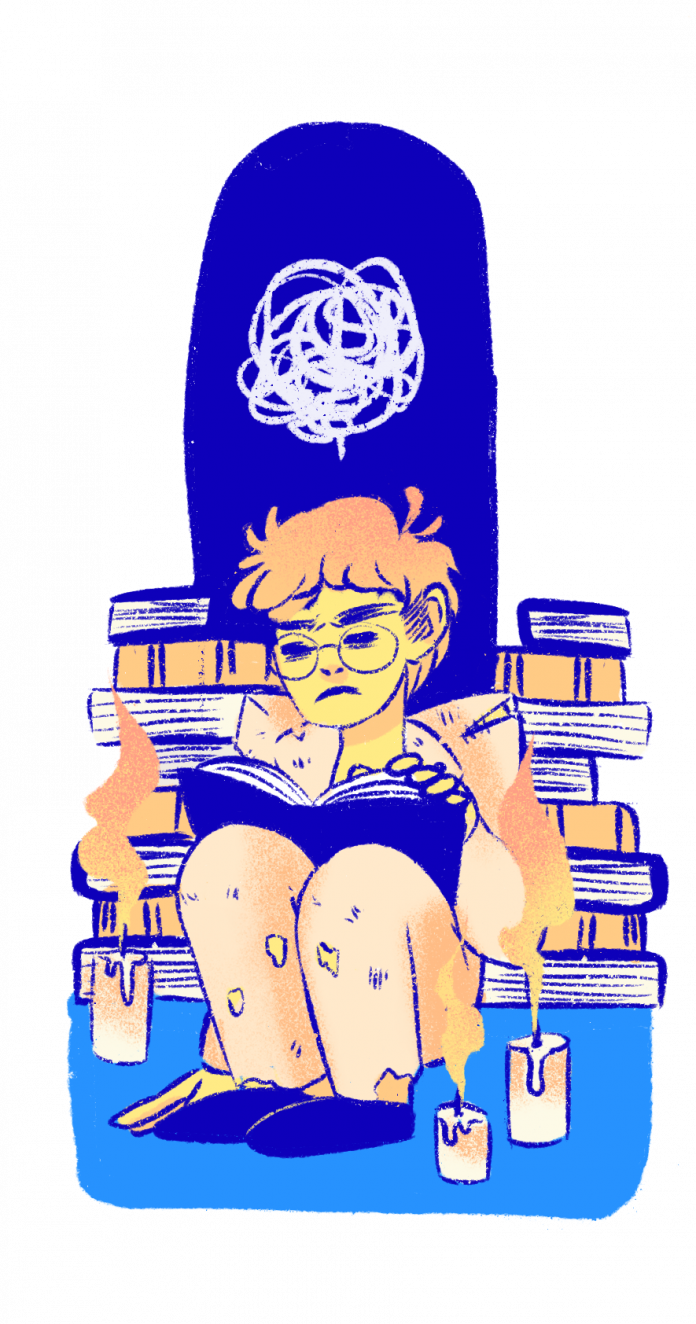
In 2016 SFU created its 2020 Strategic Research Plan, outlining why, where, and how the university intends to grow as a research institution. Part of their plan to achieve these goals is to “strengthen areas of research excellence” — including promoting the research talent of faculty and students.
Unfortunately, research assistants (RAs) have been almost entirely left out of the Strategic Research Plan. Despite their prevalence, research assistants are mentioned in the document just twice and only in reference to the “hands-on training” they allegedly receive in these positions. The reality is that these students — these workers — by and large aren’t receiving any of the special career-boosting training that the Strategic Research Plan purports to offer. Much of the work RAs do is actually quite rudimentary, and involves the fundamental routine experiments or data updating that supervisors need but don’t have time for.
The decision to minimize RAs in the 2020 Strategic Research Plan ignores the invaluable nature of RA work in SFU’s research production. If SFU wants to live up to its reputation as a leading research university, it needs to recognize that research assistants are workers who deserve benefits, dignity, and respect — not simply students supposedly gaining experience.
Despite doing “the most time-consuming work” for a research project, as an RA from the Faculty of Education described, many research assistants are never given the opportunity to be a real member of the project. In these cases, RAs never have “any chance to be involved in a conference presentation or paper writing for the project that [they’ve] been working on for almost two years.”
For over a year and a half I have been an undergrad research assistant in First Nations Studies and, although my job is interesting and my workplace is positive and supportive, I have found that this is not the norm for research assistants across the university. The more I speak to RAs outside of my department, the more aware I am of the precariousness of this work.
Other similar student positions like teaching assistants (TAs) have long been represented by the Teaching Support Staff Union (TSSU) and thus have a collective agreement and consistent, fair, contracts. Without these same protections, RAs can be subject to widely unreliable, unstable, and inconsistent work and working conditions. As it stands, RA research work is not regulated by either SFU or a labour organizing body, meaning the workload of RAs fluctuates and can be both unforeseeable and overwhelming. One RA reported having been given 100 hours of work in one email, despite the fact that the supervisor was aware that they were in school and working another job off-campus.
Safety conditions in the workplace is another issue. When RAs are faced with an unsafe situation, there is often no structural procedure in place to protect them as whistleblowers. Because of their precarious positions, research assistants have no legitimate representation to support them through grievances. Moreover, they have no real power to advocate for themselves or argue with management without fear of losing their job.
University services like the Ombudsperson or Human Rights Office, (who are supposedly in place to help students in difficult situations or those without representation) both explicitly say that they cannot and do not act as advocates for individual students. Their mediator status means that in an issue between an RA and their supervisor, research assistants are on their own while supervisors are backed by the university. Additionally, neither the Ombudsperson nor the Human Rights Office are labour organizations, so they have exceptionally inadequate power in navigating and resolving employee-employer conflict or other workplace issues. Their mandate is to address academic concerns, not labour law.
The way RAs are paid can also vary greatly across the university. Some research assistants are paid an hourly wage and keep personal hour logs they submit to the department, getting paid on a bi-weekly basis. For other students, the wages they receive are sporadic and uncertain. These aren’t reliable wages,rather just lump sums of money sometimes granted at the end of a project directly from a supervisor. This can add stress onto supervisors who are unfamiliar with being in charge of payroll, and may subsequently forget this step in the RA agreement. Both the amount and timing of this money — given for work already completed — is unreliable and often unknown to these RAs ahead of time.
In 2016 the Graduate Student Society (GSS) conducted a survey that found the top three complaints held by research assistants were overwork, lack of union representation, and not being paid on time. Of all the student workers surveyed — including TAs and tutor markers (TMs) — 63% reported having had to rely on savings. Fifty-two percent had to rely on parents, family members, and/or partners for financial support. The unpredictability of RA pay exacerbates the financial stress already felt by student workers to an unfair degree.
Even though my situation as an RA is comparatively good, this is not because of any SFU policy. All of my resources as a worker — from my research to my working conditions — are entirely dependent on the supportiveness, flexibility, and kindness of my co-workers and my supervisor with little input or guidance from SFU. This shouldn’t be the case; the work I do is not just for my supervisor, but for the university as well. In other words, SFU benefits from my labour without having to give a second thought to any of the benefits and recognition that my colleagues and I deserve.
Reflecting on the idea that RAs are students rather than workers, an RA who was berated for reporting safety concerns said this:
“. . . how many papers would be published, how many experiments would be completed, how many discoveries would be made without research assistants [ . . . ] all of those outcomes, papers, experiments, discoveries, require work and research assistants do the bulk of that work, they are workers, who also are students.”
SFU needs to recognize and treat all its research assistants as workers who contribute to the functionality of the university on a fundamental level. The resources are there. SFU boasts $140 million in research income, increasing annually. Research assistants are workers who deserve fair treatment, respect, and recognition from the institution that they, in part, help build.
SFSS throws semesterly Club Days event in Convocation Mall
From drones to choir, SFU offers an impressive variety of clubs for its students. Whether you want to unwind and relax, learn valuable life skills or meet like-minded people, there’s a club for you!
The 2019 SFSS Fall Club Days were held September 10–12 on Burnaby Campus. Convocation Mall was abuzz with music and lively chatter as the festive event took place. Club representatives eagerly welcomed students to their respective tables with warm smiles and enticing sweet treats. From 11 a.m.–3 p.m. over 100 club representatives were present each day of the event to inform students about their club’s activities and aims.
Many curious students listened to club pitches intently as they discovered exciting new opportunities. As students lined up to join the clubs, club executives’ smiles seemed to become wider with each new addition to the sign-up sheet. Small crowds strolled from table to table looking for clubs that aligned with their interest. Each table was decorated with colorful banners, leaflets, bag pins, freebies, award crests, or jerseys — anything to captivate students as they passed by.
There were quite a few unique clubs present in the event. For example, Musician Impact Network Society is comprised of SFU students who volunteer to go to health care facilities, such as senior homes, in Metro Vancouver to give musical performances. Another interesting club is Team Guardian, which designs, builds, and sends drones meant to solve “urgent, everyday issues,” like monitoring animal populations, according to an article on SFU’s website. Club representative Nipun says “Students should join our club to get the hands-on experience of not just software and hardware [of drones] but also of talking to companies [to negotiate contracts].”
James Thomson of the * Sports Analytics Club, a club that looks at the math and data analysis associated with sports (think the Brad Pitt movie Moneyball), states “[To join], you just have to have an interest in sports and a question you want to ask.”
When asked about their experience of visiting Club Days, students had nothing but positive things to say in regards to the liveliness and amount of people. Amanda, a first year student, said that she had never been in an environment like this before, so it was a very interesting experience for her — she intends to join a number of clubs.
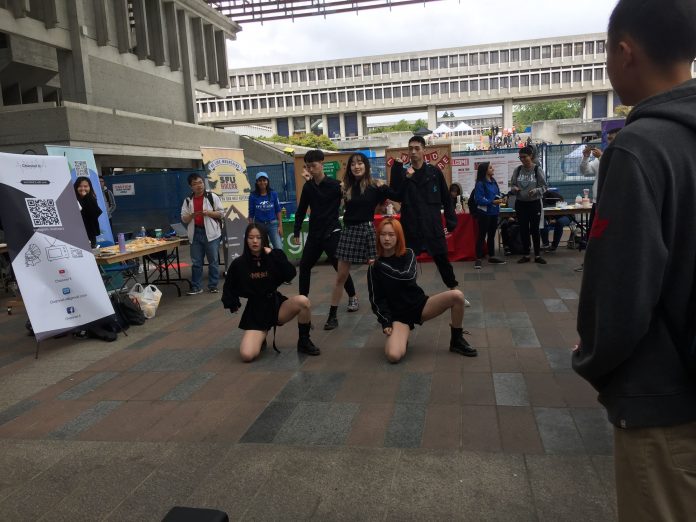
Clubs showcased many types of talents during the event. Channel II, a K-pop dance club, gave a spectacular performance on the second day of the event. Clad in all black, a group of five dancers attracted a large crowd as they danced to the song ‘Snapping’ by Chung Ha. Members of Peak Frequency, a long-time music-oriented club, performed solo musical numbers as onlookers were seen excitedly snapchatting the song.
Overall, visiting Club Days was a great way for students to expand their co-curricular interests and interact with each other. The event was a good reminder that SFU has much more to offer than a degree, namely the chance for students to follow their passion outside of academics.
Clubs Day, but shorter: a semi-comprehensive guide on SFU’s student clubs

Compiled by Winona Young, Features Editor
If you didn’t have time to drop by Burnaby campus’ clubs days last week, don’t worry. The Peak has compiled a series of blurbs submitted by various clubs execs (on a first come, first serve basis).
“The SFU Anime Club is one of SFU’s largest clubs! Every month we host a major event, and every week we host a screening. In July 2020, we’ll be hosting our 10th annual Summer Festival, which drew nearly 2000 [attendees] last year! We welcome all anime fans, from casual to hardcore.” — Patrick Devota, club president
The Behavioural Neuroscience Student Society
“The Behavioural Neuroscience Student Society aspires to integrate BPK, PSYC, and BNEU students into the academic community and student life through engaging networking nights, lecture series, game/movie nights, and outdoor activities. Come to one of our meetings (Thursdays at 12:30p.m. in AQ3127) and get involved!” — Aaron Siebenga, club president
“Better Life provides students with the opportunity to get involved with various community services through our one club. Using the momentum from our summer food drive event, in collaboration with the SFSS and the Greater Vancouver Food Bank, we look forward to tackling different social and environmental issues each semester.” — Nima Tehrani, executive of operations
SFU Burnaby Mountain Toastmasters
“Burnaby Mountain Toastmasters is committed to helping students improve their public speaking and leadership skills. Whether you are a beginner or a veteran speaker, we have something to offer. Join us on September 24 for our icebreaker meeting to enjoy free food, to meet new friends, and to learn more about Toastmasters!” — Richard Wan, vice president membership
“Change SFU club members have one goal: to change SFU in positive ways. This semester, our focus is on climate change, reducing single-use plastics, AND any other cool initiatives club members are passionate about. If you are an individual who cares about these issues or knows of a way that we can make SFU a better university, we want to hear from you!” — Mariah Mund, club co-president
SFU Disability and Neurodiversity Alliance
“The SFU Disability and Neurodiversity Alliance is a student-led group open to anyone who identifies as disabled, autistic, neurodivergent, deaf, mad, having a chronic illness, long-term condition [sic], mental illness, and allies. We work together to create campus change, address ableism, and promote disability justice while opposing oppression in all forms.” — Serena Bains, social media executive
The Engineering Science Student Society
“The Engineering Science Student Society (ESSS) provides academic, social, and networking support for ENSC students. Prove to your friends and family that SFU Engineering is the greatest experience ever by joining ESSS! (I also want more friends.)” — Alvin David, club president
The Gender, Sexuality, and Women’s Studies Student Union
“The GSWS Student Union plans events to bring the department, its faculty, and students together in order to bring connection, inclusivity, and representation to marginalized groups in a safe space. GSWS students and other students should join to create a difference in the SFU community, make new friends, and have fun!” — Madeleine Chan, social media and communications executive
“Learn one of the most effective self-defence martial arts, Brazilian Jiu Jitsu. Whether you are a beginner or a veteran BJJ practitioner, the SFU Grappling Club provides students with the opportunity to learn one of the most valued martial arts in hand to hand combat while creating friendships with other students!” — Khaled Bayyari, club vice president
“Impact SFU focuses on increasing student engagement and personal development within the SFU Surrey community. Our mission is to give back through our fundraisers to Beautiful World Canada Foundation (BWCF) to provide women in sub-Saharan Africa with the opportunity to further their education. Want to get involved? Come check us out, everyone’s welcome!” — Sarah Qiu, vice president of marketing
“If you have a desire to help and support children in the community through fundraising and event activities, then look no further, the Optimist Club is for you. Get to know more from me, Olivia Tryon, president of the Optimist Club, and our other amazing members!” — Olivia Tyron, club president
“SFU has an orchestra?! The SFU Concert Orchestra is a group of student and community musicians of all skill levels brought together by a passion for music. We play a range of repertoire from refined classics to your favourite movie/musical scores. We hold rehearsals on Sundays at 4:30p.m. – 7:30p.m. in the Forum Chambers to practice for our semester-end concert, so if you love playing music, consider joining!” — Michelle Kurtagich, club co-president
Pakistani Students Association (PSA)
“The Pakistani Students Association (PSA) is a club that celebrates Pakistani culture. We encourage multicultural engagement by students from different backgrounds and ethnicities to understand and celebrate what Pakistan truly is. All SFU students, no matter where they are from, are encouraged to become a member of PSA!” — Zoha Shoaib, vice president of marketing
The Punjabi Students Association
“The Punjabi Students Association is having an icebreaker on the 22nd of September. Come out to have fun, make friends, and make a difference in the community all while connecting to Punjabi roots and culture. Follow us on Instagram @sfupsa for more information” — Gurpreet Sandhu, club president
“Friendships that function at 5 a.m. are the best kind. If you’re looking for a group of competitive athletes who do more than the average person does before an 8:30a.m. class, SFU Rowing is the club for you. Be ready to train hard and get some amazing sunrise pictures for Instagram!” — Katinka Neumann, club president
“UNICEF SFU is one of the largest humanitarian student-run campus clubs at SFU. We work with UNICEF Canada by hosting several events each semester to educate students on how they can support children around the world. Come to our icebreaker for information on leadership opportunities!” — Jennifer Yi, club president
“Love to sing? Come join SFU’s official a cappella club, SFUnison! At SFUnison, we make covers of all your favourite hits. Rehearsals are every Monday from 2:30–5:30 p.m. in Forum Chambers. All levels of experience are welcome.” — Sharlyn Monillas, events coordinator
“At SFU Surge, our goal is simple: to provide a welcoming space that promotes curiosity and excitement for a future in technology, while empowering students on their paths to career success. Join our upcoming events where you can learn and develop new skills, connect with programmers and designers, or better yet, compete in a large-scale hackathon!” — Kim Regala, social media director
Claypot rice in cramped apartments: Reflecting on my cultural identity in Hong Kong

“I wanted to soak up and bring back as much of Hong Kong as I possibly could.”
The first time I was called a “CBC,” I was having a conversation with my university Chinese instructor — the term stands for “Canadian Born Chinese.” I was taking CHIN 100: Mandarin Chinese I in an attempt to learn spoken Mandarin, improve my Chinese literacy, and, ultimately, get closer to my heritage. I remember feeling taken aback by my instructor’s comment. Even though it was true, somehow it made me feel like even more of an outsider to Mama China.
I grew up in Vancouvers’ Chinatown — a neighbourhood rich with Cantonese culture. I used to visit produce markets with my mom, holding her hand as she greeted friends in her native dialect. When my family moved away to suburban Surrey, I felt like I lost a precious connection to that culture. Since then, I’ve been trying to reconnect with my Guangdong roots, achieving only glimpses with the taste of dim sum or the odd Cantonese conversation overheard on public transit.

This summer, I had the opportunity to travel to Hong Kong. Prior to the trip, I was filled with a nervous mix of excitement and terror. This trip would be the closest I’d ever been to the “homeland,” as my mom had immigrated from Guangzhou, a city that shares a similar culture and language of Cantonese to Hong Kong.
It would be my first time leaving North America. I remember the panic that filled my body during the plane ride. The thoughts circulating in my head ranged from “What if this plane crashes?” to “What if I get robbed? Kidnapped? Caught in the protests?”
Once I touched down onto Hong Kong soil, however, I felt strangely serene. As the flight attendants welcomed us in both Cantonese and English, I remembered how much I couldn’t wait to be immersed in Cantonese culture and suck the short rib marrow out of this experience.
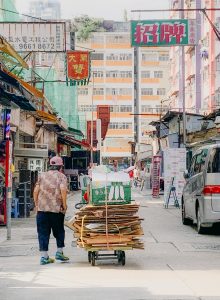
It was July. Hong Kong was stiflingly humid. I initially came to visit the Hong Kong Polytechnic University to represent SFU at a youth summit, but I knew there was something deeper drawing me here. On my first day, I was thrilled to hear my family’s language being spoken in the streets, in restaurants, public transportation, everywhere! This trip would be about identity — about reconnecting with my roots.
First things first; food. Having grown up enjoying Cantonese cuisine such as dim sum, bakery buns, and claypot rice, I knew I had to try the homegrown, “authentic” versions of these foods. I was surprised to learn that I actually prefer Vancouver dim sum to Hong Kong. Portions are larger back home and food prepared by the diaspora is just as authentic. I even discovered and fell in love with new dishes, such as the culturally iconic cart noodles.
I grew up visiting Vancouver’s Chinatown Night Market on summer nights with my family. I watched in amazement as street vendors prepared bubble waffles, stir-fried rice rolls, and dim sum on sticks. A new friend who I met in Hong Kong guided me through the Ladies’ Market in the shopping district of Mong Kok. My Cantonese grammar is terrible, but haggling with merchants became the ultimate test of my language skills.
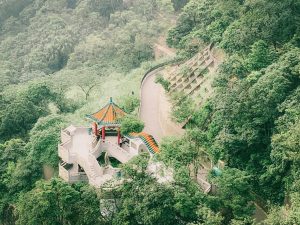
I spent that first week in Ho Man Tin and Hung Hom attending the summit with fellow university students from around the world. Our schedule was pretty lenient, meaning we had free time in the evenings to sightsee. We navigated the MTR transit system, rode the Hong Kong Observation Wheel, and crossed Victoria Harbour in a Star Ferry. We ate giant fish balls on Cheung Chau island, shopped at the Temple Street Night Market, and pre-gamed at 7-Eleven before bumbling down the clubbing street of Lan Kwai Fong. I remember venturing into grimy restaurants with wet cardboard as flooring just for a good bowl of claypot rice. Hell, I even got my sister a postcard featuring the Cheung Chau Bun Festival. I wanted to soak up and bring back as much of Hong Kong as I possibly could.
I extended my trip by a few days to visit my aunt and her daughter in Sha Tin. These were family members who I hadn’t seen since they visited Canada almost a decade ago. I’ve remained Facebook friends with my cousin this whole time, but it was still a shock to see this childhood friend now gearing up to pursue her Master’s.
The day that I met with my aunt, she took me grocery shopping. She asked what all of my favourite ingredients were. I pointed out the fish paste, tofu, enoki mushrooms, and cloud ear fungus that I saw in the market. The next day, she made dinner incorporating all of those ingredients. There was no better way to make me feel welcome and warm than that family dinner that she prepared.
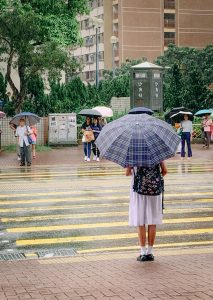
That weekend, my cousin invited me to a boat party. I had no idea what that entailed, but I was down to party with Hong Kong’s youth. Who knew I’d get to go wakeboarding during a thunderstorm? My social anxiety was exacerbated by both fear of the language barrier and the knowledge that my cousin was my only connection to the party. This dread eventually melted away as I ended up sipping chrysanthemum tea with women who had been educated in the United Kingdom or the United States and whose English fluency was on the same level as mine.
Upon talking to more party guests, I realized we were all in the same boat — not just literally. Most of the people who I spoke with also only knew one or two other attendees. Another positive was that whenever my wallflower instincts kicked in, I could just jump off the boat and go for a swim in soothingly warm waters. I couldn’t open my eyes in that water because it stung like all Hell, whether due to salt or pollution. Still, floating around in those waters filled me with a soothing happiness, a deep-set gratitude for this experience.
During my conversations at the boat party, I was open about being a visitor from Canada. The Hongkongers, most in their early twenties, seemed impressed by my Cantonese. Back home, my Cantonese proficiency (or lack thereof) would only draw out disappointed lectures from immigrant elders, so this was a refreshing boost to my complicated relationship with language.

On my last night in Hong Kong, I remember watching video clips of the attacks at Yuen Long Station from my cousin’s phone. These videos came from her friends’ Instagram stories. Illuminated in blue light, I stared in horror at masked men in white as they beat protestors and commuters alike.
We remained safe at home. With her characteristic dark humour, my aunt was laughing from the dining table. “Hong Kong’s gone insane,” she cackled in Cantonese. “Good thing you’re leaving tomorrow, eh?”
In light of the ongoing political turmoil in Hong Kong, I am extremely grateful for the safe trip that I experienced. On my last day, I ate beef noodle soup with my aunt, paid her back for the Octopus Card*, and set out to fly back across the Pacific, having satisfied a cultural longing that I had been nursing since childhood.
*the Hong Kong equivalent of a Compass Card, only on steroids

