Home Blog Page 460

CONFESSIONALS: I LOVE group projects

0
Illustration of a closed envelope, with the text, “Confessionals”
ILLUSTRATION: Marissa Ouyang /The Peak

Written by Meera Eragoda, Staff Writer

I’m scrolling through the syllabi of various course offerings and I’m looking for one thing in particular. Finally, I find it in a gender studies course. Those magical words: group project. It’s kismet and I’m sold.

It feels rarer and rarer these days to see group projects being incorporated into courses, and I just don’t understand why. It’s literally such an easy way to get your grade up in a class. Unpopular opinion, I know, but I for one LOVE group projects.

I love that I get to just sit there and look hot. And everyone else in my group gets to just be there to bask in my glow. It’s like combining both schoolwork and charity. I mean, I don’t want to say it’s benevolent of me, but . . . yeah, it is benevolent of me.

Group projects are also great when you have an overwhelmingly busy schedule like I do. Normal projects mean you have to actually schedule time, on your own, to do work. How can I be expected to stick to every work session I commit to when I’m busy deciding whether to filter my latest Instagram fits with Valencia or Sierra? Nobody thinks about how much time goes into influencing my 62 followers. And there’s no one doing it for me. 

People in group projects, though, are so supportive and understanding. They check in so often to ask if I’m OK or if there’s “something going on.” And they check in, like, all the time to see if I’m going to be able to finish my part. It makes me feel really cared about.

Sure, if I’m being honest, sometimes it’s a little too much — a tad too smothering. Like, get off my back, mom. So I guess that’s a slight downside to group projects. But I mean, if I’m feeling overwhelmed with life, I can just say that. I can literally type out a response that says, “Im just rlly overwhelmed w/ life,” and they’ll all swoop into the Google Doc to make sure that the work gets done. 

I think this is a really fair way of doing things. It’s not like anyone else ever has anything going on anyway. And if they do, I mean, what if they just didn’t, and then they could focus on me, instead? 

Plus, I make excellent suggestions about what type of font and what pre-set type of PowerPoint slides to use. A lot of people in group projects don’t seem to get that font and colour make a massive difference. They’re all, “Let’s use Arial or Times New Roman!” and I have to be like, “Let’s focus on something that doesn’t suck! Like Bangers or Syncopate or, you guessed it, Comic Sans MS. :)” They don’t know what font is good for them — or for our grade!

My fave group project memory happened on WhatsApp. I got added to a new group chat, full of people from my class, called “genius idea to create a new chat without the dead weight.” I was confused at first, so I replied “lol what?” I guess no one else had any idea either, because they all replied “wrong chat!” and “I think you meant to post this somewhere else???” 

Look at them all imitating me, I thought triumphantly. Honestly, I’ve never set a better trend than “no idea what’s going on.”

They did keep making digs about some egotistic, disrespectful asshole not pulling their weight. But I never figured out who it was they were even talking about.

Anyway, easy A. I guarantee it.
Your weekly SFU horoscopes: February 17–23

0
An illustration of a girl with long flowing hair. Astrological signs and stars shine around her.
ILLUSTRATION: Marissa Ouyang / The Peak

Written by Zach Siddiqui, Humour Editor

Aries — March 21–April 19

Read a book this week. You never know when you’ll earn a bonus 1% in class for being able to recite the first 500 words of the Necronomicon.

Taurus — April 20–May 20

Spend your break studying hard. Not hard like the colloquial adverb, but like the abstract concept of “hard.” Maybe if you really understand the cruelty of unyielding steel and the unfriendliness of a concrete floor, you’ll stop being such a cold, hard-hearted snitch. 

Gemini — May 21–June 20

Relax, OK? It’s not about you right now. 

Cancer — June 21–July 22

You just want permission to be weak this week. And you have it. Collapse into bed and dream of a world where Chikorita got the power and attention it deserved as the cutest Johto starter Pokemon.

Leo — July 23–August 22

Your career worries will drown you this week. Swim towards your future by selling your waterlogged lungs on the Australian black market, but not before taking a year to “find yourself” there while working on some derelict farm in the Outback. 

Virgo — August 23–September 22

Your excuses are as fragile as your platonic social contracts this week. Clean your damn house, before your house cleans you.

Libra — September 23–October 22

Aim high this week, in all your projects. You know what they say: “Shoot for the moon. Even if you miss, you’ll land in the extraorbital vacuum, where you and your exploded florid red innards will become the next astronomy hoax.”

Scorpio — October 23–November 21

Spend this week hiding somewhere in the darkness. Not sure where to find the darkness? Try season 2 onward of any show run by Roberto Aguirre-Sacasa — I mean, seriously, what on earth have they been telling their lighting team?

Sagittarius — November 22–December 21

Practice saying things like “I’m sorry” and “I was wrong” this week. Subconsciously, you have started to notice that lies are the only way to mediate conflicts among your friends. Well, lies and strange parties in Maple Ridge (and there are always strange parties in Maple Ridge).

Capricorn — December 22–January 19

Buy a bunch of worthless luxuries this week. The church will forgive your excesses. After all, the eighth Catholic virtue is corporate brainwashing.

Aquarius — January 20–February 18

You need more attention this week. Build all kinds of amazing new social media accounts; let a fresh Instagram offer you a new identity myth. Then, once reading week ends, abandon them all until you forget the passwords forever.

Pisces — February 19–March 20

Destruction will approach you this week. Flare your nostrils as a scare tactic. Nobody, not even the Grim Reaper, is coming near that.

Nerd Nite Vancouver is way more fun than your average Wednesday night lecture

0
Illustration: Armin Mortazavi / Nerd Nite Vancouver

by Meera Eragoda, Staff Writer

On Main & 7th Street lies the Fox Cabaret. Once a porn theatre called Fox Cinema, it rebranded in 2014 to become a live-show venue. In a move away from the R-rated content it once held, the Fox now rents out to PG events such as Nerd Nite Vancouver — PG, however,  doesn’t mean boring, and Nerd Nite always has surprising content.

Nerd Nite is an event that takes place in cities all around the world, though most of them are concentrated in North America. The Vancouver chapter was started by Kaylee Byers, a PhD candidate at UBC with “an interest in host-parasite relationships” specifically through the lens of rats, and Michael Unger, Programs Coordinator at the H.R. MacMillan Space Centre. They are also the hosts of the show, and while they’re both very smart people with amazingly nerdy tastes (Buffy, Georges Méliès, and the like), it’s Byers’ presence that really makes it entertaining. She’s witty, charismatic, has great energy, and can go with the flow.

According to their website, the formula for each Nerd Nite is pretty standard — 20-minute presentations from three presenters each night, in a laid-back environment with lots to learn, and lots to drink!” This means that it is a 19+ event — my apologies to all the underage nerds out there, but fear not, your time will come! 

Many of the presenters are people currently in grad school. While this may sound academic, the goal is for them to enlighten the public about something they are passionate about in an accessible way. Plus, presentations are not just restricted to academics. Past events have included performative Indigenous storytelling, queer storytelling from a local drag performer, and a lesson on how fun poetry is. The last Nerd Nite event also opened with the first presenter performing a song about his topic: predator-prey relations.

Nerd Nite is a mixed bag, and I’m not going to lie and tell you every presentation is great. Sometimes people have too much exposition about their lives and it detracts from the info, sometimes the topics aren’t put into tems that are easy to understand, and sometimes the presentations just aren’t all that interesting. That being said, most of the time presenters are amazing. It’s interesting and I’ve learned so much after faithfully attending every month. When there’s a topic I’ve never thought about before, or when a topic is presented in an engaging way, it’s eye-opening and is 100% worth the affordable $7 cost of entry.

Some of my favourites have been “The Struggles of Being a Socially Awkward Adolescent Rat” by Travis Hodges, “Trans-Reproductive Health” by A.J. Lowik (whose important work is helping make the Vancouver medical industry more trans-friendly), and “The Potential Perils of Brain Eating Fungi!” by Linda Horianopulos. 

After every presenter, the audience is also given a chance to tweet about something generally related to the presentation in order to win prizes. One of my favourite prompts was tweeting a haiku about a favourite animal for which I won a stuffed rat: “bill the weiner dog / jaws of death unrelenting / loves his tennis ball.” I’ve also won a book of poetry and a pair of bigfoot socks which remains my favourite prize to date. 

Aside from the fun aspect of it, Nerd Nite is a good chance for anyone who has a topic they’re passionate about to bring it to the general public, or if they did a presentation for a class and they hope to take that information out of the classroom. Currently, the presenters run very UBC heavy, so let’s get the SFU representation up! 

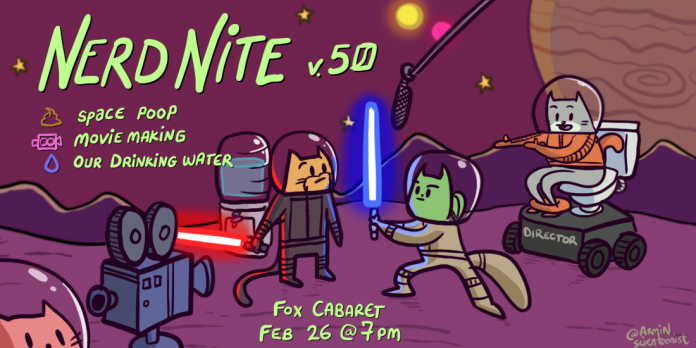
Catch the next Nerd Nite on February 26, for their six year anniversary and 50 show, where the upcoming topics are Space Poop, Movie Making, and Our Drinking Water. The tickets are available on the Nerd Nite website and are tiered with three price points: a $7 Early Nerd (which is now sold out), a $10 Level-up Nerd, and a $15 Mecha Nerd. And maybe you might just be inspired to hop on stage in the future. I mean, truly, what’s nerdier than that?

SFU Reading Circle invites community to read and discuss Indigenous literature

0
Photo: Chris Ho / The Peak

by Amneet Mann, Peak Associate

After five years of being a student on Burnaby campus, I stepped into the SFU Gallery for the first time to attend SFU’s Indigenous Literature Reading Circle

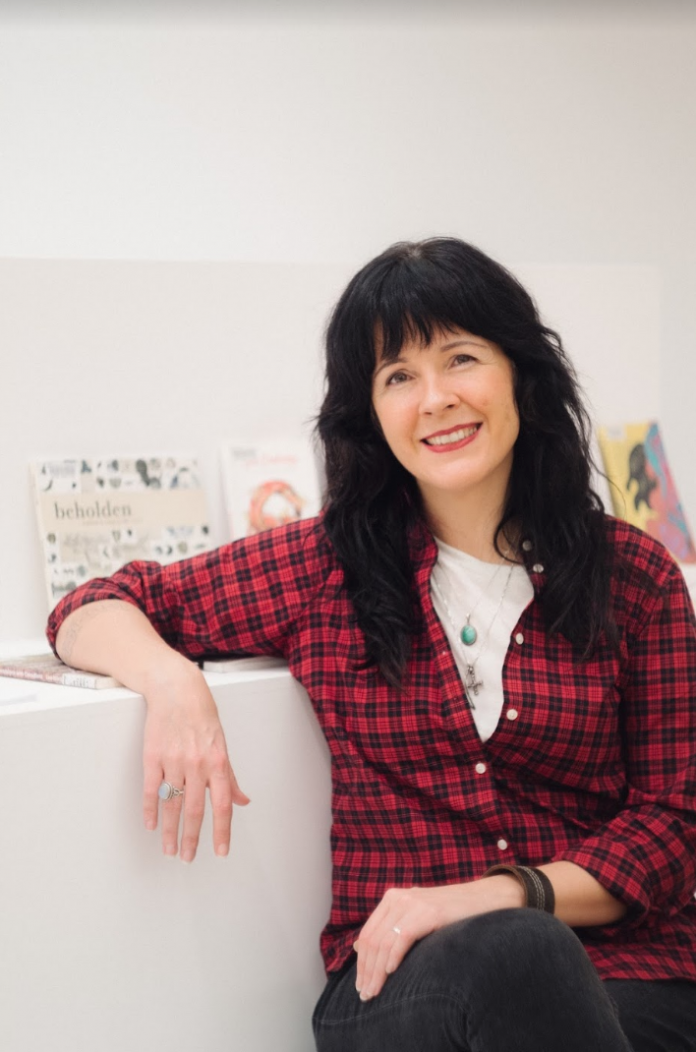
Walking into the SFU Gallery from the Academic Quadrangle (AQ)’s busy halls, you feel as if you’ve entered another world. The gleaming hardwood floor, track lights, white walls, and display shelves make the room look unlike what I’ve grown to expect from the university. For the spring term, the Gallery is featuring Lyse Lemieux’s exhibition No Fixed Abode, and the large black and white drawings on the wall make the room feel even larger than it is.

The location has a quieting and centring effect, removing you from the between-class madness of the AQ just outside. This makes it the perfect space to hold the weekly Reading Circle hosted by SFU’s current Writer-in-Residence Carleigh Baker. 

I wasn’t sure what to expect from a reading circle, but when I walked in and saw six straight-backed, dark wooden chairs arranged in a circle, it occured to me that the name was more literal than I had assumed. I took a seat and joined the conversation that was going on as we waited for more participants to join us.

While not officially part of the main event, I found that sitting in a circle with Baker, Gallery staff, and other participants and talking about our opinions of CliFi (fiction that deals with climate change, often in a dystopia) and the different punk genres to be a highlight of the experience. Baker was engaging and inviting, sharing anecdotes from her creative writing class, and responding to jokes with a clear laughter that echoed off the Gallery walls. 

After about 10 minutes of chatting, we decided to leave the door open for participants to trickle in and began by reading Moon of the Crusted Snow by Waubgeshig Rice, a novel that follows an Anishinaabe family in a post-apocalyptic timeline. The book was passed around the circle and read aloud, with each participant reading one page at a time. We read two chapters of the book and ended at 2:20 p.m., leaving time for participants to grab some coffee on their way out. The session reminded me of English class in high school, and asked for the kind of attention that makes you forget about the exams and assignments that you were worrying about.

When I talked to Baker on the phone after, she echoed my thoughts about the effect of the Reading Circle. She recalled that, after the first Reading Circle she did as a master’s student at UBC with her classmates, “it was like just going to an exercise class [ . . . ] where we finished and thought, ‘oh, this feels great. I feel kind of relaxed and focused.’ And we decided we would keep doing it.” 

Baker continued the practice weekly at UBC, and then included it as part of her pitch when she applied for the Jack and Doris Shadbolt Fellowship to come to SFU. 

“I really like the role I play in academic institutions to be sort of a community-builder, someone who can make space for people to just be together and sort of relax, and the Reading Circle just proved itself to be that in spades,” said Baker.

Baker noted that the atmosphere of the circle tends to depend on the type of work that is being read, with poetry leaving participants feeling invigorated, and non-fiction work always spurring conversation post-read. When choosing non-fiction, Baker tries to find work that is relevant to current cultural concerns, such as cultural appropriation.

According to Baker, the response from the SFU community towards the Reading Circle has been steadily growing since its start in January. She recalled being concerned that she didn’t have enough of a reputation at SFU to begin a community program where individuals would feel comfortable attending, and that they might ask themselves “Why should I feel safe coming and sharing this space with her?”

But her concerns have proven to be unfounded as the program grows steadily each week. “Folks have come from all different departments,” she said, noting that the biggest attendance so far had been eight or nine people. 

Baker emphasized that participants of the Reading Circle are not obligated to read. 

“I’m never going to push people into something they’re uncomfortable with. It’s the comfort level that I want most of all,” she explained. “So I’m really thrilled that people are just coming and hanging out, and feel like they can take part.”

The Reading Circle is slated to run every Thursday in the SFU Gallery from 1:30 p.m.–2:30 p.m. until April 9, which marks the end of Baker’s fellowship at SFU.

SFU’s inefficient sinks don’t promote healthy hand-washing

0
Sink’s broken, guess I’ll die. Photo: Nicole Magas/The Peak

By: Paige Riding, News Writer

This cold and flu season, SFU took it upon themselves to stick up a bunch of signs explaining when and how to wash your hands. Like a Hello Kitty Band-Aid put on by a blind nurse, the signs were put up with the best intentions, but miss a big problem. It feels like half the sinks on campus don’t work, and the other half provide water cold enough to take your breath away — and not in a “Scar saying ‘long live the king’ to Mufasa before sending his brother to live in the clouds” kind of way. SFU needs to fix their sinks before they start pontificating about how people should be more hygienic.

Like many of the students sitting in AQ, the sinks in the washrooms of that building do one thing really well: they sit there, showing promise of working to those who pass by, only for nothing about them to work at all. 

These broken and ice-cold water-dispensing sinks pose a serious health risk. Some people may give up on the attempt to find a functional sink, thus spreading whatever germs colonized on their hands to the next surface they touch. Others may grimace at the icy-cold water, deciding to cut their hand-washing routine short. For the sake of all students, staff, and faculty on campus, working sinks are a necessity that should be treated as just that. They are tools that make campus cleaner and safer for everyone, and should not be neglected by SFU Maintenance & Operations.

And while the debate continues about whether or not hot water is the better option, what virtually 100% of folks who are not lizard people agree on is that the freezing bursts of water that some sinks spit out on campus is not ideal. 

Centers for Disease Control and Prevention’s website says that scrubbing one’s hands for a minimum of 20 seconds is sufficient to kill a bulk of harmful bacteria. The short bursts from many button-activated sinks on campus do not reach a time near this. At the best of times, SFU patrons will repeatedly press the button so that enough water can flow for the recommended hand-washing time. At the worst, the brisk five-second initial supply of water will be deemed enough, resulting in an ineffective attempt to protect themselves and others from the spread of disease.

SFU needs to practice what they preach on these informative signs. While informing the SFU community on how to defend against diseases is great and all, with such useless sinks to execute these instructions, no one benefits. There is nothing to lose but everything to gain by fortifying the tools available to stop the spread of germs.


People without food restrictions should leave specialized foods for those who need them

1
Is it too much to ask to be able to eat SOME of the food on the table? Photo: Mike Kenneally/Unsplash

By: Madeleine Chan, Staff Writer

Have you ever been to an event or party, gone over to the food table, and been disappointed at the limited, or non-existent, selection you can eat? If not, that’s great. If yes, then it’s probably because the people who aren’t limited in food choice took it all.

My gluten and dairy allergies usually rule out my feasting options at parties and events. Dietary-restriction awareness, particularly for on-campus events, seems to be at an all-time low as suitable food options are always limited to a few measly items. 

Spotting the words “GLUTEN FREE” or “VEGAN” always makes the clouds part and the sun shine down on this one thing that can quell my hungry and sensitive stomach. However, seeing people take those divinely-labelled items when they do not need to fills my soul with sorrow. It feels as if they rip my hopeful heart out of my chest and serve it to me on a platter saying, “Here, you can eat this instead.”

Not being able to eat certain foods shouldn’t exclude me from satiating my hunger alongside everyone else. Other people should respect that by not taking the limited foods that I can eat. I cannot count the number of times that I have gone to an event or party and had nothing but some carrot sticks to eat. And carrots are great: bunnies love them, and I love them. It shouldn’t, however, be the only option there to fill my belly — especially not when I know there were other options there.

I recognize that I’m on the lucky side of food restrictions. Some people literally cannot eat certain things or else they suffer immediate, deathly reactions. But even if someone isn’t deathly allergic to something, their religious, cultural, or otherwise personal food choices and diets should be respected. Yeah, maybe Becky won’t die from not being on a keto and a vegan diet, but that doesn’t mean you should make that choice for her by taking all of her food options.

If you can go to a party or event and not worry about potentially dying, becoming ill, or starving due to the spread available, then maybe you should check which kind of foods you’re consuming. Make sure they’re not intended for someone else. Greater awareness about specialty foods and dietary restrictions will allow everyone in attendance to have the ability to enjoy the fun as well as the food.

What Grinds Our Gears: Constant fire alarms in Residences are testing my patience

0
Unless the dorm is on fire, I don’t want to hear about it. Illustration: Maple Sukontasukkul/The Peak

By: Lubaba Mahmud, Staff Writer

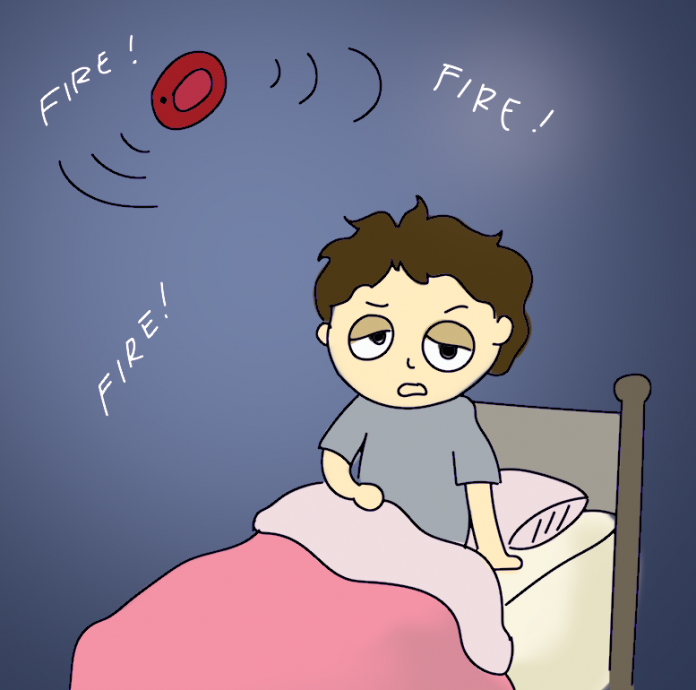
It’s 10 p.m. on a weekend, and I’ve snuggled up in bed with all sorts of snacks to rewatch Brooklyn Nine-Nine. Ahh, cozy, right? WRONG. Because DING DING DING there goes the obnoxious, unplanned fire alarm in SFU Residence. Now I have to rush down seven flights of stairs to wait outside in the cold for at least half an hour until it is turned off.

Once, the fire alarm started at 1 a.m. during exam season. I’ve also screamed internally when that horrible noise rang again within a mere two-week interval — during the holidays when there was a grand total of seven residents in my entire building, no less. 

Whether it’s an alarm malfunctioning issue, someone smoking in their room, or some idiot pulling the alarm because they have a pathetic sense of humour, it is extremely annoying whenever the alarm unexpectedly sounds. Not to mention that it undermines the importance of planned fire drills. More and more people are staying inside their rooms when these alarms go off. I’ve even heard of students throwing out their fire alarms in frustration. 

I’ll still drag my lazy ass down the stairs each time it rings, but the sense of urgency that fire alarms should invoke is now as watered-down as Dining Hall coffee.


Inspiring SFU student film Saloon Doors featured at Vancouver Short Film Festival

0
Photo via IMDb
Photo via IMDb

by Ben McGuinness, Peak Associate

Each year, the Vancouver Short Film Festival shows off the power of short films and Vancouver’s up-and-coming filmmakers at the Vancity Theatre.

Amongst this year’s films was Saloon Doors, an exciting short by second year SFU film student Santiago Araujo Henderson who punches above his weight — as far as his cinematography is concerned. Not only did Henderson write this incredible short, but also directed and starred in it as well. From the very first shot of a bus blowing through Uruguay beaches to an upbeat Spanish song, the film is decidedly different from most shorts that take a safer, more measured approach to their settings and visuals.

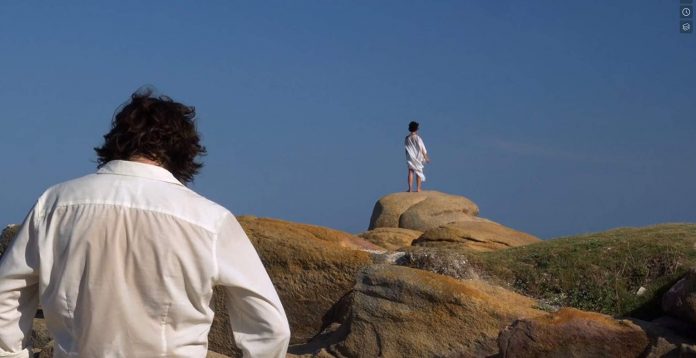
The first scene is a vivid dream that protagonist Hank (Santiago Henderson) is having where, while he’s on a rickety bus tour, his girlfriend (Bonnie Louise Gaskin) is posed majestically amongst the boulders and dunes in the style of a Vogue photoshoot. Somehow he gleans that the dream is telling him their relationship is in trouble, and upon waking up he jeopardizes it by obsessing over their status on the night of her art gallery showing.

Despite the tension, they clearly try to keep it working as he brings the focus back to her show. The scene at the gallery is another loaded visual for the audience, featuring gorgeous paintings created by the actress herself. 

Meeting Henderson after the show, I’m not surprised to find he’s passionate and just a bit frenzied as he conveys his excitement describing the filmmaking process. The scene in Uruguay, I learn, was filmed by chance as he traveled to the country for a wedding. I come to realize the film is a delirious blend of autobiography, documentary, and just enough fiction that Hank can show his girlfriend what he sees in his dreams through a “dream machine” pillow covered in Christmas lights — though I’m sure Henderson would too if he could.

Or maybe Hank only dreamed about the dream machine. It’s hard to tell exactly what happened as the film flits between lush dreams and sluggish reality. It is shot in a style that especially reminds me of Satoshi Kon, with the camera following Hank’s girlfriend into their dark apartment as the footage of his dream interlaces itself into the scene. Somehow, I’m assured, it is recounting a time in the director’s life when his relationship was challenged by the commotion of two artists dating.

The audience might get a bit lost in the fever-dream ramblings of the protagonist and the surreal splicing of his visions with mundane reality. However, if Henderson revisits the concept, he might be able to better convey why his dream affected him so greatly that he turned it into an ambitious film project.

Short films are most exciting when they are the playground for what could one day be the elements of a director’s feature films. I certainly can’t wait to see Henderson’s next brainchild.

Catch the director’s upcoming co-directed piece at a showing of SCA student films coming up in April. Keep your eyes on the SCA Events page to stay posted.

Chess boxing: a sport of two extremes

1
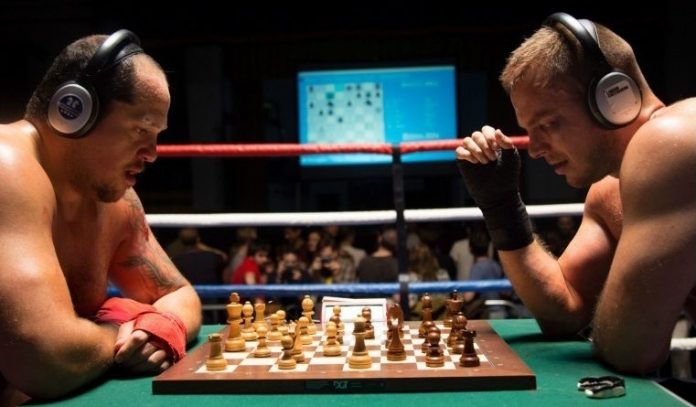
Contestants wear headphones to prevent the crowd from calling out tips. — Photo: Pitchhigh

By: Ahmed Ali, Peak Associate

Imagine, if you will, a sport that simultaneously pushed its athletes to their physical and intellectual limits — a sport that requires an extreme amount of focus, restraint, and raw power. Well, imagine no longer, as the odd, but nevertheless impressive, new sport known as chess boxing has burst onto the scene.

Chess boxing is a sport in which two athletes alternate between six rounds of chess and five rounds of boxing, lasting three minutes each. In chess boxing, the winner is whoever gets a checkmate or a knockout first. Athletes can also be disqualified for trying to stall for time and, in the event of a draw, the winner is determined by points scored in the boxing ring. If the two athletes are still tied after their five boxing rounds have been assessed by the judges, the athlete playing the black side in chess is determined to be the winner.

This sport of two extremes was created by Dutch performance artist Iepe Rubingh in the early 2000’s. Rubingh’s idea was to create performance art to make people think by ushering in a new sport that was based on the 1992 comic Froid Équateur. In the comic, there is a chess boxing championship in which two athletes spend an entire day in a boxing match (with a ring painted like a giant chessboard) and the next day in a round of chess. Rubingh likely found this set up to be unwieldy, so he refined the rules to make a match of chess boxing more manageable in terms of time. In 2003, Rubingh started the first official chess boxing competition and, somewhat unsurprisingly, became the first champion.

What was surprising was that this new sport ended up becoming wildly popular. Since then, in collaboration with the Dutch Boxing Association and the Dutch Chess Federation, the World Chess Boxing Organization was formed with the goal of legitimizing chess boxing worldwide. Rubingh himself has set aside his career as an artist to focus on promoting and expanding the sport, which is particularly popular in Germany, the UK, India, and Russia.

One of the most difficult aspects of the sport is the mental fortitude it requires. It can be extremely taxing to amp yourself up for a fight, only to have to quickly calm down for a tough mental exercise, and then have to repeat the process up to six times. The official Chess Boxing Global website describes this unique challenge, noting that “chess boxing is a rare blend of contrasting skills” that requires athletes to combine “a powerful body with a sharp mind.” While there are many quirky elements to the sport, it’s this transition between physical and intellectual extremes that creators and proponents of the sport describe as its most intriguing feature. As the official website notes, “In the ring, the fighter is fueled by testosterone, adrenaline, and skill. Three minutes later, he [or she] changes battlegrounds. The contender has only seconds to restrain his fighting instinct and move into the silent logic of his mind. It is the only sport in which the heart, mind and body perform in total harmony.” 

Personally, I think one of the coolest things about this sport is the fact that it’s entirely possible that someone with no boxing experience could beat Floyd Mayweather in what is technically, at least partially, a boxing match. All this could be done without having to actually fight him, as long as the checkmate was secured in the first round of chess. If not, well, that might be the last game of chess one ever played. 

Letter to the Editor from Giovanni HoSang

0
Photo: Aaron Burden/Unsplash

Greetings to the Editor-in-Chief of The Peak:

The Peak opinion piece entitled “Giovanni HoSang can’t pretend Kickoff doesn’t involve him” stated some concerns around holding the president accountable for the losses of the concert. I wholeheartedly support students holding us accountable and raising issues as elected representatives, and I strongly encourage this. At the same time, I want to address some concerns that were raised in that article. The reality is, unless there is a change in the bylaws and policies that allows a single Board member to have more influence over Board decisions, not even the president has the power to overrule a majority vote.

Currently, there is no such mechanism and [there] probably shouldn’t be. This means that everything decided by the Board is at the will of the Board as a whole. The president’s role doesn’t include the power to overrule or veto a majority decision. The president can help set the direction of the Society and represent the Society on formal occasions, act as the Societys’ ambassador, attempt to have their vision for the Society executed through Board processes, and work with other directors to execute on their vision.

This Board voted to increase the budget deficit allowable to $60k while shutting down questions that I was asking about the budget (to break it down, the VP Student Services called the question, meaning there could be no more discussion on the matter. This, making the discussion time a total of eight minutes). In addition, this was the last time the Fall Kickoff event came to the Board table.

However, as the article stated, I worked hard to get sales and visibility for the event, and even fought for it not to be cancelled, because I value the Kickoff concert and wanted to see it succeed and for students to attend. That doesn’t mean that the process and planning around the concert didn’t have its problems that students need to hold the Board, and each and every Board member, accountable for. This is why I, and some other Board members want to see recommendations through an audit to make sure the same thing doesn’t happen in future years.

Essentially, the originally anticipated losses for the concert were badly planned in a top down way, and the increases should not have been approved. But neither the president nor any single Board member who opposed this could have changed this without majority support. It is important that students are aware of these decision-making processes, and seek to change them to reflect more transparency in large scale event planning and other activities of the Society.

Yes, last year I was elected president. However, my values and those of some of the other Board members, who support my values and my vision for the Society, are in a clear-cut minority. As a result, we need a stronger mandate for future Boards to have a larger representation of strong progressive students, who will bring back student power through activism on campus. We need to elect more students who will truly and actually care about what students want, and this is what I will continue to fight for.

Cheers,
Giovanni HoSang